
12 Vintage Trunks and Travel Cases Collectors Buy for Decor and Value
A great vintage trunk or travel case does more than fill an empty corner since it adds story, texture, and character to a space. Collectors are often drawn to pieces with original parts, attractive wear, rare labels, and a strong look that still holds up over time. Even so, the best finds are usually the ones that mix good condition with a clear sense of history and style.
This post may contain affiliate links, which helps keep this content free. Please read our disclosure for more info.
Louis Vuitton Wardrobe Trunk
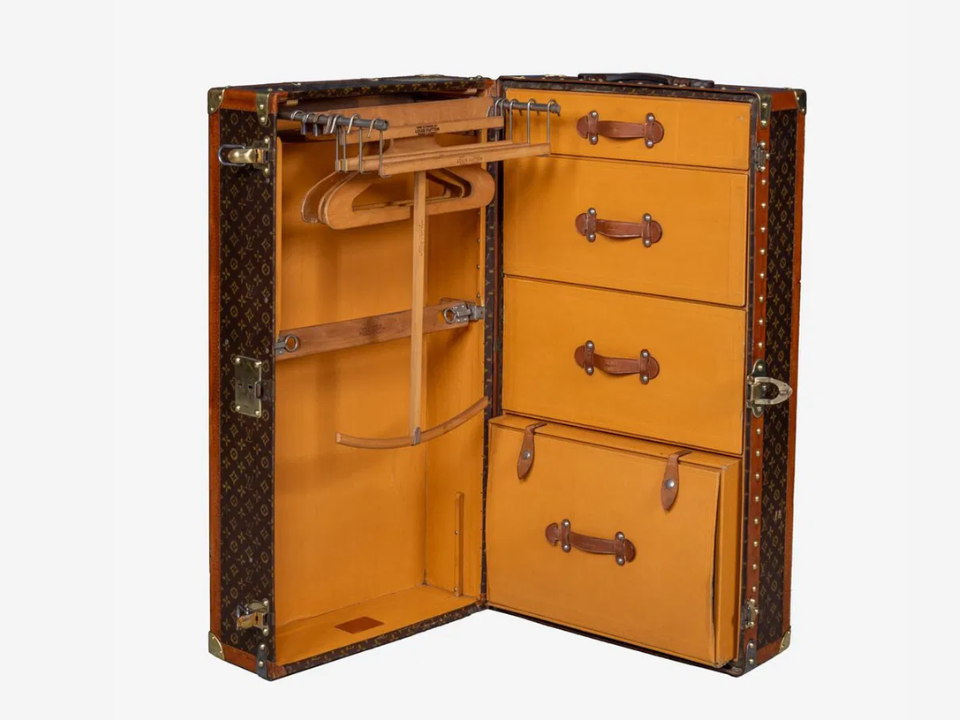
Among early luxury trunks, the Louis Vuitton wardrobe trunk stands near the top for decor and resale value. Most examples date from the 1910s through the 1930s, and the maker was Louis Vuitton of France. These trunks usually feature a monogram canvas outer shell with brass fittings and a fitted wardrobe-style interior. A present-day dealer’s range of about $27,600 to $34,300 is common for notable examples, especially when the body stays crisp, and the inside fittings are still there.
Inside, this type opens more like a compact closet than a plain trunk. Collectors like the height, the useful storage sections, and the way it can stand in a room like a cabinet. Original trays, hanging sections, labels, and working locks usually matter a lot when value is judged. In a bedroom or study, it can work as both storage and a strong period statement piece.
Goyard Courrier Trunk
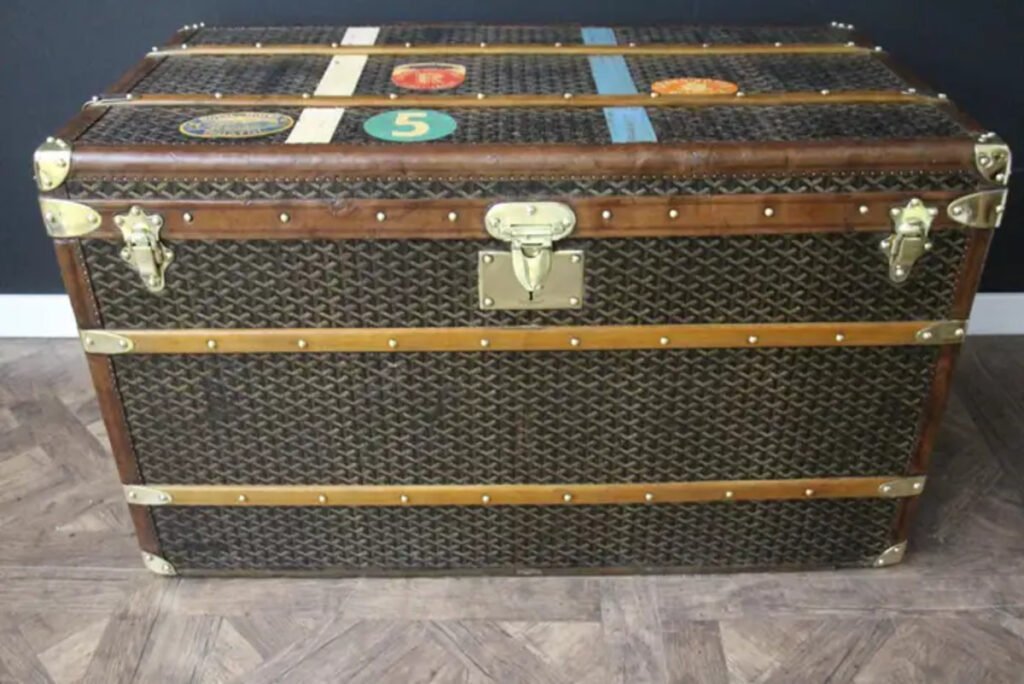
The Goyard courrier trunk is one of the strongest French alternatives to Louis Vuitton. Most examples on the market date from the 1920s, and they were produced by Goyard in France with chevron canvas and solid brass fittings. Present dealer prices often fall around $19,400 to $25,500, depending on size and finish. The chevron pattern gives it a quieter look than the monogram canvas, though it still reads as luxury luggage.
Because the body is long and fairly low, this trunk often works as a table in larger rooms. Collectors look for warm canvas color, strong side handles, and stamped hardware with less replacement work. The maker name helps, though the less common pattern is what draws in buyers who want something a bit different. In a mixed antique room, it gives history without feeling overdone.
Louis Vuitton Car Trunk
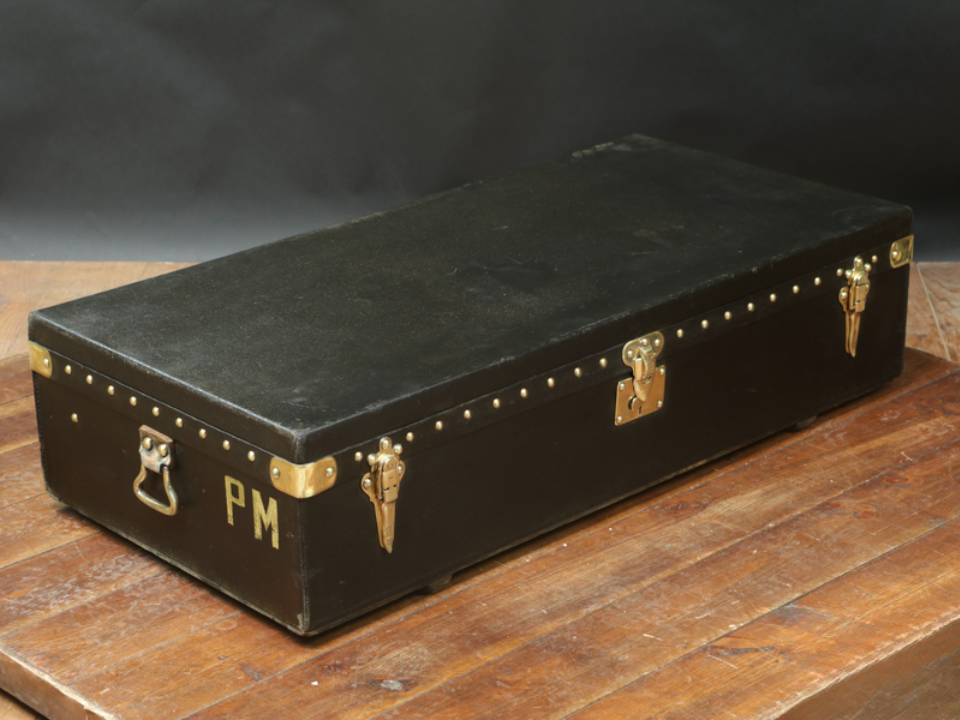
Made for early motor travel, the Louis Vuitton car trunk has a lower and slimmer profile than a ship trunk. This model was produced by Louis Vuitton in France around the 1910s, and listed examples show monogram canvas with brass fittings. Current asking prices are usually close to $12,200 to $12,300 for a strong period example. Its long shape makes it easy to place at the foot of a bed or under a window.
Unlike a tall wardrobe trunk, this one feels cleaner and more horizontal. Collectors like the link to early automobile travel and the fact that it takes up less visual space. Good canvas color, a solid frame, and working latches tend to matter more than a perfect interior. That lower shape gives it a clean look that works well in both old and newer interiors.
Goyard Hat Trunk
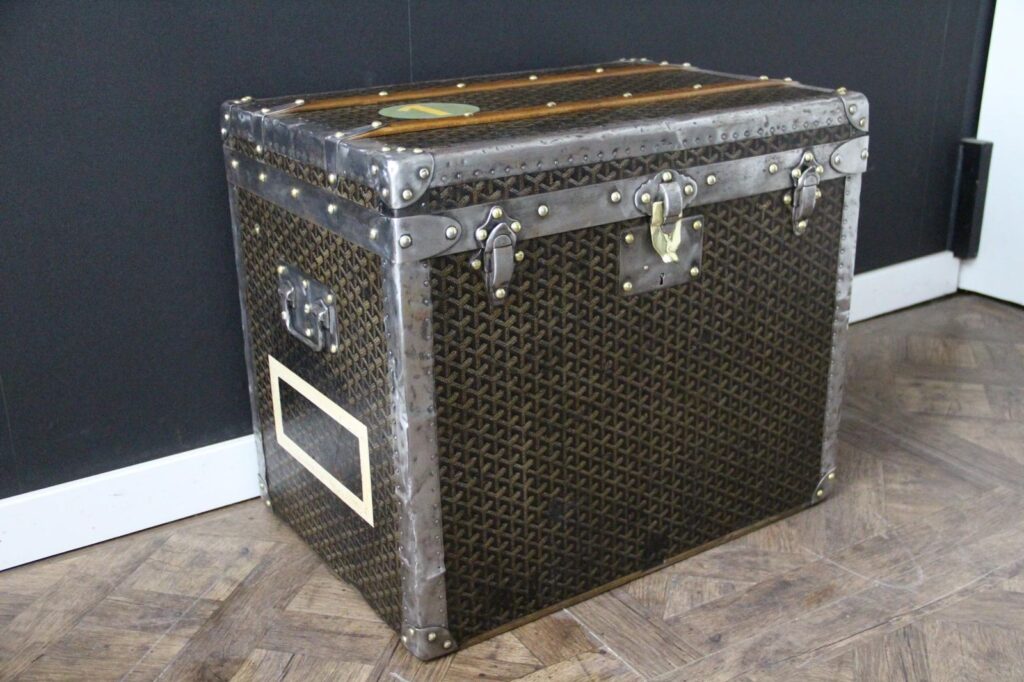
Compact and boxy, the Goyard hat trunk is one of the most decorator-friendly pieces in this area of collecting. Examples from the 1920s and 1930s were produced by Goyard in France, and listed pieces show chevron canvas, brass hardware, and trunk-style fittings. Present asking prices range widely, with examples around $18,800 and others above $24,000. Its cube-like shape makes it easy to use as a side table, nightstand, or stacked accent.
Compared with a full steamer trunk, this case gives the same old travel mood with much less bulk. Collectors usually like them because they fit more homes and still carry a well-known French maker’s name. A removable tray, clear maker marks, and strong corners can all help increase value. For smaller rooms, this is one of the easiest old luxury cases to live with every day.
Louis Vuitton All Leather Trunk
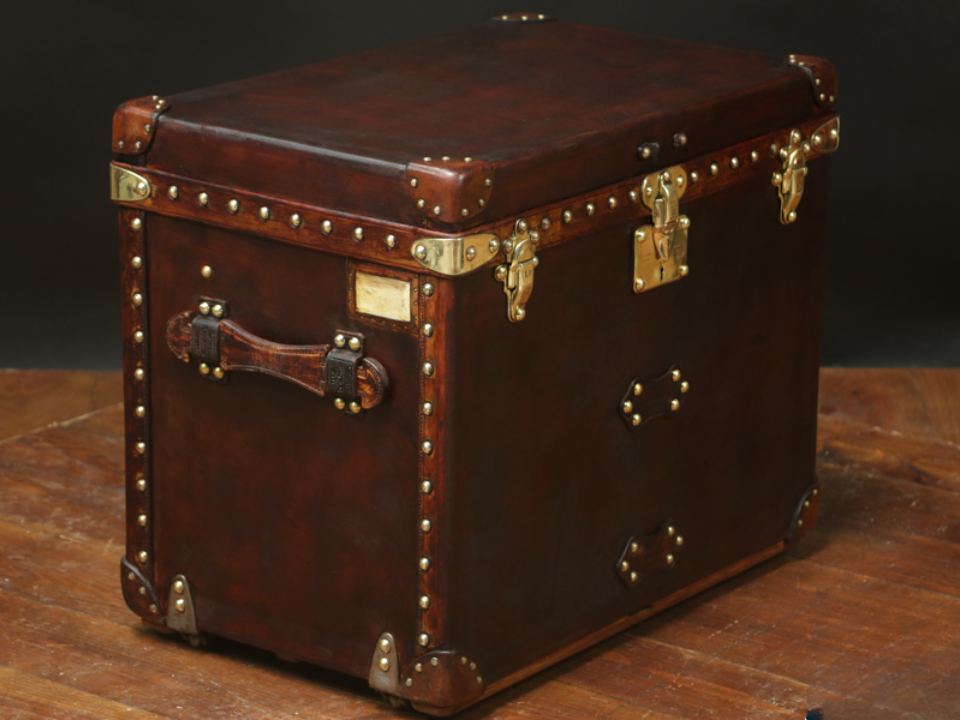
Far less common than the monogram canvas versions, the all-leather Louis Vuitton trunk has a richer surface and a warmer tone. These pieces were made by Louis Vuitton in France in the early 1900s, and listings point to leather bodies with brass fittings. A present-day asking figure of about $25,800 is typical for a notable example. The leather finish gives it a more furniture-like look from the start.
What often makes this type stand out is the depth of color that builds with age. Collectors usually pay close attention to dryness, cracking, and any major loss to the leather skin. When the case still has a firm body and presentable brass, it can look very handsome in a library or living room. It is a stronger buy for someone who wants the Louis Vuitton name without the usual monogram pattern.
Louis Vuitton President Case
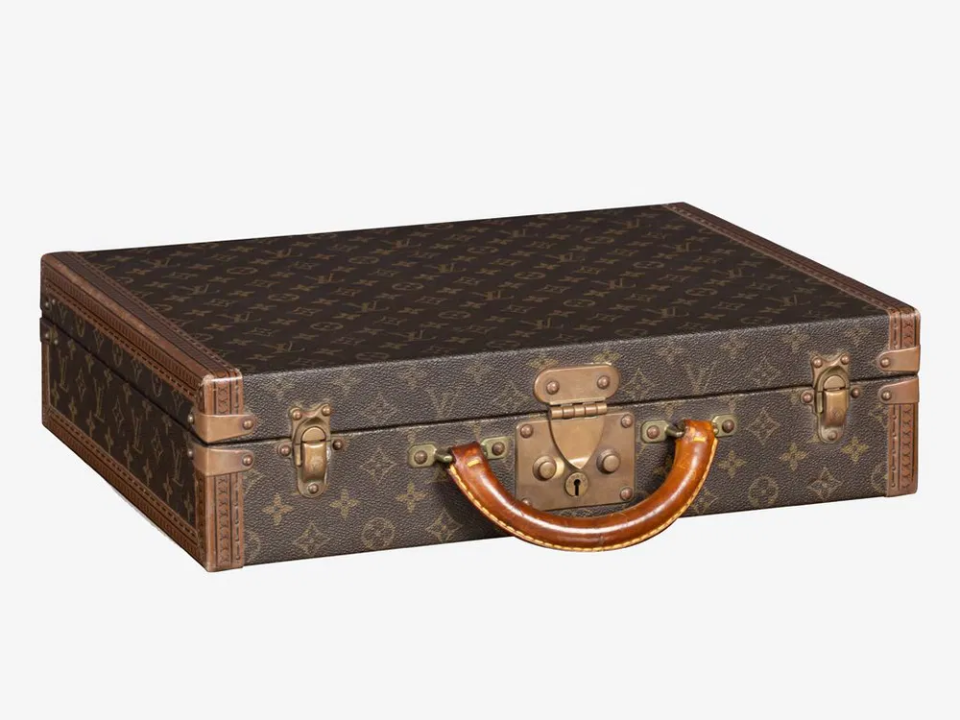
Smaller than a trunk, though still part of the travel case world, the Louis Vuitton President case gives collectors a lower cost entry into the brand. These hard cases were made by Louis Vuitton in France during the 1970s through the 1990s, and examples show monogram canvas or Epi leather with metal fittings. Present-day asking prices often land between about $3,266 and $5,107. The size makes it easy to place on a shelf, desk, or stacked trunk display.
For decor use, this case works well where a full trunk would feel too large. Collectors tend to like the hard shell, polished latches, and clear brand look. Sharp corners, a clean handle, and an interior that has not dried out can make a visible price difference. It also works nicely as a document box or display case for letters and small objects.
Moynat Orange Trunk
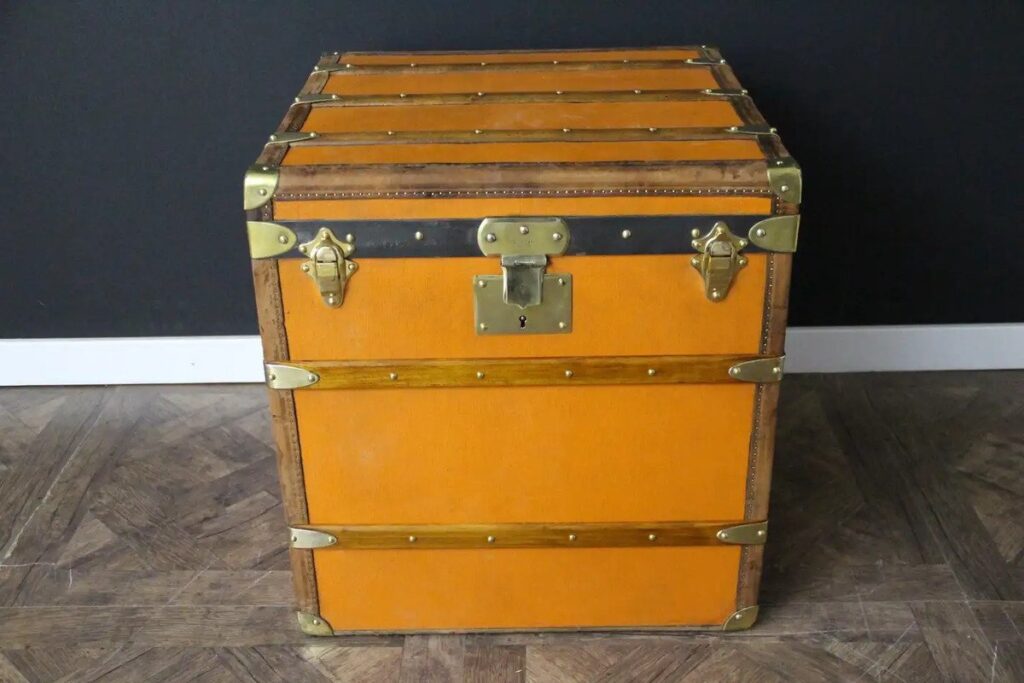
Bright color is a large part of the appeal of the Moynat orange trunk. Listed examples point to production around 1922 or the broader 1920s, with the maker being Moynat of France and materials including orange canvas, leather trim, and brass fittings. Present asking prices often sit around $9,400 to $10,700. That orange finish gives the case a warmer and more eye-catching look than standard brown or black trunks.
Seen in a room, this trunk reads almost like a piece of accent furniture. Collectors often like it because the color is unusual, while the overall shape still feels period correct. Corner wear matters here, since damage shows faster on a bright body. When the canvas tone stays rich, and the leather has aged evenly, it can be a very handsome buy.
Au Depart Steamer Trunk
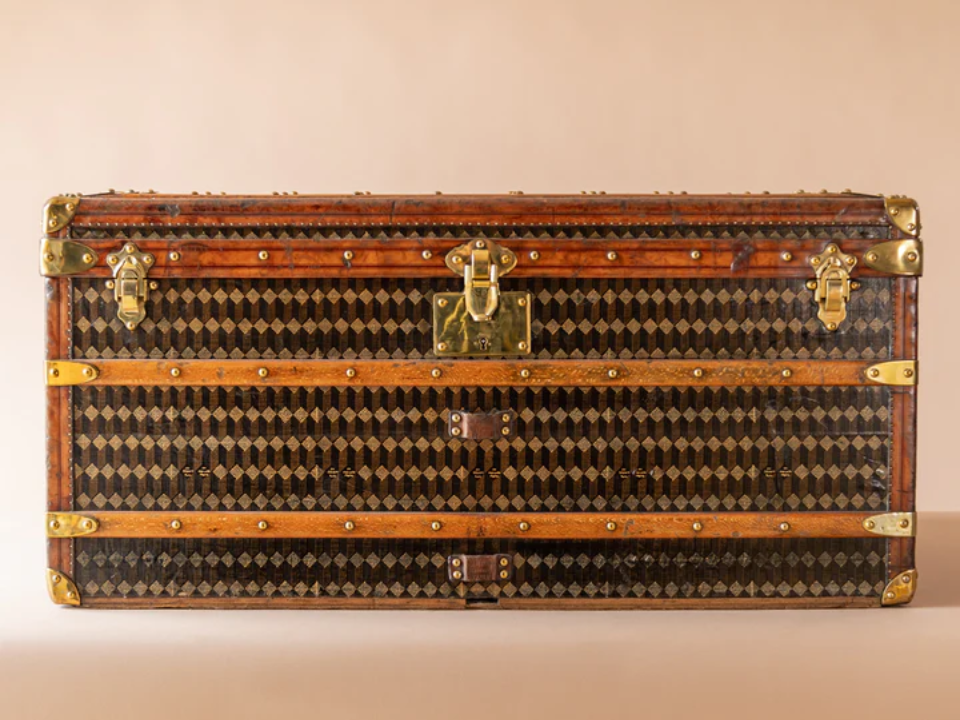
Au Depart steamer trunks are respected by luggage collectors who want a strong French maker outside the best-known two or three names. These trunks were produced in France in the 1910s, and listings describe them as early 20th-century French cases with brass hardware and period travel build. Present asking prices vary a lot, with one example near $10,565 and another much larger example above $26,500. That range shows how size and condition can move the number quickly.
In decor terms, the long rectangular body makes this a good coffee table trunk. Collectors often like the history of the maker and the fact that the name still feels less common in a room. Original labels, stronger lid alignment, and less interior loss usually help the value. For someone who wants French travel history with a little less name saturation, this is a strong pick.
Hartmann Turntable Wardrobe Trunk
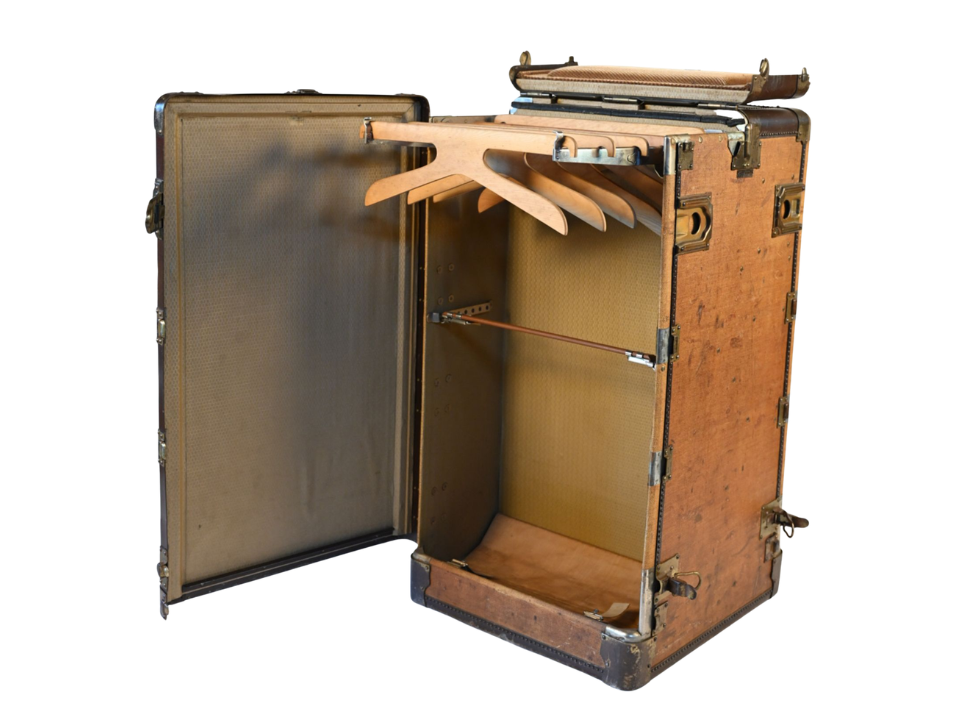
American trunks have their own following, and the Hartmann turntable wardrobe trunk is one of the better-known examples. These were made by Hartmann in the United States during the 1930s and show beige leather with a fitted wardrobe-style interior. Present asking prices usually sit between about $5,283 and $9,391. The turntable base and fitted interior make it feel more like movable furniture than plain baggage.
When opened, one side usually hides a hanging section while the other side shows drawers. Collectors like that inner layout because it still feels useful and interesting to look at. Leather condition matters a great deal, since scuffs, dryness, and edge wear can lower appeal quickly. In a bedroom corner, it can read like a compact wardrobe with clear period charm.
Oshkosh Wardrobe Trunk
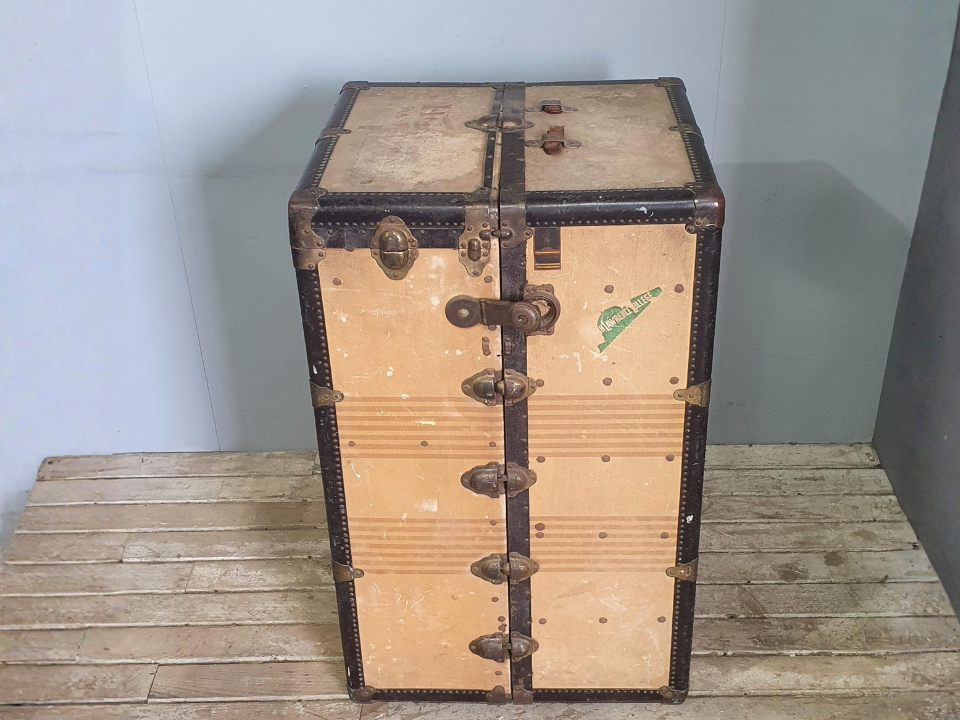
Oshkosh wardrobe trunks give buyers a strong American name at a much easier price level. Examples around 1920 were produced by Oshkosh Trunks and Luggage in the United States, and listings describe navy vulcanized fiber exteriors with black trim and brass hardware. A present asking figure of around $1,900 is common for a notable example. That makes it one of the more reachable wardrobe trunks for a collector who still wants a respected maker.
From a decor point of view, the flat top is very useful. Collectors often like the worn travel look, especially when original hangers, labels, and tray sections remain inside. The dark outer shell suits studies, hallways, and rustic rooms very well. For the money, it gives a lot of visual character without entering luxury trunk territory.
Mark Cross Dual Vanity Train Case
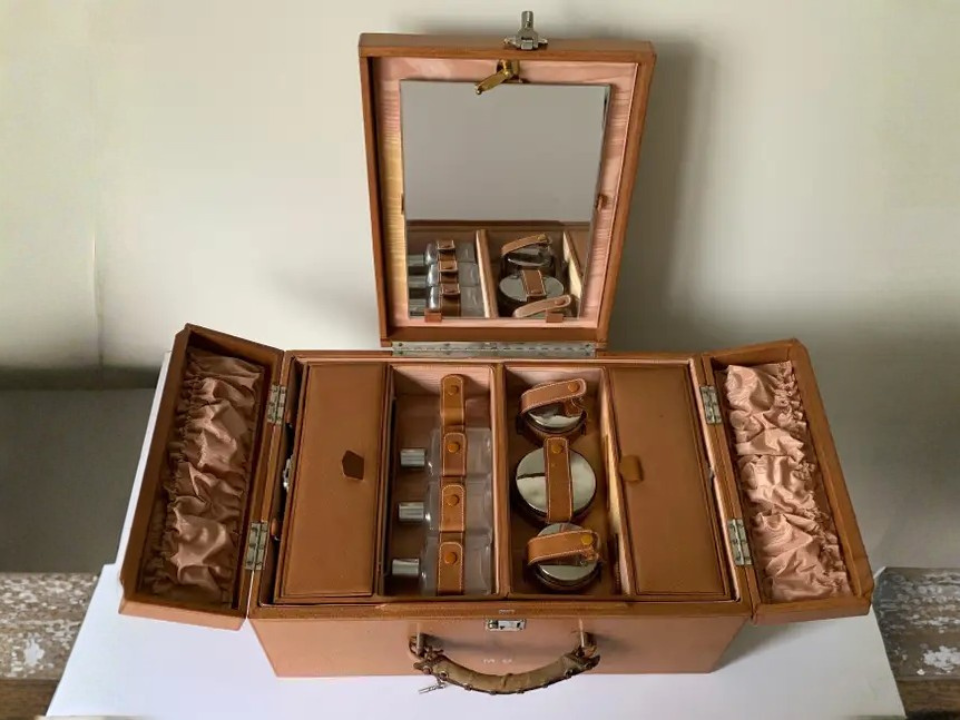
Train cases have a different kind of pull, and the Mark Cross dual vanity case is a very good midcentury example. This piece was made by Mark Cross in the United States during the 1950s, with tan leather outside and a blush silk moire lining inside. A present asking price of about $950 is attached to the listed example. Original glass bottles, jars, and the foldable smaller case all add to its value.
Because it is compact, this case fits nicely on a vanity, dresser, or shelf. Collectors usually like complete sets more, so the mirror and glass pieces matter here more than they would on a large trunk. The leather handle and snaps should still feel sound if the piece is going to keep its value. For someone who likes vintage travel style but does not want a heavy trunk, this is an easy piece to place.
Seward Wonderrobe Trunk
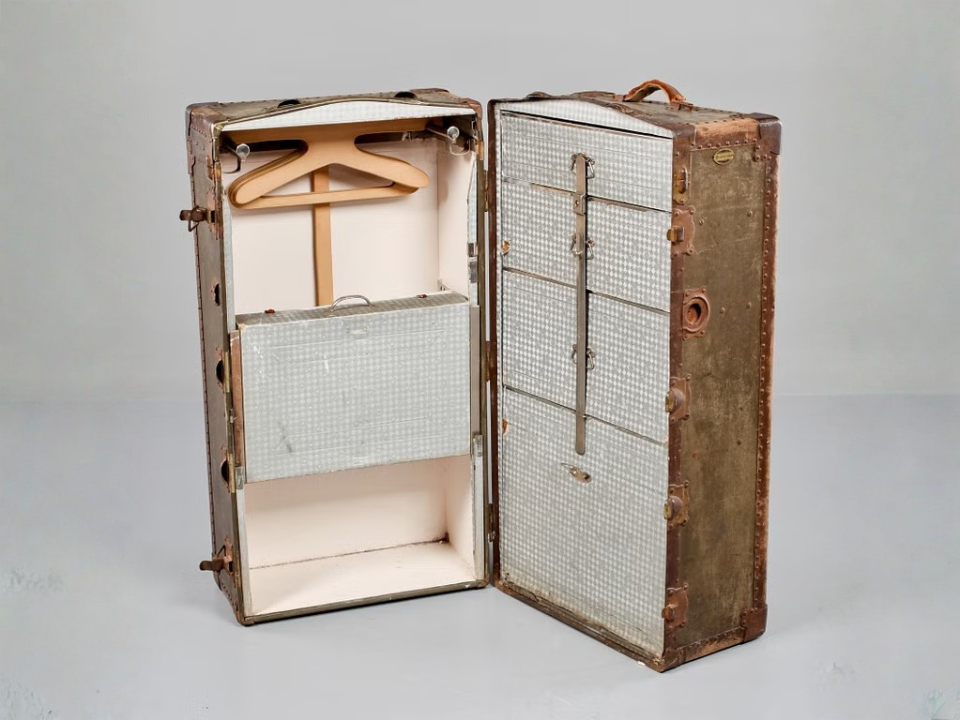
The Seward Wonderrobe trunk sits in a nice middle ground between furniture and travel gear. This type was made by the Seward Trunk and Bag Company in Petersburg, Virginia, during the early 20th century, and a listed example sells for around $1,400. Period descriptions point to a fitted interior with hangers, drawers, and an accessory box, and examples are often used as a bench or table when laid on its side. That range and flexibility help explain why it still gets attention from buyers.
Inside, the storage variety is the main attraction. Collectors often hope to find the wooden hangers, drawer sections, and locking bar still present because missing pieces are common. The outer shell can take wear and still look right, which helps it as a decor piece. In a guest room or hallway, it brings age and usefulness without taking up too much space.
This article originally appeared on Avocadu.