
10 Vintage Science Kits That Collectors Love
Science kits were once popular toys that helped kids learn through hands-on experiments. These sets usually included small tools, powders, and parts that created simple reactions or demonstrations. Many families remember them as fun ways to explore basic ideas at home. They worked by guiding users through steps that showed how certain materials behaved when combined. If you enjoy nostalgic items with educational charm, these classic kits might interest you.
This post may contain affiliate links, which helps keep this content free. Please read our disclosure for more info.
A C Gilbert Chemistry Outfit
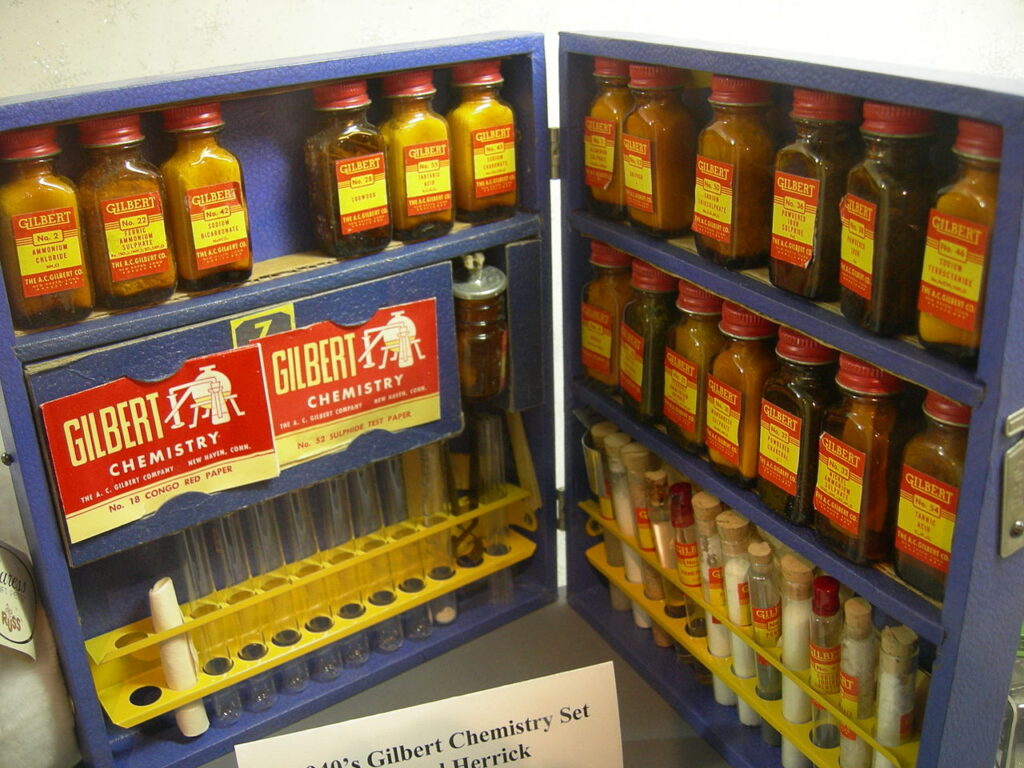
Collectors often look back to the 1940s for the A C Gilbert Chemistry Outfit. This set came in a sturdy metal case and included glassware, powders, and simple tools for home experiments. Many people love it because the graphics on the lid and manuals feel like a slice of mid century classroom life. Complete examples in good shape tend to bring around $80 to $150, with very clean sets or early wartime versions sometimes reaching above that range. These prices usually come from online auctions where partial outfits can sell for much less.
When someone shops for this kit today, condition and completeness matter quite a bit. Original manuals, intact labels on bottles, and unbent metal trays all help support value. Sets with many chemicals still present often appeal to display collectors even if the contents are no longer used. A missing lid or heavy rust can drop the price into the $30 to $60 range. Many collectors place this kit beside Gilbert trains and Erector sets for a unified display theme.
Gilbert U 238 Atomic Energy Lab
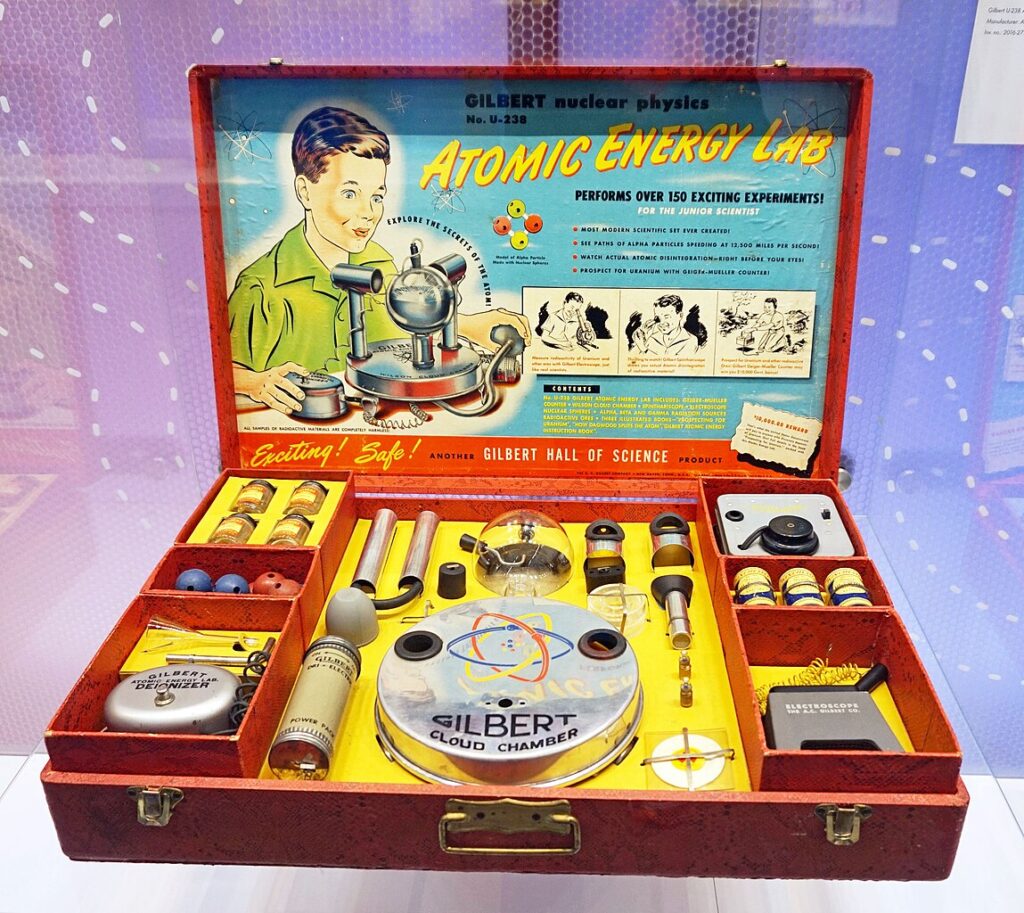
For many collectors, the Gilbert U 238 Atomic Energy Lab from around 1950 feels like a legendary piece. This short lived kit included cloud chamber parts, small radiation sources, and detailed booklets about atomic science. The set had a high original retail price for its time, which meant few units sold and even fewer survived in complete form. Because of that scarcity, clean examples can bring several thousand dollars, often in the range of $5 000 to $10 000 or more. Most price reports come from auctions and specialty sales.
Collectors who hunt for this lab care about more than the hardware. Intact packaging with vivid artwork, original manuals, and unused components add strong appeal. Many surviving kits are incomplete or have replacement pieces, which can bring values down into lower ranges. Some buyers focus on the empty box and paperwork for display. Even partial examples can become a centerpiece due to the kit’s unusual concept and short production time.
Porter Chemcraft Senior Laboratory Set
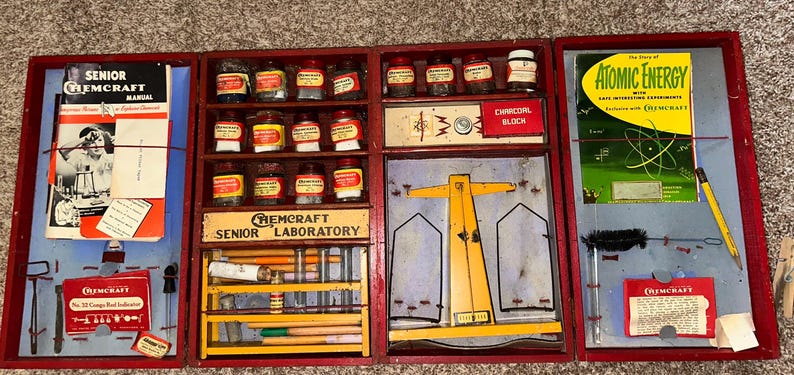
Among 1950s chemistry toys, Porter Chemcraft Senior Laboratory sets stand out for their metal cases and bright graphics. These sets often carried model numbers such as 415 or 6105 and included glassware, chemicals, and experiment manuals. Collectors enjoy them because they show how chemistry was presented to young students during the atomic era. Typical values fall around $60 to $150, with especially clean sets going above $200. Incomplete tins or empty cases usually fall between $25 and $50.
When someone brings home a Chemcraft Senior set, the condition of the tin and tray becomes important. Bright graphics, minimal rust, and intact hinges help keep value strong. Manuals with vintage illustrations help tell the story of how experiments were taught. Rare variations with atomic themed artwork hold extra attraction. Many collectors line up these sets beside Gilbert and Skilcraft outfits to compare how each brand approached science toys.
Chemcraft Junior Chemistry Outfit
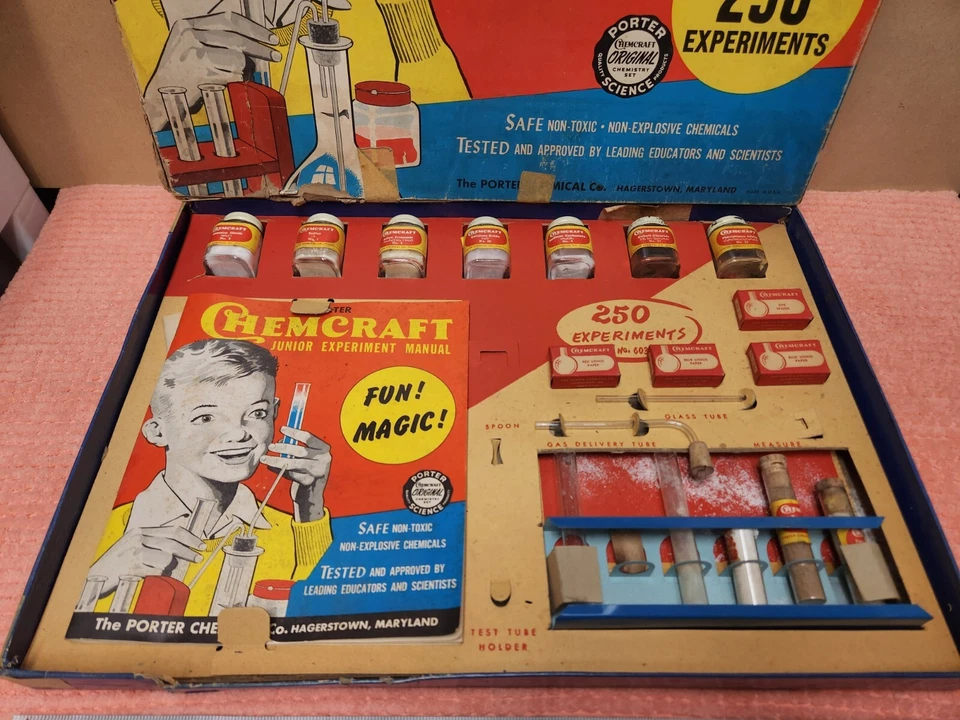
Another favorite from the mid-century period is the Chemcraft Junior chemistry outfit. These kits were slightly smaller than the Senior sets and were aimed at younger experimenters. They typically featured small glass test tubes, simple reagents, and colorful instruction sheets. Collectors can still find them fairly often because they were sold widely. Market values often sit around $40 to $90 for complete sets, and very tidy examples can reach higher.
Condition plays a meaningful role in how people judge these Junior sets today. Boxes with bright lids and clean inserts help the kit display well. Surviving chemicals with readable labels help support the sense of authenticity. Even when chemicals are removed for safety, collectors keep empty bottles and original racks for display. Many people see this kit as an entry point into vintage science collecting due to its approachable price.
Skilcraft Chemistry Lab Deluxe 510
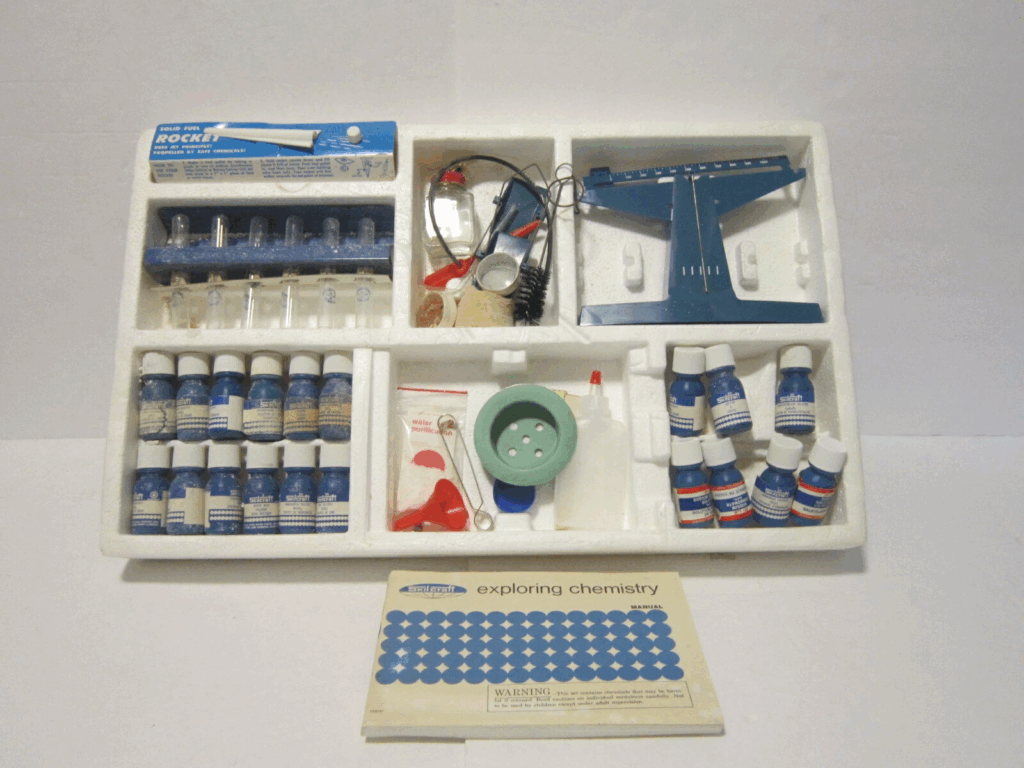
Skilcraft Chemistry Lab sets from the 1960s and 1970s hold a special place for fans of later vintage toys. The Deluxe 510 model came in a metal case with colorful graphics and a tidy interior layout. Many collectors enjoy it because it represents a shift toward more modern packaging while still feeling nostalgic. Typical complete examples sell in the $60 to $120 range, while partial sets or case only listings fall lower. Very complete and clean sets with manuals can climb higher.
Collectors who open a Skilcraft lab today often find test tubes, balances, and a full experiment manual. The tray layout and arrangement of bottles make the inside display friendly. Cases with minimal dents and scratches bring stronger interest. Sets that still include the original order form or mailer card feel special. Fans of 1960s and 1970s science toys often use this kit as a centerpiece on a display shelf.
Skil Craft Micro Chem Lab No. 508
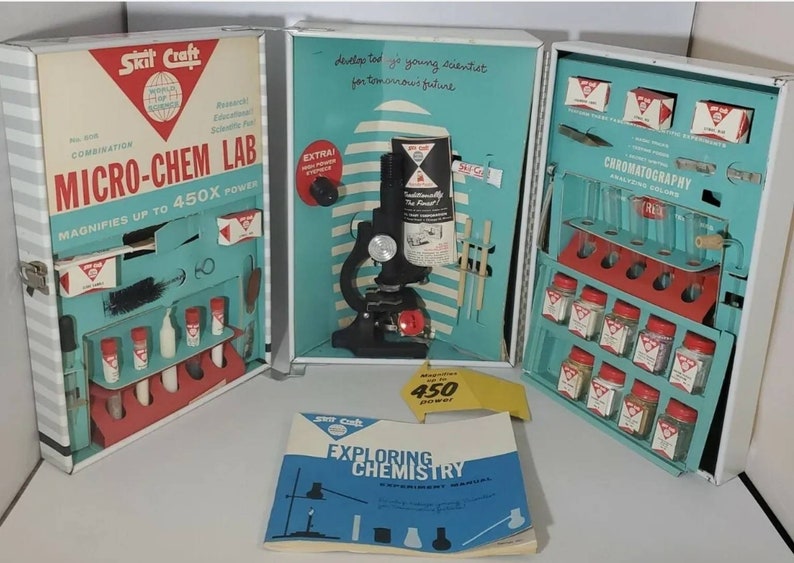
For many collectors of Skilcraft items, the Micro Chem Lab No. 508 from the 1960s is a standout. This compact kit came in a small metal case with a fold out manual and miniature tools. It is popular because it packs the feel of a full chemistry lab into a smaller space. Asking prices often appear around $200 to $300 for clean examples with manuals. Lesser condition pieces or incomplete kits appear at lower price levels.
Inside this Micro Chem Lab, collectors usually find miniature glassware and carefully arranged inserts. The fold out manual is a core part of the appeal because of its diagrams and compact style. Rust, missing bottles, or loose hinges can affect value. Display collectors often prop the lid open to show both the case art and inner layout. Fans of smaller but detailed kits often consider this one a favorite.
Remco Jet Propulsion Science Kit
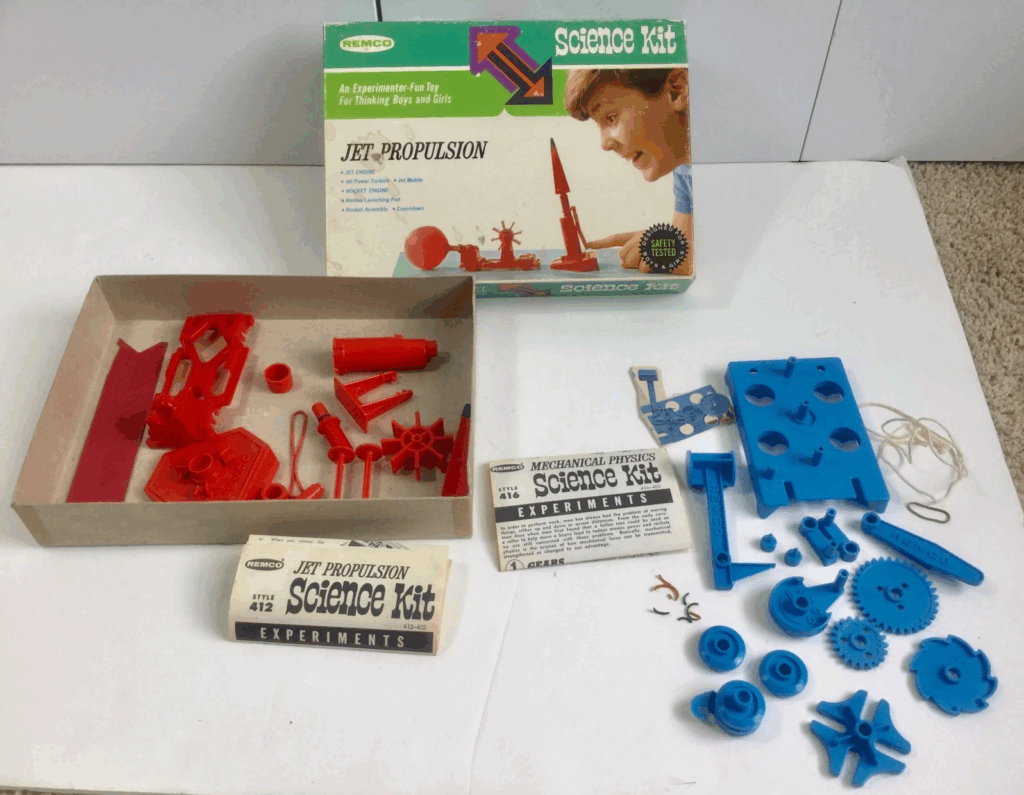
Among physics themed toys, the Remco Jet Propulsion science kit from around 1965 holds nostalgic value. This set focused on propulsion and mechanical projects rather than chemistry. Collectors enjoy it because it reflects the space age excitement of the time. A combined lot with a similar physics kit once sold around $40, and cleaner single kits often reach $75 to $150. Completeness and condition influence final prices strongly.
Opening a Remco kit today reveals motors, plastic parts, and project cards. Many collectors remember building simple rocket themed projects as kids. Boxes with intact artwork display very well on shelves. Missing motors or cracked plastic pieces can lower the price, but some collectors purchase them for parts. Fans of mid century space culture often display this kit alongside model rockets.
Radio Shack Science Fair 50-in-1 Electronic Project Kit
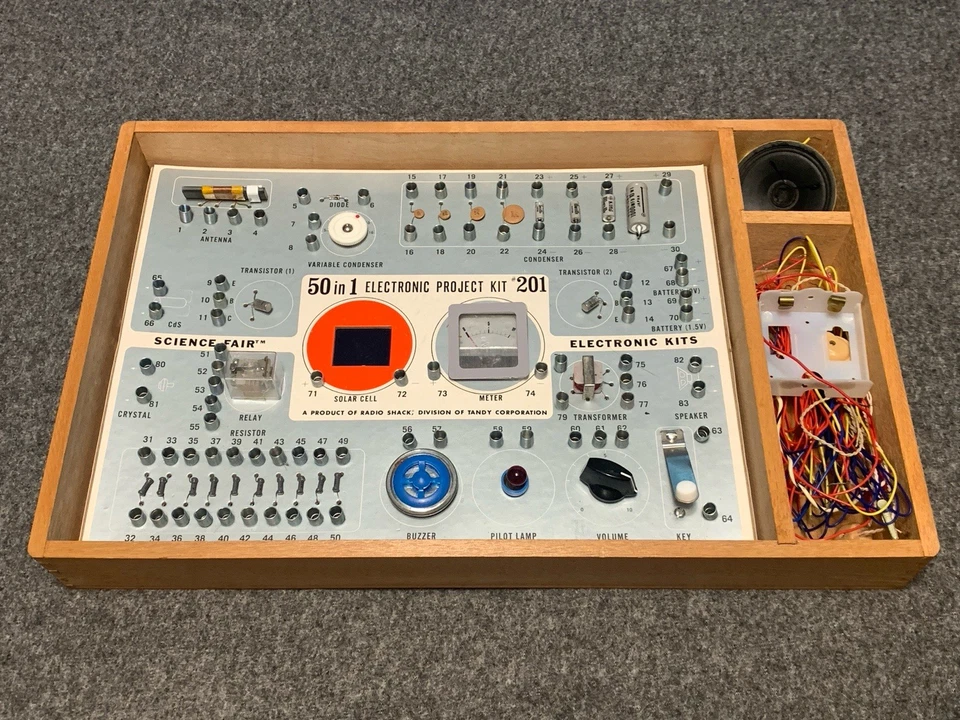
Electronic sets such as the Science Fair 50-in-1 project lab remain popular among collectors of 1960s and 1970s toys. These boards let kids create circuits by connecting wires to small spring terminals. Collectors like them because they show how electronics was introduced before digital toys became common. Working examples with boxes often fall between $40 and $100, while rougher boards sell for less. Larger versions like the 75 in 1 or 150 in 1 kits often fit into the same general price area.
Inside a typical Science Fair kit, collectors find resistors, capacitors, transistors, and a project book. The book includes light makers, sound circuits, and radio projects. Corrosion on spring terminals can affect value, so buyers inspect them closely. Boards with clear graphics and full manuals draw more interest. Electronics fans often line these kits up beside other Radio Shack items for a nostalgic display.
Heathkit Junior Electronic Lab
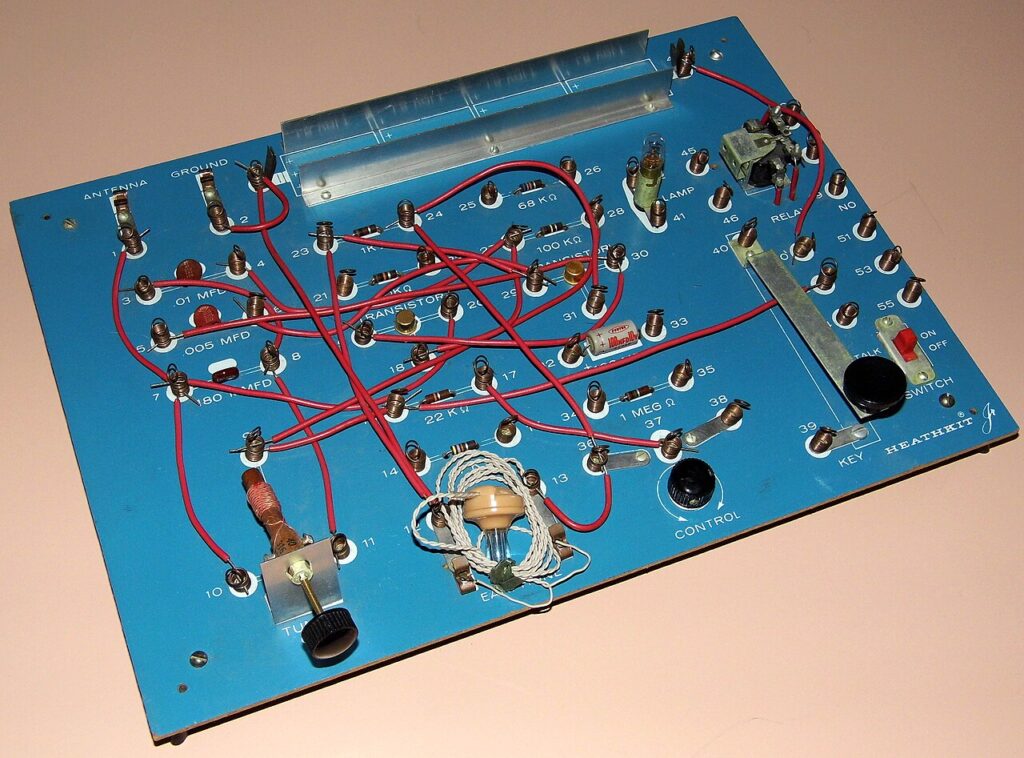
A favorite among electronics hobby fans is the Heathkit Junior Electronic Lab from the 1960s. This kit helped children build simple circuits and understand basic electronic parts. Collectors value it because Heathkit has long been associated with hobby electronics. Prices tend to run between $80 and $200 for complete and clean sets, while incomplete examples fall lower. Kits missing many parts often appear in the $40 to $70 range.
When collectors evaluate a Junior Electronic Lab, they inspect the control panel and parts tray. Knobs, dials, and terminal strips need to be intact for better value. Original manuals and experiment guides add strong display appeal. Many collectors place this lab beside adult Heathkit radios and test gear. For those with childhood memories of tinkering, this kit carries strong sentimental meaning.
Salter Chemistry Set
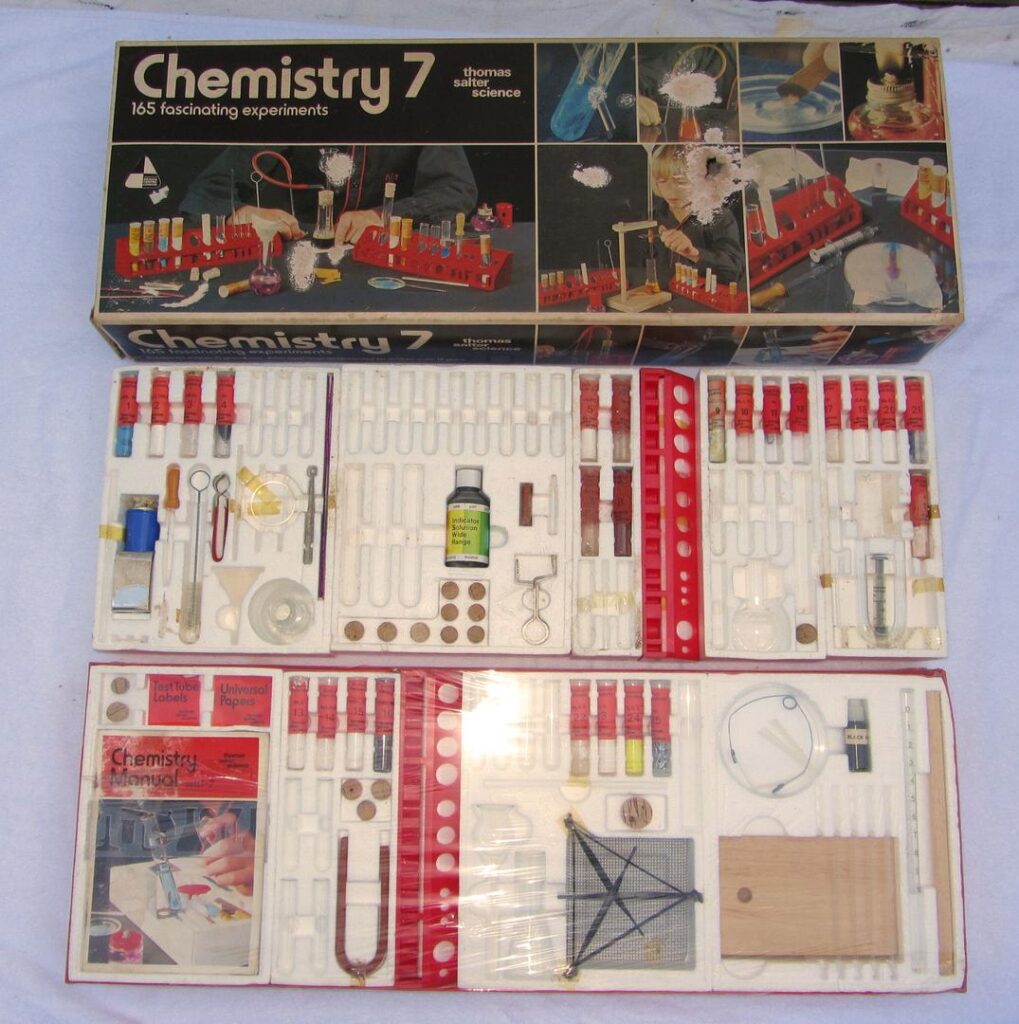
Salter chemistry sets from the 1980s show how science toys shifted toward lighter and more modern packaging. These kits often used plastic cases but still included glassware and reagents. Collectors like them because they represent the final era of classic home science kits. Original retail prices were around $39, and present day values usually fall in the $40 to $80 range. Nearly unused sets with clean bottles sometimes reach a bit more.
Opening a Salter kit reveals a mix of old style tools and newer design choices. Molded inserts hold bottles and tubes securely. Manuals tend to be bright and friendly, adding display appeal. Collectors who focus on 1980s toys often pair these kits with early computer items. The blend of classic experiments and modern graphics gives the set a distinct look.
This article originally appeared on Avocadu.