
15 Vintage Holiday Tins People Love to Display
Vintage holiday tins hold a special place in many homes during the festive season. With their cheerful designs and nostalgic charm, these tins offer a glimpse into the past, evoking memories of holiday traditions and simpler times. Whether they are adorned with snowmen, Santa Claus, or winter landscapes, each tin brings its own unique story. Many people enjoy displaying these tins as part of their holiday decorations, as they add a touch of warmth and history to the season. The appeal of vintage tins goes beyond their functionality; they serve as little treasures that remind us of the joy and magic of Christmas. Even as years pass, these tins continue to bring a festive spirit to homes and collections, cherished for their timeless beauty.
This post may contain affiliate links, which helps keep this content free. Please read our disclosure for more info.
Vintage Candy Tin with Santa Illustration from the 1950s
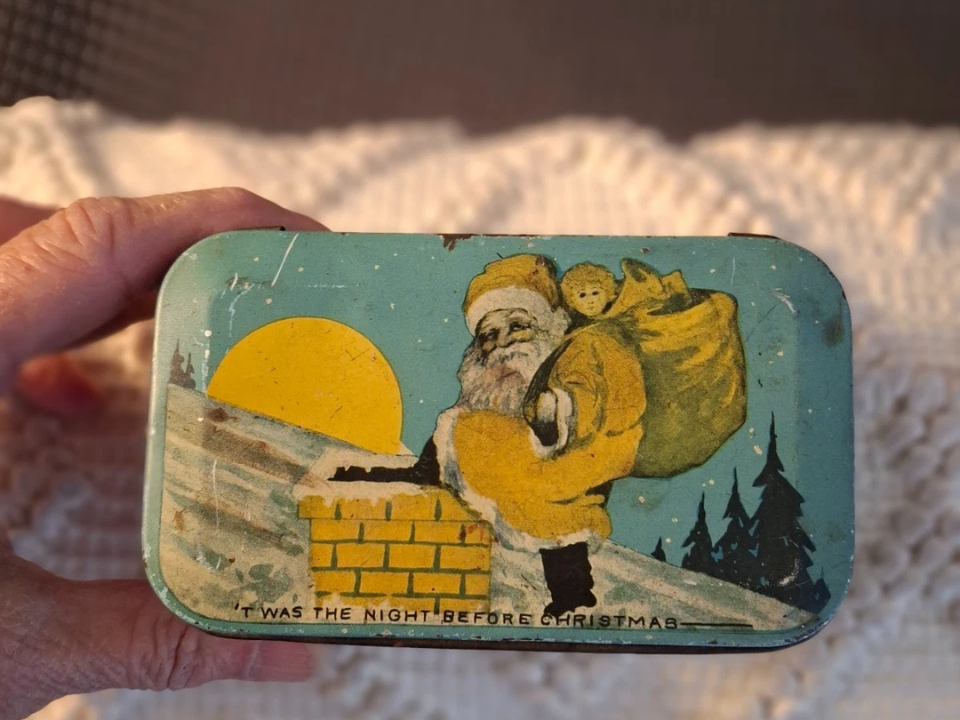
This tin shows a cheerful Santa Claus against a snowy winter background with bright red and green accents that evoke holiday spirit. It often came filled with assorted hard candies or chocolates for Christmas celebrations. Many collectors prize it because of the nostalgic art and seasonal charm that reminds them of mid‑century holiday traditions.
When displayed on a shelf or mantel, it brings a sense of warmth and memory of simple festive celebrations from decades ago. Because of wear or fading, tins in excellent condition remain rare which adds to their appeal. A well‑preserved example typically sells around $25.
Whitman’s Chocolate Holiday Sampler Tin from 1920s‑1930s era

This tin originally held assorted chocolates and featured classic holiday‑themed artwork such as wreaths, ribbons, holly garlands and festive colors designed to attract gift buyers. The tin has a hinged lid that allowed reuse long after the chocolates were gone which adds to its value as a keepsake. Collectors often seek tins from this period because the packaging reflects holiday aesthetics from nearly a century ago.
Given its age and historical place among early holiday chocolates, a clean example with minimal rust or dents may fetch around $40 to $60. Many of these tins are empty but still highly valued for display because they evoke a sense of timeless holiday tradition.
Vintage Cookie Tin with European Winter Village Scene circa 1960s
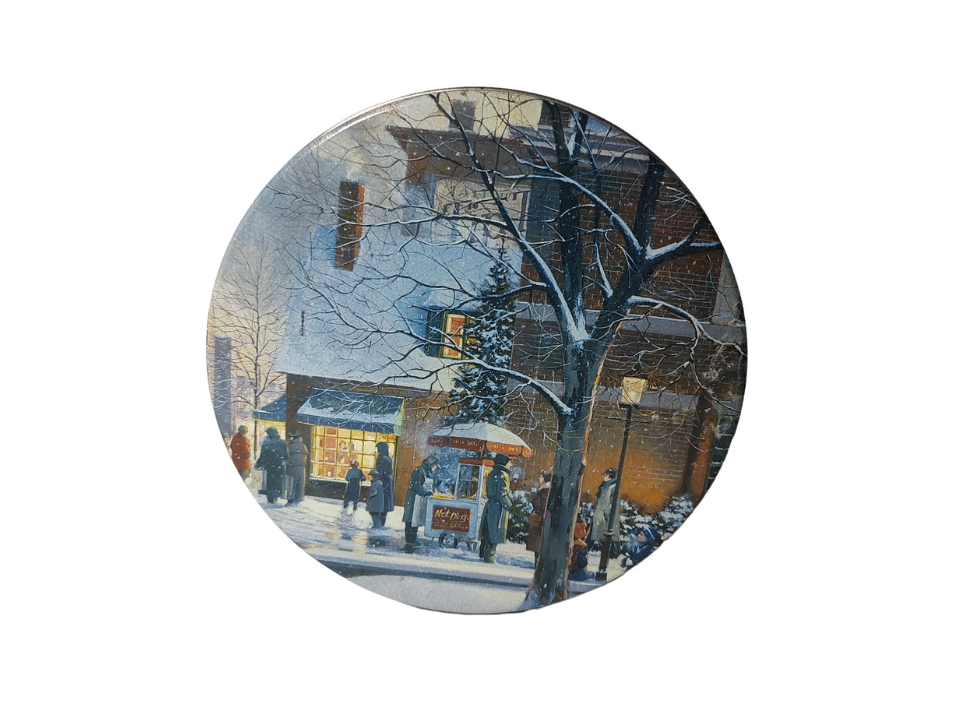
This metal cookie tin shows a charming winter village with snow‑covered roofs, ice skaters, and pine trees dusted in white. It probably once held holiday cookies or biscuits sent as gifts or family treats during the season. The soft pastel tones and nostalgic village imagery make it a favorite among those who like decor that recalls classic holiday postcards.
Despite many decades since production many survive because they were tucked away after use rather than discarded. A good example of this tin usually sells for about $30. Displayed alongside other vintage tins it gives a cozy, nostalgic feel to any holiday shelf or kitchen corner.
Holiday Tea Biscuit Tin with Victorian Style Art from 1920s

This elegantly decorated tin carries Victorian era inspired holiday art such as delicate wreaths, ribbons, and a soft linen‑colored background with muted holiday tones. It was originally used to store biscuits or holiday tea biscuits given as gifts or served during holiday gatherings.
The Victorian style gives it a refined, nostalgic look that is valued by collectors who prefer classic vintage elegance over bright modern patterns. Because many tins of this type were reused heavily or discarded after use, surviving examples in good shape are rare and sought after. Market value for a well-preserved piece reaches about $45.
Rectangular Tin with Snowman and Children Playing from 1950s
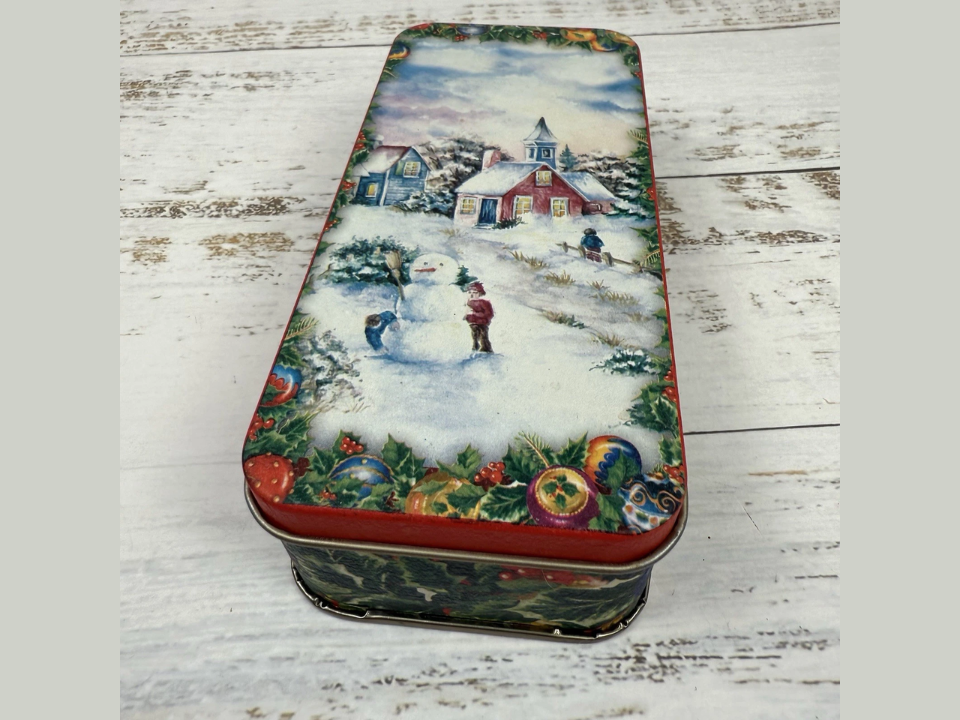
This tin features cheerful children building a snowman while wearing winter clothing in a snowy yard and decorative holly motifs around edges. It likely held holiday cookies or candy and was intended for families during Christmas gatherings.
The playful scene makes it a beloved piece for those who want holiday nostalgia tied to childhood memories or family traditions. Even if interior shows light wear or some scratches the exterior art remains appealing for display. A collectible tin like this generally sells for around $28.
Christmas Mailbox‑Shaped Tin Box used for Gift Packaging in 1960s
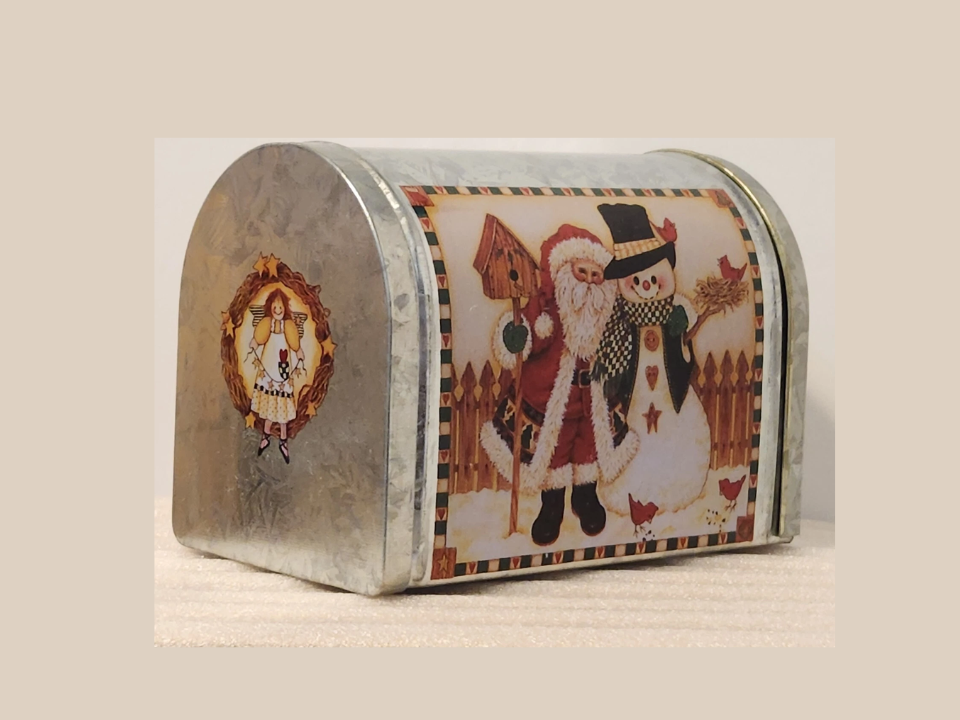
This tin is shaped like a small mailbox and decorated with holiday greetings, holly leaves, snowman and snowflake motifs. It might once have been used as packaging for small gifts or candies sent during the holiday season. Its unique shape stands out among typical round or rectangular tins making it a conversation piece in any display.
Collectors who favor unusual or whimsical containers often seek pieces like this because they offer variety beyond standard boxes. A mailbox‑shaped tin in good condition sells near $25 to $30.
Early 20th Century Tea Biscuit Tin with Embossed Lid and Holiday Floral Pattern
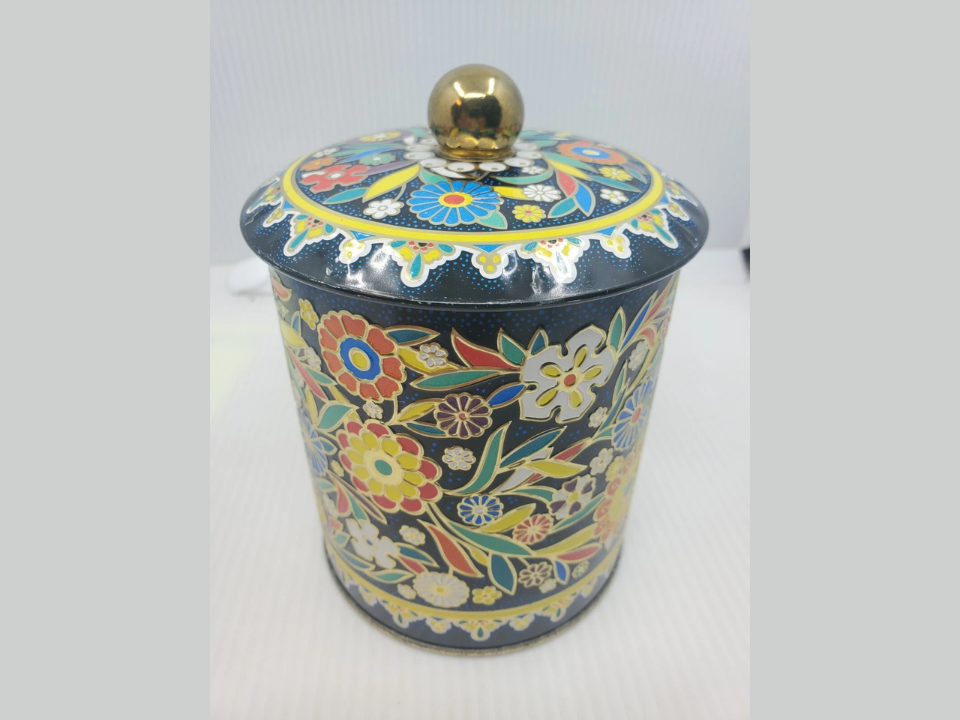
This tin stands out because of an embossed lid and subtle floral patterns combined with holiday colors of deep green and red. It was used to store tea biscuits or holiday cookies delivered as gifts or served at festive family meals. The embossed lid adds tactile appeal making it feel more like a keepsake or heirloom than a simple container.
Many of these tins have survived because subsequent owners reused them for storage, prolonging their life beyond the holidays. A clean example without dents or major rust typically sells for $50.
Mid‑Century Round Tin with Red Cardinal Birds and Holly from 1950s
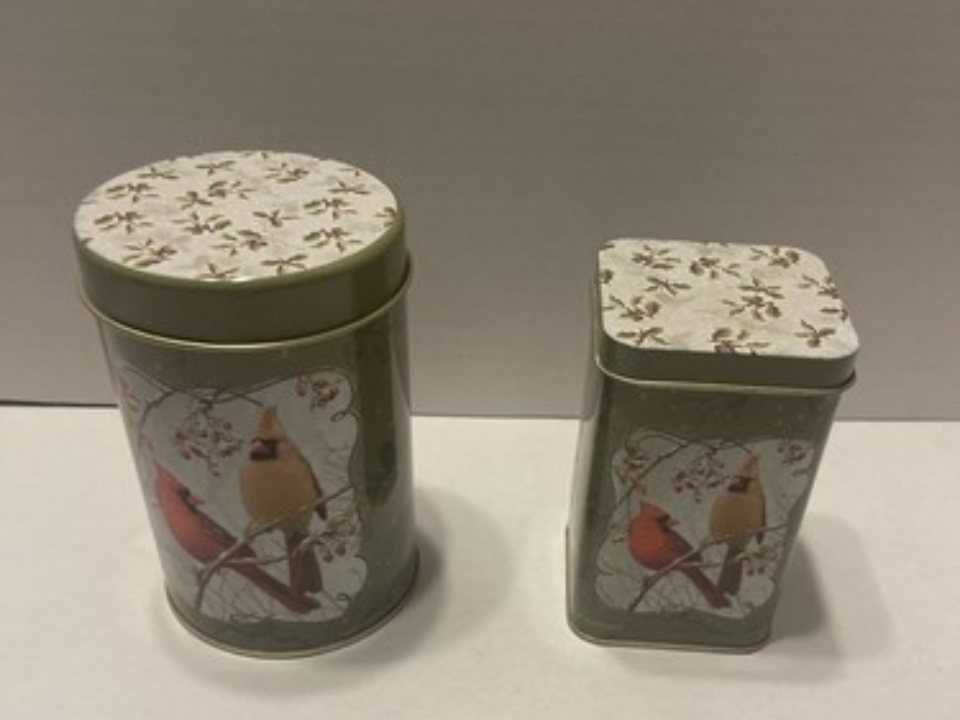
This circular tin presents bright red cardinal birds perched on holly branches with snow accents set against a white or light‑blue background. It could have held cookies, candies, or holiday nuts. The cheerful winter bird and holly motif make it ideal for holiday displays where a bit of natural festivity is wanted. Given the mid‑century appeal and relatively durable construction, many examples survive though often worn. A well preserved one usually sells for $30.
Vintage Metal Tin with Reindeer and Snowy Forest Scene from 1960s

This tin shows reindeer among pine trees with snow falling, evoking a winter woodland. It likely contained holiday cookies or candy given as a seasonal gift. Collectors who appreciate holiday folklore and woodland themes often display this tin during winter months alongside other seasonal decor.
Because it came from a period when metal tins were common for gift packaging, it remains a favorite for nostalgic collectors. A clean example tends to sell for $25.
Christmas Tree‑Shaped Tin from 1950s
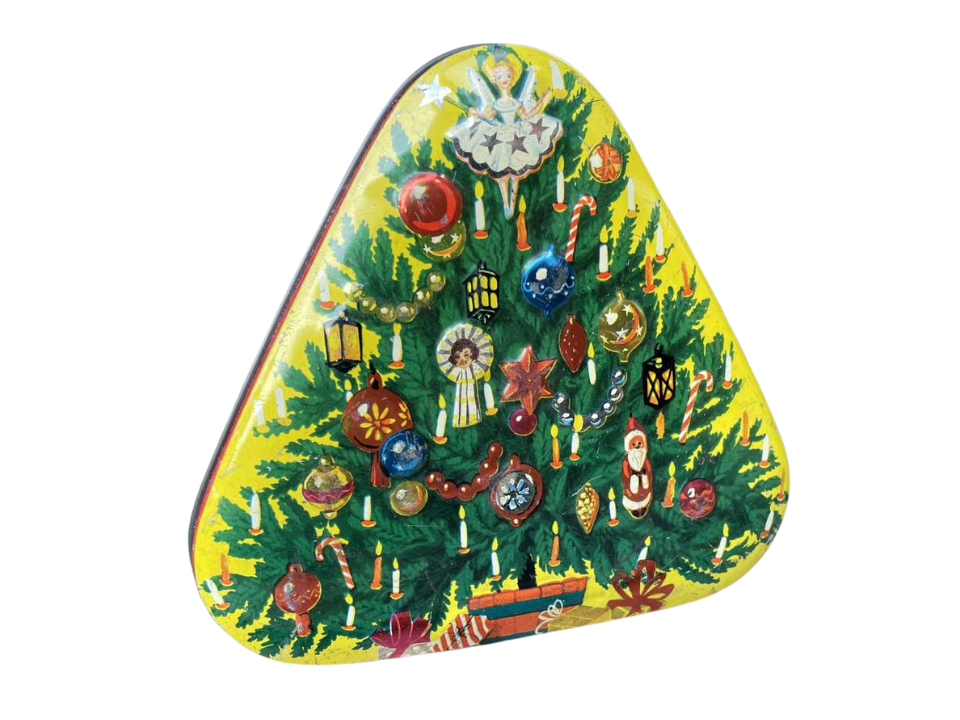
This unique tin is shaped like a Christmas tree, complete with bright colors and an intricate design that mimics decorations found on a real tree. It likely held small treats or cookies, making it a festive and functional piece. The three‑dimensional shape of the tree makes this tin especially attractive for display, adding a charming touch to any holiday decor.
Its design is often associated with mid‑century holiday traditions, which gives it a special place among collectors who enjoy nostalgic and functional items. In good condition, this tin can sell for around $50, with higher values for examples that retain their original paint and decorations.
Vintage Tartan Plaid Holiday Tin from 1950s
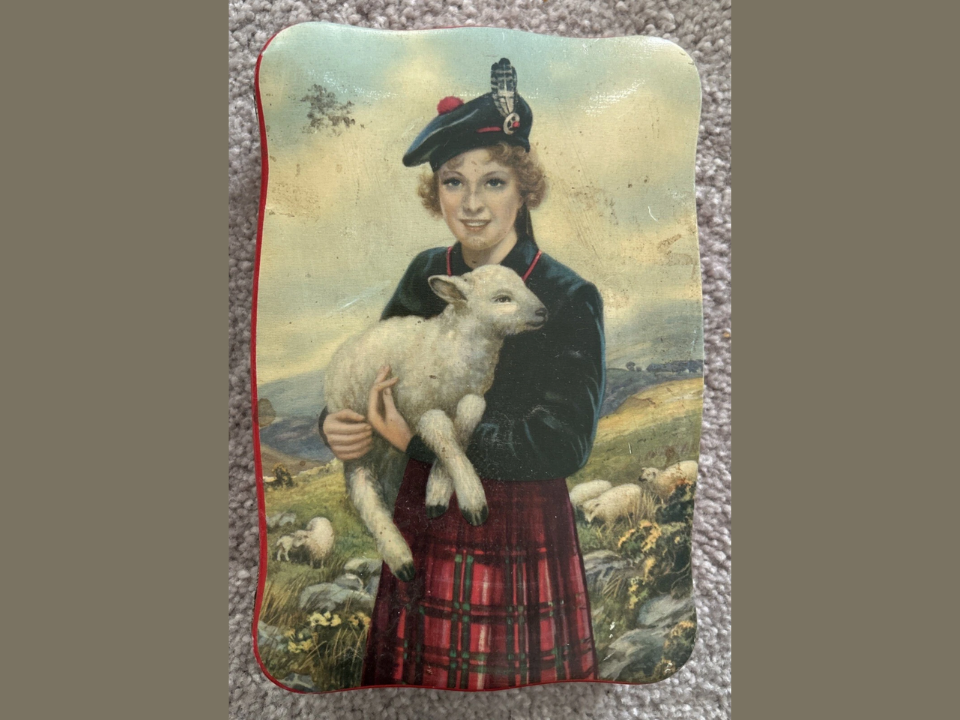
With its red, green, and gold tartan plaid pattern, this tin embodies the traditional Scottish influence on holiday decor. It likely held Christmas cookies or candies and was designed to capture the festive spirit of the season with a timeless pattern that never goes out of style.
Collectors appreciate the sturdy construction and classic design of this tin, which works well for both holiday display and practical use. Many of these tins are sought after for their durability and nostalgia, selling for around $25 when in good shape.
Santa’s Workshop Biscuit Tin from 1930s
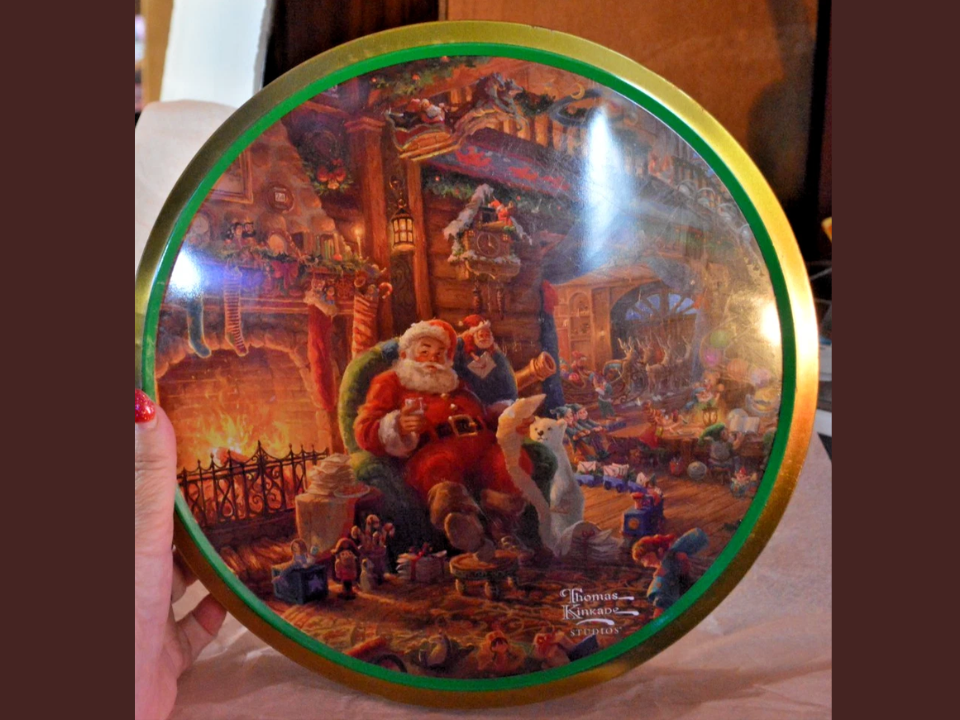
This nostalgic tin shows Santa in his workshop, surrounded by elves working hard to make toys for children. The vibrant colors and lively scene reflect the joy and energy of holiday preparations, making it a favorite among collectors of holiday memorabilia.
It was originally filled with biscuits or cookies but has since become a decorative item that evokes fond memories of Christmas mornings. In pristine condition, this tin can be worth around $50 to $60, with its value depending on the clarity of the artwork and condition of the lid.
Red and Green Candy Tin with Holly and Bells from 1960s

This round tin, featuring an intricate design of holly leaves, red berries, and gold bells, captures the essence of a traditional Christmas. It was most often used to store holiday candy or nuts, making it a favorite among those who enjoy nostalgic holiday snacks.
The elegant red and green color scheme paired with the festive bell design gives it a refined holiday look that still feels fresh today. A good example of this tin is typically priced around $30. The tin’s simple yet attractive design makes it an easy addition to any vintage holiday collection.
Holiday Snowman Biscuit Tin from 1950s
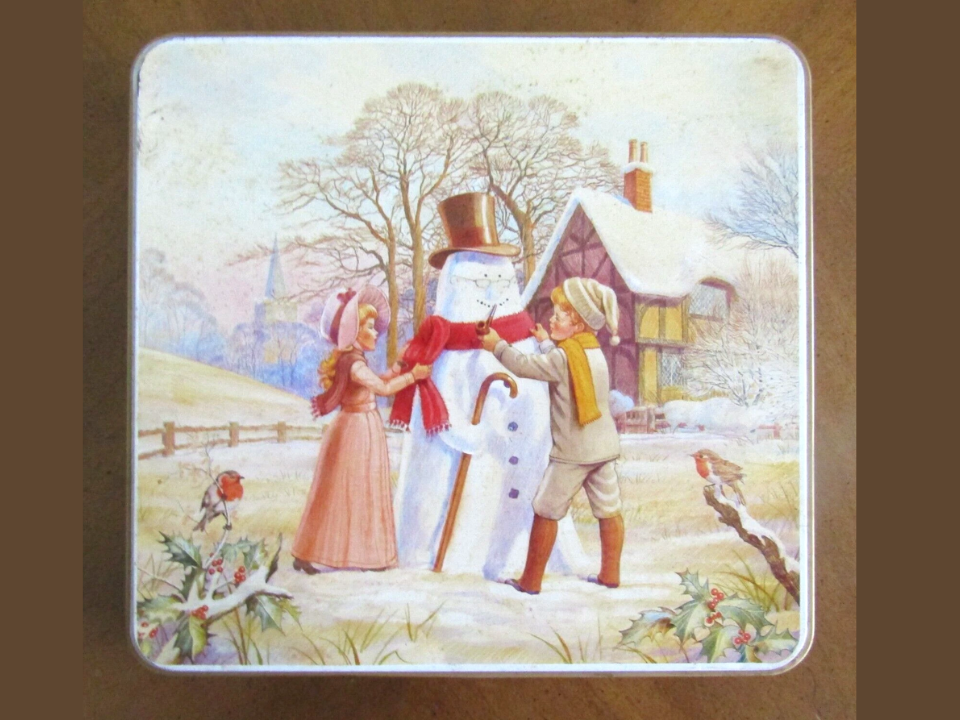
This whimsical tin features a cheerful snowman dressed in a red scarf and hat, standing in front of a snowy landscape. It likely held holiday biscuits or cookies, adding to the festive atmosphere of Christmas celebrations.
The snowman design has remained a favorite in vintage holiday tins because of its universal appeal and association with winter festivities. Displaying this tin evokes the magic of the season, and in excellent condition, it can bring in $40 to $50, especially if the artwork is well preserved.
Nutcracker and Toy Soldiers Holiday Tin from 1930s
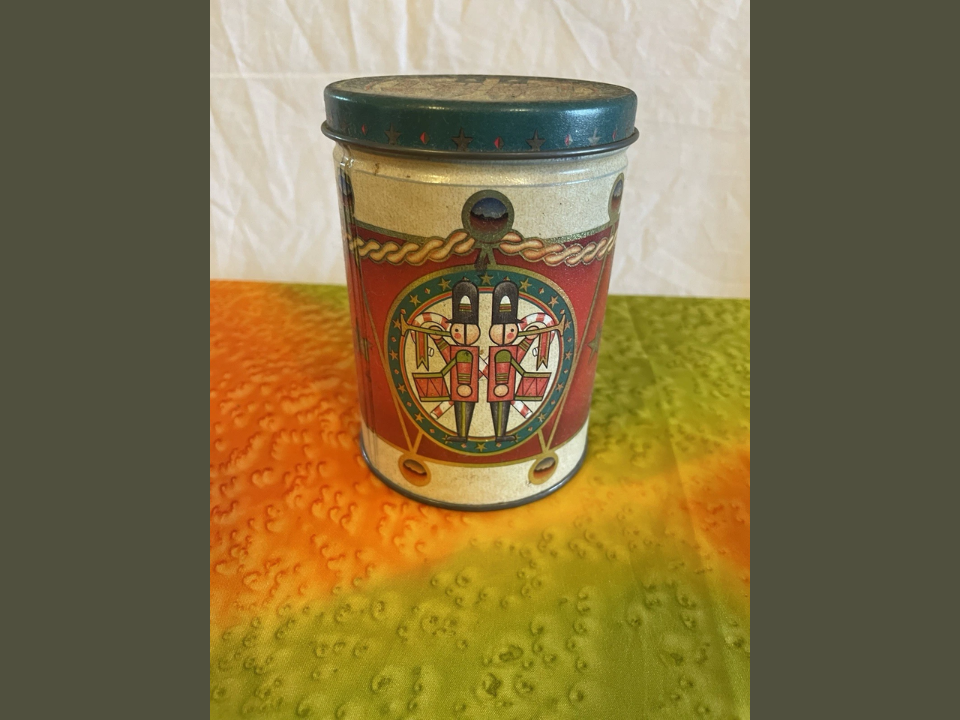
This large tin features the traditional nutcracker soldier surrounded by toy soldiers and festive decorations. The detailed artwork has a vintage charm that appeals to those who collect nutcracker memorabilia and other classic holiday images. It was likely filled with treats such as candies or cookies during the holiday season.
Collectors often seek these tins for their high quality and intricate artwork, making them valuable items in the vintage holiday tin market. A well-maintained example can be worth about $45 to $55, depending on the clarity of the art and condition.
This article originally appeared on Avocadu.