
10 Vintage Fishing Lures That Anglers Will Pay Premiums For
Fishing lures may seem like simple tools for catching fish, but to many collectors, they hold much more value. Old fishing lures, especially those from earlier generations, have a unique charm that tells the story of the past. They represent a piece of fishing history, crafted by hand with attention to detail that modern lures often lack. For passionate anglers and collectors, these vintage lures are a gateway to the past, a way to connect with the tradition of the sport. Whether it’s the craftsmanship or the rarity, some of these lures can fetch impressive prices at auction.
This post may contain affiliate links, which helps keep this content free. Please read our disclosure for more info.
Haskell Giant Minnow
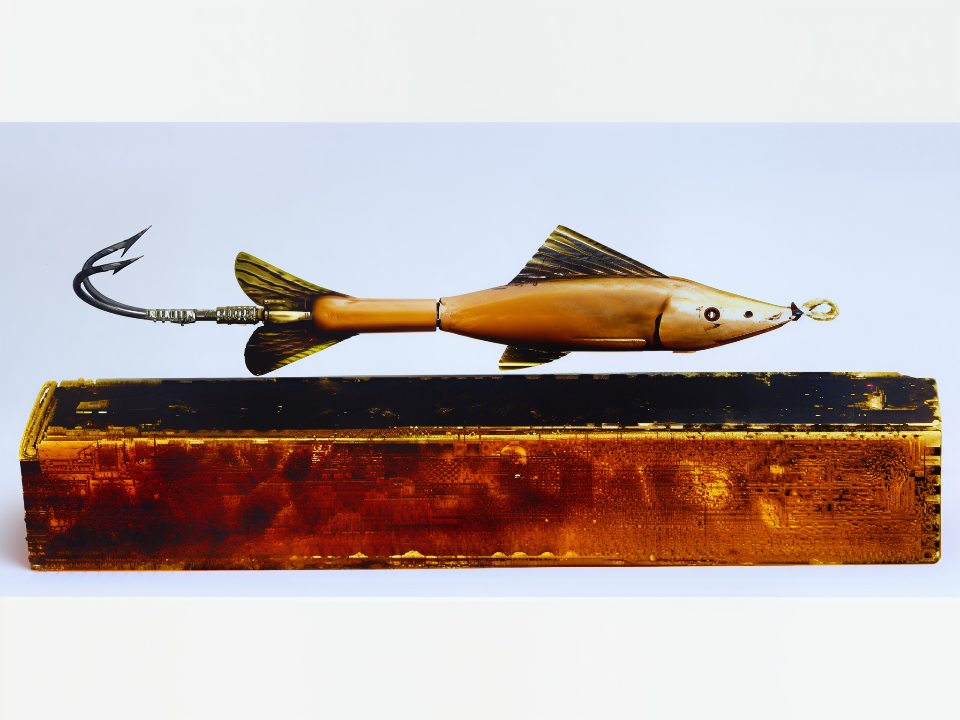
This lure stands out as perhaps the most legendary of all old fishing lures. Made by Haskell with an 1859 patent, this oversized minnow is believed to be unique in its size and craftsmanship. At auction in 2003 it fetched approximately $101,200, making it the highest‑price antique fishing lure ever sold.
Collectors prize this lure not just for its record sale price but for its significance as one of the earliest examples of American handmade wooden lures. Its rarity and provenance give it enormous historical and sentimental value among those who treasure early American fishing tackle.
Early American Underwater Minnow
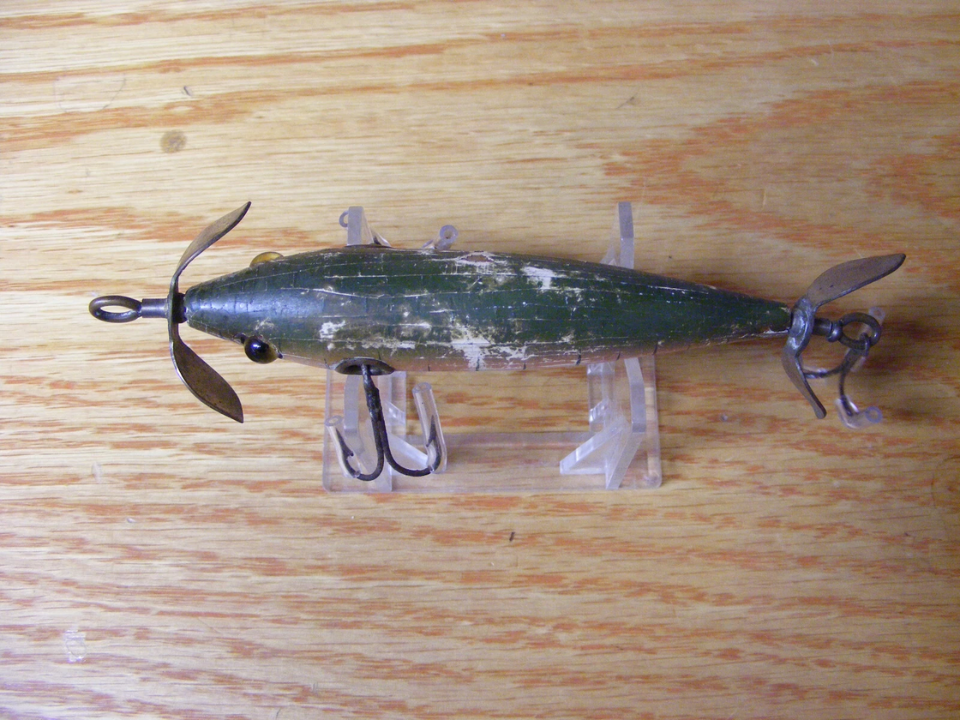
This underwater minnow dates from the earliest days of American lure manufacturing, though its maker remains unidentified. At a 2006 auction it sold for about $42,500.
What makes this specimen appealing is its age and condition. It represents the kind of wooden minnow early anglers might have used over a century ago. For a collector who values the roots of lure history such a find adds deep meaning to a tackle collection.
Haskell Musky Minnow
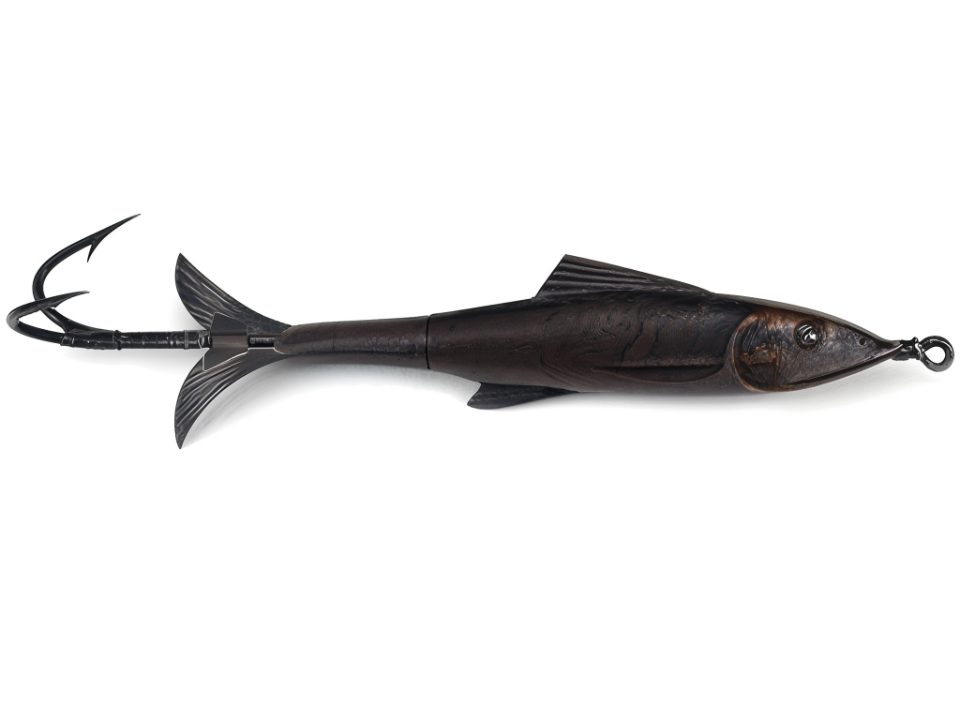
At 7.5 inches long, this musky-sized minnow is a fine example of early American lure design. It sold at auction in 2007 for over $32,000. Its size and detailed scale and fin work reflect a level of craftsmanship seldom seen in modern mass‑produced lures.
For those who collect musky or large‑fish lures, this example represents a rare chance to own a piece of angling history. Its detailed work on scale and fin carving reflects the craftsmanship of early lure makers. For collectors focused on muskies or large freshwater fish, this lure offers a prized link to early American lure‑making tradition.
Musky Charmer Minnow

Made by the Charmer Minnow Company, this musky‑size bait is rare among its kind. The version with a striped tail and in excellent condition sold in 2018 for just over $25,000.
Collectors prize this lure for its scarcity and unique finish. The fact that only a few musky-sized models remain adds to its desirability. For a serious collection of musky or larger predator lures, this item presents a compelling addition.
Heddon Black Sucker
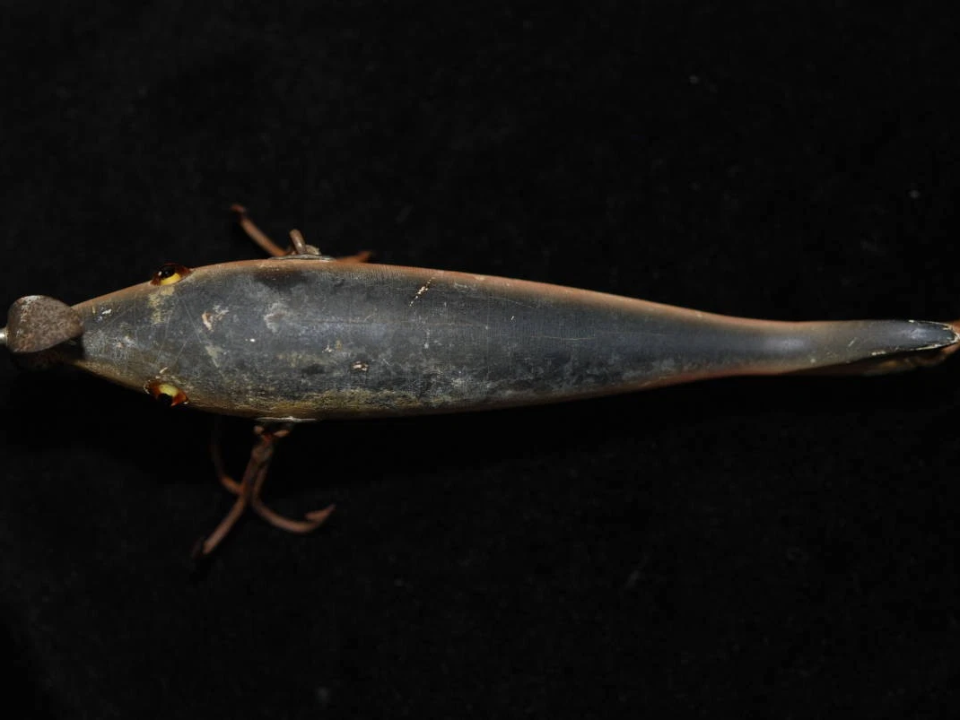
This wooden lure by Heddon from Dowagiac Michigan features large glass eyes, a front spinner, and original tail hardware. In 2006 one such example fetched about $19,000. Heddon helped pioneer artificial lures in the United States, pieces like this hold appeal not just for fishing but for their role in the early history of tackle manufacturing. The intact hardware and preserved paint make this sucker a vivid piece of that past.
Because Heddon remains a name strongly associated with early lure history, pieces like this carry weight among collectors. The intact hardware and preserved paint make this an attractive specimen for display or historical reference.
Wooden Minnow by Shakespeare
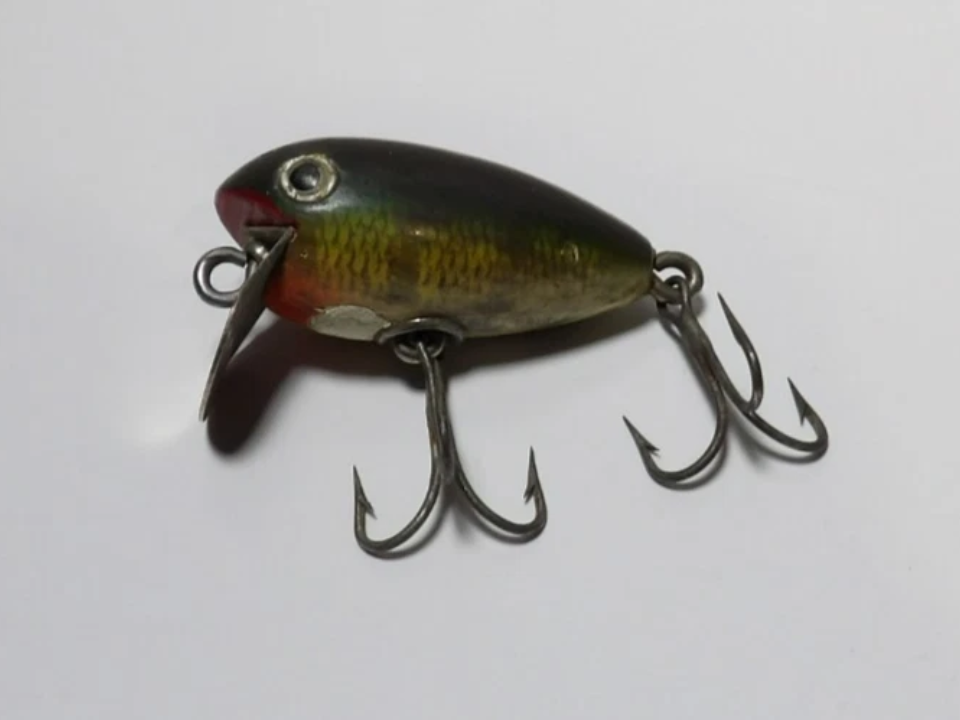
This freshwater minnow dates to 1907 and features early minnow body styling, see‑through gem hardware, and its correct maroon picture box. A fine example sold at auction in 2012 for roughly $18,700. Its value comes from the combination of original hardware, body styling and the correct box.
What raises its value beyond age is the completeness of the package. The correct original box adds provenance and gives the piece extra appeal among collectors who value authenticity and preservation.
Heddon Jeanette Hawley “Mohawk” Minnow
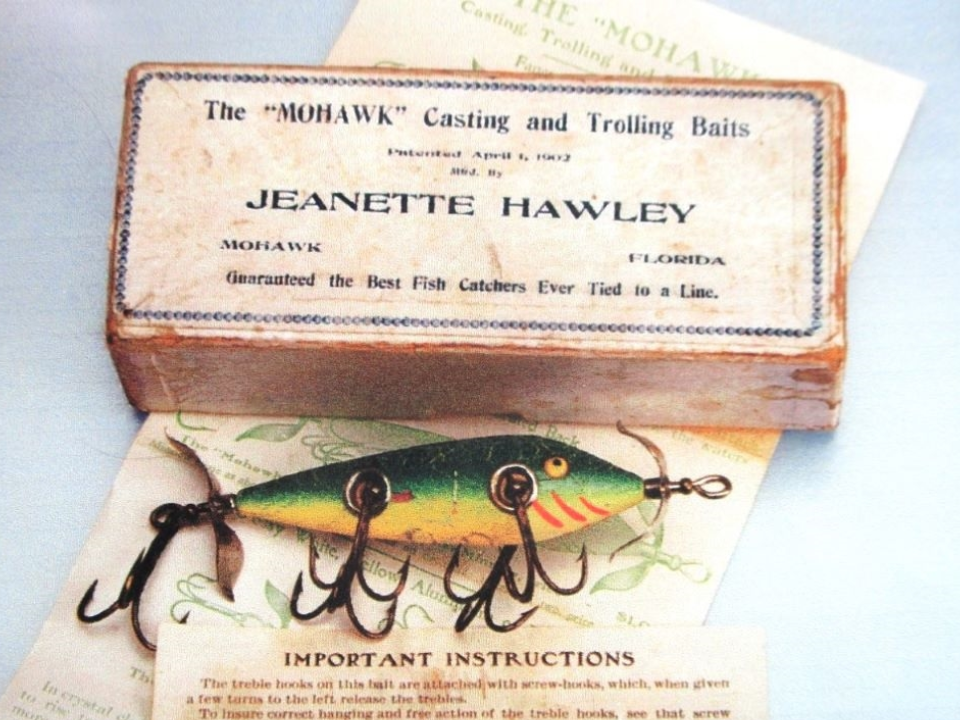
From around 1905, this lure was produced by Heddon at the Mohawk, Florida location. It remains rare with its original wooden box intact. One example sold in 2013 for approximately $18,400. Its rarity and provenance give it strong collectible appeal.
For collectors of state‑specific or regional Heddon lures this stands out as a prized piece with strong provenance. Its regional origin and survival with box make it especially desirable among collectors who look for unusual or regional variants of Heddon lures.
Little Wonder Minnow
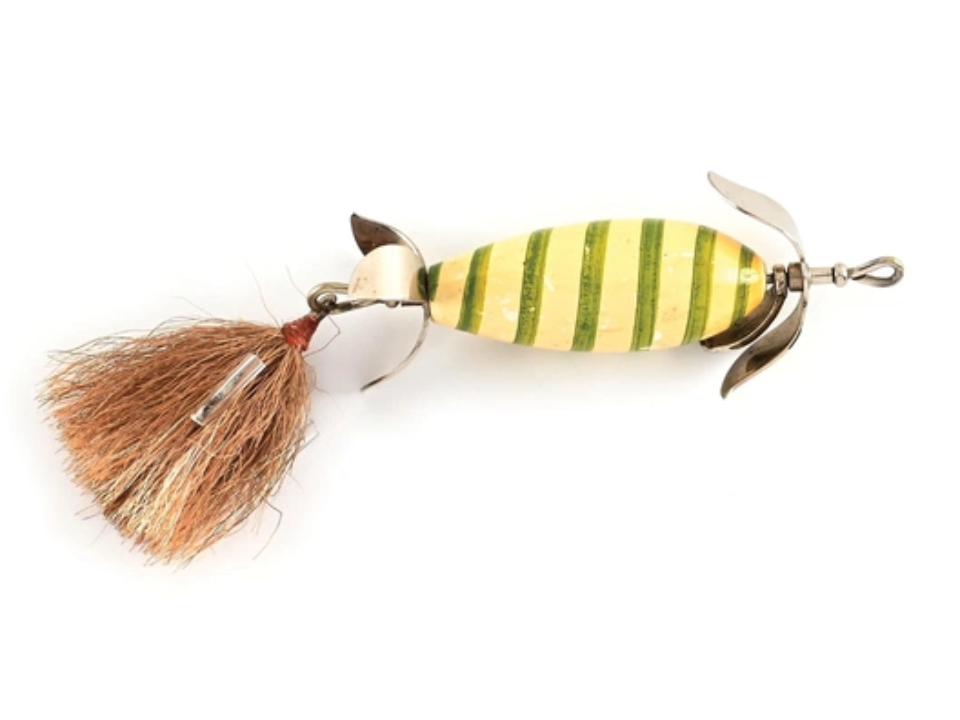
Produced around 1910 by the Clinton Wilt Manufacturing Company of Springfield Missouri this minnow is valued in part because it appears with its original two‑piece cardboard box. A 2019 auction saw this combination fetch over $18,000. Collectors who value early Missouri‑made tackle find this lure especially meaningful because it represents a lesser‑known maker’s attempt at good quality bait.
Having a complete box and lure makes this a rarity among collectors. Its survival over more than a century renders it a meaningful artifact of early American fishing history. Its appeal lies in the completeness of packaging plus its survival over many decades.
Wiggletail Smith Minnow
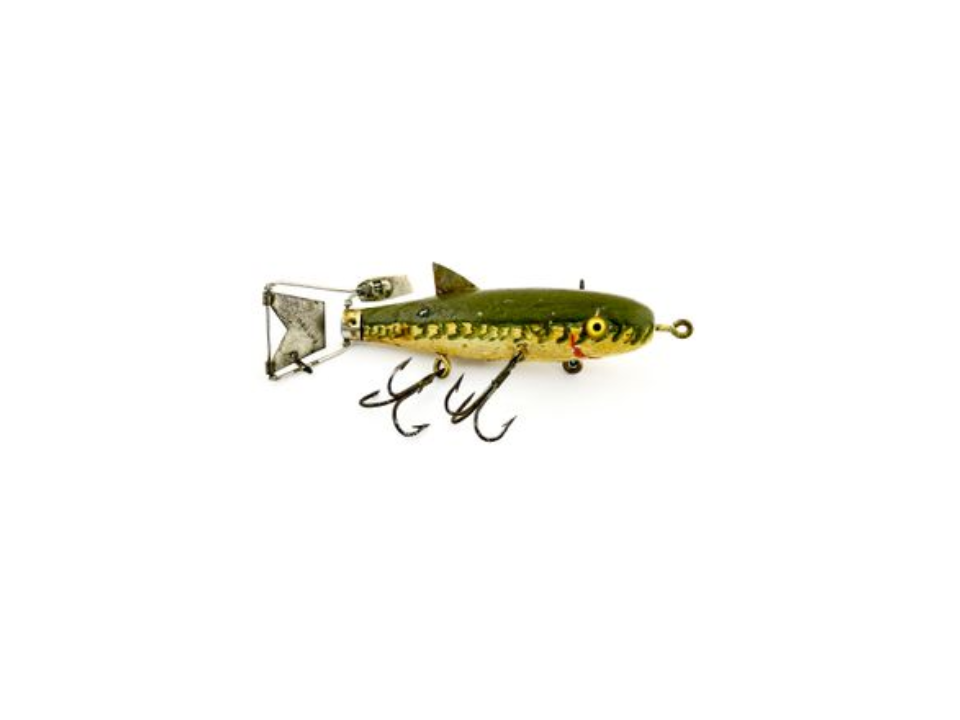
This lure, patented in 1905 by Charles Smith of Indiana, features a tail mechanism and fin design that set it apart from other minnows of its time. Known examples are very few, and one sold in 2015 for slightly over $17,500. The rarity of surviving examples with intact tail hardware adds to its value and appeal.
Collectors drawn to early mechanical or moving parts in fishing tackle find this lure especially interesting. Its rarity and mechanical features highlight early innovation in lure design. For collectors interested in early mechanical and moving‑part lures this minnow stands out because of its inventive design.
Creek Chub Bait Company
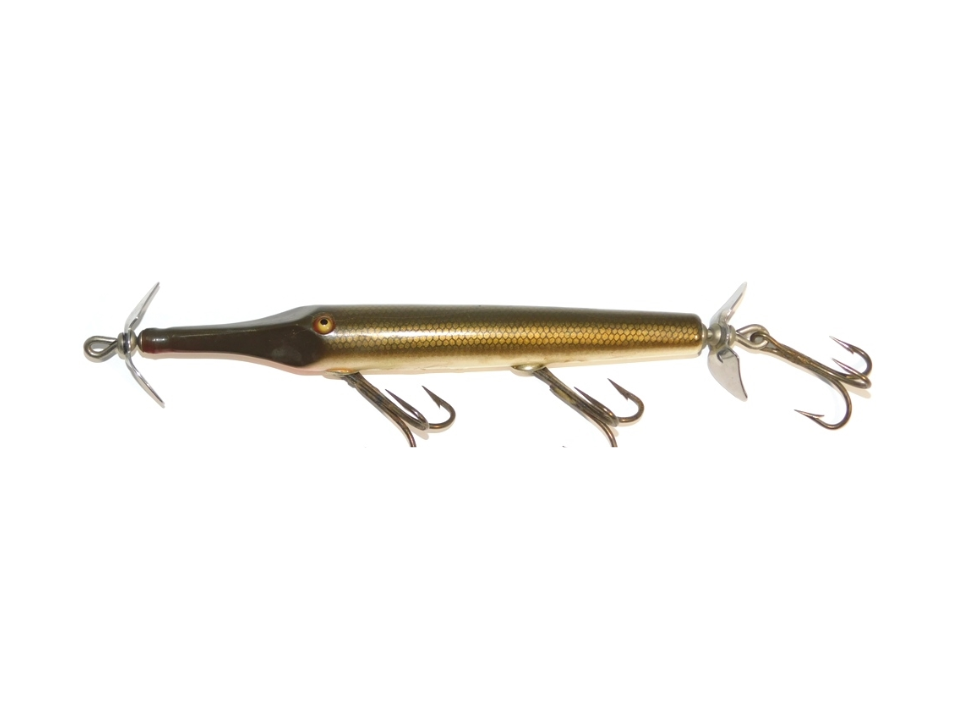
The Creek Chub Bait Company was established in 1916 and became one of America’s leading producers of wooden and later plastic lures. Their early lures were hand painted and many featured wood bodies with glass or painted eyes and lifelike scale patterns.
Rare original Creek Chub lures in good condition still attract collectors. For example, their jointed Pikie models and ice decoys have sold in the range of several thousand dollars depending on rarity, condition and presence of original packaging.
This article originally appeared on Avocadu.