
15 Uranium Glass Pieces Collectors Hunt For and How They Identify Them
Uranium glass is one of those collectibles that looks ordinary until it hits the right light. Its soft green or yellow tint can show up in all kinds of everyday pieces, from plates to perfume bottles. This guide covers the pieces collectors look for most, plus simple ways to tell what you have. You will learn what to check before you buy, and what details can point to the real thing.
This post may contain affiliate links, which helps keep this content free. Please read our disclosure for more info.
Depression Glass Dinner Plates
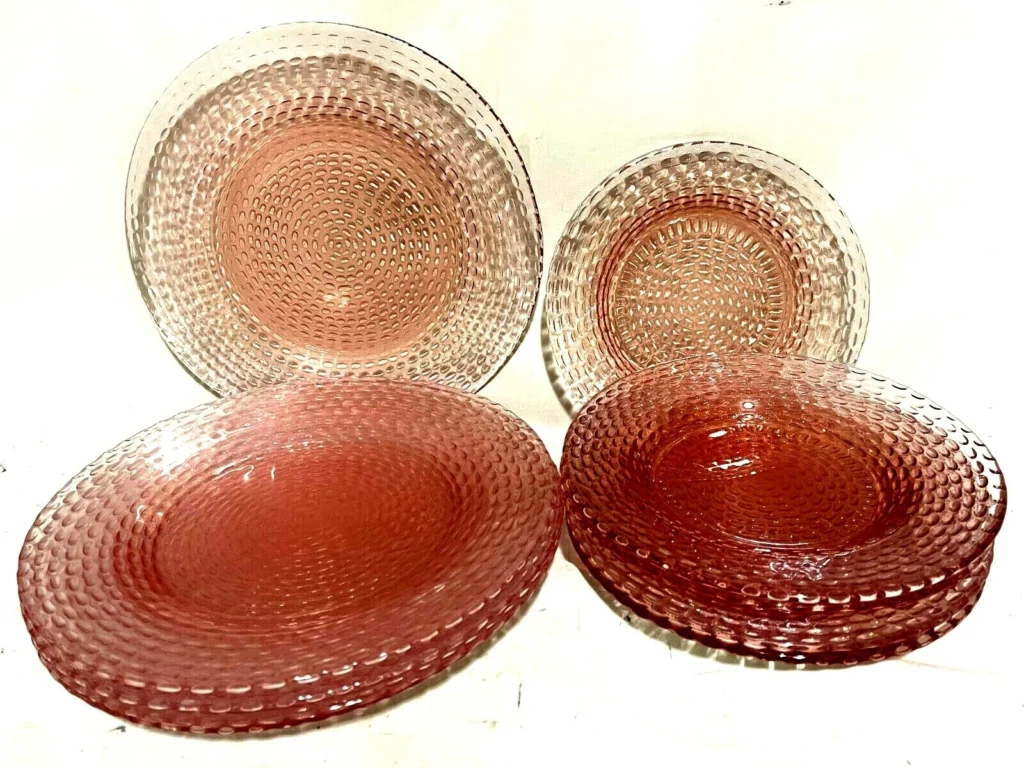
A lot of uranium glass plates show up as Depression era patterns, and the color can look pale in normal room light. Look for a slightly yellow green cast, especially around the rim where the glass is thicker. Many plates have molded patterns like flowers, blocks, or geometric ribs that catch light across the surface. Chips along the edge are common, so run a finger gently around the rim before you fall in love with it.
The easiest check is a small UV flashlight, because true uranium glass will glow a bright neon green. If you do not have a light, hold the plate near a sunny window and watch for that lively green shift in the highlights. Weight can be a clue too, since many older plates feel a bit heavier than modern reproductions. Pattern books and online pattern guides can help once you spot a design, since some lines were made in uranium shades more often than others.
Vaseline Glass Candy Dishes
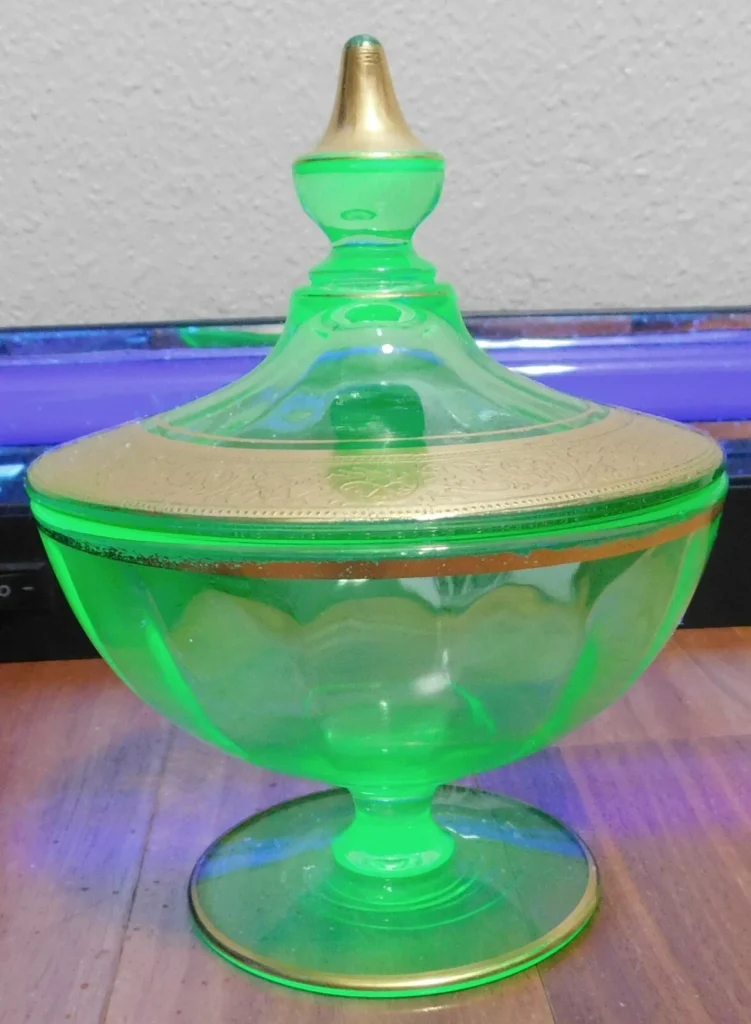
Candy dishes are popular because they are small, pretty, and often come in dramatic shapes like scalloped bowls or lidded jars. Vaseline glass usually looks more yellow than green, almost like warm lemonade in daylight. You might see pressed details such as stars, fans, or panels that make the dish sparkle on a shelf. Lids are a big deal for value, so check that the lid matches the base and sits evenly without rocking.
Under UV light, vaseline pieces glow the same bright green as other uranium glass, even if the glass looks yellow in the room. Makers sometimes used satin finishes or opalescent edges, so do not rule it out just because the surface is not shiny. Watch for modern candy jars with a similar color that do not glow, since color alone can fool you. If the dish has a rough, fresh looking base or sharp seams, that can hint at newer glass rather than an older pressed piece.
Uranium Glass Salt Cellars
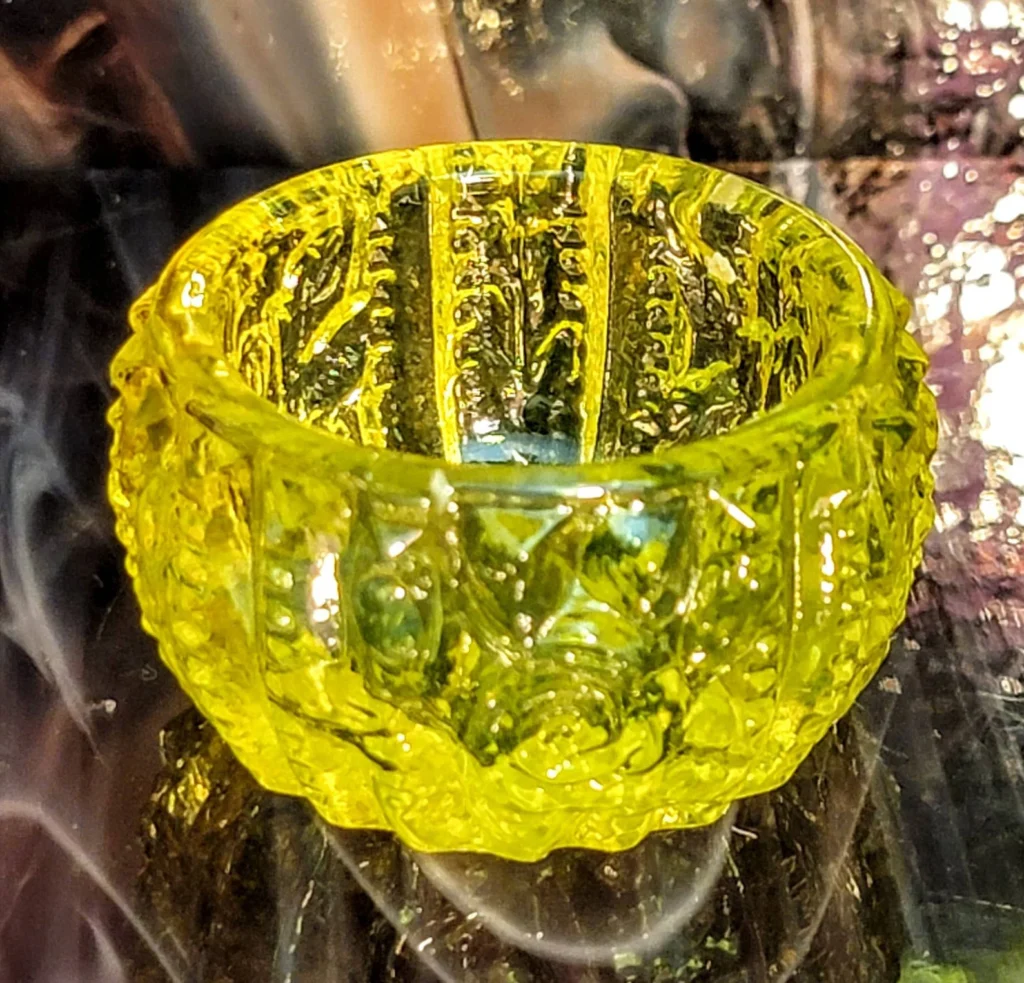
Salt cellars are tiny open bowls that were meant to sit by a place setting, and they are easy to miss in a mixed lot. Many are dipped or pressed with simple ribs, beading, or a small foot. Because they are small, the color can look faint until you hold it up to light. Some come in pairs or sets, so finding several that match can feel like striking gold.
A UV light is still the best tool, and it helps with salt cellars because the glow pops even on a small piece. Check the rim carefully, since flakes and nicks happen a lot from spoons and daily use. Older ones often have a slightly worn base, while brand new looking bases can raise questions. If you are buying online, ask for a UV photo and a clear shot of the base so you can judge wear and mold marks.
Uranium Glass Sherbet Cups
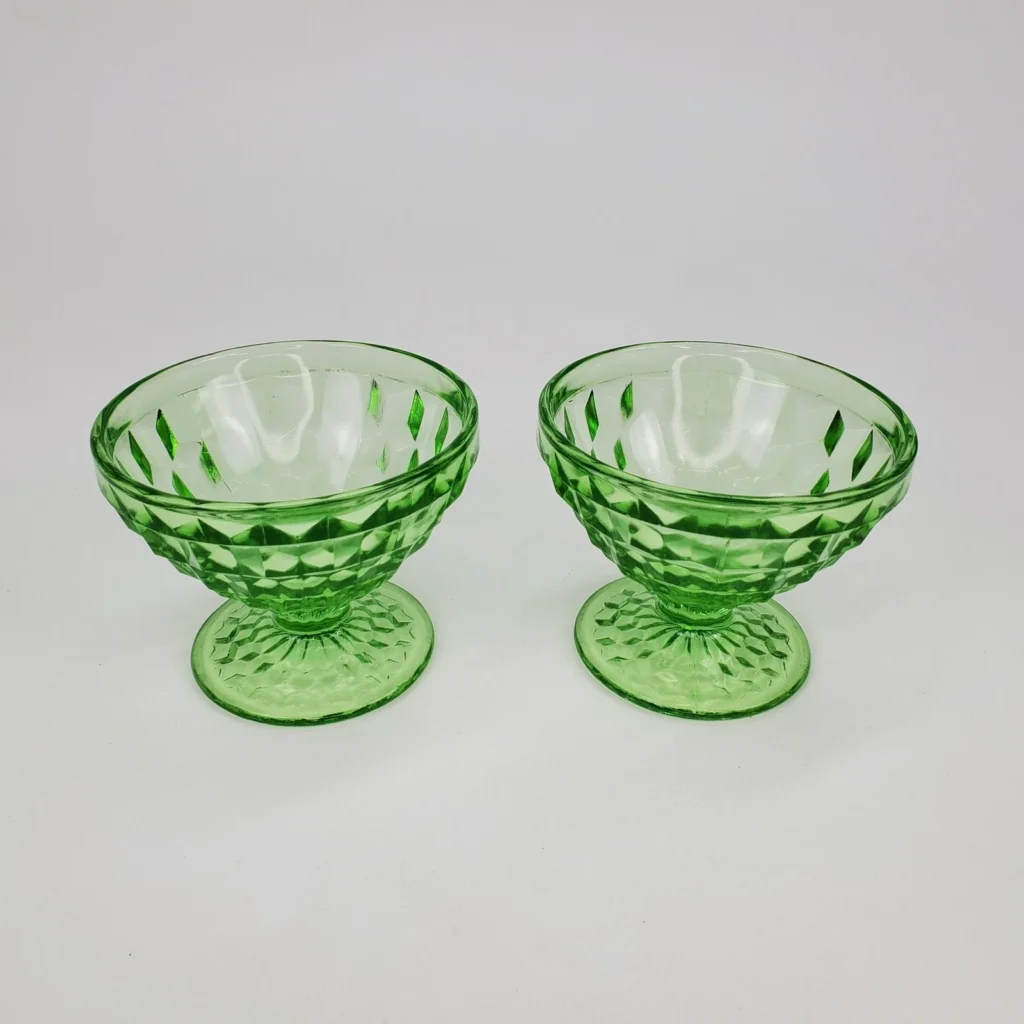
Sherbet cups are a classic target because they show up in many patterns and often have a footed base. The bowl tends to be wide and shallow, and the stem or foot can be thick, which makes the color easier to see. Some sets were used for ice cream, fruit, or fancy desserts, so they can come with matching plates. If you find a group in the same pattern, it looks great on a table or in a cabinet.
Under UV light, the glow is usually strong, especially in the thicker foot. Look for consistent color across the set, since mismatched replacements can sneak in over the years. Tiny flea bites on the rim are common, so tilt the cup and inspect the edge in good light. If a cup has a cloudy film, it might be hard water stains, and a gentle cleaning can sometimes bring back clarity.
Uranium Glass Footed Compotes
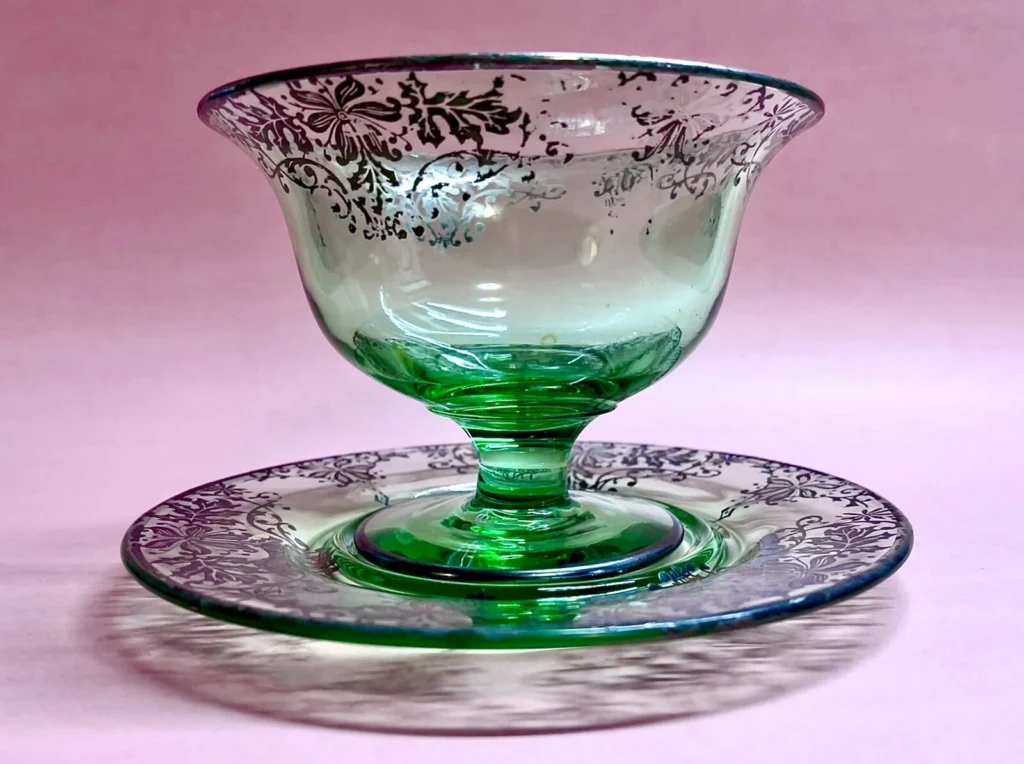
A compote is basically a serving bowl on a pedestal, and uranium glass versions can look like little trophies. The pedestal is often where the strongest color shows, since the glass is thicker there. Many compotes have ruffled edges, scallops, or pressed patterns that make the bowl look fancy without being fragile. They were used for fruit, candies, or small desserts, so they can be found with mild scratches inside from use.
Shine a UV light along the stem and you will usually get an immediate bright green response. Check the join where the bowl meets the stem, because stress lines or small cracks can hide there. If the rim is ruffled, make sure each wave feels smooth, since chips can blend into the shape. When you compare a few in person, older glass often has softer mold seams and a more natural looking finish.
Uranium Glass Punch Cups
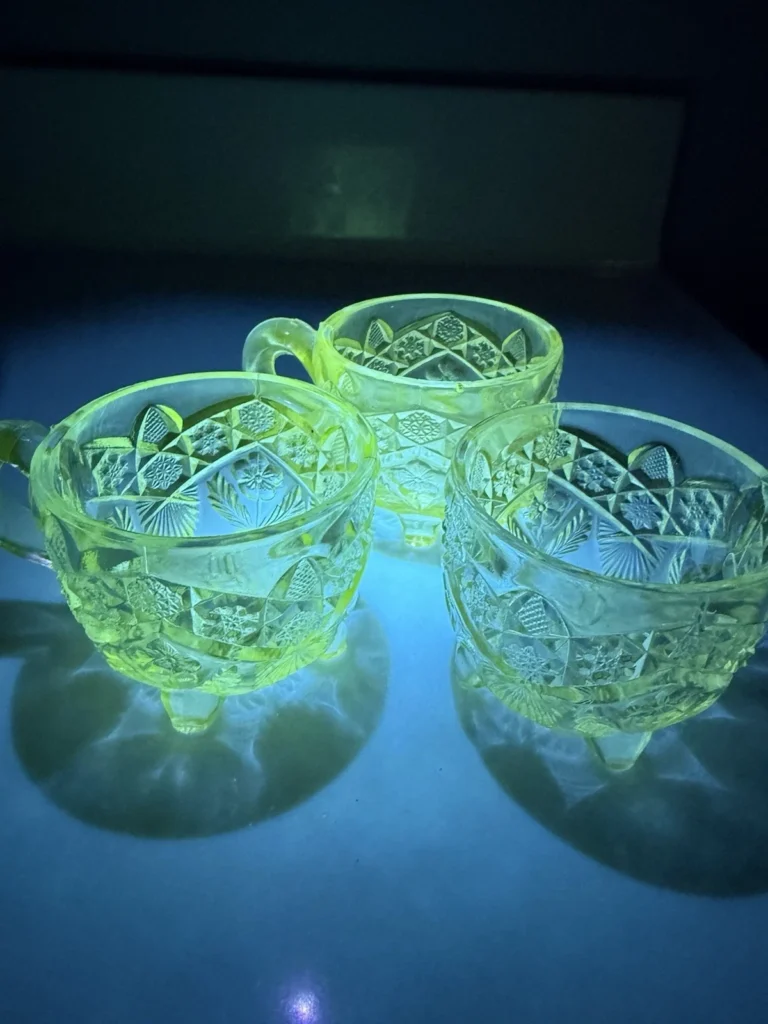
Punch cups are fun because they often come in sets, and a full set makes a strong display. Many are small handled cups, while others look like tiny tumblers without handles. Pressed patterns are common, and some have a slight swirl or optic ribbing that looks lively when the cup is turned. Because they were used in groups, you may find mixed wear, with some cups clearer than others.
Use UV light to confirm the glow, then check that the color is similar across the group. Handle areas can have extra wear, so look for dull spots or small chips near the handle join. Replacement cups can be a slightly different shade, so line them up and compare in daylight. If you are buying a set, count carefully, because missing cups are the most common problem.
Uranium Glass Punch Bowls
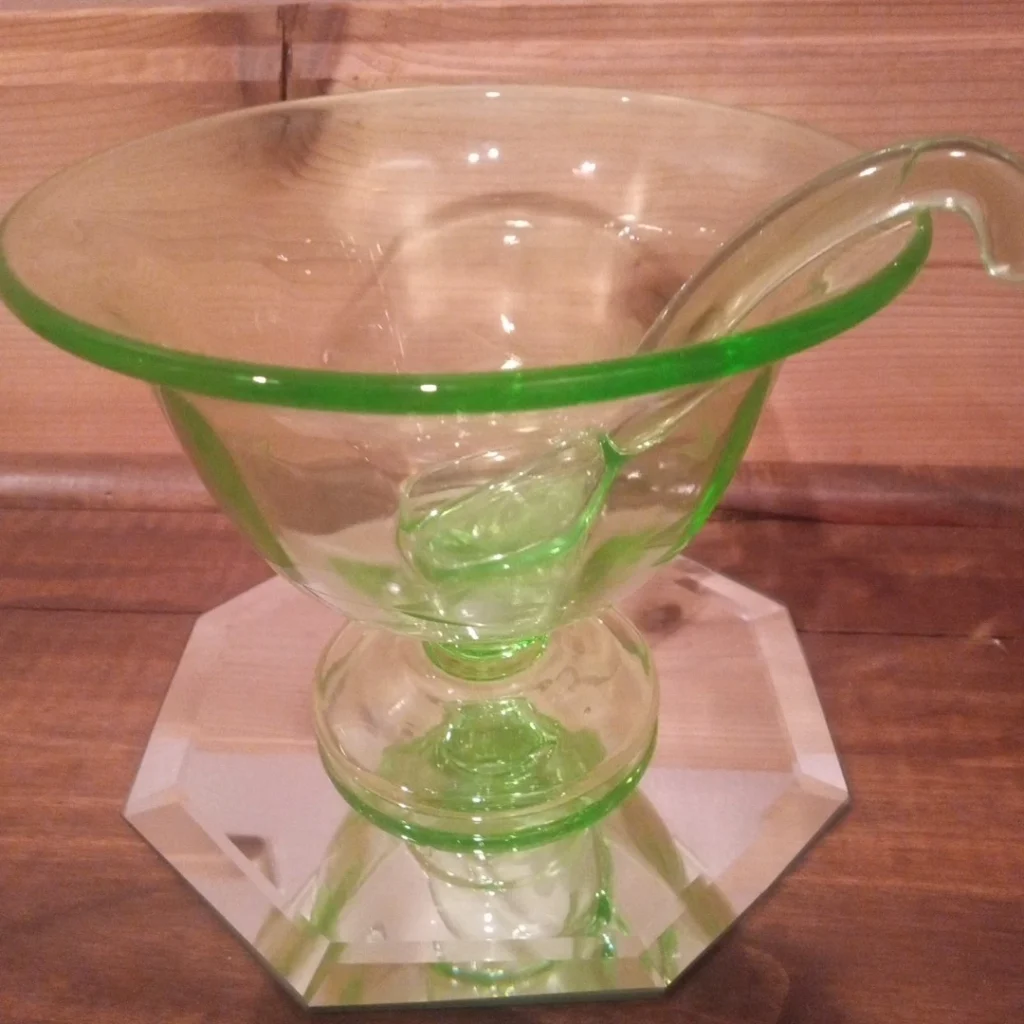
A punch bowl is a centerpiece piece, and uranium glass examples can glow like a lantern when the lights are off. Many are large and heavy, with thick walls and bold pressed designs. Some bowls have matching bases, ladles, or cup hooks, but even the bowl alone can be impressive. Because of the size, cracks and repairs matter a lot, so take your time checking it.
A UV flashlight will make the whole bowl light up, and the thickness usually means a very strong glow. Inspect the rim first, since chips along the top edge are common from ladles and stacking. Look for hairline cracks that run down from the rim, and check for any glued repairs that may look cloudy. If you can, tap very gently with a fingernail and listen for a clear ring, because a dull sound can hint at damage.
Uranium Glass Tumblers and Water Goblets
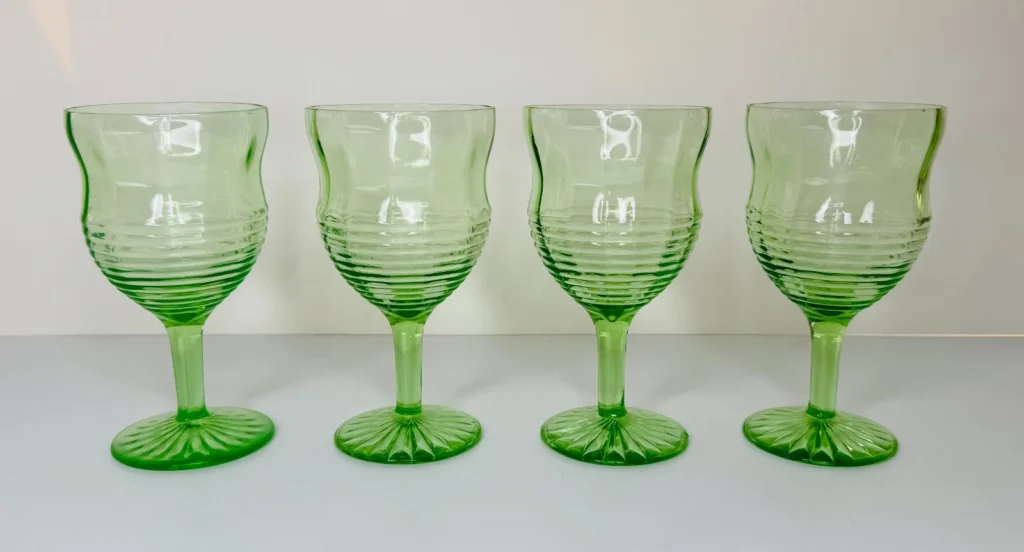
Tumblers and goblets are some of the easiest pieces to use, which is why they have always been popular with collectors. Uranium glass versions can be plain or decorated, and some have stems while others are simple straight sided cups. Sets often show mixed wear because they were used daily, so scratches near the rim or inside are normal. The nice part is that even a single glass looks great on a shelf, especially if it has a strong color.
Under UV light, the glow will usually be even across the body, but stems can glow brighter if they are thicker. Check the lip for tiny chips, since the drinking edge takes the most hits. If you are sorting through a lot, hold several together and look for matching height and shape, because replacements can hide in a group. A smooth, slightly worn base often fits older glass, while a sharp, fresh base can suggest newer production.
Uranium Glass Wine Glasses and Cordials
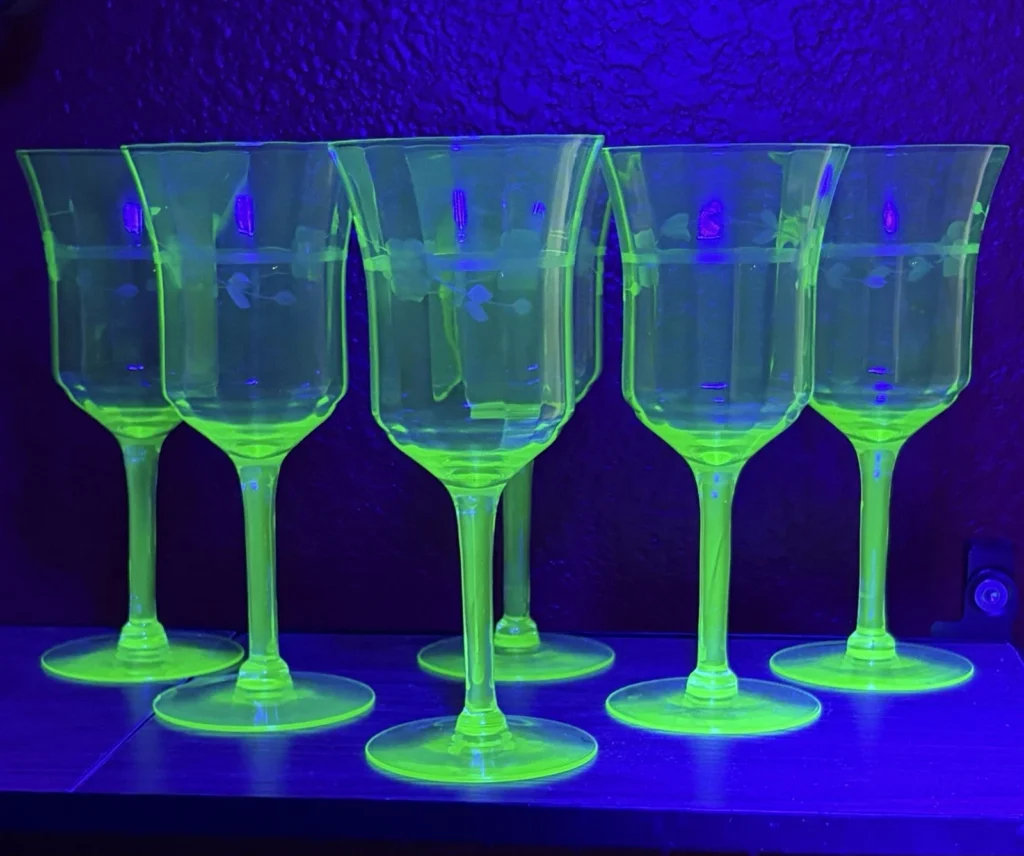
Wine glasses and cordials can show more delicate shapes, and the thin stems make them feel a bit more special. Some uranium glass wine pieces look more green, while others lean yellow, depending on the mix and thickness. Cordials are often small and dainty, sometimes with etched designs or pressed patterns on the bowl. Because stems are fragile, complete sets can be harder to find without chips or cracks.
A UV light helps because thin stems still glow, even if the color looks faint in daylight. Look closely at the stem and foot for hairline cracks, since stress happens where fingers grip the glass. If the glass has etching, it should look crisp and even, not like a rough scratched design. When buying online, ask for a photo taken against a window, because it makes the color and shape easier to judge.
Uranium Glass Perfume Bottles
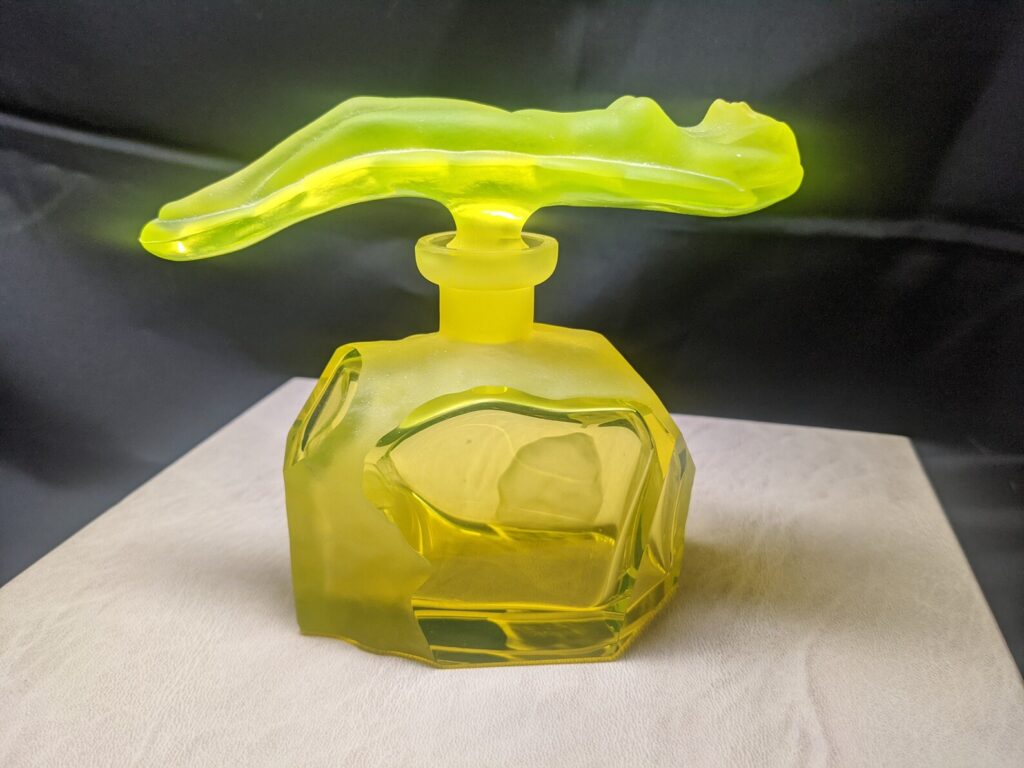
Perfume bottles are a collector favorite because they can be sculptural and they look great grouped together. Many have faceted sides, ribbing, or floral shapes, and some come with stoppers that fit tightly. The color can look soft until you shine light through it, and then the glass may show a warm green glow even before UV. Stoppers matter a lot, so always check if the stopper is original and not a random replacement.
Under UV light, the bottle and stopper should both glow if they are made from uranium glass. Mismatched stoppers are common, so compare color and glow side by side when you can. Look for wear on the base and around the neck, since repeated stopper use can leave tiny chips. If you see a strong perfume smell, that can be normal, but sticky residue inside may take careful cleaning to remove.
Uranium Glass Vanity Trays
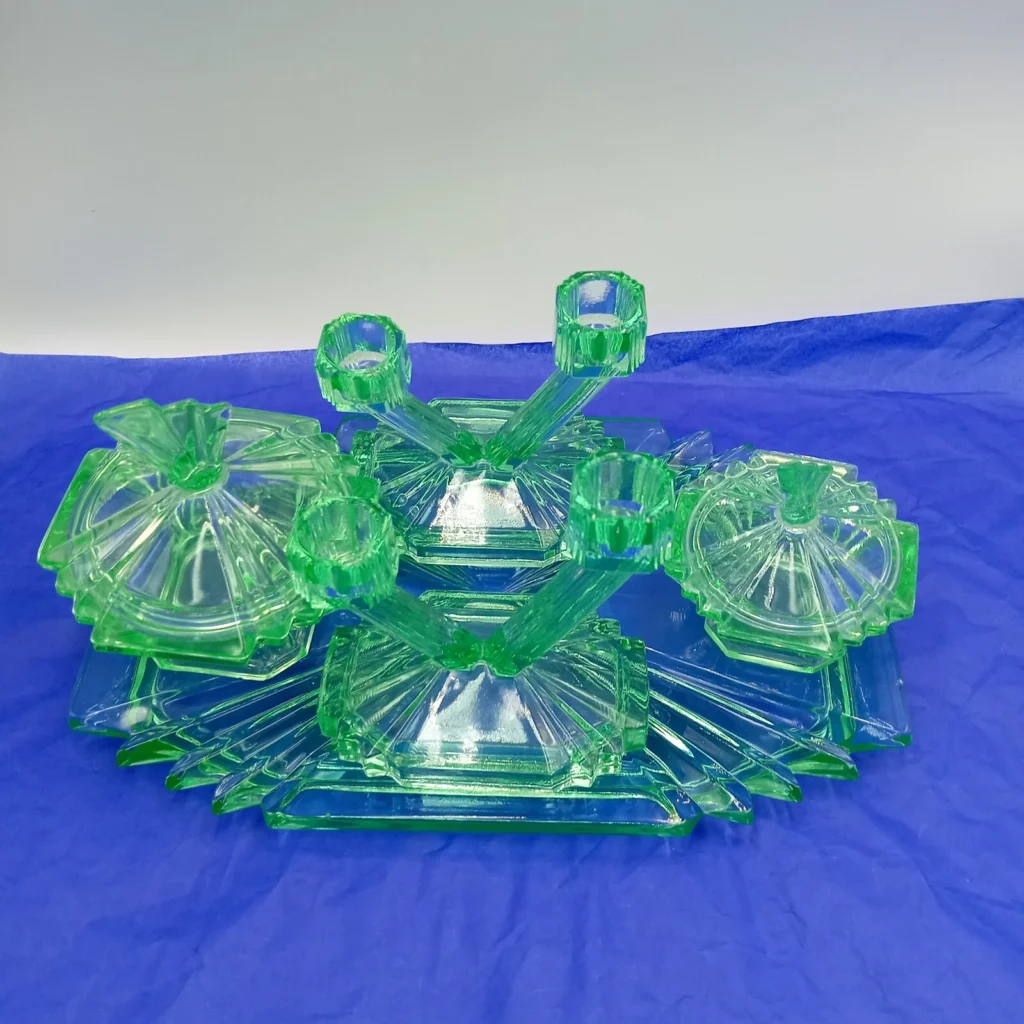
Vanity trays were meant to hold perfume bottles, powder jars, or brushes, and they often have raised edges or pressed patterns. Some trays are oval or rectangular, and others have scalloped rims that make them look like jewelry displays. Because they are flat, scratches are common, especially in the center where bottles sat for years. A tray can be a nice starter piece because it is useful and easy to display.
A UV light will usually show a wide, even glow across the tray, and thicker edges may shine brighter. Check the corners and rim, since chips like to hide there, especially on shaped edges. If the tray has feet, look for original wear marks where it sat on a dresser. Modern green trays can look similar, so the glow test is the quickest way to avoid mistakes.
Uranium Glass Oil Lamps and Lamp Shades
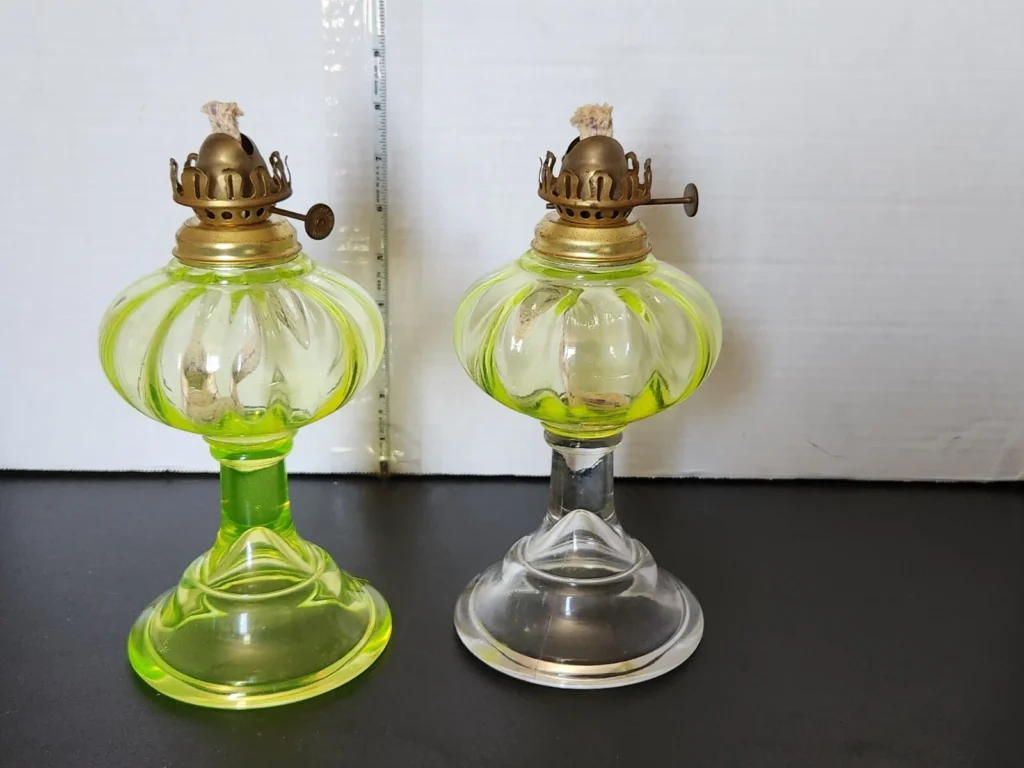
Uranium glass lamps and shades can be dramatic, especially when the glass has swirls, ribs, or a satin finish. Some older lamps have uranium glass fonts, while others use uranium glass chimneys or shades with brass hardware. Heat marks, soot, and small chips can show up because these pieces were used with flame. Even so, a glowing shade or chimney is one of the most eye catching things you can put in a cabinet.
With UV light, a chimney or shade often glows intensely, and the thickness can make it look almost electric. Check for cracks around fitter rims, since those areas take stress when the glass is mounted. Make sure hardware fits correctly and does not force the glass, because that can cause breaks over time. If you plan to use a lamp, be cautious and consider using it for display only, since old glass and old fittings can be delicate.
Uranium Glass Paperweights
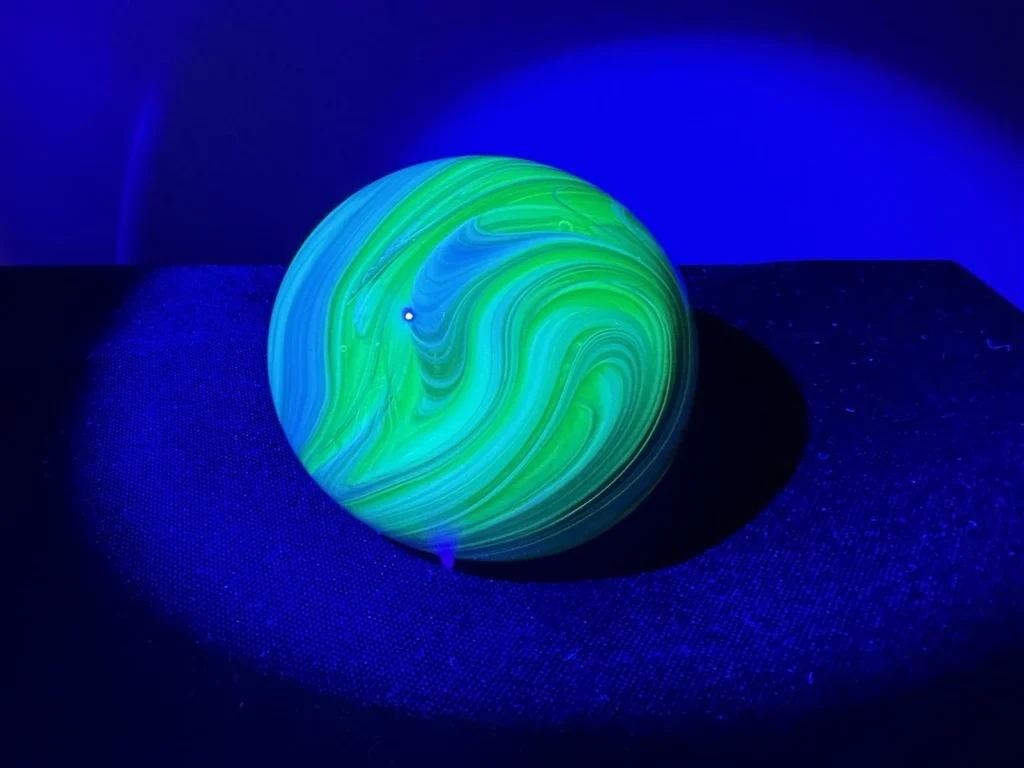
Paperweights are fun because they can show clear shapes, bubbles, or floral designs inside the glass. Uranium glass paperweights can be solid or have embedded patterns, and the thickness often makes the color richer. Many feel heavy for their size, which makes them satisfying to hold. Because paperweights were desk items, you will often see base wear from sliding across surfaces.
Under UV light, thick paperweights glow very strongly, often brighter than thinner pieces. Turn the weight over and check the base for chips, since damage usually hides there. Some paperweights have ground and polished bases, while others have a rougher finish, depending on age and maker. If you see a very bright glow but the glass looks perfectly new, that does not always mean it is fake, but it is worth comparing to known older examples.
Uranium Glass Marbles and Game Pieces
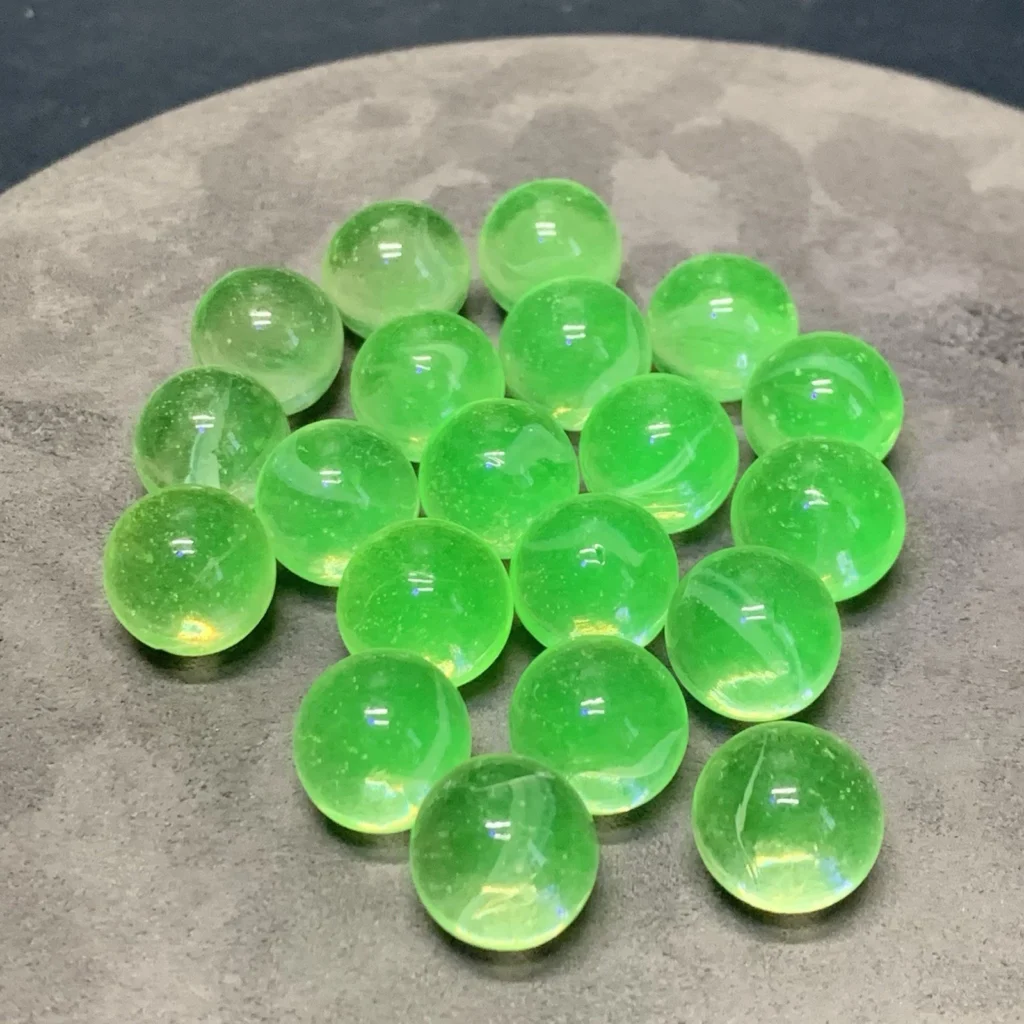
Marbles and small game pieces show up in jars, mixed lots, and old board game sets, and they can be a cheap way to start collecting. Many uranium glass marbles look pale yellow or green, and some have swirls or patches of color. Because they are tiny, the glow can surprise you the first time you hit them with UV. Chips and flat spots are common, especially if they were actually played with.
A UV flashlight is the quickest way to sort a pile, and true uranium glass pieces will pop bright green. Look for consistent glow through the whole marble, since surface coated items can behave differently. If you are buying a jar of marbles, ask for a photo under UV, because it saves you from guessing. Keep in mind that many older marbles are not perfectly round, and that small quirks can be part of the charm.
Uranium Glass Figurines and Animal Miniatures
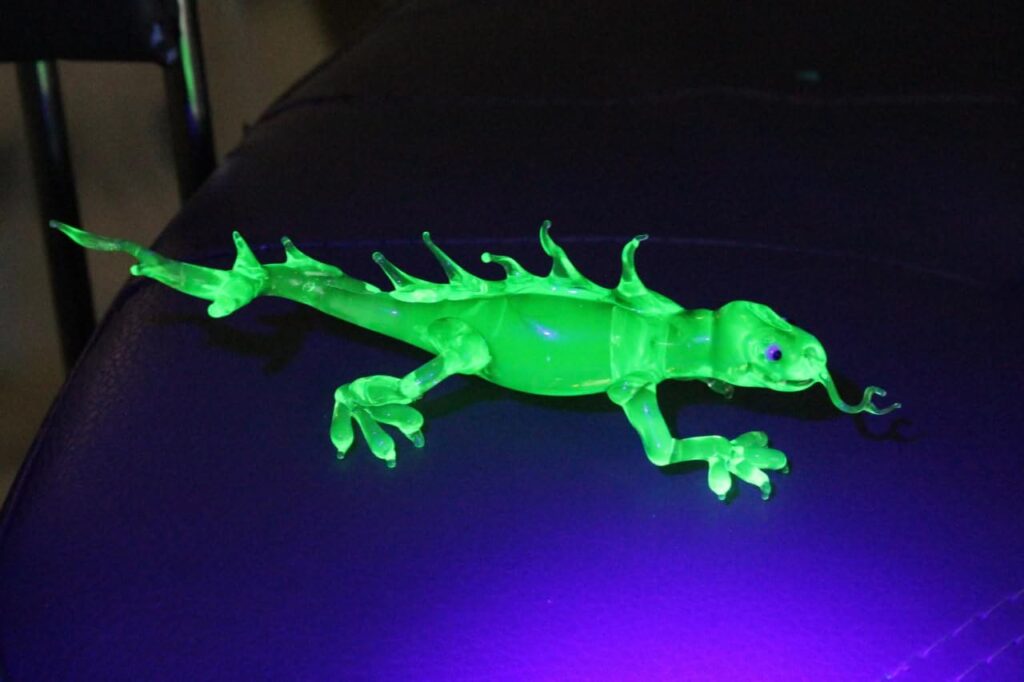
Small figurines can be tricky because the color can hide in the shape, especially if the piece is thin or lightly tinted. Animals, flowers, and little decorative figures were made in pressed and molded forms, and details like feathers or fur can be surprisingly sharp. Many figurines were shelf pieces, so they may have small base wear but fewer scratches than tableware. If you find one with a strong color and clean details, it can become a highlight in a collection.
Under UV light, figurines can glow unevenly depending on thickness, so move the light around to check the whole piece. Check delicate parts like tails, ears, and petals, because those are the first spots to chip. If the figure has a seam line, it should look smooth and softened, not sharp like some newer molded glass. When shopping, bring a small UV light and a soft cloth, since dust can dull the look and hide small flaws.
This article originally appeared on Avocadu.