
15 Strange Looking Spring Mushrooms and Where They Pop Up
When spring settles in, the ground starts to reveal some truly unusual growth. Among the leaves and soil, mushrooms appear in shapes and colors that can catch anyone off guard. Some look almost unreal, while others blend in until you look closely. It is worth slowing down and paying attention to what is underfoot.
This post may contain affiliate links, which helps keep this content free. Please read our disclosure for more info.
Morel Mushroom (Morchella species)
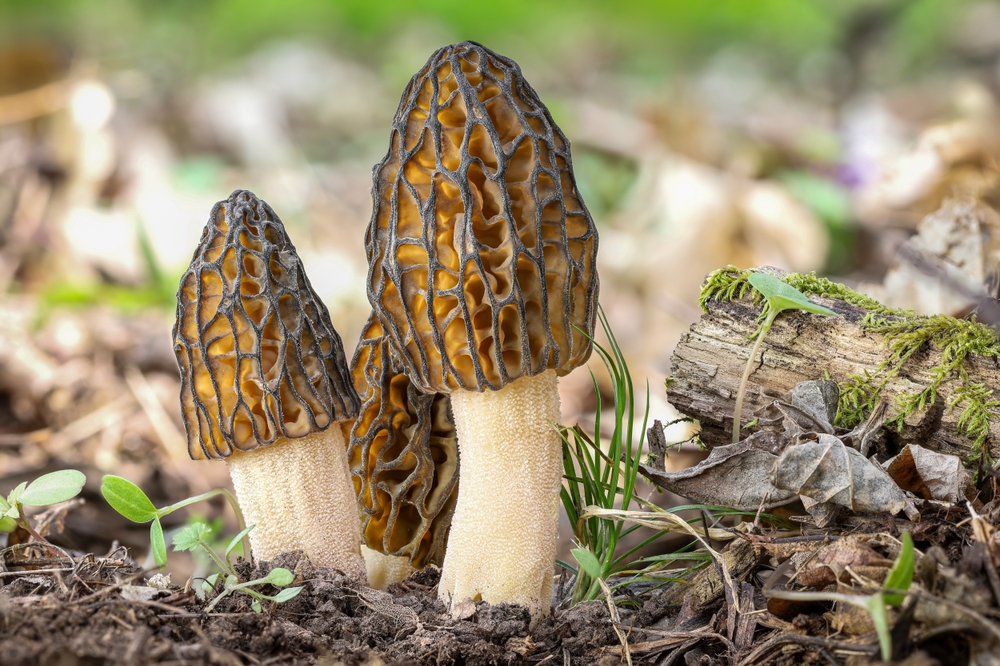
Morels are one of the most recognizable mushrooms that appear in spring, known for their honeycomb-like caps and hollow centers. They usually show up after the soil begins to warm, often following a few steady rains that bring just the right moisture. You will often find them near elm, ash, and old apple trees, especially in areas where the ground stays rich and slightly damp. Burn sites and recently disturbed areas can also produce strong growth, which surprises many first-time foragers. Once you learn their shape and texture, they become easier to spot among leaves and forest debris.
They are highly valued in cooking, though proper identification is very important since some lookalikes can cause serious issues if mistaken. Morels tend to return to the same areas year after year, which makes keeping track of past spots worthwhile. Their color can range from pale yellow to deep brown, depending on the species and growing conditions. The texture becomes firmer when cooked, which is one reason they are so well-liked in the kitchen. Many experienced foragers treat them as one of the true signs that spring has fully arrived.
Stinkhorn Mushroom (Phallus impudicus)
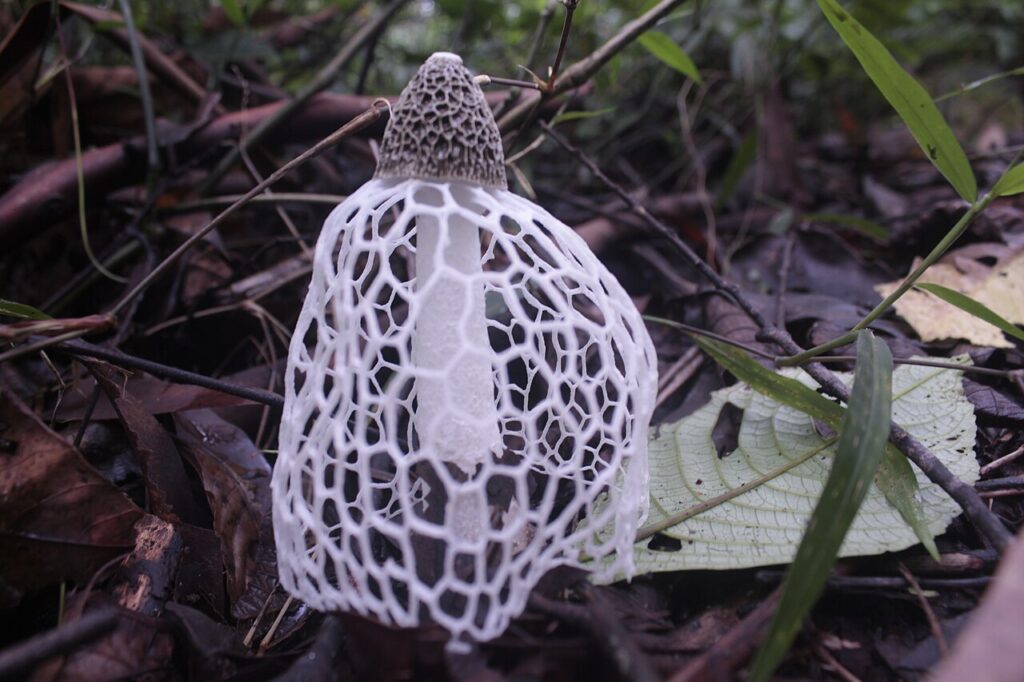
Stinkhorn mushrooms are hard to miss once you catch their strong odor, which is often compared to rotting material. They begin as small egg-like structures hidden just under the soil before quickly growing into tall, narrow forms within a short period. These mushrooms tend to appear in gardens, mulch piles, and forest edges where organic matter is breaking down. Their sudden growth can seem almost overnight, which adds to their unusual reputation. Many people notice them first by smell rather than sight.
The slimy coating on the cap plays a key role by attracting flies that help spread the spores. While the odor may be unpleasant, these mushrooms are part of the natural process of breaking down plant material. Some people recognize the early egg stage as edible, though this is not widely practiced. Their texture changes quickly as they mature, becoming softer and more fragile. They tend to appear briefly and then disappear, leaving little trace behind.
Scarlet Elf Cup (Sarcoscypha coccinea)
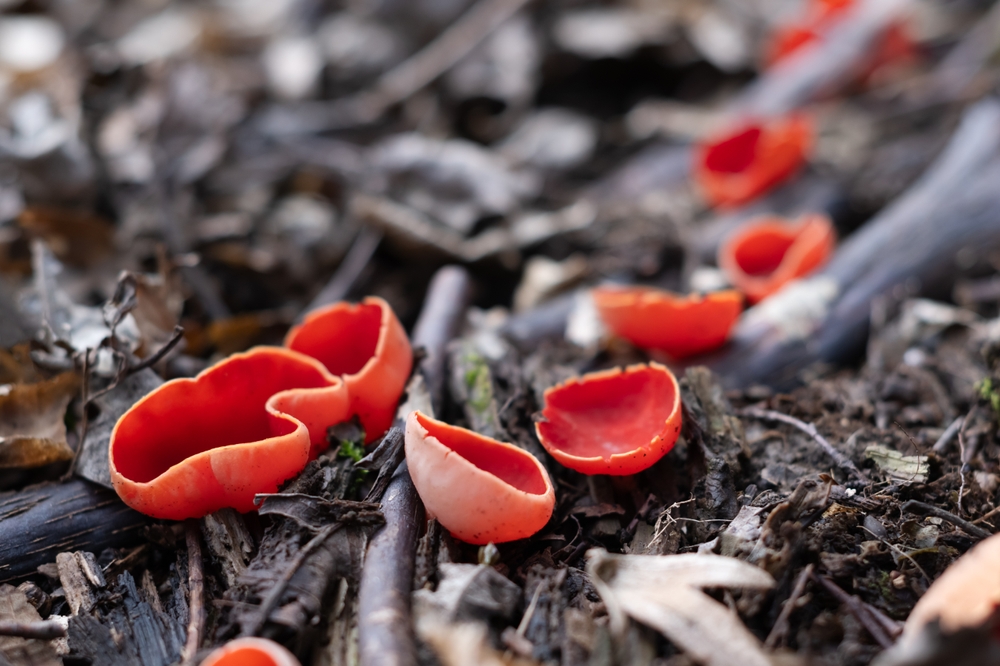
The scarlet elf cup stands out with its bright red color, which contrasts strongly against damp leaves and decaying wood. It often appears early in spring, especially in shaded forests where moisture lingers. These mushrooms grow on fallen sticks and branches, sometimes partly hidden beneath layers of leaf litter. Their cup shape and smooth inner surface give them a clean and almost polished look. On a quiet forest walk, they can feel like small flashes of color among the browns and greens.
They are not commonly used for food, though they are not known to be harmful. Many hikers notice them because of how sharply they stand out in low-light conditions. They can remain visible for several weeks when temperatures stay cool and moisture levels remain steady. You will often find them in clusters, especially in areas where fallen wood is slowly breaking down. Their presence is often one of the first visual signs that the forest floor is coming back to life.
Devil’s Fingers (Clathrus archeri)
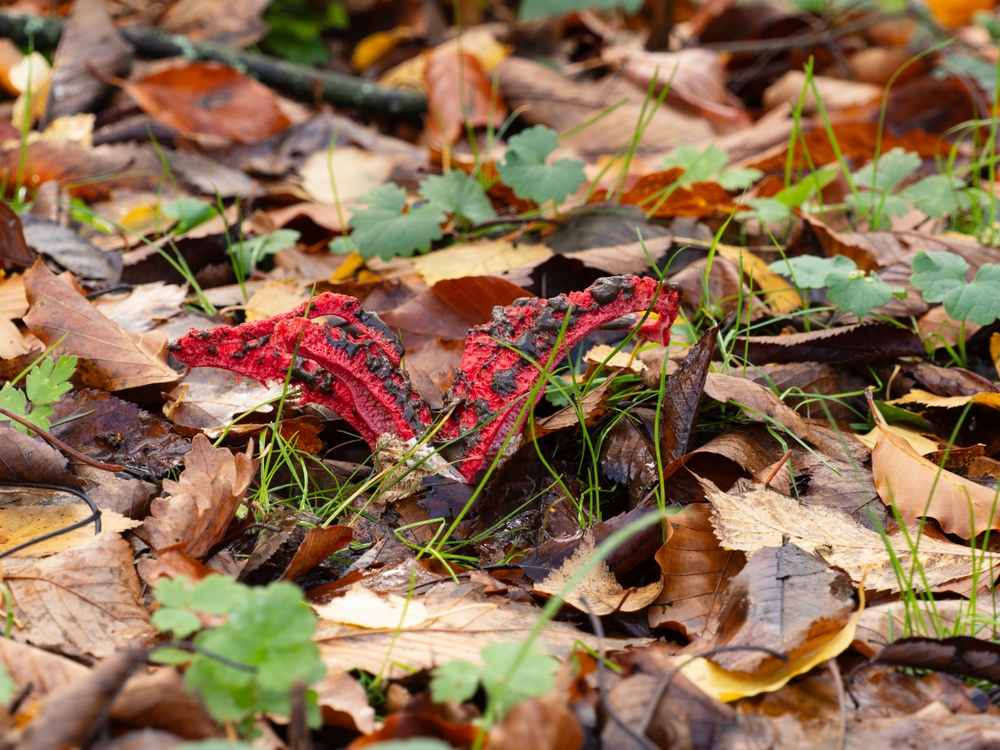
Devil’s fingers begin as a pale, rounded egg before splitting open into several red arms that stretch outward. As the arms spread, a dark, sticky coating forms on the inner surface, producing a strong odor that draws attention. This mushroom often appears in gardens, mulch beds, and forest floors during warmer spring periods. Its shape can look almost alien to those who come across it for the first time. The contrast between the pale base and red arms makes it especially striking.
The odor attracts insects that help carry spores to new areas, which is part of how it spreads. Its texture is soft and slightly spongy, and the arms can curl or stretch as it matures. It is not considered edible and is usually left untouched. These mushrooms tend to appear in small groups rather than large clusters. Once you have seen one, it is not something you easily forget.
Bleeding Tooth Fungus (Hydnellum peckii)
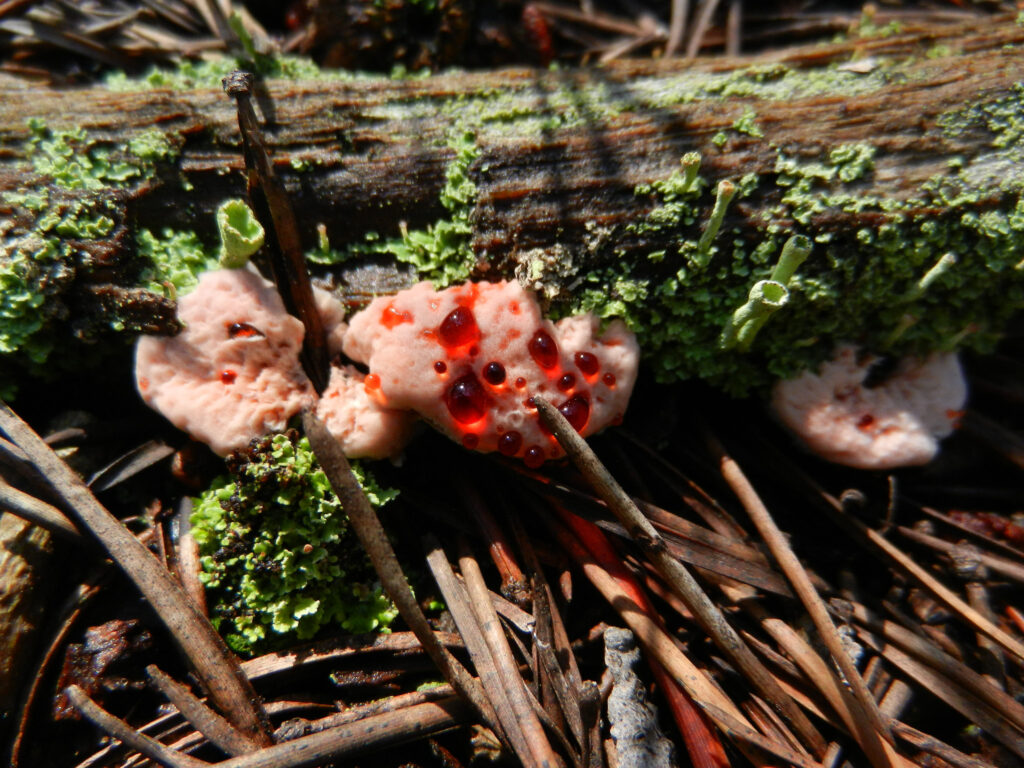
The bleeding tooth fungus is known for its unusual look, especially when it is young and producing red droplets on its surface. These droplets resemble beads of liquid, which gives the mushroom its memorable name. It grows in forested areas, often among moss and pine needles where moisture remains steady. The white surface provides a strong contrast against the red droplets, making it stand out clearly. As it ages, the bright appearance fades and the surface becomes darker.
It is not toxic, though it has a very bitter taste that makes it unsuitable for eating. The underside features small tooth-like structures instead of the more common gills. This mushroom tends to appear in cooler climates and can show up in spring when conditions are right. Its texture becomes firmer as it matures and loses its bright coloring. Many people remember it as one of the most unusual fungi they have ever seen.
Wrinkled Peach Mushroom (Rhodotus palmatus)
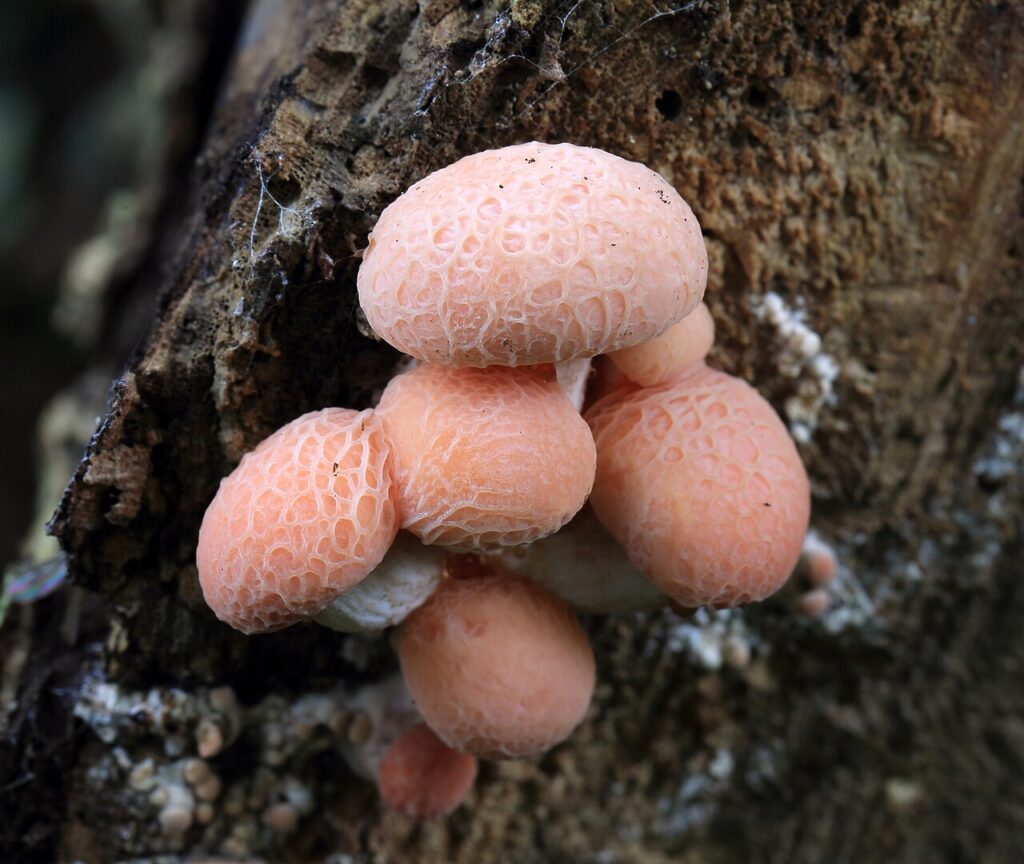
The wrinkled peach mushroom has a soft pink tone and a textured surface that looks almost like a net. It grows on decaying hardwood, especially elm, during damp spring weather when moisture levels are high. The cap has a slightly glossy finish that reflects light, making it easier to notice in shaded areas. Its rounded shape and detailed surface set it apart from more common mushrooms. In many regions, it is considered a rare find.
Its color can deepen as it matures, shifting from a light pink to a richer tone. It prefers humid environments where fallen wood is slowly breaking down over time. While it is not commonly eaten, it draws attention because of its unusual appearance. You will often find it growing alone or in small groups rather than large clusters. Its presence often signals a healthy, moisture-rich woodland environment.
Orange Peel Fungus (Aleuria aurantia)
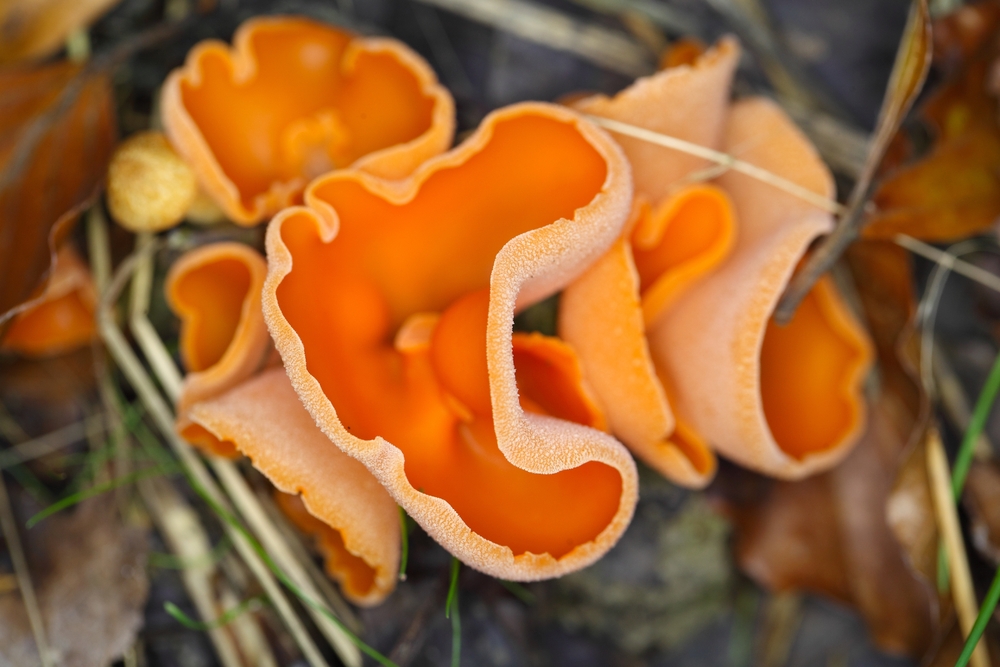
Orange peel fungus looks like pieces of bright orange skin scattered across the ground. Its irregular shape and smooth surface make it easy to recognize, even for beginners. It often grows on bare soil, disturbed ground, and garden beds during wet spring conditions. The color remains vivid, which makes it stand out against darker soil. It is often one of the first things people notice after rainfall.
It is considered edible, though its flavor is mild and not widely sought after. This fungus can appear in groups, forming patches of bright color that spread across the ground. It prefers open areas where sunlight can reach the soil. Rain often triggers new growth, so checking the same area after a storm can reveal more. Its simple shape and color make it one of the easier mushrooms to identify.
Wood Ear Mushroom (Auricularia auricula-judae)
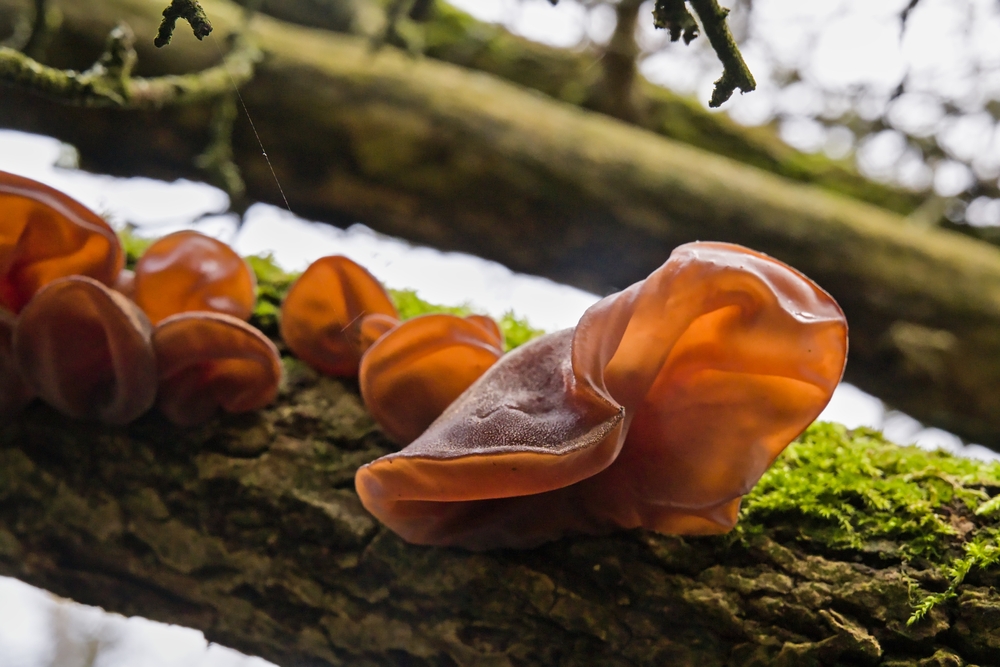
Wood ear mushrooms have a soft, jelly-like texture and a shape that resembles an ear. They grow on dead or dying hardwood trees, especially in areas where moisture stays high. These mushrooms often appear after rain during spring when humidity levels rise. Their surface can look smooth or slightly wrinkled depending on conditions. The color ranges from light brown to a deeper reddish tone.
They are widely used in cooking, especially for their texture rather than their flavor. When dried, they can be stored and later soaked before use in different dishes. They often grow in clusters that cling closely to wood surfaces. Their shape can shift slightly depending on how much moisture they hold. Many people first notice them after rainfall when they become more visible.
False Morel (Gyromitra esculenta)
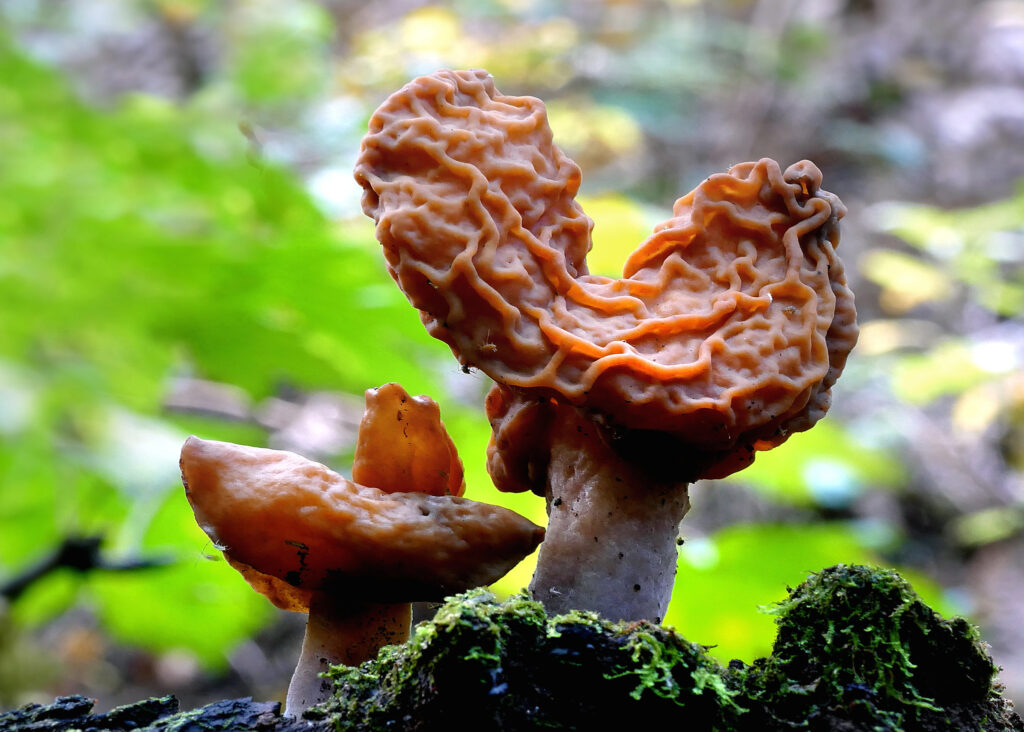
False morels have a wrinkled, brain-like cap that gives them a very distinct appearance. They appear in spring, often in sandy soil or near conifer trees where the ground drains well. Their reddish-brown color and uneven folds make them stand out once you know what to look for. Many people confuse them with true morels, which can be dangerous. Learning the difference is an important part of safe foraging.
These mushrooms contain toxins and should not be eaten without proper knowledge. They tend to grow in similar environments as true morels, which adds to the confusion. Careful identification is always necessary when collecting wild mushrooms. Their unusual form makes them one of the more memorable spring finds. Even experienced foragers take time to double-check before handling them.
Turkey Tail (Trametes versicolor)
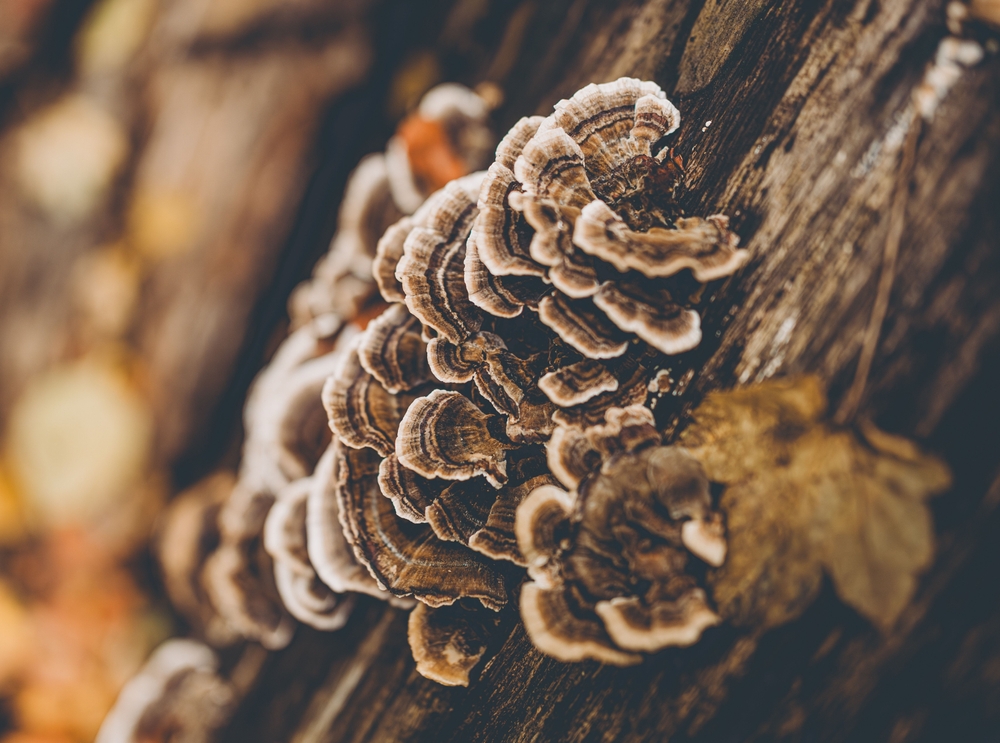
Turkey tail mushrooms grow in thin layers on dead logs and tree stumps. Their bands of color resemble the pattern of a turkey’s tail, with shades of brown, white, and even hints of blue. These mushrooms are common in forests and can be found throughout spring. They prefer damp, shaded areas where wood is slowly breaking down. Their layered structure spreads across wood surfaces in wide patterns.
They are not usually eaten whole because of their tough texture. Instead, they are often dried and used in teas or similar preparations. Their growth pattern can cover large sections of fallen logs. They are easy to identify once you notice their repeating color bands. Many people recognize them as one of the most common mushrooms in wooded areas.
Oyster Mushroom (Pleurotus ostreatus)
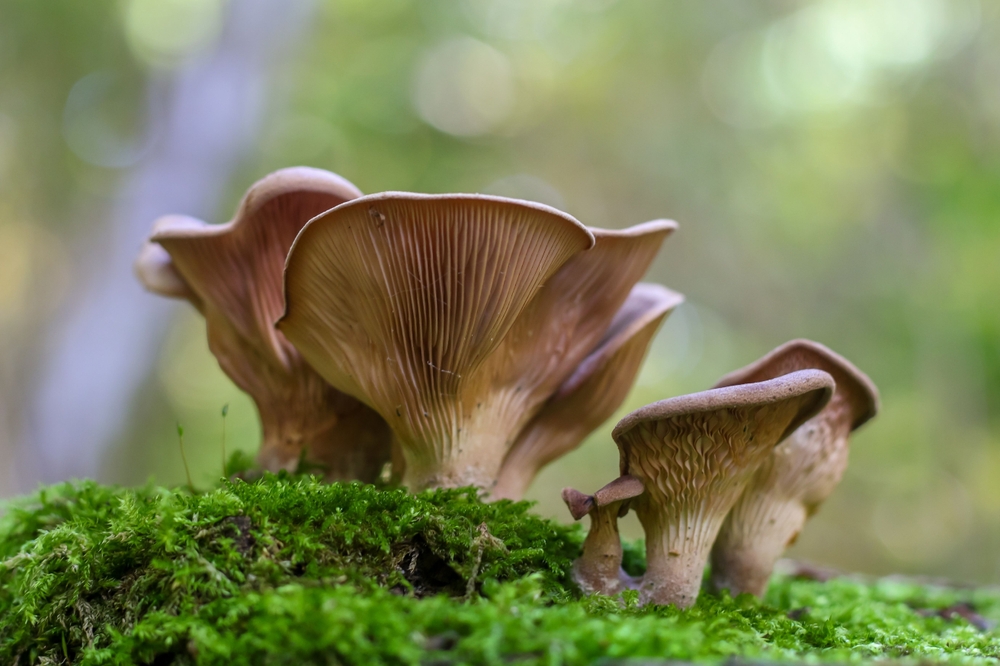
Oyster mushrooms have a smooth, fan-shaped cap and grow in overlapping clusters. They often appear on dead or dying hardwood trees during cool, moist spring weather. Their color ranges from white to gray or light brown depending on the environment. The gills run down the short stem, which helps with identification. Their layered growth makes them easy to notice from a distance.
They are widely used in cooking due to their mild flavor and soft texture. These mushrooms can grow quickly and spread across large sections of wood. They play a role in breaking down wood fibers in natural settings. Their appearance can change slightly based on moisture levels. Many people consider them one of the easiest wild mushrooms to recognize.
Lion’s Mane (Hericium erinaceus)
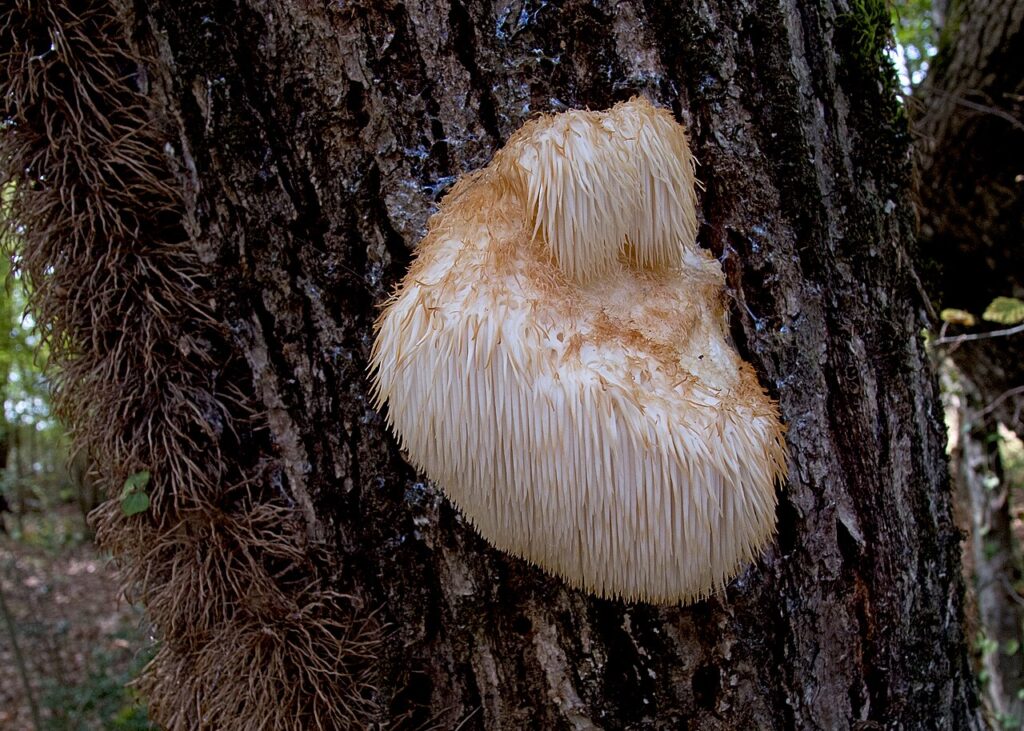
Lion’s mane forms a white, shaggy mass that looks like a cluster of soft hanging spines. It grows on hardwood trees and often appears during spring in humid forests. Its unusual shape sets it apart from most other mushrooms. The soft spines can hang down in long strands as it matures. It prefers shaded areas where moisture stays consistent.
It is valued in cooking for its texture, which some compare to seafood. The structure becomes more defined as it grows larger. It usually appears as one large cluster rather than several small ones. Its bright white color stands out against dark bark. Many people remember it because it looks so different from typical mushrooms.
Shaggy Ink Cap (Coprinus comatus)
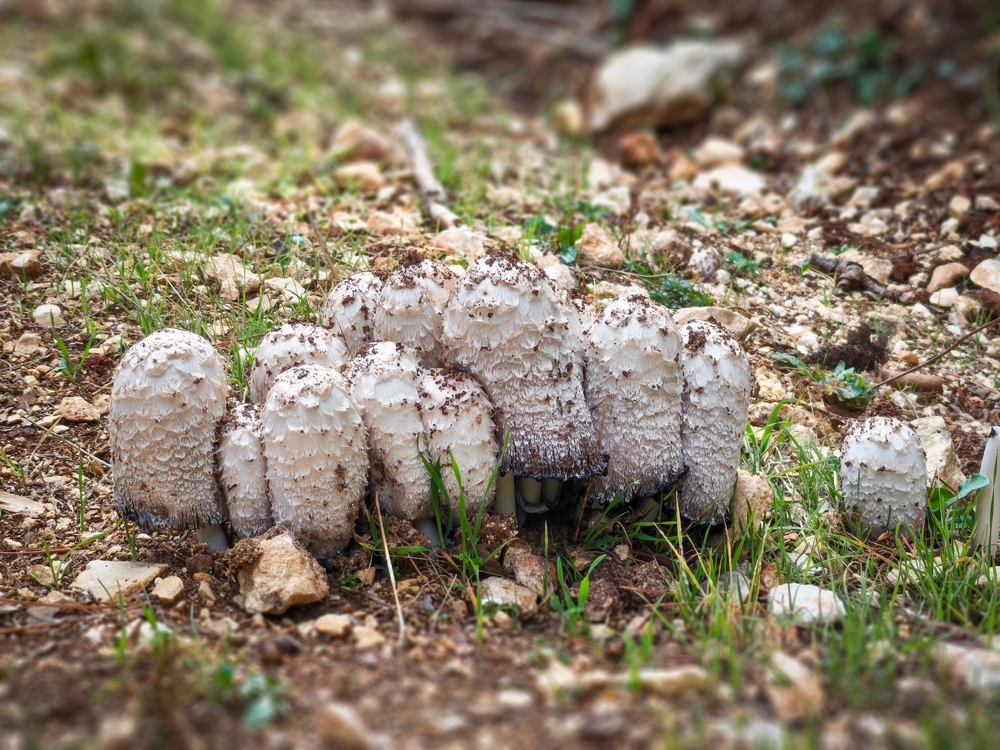
Shaggy ink caps have tall, cylindrical caps covered in white scales that give them a textured look. They often grow in grassy areas, parks, and along roadsides during spring. Their upright shape makes them easy to spot in open spaces. As they mature, the caps begin to dissolve into a black liquid. This change gives them a very distinct appearance.
They are edible when young, before the blackening process begins. Timing is important, since they change quickly after appearing. Their texture is soft at first and becomes less appealing as they break down. They often grow in small groups scattered across the ground. Many people find them interesting because of how quickly they change.
Violet Webcap (Cortinarius violaceus)
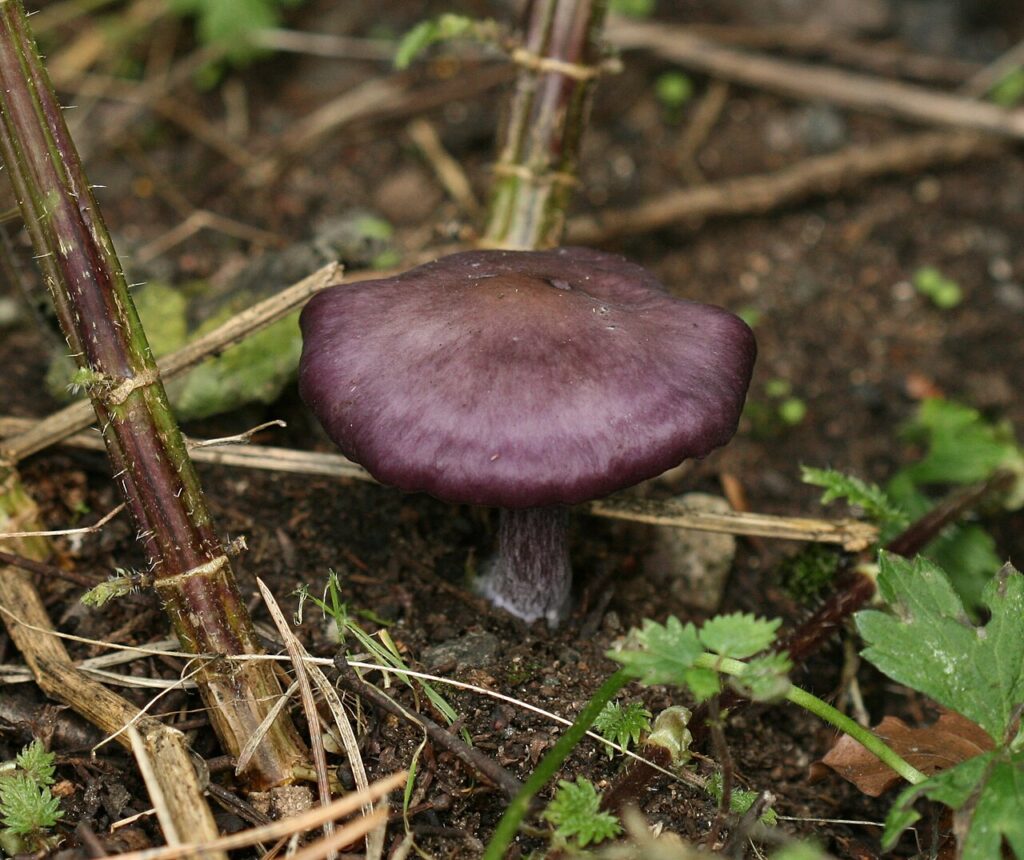
The violet webcap stands out because of its deep purple color that covers both the cap and stem. It grows in forests among leaf litter and moss during spring. The surface has a soft, velvety feel that adds to its unusual look. It is not commonly found, which makes it a memorable sight. The rich color can catch your attention even in low light.
As it ages, the color may fade to a more muted shade. It belongs to a large group that can be difficult to identify with certainty. While it looks appealing, it is not widely used for food. Its structure remains fairly solid compared to softer mushrooms. Many people remember it simply because of its color.
Earthstar (Geastrum species)
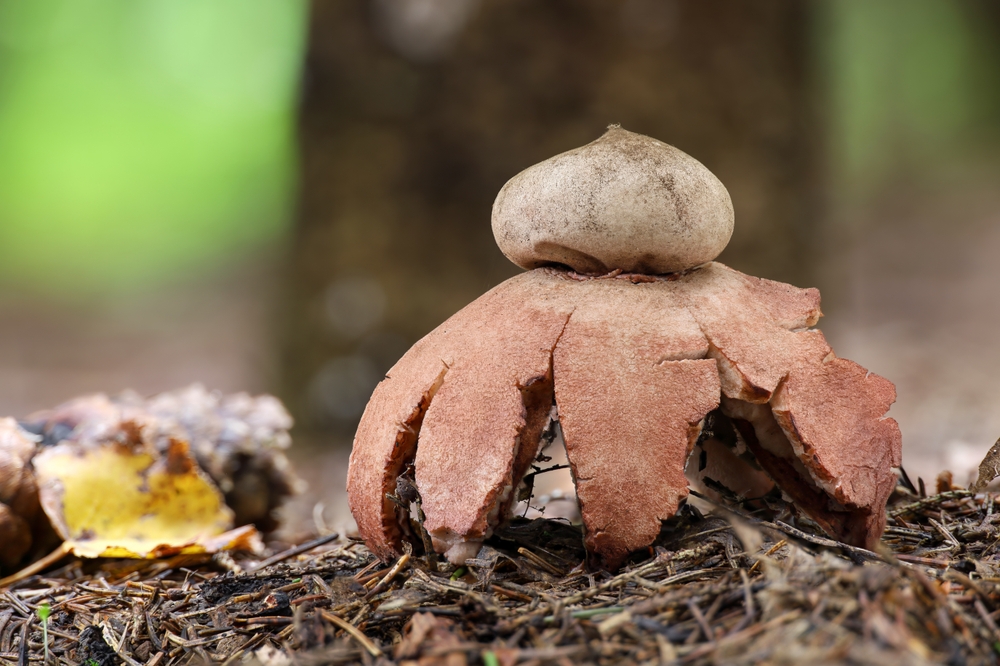
Earthstars begin as small round balls before opening into star-like shapes on the ground. The outer layer splits and folds back, revealing a central spore sac. These mushrooms grow in sandy or well-drained soil in forests and open areas. Their form changes depending on moisture levels and age. When fully open, they resemble a small star resting on the ground.
When raindrops hit the center, spores are released into the air. This process helps spread them to new locations. Their shape makes them easy to recognize once open. They often appear in small scattered groups rather than large clusters. Many people find them interesting because of how their shape changes over time.
This article originally appeared on Avocadu.