
16 Strange Desert Plants That Look Like They Belong on Another Planet
Deserts often feel empty at first glance, yet a closer look reveals plants that seem to break every rule of nature. Some grow flat against the ground like stones, while others rise in shapes that look sculpted rather than grown. Many of these plants survive by storing water in unexpected ways or hiding beneath the soil to escape the sun. Their colors, textures, and forms can feel unfamiliar even to experienced plant lovers. Seeing them in their natural setting can feel like stepping onto a distant planet. Each one tells a quiet story of survival written into its shape. Together, they show just how strange and surprising desert life can be.
This post may contain affiliate links, which helps keep this content free. Please read our disclosure for more info.
Welwitschia mirabilis
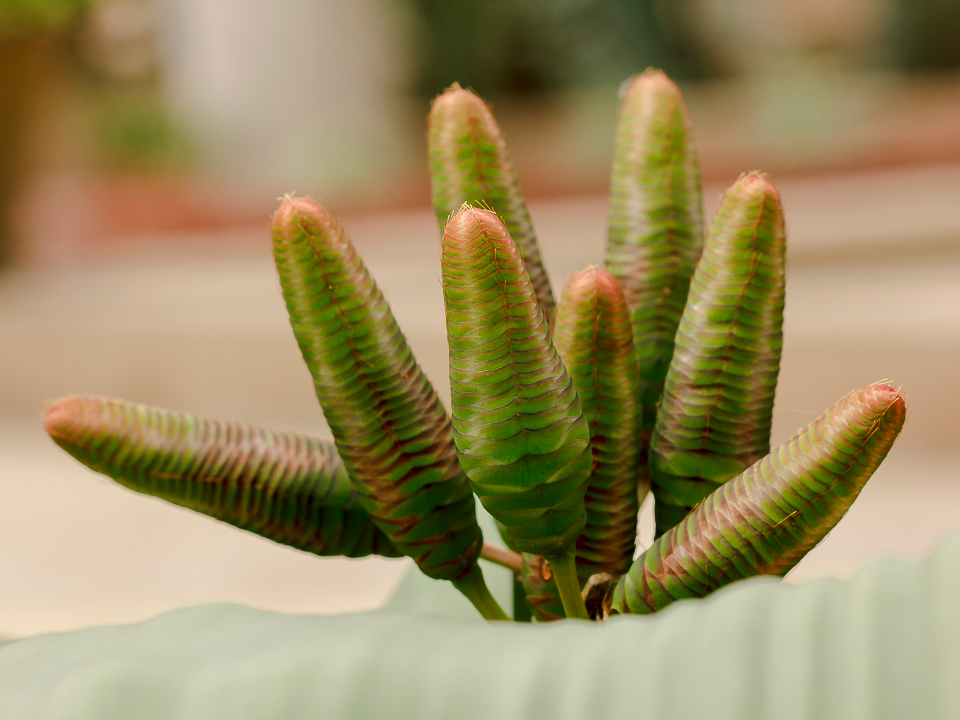
This plant lives in one of the driest desert regions on Earth and appears frozen in time. Its two ribbon-like leaves grow endlessly, twisting and tearing as wind and sand wear them down. Many specimens have survived for centuries, which gives them an ancient and almost mythical presence.
The thick central body stays close to the ground and looks shaped rather than grown. Welwitschia survives by pulling moisture from fog drifting in from the ocean. Standing near one often feels like encountering a living fossil rather than a plant.
Lithops

Lithops sit low in the soil and look almost identical to the stones around them. Their two thick leaves form a split shape that helps them hide from animals in open desert spaces. This disguise works so well that people often walk past them without noticing.
When flowering season arrives, a bright bloom pushes up through the center like a quiet surprise. Their compact form helps them hold water through long dry periods. The contrast between their dull stone look and sudden flowers feels quietly strange.
Pachypodium namaquanum
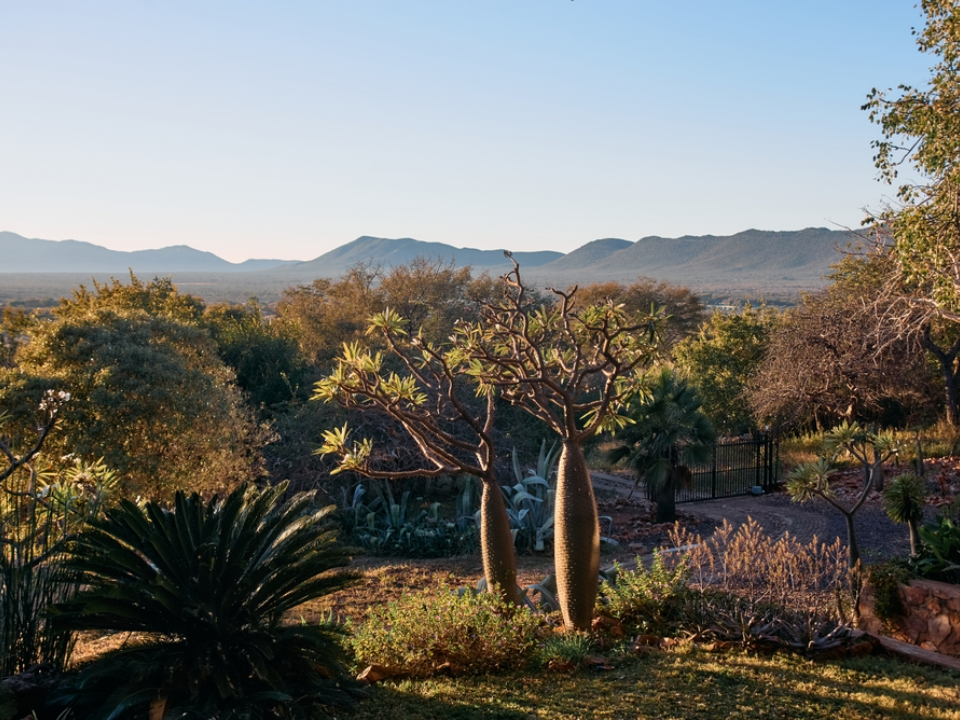
This plant grows upright with a swollen trunk that gives it a human-like stance. It often leans slightly, which adds to its eerie personality when seen from a distance. Sparse leaves appear near the top, leaving most of the trunk bare and sculptural.
The thick stem stores water to survive long stretches without rain. Its gray surface reflects heat and helps protect it from harsh sun. Local stories once described it as a turned figure watching over the desert.
Boophone haemanthoides
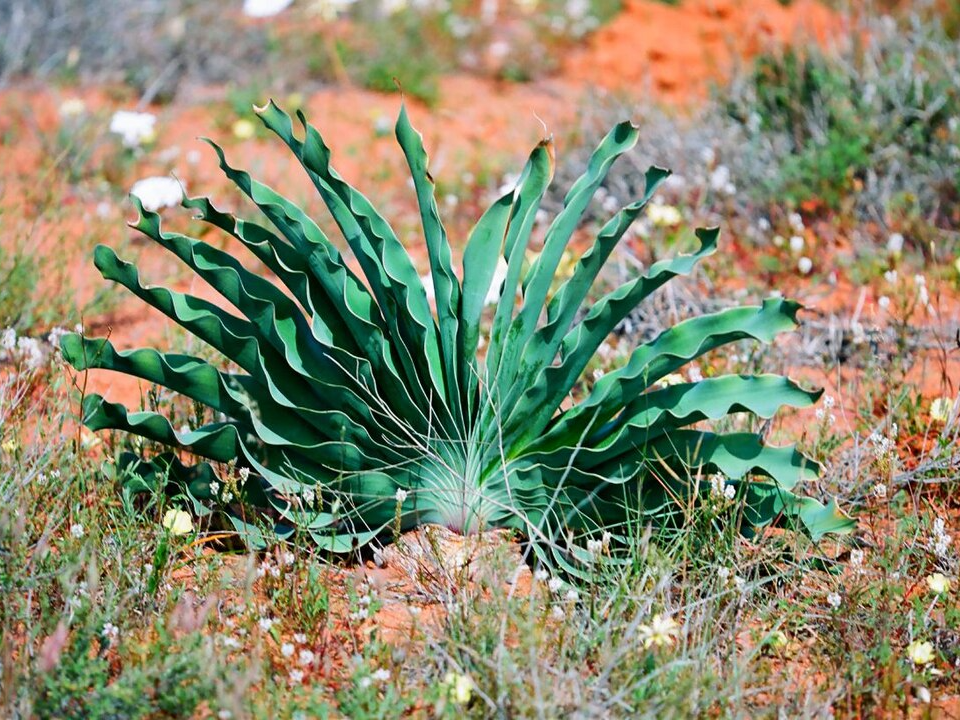
Boophone haemanthoides grows from a large bulb that rises above the soil like a buried object pushing upward. The bulb alone looks dramatic enough to seem unreal. Long flat leaves spread outward in a wide circle along the ground.
A tall flower stalk appears during blooming season with a rounded head of soft pink flowers. Toxic compounds in the plant discourage animals from feeding on it. Its exposed shape gives it a powerful and slightly unsettling look.
Aloe dichotoma
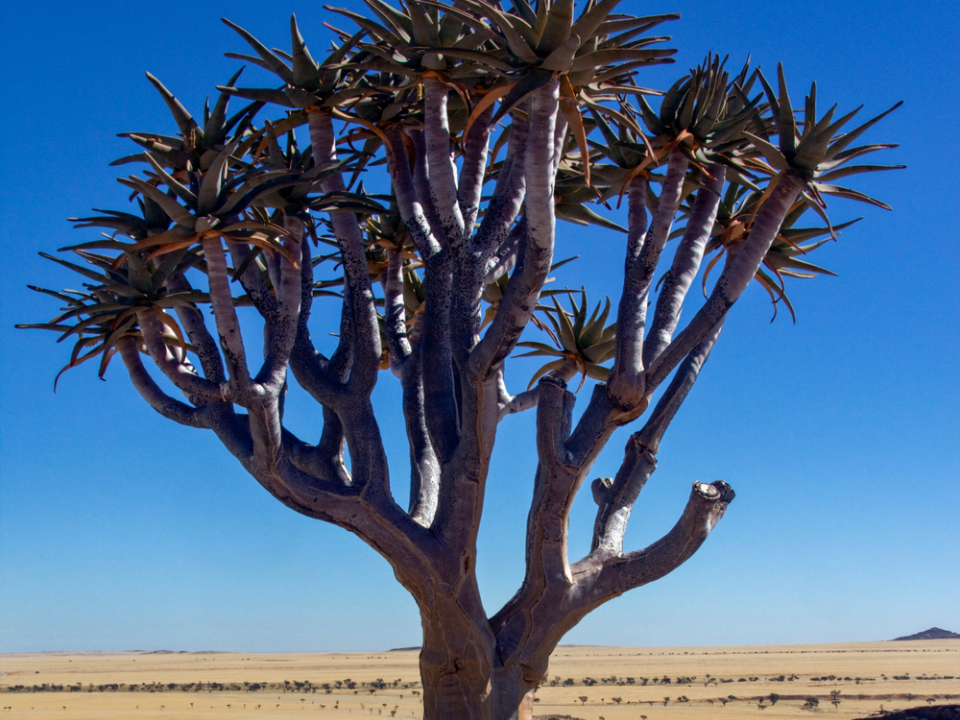
Aloe dichotoma grows into a branching form that looks almost playful against empty desert land. Its smooth pale bark reflects sunlight and peels in thin layers over time. Thick blue-green leaves gather at the ends of branches in neat clusters.
Bright yellow flowers appear during blooming season and attract birds from far away. The tree can grow tall and stand alone without nearby plants. Its silhouette often looks unreal against open skies.
Euphorbia obesa
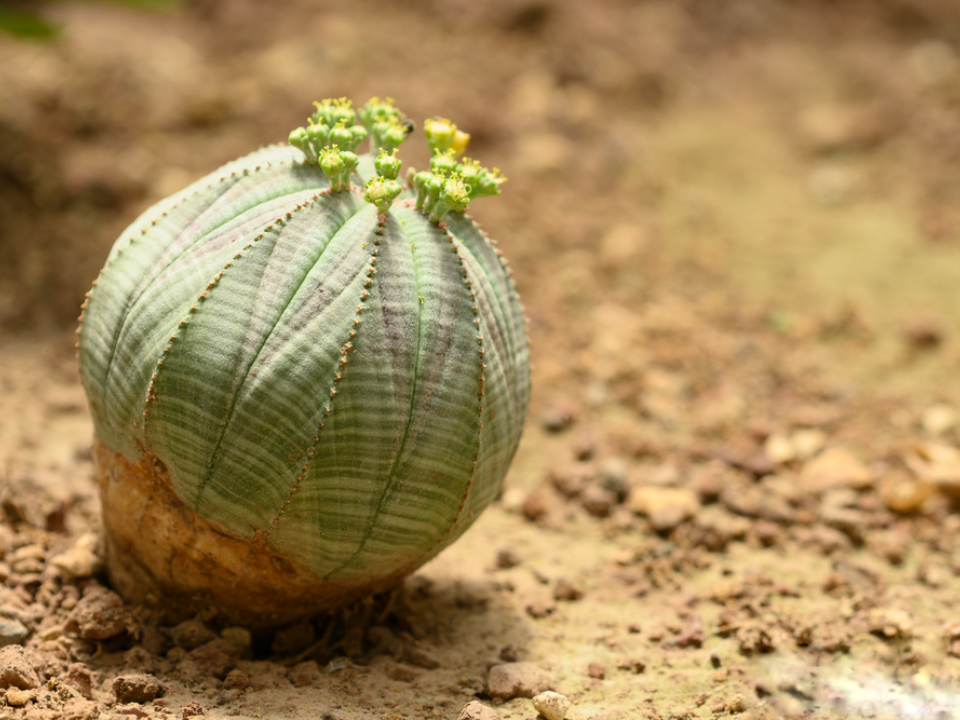
Euphorbia obesa forms a near-perfect round shape that barely resembles a plant. Subtle ribs and faint striping make it look carefully shaped rather than grown. The plant stores water inside its thick body instead of using leaves.
Small flowers appear near the top during certain times of year. Its smooth surface helps reduce moisture loss under strong sun. Many people mistake it for a decorative object at first glance.
Hydnora africana
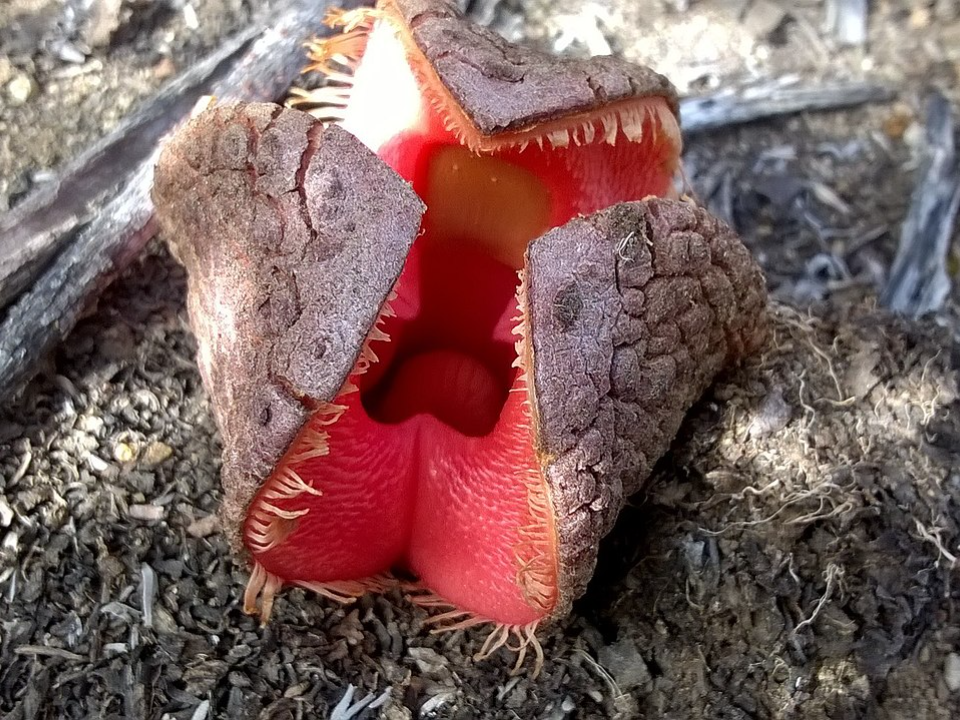
Hydnora africana lives hidden underground for most of its life. Only its thick fleshy flower breaks the surface, revealing a form unlike typical blooms. The petals open to expose a dark interior that feels strangely raw.
The flower releases a strong odor that attracts insects for pollination. Lacking chlorophyll, the plant relies on other species for nutrients. Its sudden appearance can feel shocking even to experienced desert travelers.
Stapelias
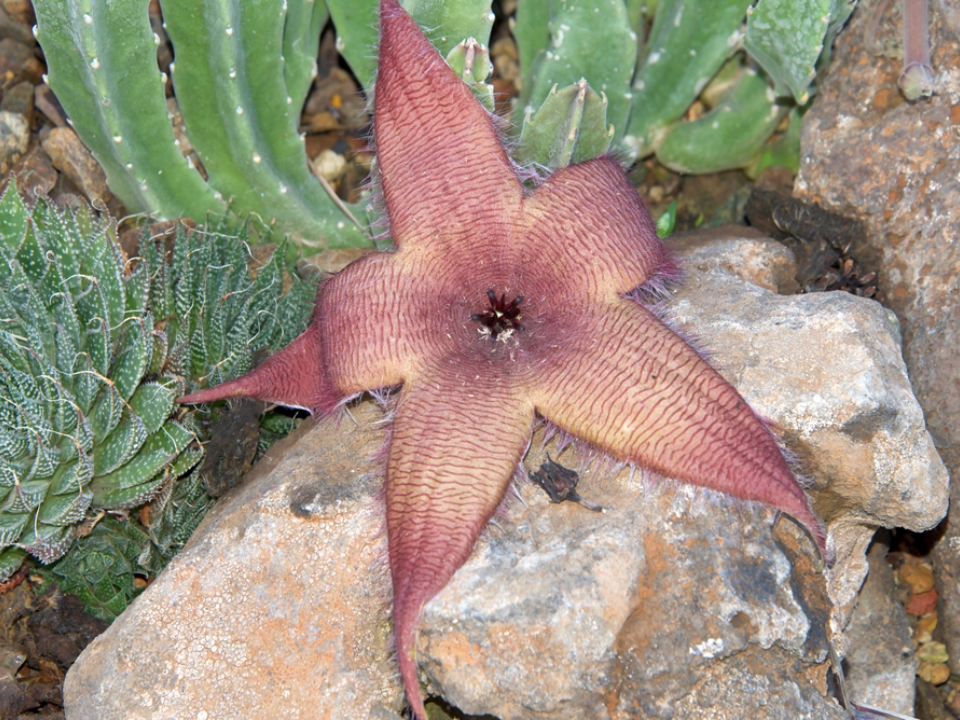
Stapelias grow close to the ground with thick angular stems that resemble sculpted forms. Their large star-shaped flowers display bold patterns and heavy textures. These blooms often appear oversized compared to the rest of the plant.
Many species produce a scent similar to decaying matter to attract flies. The flowers often look waxy and heavy, adding to their strange appeal. Seeing one in bloom feels like encountering something unfamiliar.
Tavaresia barklyi
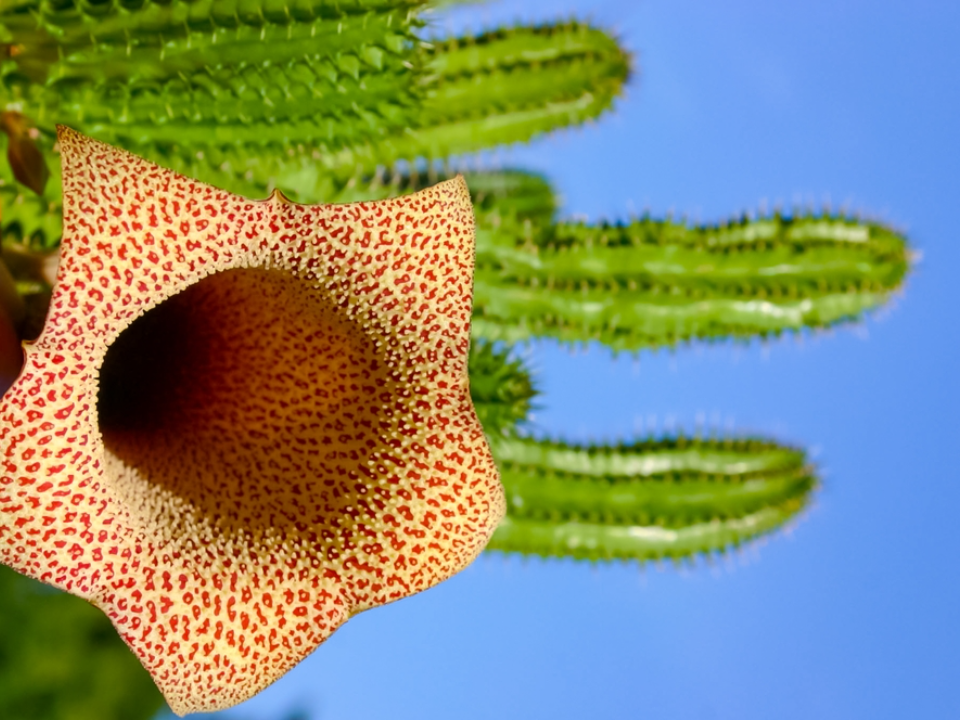
Tavaresia barklyi grows as upright stems covered in small bumps and ridges. The surface texture looks more like skin than plant material. Its clustered growth keeps it compact and low to the ground.
When it flowers, pale star-shaped blooms open with fine internal markings. The soft flowers contrast sharply with the rough stems. This mix of textures gives the plant an unsettling beauty.
Adenia pechuelii
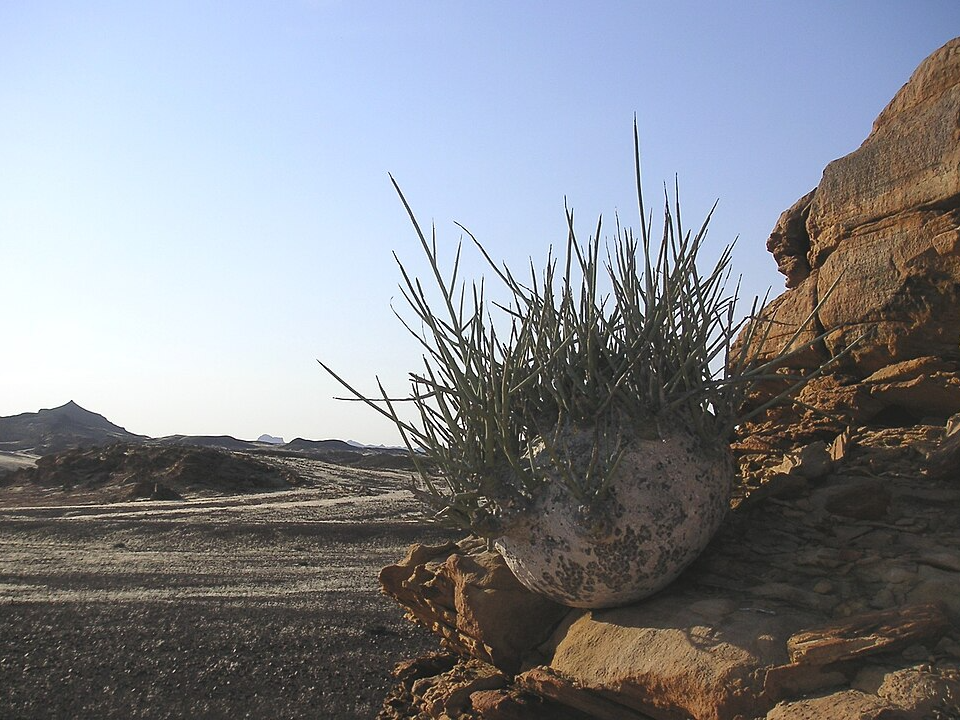
Adenia pechuelii grows from a massive swollen base that dominates its appearance. Thin vine-like stems extend outward from the thick body in unexpected directions. The plant often looks unbalanced in a fascinating way.
The base stores water to survive long dry stretches. Cracks often appear as the plant ages, adding to its rugged look. Its strange shape makes it feel more like a desert creature than a plant.
Fenestraria rhopalophylla
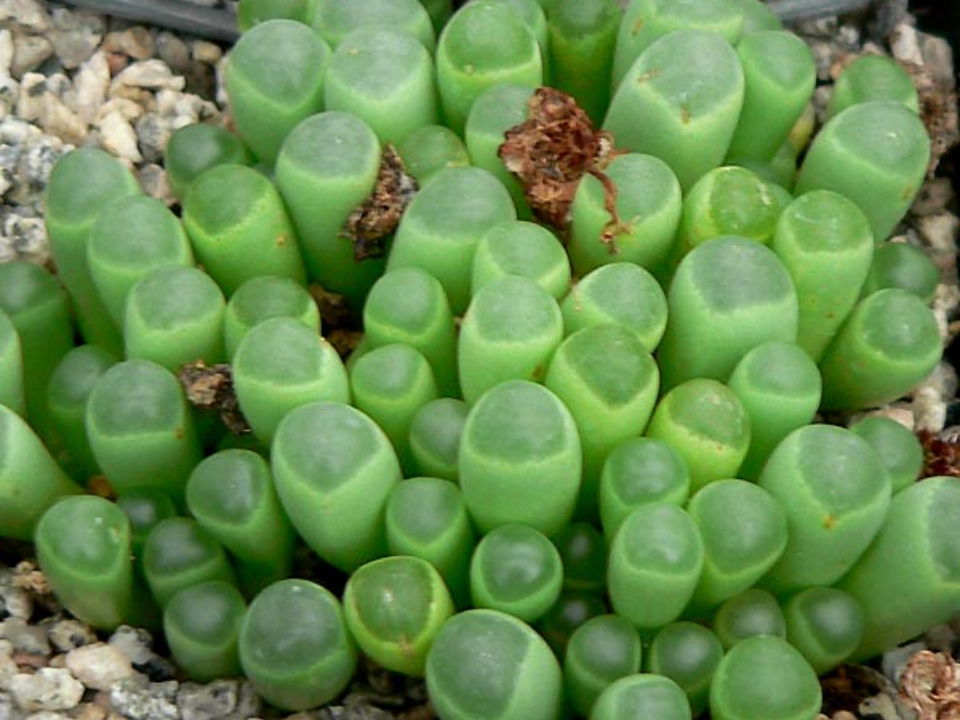
This small desert plant is often called baby toes because of its rounded leaf tips. Most of the plant stays buried beneath sand, with only translucent ends exposed to sunlight. This design helps protect it from heat while still allowing photosynthesis.
The clear leaf tips act like tiny windows that guide light inward. Moisture is stored deep below the surface where temperatures stay cooler. Up close, the plant looks more like a cluster of soft stones than living growth.
Psammophora
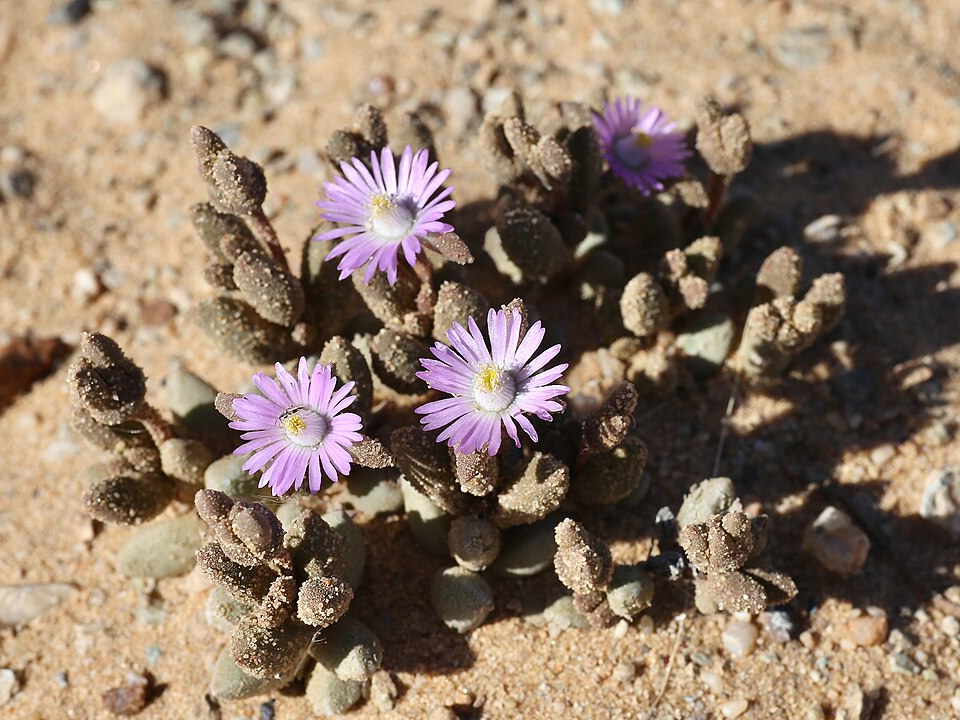
Psammophora grows low to the ground and collects sand on its surface. Sticky hairs trap grains of sand, forming a natural coating. This layer helps shield the plant from sun and wind.
The sandy covering makes it nearly invisible in open desert spaces. Its leaves are hidden beneath the grit, giving it a rough and armored look. At first glance, it feels more mineral than plant.
Cylindropuntia bigelovii
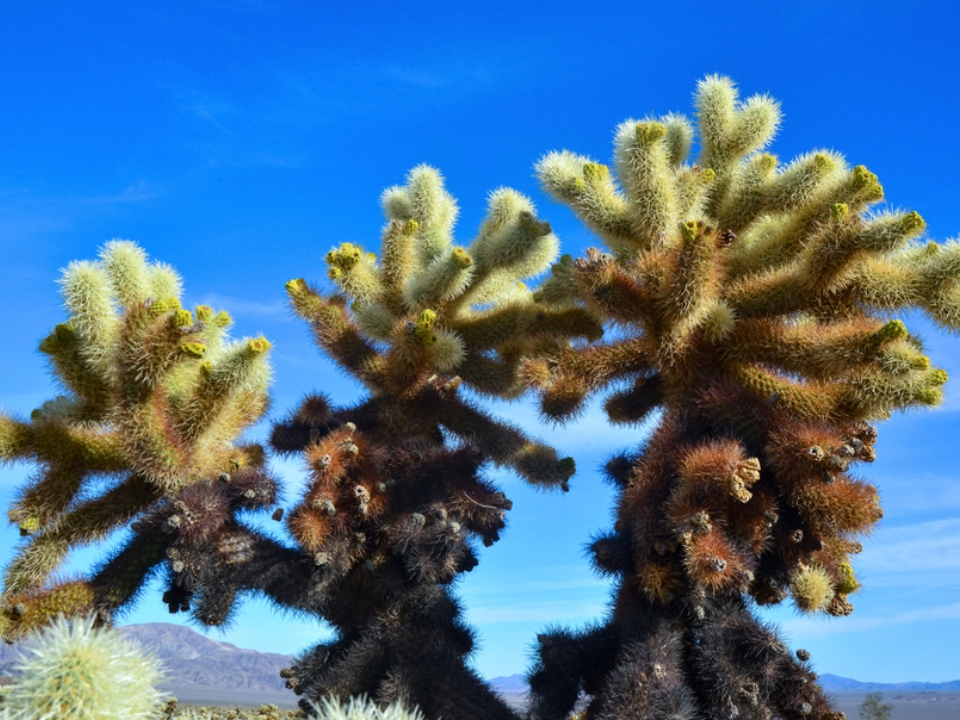
This cactus is known for its dense spines and segmented shape. The joints break off easily and cling to passing animals. This allows the plant to spread across dry landscapes.
The segments look almost animated when they catch light. Dense spines create a glowing halo under the sun. Encountering one up close can feel both fascinating and unsettling.
Fouquieria columnaris
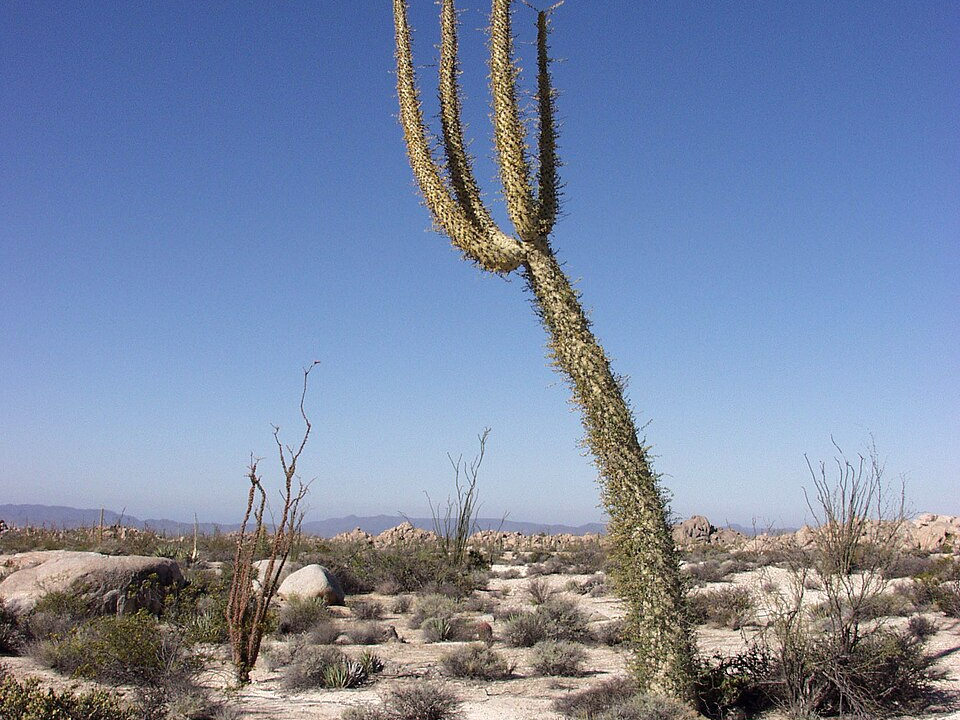
Often called the boojum tree, this plant grows tall and narrow like a twisted pole. Short branches poke out irregularly along the trunk. Its odd proportions give it a surreal presence.
Small leaves appear only after rainfall and soon fall away. The trunk stores water to endure long dry periods. Seeing a grove of these plants feels like stepping into another world.
Ariocarpus fissuratus
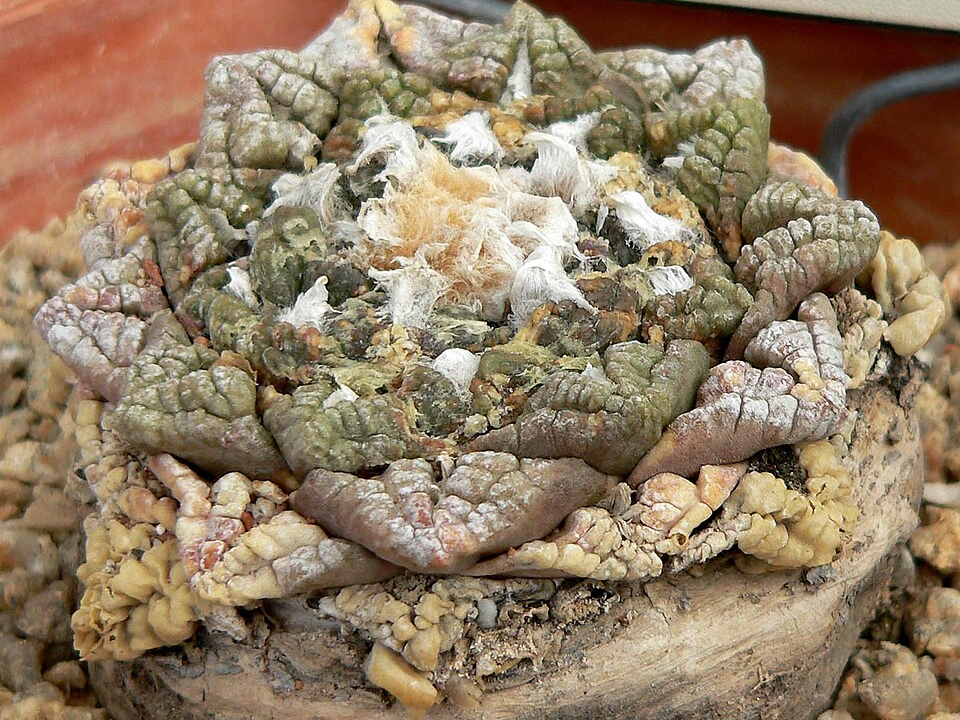
This cactus grows flat against the soil with thick triangular segments. Its surface closely matches surrounding rocks in color and texture. This camouflage protects it from animals and heat.
During flowering season, a large bloom emerges from the center. The flower feels oversized compared to the rest of the plant. That sudden contrast adds to its strange appeal.
Pelecyphora aselliformis
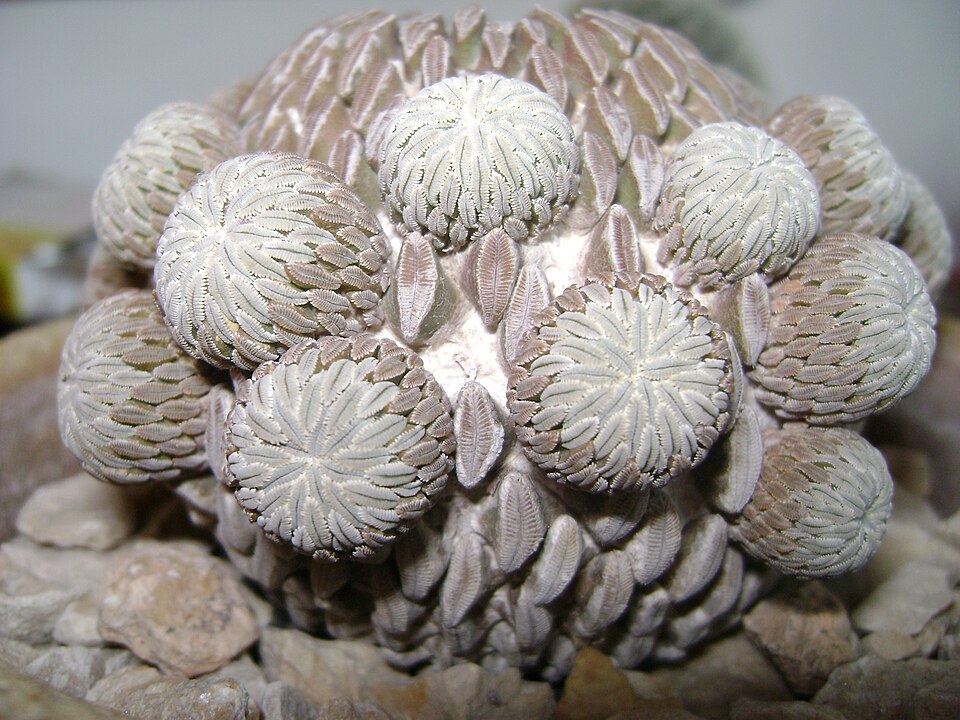
This cactus grows as a low rounded mound with overlapping scales. The surface texture resembles layered armor. It blends easily into rocky desert soil.
Small pink flowers appear near the top. The contrast between hard texture and soft bloom stands out. Its compact shape gives it a quiet but strange presence.
This article originally appeared on Avocadu.