
15 Spring Plants That Stay Neat and Low Maintenance
Spring planting feels a lot easier when you pick plants that stay tidy without constant trimming or fuss. This list focuses on reliable options that hold their shape, handle typical weather swings, and still look good as the season moves along. If you want a garden that looks cared for without taking up your weekends, these are strong picks to start with.
This post may contain affiliate links, which helps keep this content free. Please read our disclosure for more info.
Lavender (Lavandula)
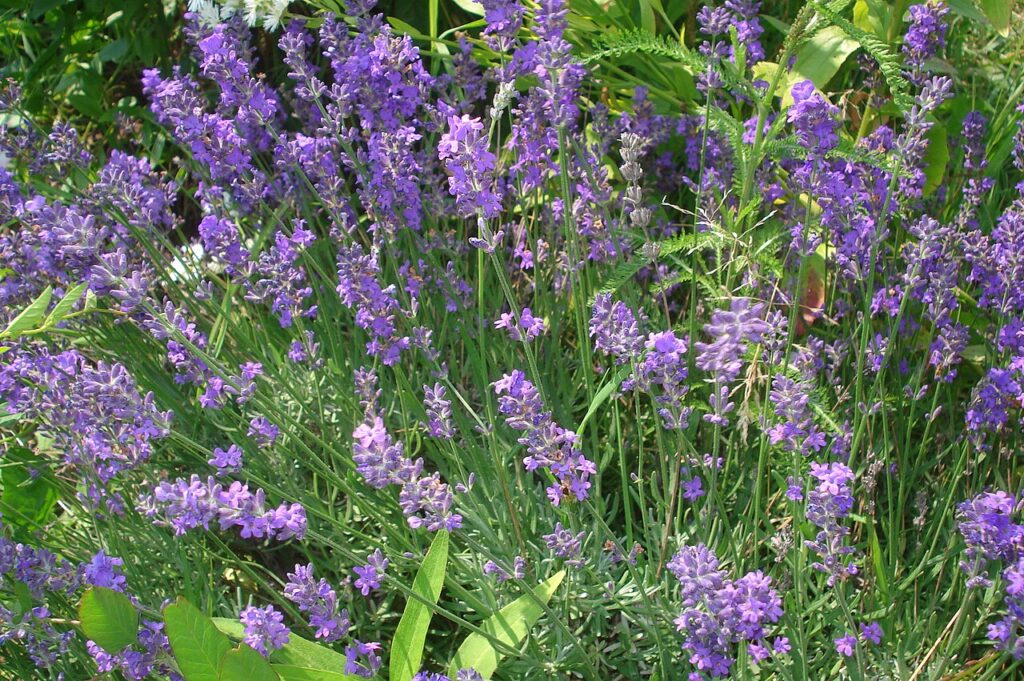
Lavender stays neat because it naturally grows into a rounded, silvery mound that does not flop all over the place. In spring, new growth starts quickly, and by early summer you usually get those purple flower spikes that make the whole bed smell clean and sweet. Give it full sun and soil that drains fast, and it will look better with less work. If your soil holds water, planting it on a slight mound can help keep roots from sitting wet.
Once it is established, lavender mostly wants you to leave it alone and not overwater it. A light trim after flowering helps keep the shape tight, and it also stops the plant from getting woody and messy. In humid areas, good airflow matters, so spacing plants a bit farther apart keeps them healthier. Lavender also does well in pots, which can be a nice option if your yard soil stays damp in spring.
Catmint (Nepeta)
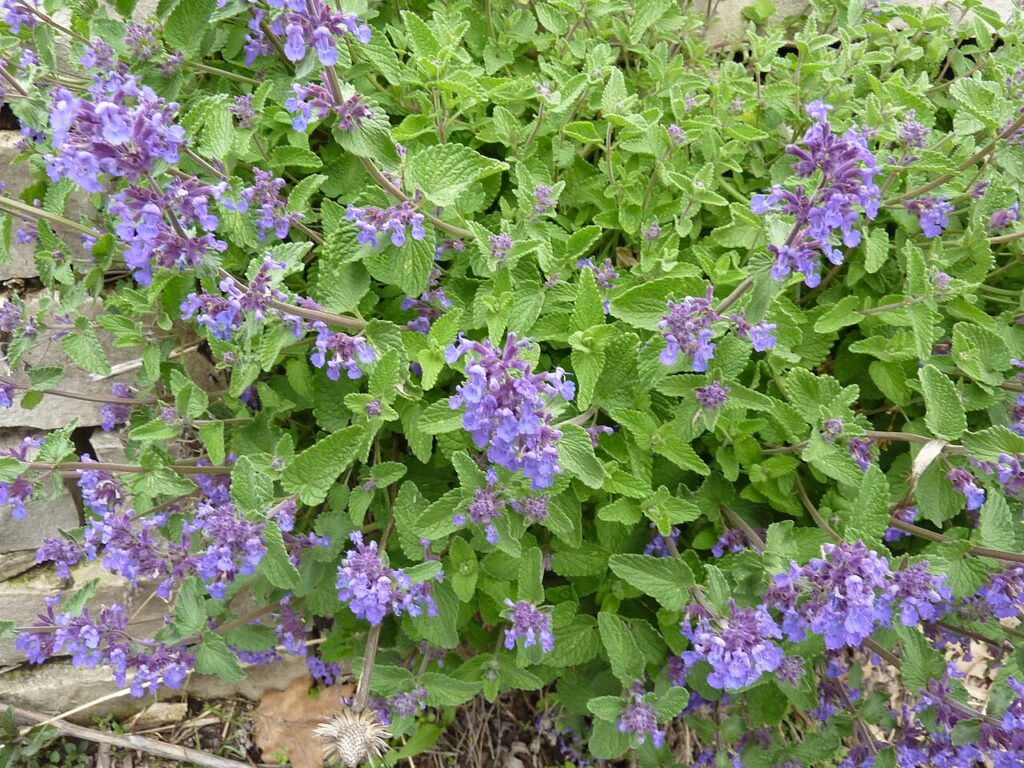
Catmint is one of those plants that looks full and put together even when you are not hovering over it. Its gray green leaves stay tidy, and the soft purple blue flowers show up early and keep coming for a long stretch. It handles heat and dry spells better than many spring bloomers, so it does not sulk when rain stops. If you plant it along a path, brushing past it releases a minty scent that makes the space feel fresh.
After the first big bloom, you can shear it back by about a third to bring on another flush of flowers. That quick haircut keeps it compact, and it also stops it from looking tired later in the season. Catmint is a favorite for pollinators, so you will often see bees working it on sunny afternoons. It is also deer resistant in many yards, which saves you from replacing chewed plants.
Salvia (Salvia nemorosa)
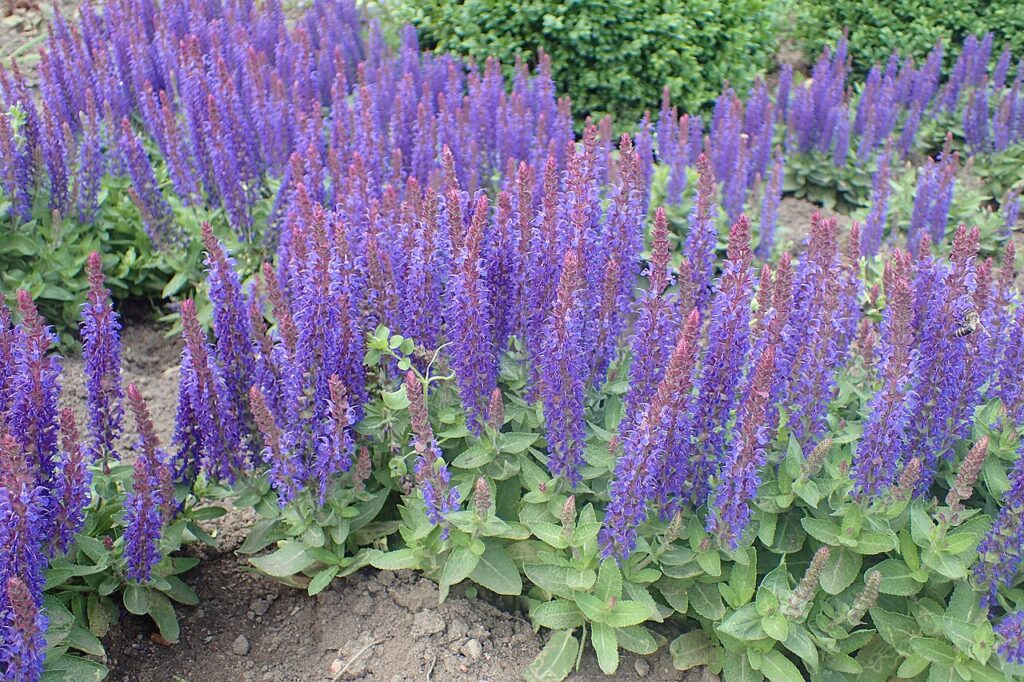
Salvia nemorosa grows upright and stays in a clean clump, so beds look organized without much effort. The flower spikes start in late spring and keep coming when you deadhead or do a quick trim. It loves full sun and does best in soil that does not stay soggy, which makes it a good match for many low water gardens. The foliage is lightly scented, and it keeps a nice structure even when flowers pause.
If you want more blooms, cut back the spent spikes and you will usually get a second wave. Salvia holds up well in wind and rain, so it does not collapse like some taller perennials can. In mixed borders, it pairs easily with roses, daisies, and ornamental grasses without looking chaotic. Once established, it rarely needs extra watering unless you are in a very hot stretch.
Coreopsis (Tickseed)
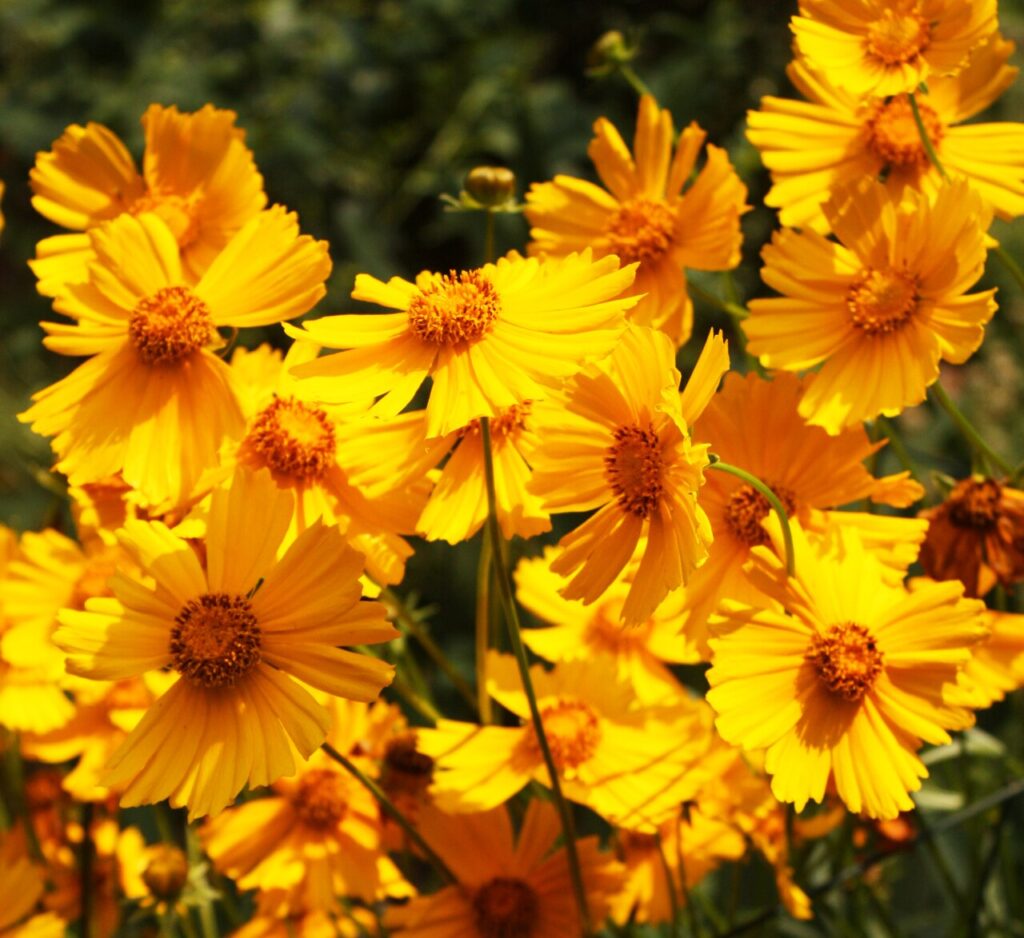
Coreopsis is cheerful without being needy, and it usually stays in a neat clump that does not sprawl. In spring it fills in quickly, then starts pumping out bright flowers that keep the border looking alive. Many types handle heat and poor soil, which is why people plant it and forget it. If you pick a compact variety, it stays especially tidy and does not need staking.
To keep it looking fresh, snip off spent blooms or give it a light haircut when flowering slows down. That little bit of cleanup often leads to more flowers later. Coreopsis also handles containers well, especially when you want a sunny pot that does not need daily attention. It is a good pick for beginner gardeners because it forgives missed watering and still looks fine.
Coneflower (Echinacea)
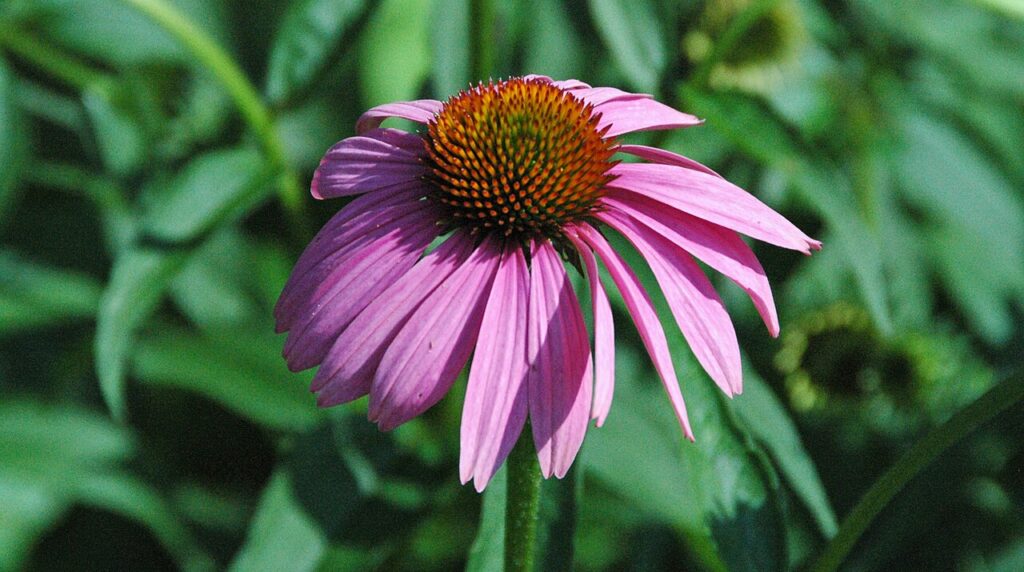
Coneflower starts in spring as a sturdy clump of leaves, and by summer it sends up strong stems that usually stand on their own. The big daisy-like flowers look structured, not messy, and they keep their shape even during hot weather. It handles drought once established, which means fewer trips with the hose. Plant it in full sun and give it room, and it will look neat while slowly getting fuller each year.
You can deadhead to keep flowers coming, or you can leave some blooms to turn into seed heads for birds. Either way, the plant still looks intentional because the stems stay upright. Coneflower also works well in mixed plantings because it does not take over, and it plays nicely with other perennials. If your soil is heavy, adding compost and planting slightly high can help it avoid wet feet in spring.
Yarrow (Achillea)
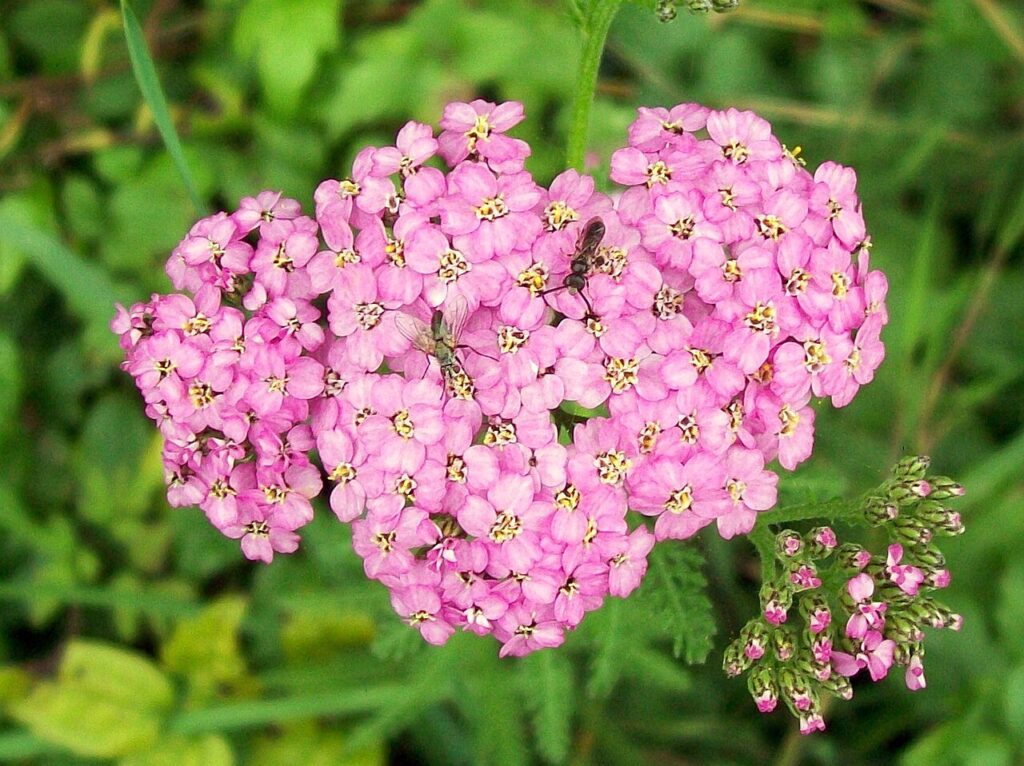
Yarrow has feathery leaves that look soft but stay in a tidy clump, which is great when you want texture without chaos. In late spring and summer, it sends up flat flower heads that look clean and architectural. It is tough in heat and dry conditions, and it does not panic when you forget to water. Full sun helps it stay compact, while too much shade can make it stretch.
If the first round of flowers fades, you can cut the stems back and often get more blooms. Yarrow rarely needs fertilizer, and too much feeding can actually make it flop, so low effort works in your favor. It is also a good choice for borders that get reflected heat from driveways or sidewalks. Once it settles in, it is the kind of plant that looks cared for even when you have not touched it in weeks.
Sedum (Stonecrop)
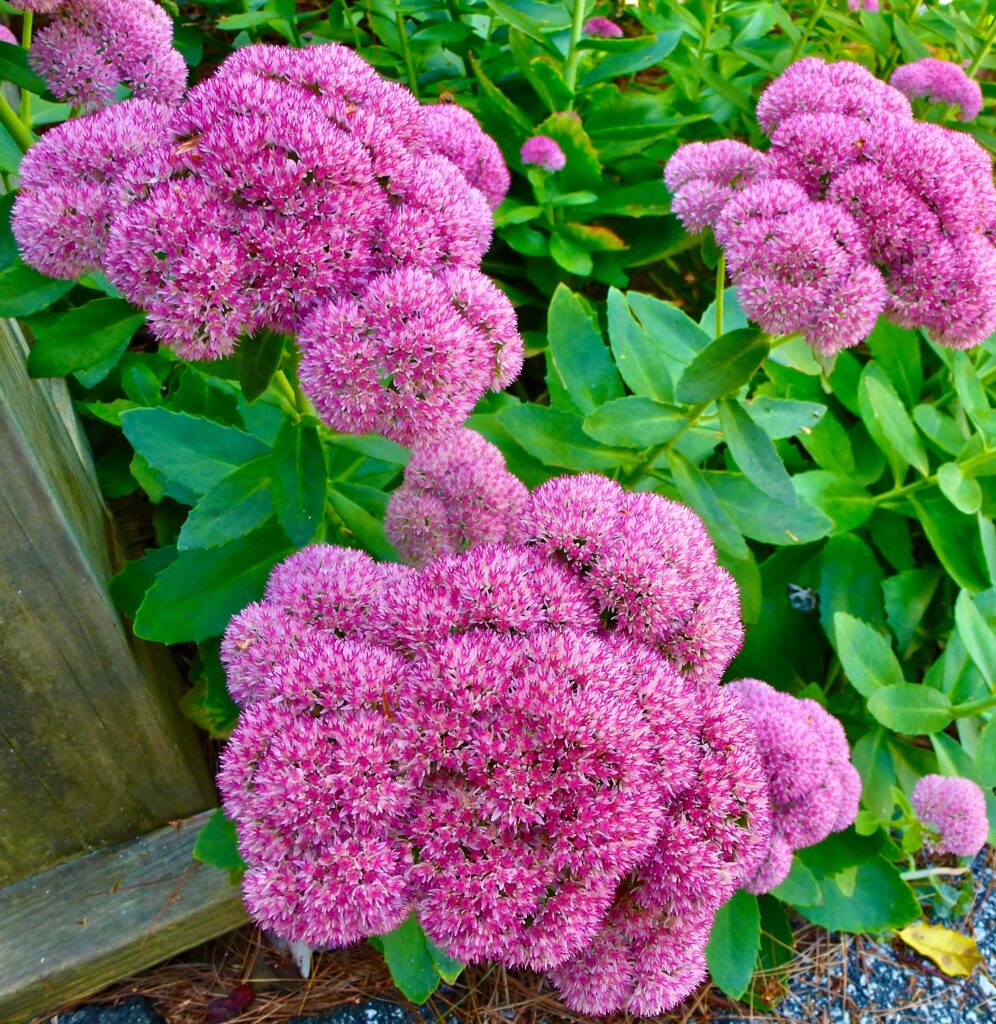
Sedum is tidy by nature because it grows as a firm mound with thick leaves that hold their shape. In spring, it fills in quickly, and the foliage looks clean even before flowers arrive. Many types bloom later in the season, but the plant still earns its spot early because it stays neat and does not need much water. It is perfect for sunny spots where other plants crisp up.
Sedum needs very little, and that is the best part. Avoid rich soil and heavy watering, since those can make it grow loose and floppy. If a stem breaks, you can often stick it back into the soil and it will root, which feels like a free plant. It also looks great in rock gardens and containers where a crisp, low profile plant helps everything look organized.
Heuchera (Coral Bells)
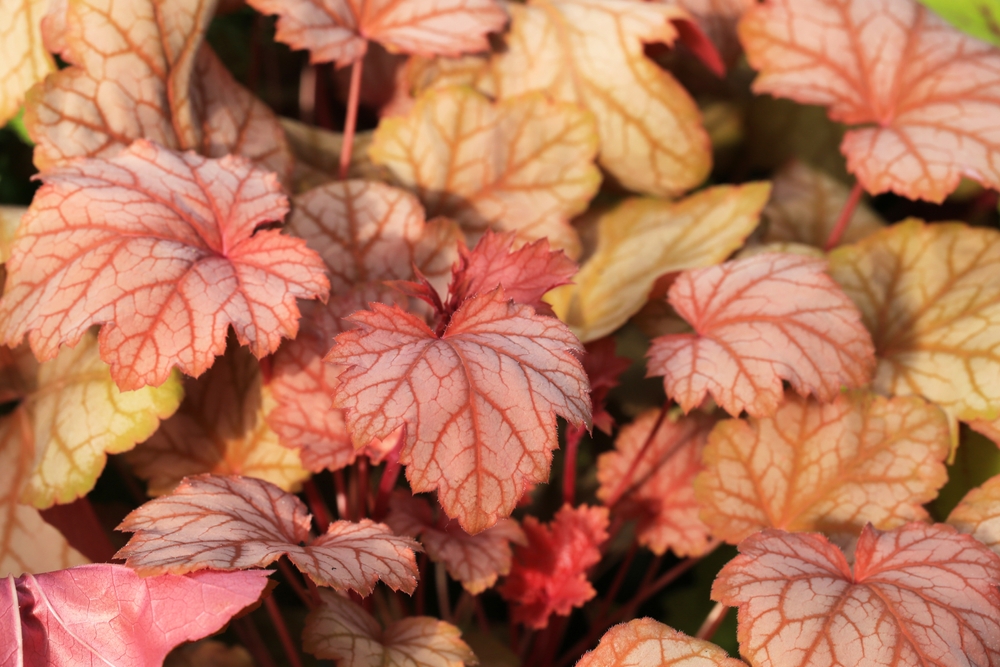
Heuchera is a spring garden workhorse because the leaves form a tidy mound and come in colors that pop without flowers. You can find varieties in lime, caramel, purple, and near black, and they keep that color for months. It handles part shade well, which is helpful if you have a yard with trees waking up in spring. The small flower stems are pretty, but the foliage is what keeps the plant looking put together.
Keep it in soil that drains well, and do not bury the crown too deep. In spring, you can tidy it up by pulling off any tired leaves, and that is usually all it needs. If winters are rough in your area, a light mulch helps stop the plant from heaving out of the ground. Heuchera also looks great in pots near a front door because it stays neat and does not spill everywhere.
Hellebore (Lenten Rose)
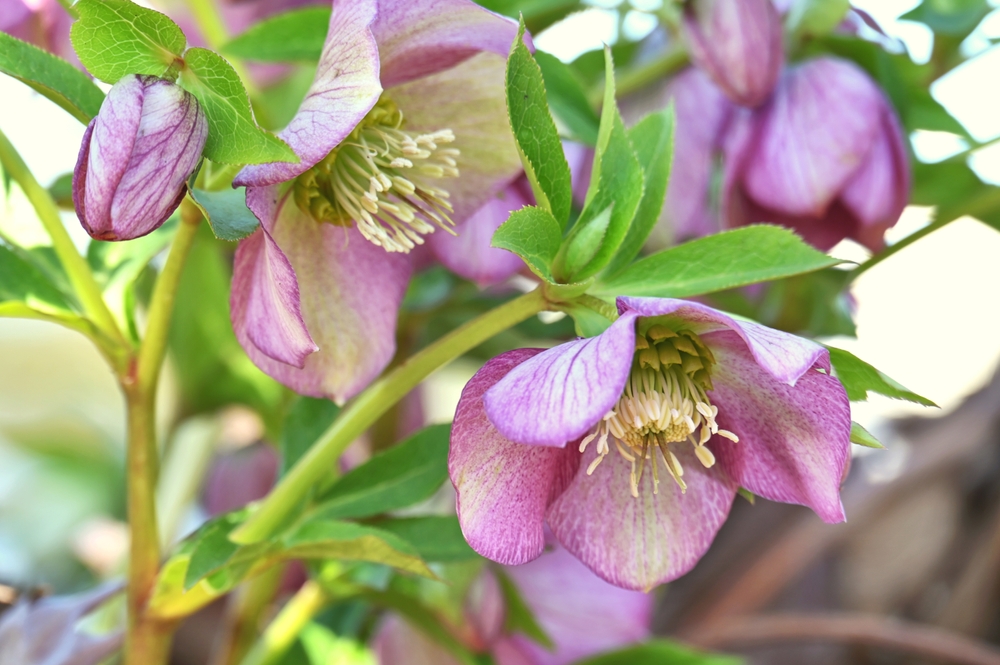
Hellebores are neat and low work, and they often start blooming while winter is still hanging on. Their leaves form a sturdy clump that stays attractive through spring, and the flowers nod gently without turning messy. They like part shade, so they fit perfectly under deciduous trees that are bare early in the season. Once they settle in, they can live for years in the same spot with very little attention.
In early spring, you can cut off older leaves to show off the blooms and keep everything looking clean. That one bit of trimming also improves airflow and makes the plant look freshly groomed. Hellebores do not need constant watering, but they appreciate a drink during long dry spells. Because deer usually leave them alone, you are less likely to come outside to a chewed up plant.
Daylily (Hemerocallis)
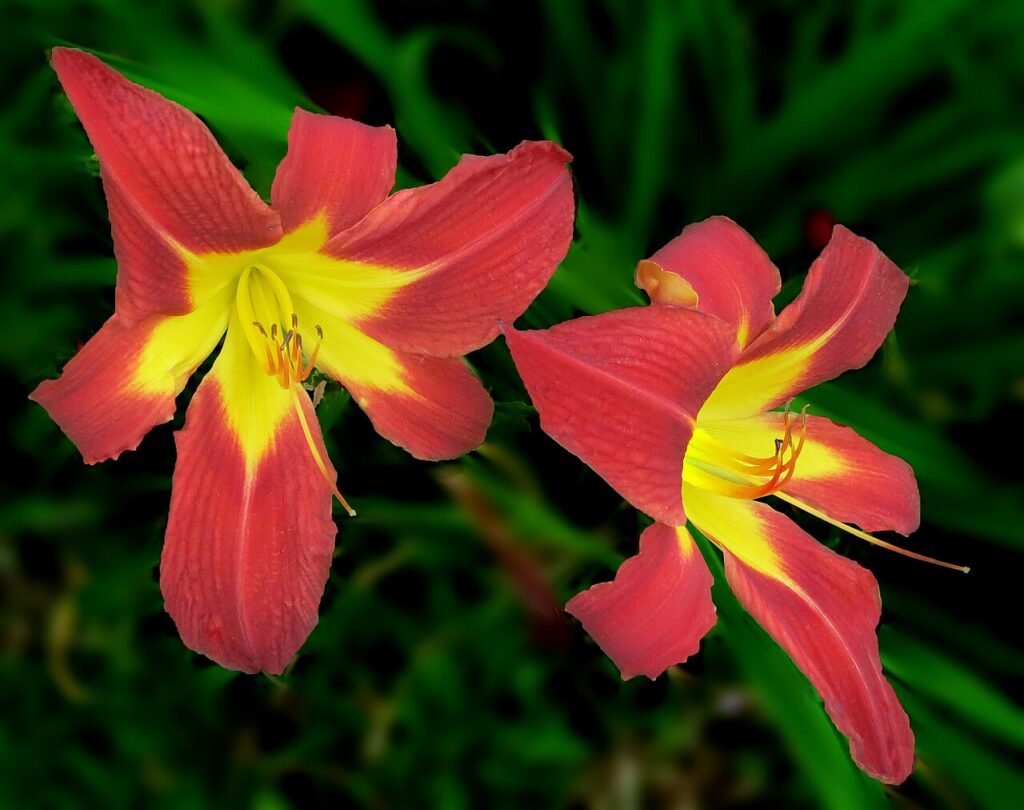
Daylilies grow in tidy clumps of arching leaves, and they fill space without looking wild. In spring the foliage comes up fast and looks like a clean green fountain. Flower stalks show up later, and each bloom only lasts a day, but the plant keeps sending more for weeks. They handle many soils, so you do not have to baby them to get a solid show.
To keep them looking neat, remove spent flower stalks when the blooming period ends. Every few years, dividing a crowded clump helps the plant stay healthy and keeps the bed from feeling jammed. Daylilies are also a good option for areas that get heat and some drought, since they bounce back well. If you pick a compact variety, it stays especially clean along walkways and borders.
Dianthus (Pinks)
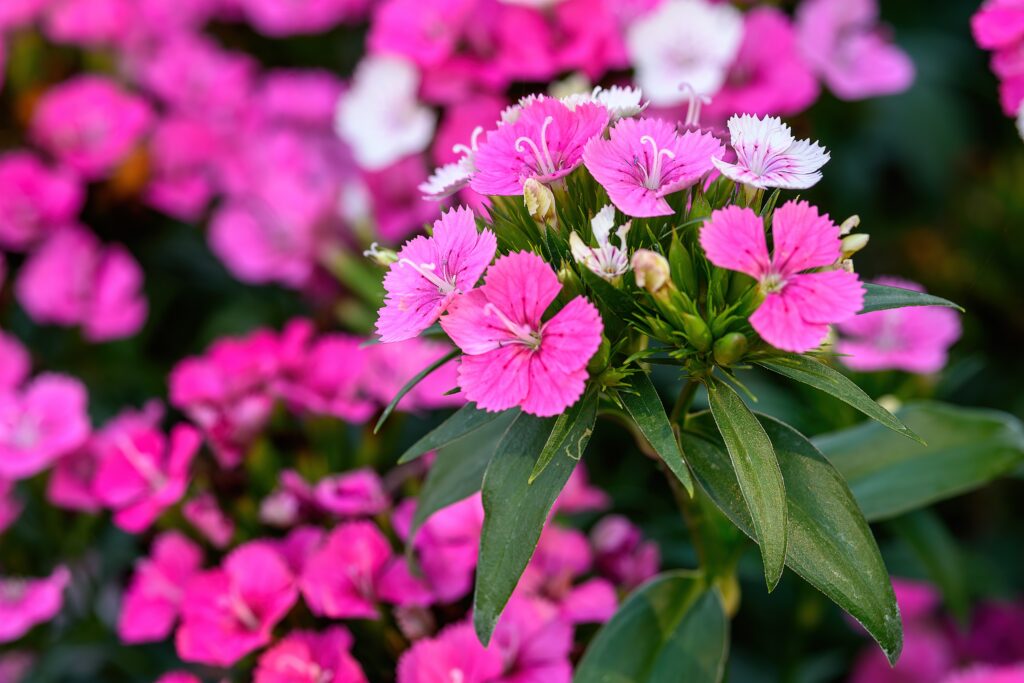
Dianthus stays low and tidy, with narrow blue green leaves that look like a neat little tuft. In spring, the flowers pop up in bright pinks, reds, or whites, and many have a light clove-like scent. It likes sun and well draining soil, so it is a good pick for edges, rock gardens, and containers. Because it stays compact, it helps borders look finished instead of shaggy.
After a bloom, a quick snip of spent flowers keeps it looking clean and can encourage more. Dianthus does not like soggy roots, so it is better to water deeply and less often than to sprinkle every day. It is also a nice plant for small spaces because it does not sprawl into its neighbors. If you keep the crown from getting buried under mulch, it usually comes back reliably each spring.
Allium (Ornamental Onion)
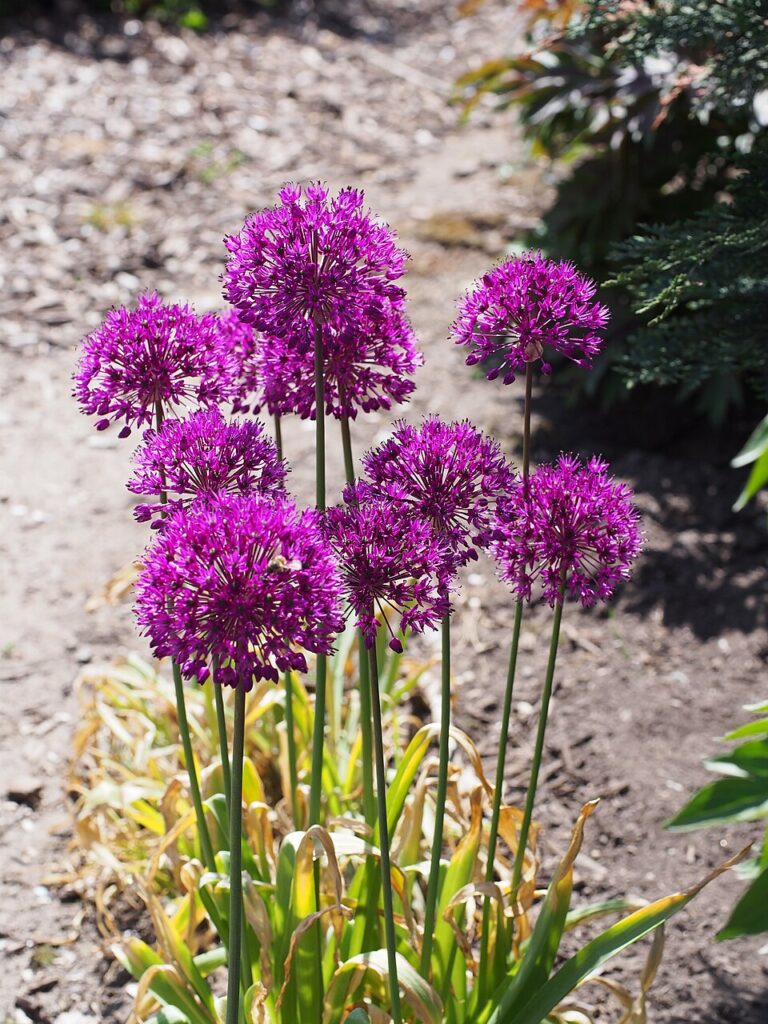
Ornamental alliums bring a neat look in spring because the flower stems rise cleanly and end in round blooms that look like little fireworks. Many types bloom in late spring, right when a lot of gardens need a punch of color. They love sun and well drained soil, and they do not need much else to perform. Because they come from bulbs, they also feel easy since you plant once and get a repeat show.
The leaves can yellow as the flowers come on, so planting alliums among perennials helps hide that fading foliage. After bloom, you can leave the seed heads for texture or cut them off for a cleaner look. Alliums are usually ignored by deer and rabbits, which makes them low stress in many yards. For an especially tidy bed, choose shorter types that do not flop and stay upright in spring winds.
Boxwood (Buxus)
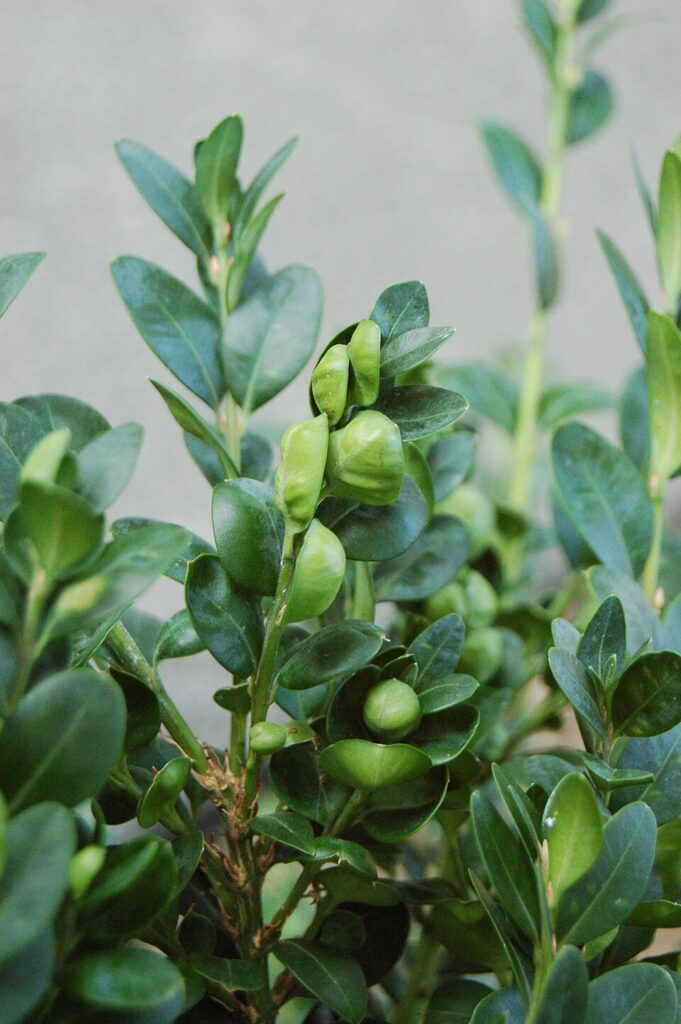
Boxwood is a classic choice when you want a plant that keeps its shape and makes the garden look organized. In spring, the new growth comes in bright green, and the shrub stays dense if it gets enough sun and airflow. You can use it as a low hedge, a round accent plant, or a steady backdrop behind flowers. It is also easy to pair with seasonal color because it does not compete for attention.
A light trim in late spring helps it keep a clean outline, and that is usually the main job. Water it during the first year so roots settle in, then it becomes much easier to manage. In areas where boxwood pests are common, keeping plants healthy and spaced out can reduce problems. If you prefer less clipping, look for naturally compact varieties that hold their shape well.
Dwarf Fountain Grass (Pennisetum alopecuroides ‘Hameln’)
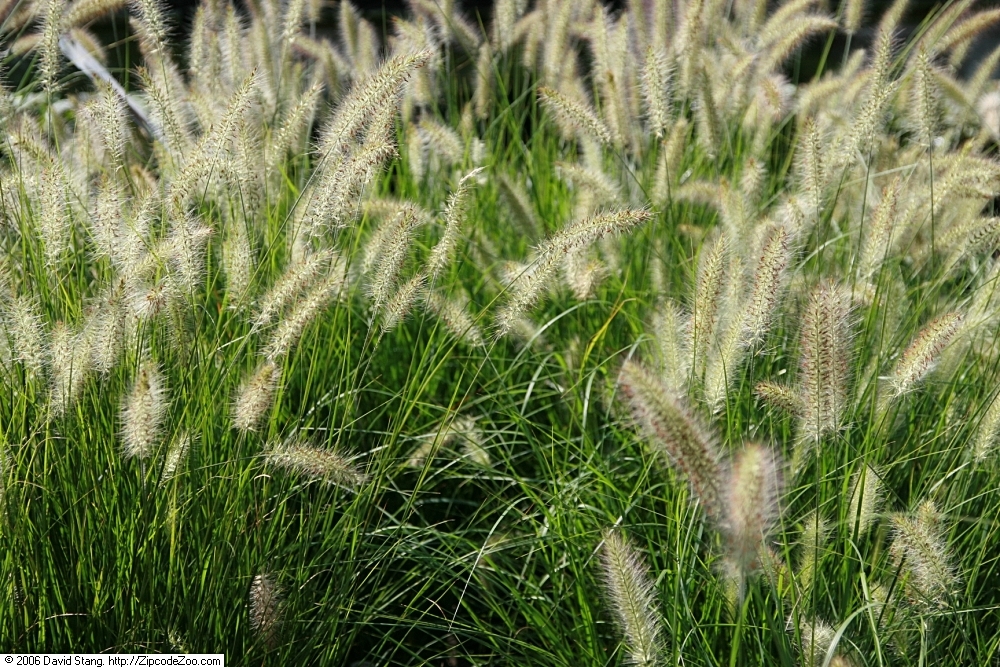
Dwarf fountain grass forms a tidy fountain shape that looks intentional from spring through fall. New blades start pushing up as temperatures warm, and the clump stays neat instead of spreading all over. By late summer, soft flower plumes appear and sway with breeze, which adds movement without looking messy. It works well along driveways or patios because it stays contained and does not need constant fuss.
In late winter or very early spring, cut it back to a few inches tall so fresh growth comes in clean. That one yearly cut is basically the whole care routine for most yards. It prefers sun and handles dry conditions once established, so it is a good option for low watering beds. If you plant it in groups, the repeated mounds make a border look polished without extra planting.
Creeping Thyme (Thymus serpyllum)
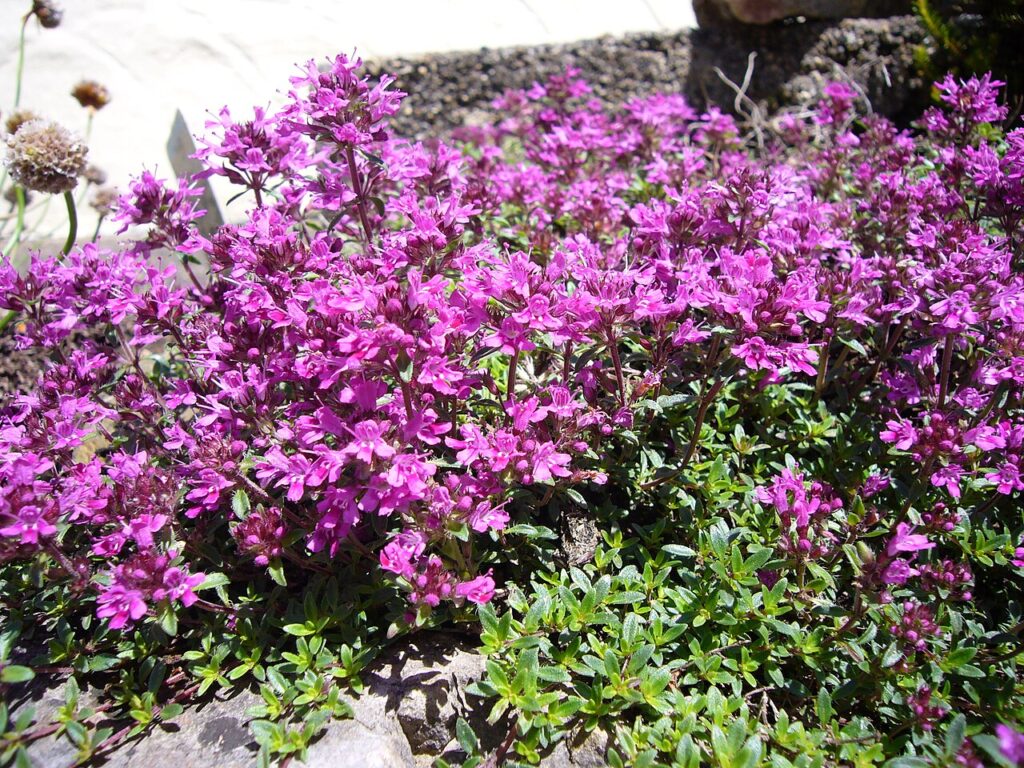
Creeping thyme stays low and tight, forming a neat mat that fills gaps without looking weedy. In spring and early summer, tiny flowers can cover it, and the blooms pull in bees while still keeping a clean look. It likes sun and fast draining soil, which makes it perfect for stepping stones, rock edges, and sunny slopes. When you walk on it, it releases a light herbal smell that makes the garden feel inviting.
It needs very little watering once established, and it usually looks better when you do not overdo it. If it creeps a bit beyond its space, you can trim the edges with scissors and it bounces back fast. In heavy clay, planting it in raised pockets or between stones helps keep roots dry. It is a smart ground cover for spring because it stays tidy while other plants are still filling in.
This article originally appeared on Avocadu.