
16 Spring Holiday Collectibles That Show Up at Flea Markets Right Now
As spring flea markets fill up with fresh booths and old treasures, holiday collectibles often start standing out right away. Some pieces bring soft colors and sweet memories, while others remind people of the way spring celebrations once looked at home. Because of that, browsing these markets can feel like a small trip into the past.
This post may contain affiliate links, which helps keep this content free. Please read our disclosure for more info.
Gurley Easter Bunny Candle
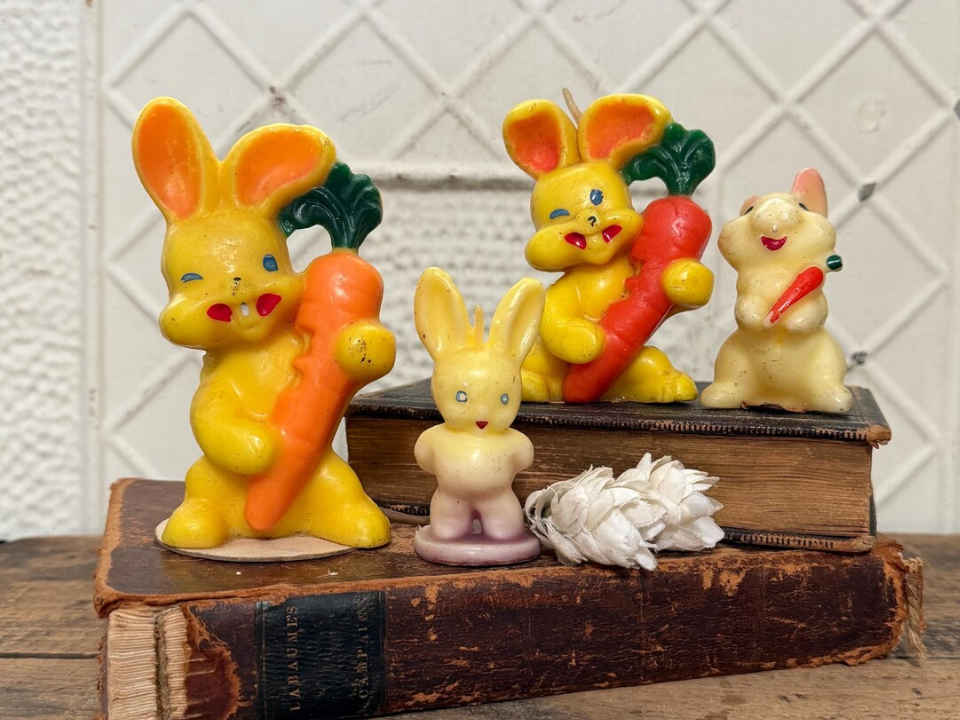
A Gurley Easter bunny candle from the 1950s is one of those flea market finds that people notice fast because the shape and pastel finish feel tied to older holiday displays. It was made by Tavern Company for the Gurley line, and most examples are molded wax with painted details. These candles were sold as decor first, so unburned pieces tend to get more attention than ones with melted ears or missing paint. Small labels still attached at the base can make a plain bunny feel a little more special.
Currently, a single 1950s Gurley bunny candle typically sells for $10 to $20 in the resale market, with cleaner, unburned examples commanding higher prices. Wax condition matters a lot because heat damage, bends, and fading can pull the price down quickly. Many flea market sellers group these with chicks and flowers, so buying in a mixed lot can be a better deal. If you see one with crisp color and a strong wick, it is usually worth a closer look.
Gurley Easter Chick Candle
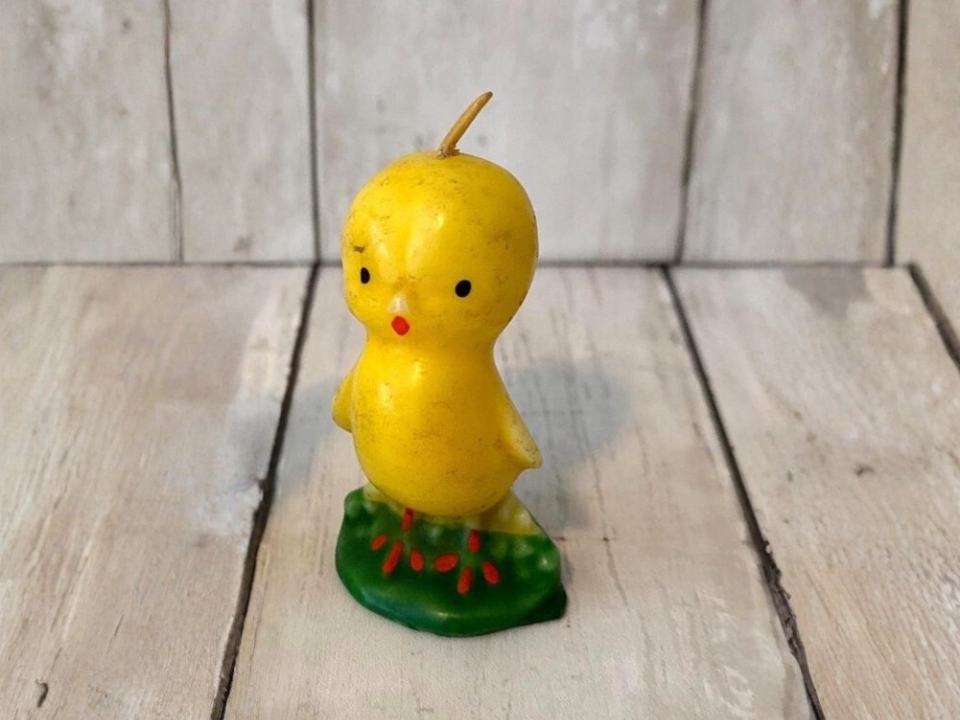
Another easy spring holiday piece to spot is the Gurley Easter chick candle from the 1950s. Like the bunny version, it was made of molded wax and painted in bright pastel tones, usually yellow with orange and black accents. The small size makes it easy for sellers to tuck into boxes of mini decorations, which is part of why these still show up so often. Because the design is simple and cheerful, many people pick them up even when they do not collect candles in general.
In today’s resale market, a single chick candle often lands around $8 to $18, depending on color and whether it looks unused. Pieces with the original sticker tend to sit at the better end of that range. Burn marks, flattening, and wax bloom can cut the price, though flea market buyers still like them as shelf fillers. These pair nicely with old paper grass, candy containers, and miniature egg cups in a spring display.
Rosbro Bunny with Wheelbarrow Candy Container
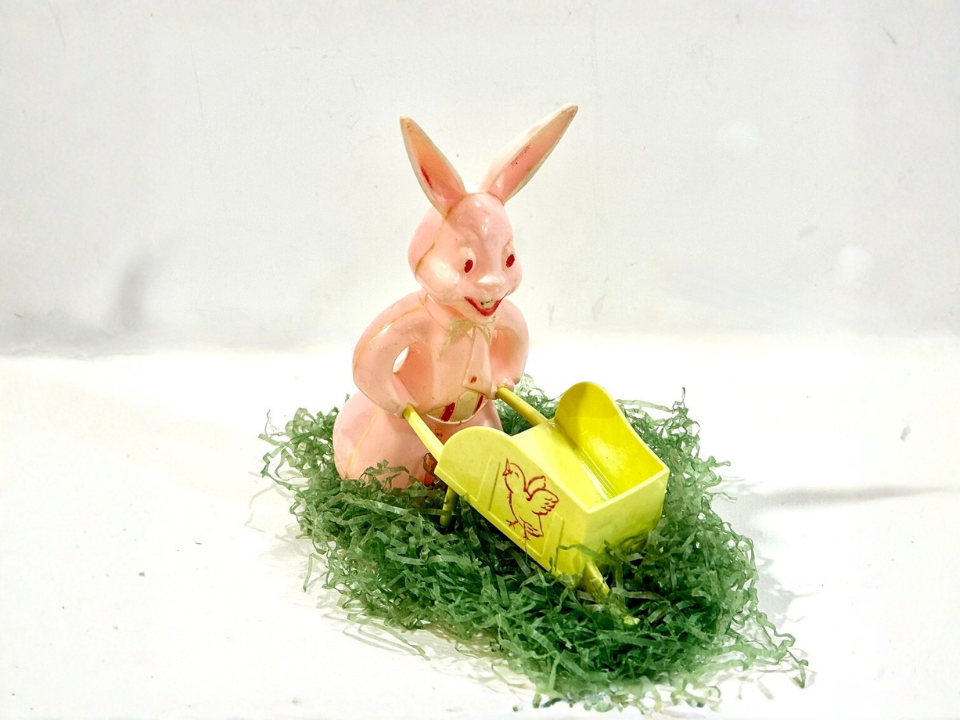
The Rosbro bunny with wheelbarrow candy container is a classic 1950s Easter find that still turns up at flea markets with surprising regularity. Rosbro, also seen as Rosen Rosbro, made these in the United States from hard plastic with painted accents. The rabbit usually pushes a bright, candy-filled wheelbarrow, giving it a toy-like look that people still enjoy. This is one of the more recognized Rosbro spring pieces, so sellers often know what it is.
Right now, most wheelbarrow examples land around $50 to $90, with original tags or cleaner paint pulling the figure higher. Worn ears and rubbed paint are common, so a piece with strong color can stand apart fast. Many buyers like them because they work as both holiday decor and plastic toy memorabilia. If the wheelbarrow is not cracked and the bunny still stands straight, that is usually a good sign.
Gurley Easter Egg Diorama Candle
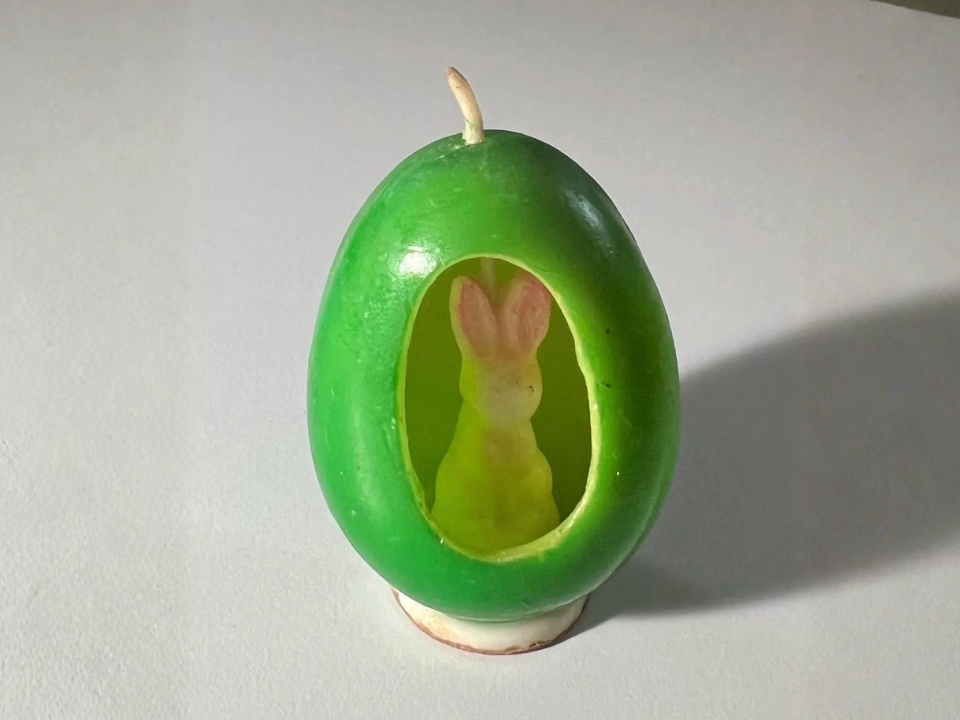
The Gurley Easter egg diorama candle from the 1950s stands out because it is a little more playful than the plain bunny and chick forms. It was made of colored wax and formed like an egg with a cutout scene, usually showing a chick inside. That extra detail gives it more shelf appeal, especially when the inner scene still looks bright. Even at a busy flea market, this one has a way of pulling people in.
A fair resale range for one of these usually sits around $15 to $25. Shape matters here because the egg form can chip or warp more easily than a simple figure. If the cutout section is clean and the little chick is still vivid, the piece tends to hold attention better. Buyers who like mid-century holiday decor often grab these quickly because they look fun without taking up much room.
Rosbro Small Hard Plastic Bunny Figure
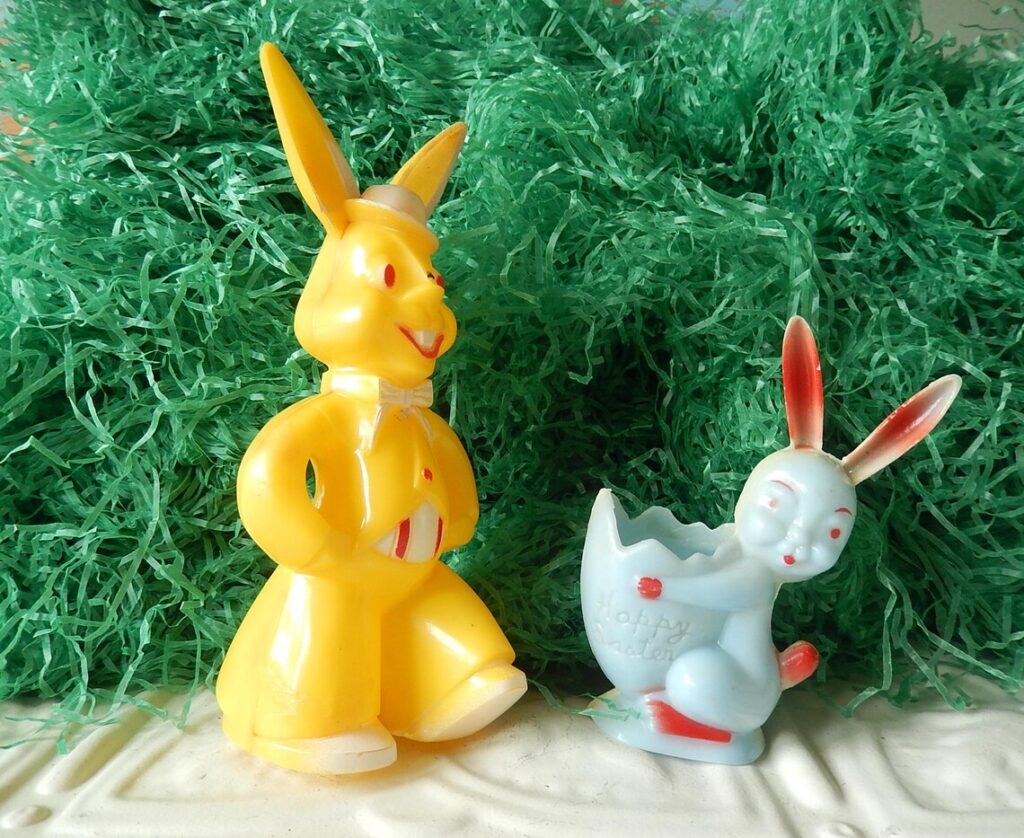
Small Rosbro hard plastic bunny figures from the 1950s are another regular flea market sight, especially in mixed boxes of holiday miniatures. These were made of hard molded plastic and often painted in soft pink, yellow, blue, or white. Some stand alone, while others were made as candy containers or pull toys. Even the simpler ones feel full of period charm because the faces and colors are so easy to spot.
A single small Rosbro bunny often lands around $12 to $20, while grouped lots can move the math a little lower per piece. Sets or pairs usually do better because buyers like ready-made shelf groupings. Paint loss is normal, so the condition is often judged with some grace in this category. These are worth picking up when the colors still look clean, and the plastic has not split.
Lefton H3241 Bunny Planter
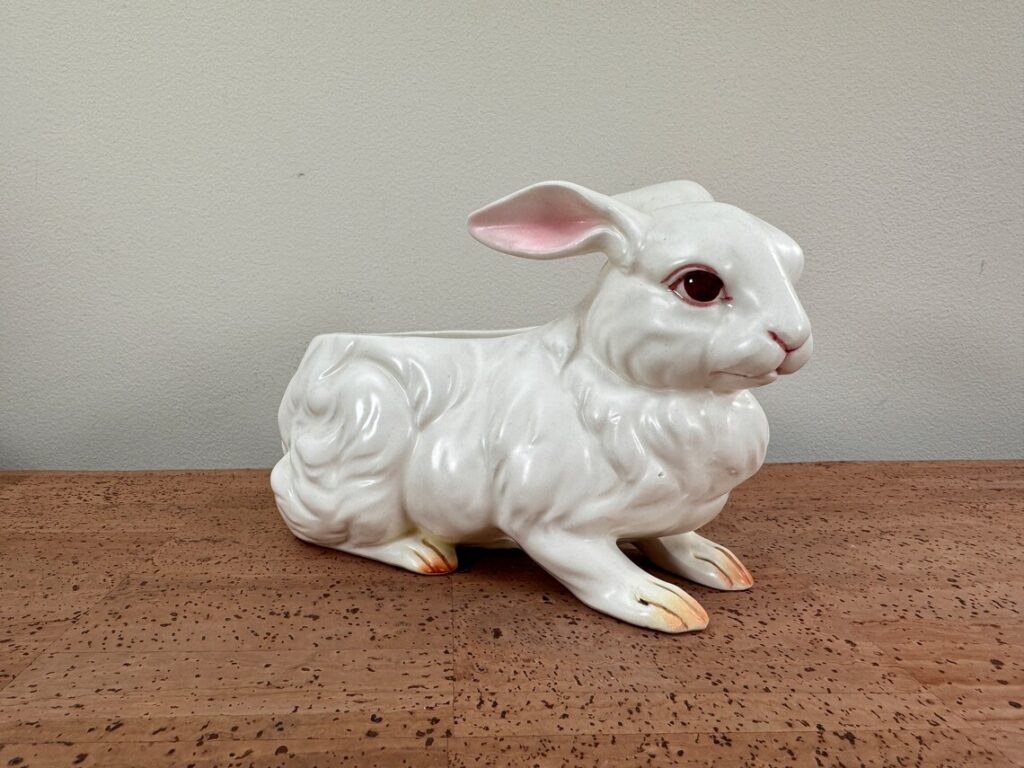
Lefton made a long line of holiday ceramics, and the H3241 bunny planter is one of the easier spring examples to find. This piece dates to the mid-century period and is made of ceramic with a glazed finish. The rabbit shape keeps it decorative even when the planting area is empty, which helps it work well on shelves and windowsills. A marked base is a plus because Lefton numbers help buyers feel better about identification.
Most examples of the Lefton H3241 planter land around $25 to $35 in the current market. Better glaze, clearer markings, and fewer flea bites tend to keep the price steady. These planters are still easy to use for faux flowers, wrapped candy, or a small Easter arrangement. When one appears at a flea market for under that range, it usually does not sit long.
Lefton 3074 Three Bunnies Egg Planter
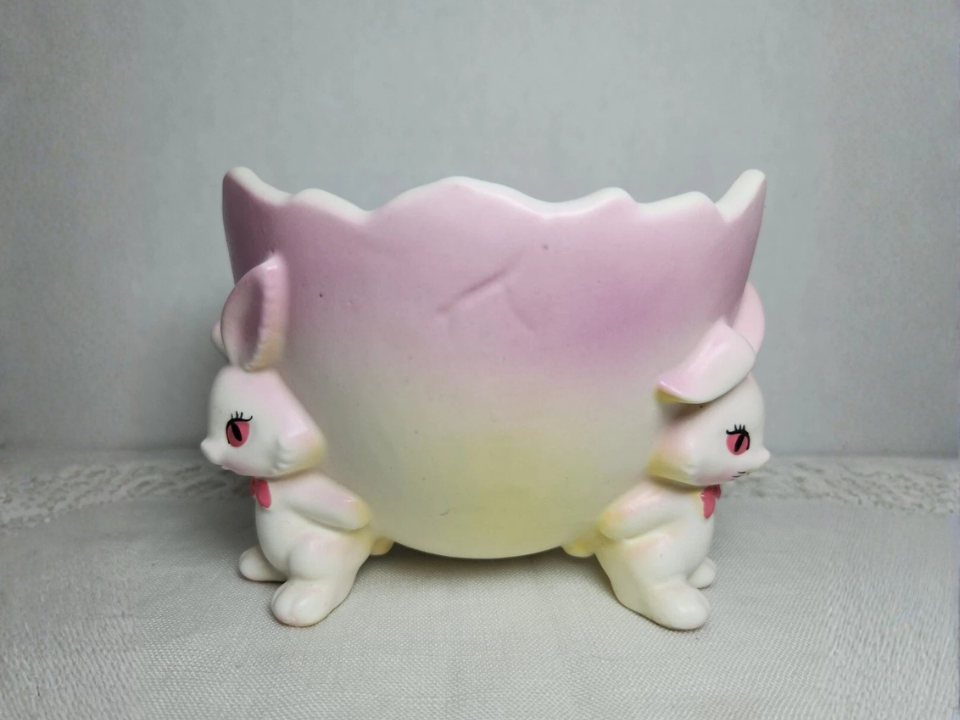
A different Lefton piece that shows up with some regularity is the 3074 planter from the 1960s. This one is ceramic and features three bunnies holding up an egg-shaped planter bowl, which gives it a playful mid-century look. Because it has more figures and more movement than a single rabbit planter, it tends to stand out on a crowded table. It is the kind of piece that feels decorative even from a distance.
A fair value for the Lefton 3074 planter is around $35 to $45. Chipping around the rim or ears is the main thing to watch, since those raised areas wear easily. Buyers like it because it feels a little larger and more detailed than many common bunny planters. If the paint around the eyes and bows still looks fresh, it usually makes a better impression.
Napco Mom and Baby Bunny Planter
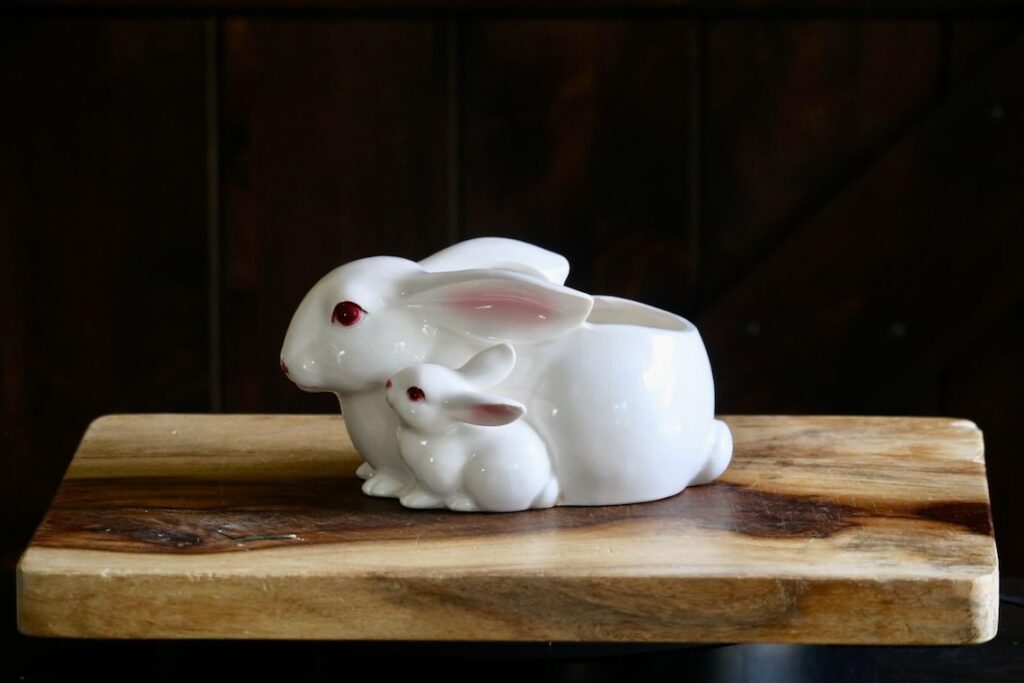
Napco bunny planters are steady flea market favorites, and the mom and baby version from 1960 is one that comes up often. Napco, short for National Potteries Corporation, sold many of its novelty holiday pieces in glazed ceramic. This one usually shows a larger rabbit with a smaller bunny tucked close by, often with pastel trim and a planting pocket. The family look gives it a softer style than some of the more comic Easter pieces.
Current resale value for this planter often falls around $40 to $55, though damaged pieces can dip below that. The price tends to move higher when the foil label is still there or the paint is unusually clean. Crazing is common on Napco ceramics, so buyers usually focus more on chips and repairs than fine age lines. For flea market shopping, this is a good one to check inside and around the ears before buying.
Napco Bunny Painting Egg Planter
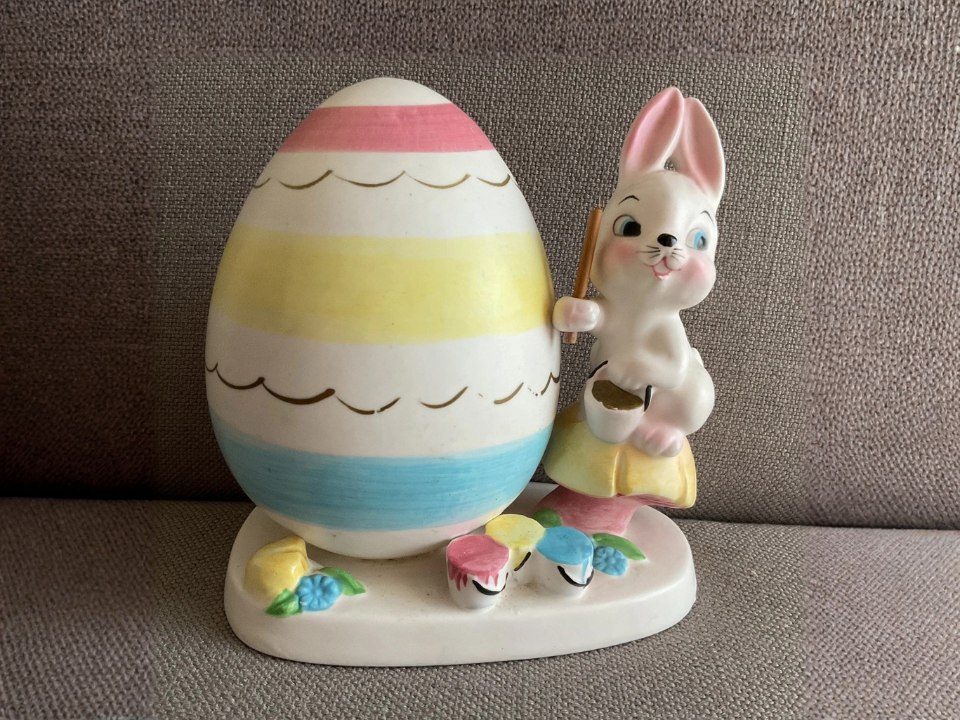
The Napco bunny painting an egg planter is a spring piece from 1961 that feels especially easy to love. It is made of ceramic, usually hand-painted in white and pastel tones, and the pose gives it more story than a plain rabbit figure. That little scene of a bunny working on an egg fits the holiday theme without looking too formal. At flea markets, it often draws people who like classic Japanese import ceramics.
A fair market range for this 1961 planter is about $35 to $55. Missing small details or paint wear around the paws can pull it lower, though the figure still has good shelf appeal. Buyers often like Napco spring pieces because they have a gentle, hand-painted feel. This one looks especially nice with small flowers or jelly beans tucked into the open section.
Josef Originals Big Eyed Bunny Planter
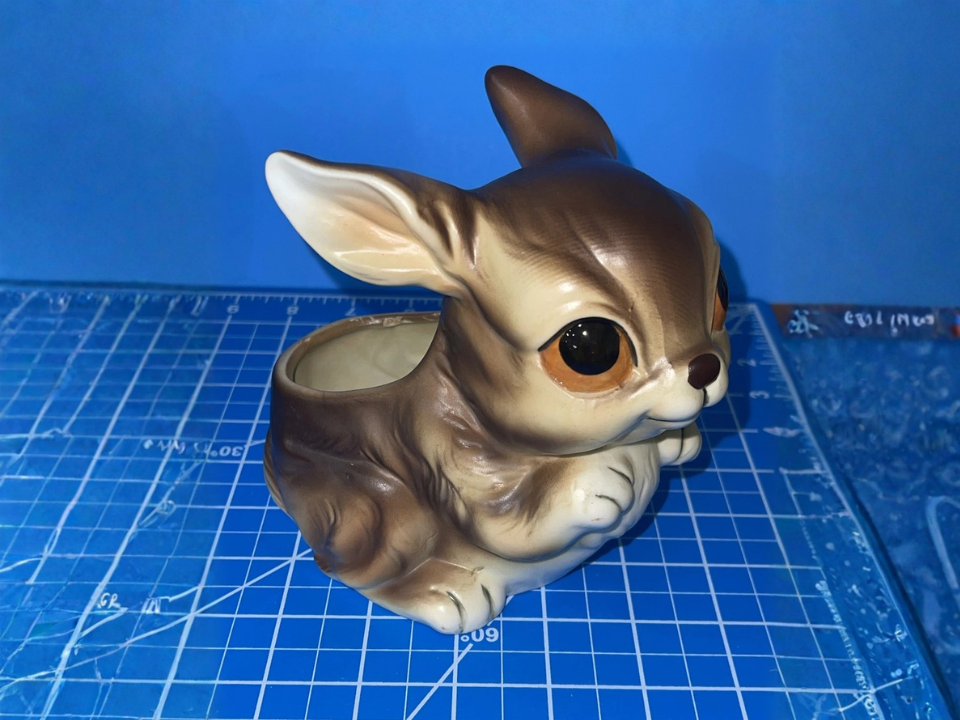
Josef Originals made plenty of animal figures, and the big-eyed bunny planter from the 1950s still shows up around Easter time. Most examples are ceramic or porcelain with a glossy finish and a soft, hand-painted face. The wide eyes and sweet expression make it feel very much of its era, which is part of why people still pick them up. Even when they are small, these planters tend to have real personality.
In the current market, these Josef Originals bunny planters often land around $20 to $35. Pieces with the original sticker or cleaner glaze usually sit at the stronger end of that range. Chips are the biggest issue, especially around the ears and the planter rim. For a flea market buy, it is worth checking the underside too, since Josef labels can add a little value.
Holt Howard Easter Bunny Candle Huggers
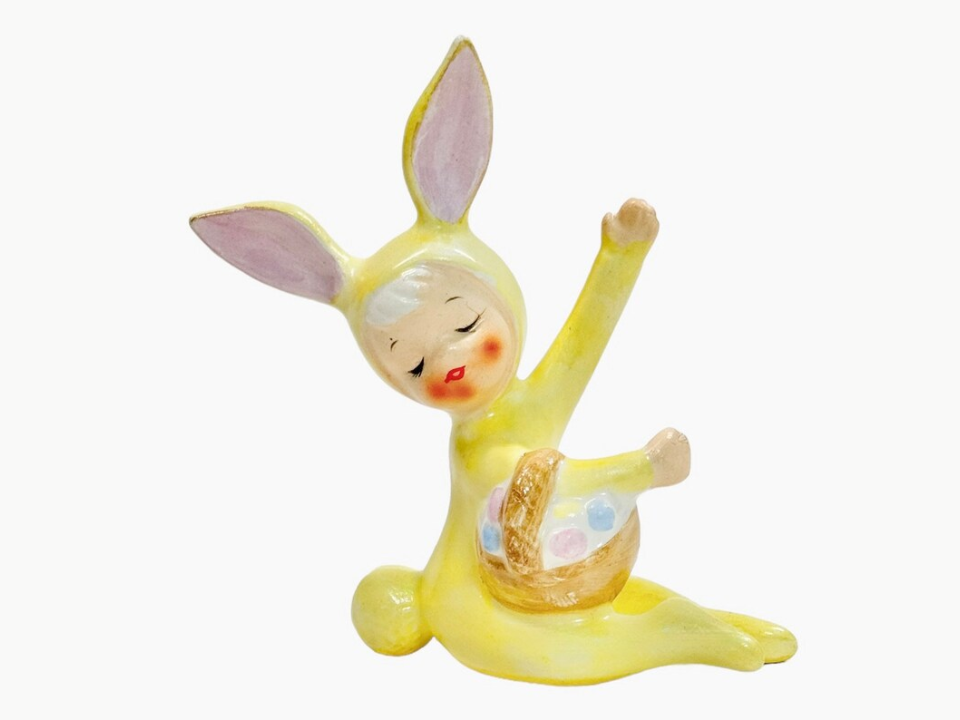
Holt Howard spring pieces are watched closely, and the yellow Easter bunny candle huggers from 1958 are among the most wanted. These were made in Japan from ceramic and porcelain, and they were designed to wrap around candle holders or matching bases. Their faces have that playful Holt Howard look that many mid-century buyers love. Because the ears and arms are delicate, intact sets are harder to find than common planters.
A pair in today’s market usually lands around $65 to $100, though repaired sets can sit lower. Collectors tend to forgive small wear here because these are known for fragile points. Even so, solid glaze and matching bases help a lot. At a flea market, these are the sort of spring holiday pieces that can turn an ordinary table into one worth digging through.
Holt Howard Rooster Egg Cups
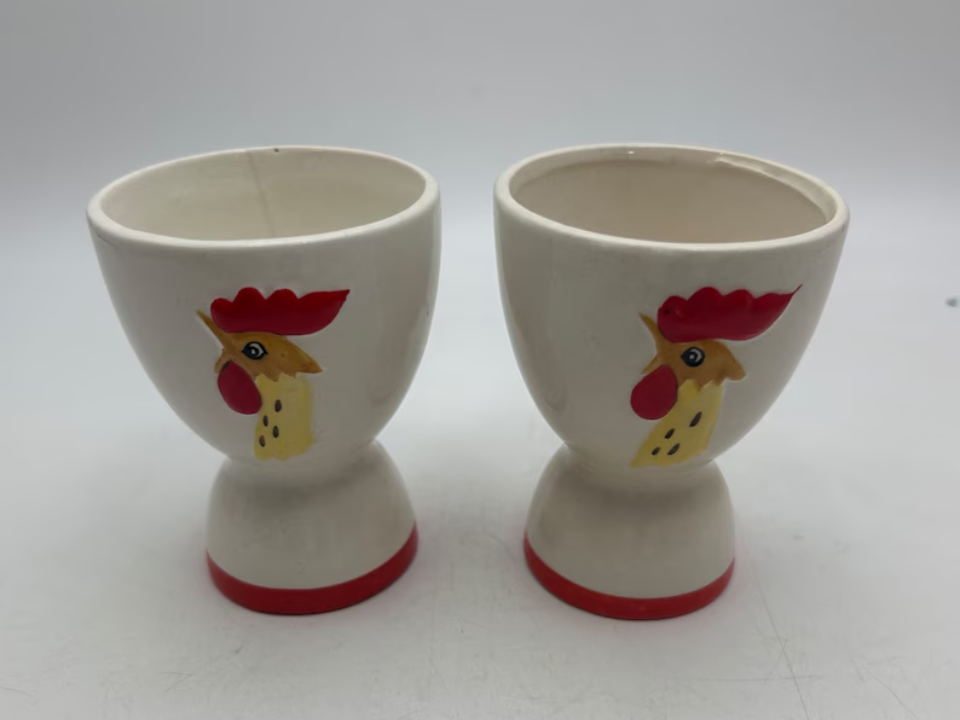
Not all spring holiday finds are rabbits, and Holt Howard rooster egg cups from 1961 are a good example of that. The usual set is ceramic, made in Japan, and painted in white with red accents. These were table pieces rather than yard or shelf decor, which gives them a slightly different feel from planters and figures. They still fit spring tables well because egg cups naturally tie in with Easter brunch and seasonal displays.
A set of three often lands around $14 to $30, depending on paint and whether the set is complete. Smaller table pieces like this can be easy to overlook at flea markets, so prices sometimes stay friendly. Buyers who like mid-century dining pieces often pick them up for use as well as display. Since they are hollow ceramic, chips at the top rim are the main thing to watch.
Empire 22 Inch Lighted Easter Bunny Blow Mold
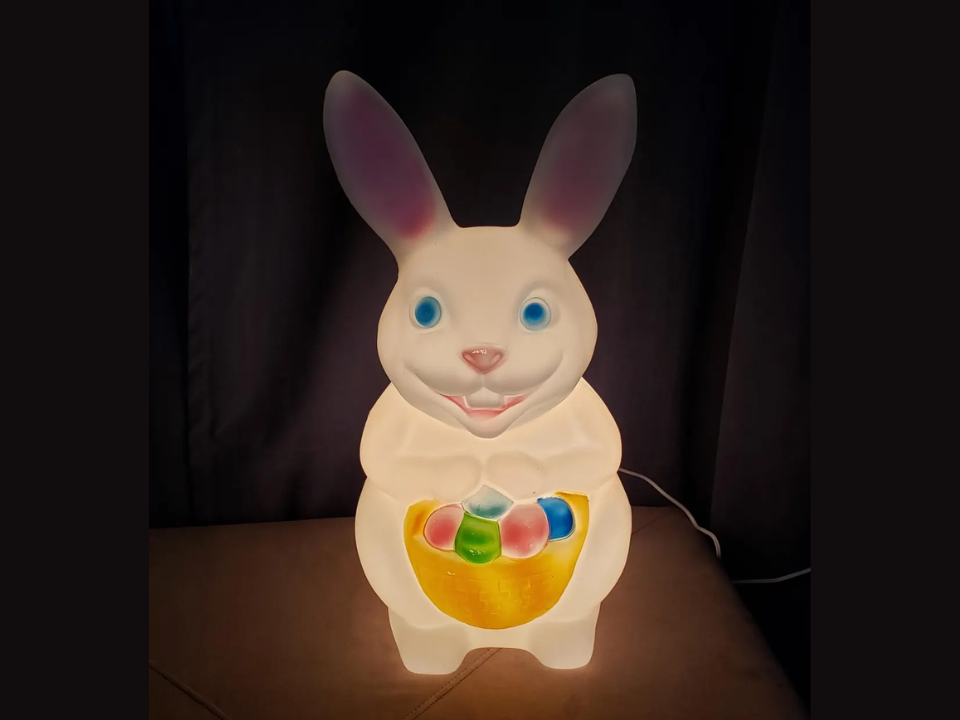
Empire’s lighted Easter bunny blow molds are still a spring flea market staple, and the 22-inch version is one of the most common. These were made of molded plastic and designed for indoor or outdoor display with a light inside. The look is bright, cheerful, and easy to spot from across a booth. Because blow molds were used on porches and lawns, signs of weather are normal.
Current resale value for a 22-inch Empire bunny usually falls around $45 to $60. Working light cords, cleaner paint, and fewer dents keep the price stronger. Many flea market buyers like these because they give a display instant holiday presence without a lot of effort. If the plastic is not brittle and the face paint still reads well, it is usually a solid pickup.
Beistle Honeycomb Easter Bunny Decoration
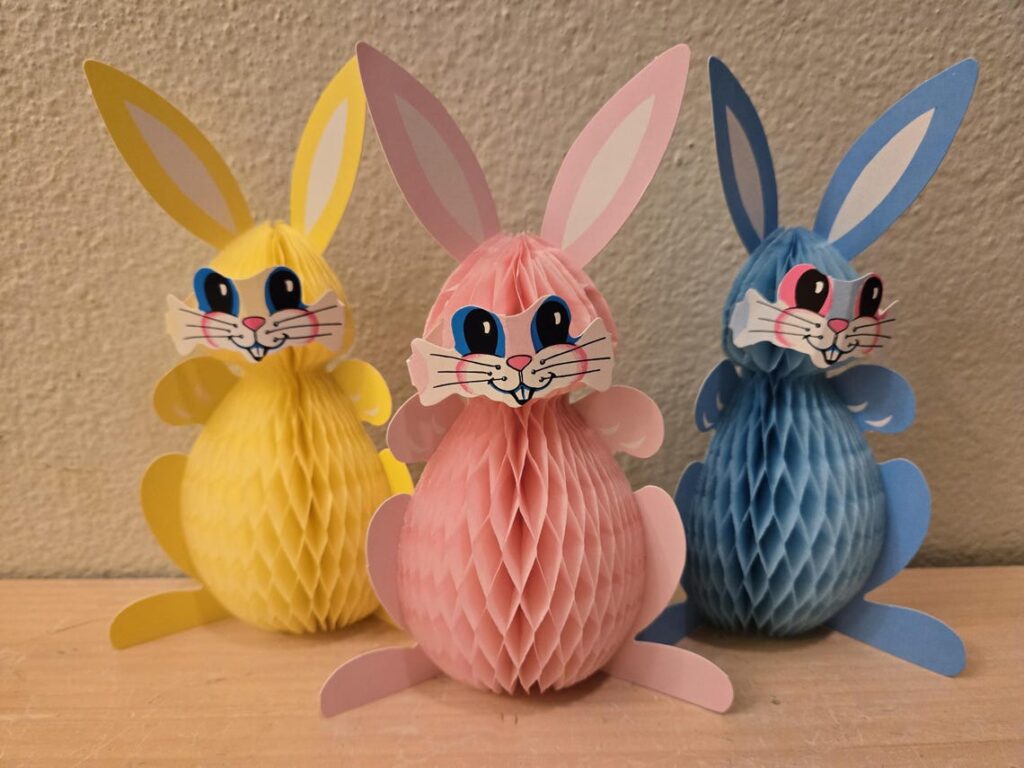
Beistle paper holiday decor has a long history, and the honeycomb Easter bunny pieces from the 1920s still show up at better flea markets. These were made of printed cardstock with tissue paper honeycomb sections, which gives them that classic party decoration look. Because paper did not always survive spring storage well, older examples feel a bit harder to find than ceramic rabbits. Even so, they still turn up when old attic holiday boxes are opened.
A fair market value for one of these usually falls around $28 to $38, with unused examples sitting higher. Color matters a lot here because fading can drain most of the appeal from paper holiday decor. Buyers like them for framed displays, mantels, or vintage party setups. If the honeycomb section still opens cleanly and the cardstock is not torn, that is a strong sign.
German Paper Mache Easter Egg Candy Container
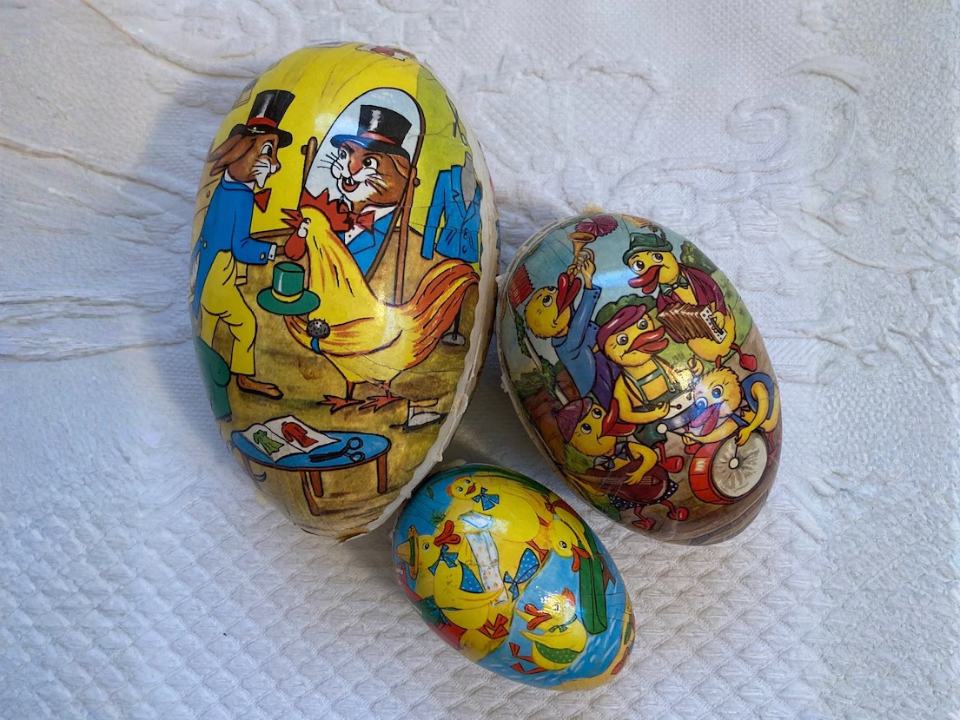
German papier-mache Easter egg candy containers from the 1920s to 1930s have a very different feel from mid-century bunny planters. These were made of papier-mache and printed with rabbit, child, or floral scenes, then used to hold candy. The graphics are a major part of the appeal, especially when both sides still look bright. Since they were made as light holiday packaging, survival rates were never especially high.
Today, these eggs often land around $26 to $72, with larger examples and stronger graphics bringing more money. Small edge wear is common, so buyers usually focus on whether the shell still closes well and keeps most of its print. They work nicely in bowls, under cloches, or mixed with old chicks and spun cotton pieces. At flea markets, it is smart to check for repairs because old paper surfaces can hide glue work.
Empire 35 Inch Mrs. Easter Bunny Blow Mold
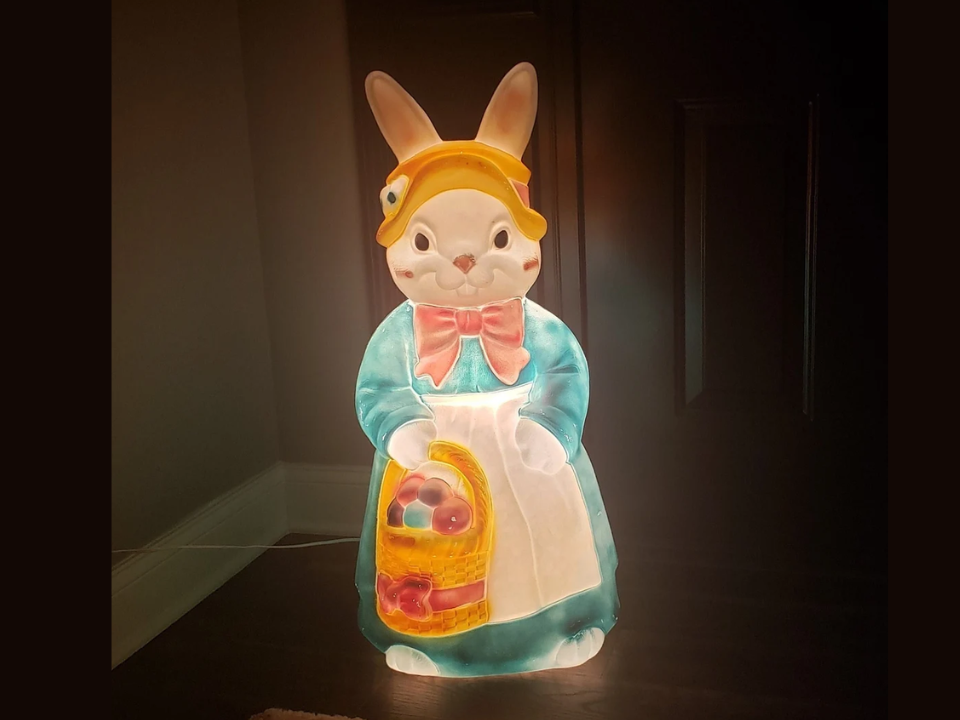
Larger Empire blow molds can feel much harder to miss, and the 35 inch Mrs Easter Bunny from the 1980s is a good example. This piece is plastic, lighted, and dressed with a bonnet and basket, which gives it more scene setting than a plain rabbit. Size is the main thing that helps it stand out, especially when it still has strong pastel paint. It is the kind of yard piece that can become the center of a spring display.
Most examples now land around $75 to $125, with cracks and repainting making a clear difference. Larger blow molds take more hits over time, so clean faces and solid seams matter quite a bit. These can be awkward to ship, which is one reason local flea market finds feel appealing. If one lights up and still has a bright bonnet, it usually draws attention fast.
This article originally appeared on Avocadu.