
14 Spring Colored Glassware People Look for at Estate Sales
A collection can feel more lively when spring colored glassware is part of the mix. These pieces stand out for their light shades, decorative appeal, and the way they pair well with both old and newer decor. Many collectors like them because they look beautiful on display and can still be used around the home. With that in mind, take a look at the pieces that keep drawing attention at estate sales.
This post may contain affiliate links, which helps keep this content free. Please read our disclosure for more info.
Anchor Hocking Miss America Pink Cake Plate
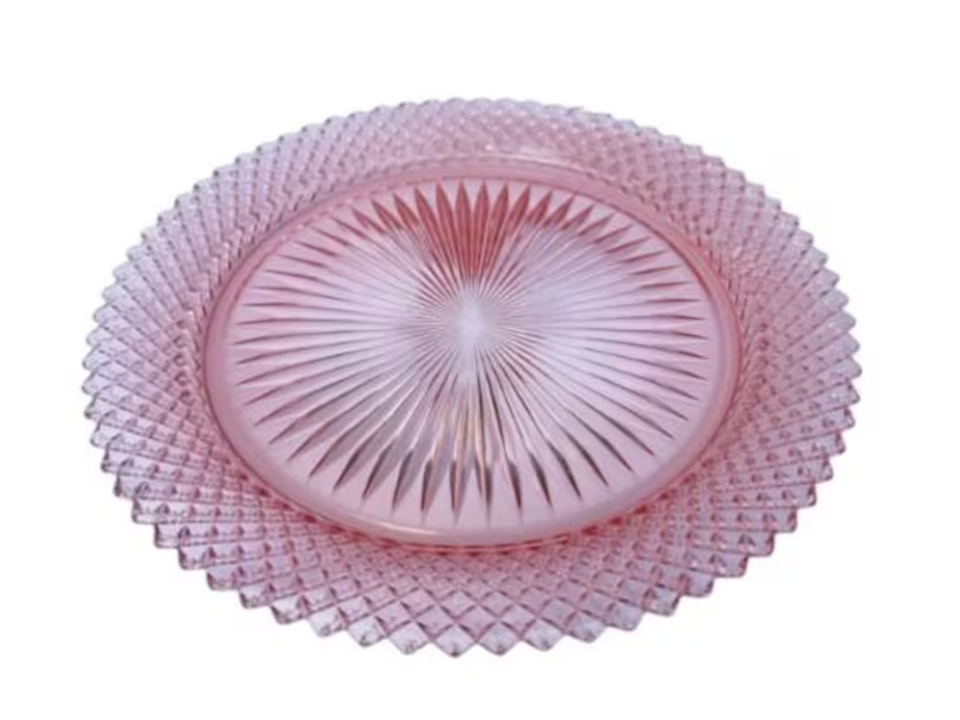
Few spring glass pieces catch the eye as quickly as a pink Miss America cake plate from Anchor Hocking. It is made of pressed pink Depression glass and is known for its pointed geometric pattern and raised pedestal form. Collectors like it because it brings color, shine, and a very classic table look. In today’s resale market, a good example often lands around $45 to $60.
On a shelf or dessert table, this piece has a lot of visual pull without taking up too much room. The plate works well for seasonal display, and it is also useful for cakes, pastries, or fruit. Chips along the rim or wear on the top surface can pull the price down. Buyers at estate sales usually look closely at the edge before anything else.
Jeannette Cherry Blossom Pink Two-Handled Bowl
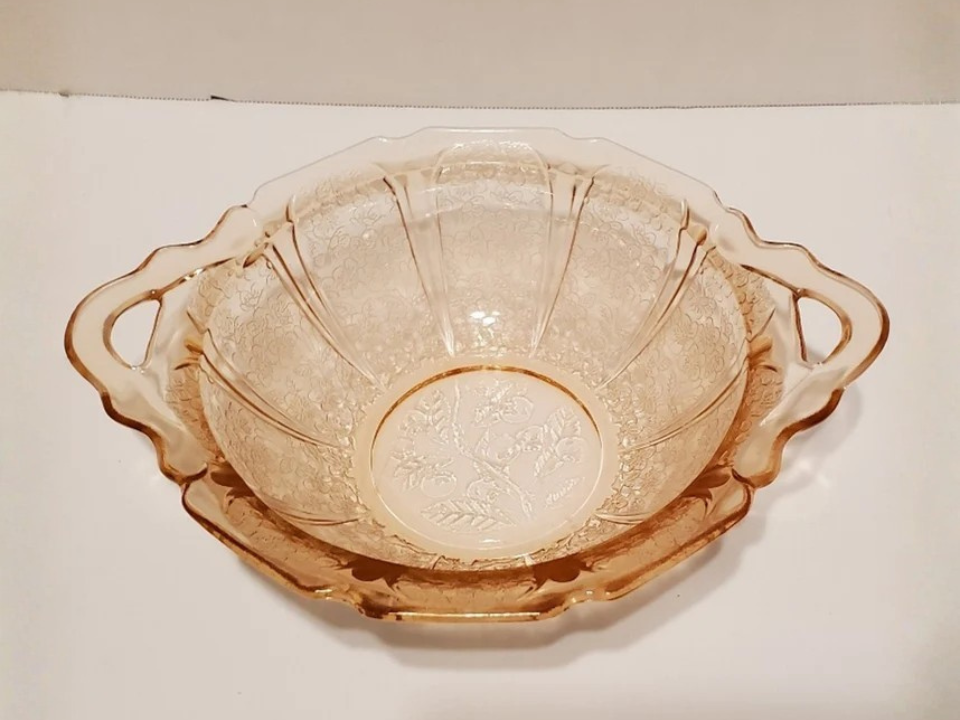
Soft floral patterns often feel right at home in spring collections, and this Jeannette bowl is a good example. It is made of pressed pink Depression glass with the Cherry Blossom pattern worked into the surface. People like it for the light floral detail and the gentle shape of the handles. A fair market range for a clean piece is usually about $25 to $55.
What gives this bowl extra appeal is how easily it fits into a pastel display. It can sit with milk glass, floral china, or other pink pieces without looking too heavy. Larger examples with clean handles tend to bring more money. Cracks or small flakes around the rim can lower the value pretty quickly.
Hocking Glass Princess Yellow Grill Plate
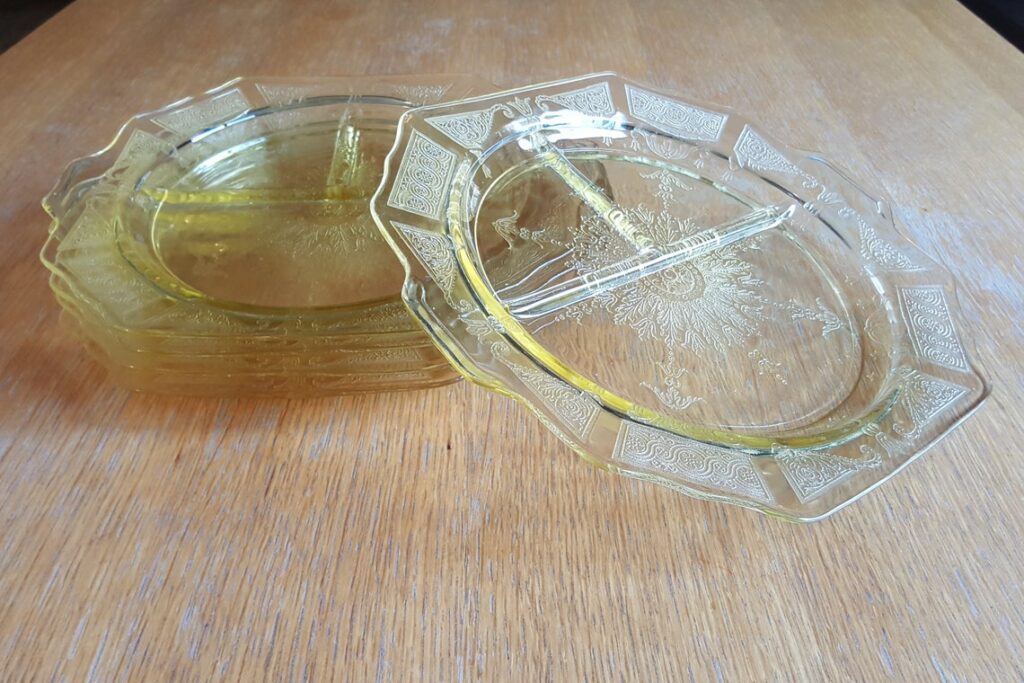
A yellow grill plate from the Princess line brings a sunny touch that many spring collectors enjoy. This piece is made of pressed yellow Depression glass and is often listed as topaz yellow. The divided shape adds old kitchen charm, which helps it stand out from plain plates. Most single plates sell in the $5 to $15 range.
For many buyers, the real draw is the cheerful color paired with a useful shape. It mixes nicely with jadete, white dishes, and clear glass on open shelving. Since these were often used, utensil marks can affect the price. Sets with matching pieces usually get more attention than a single plate alone.
Hazel Atlas Criss Cross Green Refrigerator Dish with Lid
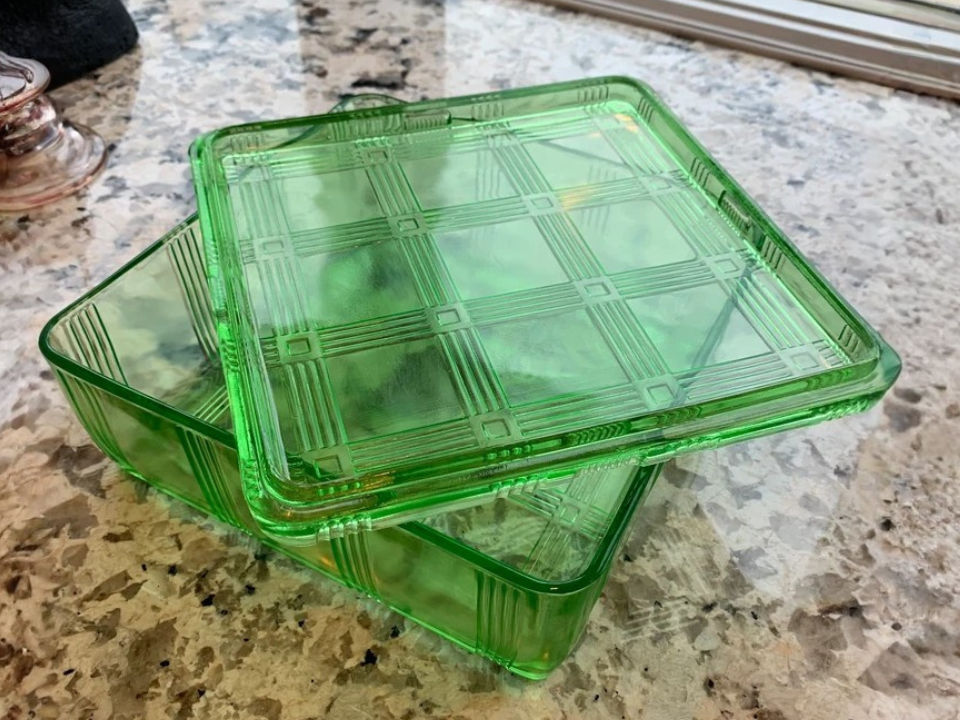
Vintage kitchen glass has a strong following, and this Hazel Atlas dish is one reason why. It is made of pressed green glass, and some examples are sold as uranium glass because they glow under UV light. Collectors like the squared shape, the practical history, and the fresh green color. A lidded dish in good condition is often worth about $10 to $25, with some examples going higher.
In many collections, pieces like this add a useful kitchen note instead of a purely decorative one. The lid matters a lot, since missing lids usually bring the value down. Clean corners and a glossy surface help the piece look much stronger. At estate sales, buyers often pick these up fast when the lid is still with the base.
MacBeth-Evans American Sweetheart Monax Salad Plate
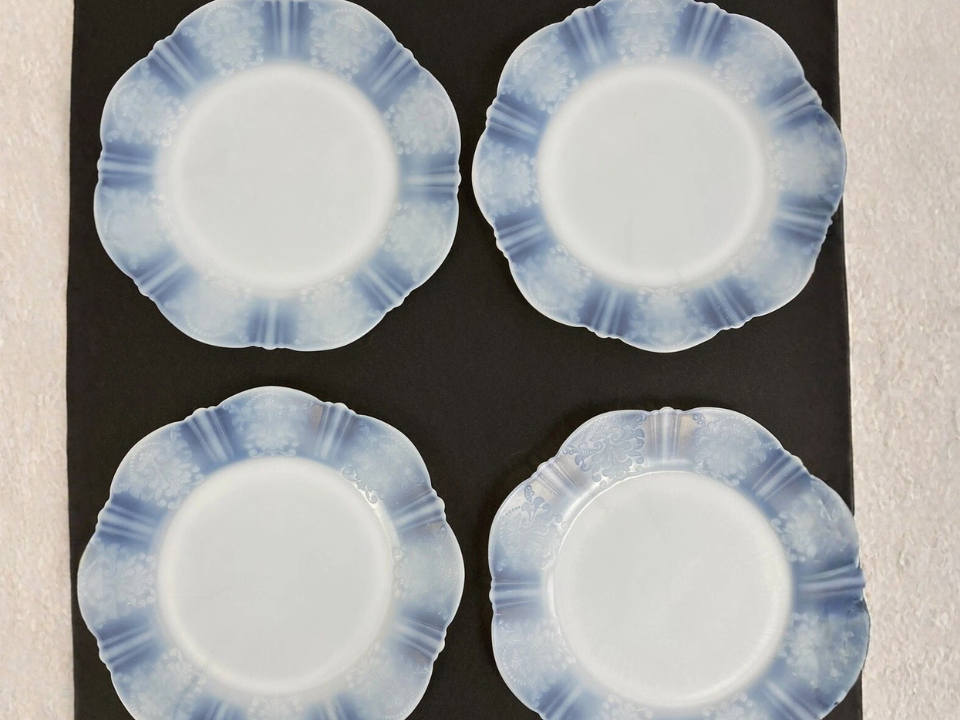
Some spring glassware feels light almost before you touch it, and American Sweetheart Monax has that effect. This plate is made of Monax glass, an opaque white glass often grouped with milk glass styles. People like the soft, floral look and the airy feel on a table. A single salad plate in nice condition often sells for about $8 to $18.
Because the pattern is delicate, many collectors mix it with pink glass, pale green pieces, or white pottery. It works well for display, though it can still be used at the table. Thin rims should be checked carefully for flakes or hairlines. Even one plate can be a nice estate sale find when the surface is still bright.
Cambridge Caprice Moonlight Blue Footed Rose Bowl
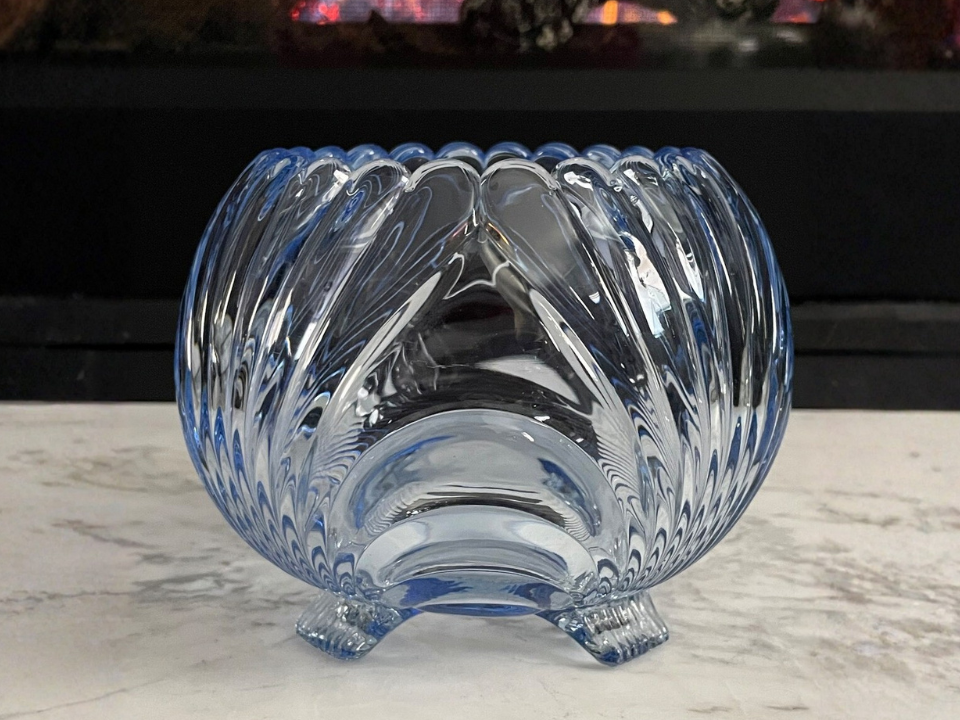
Blue, elegant glass has a cooler spring look, and Moonlight Blue Caprice from Cambridge does that very well. This footed rose bowl is made of blue, elegant glass with the rippled Caprice design. Collectors like the flowing lines and the gentle color, which keeps it decorative without feeling too heavy. A clean example often sells for about $50 to $85.
At a glance, the color usually pulls buyers in before the shape does. The bowl works well with silver, white ceramics, and pale floral pieces on a table. Feet and rim edges deserve a close check since damage there can hurt the value fast. A nice one from an estate sale can feel like a very satisfying pickup.
L E Smith Bittersweet Swung Vase
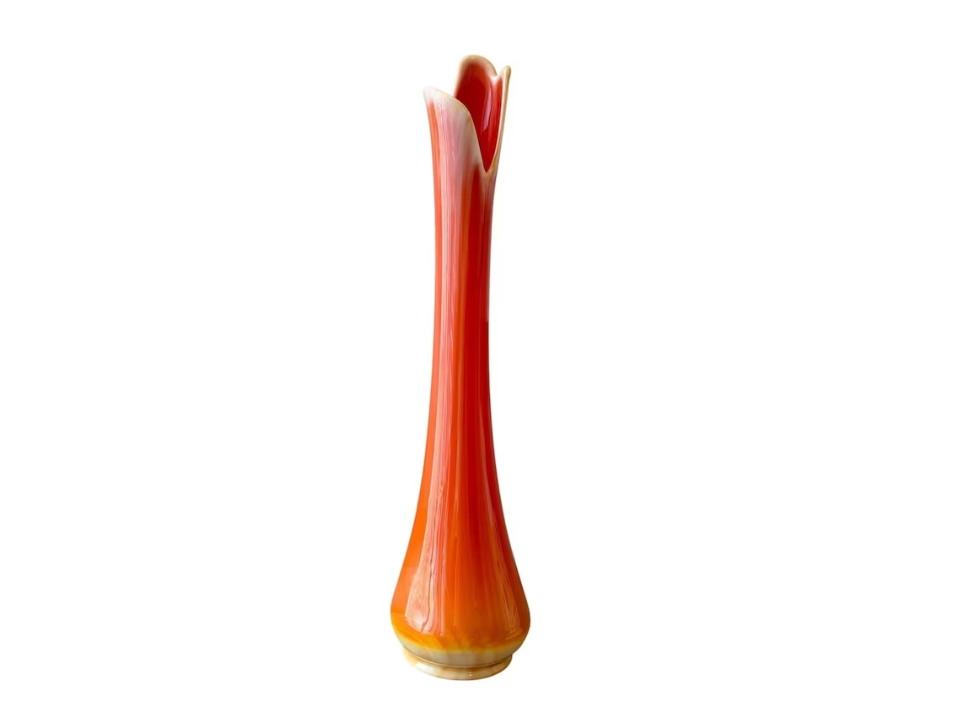
Tall, swung vases bring a very different kind of spring color, and Bittersweet from L E Smith is a good example. It is made of art glass in an orange-to-yellow range with the stretched midcentury vase form. Buyers go after it because the height and color give it a strong shelf presence. Many examples sell around $120 to $230, while larger or rarer ones can go higher.
Even one vase can act as the main color piece in a display. It pairs nicely with white pottery, pale green glass, and lighter tableware because of the clean vertical form. Height, foot style, and condition all affect price in a big way. At estate sales, tall, swung vases are often spotted from across the room.
Fenton White Opalescent Hobnail Rose Bowl
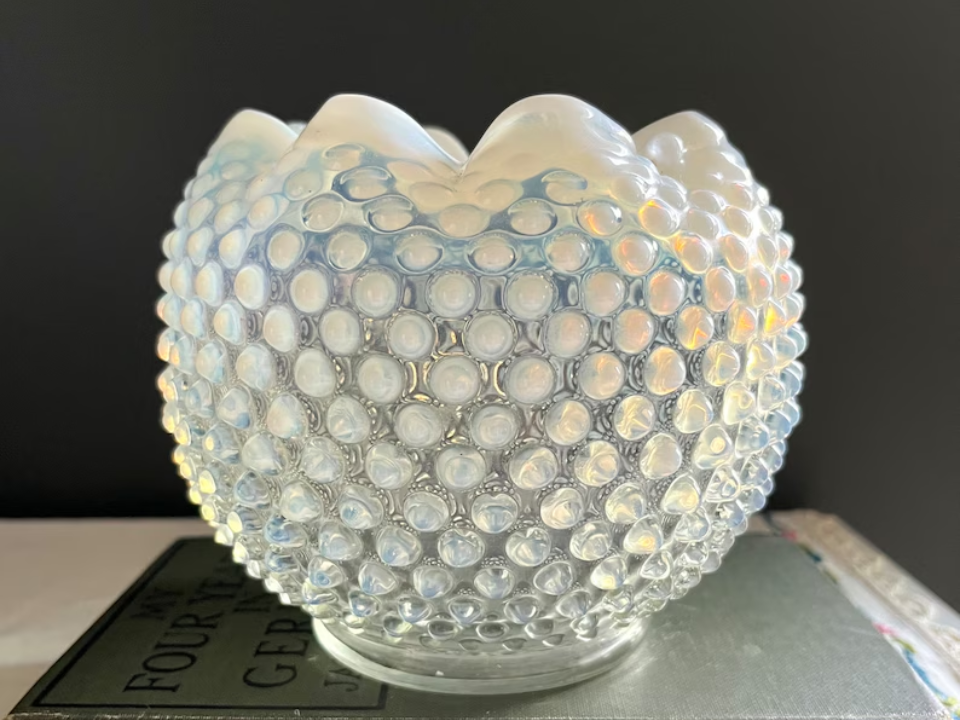
White opalescent glass can look fresh and bright in spring, and Fenton’s hobnail rose bowl shows why. It is made of opalescent glass with a raised hobnail texture and a softly ruffled rim. Buyers like the mix of texture, light color, and easy display appeal. Many standard examples bring about $45 to $50.
Placed near flowers or pastel pottery, this bowl fits in easily. The pattern is easy to spot, which makes it popular with people who are still learning older glass lines. Ruffled edges should be checked carefully because chips show there quickly. It is a nice way to add Fenton to a collection without paying for one of the rarer colors.
Westmoreland English Hobnail Milk Glass Ivy Ball Vase
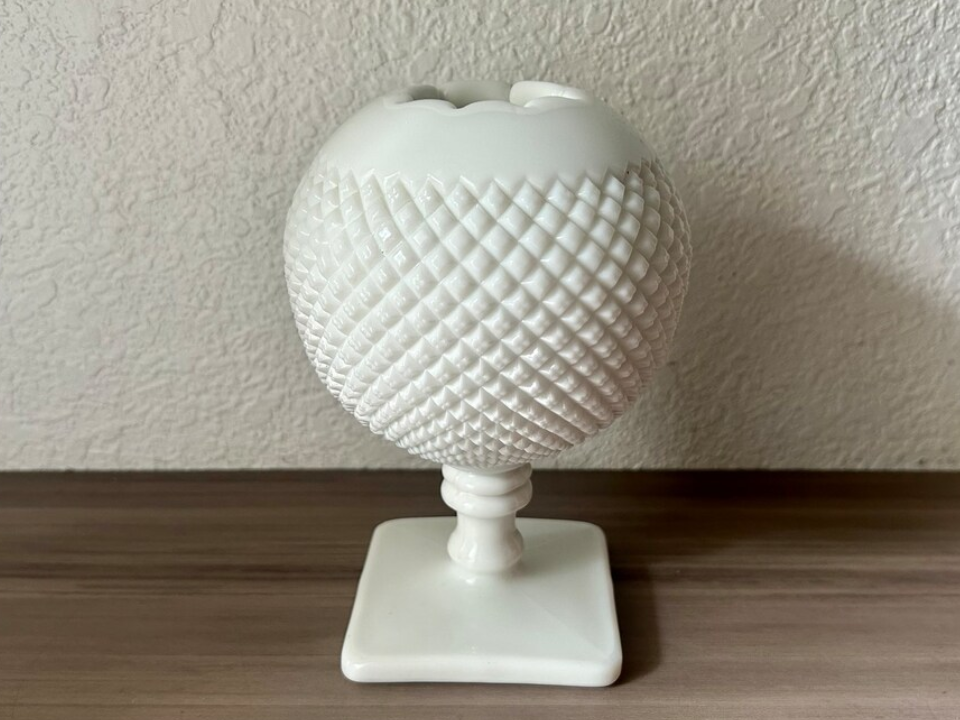
Milk glass often gives a collection a cleaner look, and this Westmoreland ivy ball vase does that well. It is made of milk glass with the English Hobnail pattern over the rounded body. People like it because it is small, useful, and easy to place in many rooms. A common market range is around $30 to $40.
With greenery or short stems, the vase looks especially nice in spring. It pairs well with pink bowls, white dishes, and pale blue glass without looking out of place. Glossy surfaces and smooth rims help the piece hold its value better. Estate sale shoppers often pick these up for both use and display.
Fostoria Fairfax Pink Serving Bowl
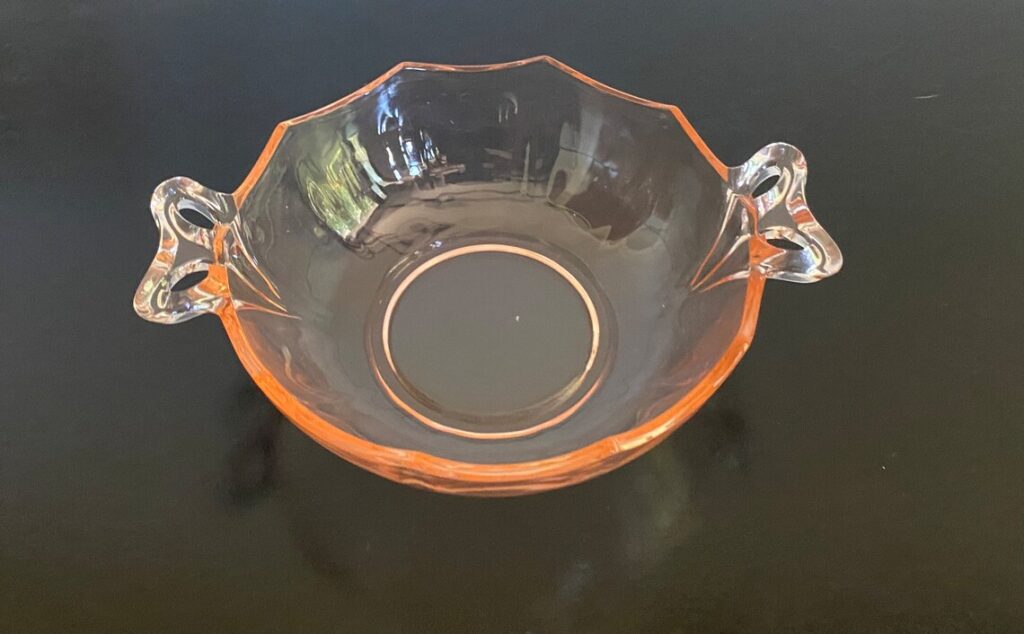
Pink Fairfax from Fostoria has a gentle look that suits spring shelves and tables. This bowl is made of pink glass and often shows softly curved lines with decorative side details. Collectors like it because it feels dressy without being too large or hard to place. A serving bowl in good condition often brings about $30 to $40.
One reason buyers like it is that the bowl still feels useful today. It works nicely for fruit, desserts, or a simple display beside other pink pieces. Handle joins and rim edges should be checked for small damage. A clean example can add a lot of charm without costing too much.
Fire-King Jadeite Jane Ray Dinner Plate
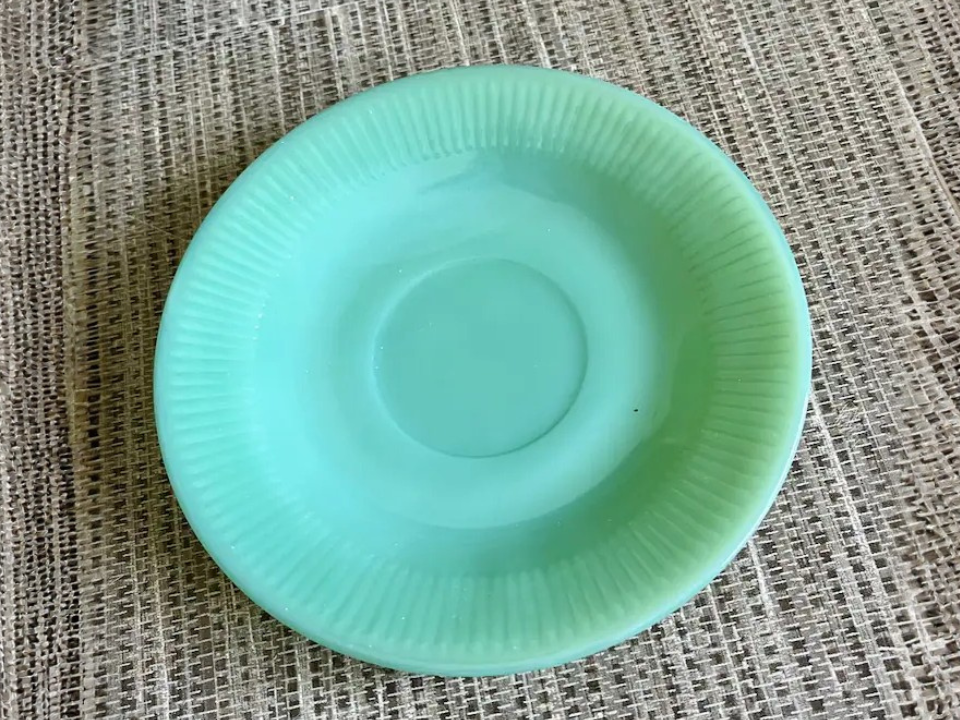
Jadeite keeps showing up on wish lists, and the Jane Ray dinner plate is one of the best-known pieces. It is made of pressed jadite glass and has the ribbed edge that many collectors recognize right away. Buyers like it because the milky green color feels fresh and still works in everyday kitchens. A single plate often costs around $20 to $35, depending on wear.
There is also a practical side to its appeal since it looks good on a shelf and on a table. White ironstone, enamelware, and wood shelves all pair nicely with this green glass. Surface scratches and rough rims can make a big difference in price. Full stacks tend to draw people in quickly at estate sales.
Imperial Glass Cape Cod Pink Water Goblet
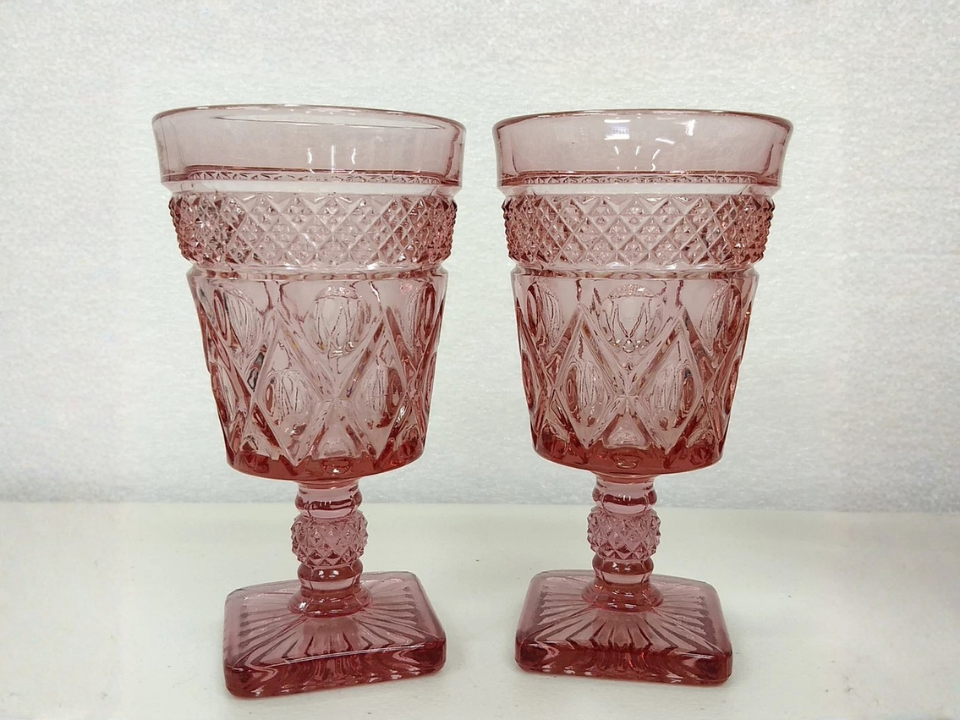
Deeper pink stemware has a richer look than many flat plates or bowls, and Cape Cod goblets show that clearly. These are made of pressed pink glass with a textured geometric pattern and a stemmed shape. People like them because they feel formal, colorful, and easy to display. A single goblet often sells for about $24 to $50.
On a dining table, they add color right away without much extra styling. White linens, silver pieces, and clear glass all work nicely beside them. Stems and rims should be checked closely since those areas can show damage first. Sets often bring stronger prices, though even one goblet can still be a good estate sale find.
Blenko 384 Spring Green Water Bottle
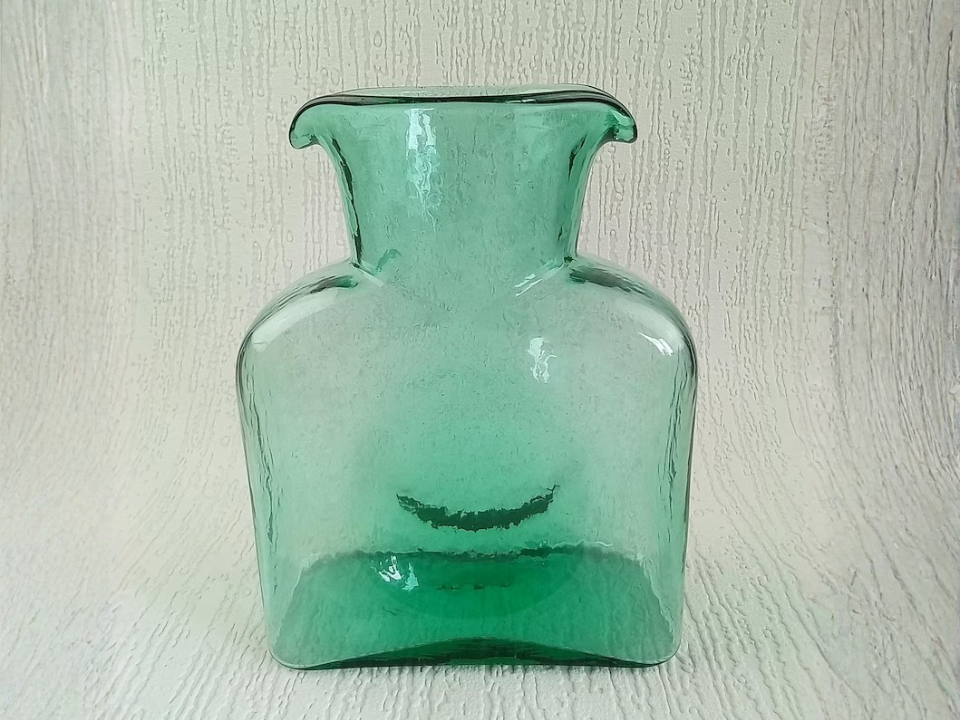
Handblown art glass brings a different feel to a collection, and the Blenko 384 bottle is a well-known example. It is made of handblown art glass, with Spring Green versions described by Blenko as clover cased in crystal. Buyers like the clean shape and fresh green color that stands out in a room. Many examples sell in the $90 to $125 range, with some versions going higher.
Rather than being tucked away, this piece is usually left out where the color can catch the light. It can still be used as a bottle, though many people keep it mainly for display. Handmade glass often shows variation, so base wear and surface marks matter. In a spring setup, it brings a crisp note that works nicely with both old and newer pieces.
Mosser Georgian Blue Hen on Nest
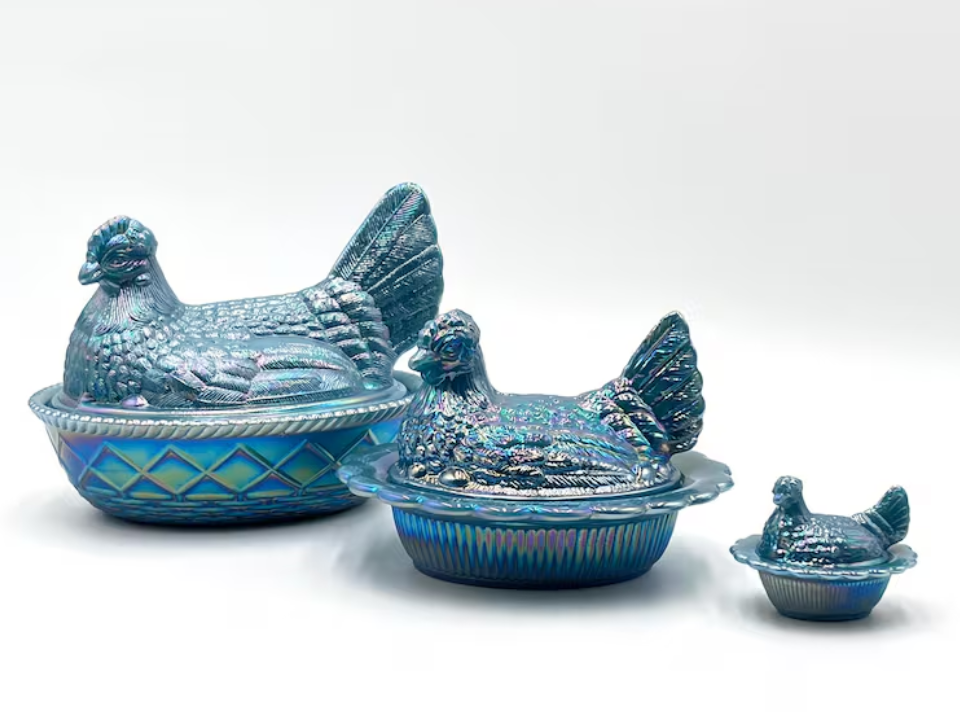
Animal-shaped glass has a fun side, and a blue hen on a nest from Mosser often gets noticed quickly. It is made of art glass and is sold in glossy or carnival-finish blue versions, depending on the piece. Collectors like the lively color and the long-running appeal of the hen form. Many blue examples fall around $80 to $90, with mini versions selling for less.
For shelf display, this one adds personality right away. It mixes well with milk glass, pastel dishes, and farmhouse style rooms. The comb, tail, and lid seat should be checked with care because those spots can chip. A good blue hen usually does not sit long at an estate sale.
This article originally appeared on Avocadu.