
10 Rare Stamps With Odd Printing Errors That Raise Value
When it comes to rare stamps, printing errors can be a goldmine for collectors. These oddities create unique pieces that stand out in any collection, making them highly sought after. The value of stamps with printing mistakes can increase dramatically, especially when they are one-of-a-kind. Read on to find out which printing errors make these stamps so special.
This post may contain affiliate links, which helps keep this content free. Please read our disclosure for more info.
1918 Inverted Jenny
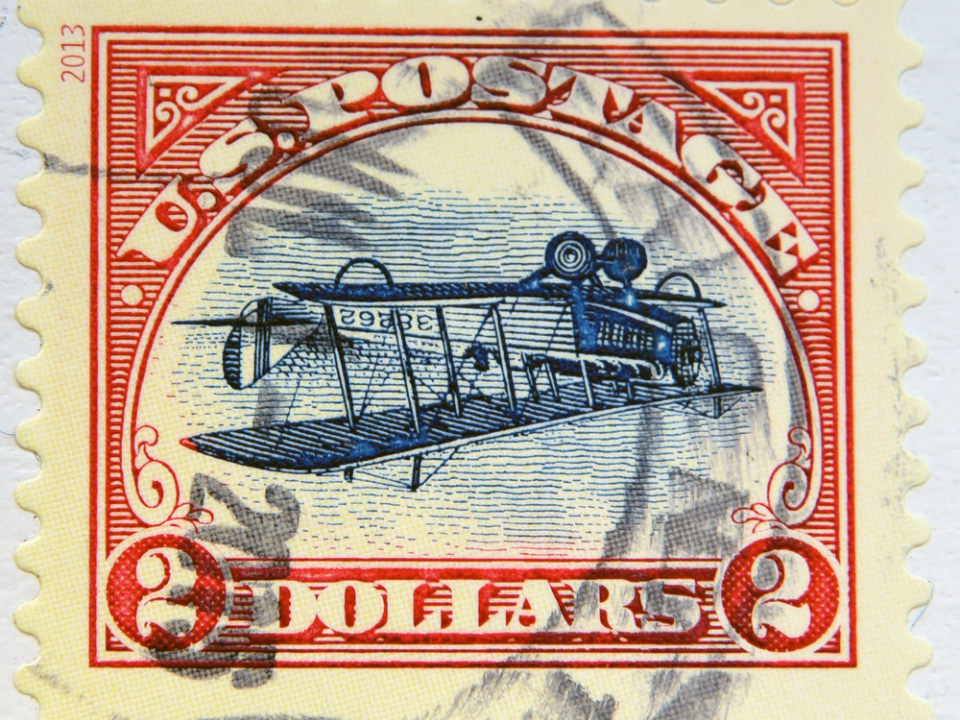
The 1918 Inverted Jenny is widely recognized as one of the most famous rare stamps in the world due to its unique printing error. A plane image on this stamp was mistakenly printed upside down, creating a rare error. With only 100 copies of this misprint ever produced, it is now considered one of the most valuable stamps. Today, an Inverted Jenny can be worth anywhere from $500,000 to $1.5 million, depending on the condition.
This printing error is especially notable for its rarity, with only a few stamps escaping the correction process. The mistake occurred when a sheet of stamps was rotated during the printing process, resulting in the upside-down image. Due to its iconic status in the philatelic world, it remains one of the most sought-after and valuable stamps. The Inverted Jenny continues to be a prized item among collectors and is a hallmark of U.S. stamp history.
1856 British Guiana 1c Black on Magenta
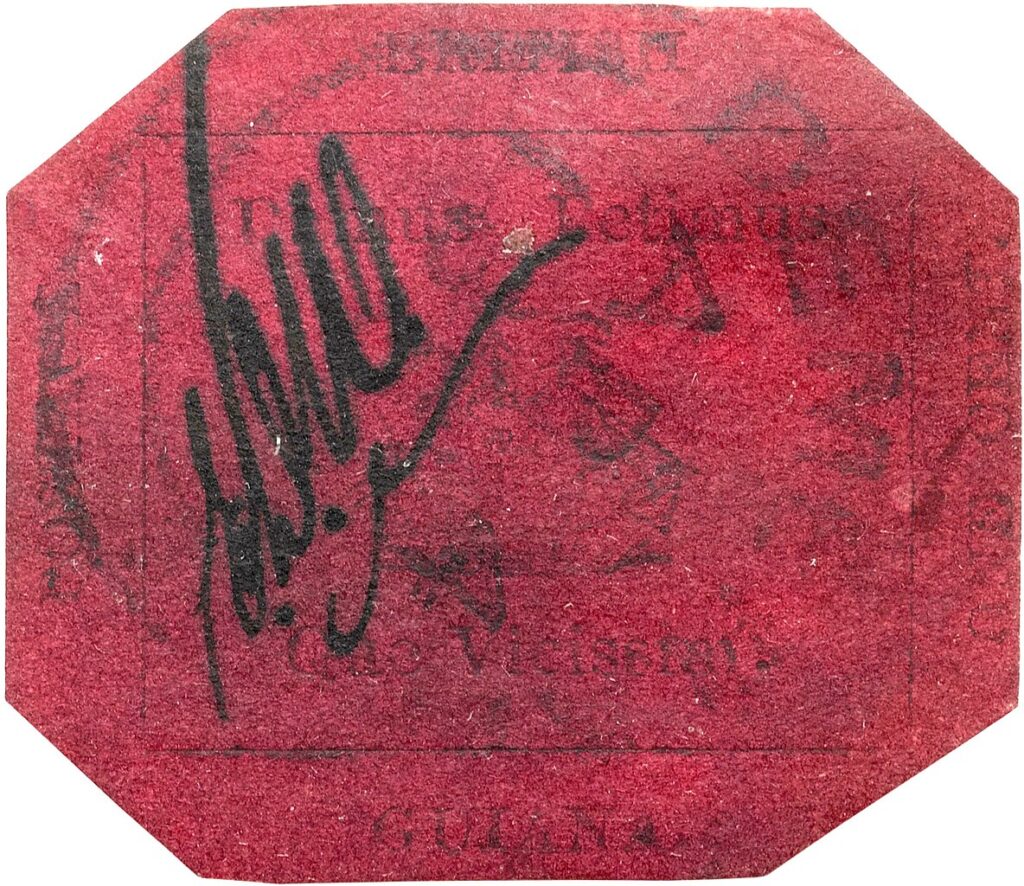
The 1856 British Guiana 1c Black on Magenta is one of the rarest stamps in existence, known for being the only known copy. Printed using local materials during a shortage of proper postage stamps, this unique stamp features a hand-drawn design. Its printing error and rarity have made it one of the most valuable stamps in the world, with a record-breaking sale of $9.5 million in 2014. Its estimated value is now between $9 million and $10 million.
This one-of-a-kind stamp was issued in British Guiana, where the postal system had run out of materials to print the usual stamps. Due to its unusual color and design, collectors were drawn to its oddity, making it a symbol of rarity in philatelic circles. The 1856 Black on Magenta holds historical significance, and its uniqueness contributes to its record value. Today, it remains a symbol of rare stamp collecting.
Uruguay 1883 Missing Horizontal Perforation
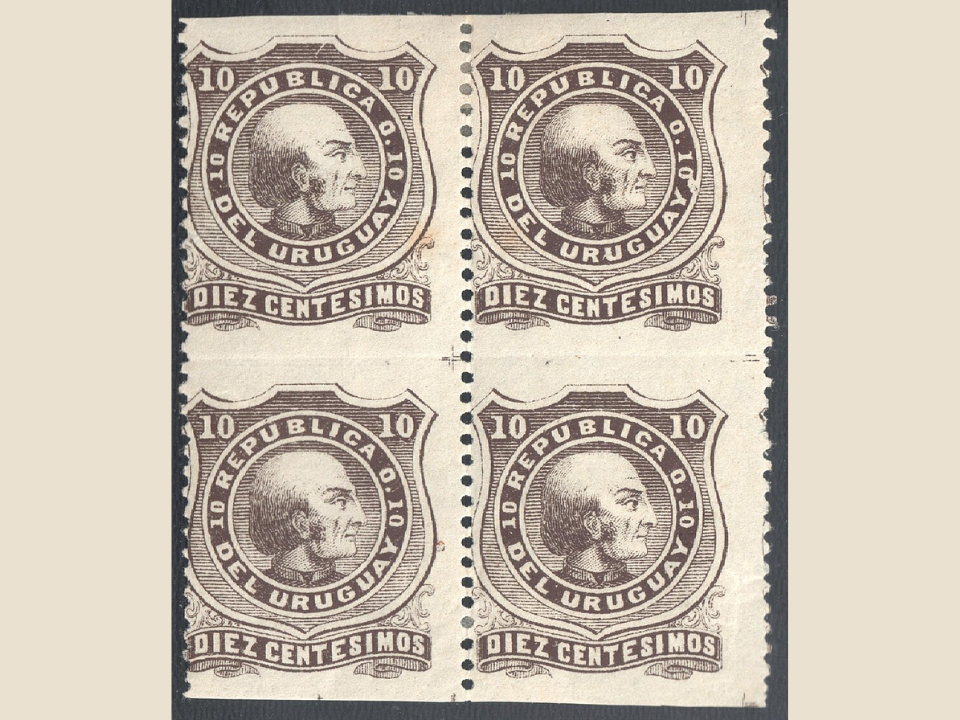
The 1883 Uruguay stamp is known for an odd printing error where the horizontal perforation was entirely missing on a portion of the stamp. This misprint was caused by a mistake during the perforating process, which left the stamp’s edges incomplete. As a result, only a limited number of these stamps with the missing perforation exist. Depending on the condition, these stamps can be valued anywhere from $500 to $2,000.
The perforation error adds rarity to the stamp, making it especially valuable for collectors who focus on printing flaws. The missing perforation disrupts the usual design, leading to a distinct appearance that is highly sought after. Collectors are drawn to this stamp not only for its rarity but for the unique imperfection that makes it stand out. This error makes the 1883 Uruguay stamp a desirable piece for any collection.
US 1917 5-Cent Value Error Placed in a 2-Cent Sheet
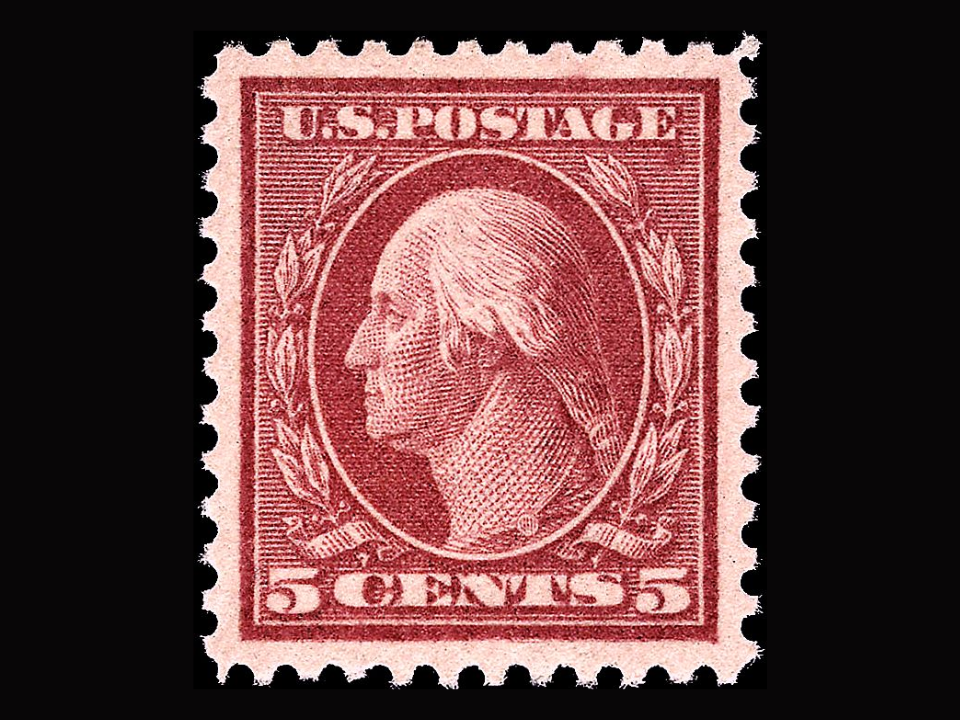
This rare U.S. stamp error occurred when a 5-cent stamp was mistakenly placed in a sheet meant for 2-cent stamps. Released around 1917, the mistake created a noticeable value discrepancy, as the stamps in the sheet did not match the intended denominations. Only a small number of misprints made it to public circulation, and their value today is estimated at around $1,000 to $3,000. The error makes this stamp highly sought after by collectors of U.S. postal history.
The misplacement error was discovered shortly after the stamps were issued, but some of the faulty sheets were sold. The misprinted stamps became valuable due to their rarity and the discrepancy between the intended values. Today, they remain a significant part of U.S. stamp collecting. The 1917 5-cent value error placed in a 2-cent sheet continues to be a valuable item for philatelists.
1899 Cuban Republic Spelling Error
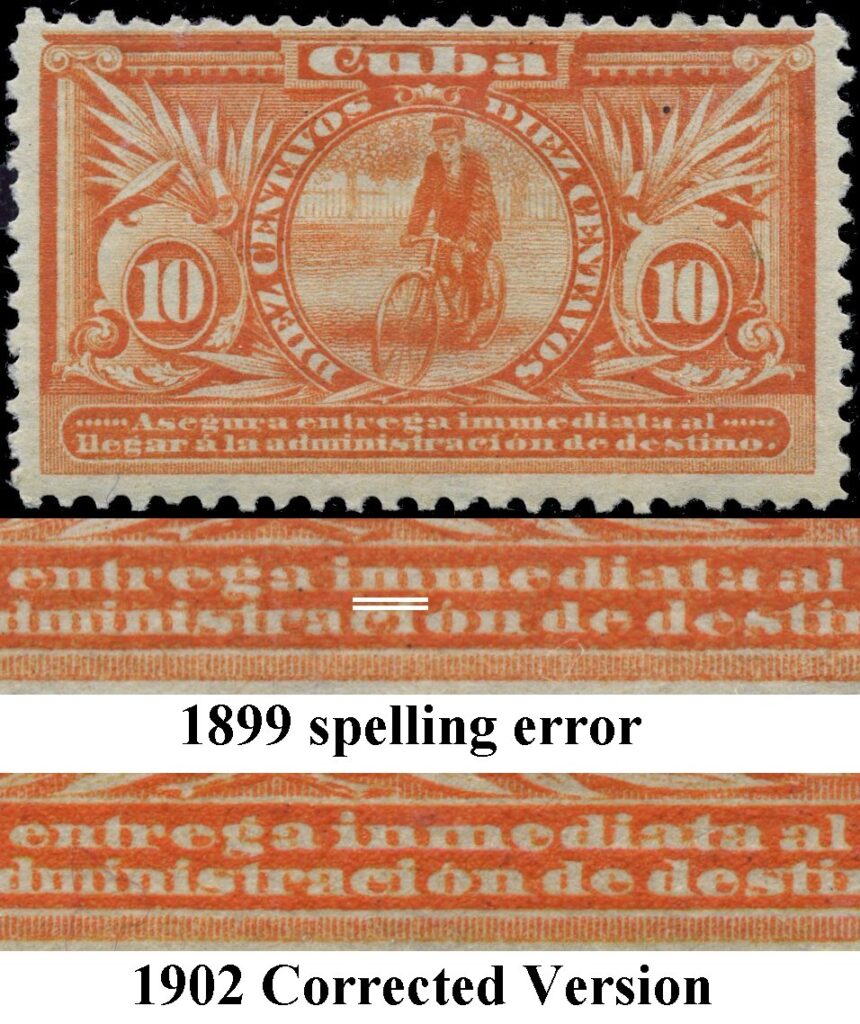
The 1899 Cuban Republic stamp became famous for a printing error involving a misspelling. Printed in the US for Cuba with major error in the spelling of the Spanish word inmediata incorrectly spelled immediata. This rare misprint makes the stamp highly collectible, with its value estimated at $20,000 to $50,000, depending on its condition.
The error was noticed shortly after release, but the misprinted stamps had already made their way into circulation. This makes the stamp highly rare, with only a few surviving copies. The mistake in spelling, combined with its historical context during Cuba’s post-independence era, has contributed to its high value.
Costa Rica 1870 50-Centavos Color Error, Green Instead of Red
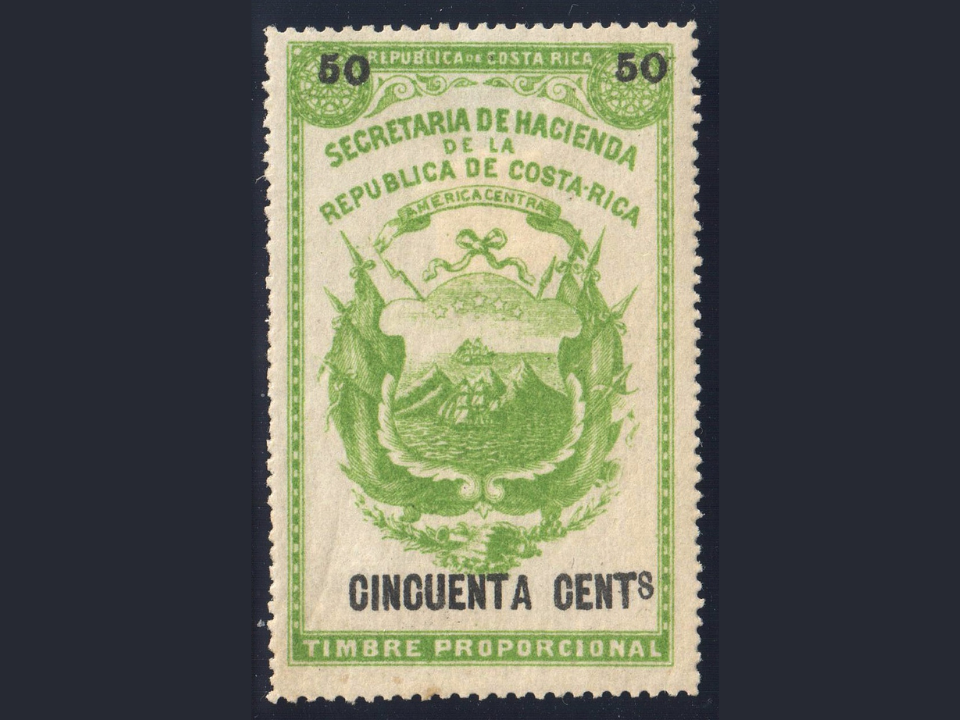
The 1870 Costa Rica 50 Centavos stamp became famous for a color error, where the stamp was printed in green instead of the intended red. This printing mistake caused the stamp to stand out, making it highly collectible. The green version of the 50 Centavos stamp is rare, with only a few examples in circulation. It is estimated that the stamp’s value ranges from $2,000 to $10,000, depending on its condition.
This error happened during the production of a series of stamps meant to commemorate Costa Rica’s postal system. The mix-up in color made this version unique, and it quickly gained attention from collectors. The rarity of this printing mistake has made it a prized piece in Costa Rican philatelic history. Today, it remains one of the most sought-after stamps from Costa Rica.
1850 Austria Diagonal Paper Fold
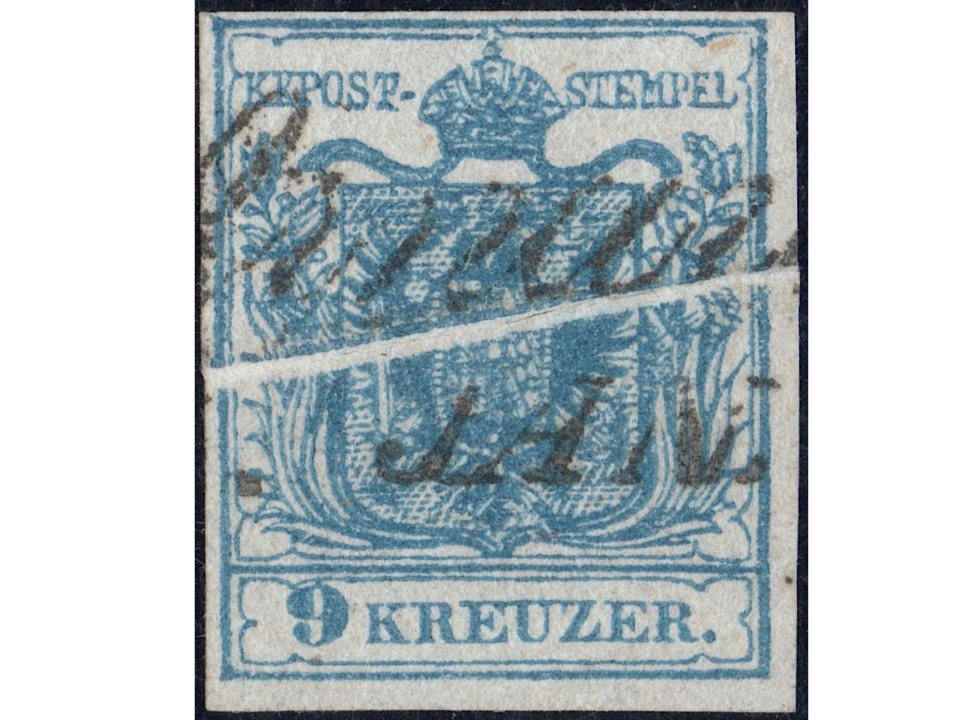
The 1850 Austria stamp is famous for a rare printing error that resulted from a diagonal paper fold, which caused a crease to appear on the final printed design. This stamp, originally issued to commemorate Austria’s postal system, features the unique flaw in its paper that can still be seen today. Due to its rarity, the stamp with the diagonal fold has a value estimated at $1,000 to $3,000, depending on condition. Only a small number of these flawed stamps have survived in circulation.
The paper fold is a subtle yet highly visible error, making the stamp easily recognizable for those familiar with printing mistakes. It was caused when the paper was improperly aligned during the printing process, leading to a lasting crease. This imperfection has increased its value, as it is a unique feature not found in the standard version of the stamp.
1892 Uruguay Inverted Overprint
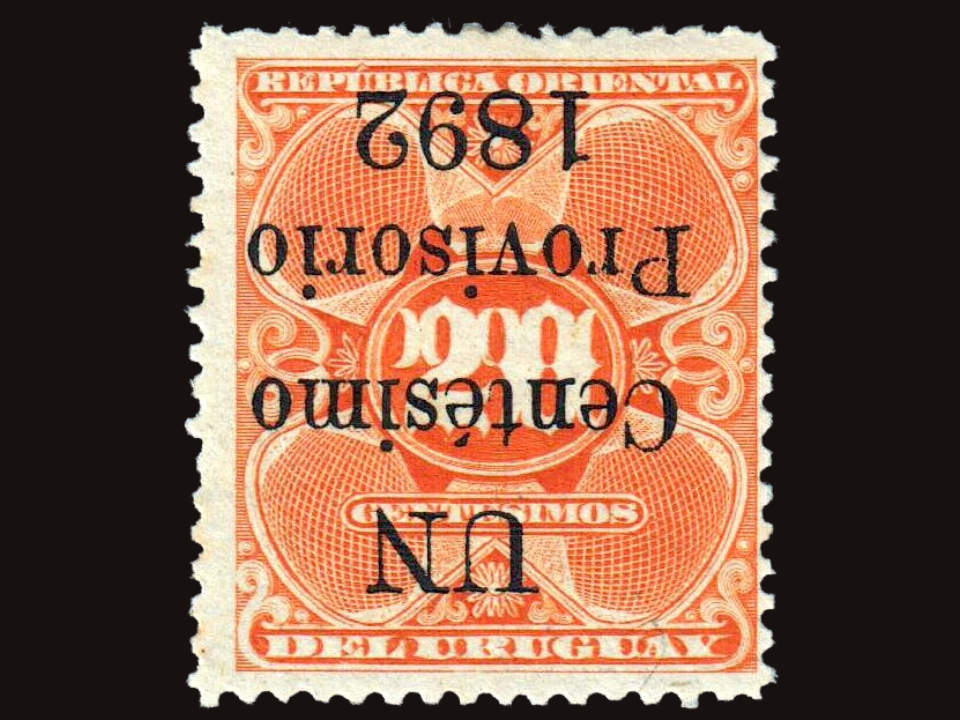
The 1892 Uruguay stamp became valuable due to an inverted overprint that occurred during the printing process. The overprint, which was intended to mark a new postal rate, was mistakenly applied upside down on a number of stamps. As a result, only a few inverted overprints were produced, and they are now highly sought after by collectors. These stamps can fetch anywhere from $1,000 to $10,000, depending on condition.
The inverted overprint creates a distinctive appearance, with the printing of the words and figures appearing upside down in relation to the image on the stamp. The error made these stamps highly rare and valuable, as they were quickly removed from circulation. Today, they remain a significant item in the world of philately, known for their printing mistake. The rarity of the misprinted stamps adds to their appeal among collectors.
1886 Santander Cliche Error Pair, Right Stamp with Cinco Instead of Diez
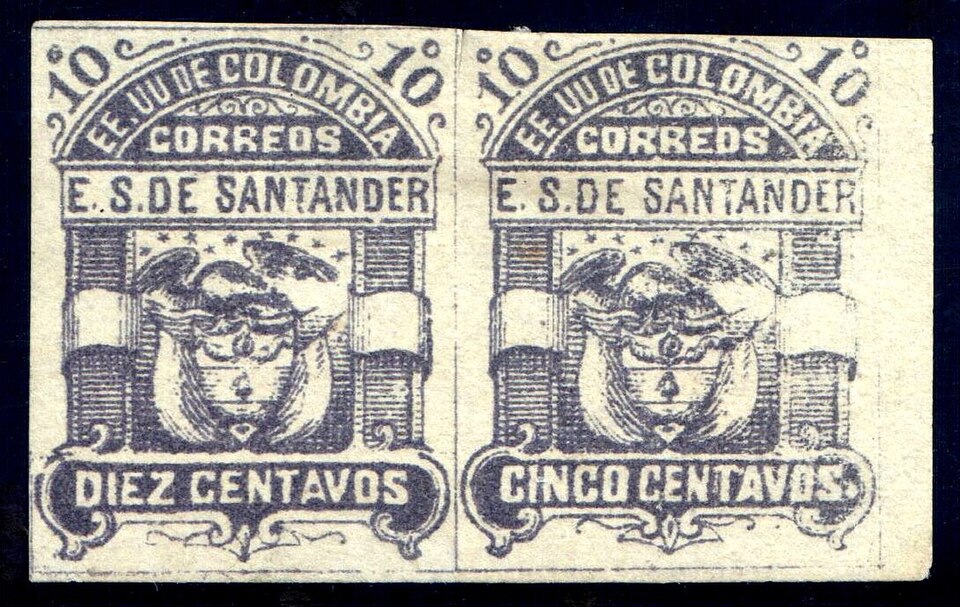
The 1886 Santander stamp is notable for a printing error in which the word Cinco was mistakenly used instead of Diez. This error occurred on one of the stamps in a pair issued by the Spanish province of Santander. The right stamp in the pair features the incorrect inscription, making it a rare and valuable collectible. Depending on condition, the value of this error can range from $1,000 to $5,000.
This error adds an interesting layer to the stamp’s value, as it represents a historical mistake in the printing process. The difference between Cinco and Diez changes the intended value of the stamp, making the error even more significant. The stamp’s rarity and the printing mistake have made it an essential item for collectors interested in unique postal errors.
1932 2-Cent Washington Red Error
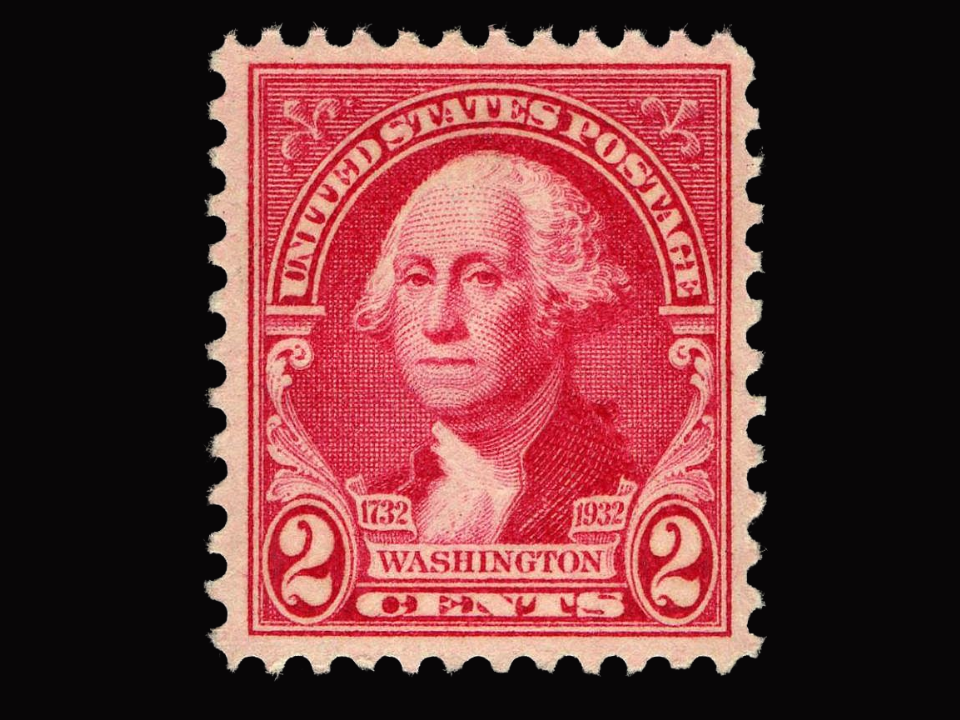
The 1932 2-cent Washington stamp is famous for its color discrepancy due to a printing error, which caused the color to appear as red rather than the intended violet. This misprint led to a rare stamp that quickly gained attention from collectors. The red version of this stamp is highly collectible and can be valued anywhere from $1,000 to $5,000, depending on condition. Only a small number of misprints were released, contributing to its rarity.
The error occurred when the ink used to print the stamp was incorrectly applied, leading to the noticeable color difference. The misprinted red Washington stamp has since become one of the most sought-after errors in U.S. stamp collecting. Its historical significance, along with the rarity of the misprint, makes it a desirable item for collectors. The 1932 2-cent Washington Red Error continues to be a valuable stamp for those looking for rare printing mistakes.
This article originally appeared on Avocadu.