
14 Rare Songbirds You Might Hear First in Spring Before You See Them
Spring break is a great time to get outside and enjoy places where kids can walk a little and still see something amazing. Waterfalls always feel like a reward at the end of a short trail, which makes them perfect for family trips. You do not need a long hike to find views that feel special and memorable. Along the way, there are spots where kids can pause, look around, and stay curious. Keep reading and start planning a trip that feels easy and fun for everyone.
This post may contain affiliate links, which helps keep this content free. Please read our disclosure for more info.
Kirtland’s Warbler
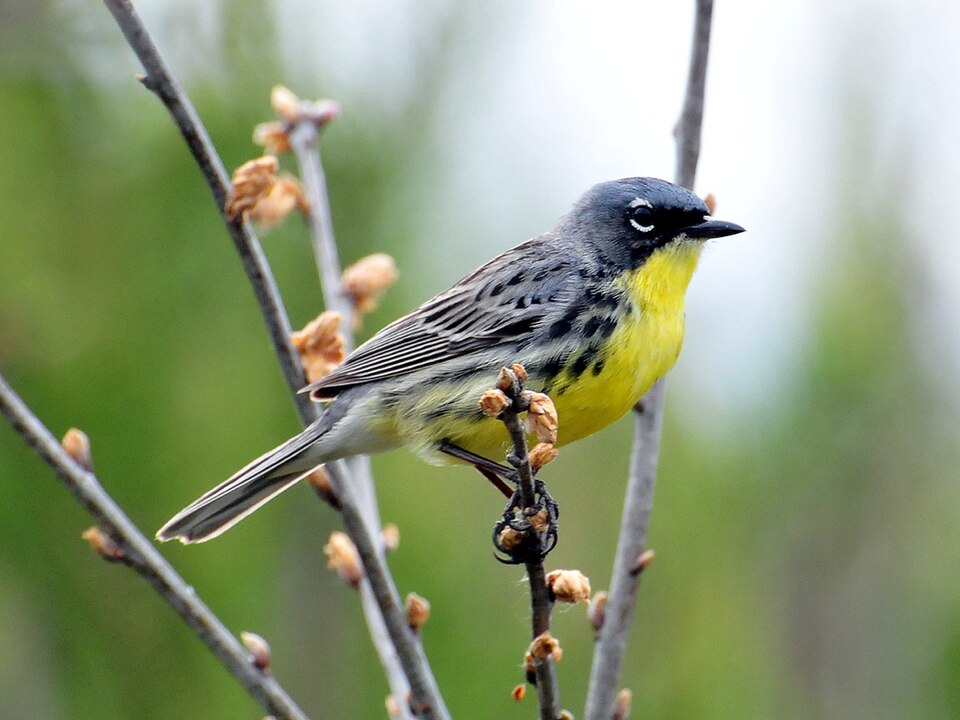
Kirtland’s Warbler is one of those birds that can stay hidden in plain sight, even when it is singing nearby. Its song is a loud, rolling series of notes that carries across young jack pine stands in spring. This bird nests in a very small breeding range in Michigan, Wisconsin, and parts of Ontario, which is why birders treat any chance to hear one as a big moment. Males usually sing from low perches, though the branches and needles can still make them hard to spot right away.
What makes this warbler stand out is how closely its life is tied to young jack pine habitat. It winters in the Bahamas, then returns north for a short breeding season that draws birders from all over. Careful habitat work helped bring it back after years of decline, though it is still closely watched. If you hear a strong song coming from scrubby pine growth in late spring, this is one bird worth pausing for.
Bicknell’s Thrush
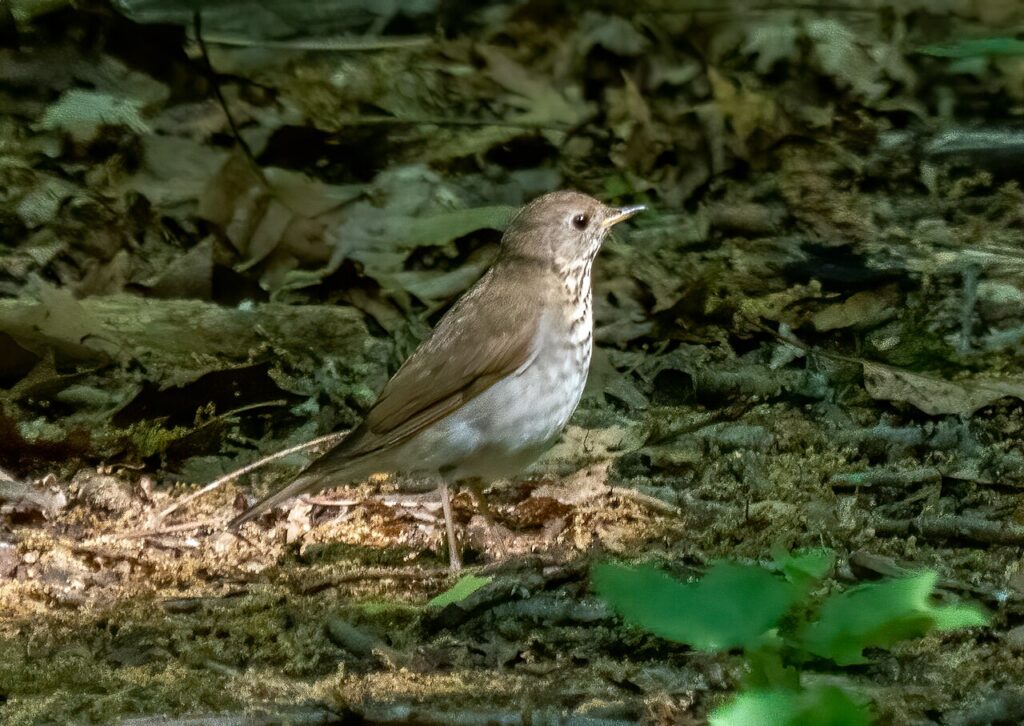
Bicknell’s Thrush is a shy mountain bird whose voice often reaches people before the bird itself does. Its song has an airy, swirling quality that can seem to float through cool dawn air on high ridges. It breeds in dense spruce and fir forests in the northeastern United States and eastern Canada, where fog, wind, and thick cover make sightings tough. Even experienced birders often hear it several times before they get a clear look.
This thrush is tied to high elevation habitat, which gives it a narrow place to nest. It looks fairly plain at first glance, with brown upperparts and a light underside, so the song becomes the best clue. Early morning is usually the best time to listen for it, especially near stunted conifers and wet mountain edges. For many birders, hearing that soft, jumbled song in the mist is the real prize.
Cerulean Warbler
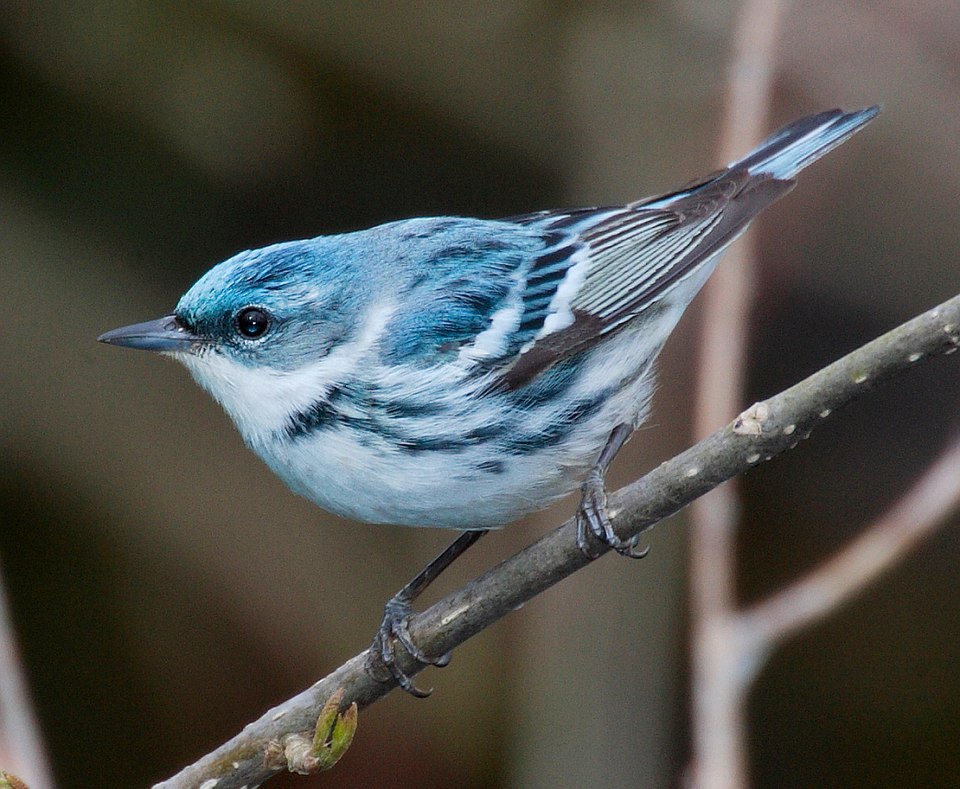
Cerulean Warbler is small, fast-moving, and often far above eye level, which is why it is so often heard first. The male gives a buzzy, rising song from the upper canopy of tall deciduous trees in spring. Because it favors mature forests and spends so much time high in the treetops, the sound usually reaches you well before the bird comes into view. That mix of height and movement can turn a simple listening moment into a long search through the leaves.
This warbler has become one of the birds that many spring birders hope to hear during migration or on breeding grounds. Males have a striking blue and white look, though you may need good light and patience to catch it. Loss of breeding and wintering habitat has made the species a bird of concern in many areas. When its song drops down from a forest canopy in May, it feels like the woods are giving up a secret.
Golden-winged Warbler
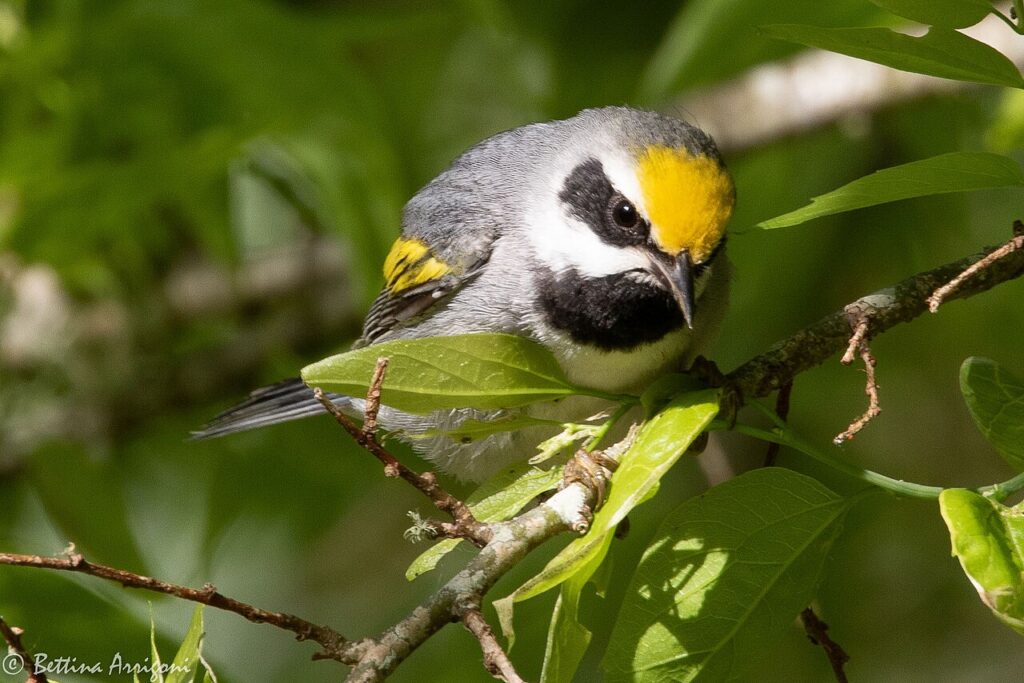
Golden-winged Warbler has a thin, buzzy song that can carry from brushy fields and forest edges before the bird shows itself. It often sings from shrubs, saplings, or low trees, though spring cover can still make it easy to miss. Its gray body, black throat, and yellow wing patch give it a striking look once you finally find it. Until then, the voice is usually what pulls your attention first.
This species depends on early successional habitat, where young growth meets older woods. It has become less common in many parts of its range, which adds to the excitement when one turns up. Hybridization with Blue-winged Warblers has complicated its story and made pure birds harder to find in some places. Hearing that dry little song in a quiet thicket is often the first sign that one is around.
Connecticut Warbler
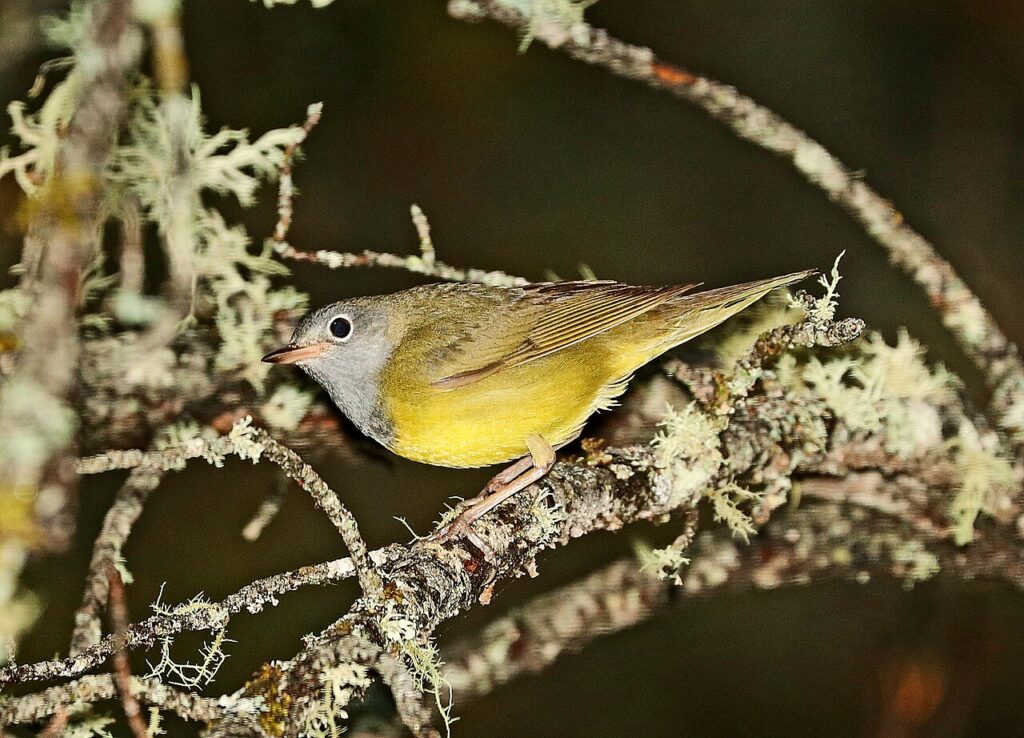
Connecticut Warbler is famous for frustrating birders in the best possible way. Its song is a rich, ringing series of notes, often given from thick undergrowth where the bird stays hidden for long stretches. During migration it can be very hard to see, since it tends to skulk low in dense cover instead of sitting out in the open. Many people know it first as a voice coming from somewhere inside a tangled patch of brush.
This warbler has a neat, almost thrush-like way of moving on the ground or near it. Males show a gray hood and yellow underparts, though spring views can be brief. It breeds far north in boggy forests and is most often noticed by birders during migration. If the song sounds full and steady from a place where almost nothing seems visible, this bird is always a good possibility.
Mourning Warbler
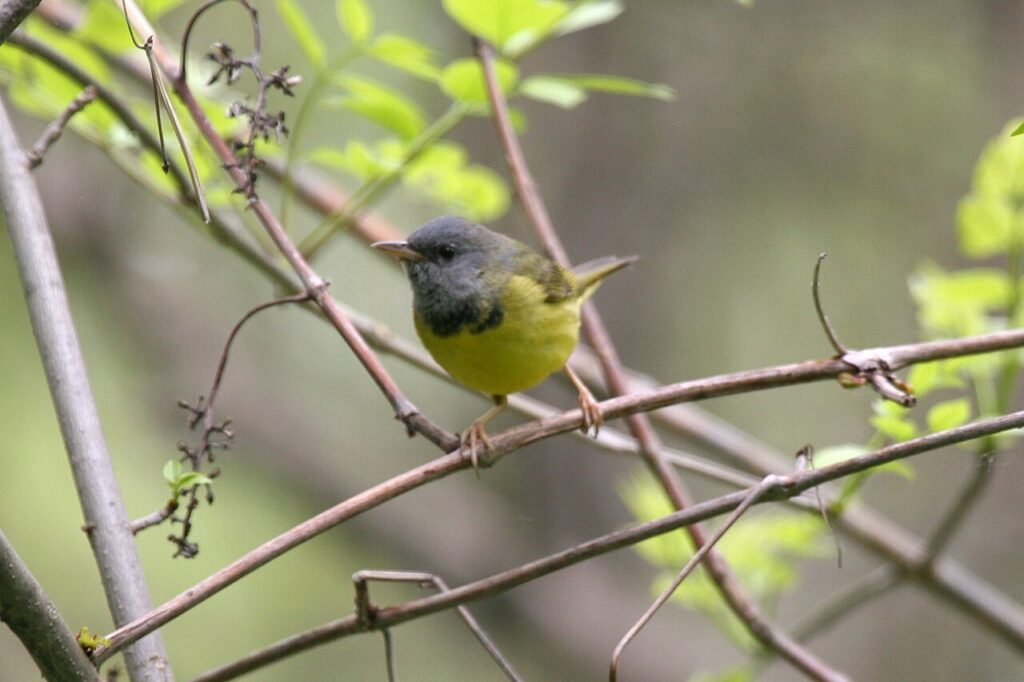
Mourning Warbler has a rolling, musical song that can sound louder than such a small bird has any right to produce. In spring, males sing from brushy clearings, regenerating woods, and thick roadside growth where leaves and stems hide them well. The bird often stays low or slips between cover, so people hear the song first and then spend several minutes trying to pin down the source. That little chase is part of what makes it memorable.
The male has a gray hood and dark throat patch framed against yellow underparts. Females are plainer, which makes sound even more important for finding them. This species often shows up in places that look messy or overlooked, especially after disturbance creates fresh growth. A warm May morning with a clear song coming from dense brush is exactly the kind of setting where Mourning Warbler turns up.
Swainson’s Warbler
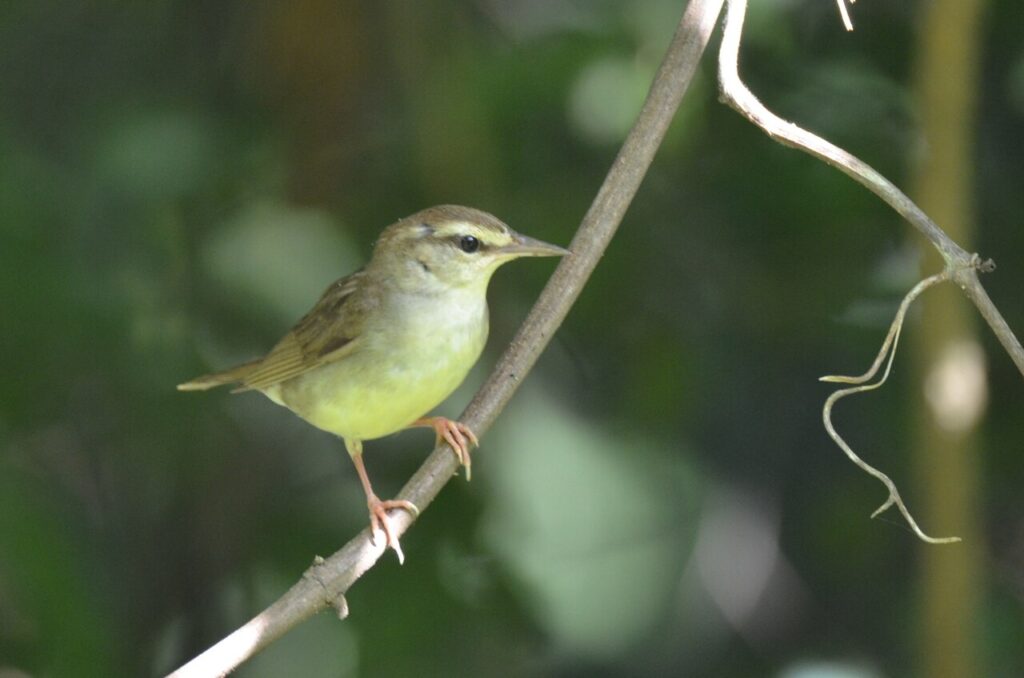
Swainson’s Warbler is one of the true hidden singers of the southeastern United States. Its song is strong and ringing, with a rhythm that can remind some listeners of a Louisiana Waterthrush, though the bird is usually buried deep in cane, rhododendron, or thick understory. Seeing one often takes patience because it sticks to dense, shaded habitat where movement is hard to track. That means the voice does most of the work in letting you know it is there.
This warbler is plain brown above and pale below, so it does not flash color the way some spring birds do. Its appeal comes from how hard it is to find and how rich its song sounds in dark woods. Birders often listen for it in swamp forests or steep ravines with heavy ground cover. When the song cuts through thick vegetation at dawn, it can stop a whole group in its tracks.
Henslow’s Sparrow
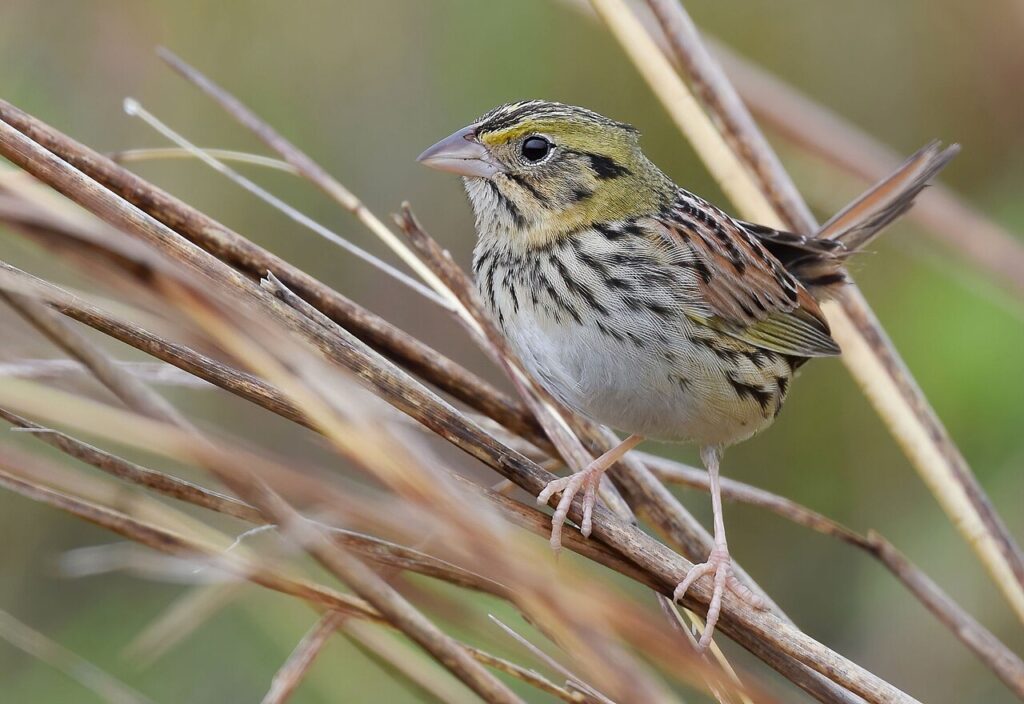
Henslow’s Sparrow is small, secretive, and easy to miss until it gives its tiny song. That song is a quick, thin tsi-lick, so short that first-time listeners sometimes think they imagined it. The bird lives in tall grasslands and weedy fields where it keeps low and does not show much. Because it sits quietly for long periods, the voice often becomes the only clue that one is present at all.
This sparrow has a greenish wash on the head and a streaked body, though those details are hard to catch from a distance. It has declined in many areas as grassland habitats have changed or disappeared. Spring and early summer are the best times to hear males giving their faint calls from hidden perches. A patient ear can find this bird long before a pair of binoculars does.
Le Conte’s Sparrow
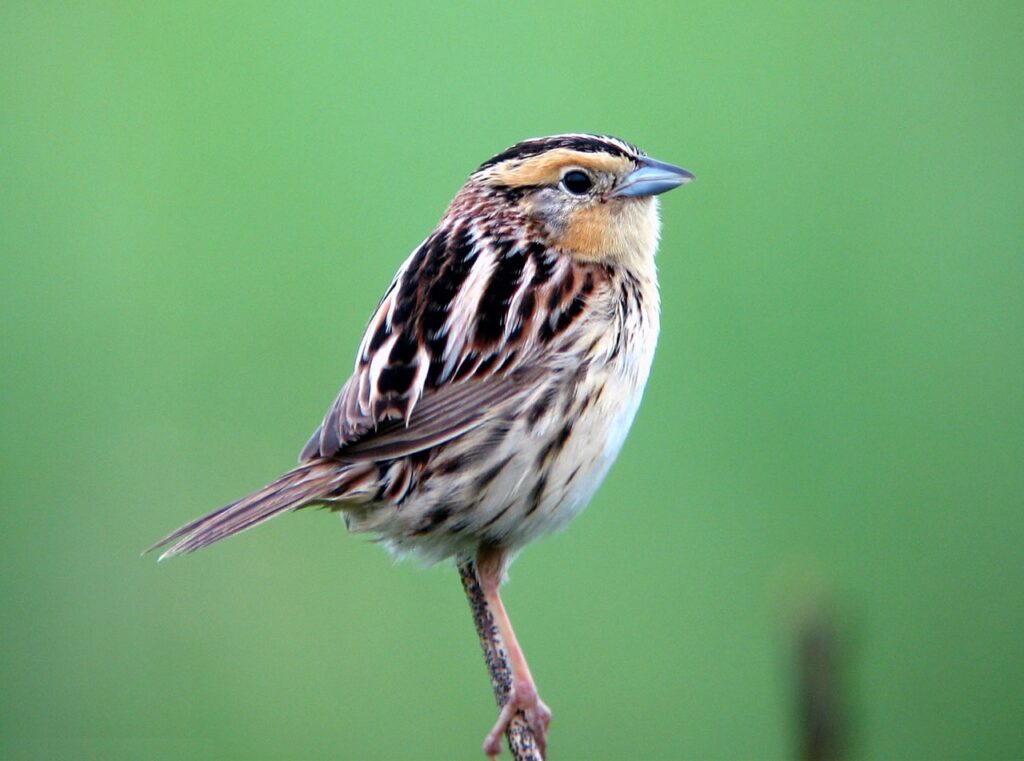
Le Conte’s Sparrow feels almost like a bird from a rumor until you hear it. Its song is a very thin, insect-like hiss and tick that seems to rise from damp grass rather than from a bird. It stays low in wet meadows and marshy fields, where it threads through stems and disappears in seconds. Many birders pass right by one unless they stop and listen for those delicate spring notes.
When seen well, it has buffy orange tones on the face and fine streaking on the back. It is small and nicely patterned, though that beauty is often hidden by its secretive habits. This species can be hard to pin down during migration as well as on breeding grounds. Hearing one in a wet field at sunrise is often more realistic than hoping for a long open view.
Bachman’s Sparrow
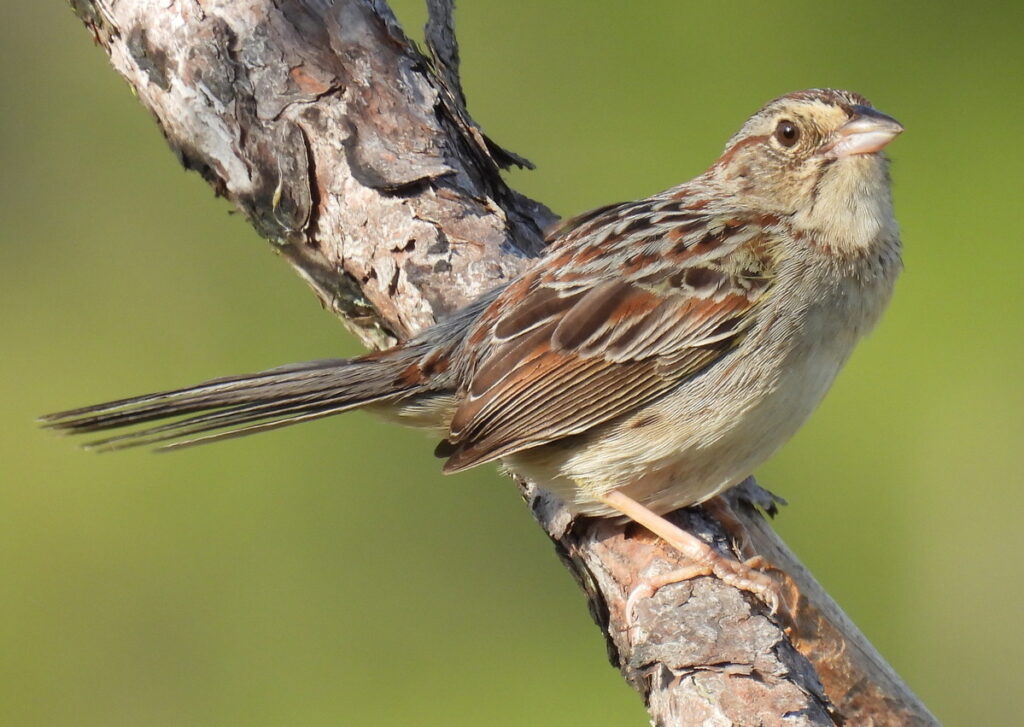
Bachman’s Sparrow gives one of the prettiest songs in the southern pine woods. The male often starts with a few thin introductory notes and then breaks into a rich, musical trill from a low perch. Even with that lovely voice, the bird can stay hard to see because it favors grassy ground under open pine stands. It drops quickly back into cover after singing, which means the sound lingers in your head longer than the sight does.
This sparrow has warm brown tones and a fairly plain face compared with flashier species. Fire-managed pine habitat with native ground cover is especially important for it, and those places often produce the best spring listening. In areas where the habitat is in good shape, the song can be one of the classic sounds of the season. It is a bird that rewards slow walks and quiet mornings.
Blackpoll Warbler
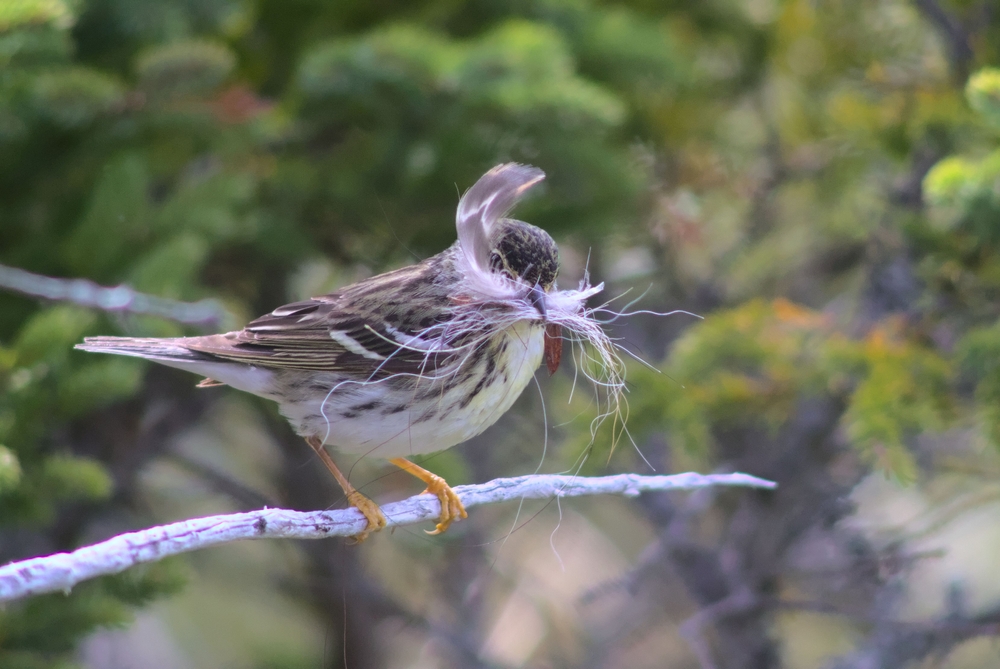
Blackpoll Warbler is famous for a high, thin song that many people hear without realizing what it is. The notes are so fine and piercing that younger listeners sometimes notice them more easily than older ones. During migration the bird can appear in woodlots, parks, and forest edges, though it often feeds high in the canopy. That makes the song the best first clue, especially on cool spring mornings.
Males in breeding plumage have a black cap, white cheeks, and streaked sides, though spring migrants can vary a bit in look depending on timing. This species later makes one of the longest overwater migrations of any songbird in the region, which adds to its appeal. It breeds in northern forests and moves through many places quickly during migration. If you hear a faint series of sharp notes overhead, it is worth checking for this small traveler.
Sprague’s Pipit
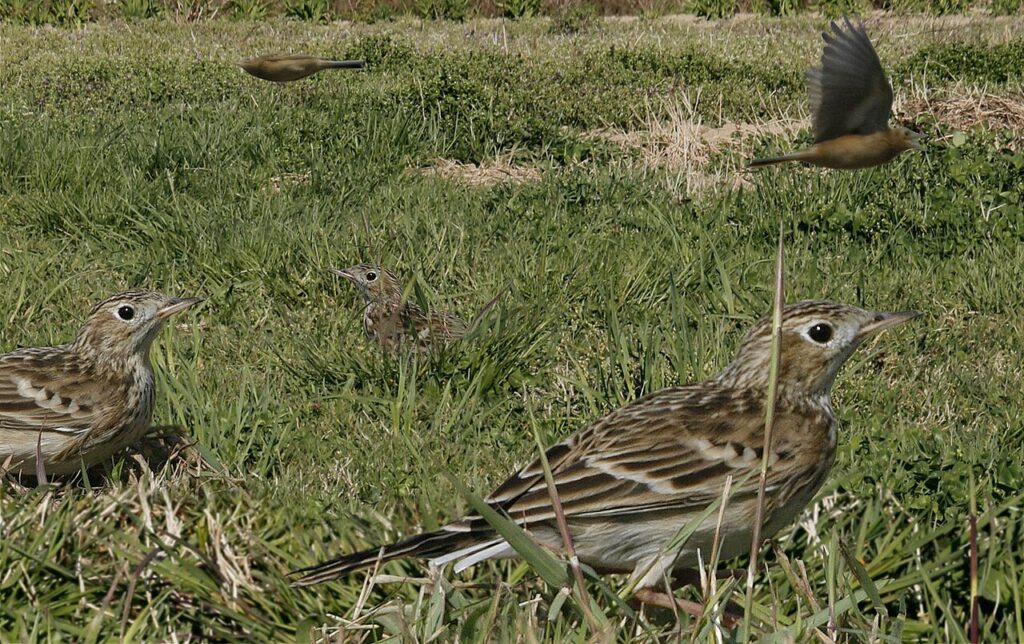
Sprague’s Pipit is a grassland bird with a song display that feels almost unreal when you first hear it. The male rises high into the air and sings while circling, filling open prairie with a thin, cascading song from a bird that may be nearly invisible against the sky. Often you hear the music first and spend a while trying to figure out where it is coming from. On the ground, the bird is even harder to pick out because it blends so well with dry grass.
This species depends on native prairie, which has become much less common over time. Its streaked look is subtle, and it often walks or crouches low instead of perching in plain view. Spring is one of the best times to notice it because males are actively singing on territory. In open country, that floating song can be one of the most haunting sounds of the season.
Saltmarsh Sparrow
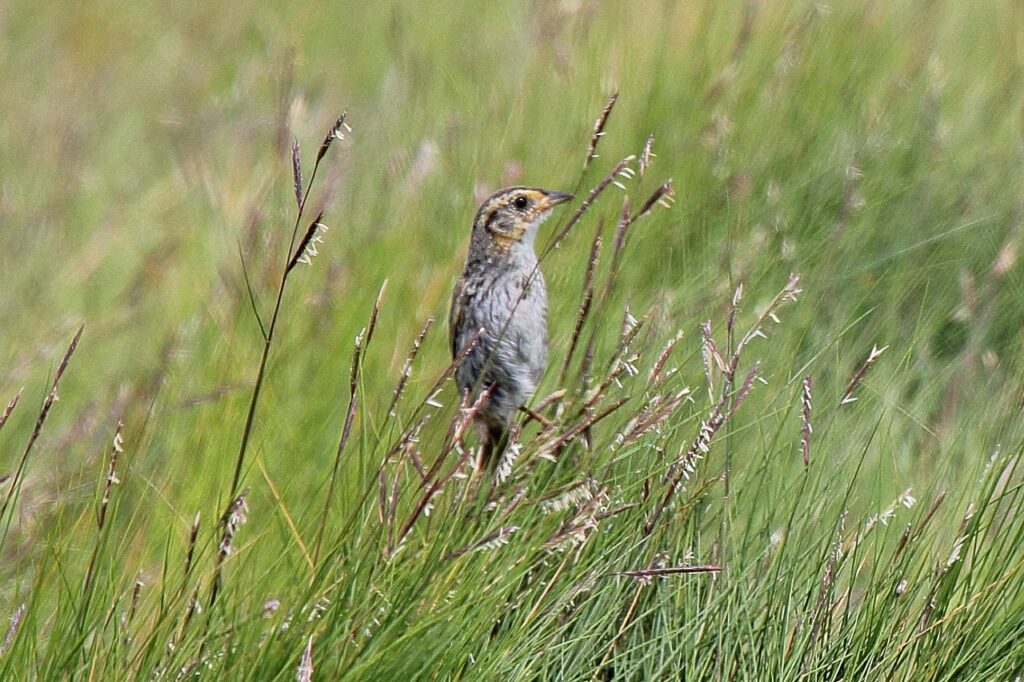
Saltmarsh Sparrow lives in coastal marshes where wind, water, and distance can make birding tricky. Its song is not flashy, though the thin raspy sound can still tip you off before the bird shows itself among the grasses. It keeps low in salt marsh vegetation and often vanishes into the same brown and green tones that surround it. That means you are far more likely to pick up a sound or movement first rather than a full view.
This sparrow nests in a habitat that is narrow, specialized, and vulnerable to flooding. It has a streaked body and orange tones on the face, which look lovely when seen well through a scope or binoculars. Birders usually find it by scanning marsh edges slowly after hearing a call or seeing a bird pop up for a moment. In the right coastal marsh during spring, even a brief sound can start a very memorable search.
Smith’s Longspur
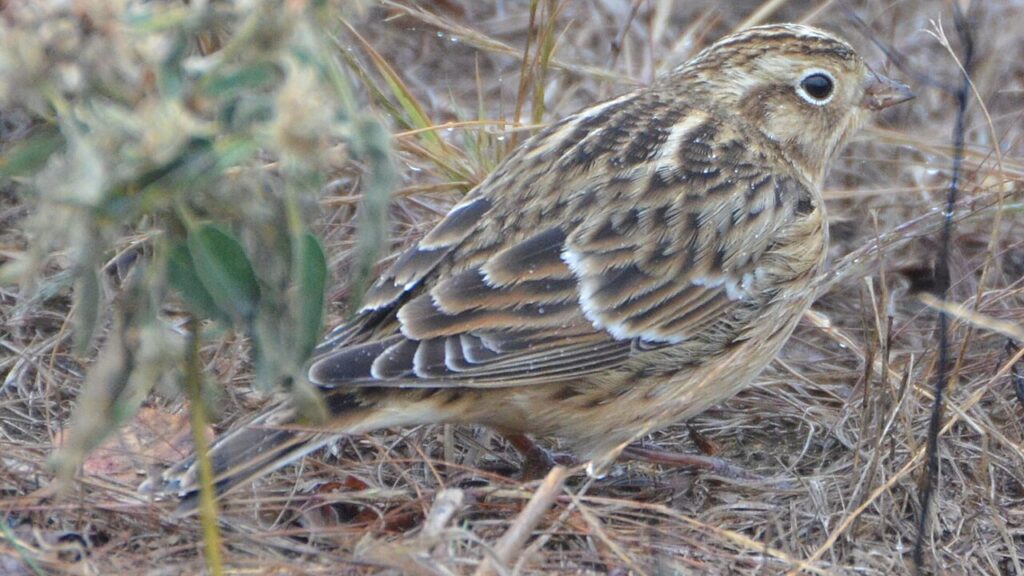
Smith’s Longspur is a prairie migrant and breeder that often reaches people as a sound over open ground before they manage to locate the bird. Males give musical, tinkling songs and display flights in breeding areas, while migrants can call overhead in loose flocks. In grassy country with little cover, that may sound easy, though the birds can still disappear against the land and sky very quickly. Their soft colors and constant movement make them much harder to lock onto than many people expect.
This longspur is tied to open northern breeding grounds and is still a special bird for many spring watchers. Males in breeding plumage have striking black and buff tones, though many views are brief. Because it is less familiar to casual birders than sparrows or warblers, the sound can be the first real clue that something unusual is nearby. A flock dropping into a field after calling overhead can turn an ordinary spring stop into a very good one.
This article originally appeared on Avocadu.