
15 Rare Orchids With Wild Petal Shapes That Don’t Look Real
Some orchids look so strange that they seem closer to fantasy than to anything you might see on a windowsill. Their petals twist, curl, and flare in shapes that can remind you of birds, insects, or even tiny dancers. These rare blooms ask for patience and careful attention, yet they reward growers with unforgettable displays when they finally open. So stay with this guide and let yourself be drawn into the world of orchids that hardly look real at all.
This post may contain affiliate links, which helps keep this content free. Please read our disclosure for more info.
Monkey Face Orchid (Dracula simia)
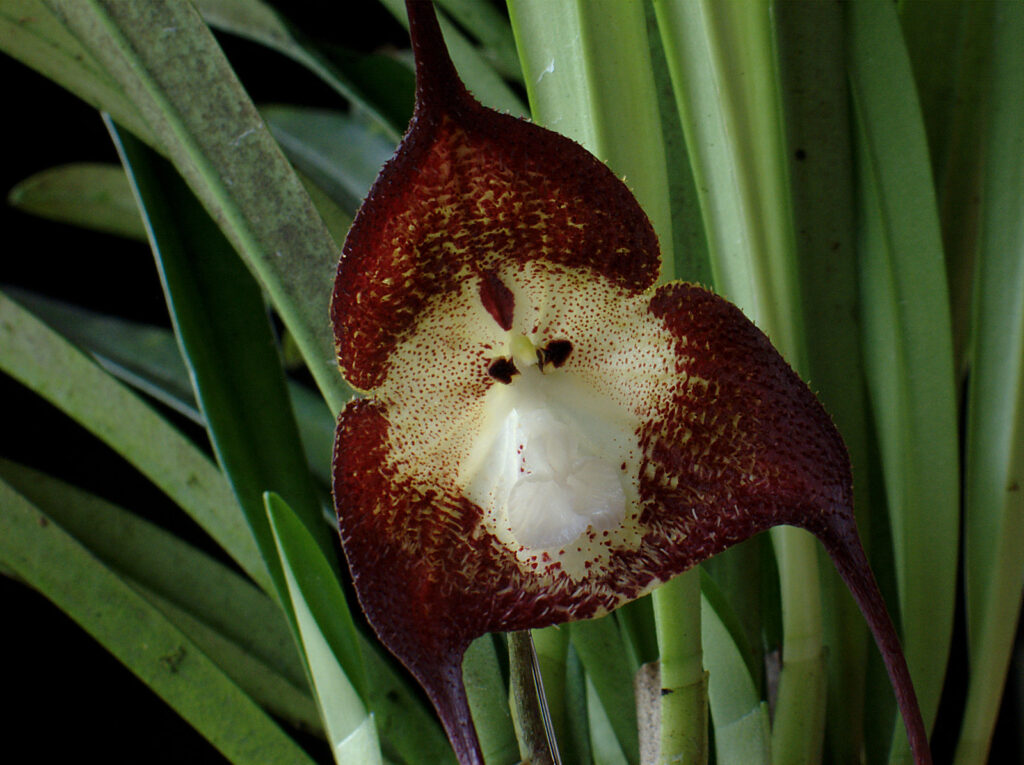
From the misty cloud forests of Ecuador, Peru, and Colombia, Dracula simia looks like a tiny animal staring back at you. The flowers arrange their parts so that a face appears, complete with eyes, nose, and a furry muzzle. This orchid grows in cool, damp mountain air with constant humidity and plenty of shade. It prefers conditions that feel more like a chilled greenhouse than a warm living room.
Seen up close, each bloom forms a small mask with long triangular sepals that stretch outward like tails. The plant enjoys fine bark or sphagnum moss that never dries out completely yet is not soggy. Gentle air movement and pure water help keep the roots healthy and active. In warmer homes, growers often give it a shaded, cooler corner or an indoor greenhouse cabinet to keep it happy.
Naked Man Orchid (Orchis italica)
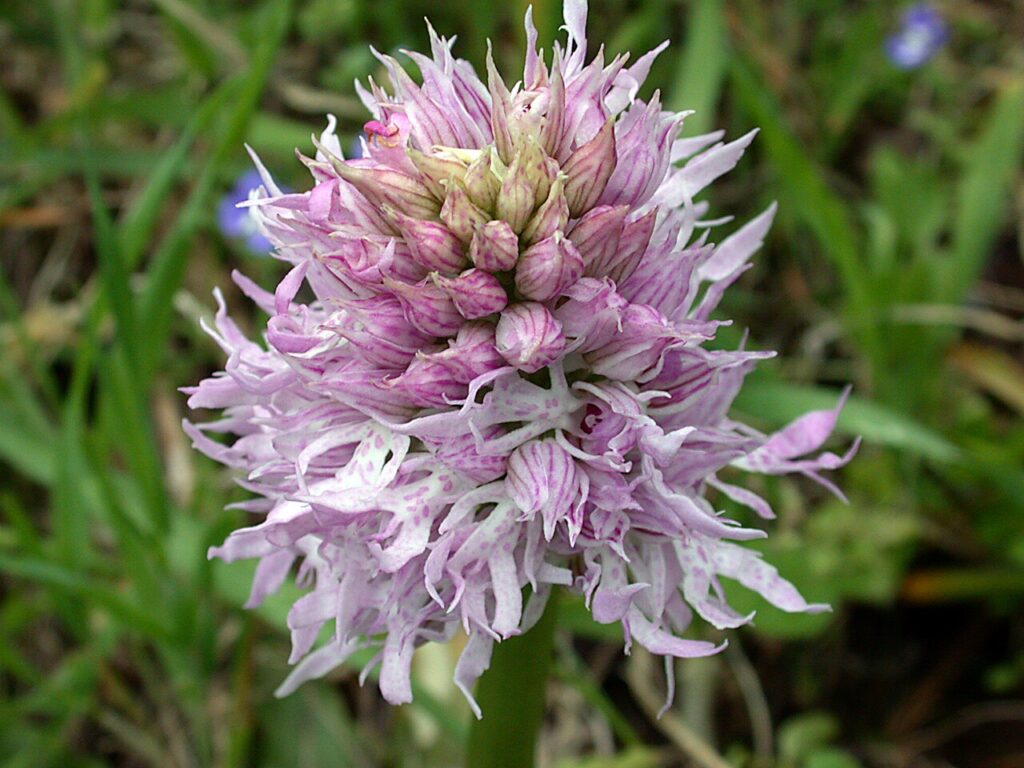
Across the Mediterranean Basin from Spain to Turkey, Orchis italica pops up in sunny meadows and rocky slopes. Each flower spike carries pink or purple blooms whose lips split into dangling lobes that look like arms and legs. The plant thrives in mild winters and warm, dry summers that match its home hillsides. It prefers gritty, well drained soil that does not stay wet for long periods.
At a glance, every flower looks like a tiny human figure wearing a helmet and hanging from a crowded spike. The plant rises from underground tubers that rest during the dry season and grow when rains return. Gardeners in similar climates often place it in rock gardens with lots of sun and lean soil. It dislikes heavy watering in summer and instead responds well to a natural cycle of wet winters and dry warm months.
White Egret Orchid (Habenaria radiata)
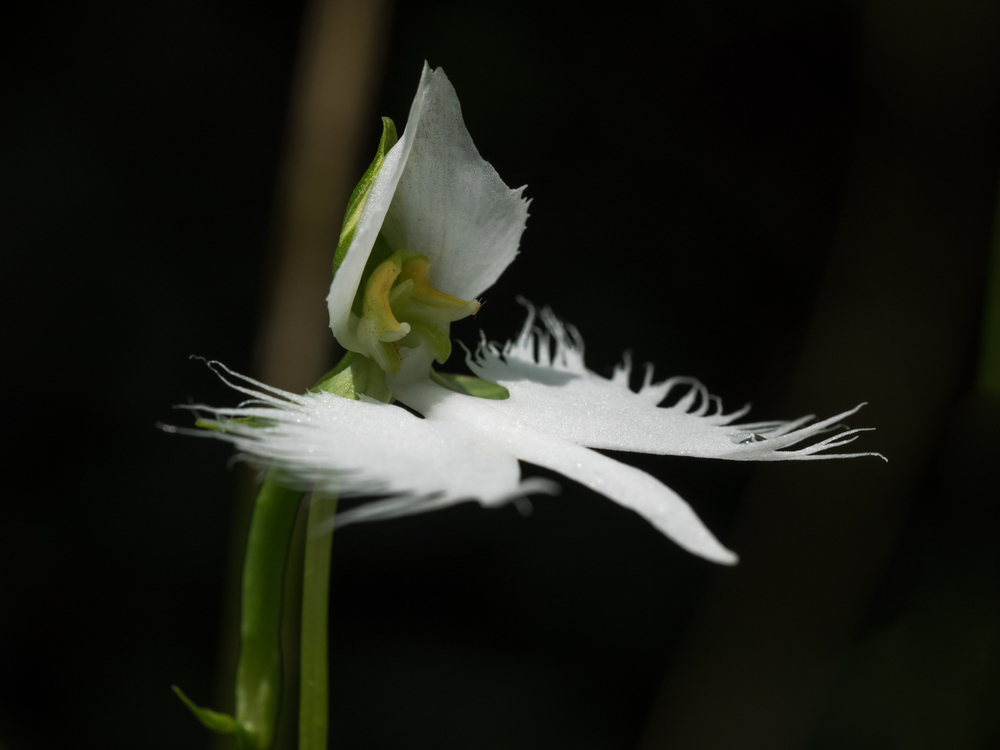
In wetlands across Japan and nearby parts of East Asia, Habenaria radiata sends up blooms that resemble small birds. The pure white lip is deeply fringed and opens into wings and a tail, creating the impression of an egret taking off. This terrestrial orchid grows in damp grass and boggy spots where water is present yet not standing in deep pools. It experiences cool winters and warm summers with steady moisture in the soil.
Each flower shows feathery edges that shimmer against narrow green leaves rising from small tubers. Growers usually keep it in shallow pots filled with sandy, acidic mix that drains well but stays evenly damp. During winter, the tops die back and the tubers rest in cool media that must not freeze hard. In hot regions, a bright position with morning sun, afternoon shade, and high humidity helps it stay vigorous.
Flying Duck Orchid (Caleana major)
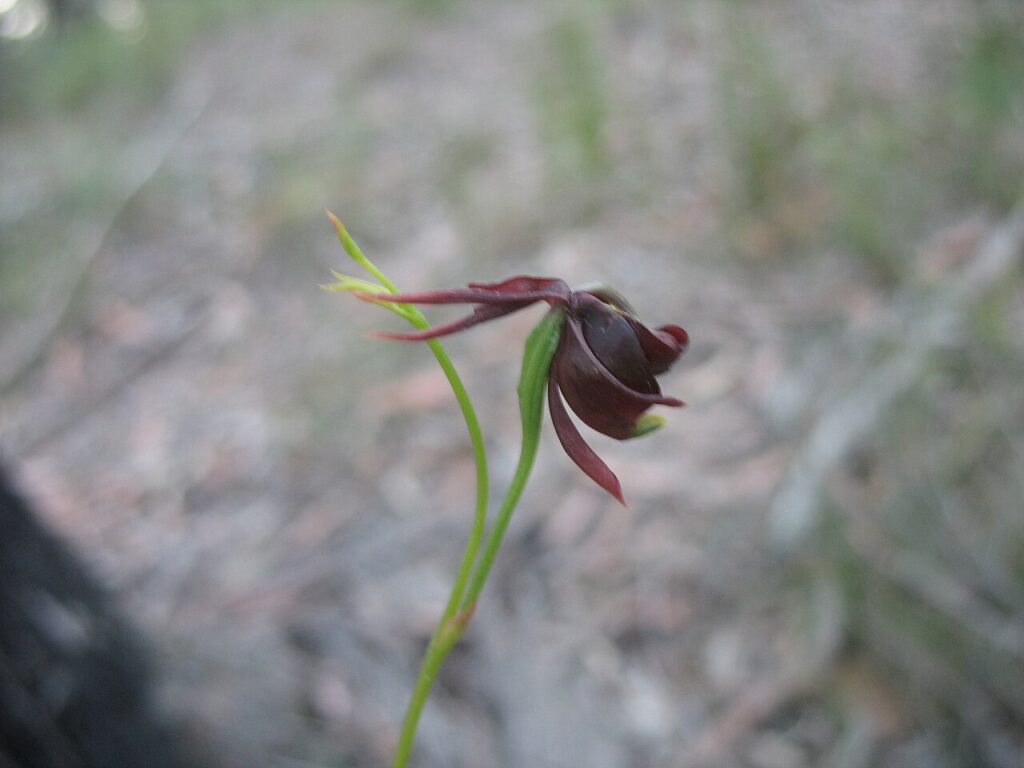
Eastern and southern Australia give Caleana major a home in eucalyptus woodlands and coastal heath. The flower curves into a shape that looks like a duck with a head, bill, and tiny body in mid flight. This small terrestrial orchid grows in sandy, low nutrient soils that drain quickly after rain. It enjoys mild winters, warm summers, and a dry rest that matches its native climate.
When you view the bloom from the side, the top sepal forms a duck head while the hinged lip acts like the body. Plants sprout from tiny tubers and often sit among low shrubs and grasses. In cultivation, they are sensitive to excess moisture around the tubers and prefer careful, light watering. A cool to warm outdoor spot with winter rain and a mostly dry summer gives the best chance for success.
Butterfly Orchid (Psychopsis papilio)
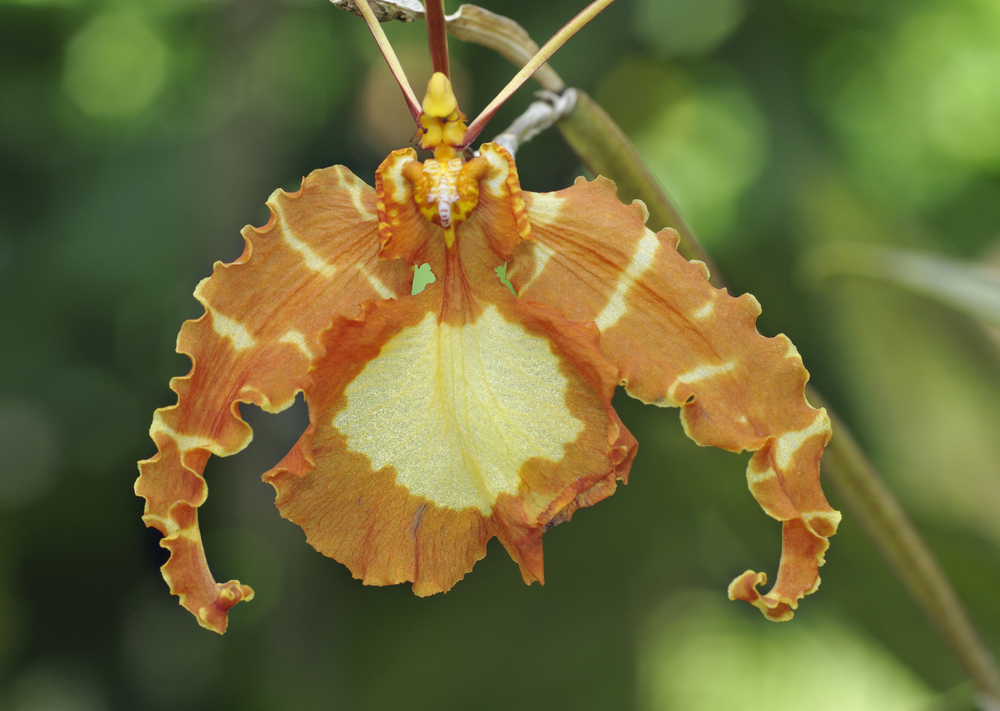
Among orchids from tropical America, Psychopsis papilio stands out as a flower that looks ready to fly away. It grows in forests of Trinidad, Venezuela, Colombia, Ecuador, and Peru where air stays warm and moist. A thin stem lifts each bloom high above the leaves so it can sway in light breezes. The pattern of yellow and brown on the petals suggests butterfly wings hanging in midair.
Floating on its tall spike, the flower has wide upper segments and narrow tails that move with every small gust. The plant grows as an epiphyte on tree trunks that offer bright, filtered light and high humidity. At home, it prefers warm to intermediate temperatures with a bark mix that dries slightly between waterings. Because the same spike can carry many blooms over time, growers avoid cutting it until it has clearly finished.
Spider Orchid (Brassia species)
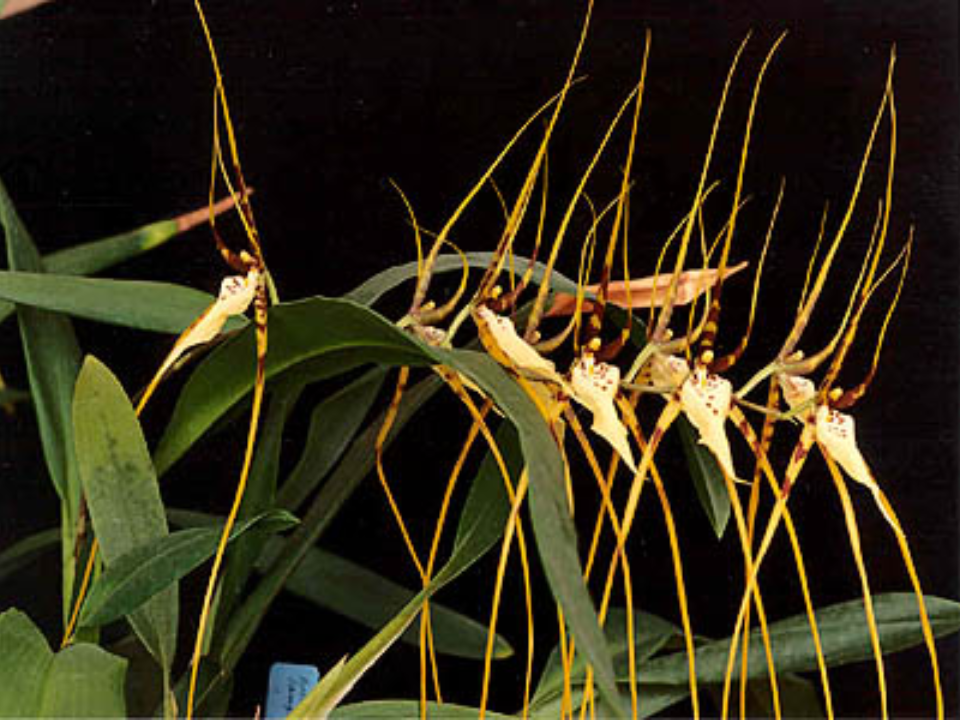
In tropical forests from Mexico through Central America into South America, Brassia orchids mimic long legged spiders. Plants attach themselves to tree branches where light is bright yet softened by overhead leaves. Their narrow petals stretch outward and carry spots in green, yellow, and brown that suggest spider legs. Humid air, warm temperatures, and frequent light rains match their normal environment.
With their star shaped flowers, these orchids hang blooms that truly look like arachnids dangling in the forest. The pseudobulbs store water so short dry spells between showers do not harm them. Growers usually place them in airy bark mixes that dry a bit between waterings while keeping humidity high. A spot with plenty of indirect light and gentle air movement keeps both leaves and roots in good condition.
Bee Orchid (Ophrys apifera)
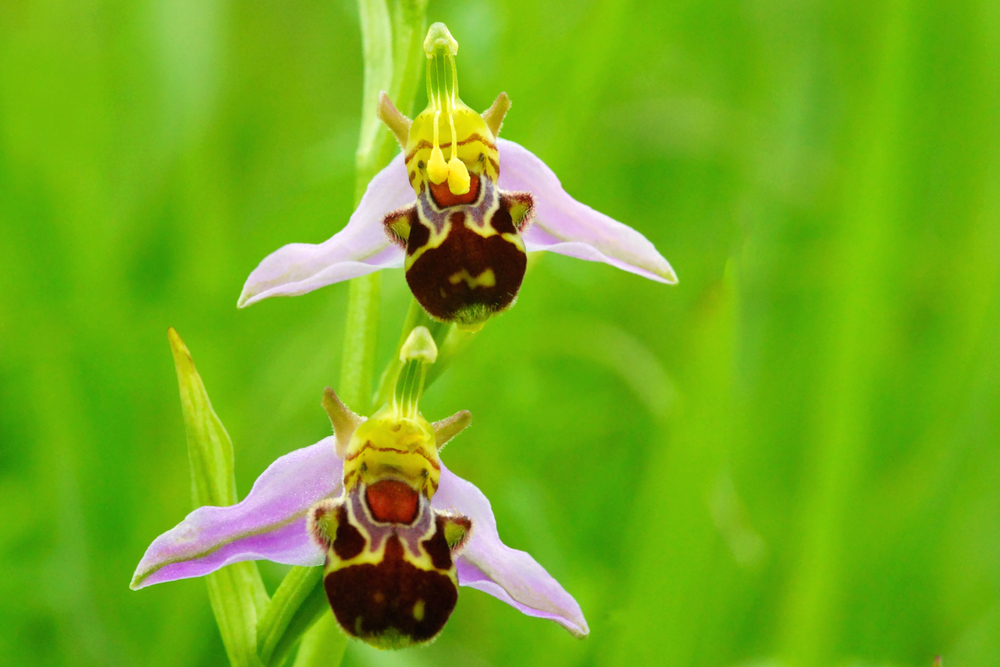
Across Europe and around the Mediterranean, Ophrys apifera dots grasslands and banks with bee shaped flowers. The lip is rounded and velvety, painted with brown and cream markings that resemble a resting bee. This mimicry helps attract pollinators in some regions, while in others the plant mostly pollinates itself. It thrives in temperate climates with cool to mild winters and not too hot summers.
Looking closely, you see a furry lip that copies the form and colors of a bee sitting on a petal. Soft pink or white sepals behind the lip complete the illusion of a blossom visited by an insect. The plant grows from small tubers in chalky or lime rich soils that drain freely. In gardens, it enjoys full sun or light shade and prefers natural rainfall patterns rather than heavy, regular watering.
Bulbophyllum medusae
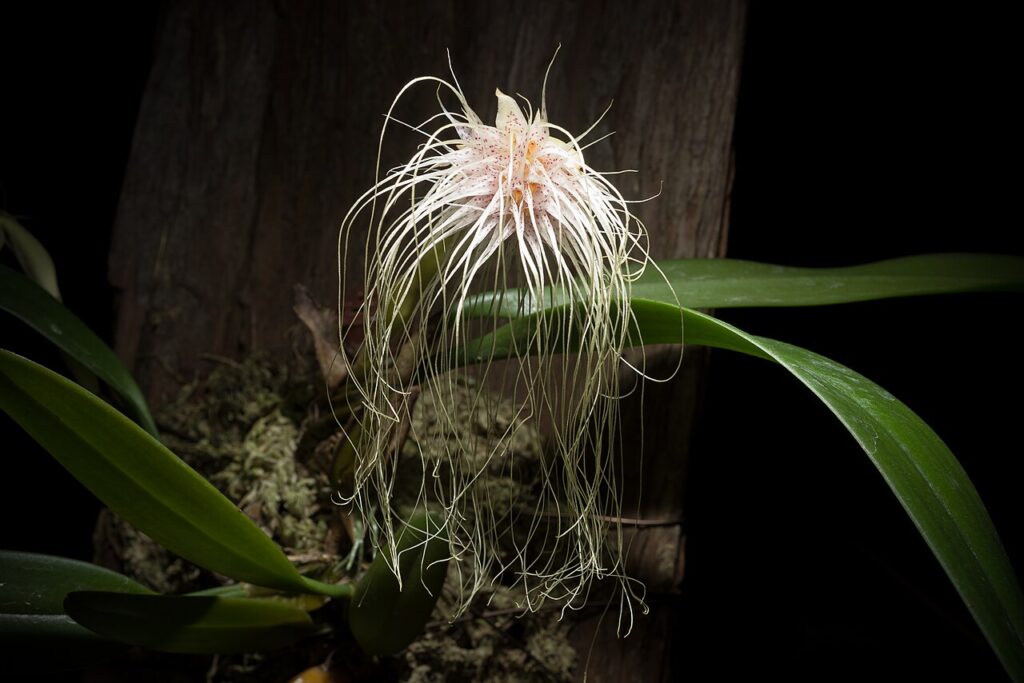
Rainforests in Thailand, Malaysia, Sumatra, and Borneo shelter Bulbophyllum medusae on mossy branches. This orchid sends up flower stalks that end in round clusters surrounded by many long, threadlike sepals. The bunch of pale threads radiates outward in all directions, giving the bloom a wild, hairlike look. Warm air, constant humidity, and gentle shade provide conditions similar to its home canopy.
As the flower head opens, the thin sepals hang like soft tentacles around a small central group of petals. The plant spreads via a creeping rhizome with small pseudobulbs that often spill over the edge of a basket or mount. Growers often mount it on bark or place it in slatted baskets with loose media so air can move freely around the roots. Regular misting, good drainage, and protection from direct midday sun allow those unusual flower heads to appear.
Antelope Orchid (Dendrobium spectabile)
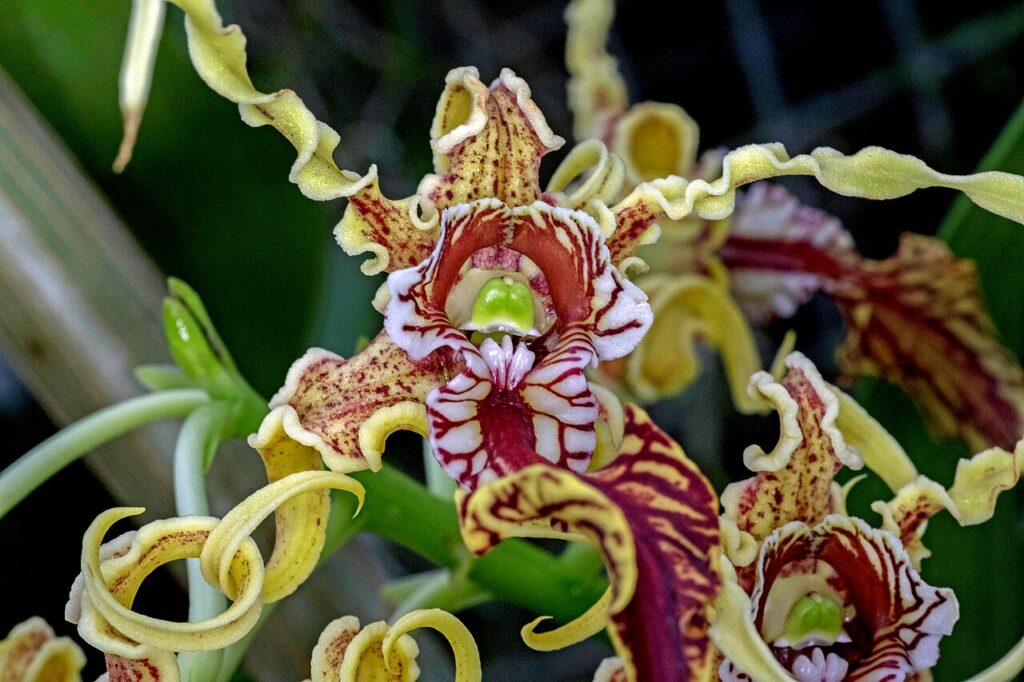
Warm coastal forests in New Guinea and the Solomon Islands hold Dendrobium spectabile on trees and mangroves. Each bloom shows twisted petals and sepals that curl into horn shapes around a speckled lip. This wild shape gives the flowers a look similar to little antelope heads with long, spiraling horns. The plant prefers hot, humid lowland conditions with no cold season and bright, filtered light.
On mature plants, tall canes carry clusters of these curling, horned blooms that look almost like tiny creatures. The pseudobulbs store moisture for periods when rainfall drops for a while. In cultivation, it appreciates strong light short of scorching sun along with frequent watering in its active growth phase. A small rest with slightly less water still keeps humidity high and encourages it to bloom well.
Paphiopedilum sanderianum
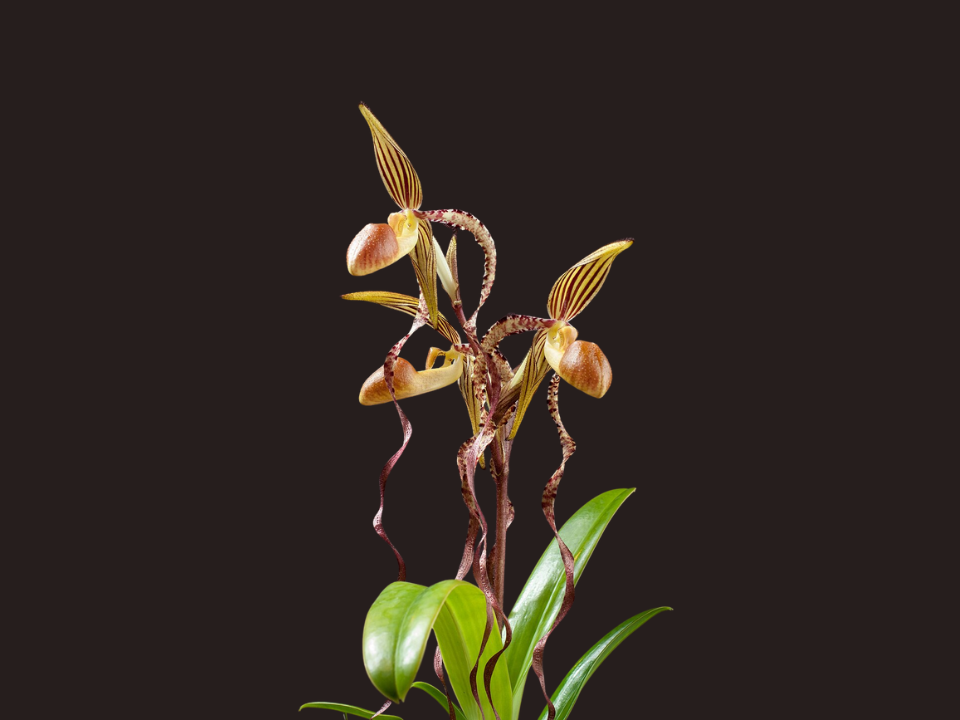
On limestone cliffs and forested hills in northwestern Borneo, Paphiopedilum sanderianum grows in pockets of moss and leaf litter. This slipper orchid is famous for its extremely long, narrow side petals that can reach impressive lengths. The central pouch forms the typical slipper shape, while the dorsal sepal stands tall and striped. Warm to intermediate temperatures and steady humidity match its native slopes.
When the plant flowers well, the hanging side petals drape like ribbons and can nearly reach the pot rim or beyond. The leaves are mottled or green and form a fan that sits neatly above the potting mix. Growers provide a loose blend of bark, stone, and other airy materials that let water move through quickly. It enjoys shaded light that feels like a bright forest floor and responds well to regular, gentle feeding in the growing season.
Anguloa uniflora Tulip or Swaddled Babies Orchid
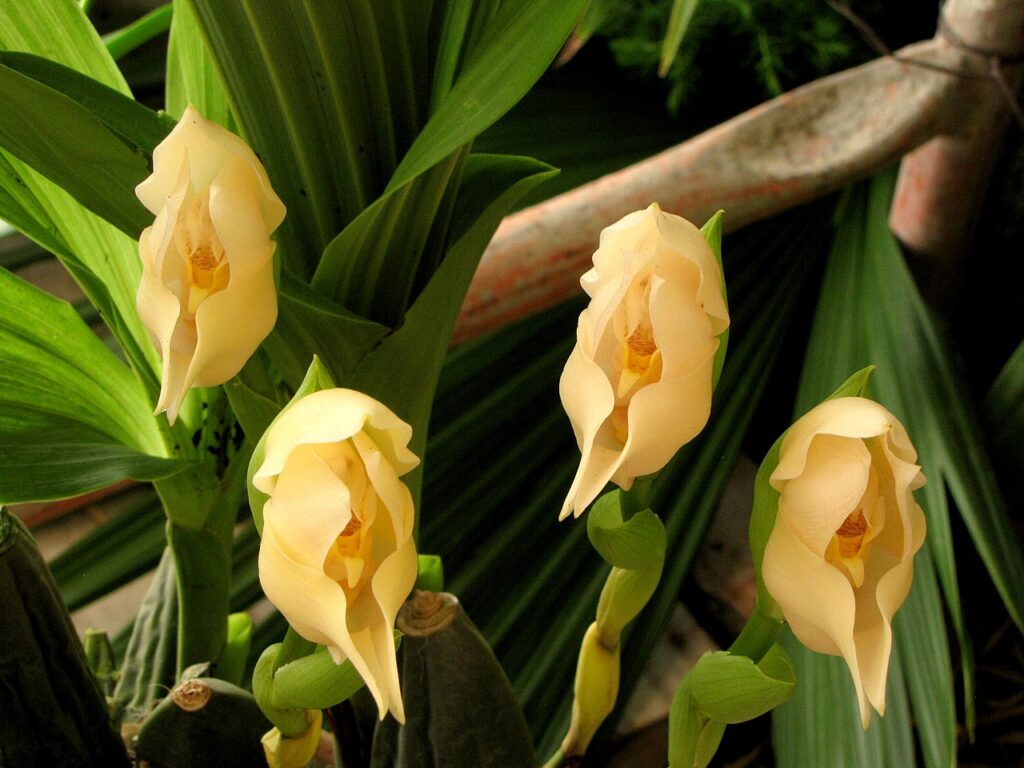
High in the Andes of Venezuela, Colombia, and Ecuador, Anguloa uniflora blooms on cool forest floors. The thick, waxy flowers look like tulips or like tiny figures wrapped tightly in blankets. Each bloom opens partway and holds its inner parts inside rounded petals, giving a sculpted appearance. This orchid experiences cool days, chilly nights, and frequent mist in its home range.
Once the buds open, the petals arch around the lip so closely that the inside seems hidden and protected. Large pseudobulbs and broad pleated leaves allow the plant to store water during drier spells. Gardeners usually pot it in a mix that holds moisture yet drains well, such as fine bark with some moss. Strong air movement, steady humidity, and protection from hot afternoon sun help it produce those unusual tulip like flowers.
King of the Masdevallias Orchid (Masdevallia veitchiana)
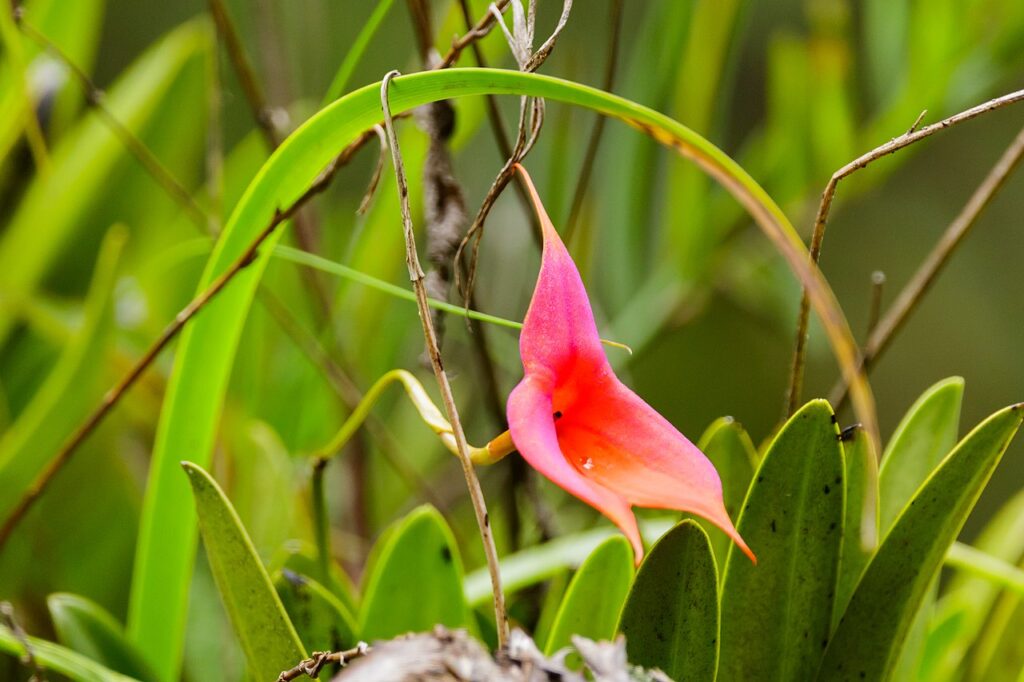
Mountain slopes near Machu Picchu in Peru carry Masdevallia veitchiana on rocky ground and grassy ledges. Its triangular flowers glow with bright orange and red tones that can shimmer in changing light. Each bloom has three main segments that join at the center, then extend into long narrow tails. Cool days, cold nights, and clean, moist air define the climate it prefers.
On a healthy plant, several triangular blooms may open together, creating a patch of brilliant color above the leaves. The roots enjoy constant light moisture in fine bark or moss and never like to dry completely. Growers keep this orchid in cool, bright conditions with strong air flow and very pure water. In warm regions, it often lives in a cooled greenhouse or a shaded outdoor corner that stays fresh through the day.
Holy Ghost or Dove Orchid (Peristeria elata)
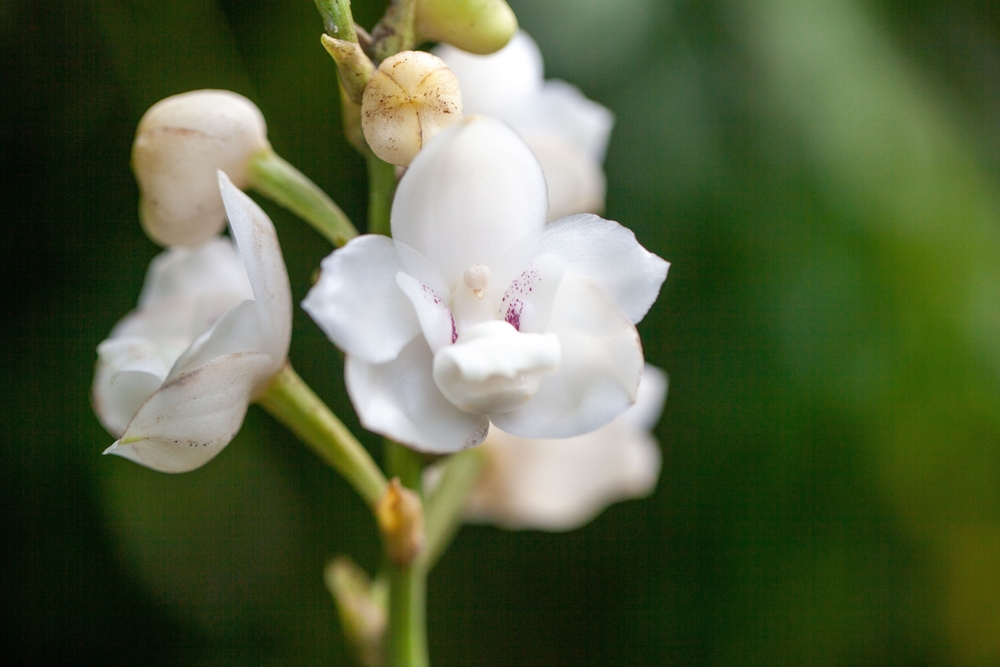
Humid mountain forests from Costa Rica to Peru shelter Peristeria elata among mossy trees and slopes. The large white flowers open with a rounded outer cup and a small inner structure that looks exactly like a dove. This bird shape sits in the middle of the bloom and gives the plant its well-known name. Warm to intermediate temperatures and high humidity match its typical growing sites.
Inside each flower, the column and lip form the tiny bird with wings and head, surrounded by the outer petals. The plant grows from big pseudobulbs that send up tall spikes carrying numerous blossoms. In pots, it likes a coarse mix that stays slightly moist yet drains quickly after watering. Regular feeding during its growth period and bright filtered light support strong bulbs and generous flowering.
Ghost Orchid (Dendrophylax lindenii)
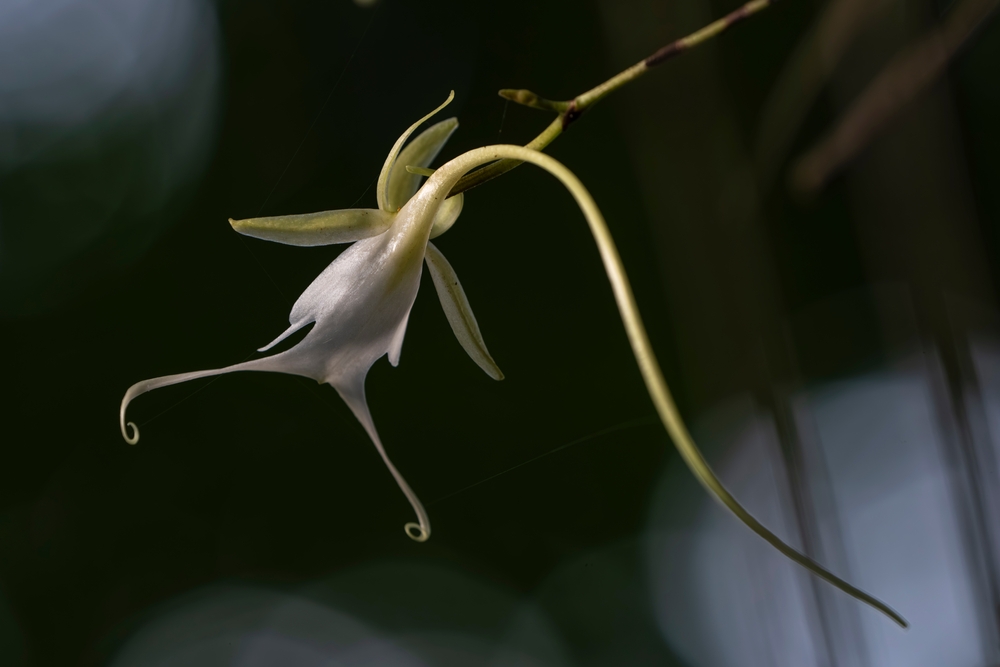
Deep in the swamps of southern Florida and parts of Cuba, Dendrophylax lindenii clings to tree trunks as a cluster of roots. The plant has no leaves, so its flat green roots take in light and cling to damp bark. Its habitat stays hot, very humid, and flooded for long stretches, with light filtered through thick tree canopies. These conditions are hard to copy, which is one reason it remains rare.
When it blooms, a starry white flower with long lower lobes seems to float against the dark swamp background. The narrow lobes hang like legs and make the blossom look like a small figure in mid jump. In cultivation, it needs mounting on bark, very high humidity, and constant but gentle air movement. Because its roots are exposed, growers water lightly and often, taking care that the plant does not sit in still, stagnant moisture.
Eastern Mantis Orchid (Caladenia tentaculata)
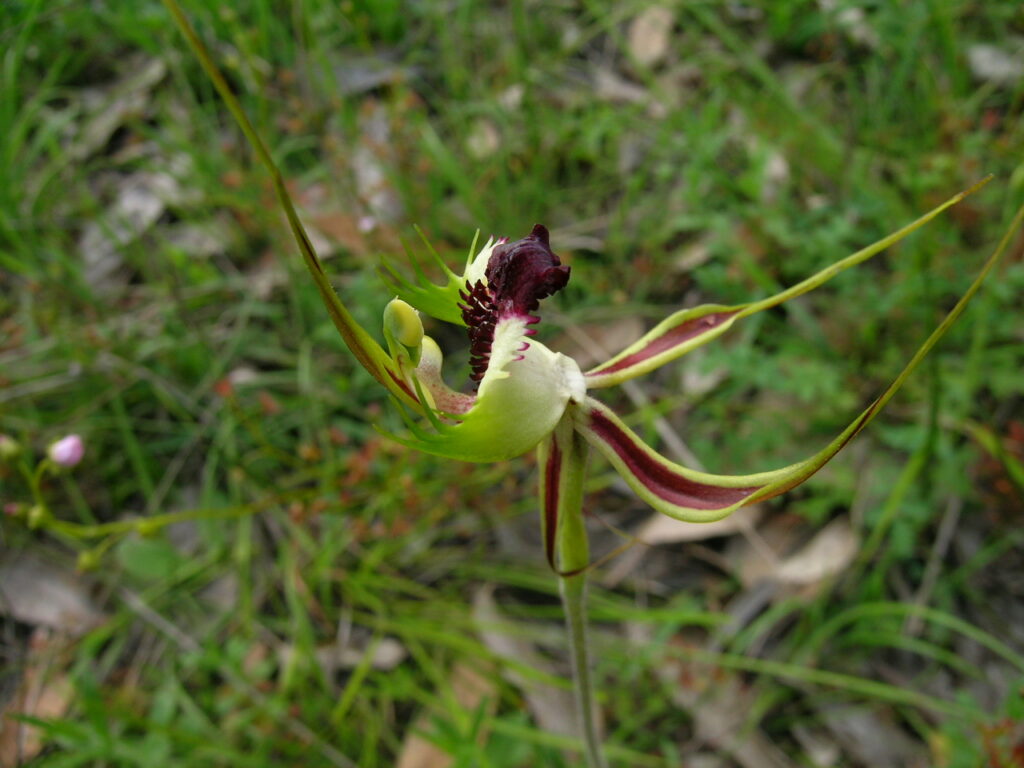
Open woodlands and grassy places in south eastern Australia host Caladenia tentaculata through cool, rainy winters and drier summers. The plant sends up a single hairy leaf and a tall stem with one or more striking blossoms. Flowers show green and red striping with long, narrow sepals and petals that end in dark, clubbed tips. This form gives each bloom a mantis or spider like pose in the grass.
On flowering stems, the extended segments stretch outward as if they were legs and arms of a waiting insect. The plant grows from an underground tuber that rests in dry summer soil before sprouting with winter rain. Gardeners who grow it use sandy, well-drained mixes and follow a seasonal watering pattern with wet winters and much drier summers.
This article originally appeared on Avocadu.