
17 Rare Lakes With Odd Colors And Real Science Behind Them
Around the world, there are lakes that look like spilled paint more than regular water. Their colors can come from dissolved minerals, microscopic life, or reactions that happen only under certain conditions. These lakes may look mysterious, yet careful research shows exactly why they shine, glow, or cloud up the way they do.
This post may contain affiliate links, which helps keep this content free. Please read our disclosure for more info.
Lake Hillier
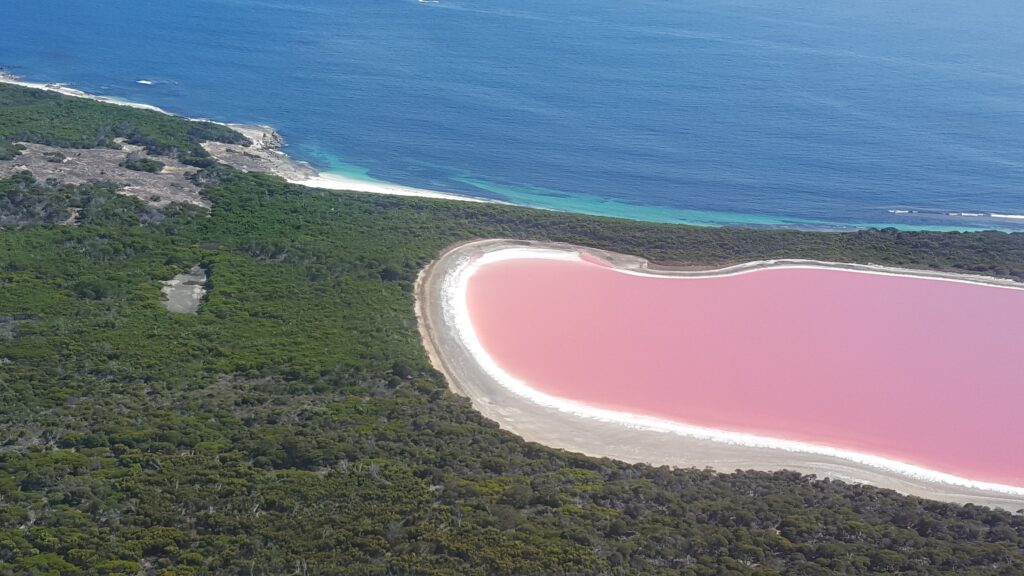
Set on Middle Island off the southern coast of Western Australia, Lake Hillier sits near the town of Esperance. Drivers reach Esperance in about seven to eight hours from Perth, then join a short flight or boat trip since there is no road to the island itself. From above, the lake appears bubblegum pink right beside the deep blue Southern Ocean, which makes the contrast feel surreal. Its colour stays pink even in a bottle, which shows that the hue comes from the water itself rather than reflections.
What gives Lake Hillier its strange tone is a mix of salt-loving algae and bacteria that thrive in extremely salty water. These microbes produce reddish and orange pigments that help them handle strong sunlight and high salinity, and those pigments tint the whole lake. Because the water can be many times saltier than seawater, very few other organisms compete with them, so the colour remains strong. Heavy rain or cooler seasons can dilute the salt and soften the pink, so visitors often aim for drier months.
Lake Retba
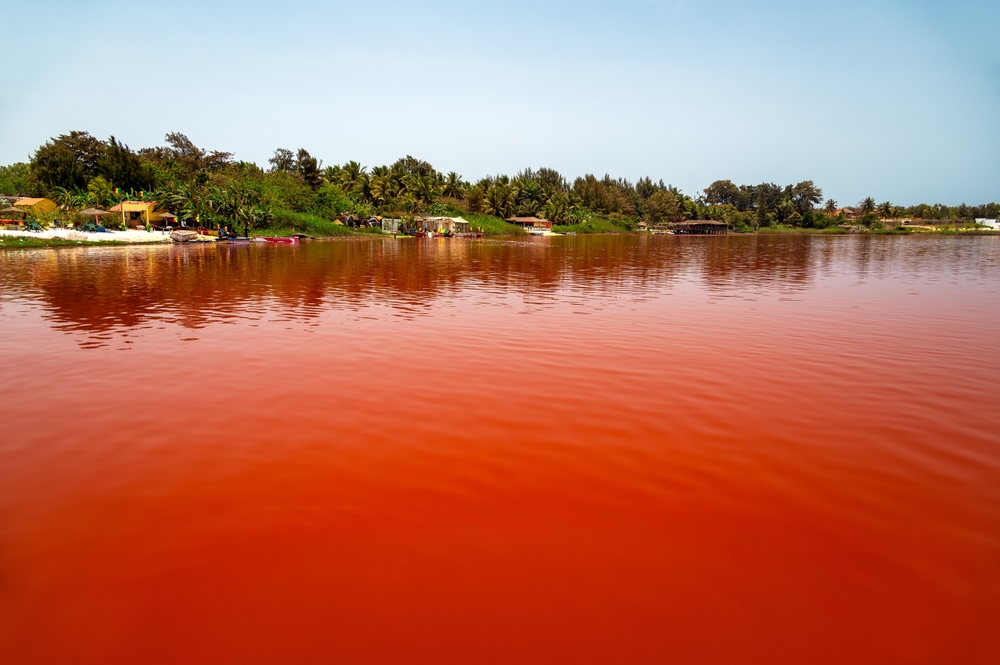
On Senegal’s Cap Vert Peninsula, Lake Retba rests just beyond the busy streets of Dakar. The lake sits around forty five minutes to an hour by car from central Dakar, depending on traffic along the coastal road. Shallow water and salt harvesting boats create a pink and white scene that looks almost painted on sunny days. During the dry season, evaporation intensifies the colour and the salt piles grow taller around the shore.
Here the rosy hue comes from salt tolerant algae and bacteria that bloom when the water becomes very salty. These tiny organisms produce red and orange pigments that scatter sunlight and shift the water from pale peach to bright magenta. As the wind ripples the surface and the sun climbs higher, the colour can change from hour to hour. People can float on the dense brine much like at the Dead Sea, but a rinse afterward is important because of the strong salt content.
Laguna Colorada
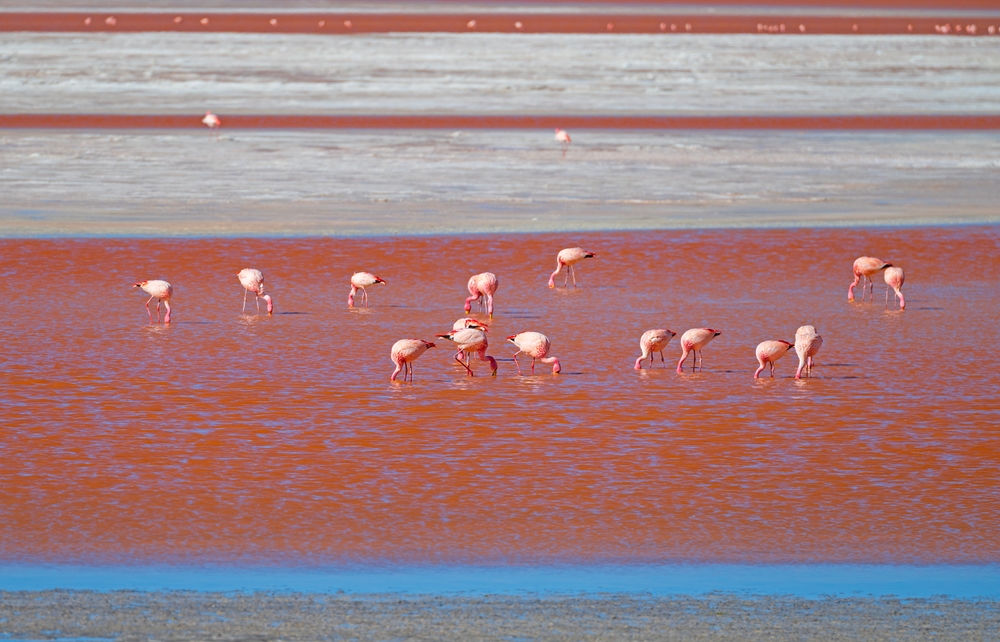
High on the Bolivian Altiplano, Laguna Colorada spreads out in rusty reds beneath wind-sculpted volcanoes. Most visitors travel by four wheel drive from the town of Uyuni, a journey of about six hours through the Eduardo Avaroa Reserve with stops at other high altitude sights. From the lakeshore, you see red water, white borax islands, and crowds of pale pink flamingos feeding in the shallows. The thin air, strong sun, and unusual colours make the whole basin feel otherworldly.
The science behind the red tones involves both mineral rich sediments and microscopic algae that tolerate cold salty water. Pigments in these algae reflect red and orange light, especially when sunlight is strong and the water is calm. Fine sediments stirred up by wind add cloudiness and deepen the colour near shore. Flamingos feed on the pigment rich algae and tiny crustaceans, which plays a role in their own pink feathers and links biology, chemistry, and climate in one small lake.
Lake Natron
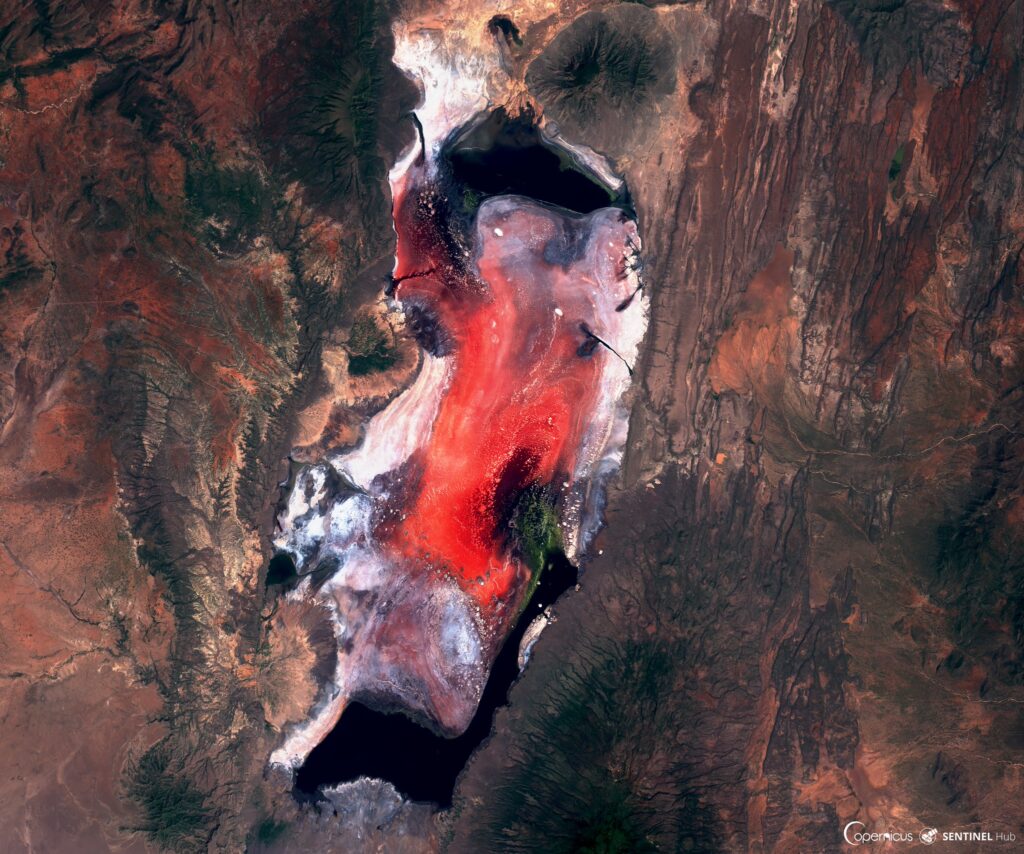
On the border between Tanzania and Kenya, Lake Natron stretches across a hot and cracked basin beneath steep rift valley cliffs. Travelers usually set out from the city of Arusha, and the trip by rough road can take five to six hours in a sturdy vehicle. In aerial views, the water appears red, orange, and sometimes purple, while from the shore it may look rust coloured with pale crusts around the edge. Huge flocks of lesser flamingos gather here, since this lake is their main regional breeding site.
What makes Natron unusual is its very high alkalinity and temperature combined with heavy mineral content. Salt loving cyanobacteria and algae that withstand caustic water produce red pigments that tint the lake surface. Strong evaporation concentrates sodium carbonate and other salts, which can create a hard coating that preserves dead birds and animals that wash in. The same chemical mix that seems hostile to many species turns out to be ideal for microbes and flamingos that are adapted to it.
Hutt Lagoon
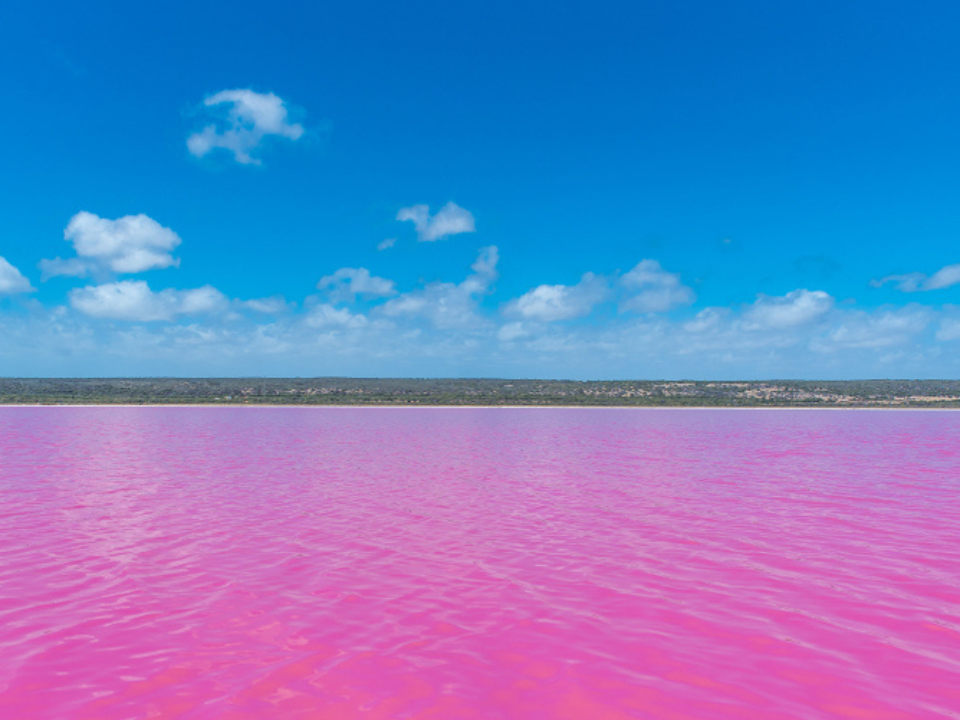
Along Western Australia’s Coral Coast, Hutt Lagoon lies just inland from the small town of Port Gregory. Drivers usually travel north from Geraldton, reaching the lagoon in about an hour, or they come from Perth in roughly five to six hours by road. On sunny days the water can look hot pink, soft lilac, or orange, depending on clouds and tide. Roadside lookouts and low hills give wide views across the shallow, coloured sheet.
The colour here comes from dense blooms of Dunaliella salina, a type of microalgae that thrives in very salty water. These cells produce beta carotene and other pigments that scatter orange and red light when concentrations are high. As the lagoon evaporates in dry weather, salinity rises and the pigments become more concentrated, deepening the hue. Companies harvest the algae for pigment and nutritional products, so this strange looking lagoon also plays a role in local industry.
Spotted Lake
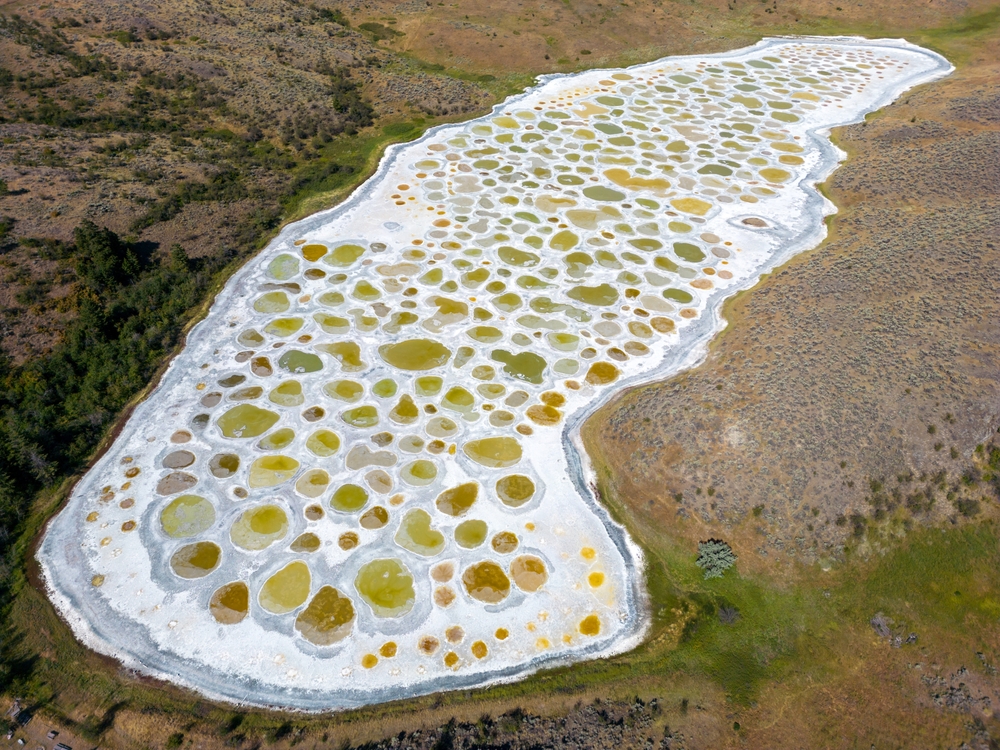
In southern British Columbia near the town of Osoyoos, Spotted Lake looks ordinary in spring but turns polka-dotted by late summer. The site sits about four and a half hours east by car from Vancouver and only a short drive from Osoyoos itself. As hot weather evaporates water, round pools of different colours appear across the lake bed, giving it a spotted pattern. Fences and signs remind visitors that this place holds cultural and healing significance for the Syilx Okanagan people, so it is viewed from the roadside.
Chemistry explains the lake’s patchwork of circles. The water contains high levels of magnesium sulfate along with sodium and calcium salts that crystallize as water evaporates. Each pool develops its own mix of minerals, which changes how it reflects light and leads to greens, yellows, whites, and browns. Rings form at the edges of the spots as minerals build up, creating a natural map of evaporation and concentration over the course of the summer.
Kelimutu Crater Lakes
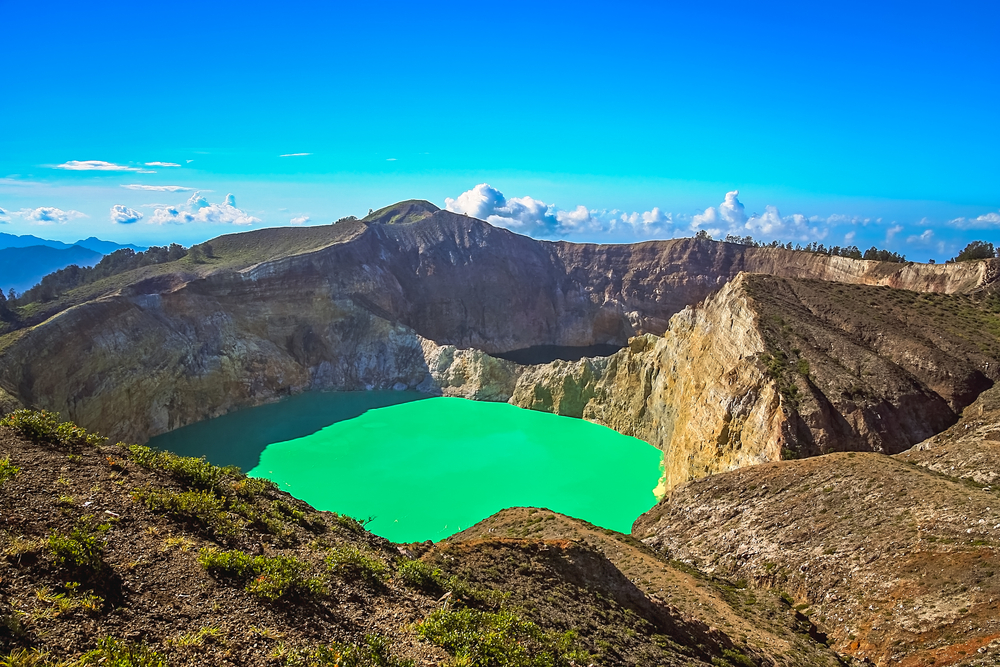
On the Indonesian island of Flores, Kelimutu volcano holds three crater lakes that can show different colours at the same time. Visitors typically stay in the town of Ende, about a one and a half to two hour drive from the trailhead on twisting mountain roads. From the viewing platform, each basin may appear turquoise, dark green, brown, or nearly black, separated only by thin rock walls. Sunrise visits are popular because morning light highlights the colour contrasts before clouds move in.
The changing hues come from ongoing volcanic activity under the lakes. Gas vents and groundwater interactions alter the chemistry of each basin, shifting the balance of dissolved metals such as iron and manganese. As these elements oxidize or reduce, they absorb and reflect different wavelengths of light, which changes the apparent colour. Because gas flow and rainfall vary over time, the lakes can look strikingly different from one year to the next.
Kawah Putih
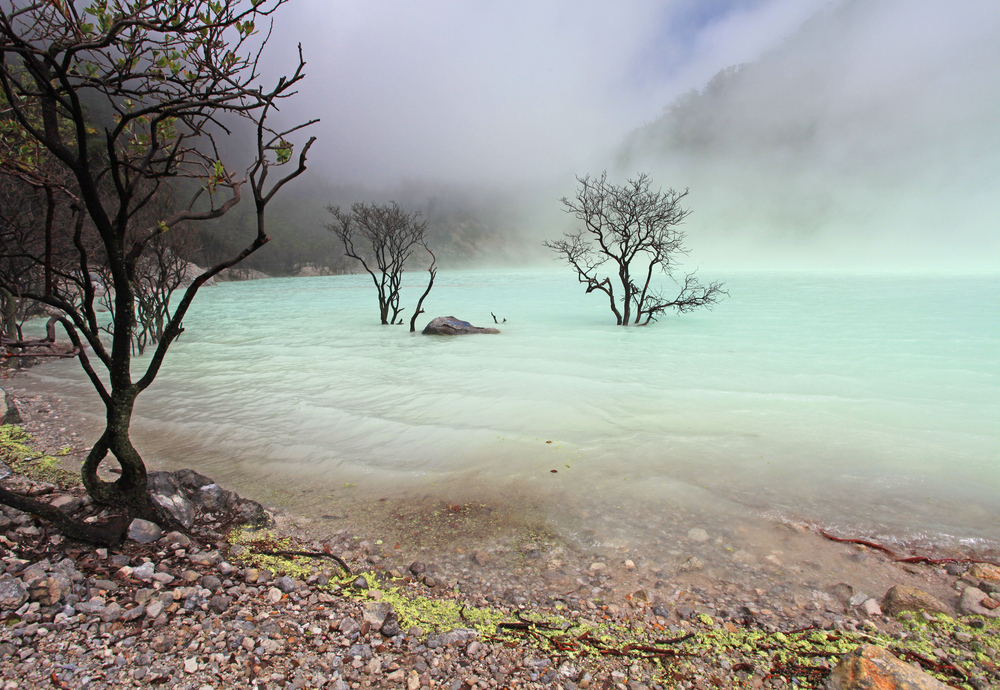
South of Bandung in West Java, Kawah Putih fills a volcanic crater with opaque turquoise water. The drive from Bandung takes around two hours, climbing from the city through tea plantations and villages to the high plateau. From the boardwalk, visitors see pale blue green water, white rocks, and leafless trees shaped by acidic fumes. A light sulfur smell hangs in the air and signs advise limiting time at the shore.
Here the milky colour is tied to volcanic gases and chemistry. Sulfur-rich water in the crater is highly acidic and holds dissolved minerals that react with oxygen as they reach the surface. Fine suspended particles and dissolved compounds scatter light, especially in the blue and green range, which makes the water look like diluted paint. Because gases and temperature change with volcanic activity, the colour and water level can shift over the years.
Five Flower Lake, Jiuzhaigou
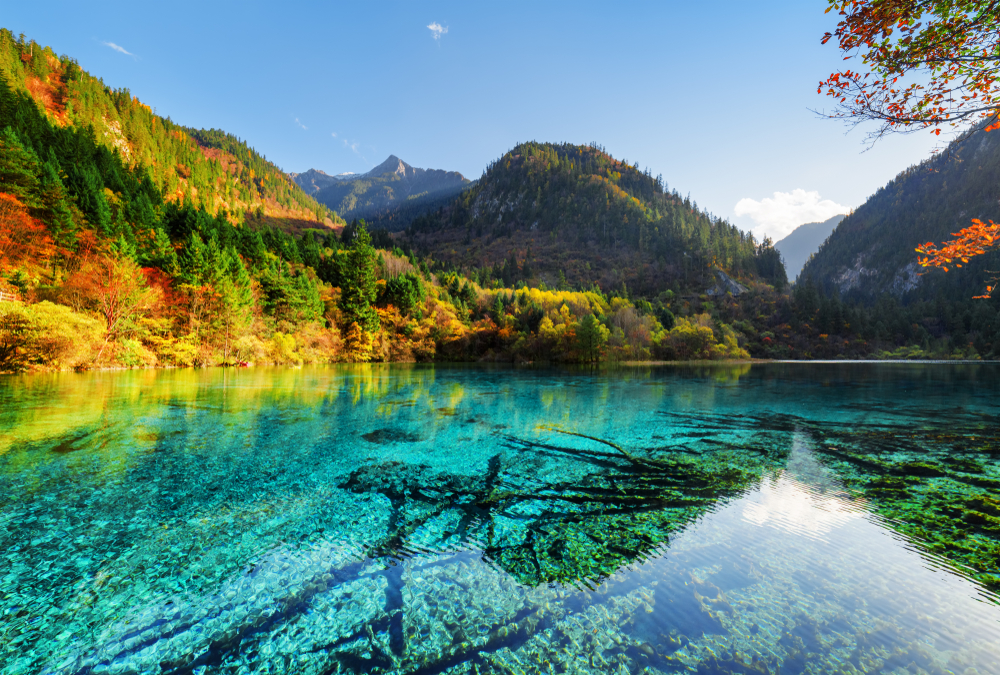
Inside Jiuzhaigou National Park in Sichuan, Five Flower Lake stretches out as a shallow basin filled with turquoise and gold patches. Travelers usually come by bus from Chengdu, a trip of about eight to nine hours by mountain roads or a shorter flight followed by a drive into the valley. Wooden walkways circle the lake, where fallen tree trunks remain clearly visible on the bottom through clear water. Different viewing angles show shifting bands of blue, green, and yellow.
Scientists describe this lake as a mix of clear spring water, dissolved calcium carbonate, and aquatic plants. Travertine deposits build up on rocks and logs when mineral rich water loses carbon dioxide and drops calcium carbonate, which creates pale surfaces that reflect light. Algae and aquatic vegetation add warmer tones that mix with the blue from the water itself. Because the water is very clear and shallow, small changes in depth and plant growth can change the visual pattern from season to season.
Moraine Lake
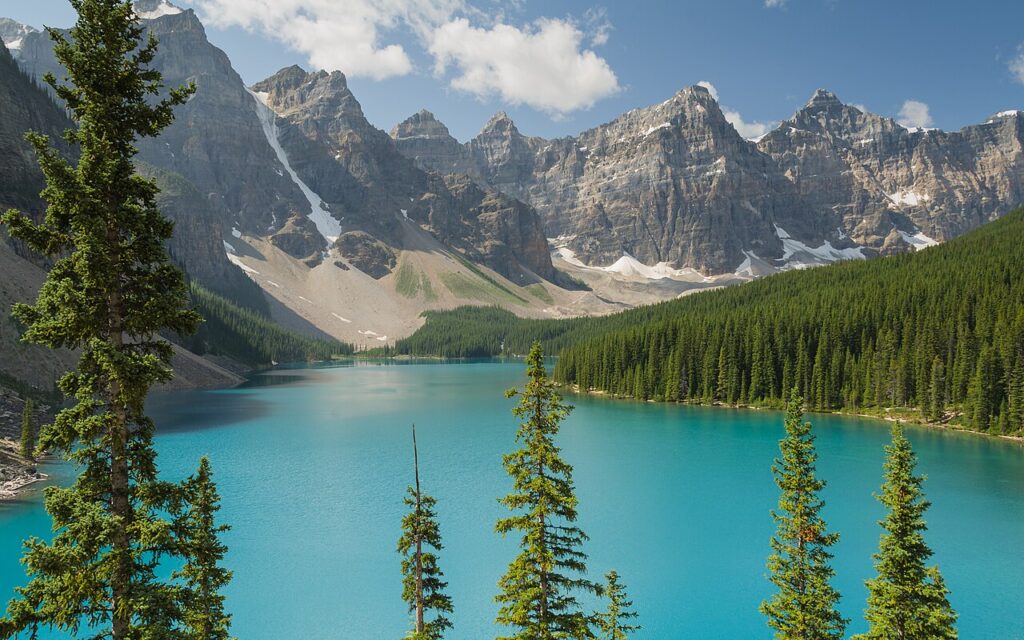
In the Canadian Rockies of Alberta, Moraine Lake sits at the end of a valley ringed by ten dramatic peaks. From Banff town, the drive to the shuttle pickup area takes about an hour, and seasonal buses cover the last stretch to the lakeshore. When the basin fills with meltwater in late June and July, the water turns a strong turquoise that almost looks artificial. Calm mornings often show a perfect reflection of the peaks in the colourful surface.
The striking hue here comes from glacial rock flour washed into the lake by meltwater streams. These ultra fine particles remain suspended in the cold water instead of sinking quickly, and they scatter sunlight in a way that highlights blue and green wavelengths. Scientists sometimes use Moraine Lake and similar basins to explain how glacial erosion affects lake colour across mountain ranges. The intensity of the shade changes across the summer as temperatures and melt rates rise and fall.
Peyto Lake
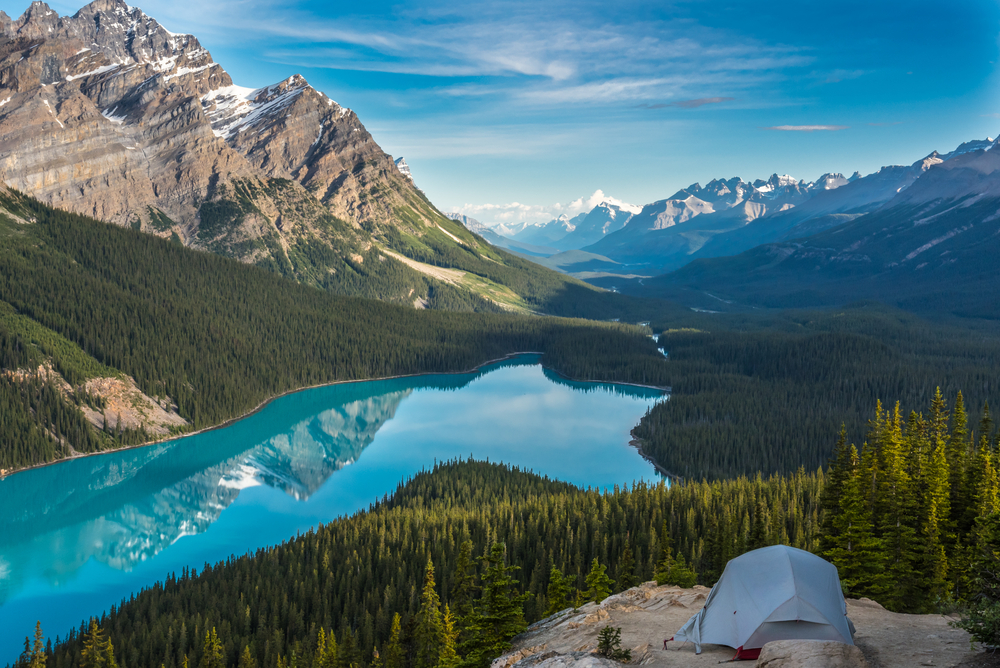
Along the Icefields Parkway in Alberta, Peyto Lake fills a hanging valley shaped like a wolf’s head when seen from above. The main viewpoint sits about forty-five minutes by car from the village of Lake Louise and a bit more than an hour and a half from Banff. From the platform, visitors look down on water that appears neon turquoise against dark forests. Many people say the view resembles an edited photograph even when seen with the naked eye.
As with other turquoise mountain lakes, Peyto’s colour is due to glacial rock flour carried in by nearby icefields. Suspended silt particles scatter light in the blue-green range while absorbing other colours, which gives the water its opaque brightness. The exact tone can shift over the season as sediment input and water level change. Because Peyto Glacier has receded in recent decades, scientists track the lake and its sediment load to study glacier retreat.
Lake Louise
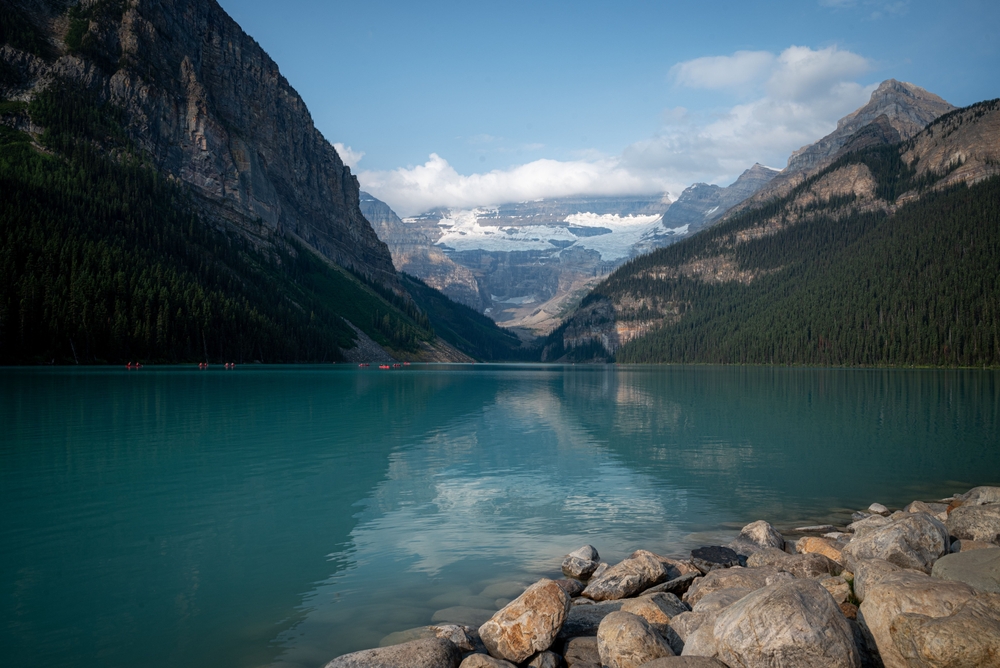
Below Victoria Glacier in Banff National Park, Lake Louise stretches out in front of a historic hotel and forested slopes. Drivers reach the lakeshore from Banff in about forty to fifty minutes on the Trans Canada Highway, although parking often fills early in the day. From the paved promenade, the water appears solid blue green and slightly cloudy rather than clear. Canoes gliding across the surface highlight the depth of the colour.
The same rock flour process that colours Moraine and Peyto is at work here. Glaciers up valley grind bedrock into fine powder, which streams carry into the lake each summer. The suspended silt scatters sunlight, especially shorter wavelengths, which makes the water look turquoise rather than transparent. Visitors often notice that the colour is strongest in mid to late summer when meltwater inflow and sediment are at their peak.
Plitvice Lakes
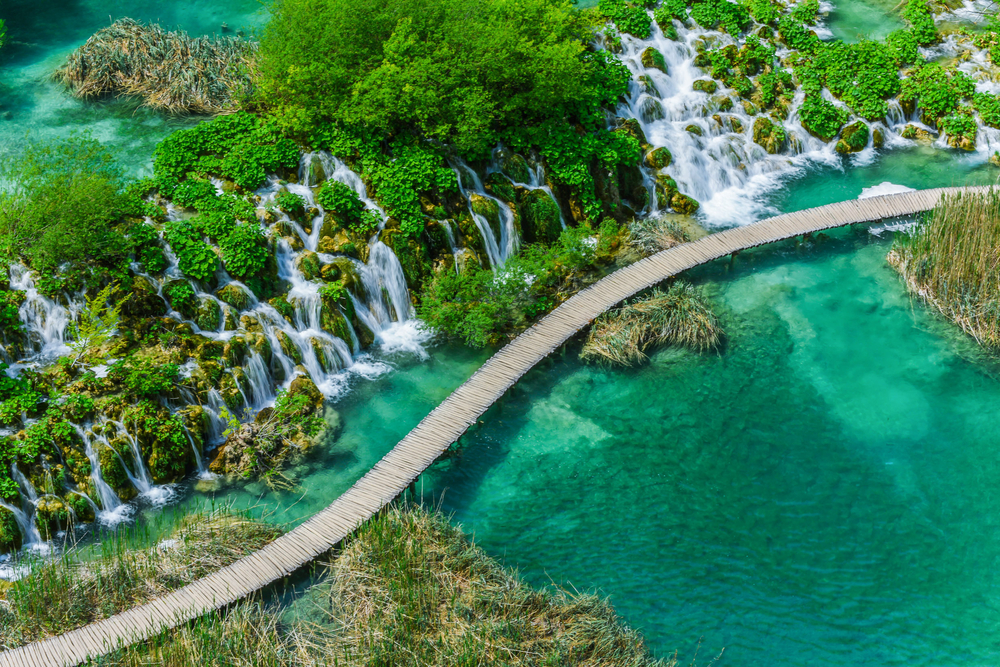
In central Croatia, Plitvice Lakes National Park forms a chain of turquoise pools linked by waterfalls and terraced travertine dams. The park entrance sits about two to two and a half hours by road from Zagreb, and buses run daily for visitors without cars. Wooden boardwalks carry people over crystal clear water where fish, moss, and submerged trunks are easy to see. The colour of each pool shifts with depth, algae, and light.
Limestone hills around the park supply calcium-rich water that creates travertine when it loses carbon dioxide and deposits calcium carbonate. These pale formations line the waterfalls and lake beds, giving a light base that reflects blue and green light. Fine suspended particles and clear water help that reflection reach the surface without much scattering. Over long periods, travertine continues to grow and reshape the barriers, slowly adjusting the pattern of pools and cascades.
Lake Pukaki
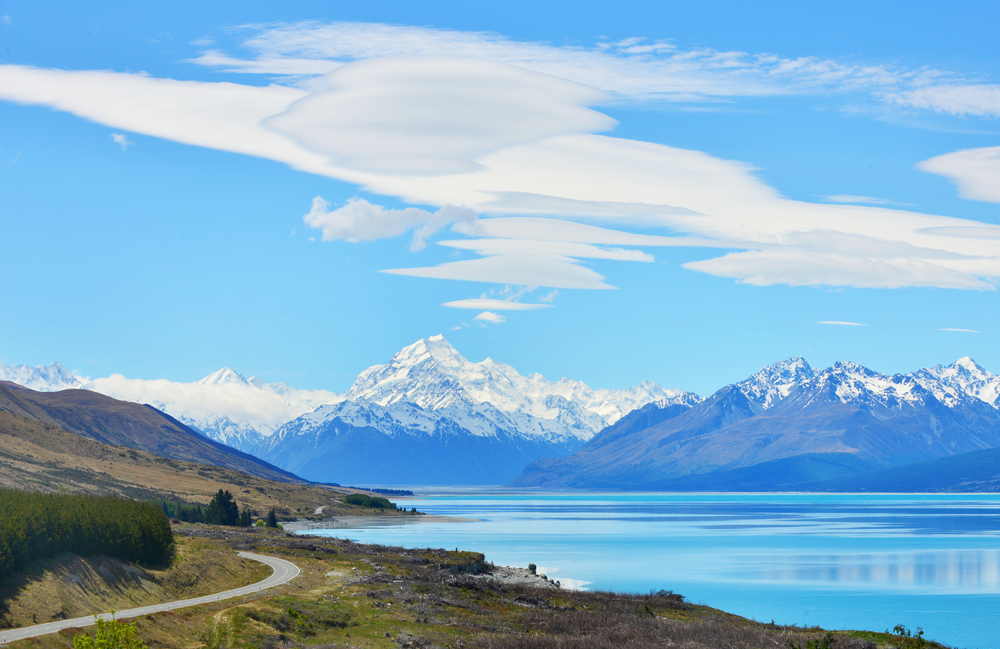
On New Zealand’s South Island, Lake Pukaki stretches along the highway that leads toward Aoraki Mount Cook National Park. Travelers often drive up from Queenstown, reaching the lake in about two and a half to three hours through rolling high country and other lakes. Roadside pullouts let you see pale blue water with snowy peaks lined up on the horizon. The colour stands out sharply against the dry hills and dark evergreens.
This ice blue tone is another example of a glacial flour lake. Rivers feeding Pukaki carry fine sediment from Tasman Glacier and other icefields, and this silt stays suspended in the cold water. When sunlight hits the lake, the particles scatter light so that blue shades dominate the view. Nearby lakes such as Tekapo share the same process, giving this region a cluster of unusually coloured basins.
Lake Salda
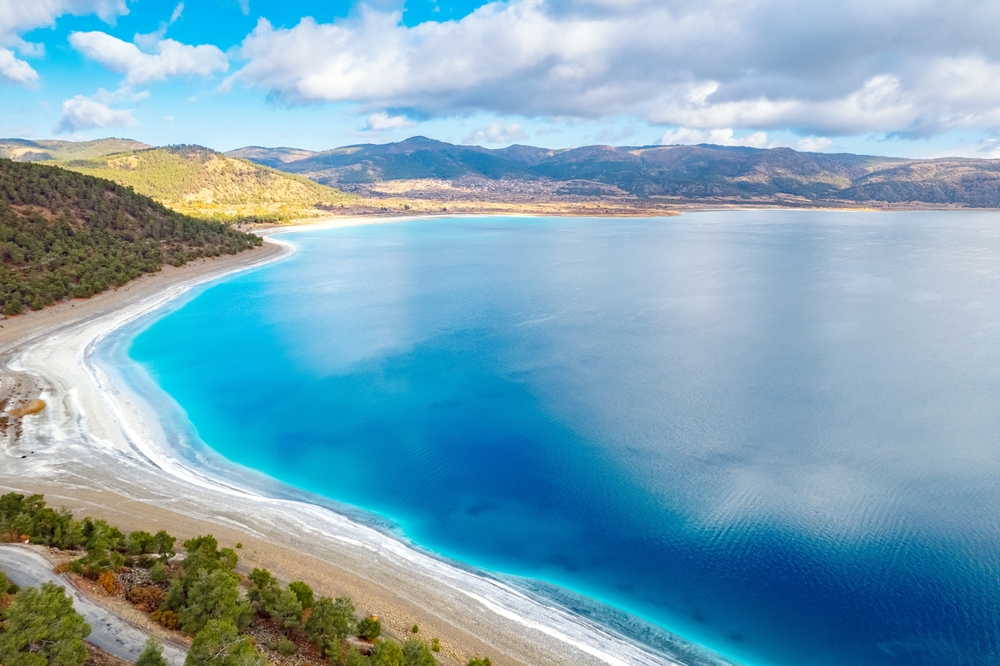
In Burdur Province of southwestern Turkey, Lake Salda sits inside a volcanic crater ringed by white beaches and forested hills. Drivers reach it from the coastal city of Antalya in about two and a half hours on good highways that climb inland. From the shore, the water shifts from deep navy in the centre to turquoise near the shallows, with chalky white sand framing the edges. The view often surprises first time visitors who expect a mountain lake to look darker.
The bright tones at Salda come from magnesium rich carbonate sediments and special shoreline structures called microbialites. These are built by microbes that trap and bind carbonate minerals, creating light coloured mounds and crusts along the bottom. The minerals and structures reflect light in a way that enhances blue and green shades in the water above them. Because the sediments resemble those seen in a Martian crater, scientists use Salda as an Earth based example for planetary research.
Laguna Verde
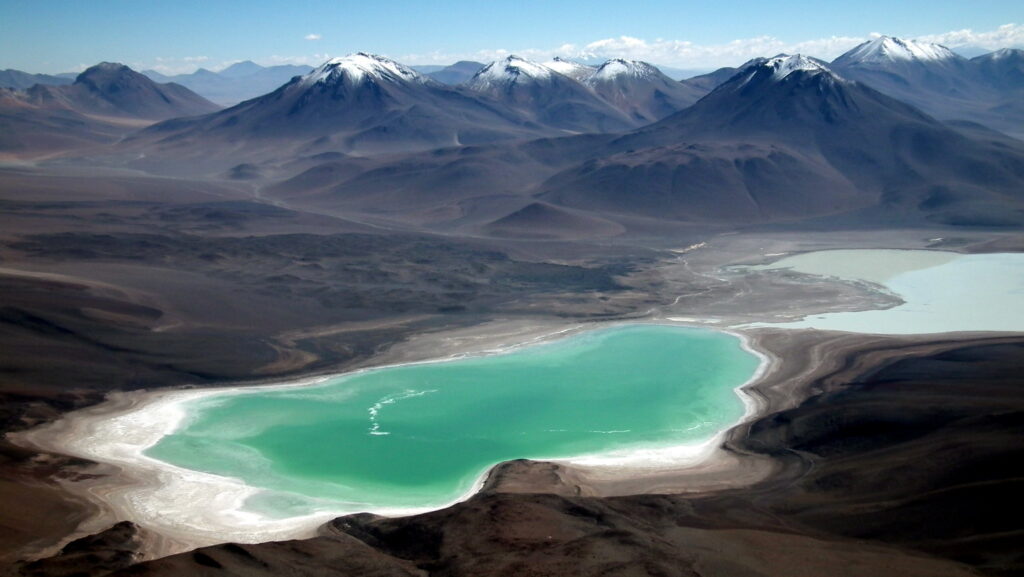
At high altitude near the Chile-Bolivia border, Laguna Verde lies beneath the cone of Licancabur Volcano. Tours usually leave from San Pedro de Atacama, with four wheel drive vehicles taking about three and a half to four hours to cross the border posts and rough tracks to the lake. From the shore, the water appears emerald or pale jade, with colour changing as wind and clouds move. Strong afternoon winds often whip the surface and shift the shade from minute to minute.
This green tone comes from a combination of dissolved minerals and fine sediments in the water. High concentrations of elements such as copper and arsenic, along with other salts, alter how the lake absorbs and reflects sunlight. When wind stirs the upper layer, particles stay suspended and make the colour stronger. Calm periods allow some sediment to settle, which softens the hue until the next gusty spell.
Laguna 69, near Huaraz
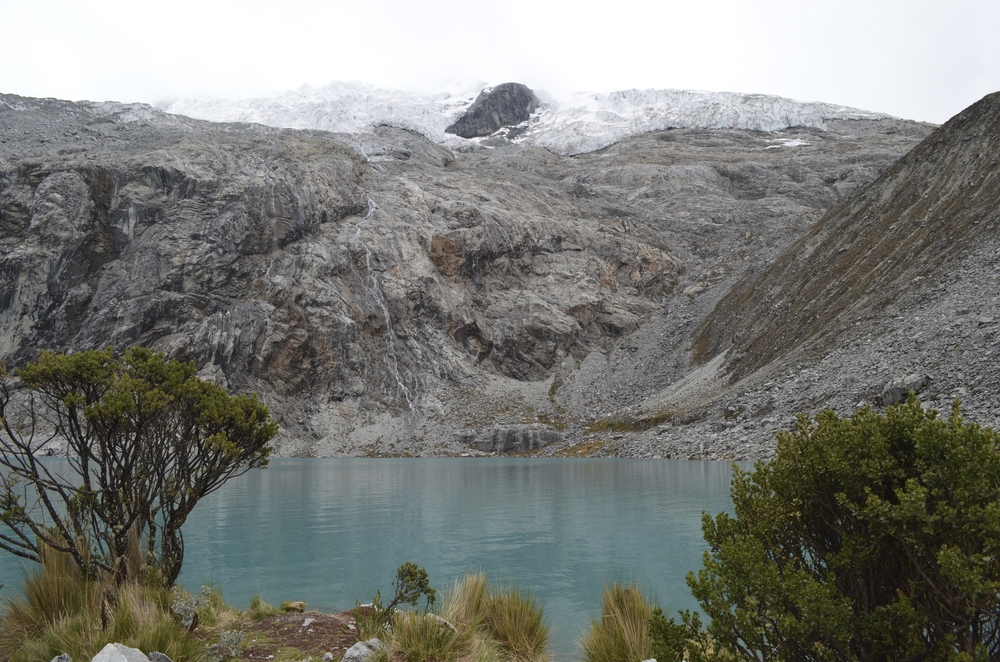
In Peru’s Cordillera Blanca, Laguna 69 sits at the base of towering granite walls and hanging glaciers inside Huascaran National Park. Visitors generally stay in Huaraz, then ride a bus or van for about three hours to the trailhead, followed by a hike of several hours rather than a direct drive to the shore. When hikers crest the final rise, they see an intense blue pool framed by grey rock and white ice. The high elevation and clear air make the colour look even stronger in sunlight.
Glacial melt and rock flour create the striking shade. Ice above the lake grinds the bedrock into fine powder, and meltwater streams carry this material into the basin where it remains suspended. The particles scatter light toward the blue end of the spectrum, which gives the lake its familiar turquoise glow. Because the glaciers feeding the lake are shrinking, researchers watch Laguna 69 to track how high mountain water bodies respond to warming conditions.
This article originally appeared on Avocadu.