
13 Rare Cactus Varieties with Naturally Colorful Spines
Cacti are known for their resilience in tough environments, but some rare varieties stand out not just for their hardiness but for their strikingly colorful spines. These cacti come in a range of vibrant hues, from fiery reds to soft pinks and bright yellows, making them a true spectacle in any collection. Their colorful spines serve as both a defense mechanism and a stunning visual feature. Whether you’re a seasoned cactus enthusiast or just beginning to explore the world of desert plants, these rare species offer a unique way to add character to your garden or home. Growing in the harshest climates, these cacti thrive with minimal care, making them a perfect addition for those looking to add some low-maintenance beauty.
This post may contain affiliate links, which helps keep this content free. Please read our disclosure for more info.
Echinocereus rigidissimus (Rainbow Cactus)
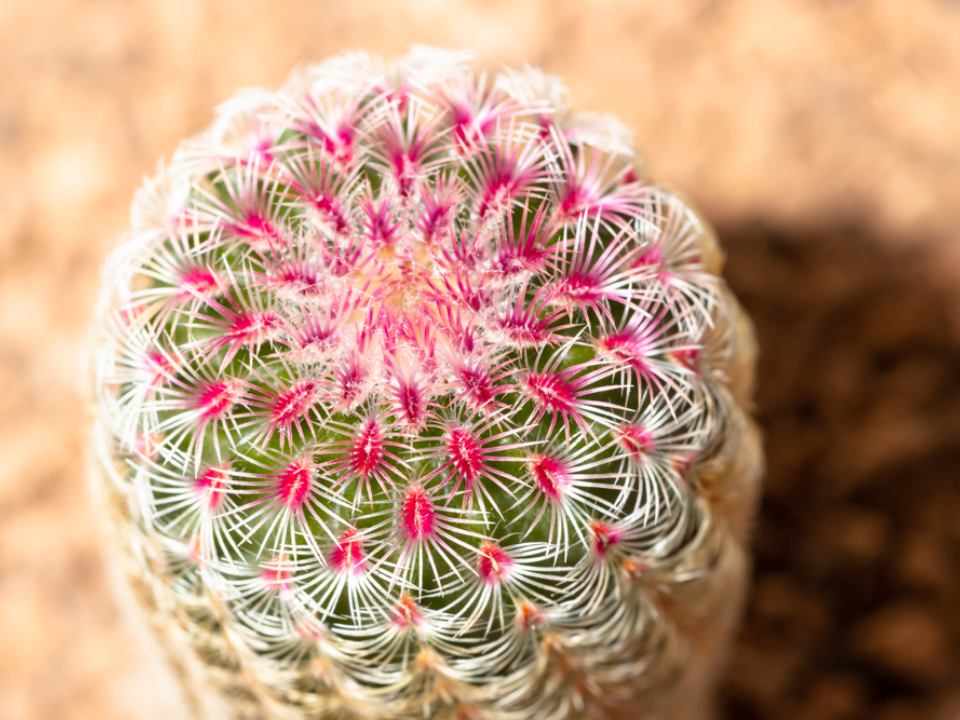
The Echinocereus rigidissimus, commonly known as the Rainbow Cactus, stands out for its vibrant spines that change color throughout its life cycle. These spines often start as a striking pink or red, transitioning to shades of yellow and orange as the cactus matures. Native to the southwestern United States and Mexico, this cactus thrives in hot, dry conditions, making it perfect for desert gardens or arid environments.
Its bold, colorful appearance adds a unique touch to any cactus collection. This cactus is slow-growing, but its striking appearance more than compensates for its pace. As it matures, the spines’ vibrant hues are complemented by beautiful pink or purple flowers during its blooming season. Be sure to plant it in well-drained soil and provide ample sunlight to bring out its best features.
Mammillaria grahamii (Graham’s Nipple Cactus)
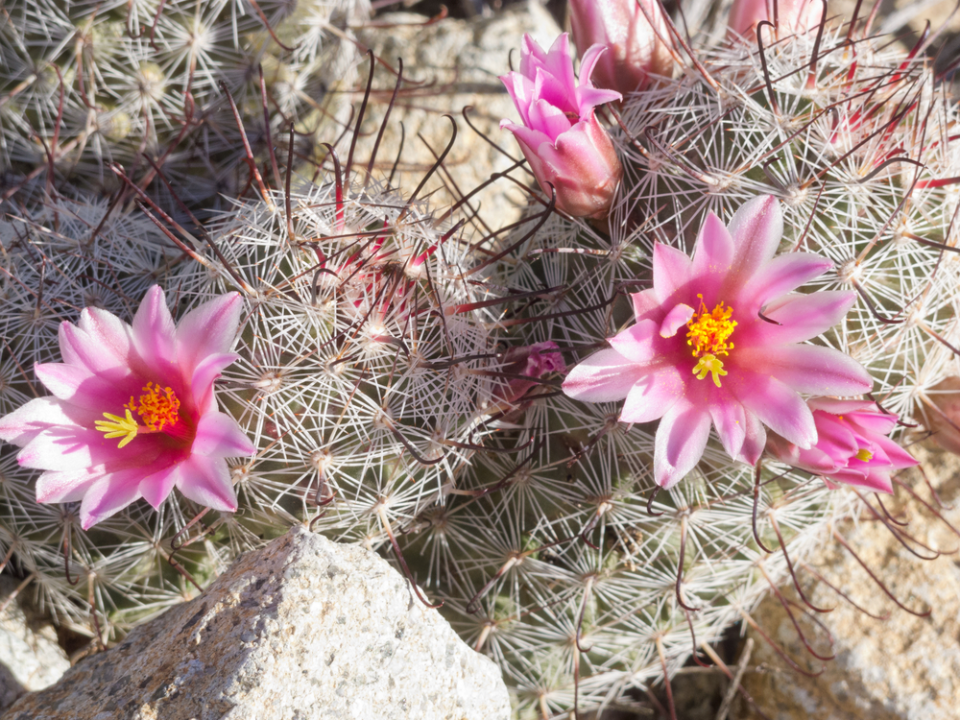
The Mammillaria grahamii, or Graham’s Nipple Cactus, is known for its stunning, colorful spines that can range from bright yellow to reddish hues. The unique feature of this cactus is its dense clusters of spines that cover its small body. Found mainly in the deserts of the southwestern United States and Mexico, this cactus is resilient to drought and harsh sun. Its spines not only add color but also act as a protective shield for the cactus, keeping away animals and harsh environmental conditions.
In late spring to early summer, the Mammillaria grahamii produces beautiful pink flowers, which further highlight the color contrast against its spiny surface. This cactus is often sought after by collectors due to its rare combination of aesthetic appeal and toughness. It does best in well-drained soil and is relatively low-maintenance when provided with sufficient sunlight.
Astrophytum asterias (Star Cactus)
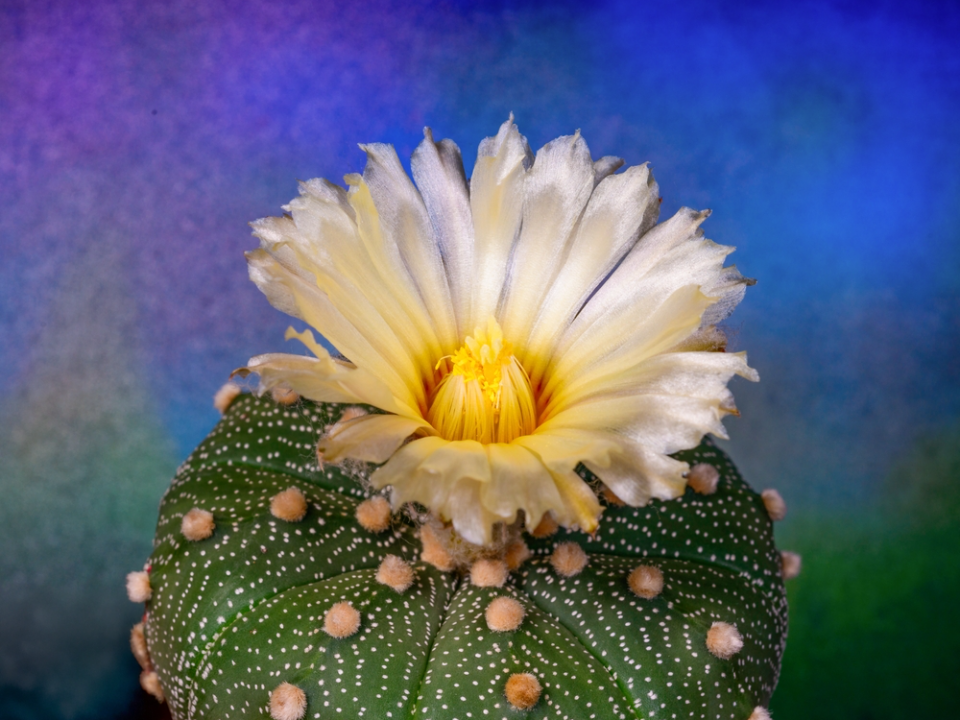
The Astrophytum asterias, or Star Cactus, has a unique star-shaped form, often covered in white spots or scales that make it appear speckled. Its spines, although subtle compared to other varieties, are typically pale yellow or white, creating a striking contrast against its deep green body. Native to northeastern Mexico, this cactus prefers dry, rocky environments and requires minimal water.
The Astrophytum asterias has a slow growth rate, but over time, it forms a spherical shape, with its spines developing more prominence. During its blooming season, the cactus produces yellow flowers that are quite eye-catching. Although not as brightly colored as some other varieties, its delicate beauty and the smooth texture of its body make it a popular choice for cactus collectors. It thrives in full sun and well-drained soil.
Coryphantha echinus (Hedgehog Cactus)
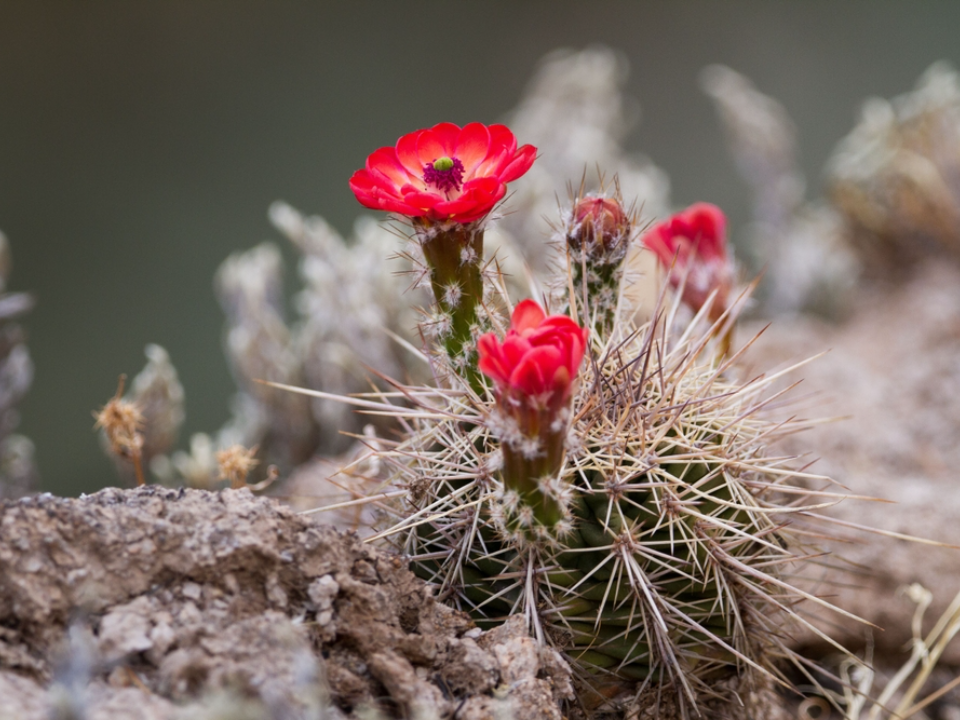
The Coryphantha echinus, or Hedgehog Cactus, is characterized by its vibrant orange to red spines, which create a striking contrast against its green body. This cactus gets its name from its resemblance to a hedgehog due to its dense clusters of spines. Found in the southwestern United States and northern Mexico, it grows in rocky, well-drained soil and can withstand periods of drought.
The spines of the Coryphantha echinus are stiff and needle-like, giving it a spiky appearance. In the summer, this cactus produces small, yellow or pink flowers that sit atop its spherical body. The colorful spines, combined with its bright flowers, make it a captivating specimen for any cactus garden. As it matures, the cactus forms clusters that can grow to a sizable size. It requires full sunlight and should be watered sparingly.
Ferocactus wislizeni (Pink Crowned Barrel Cactus)
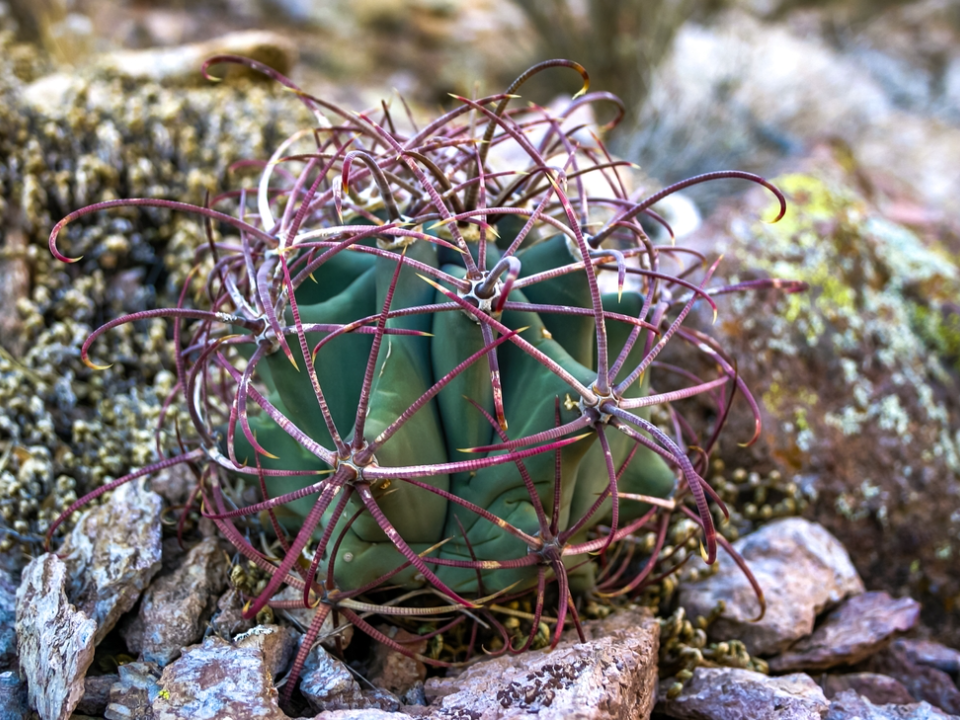
The Ferocactus wislizeni, also known as the Pink Crowned Barrel Cactus, is well-regarded for its vibrant pink and yellow spines that form a crown-like appearance at the top of its cylindrical body. Native to the Sonoran Desert, this cactus can grow to an impressive size and is known for its resilience in harsh, arid climates. Its spines are long and strong, creating an eye-catching spiny structure that makes it stand out in any desert or cactus garden.
The cactus is also prized for its stunning, large yellow flowers that bloom in the late spring to early summer. These flowers, when in full bloom, provide a striking contrast to the pink spines. The Ferocactus wislizeni can thrive in full sun and well-drained soil, and it can survive with minimal water once established. It is a perfect choice for gardeners looking to add a colorful and durable cactus to their collection.
Echinocactus grusonii (Golden Barrel Cactus)
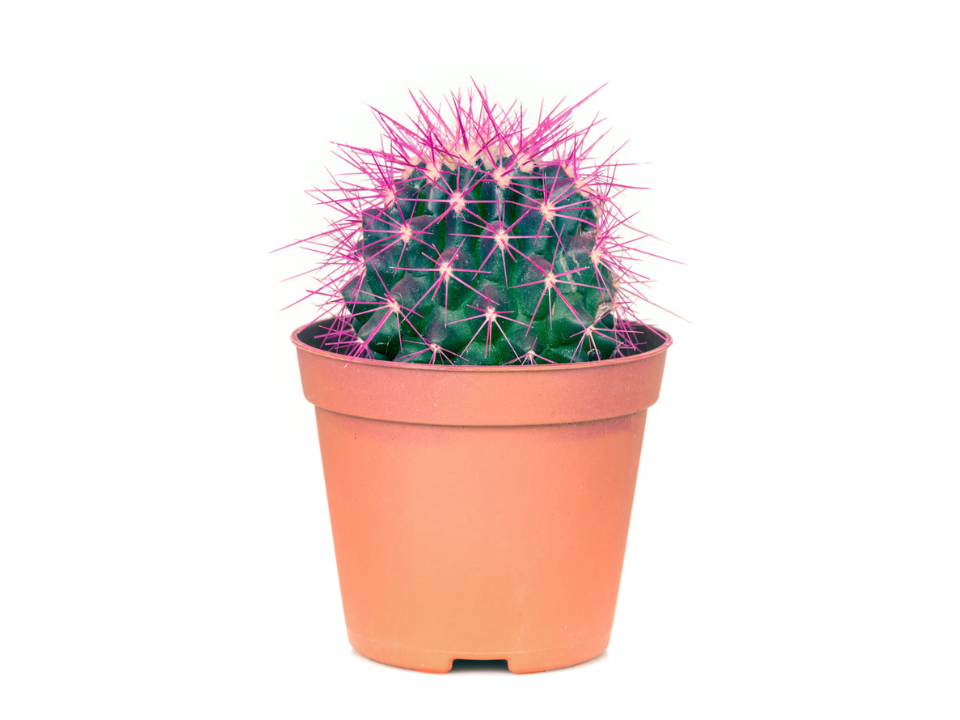
The Echinocactus grusonii, or Golden Barrel Cactus, is one of the most iconic cacti with its golden-yellow spines that cover its large, round body. Often referred to as the “Mother-in-Law’s Cushion” due to its shape, this cactus is native to northern Mexico. Its spines are particularly striking, with the golden hue standing out against the cactus’s bright green skin.
This cactus can grow quite large, reaching up to three feet in diameter, making it a bold addition to any garden. The Echinocactus grusonii is not just about its appearance; it is also an enduring symbol of resilience, thriving in hot, dry environments with minimal care. It produces yellow flowers in the summer, adding a vibrant touch to its already impressive form. This cactus thrives in full sun and well-drained soil, making it an excellent choice for arid landscapes.
Echinocereus pentalophus (Five-Pointed Cactus)
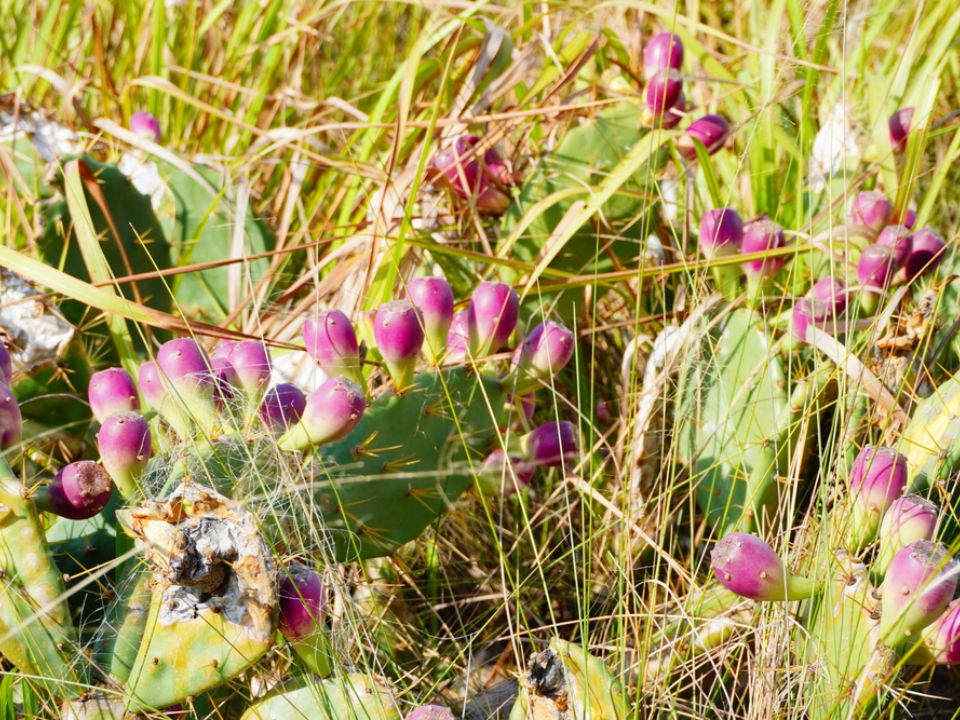
The Echinocereus pentalophus, known for its five-pointed form, is a striking cactus with spines that vary in color, from orange and red to yellow. Native to the southwestern United States and Mexico, this cactus thrives in desert-like conditions and prefers well-drained soil. The Echinocereus pentalophus is known for its beautiful, radial symmetry, which gives it a unique, star-like appearance.
The spines of this cactus can appear in dense clusters, with their colors shifting as the plant matures. In late spring to early summer, it produces large pink or purple flowers that are as eye-catching as its spines. The Echinocereus pentalophus grows slowly but steadily, making it a worthwhile addition to any cactus enthusiast’s collection. It needs full sunlight and minimal watering, typical of desert plants.
Pediocactus simpsonii (Simpson’s Pincushion Cactus)
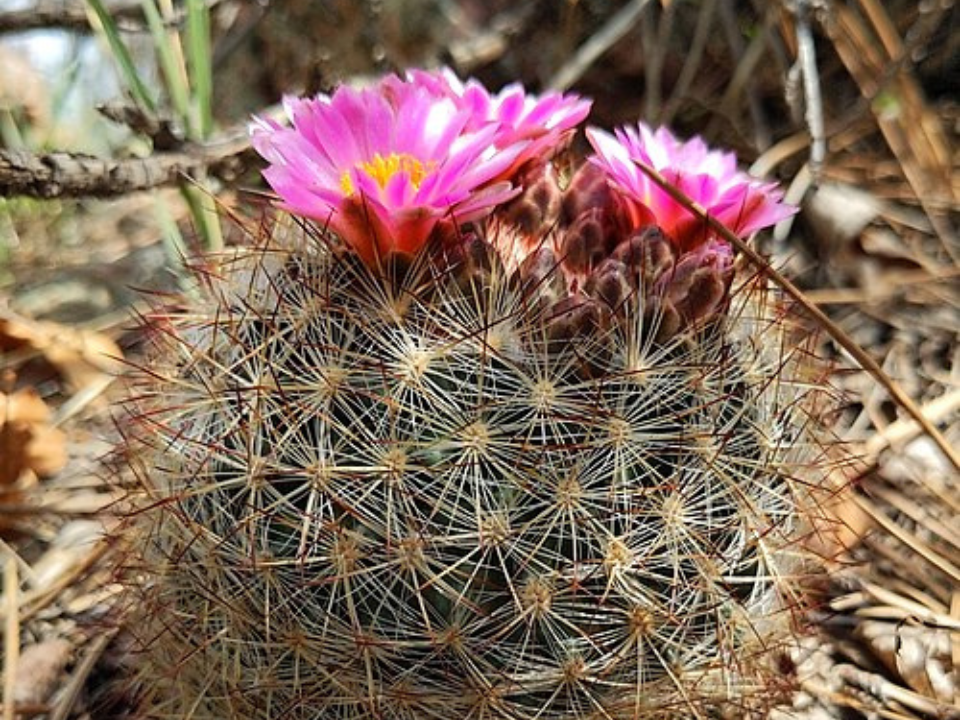
The Pediocactus simpsonii, or Simpson’s Pincushion Cactus, is a small cactus that stands out for its unique spines, which range from light yellow to red. This cactus is native to the southwestern United States, thriving in rocky, well-drained soil. It has a spherical shape and is covered in dense, sharp spines that provide excellent protection against predators. The Pediocactus simpsonii also produces vibrant pink flowers that bloom in the spring, adding to its visual appeal.
Despite its small size, this cactus can live for many years when cared for properly. It thrives in full sunlight and does not require frequent watering, making it an excellent low-maintenance choice for cactus collectors. The colorful spines give it a striking presence, especially when paired with its pink flowers.
Mammillaria bocasana (Old Lady Cactus)
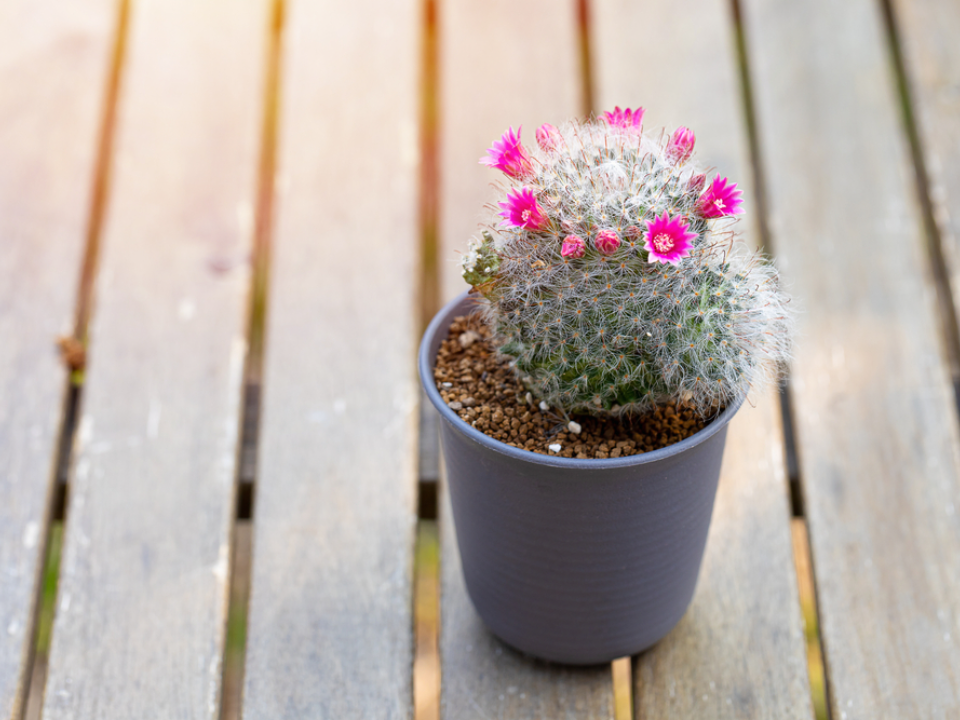
The Mammillaria bocasana, affectionately known as the Old Lady Cactus, features soft, white spines that gradually develop a pinkish hue. Its spines are long and feathery, creating a soft, woolly appearance. Native to Mexico, this cactus is often found in dry, rocky regions and is well-suited for arid environments. The Mammillaria bocasana produces small, pink or white flowers that bloom in the spring, adding to the charm of its delicate appearance.
This cactus is slow-growing but can eventually form a dense cluster of spiny bodies. The soft, colorful spines make it a fascinating specimen for those looking to add variety to their cactus collection. It thrives in full sun and requires minimal watering, making it a perfect choice for a low-maintenance cactus garden.
Opuntia microdasys (Bunny Ear Cactus)
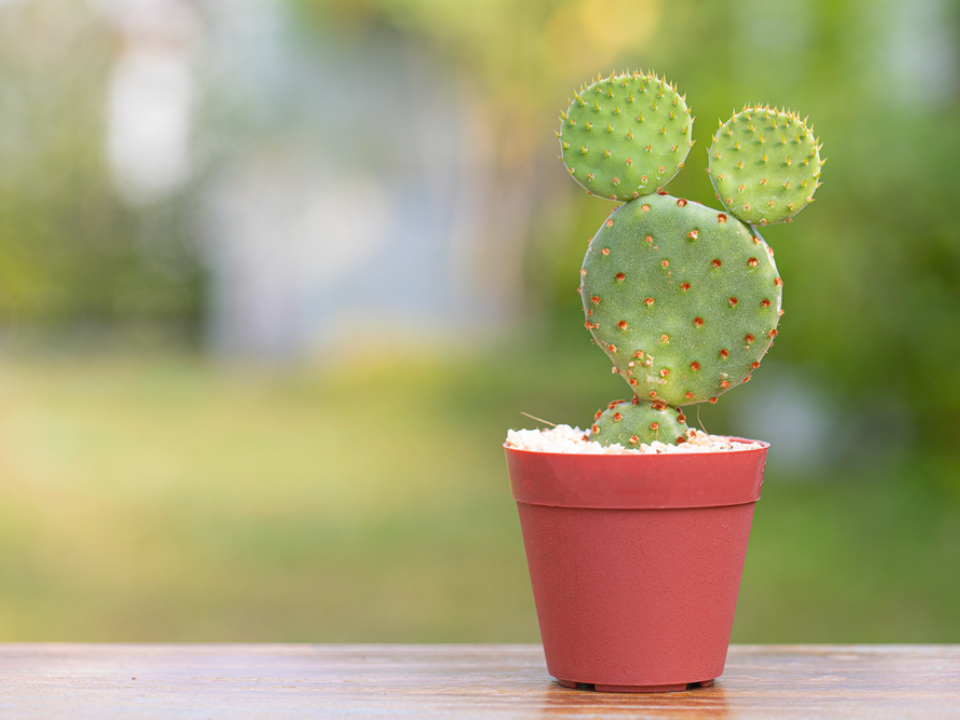
The Opuntia microdasys, or Bunny Ear Cactus, is a unique cactus variety with a soft, almost fluffy appearance due to its tiny, vibrant spines. These spines are typically yellow or white, creating a striking contrast against the cactus’s flat, paddle-like segments. Native to northern Mexico, the Bunny Ear Cactus can thrive in hot, dry climates with minimal water. Its distinctive spines, known as glochids, are fine and hair-like, making it appear almost furry.
In the summer, this cactus produces small, yellow flowers, which are a lovely addition to its already colorful appearance. The Opuntia microdasys is a slow-growing cactus but makes a fascinating addition to any desert or cactus garden. It needs well-drained soil and ample sunlight to thrive, along with periodic watering to keep it healthy.
Echinocereus dasyacanthus (Texas Rainbow Cactus)
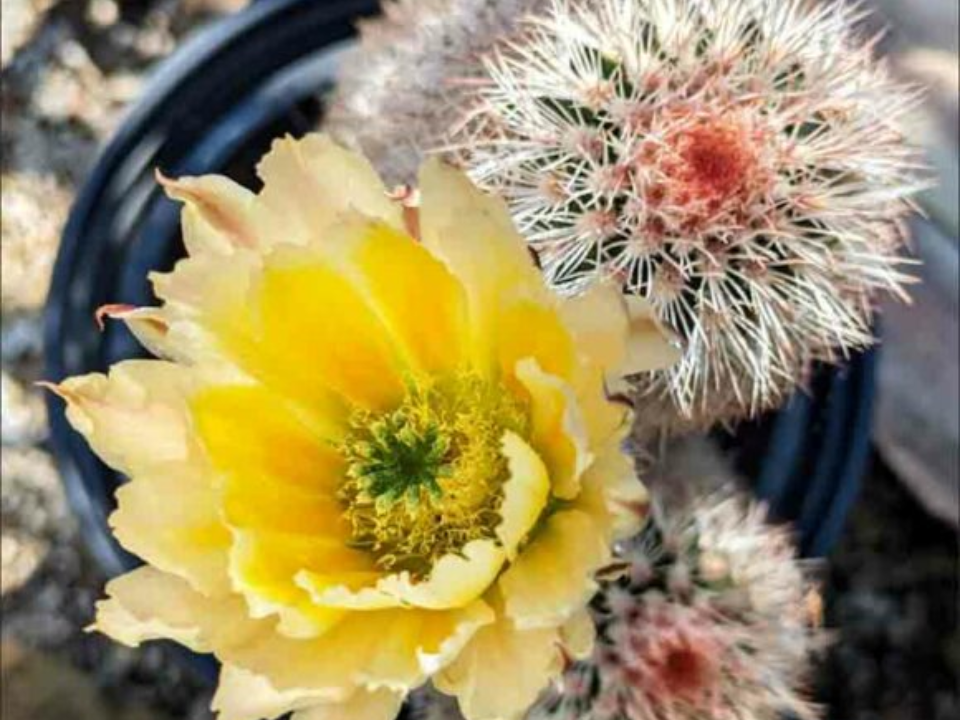
The Echinocereus dasyacanthus, or Texas Rainbow Cactus, is known for its brilliant spines that range from yellow to orange and even red as the cactus matures. Native to the arid regions of Texas and Mexico, this cactus thrives in dry, rocky conditions with minimal water. Its spines are thick and long, offering protection while creating a striking visual effect.
The Texas Rainbow Cactus is a slow-growing plant but forms a dense, spiny cluster as it matures. Its bright, colorful spines make it an attractive specimen for cactus collectors and desert garden enthusiasts alike. This cactus requires full sunlight and well-drained soil to thrive, and once established, it is relatively low-maintenance. Despite its colorful and dramatic appearance, it is hardy enough to withstand the harshest desert environments.
Cylindropuntia fulgida (Teddy Bear Cholla)
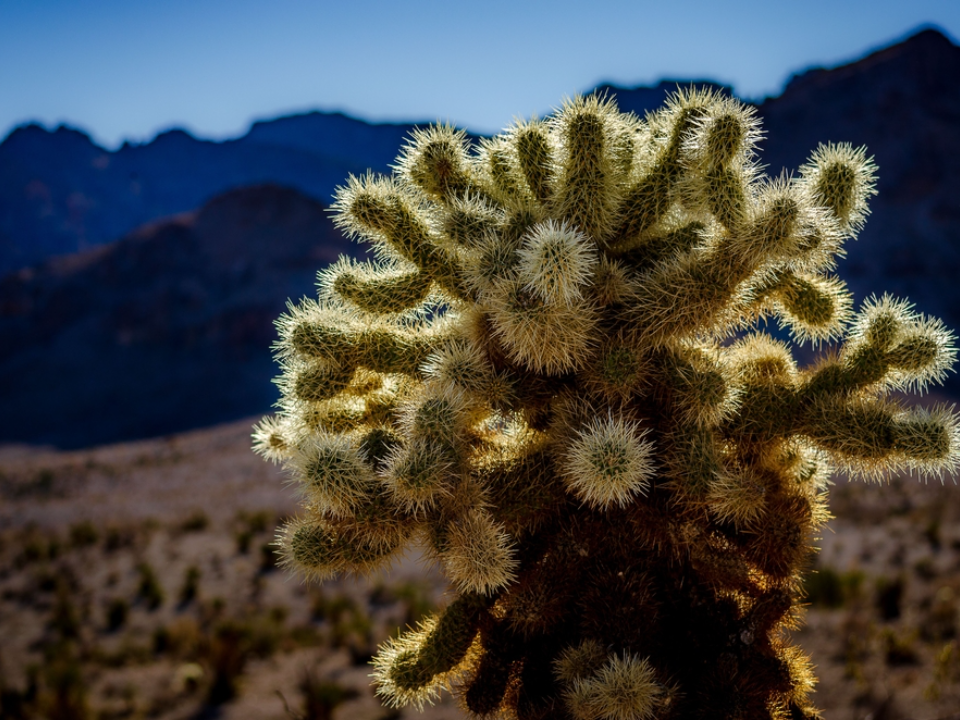
The Cylindropuntia fulgida, commonly known as the Teddy Bear Cholla, is notorious for its bright, golden-yellow spines. The name “Teddy Bear” comes from the cactus’s fluffy appearance, but its spines are far from soft. These spines are not only colorful but are equipped with barbed tips that easily detach and latch onto anything that brushes against them. Native to the southwestern United States and Mexico, this cactus thrives in desert landscapes with minimal water and full sunlight.
In the spring, the Teddy Bear Cholla produces small purple or magenta flowers, adding a splash of color against its golden spines. Despite its beautiful appearance, it should be handled with care due to its sharp spines. This cactus can form dense clusters, making it a dramatic presence in any landscape or garden.
Echinocactus texensis (Texas Barrel Cactus)
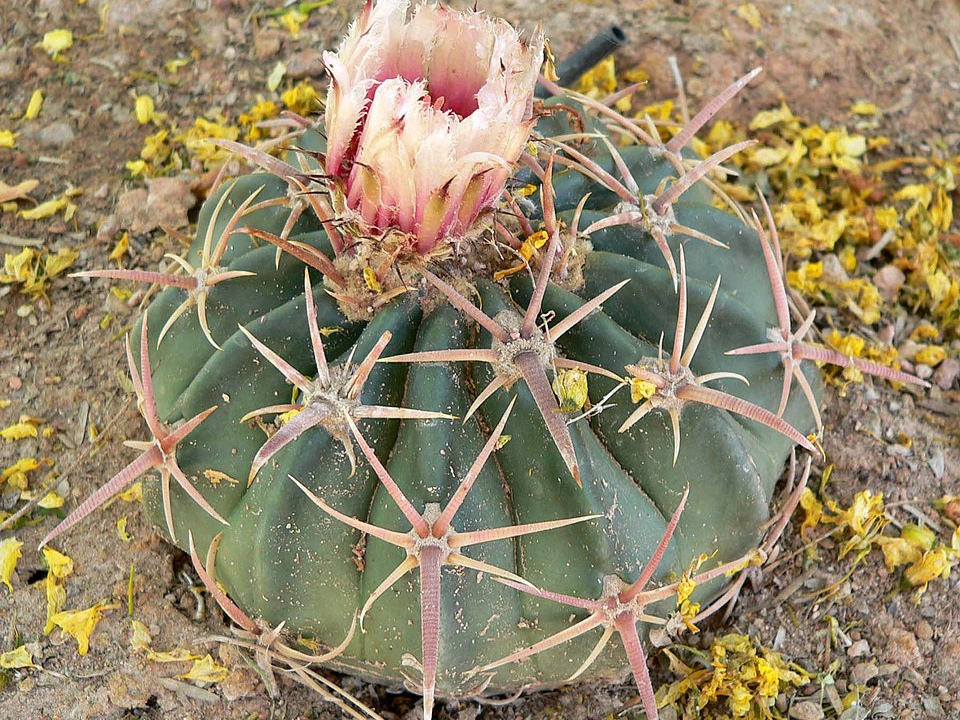
The Echinocactus texensis, or Texas Barrel Cactus, is known for its impressive golden-yellow spines that radiate out from its spherical body. Native to the deserts of Texas and Mexico, this cactus is well-adapted to arid environments with intense sunlight and little rainfall. Its spines are long, stiff, and highly colorful, offering a striking visual contrast against its green body.
The Texas Barrel Cactus can grow quite large, reaching heights of up to 3 feet tall, and it can live for many decades in the right conditions. During the late spring, this cactus produces beautiful yellow flowers that sit at the top of its body, adding to its visual appeal. It thrives in dry, well-drained soil and requires full sunlight to flourish. The vibrant spines of this cactus make it a popular choice for collectors looking for unique and colorful desert plants.
This article originally appeared on Avocadu.