
7 Quick Garden Bed Edging Ideas That Hold Up All Season
Clean edges around garden beds help the whole yard feel more organized and welcoming. They help keep grass from creeping into planting areas and keep mulch from spreading into the lawn. The good news is that there are plenty of edging ideas that do not take much time to put in place. Even a simple border can make plants stand out and give beds a finished look. Let us take a look at a few ideas that can keep things looking tidy all season.
This post may contain affiliate links, which helps keep this content free. Please read our disclosure for more info.
Brick Garden Bed Edging
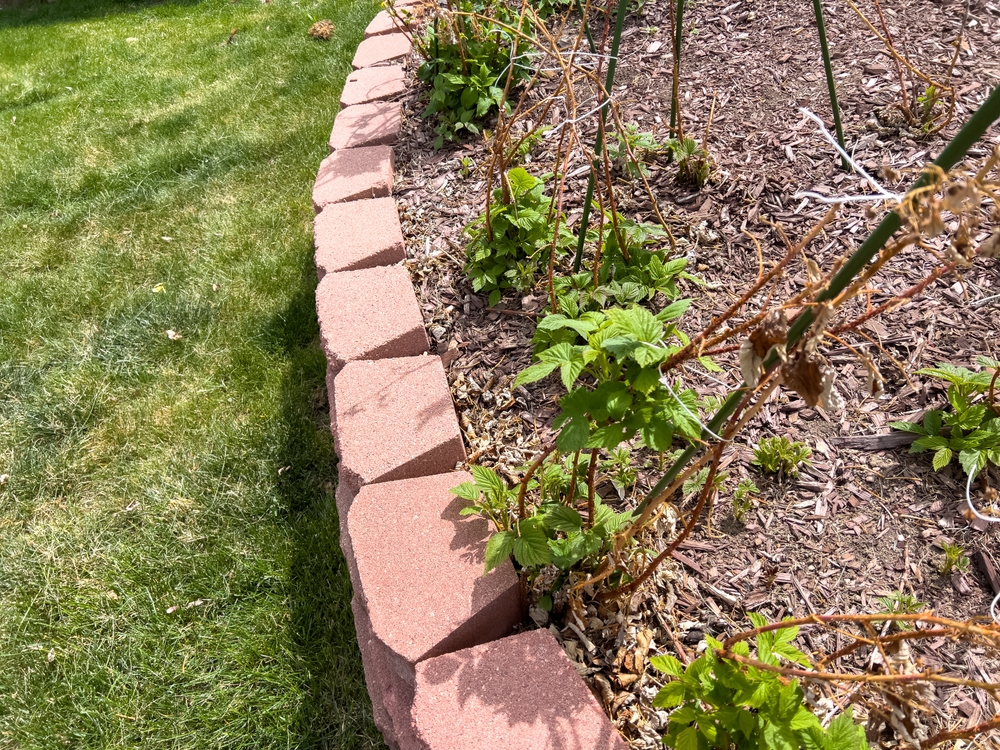
Brick edging gives garden beds a clear and attractive boundary that stays dependable through months of sun, rain, and routine yard work. The solid weight of each brick helps the border stay in place once it is pressed firmly into the soil. Many gardeners like the way brick brings a warm color that works well beside green foliage, flowering plants, and dark mulch. It also creates a tidy transition between the grass and the planting areas, so the garden looks more organized.
Setting brick edging in place usually starts with digging a shallow trench that follows the shape of the bed. Each brick can then be placed closely beside the next so the line remains even and strong. A thin layer of sand beneath the bricks helps keep them level and reduces shifting as the soil settles. Once the border is packed firmly with soil along the sides, it can hold its position through the entire growing season.
Natural Stone Border
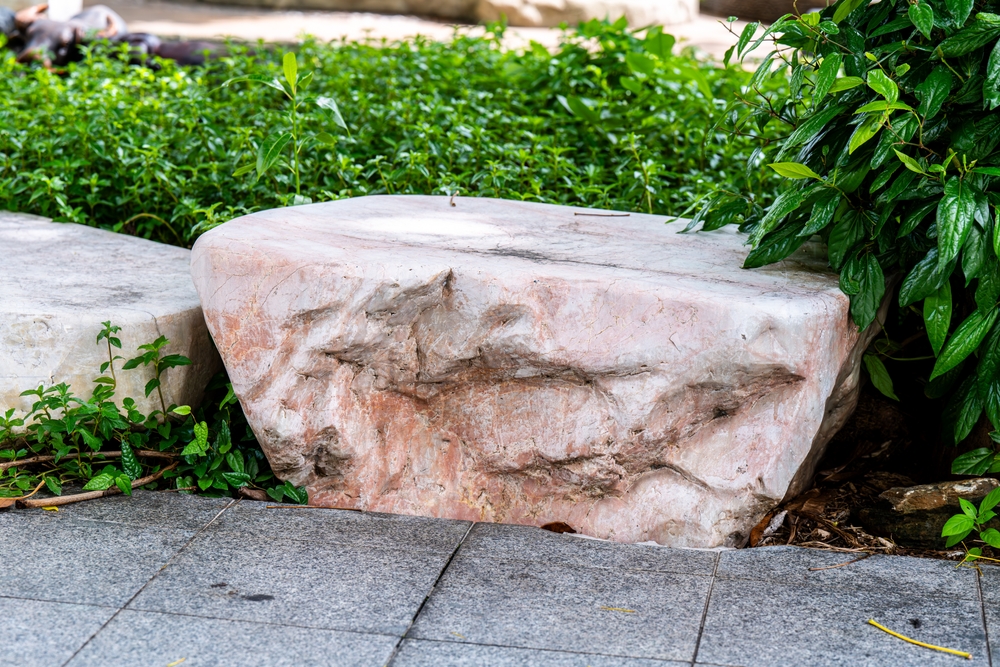
Natural stone edging adds a timeless look to garden beds and blends easily with outdoor surroundings. Stones have varied shapes and colors, which gives the border a relaxed appearance that feels connected to the landscape. Their natural weight allows them to stay steady once they are arranged along the edge of the planting area. This type of edging is especially appealing around flower beds filled with perennials and seasonal blooms.
The setup begins by placing stones into a shallow trench so the base sits securely in the soil. Larger flat stones often work best because they provide stability and a smooth top edge. Smaller stones can fill gaps between the larger pieces to strengthen the border. Once the stones settle into place, the edging tends to remain steady for the rest of the season.
Concrete Paver Border
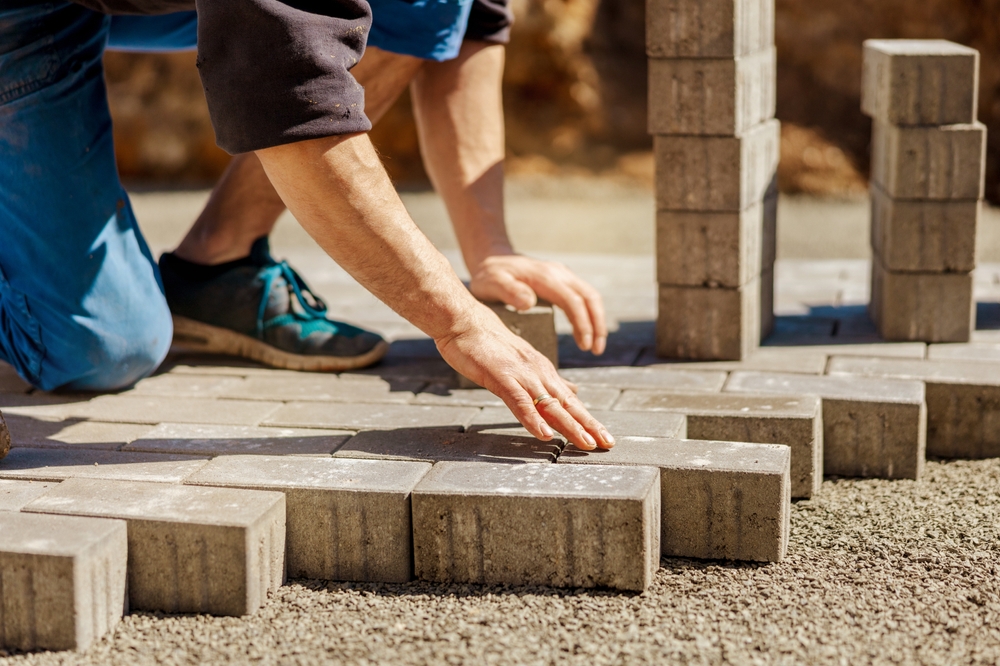
Concrete pavers provide a dependable and structured border that frames a garden bed with clean lines. Their solid shape helps keep them stable once they are placed into the soil. Many gardeners appreciate that pavers come in different shapes and colors, which allows them to match nearby patios or walkways. The result is a border that looks balanced and intentional.
To install them, a narrow trench is dug along the edge of the bed so the pavers sit firmly in place. A thin base of sand beneath each paver helps keep them level and prevents wobbling. Placing the pieces close together reduces the space for grass to grow between them. After the soil is packed around the sides, the edging usually remains steady through the growing season.
Woven Willow Garden Edging
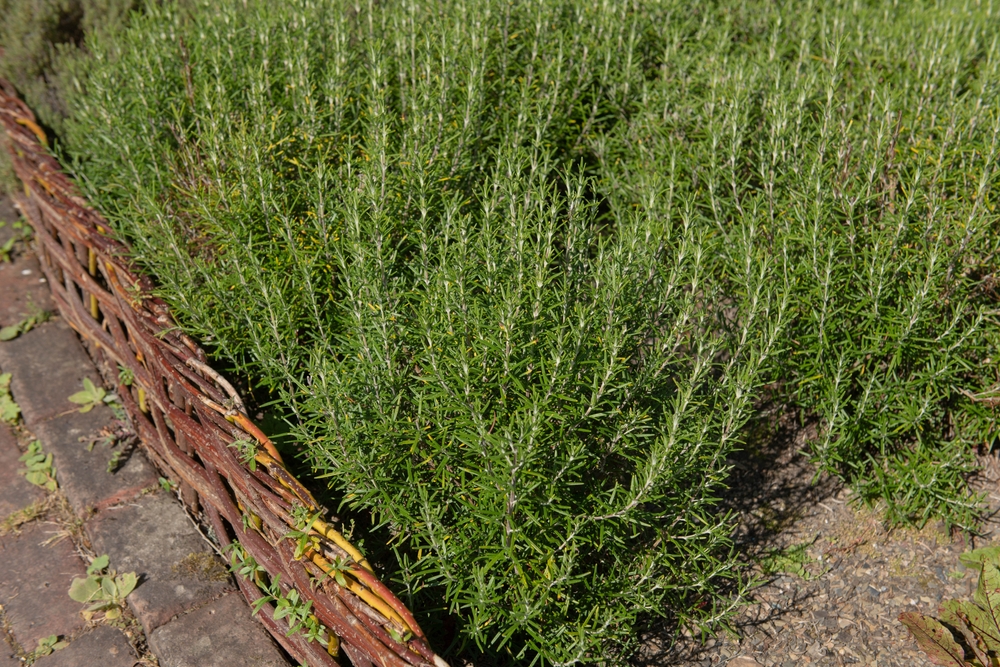
Woven willow edging brings a soft and traditional look to the edge of a garden bed. Thin willow branches are woven together to create a low fence that gently outlines planting areas. The natural color of the wood blends nicely with flowers, herbs, and leafy plants. This type of border often works well in cottage-style gardens where a relaxed appearance feels right. It also keeps mulch and soil from spilling into the surrounding lawn.
Installation usually begins by pressing small wooden stakes into the soil along the edge of the bed. The woven willow panels are then attached or slid over the stakes to hold them upright. Soil is packed firmly along the base so the fence stays steady. The flexible willow allows the border to follow gentle curves around beds and paths. Once secured, the edging can stay stable through the growing season.
Gravel Trench Garden Edge
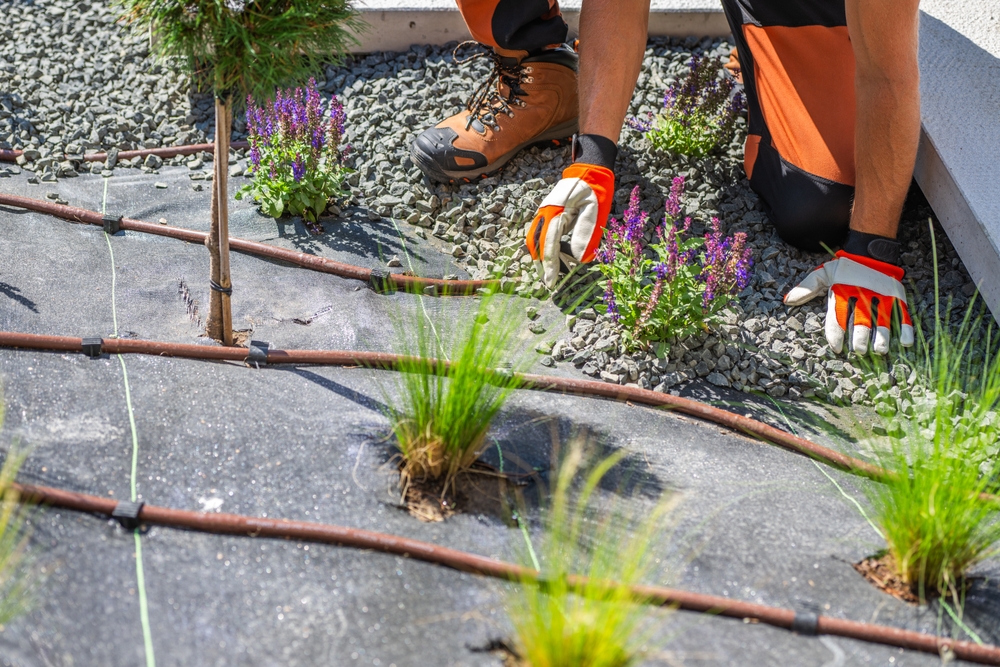
A gravel trench offers a simple and practical way to define the edge of a garden bed. The strip of gravel creates a clear visual contrast between the lawn and planting area. It also helps reduce grass growth along the border while allowing rainwater to drain easily. This method works well around both flower beds and vegetable gardens. The finished edge looks neat while still feeling natural in the landscape.
Creating this border starts with digging a narrow trench along the edge of the bed. A layer of landscape fabric is usually placed at the bottom to keep soil from mixing with the gravel. The trench is then filled with small stones and leveled along the surface. Packing the stones tightly helps the border hold its shape. Once in place, the gravel edge can stay neat through months of garden activity.
Terracotta Pot Rim Edging
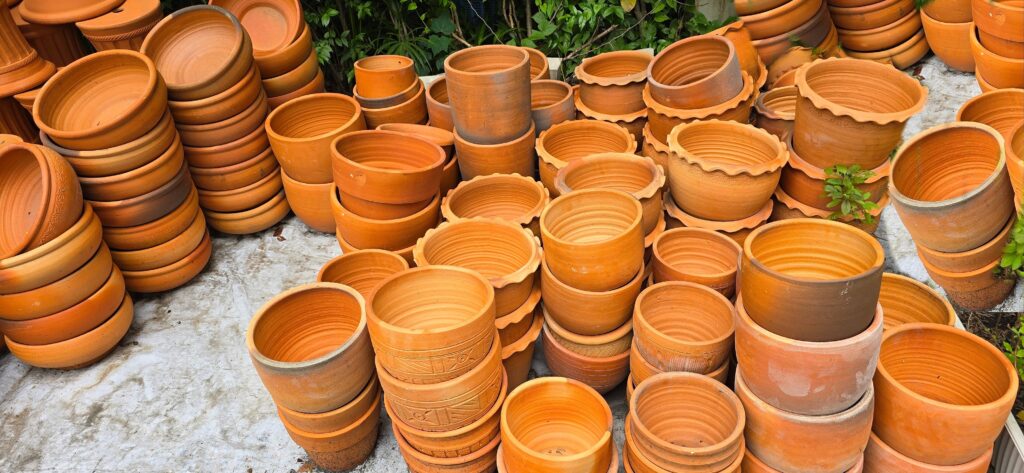
Broken terracotta pots can be turned into a creative garden bed border. The curved pieces bring warm color and texture along the edge of the planting space. Each piece adds a slightly different shape, which gives the border a relaxed and decorative look. This approach also allows gardeners to reuse old pots instead of throwing them away. The clay blends nicely with soil and plant colors.
To install the edging, a shallow trench is dug along the bed’s edge. The terracotta pieces are placed upright in the soil with the curved sides facing outward. Soil is then pressed around each piece to keep it steady. The pieces should be placed close together so the border forms a continuous line. Once settled, the edging can stay in position through the season.
Low Hedge Plant Border
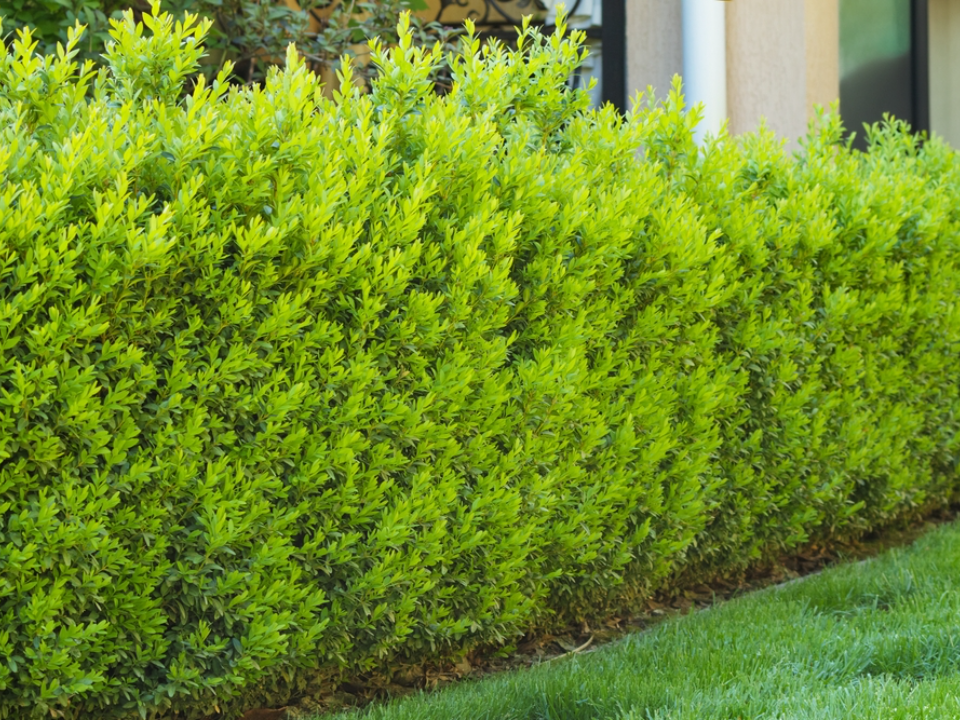
A low hedge can form a living edge that frames garden beds with greenery. Small plants such as thyme, dwarf boxwood, or compact grasses create a soft line along the border. As the plants grow together, they form a natural barrier between the lawn and planting space. The greenery adds texture and movement along the edge of the garden. This approach often makes the bed feel more connected to the surrounding landscape.
Planting usually begins by spacing the small plants closely along the edge of the bed. As they grow, their foliage begins to fill the gaps between each plant. Light trimming during the season helps keep the border neat and evenly shaped. Regular watering during early growth helps the plants settle in the soil. Once established, the living border can remain attractive throughout the growing season.
This article originally appeared on Avocadu.