
11 Pyrex Patterns People Collect Most in Spring
Collectors often turn to Pyrex in spring because the patterns can make a kitchen feel lighter and more inviting. Floral prints, soft shades, and playful designs give these pieces a look that stands out without feeling too heavy. Part of the appeal comes from how easy they are to use, stack, and show off around the home. If you enjoy vintage finds with color and personality, the patterns ahead are worth a look.
This post may contain affiliate links, which helps keep this content free. Please read our disclosure for more info.
Pyrex Gooseberry
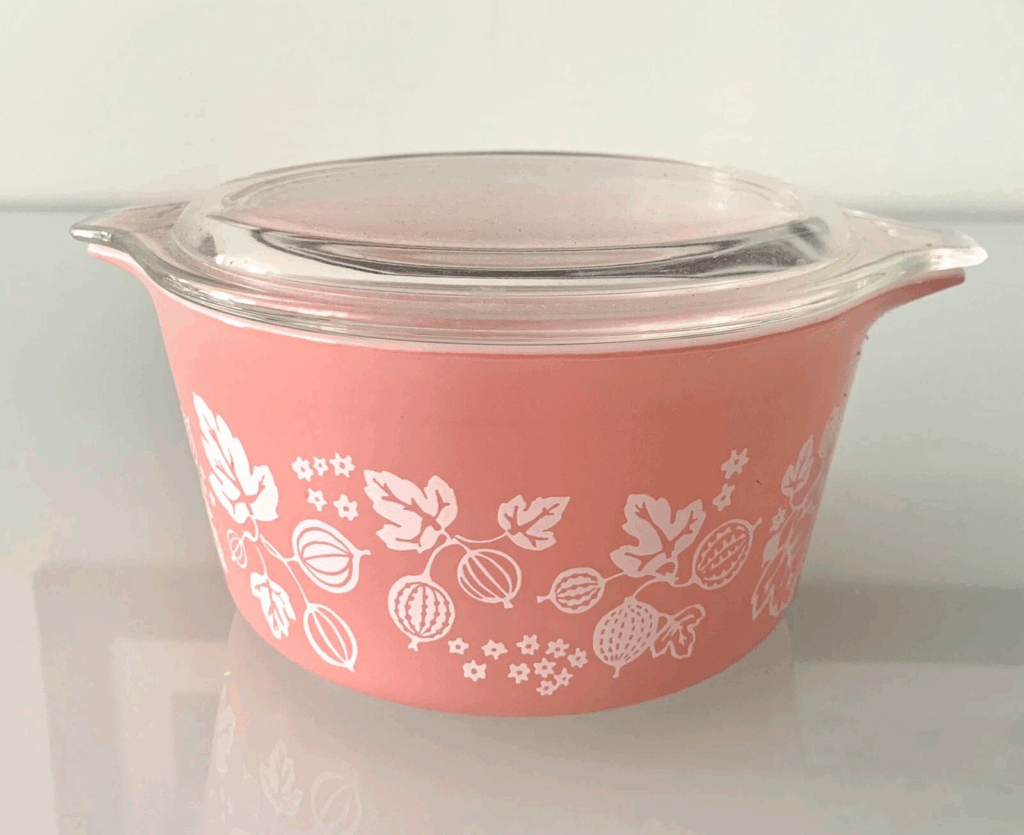
Pink Gooseberry is one of the first Pyrex names many people learn. The Gooseberry line ran from 1957 through 1966, and the pink on white version is the one that tends to fit spring displays best. The berry and leaf motif feels soft and floral without being too busy. A full Cinderella bowl set often sells for about $300 to $600 in good shape.
For a spring shelf, Gooseberry works especially well beside milk glass and pale green kitchen pieces. Collectors usually like it for the soft pink tone and the way the pattern still feels playful after all these years. Scratches inside the bowls and fading on the outer print can lower the price in a hurry. Even so, it remains one of the more loved Pyrex looks from the 1950s.
Pyrex Spring Blossom Green
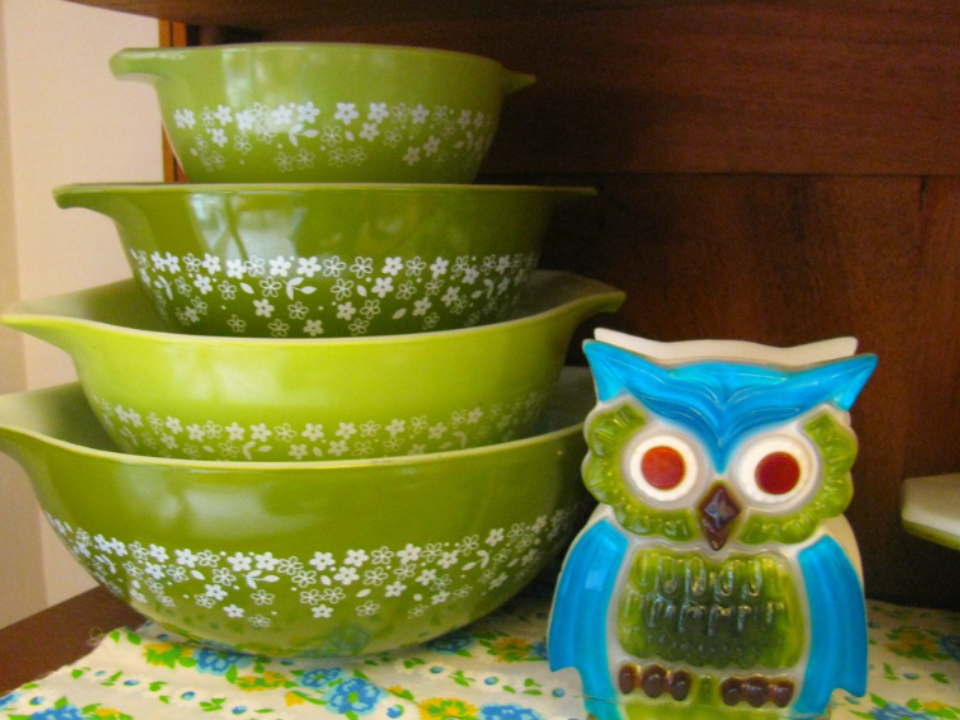
Spring Blossom Green, often called Crazy Daisy, has a cheerful, floral look that fits spring very naturally. The pattern became popular in the 1970s, and the green-and-white daisies give it an easy, kitchen-garden feel. Because it was made in large numbers, it is easier to build a full set than with earlier, rarer lines. A set of mixing bowls usually falls around $60 to $140, with cleaner full sets sometimes running higher.
A lot of collectors like this one because it is still easy to use, stack, and display. The color works well in spring since it pairs nicely with white shelves, floral linens, and other green glassware. Heavy utensil marks inside the bowls are common, so that is one of the first things buyers check. For newer collectors, it is often a friendly way into vintage Pyrex.
Pyrex Snowflake Garland
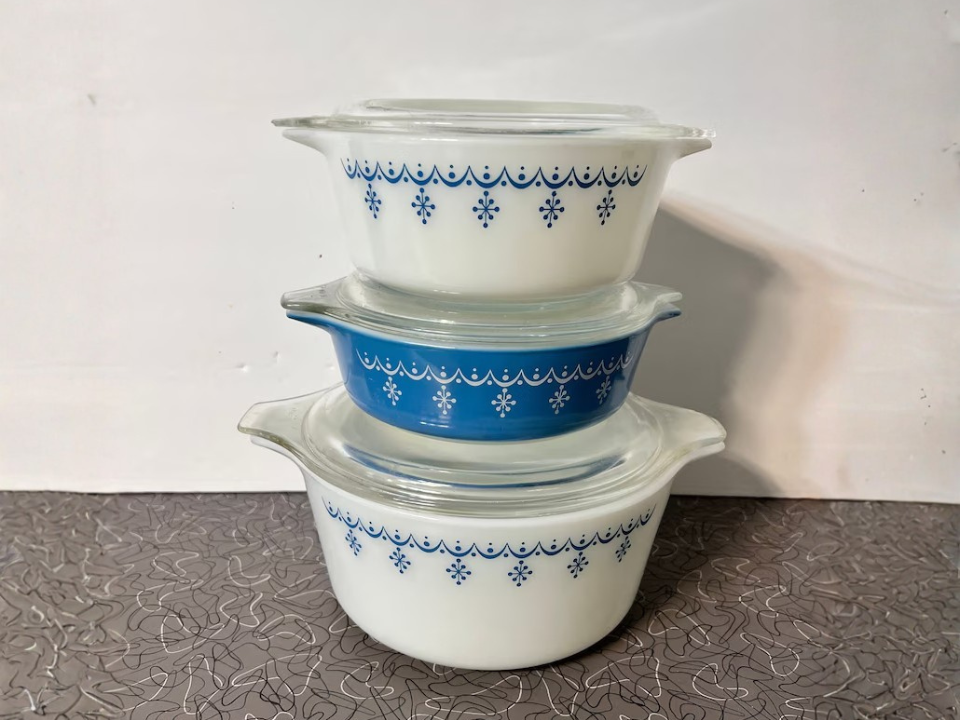
Snowflake Garland brings a cooler blue note that still feels light enough for spring. The blue and white look keeps it easy to pair with plain white kitchens or pastel displays. It is not floral, though the airy motif still suits the season. Smaller bowls and casseroles often sell in the $10 to $80 range, depending on size and lid.
This pattern tends to do well with people who like a cleaner look than the busier flower lines. The turquoise and blue tones feel crisp on a shelf, especially near jadite or white stoneware. Lids add a lot to the value, and the larger casseroles can jump well above the smaller bowl prices. It is a pattern that stays easy to live with long after spring is over.
Pyrex Butterprint
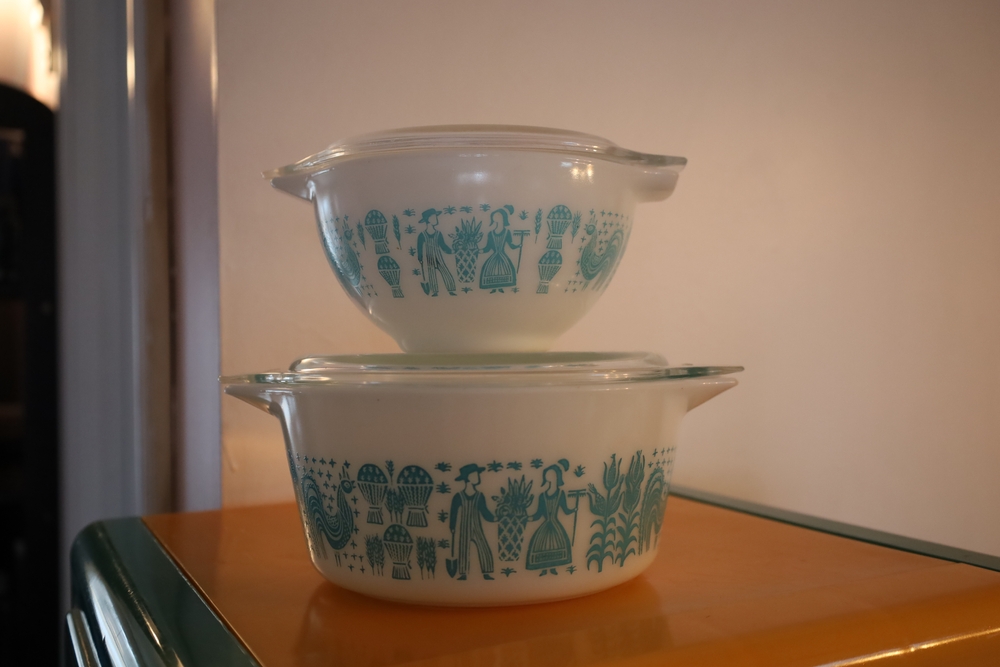
Butterprint is one of the Pyrex patterns that many spring collectors keep near the top of their wish list. The pattern ran from 1957 to 1968 and is known for its farm scene with an Amish couple, roosters, and crops, usually in turquoise and white or pink and white. It feels right for spring because the soft colors and folk art look pair well with lighter seasonal displays. A full Cinderella bowl set in good condition often lands around $250 to $400, with stronger sets moving higher.
On open shelves, Butterprint has a calm look that does not feel too heavy for the season. Collectors usually pay close attention to gloss, color wear, and whether the handles still look clean. The turquoise version gets the most attention, while the rarer Pumpkin Butterprint pieces can climb far beyond the usual range. That mix of color, nostalgia, and easy display appeal keeps it in steady favor.
Pyrex Friendship
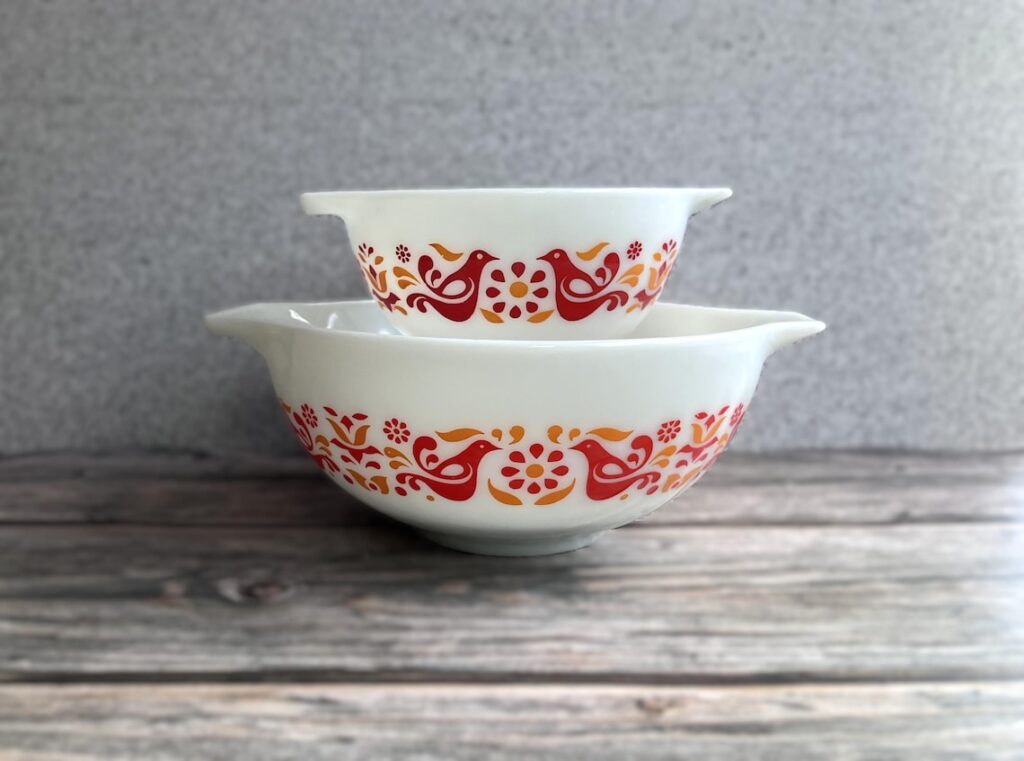
Friendship has one of the most recognizable bird and flower looks in the Pyrex world. The pattern dates to the early 1970s, and the red and orange design gives it a lively feel without losing that homey vintage look. Spring collectors often like it because the motif reads warm, floral, and full of movement. Typical pieces and small sets often land around $90 to $315.
On a spring table, Friendship brings more color than softer pastel patterns do. Collectors often look for strong red print, clean white glass, and less interior scratching. Since some pieces come up one by one rather than in full matched stacks, putting together a complete group can take time. That slower hunt is part of the appeal for many buyers.
Pyrex Butterfly Gold
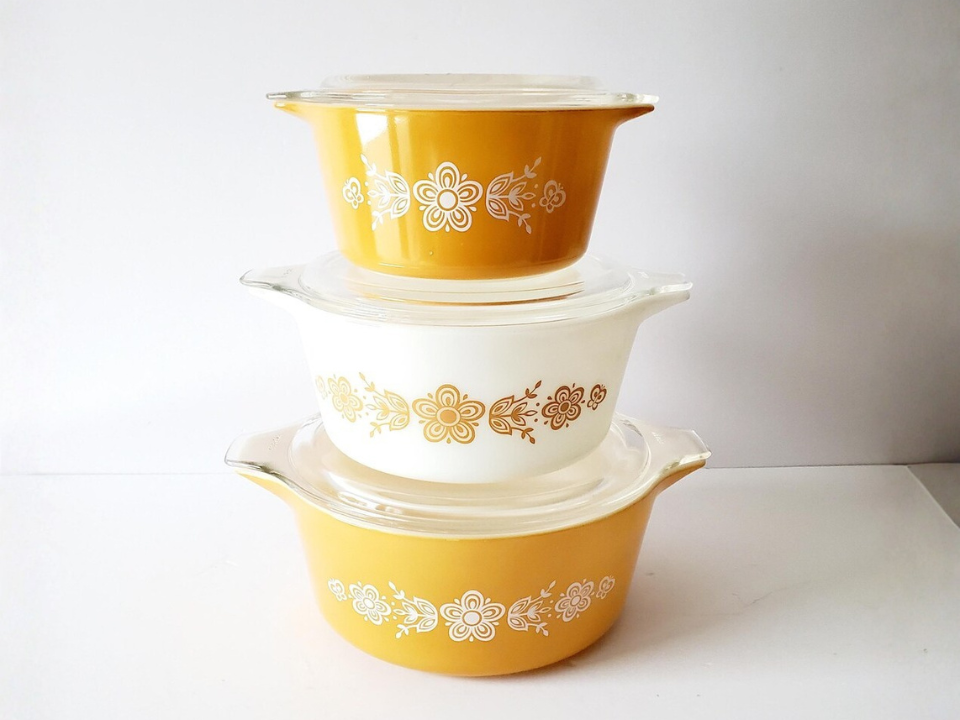
Butterfly Gold stays one of the better-known Pyrex lines from the 1970s. The pattern mixes butterflies and flowers in warm yellow and gold tones, which gives it a sunny kitchen look that many people still enjoy in spring. It is common enough to collect without too much trouble, though the cleanest full sets still sell well. A Cinderella bowl set often goes for about $130 to $220.
This one tends to attract people who like vintage Pyrex with a softer country feel. It looks nice with wood shelves, wicker, and pale table linens when spring decor comes out. Since it was widely used, rubbed gold and utensil wear are very common. A set with strong pattern coverage and matching sizes usually gets more attention than single loose bowls.
Pyrex Pink Daisy
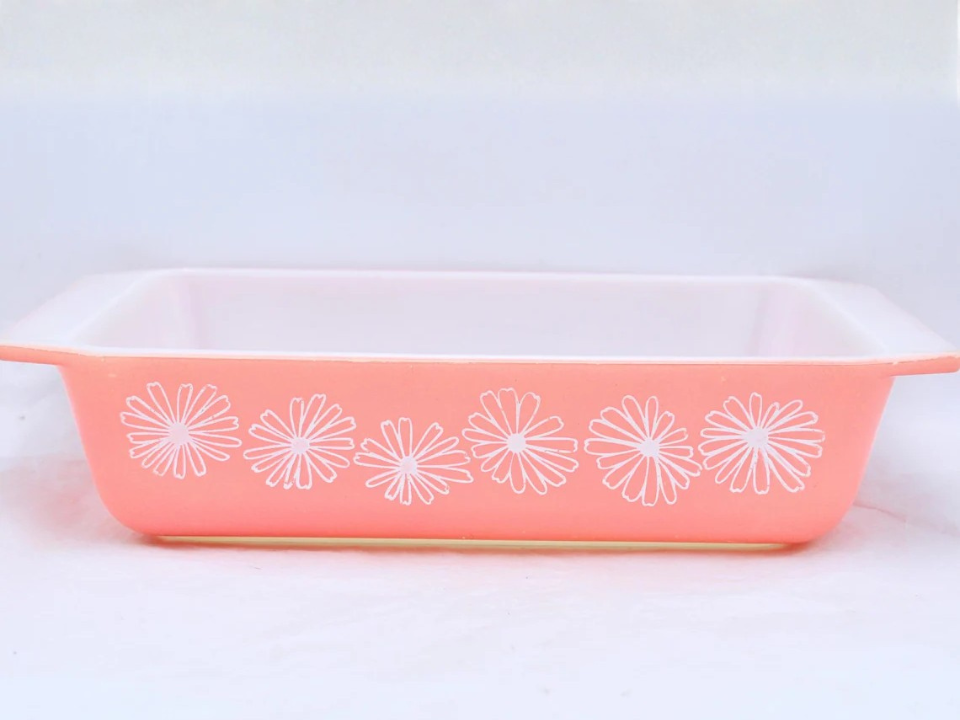
Pink Daisy is one of those patterns that instantly feels tied to warmer weather and lighter rooms. Common oval casseroles with lids often land around $45 to $75, which keeps it more reachable than the rarest pink Pyrex lines. Collectors like it for the pink floral print and the way it adds color without taking over a display. In spring, it works especially well with milk glass and pale florals.
For many buyers, Pink Daisy sits in a nice middle ground between common and special. It is easier to spot than Pink Stems, though it still has enough collector pull to feel exciting at an estate sale. Lids matter, and the divided casseroles often do a little better than bare dishes. The soft pink look is the main reason it keeps showing up in spring groupings.
Pyrex Pink Stems
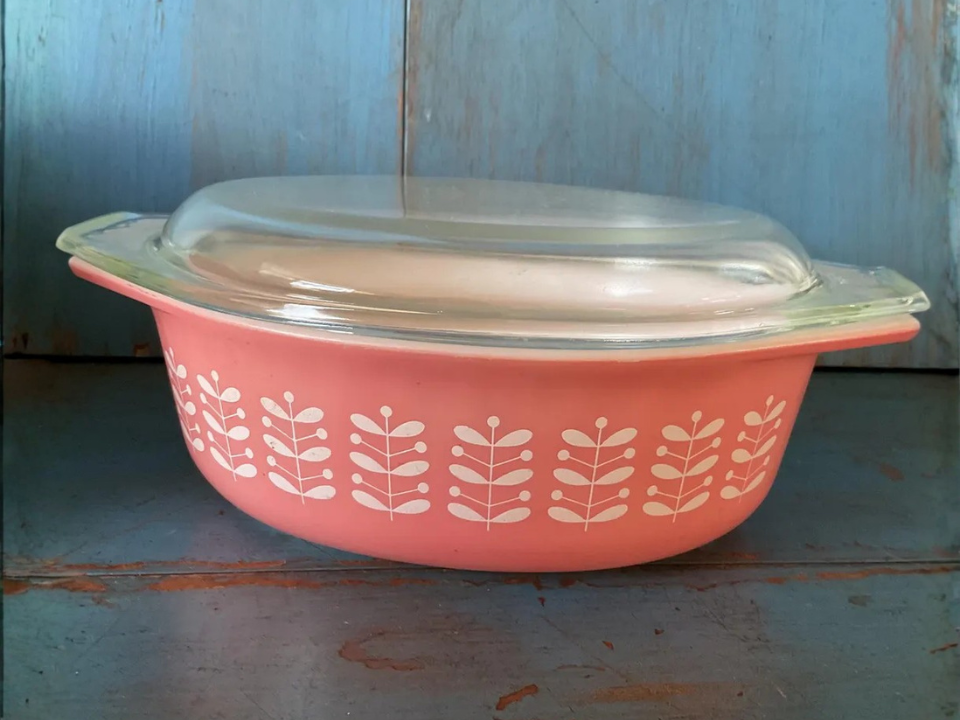
Pink Stems is one of the harder Pyrex patterns to come across, and that rarity has pushed values very high. The casserole often sells around $700 to $1,000, while especially strong examples can go beyond that. Collectors like it for the light pink graphic line work and its short production run. In spring displays, it gives the shelf a soft midcentury look that still feels delicate.
Few pink Pyrex pieces have the same mix of rarity and visual pull. Because it is scarce, even a single casserole can become the main piece in a group. Buyers usually look for full gloss, minimal fading, and an original lid whenever possible. This is one of the lines that serious Pyrex collectors talk about for good reason.
Pyrex Balloons
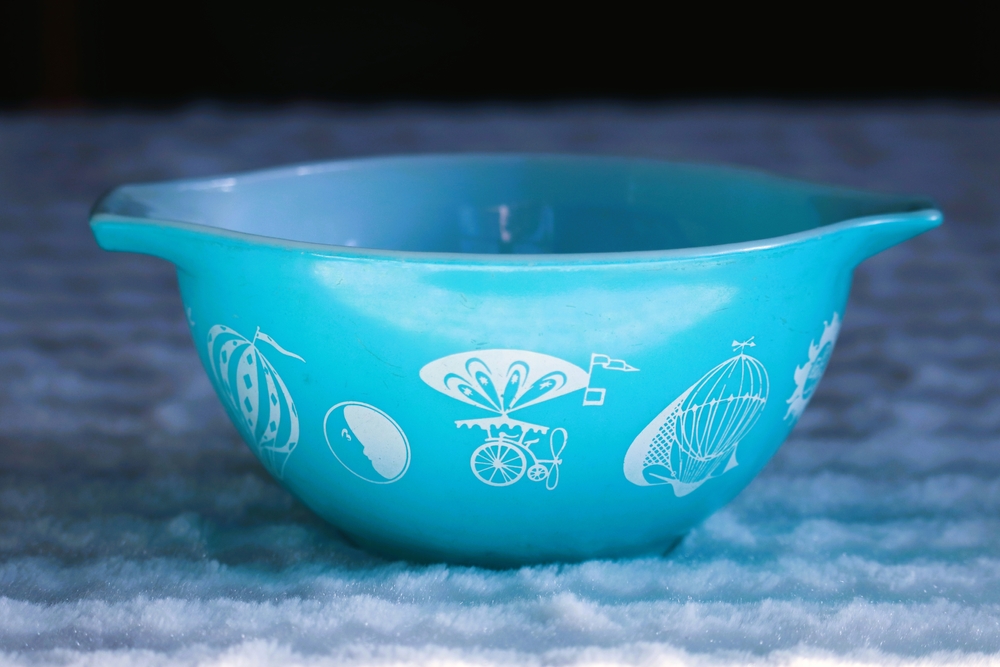
The Balloons pattern is one of the best-known Pyrex promotional releases from the late 1950s. Collectors like it for the hot air balloon design and the strong midcentury look. A full chip and dip setup usually lands around $250 to $450, while single bowls often sell for less. The design feels playful enough for spring without being too fussy.
At spring estate sales, this is one of the patterns that can wake up a whole room of buyers. The blue and white color scheme still feels light enough for the season, and the balloon motif gives it a cheerful touch. Sets with the bracket are the real prize, while lone bowls are easier on the budget. Because it was promotional, many collectors still treat it as a big score when it turns up.
Pyrex Bluebird
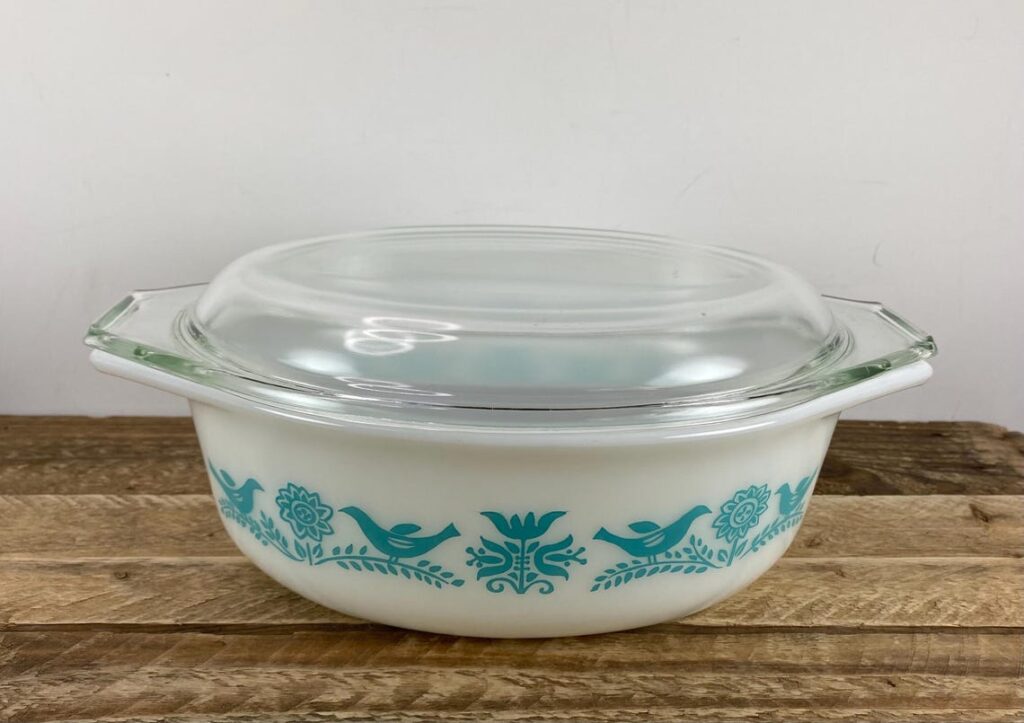
Bluebird has a gentle bird and flower look that suits spring especially well. This promotional casserole pattern ran from 1959 through 1961, and the turquoise birds on white glass give it a lighter feel than many darker kitchen patterns. Collectors tend to like it because it feels close to Butterprint while still having its own look. A covered oval casserole often sells in the $40 to $90 range.
This pattern does very well with people who like soft blue Pyrex but want something less common than Snowflake. The bird motif feels right for spring shelves, especially beside pale pottery and floral linens. Since Bluebird often shows up as a casserole rather than a full, large line, nice, complete pieces get noticed fast. Clean white glass and a matching lid help a lot with value.
Pyrex Horizon Blue
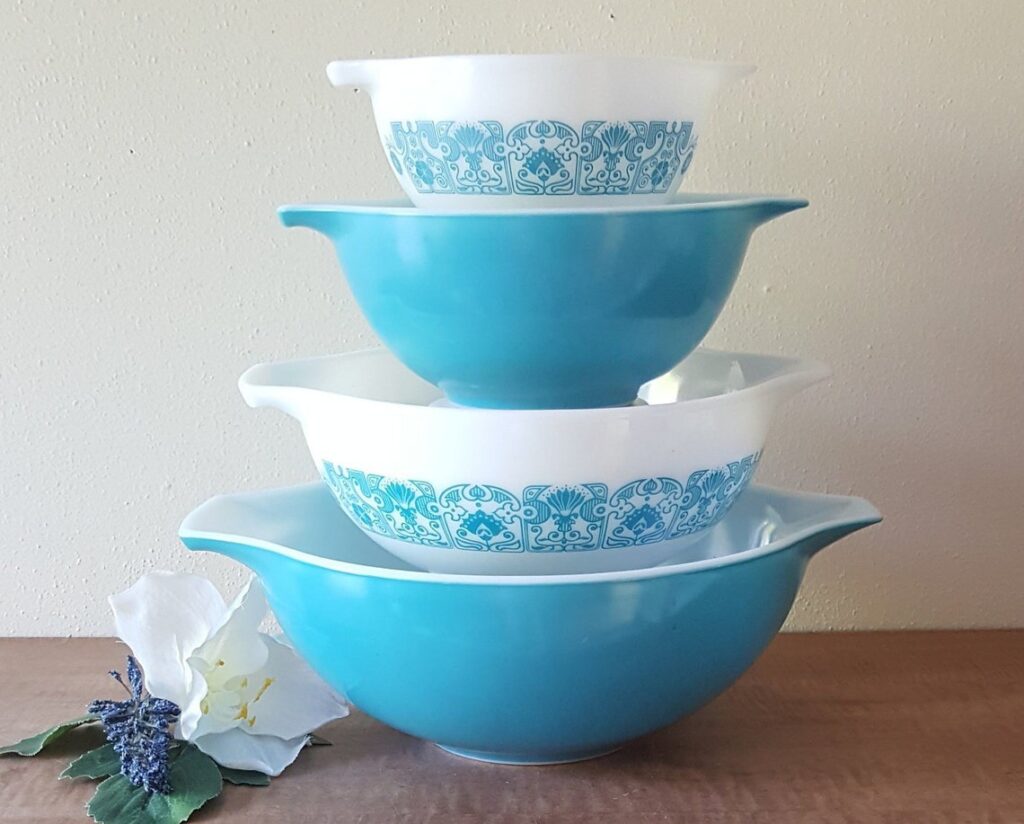
Horizon Blue brings a clean aqua look that many spring collectors like because it feels cool and easy on the eyes. Single casseroles often sit around the $45 to $65 mark, while bowl or casserole groups can run roughly $165 to $300 or more. It is one of those patterns that looks simple from far away and much better when grouped in multiples. The blue shade also pairs well with white kitchens and glass displays.
Some collectors turn to Horizon Blue when they want color without a busy print. The line feels tidy and calm, which helps it fit nicely into spring setups that lean pale and airy. Lids and matched sets push the price up much faster than single loose dishes do. A strong four-bowl set can still get plenty of attention on the resale market.
This article originally appeared on Avocadu.