
13 Plants That Live Off Other Plants Without Looking Like Parasites
Plants come in all shapes and sizes, each with its unique way of surviving and thriving. Some plants have adapted to live off other plants, but they do so without harming them, forming interesting and harmonious relationships. These plants don’t steal nutrients from their hosts like typical parasites. Instead, they rely on them for support, using the trees or other plants simply as a place to grow and access sunlight. It’s fascinating to see how nature has created a balance where one plant can live off another without causing harm. These relationships are a testament to the diversity of life and how plants can coexist in an ever-changing environment.
This post may contain affiliate links, which helps keep this content free. Please read our disclosure for more info.
Mistletoe
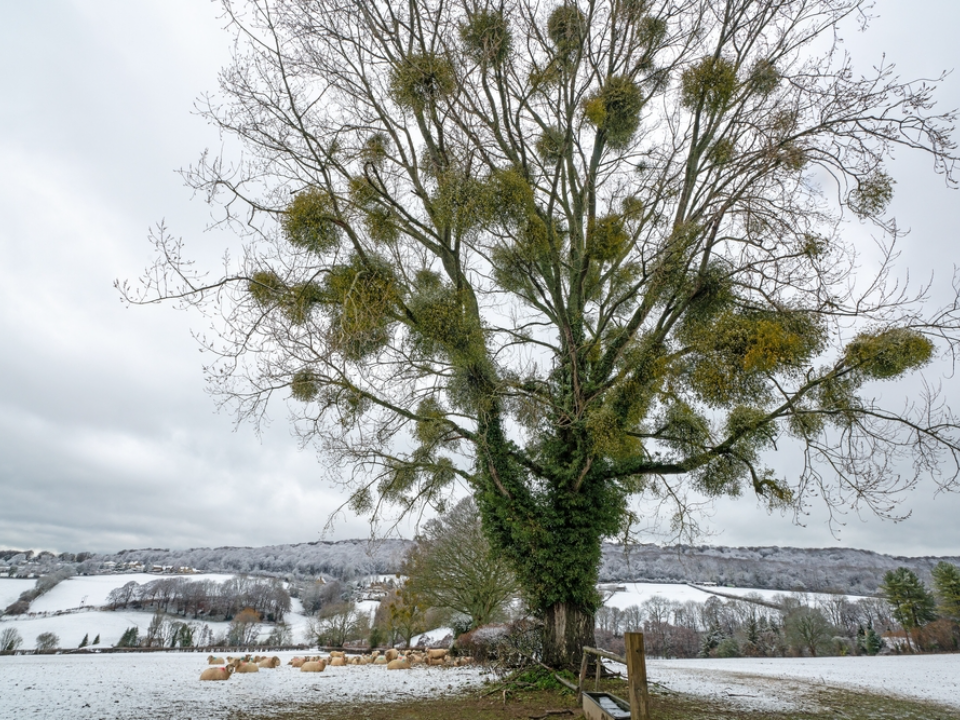
Mistletoe is a plant that thrives on the branches of trees without causing harm. While it attaches itself to the host tree, it still performs photosynthesis, drawing water and nutrients from its host. This plant is often seen during the winter holiday season, as it is traditionally hung for decoration. Mistletoe’s relationship with its host is more of a commensal one, as it does not typically damage the tree in the way parasitic plants would.
It can, however, become problematic if it grows excessively, as it might eventually outcompete its host for resources. The plant’s white berries are consumed by birds, which help spread the seeds, continuing its life cycle. In some cases, mistletoe can survive for long periods without harming the tree, making it an interesting example of a plant that coexists rather than takes from its host.
Orchids (Epiphytic species)
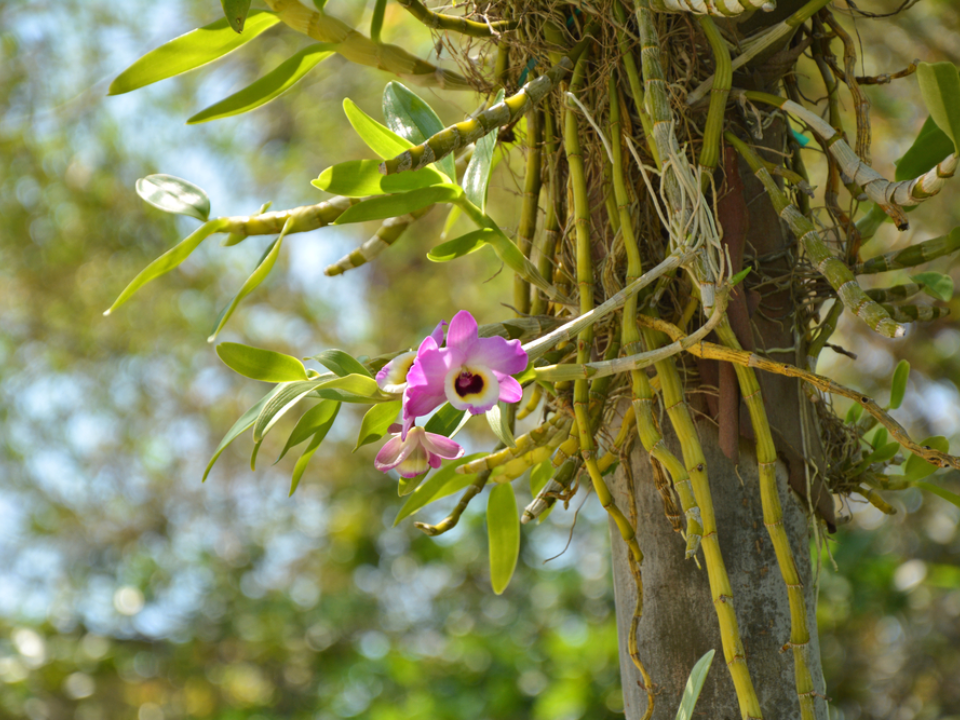
Epiphytic orchids are a remarkable group of plants that live on the surface of trees, but they do not harm them. These orchids obtain moisture and nutrients from the air, rain, and debris that accumulate around them. Their roots anchor them to the tree but do not penetrate the host’s vascular system, unlike true parasites.
Orchids rely on their host simply for support, positioning them in the canopy to capture more sunlight for photosynthesis. In return, they contribute beauty to the tree, enhancing its appearance without competing for the tree’s internal resources. This type of relationship is often beneficial for the orchid as it thrives in environments where other plants might not. Epiphytic orchids are found in various regions, from tropical rainforests to temperate zones, highlighting their adaptability.
Spanish Moss
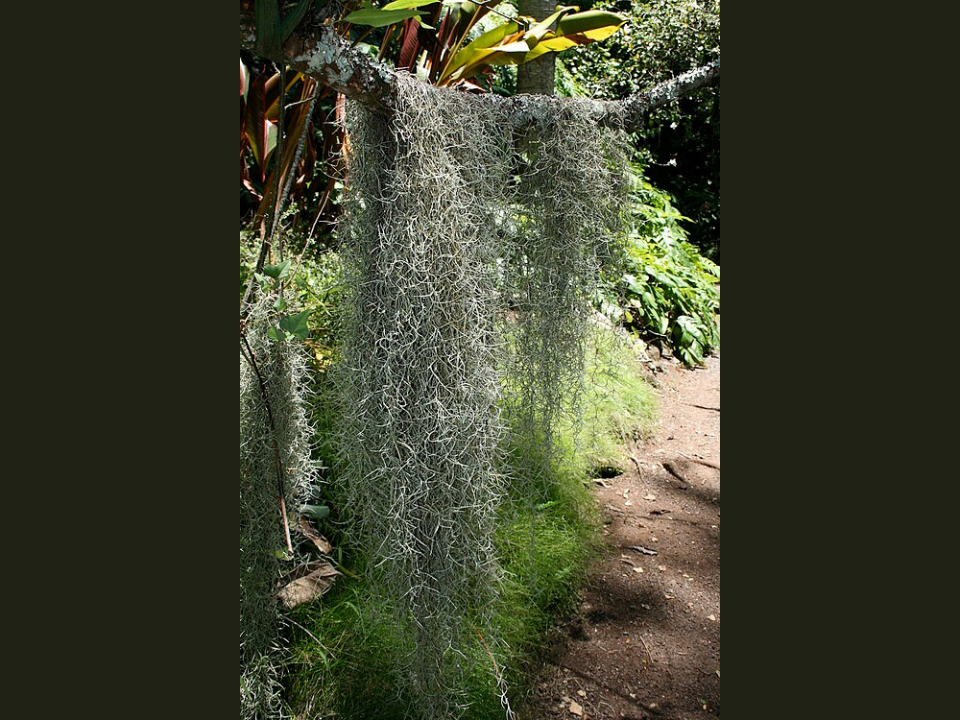
Spanish moss is a type of bromeliad that hangs from tree branches in long, flowing strands. It is an epiphyte, meaning it lives on trees, but it does not extract nutrients directly from the tree itself. Instead, it collects moisture from the air and relies on rainwater and humidity to sustain itself. Spanish moss is found in the southeastern United States, often hanging from oak and pine trees, adding a unique, ethereal look to the landscape.
It does not harm its host tree, as it simply uses it for support. In fact, Spanish moss can benefit the ecosystem by providing habitat for small birds and insects. This plant thrives in the humid environment of forests and wetlands, showcasing how epiphytes can survive and even enrich the places they inhabit.
Bromeliads
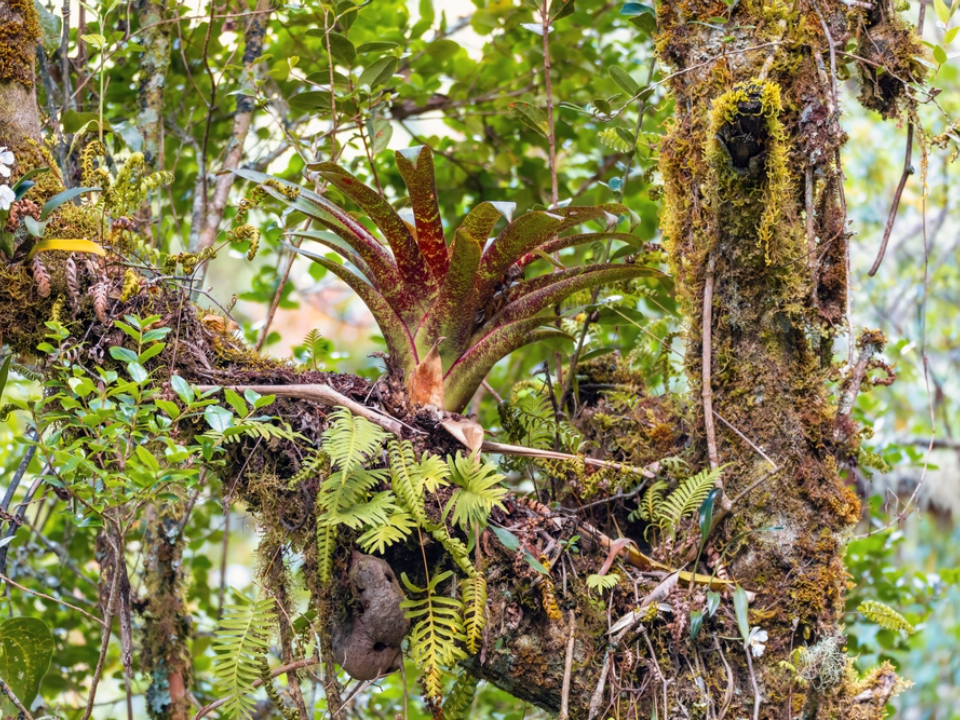
Bromeliads are another group of plants that can grow on trees without causing harm to their host. These plants are commonly found in tropical areas, where they can attach themselves to tree branches and rocks. Bromeliads have specialized leaves that form a rosette, creating a cup-like structure that collects rainwater and nutrients from decaying organic matter. This allows them to thrive without taking resources directly from the tree.
The roots of bromeliads are primarily for anchoring the plant, not for nutrient absorption. Some species even provide shelter to small animals, including frogs and insects, creating a small ecosystem within their rosettes. This unique method of surviving in the canopy shows how bromeliads can live in harmony with their host trees.
Ball Moss
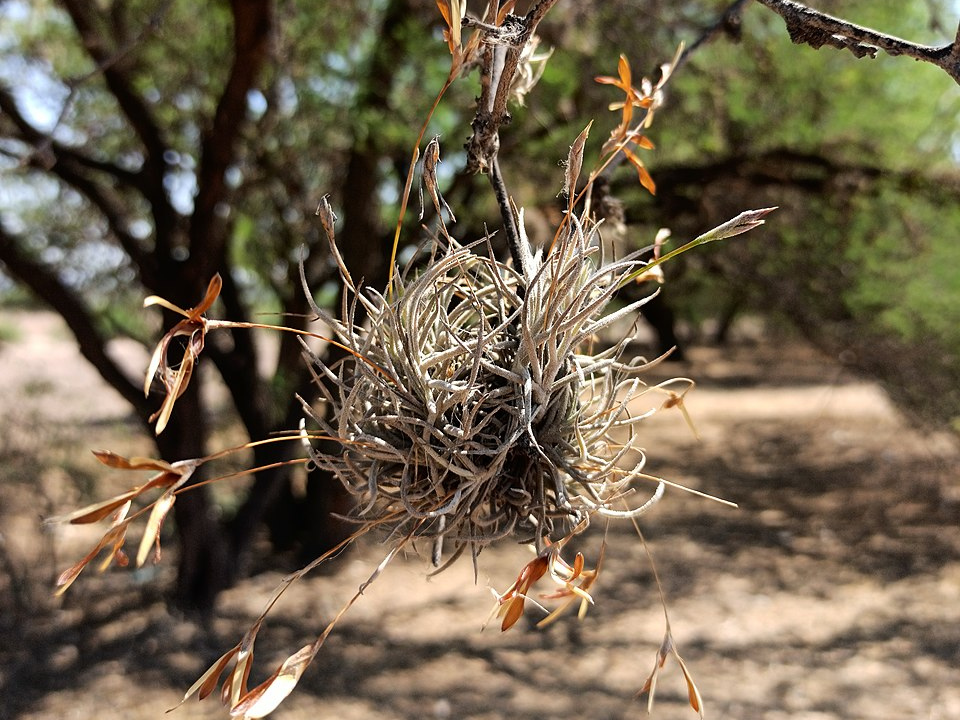
Ball moss, a member of the bromeliad family, often grows on the branches of oak and pine trees. It is an epiphyte that survives by collecting water and nutrients from the air, rain, and surrounding environment, rather than from the tree itself. Ball moss gets its name from the round, ball-shaped clusters it forms as it grows on the branches.
Although it looks similar to Spanish moss, it tends to grow in denser clumps and can be mistaken for a parasite. However, it does not harm the tree, as it does not extract resources from its host. Instead, ball moss relies on its ability to capture moisture and organic matter from the air. This plant contributes to the unique biodiversity of its environment, supporting various insects and birds.
Staghorn Fern
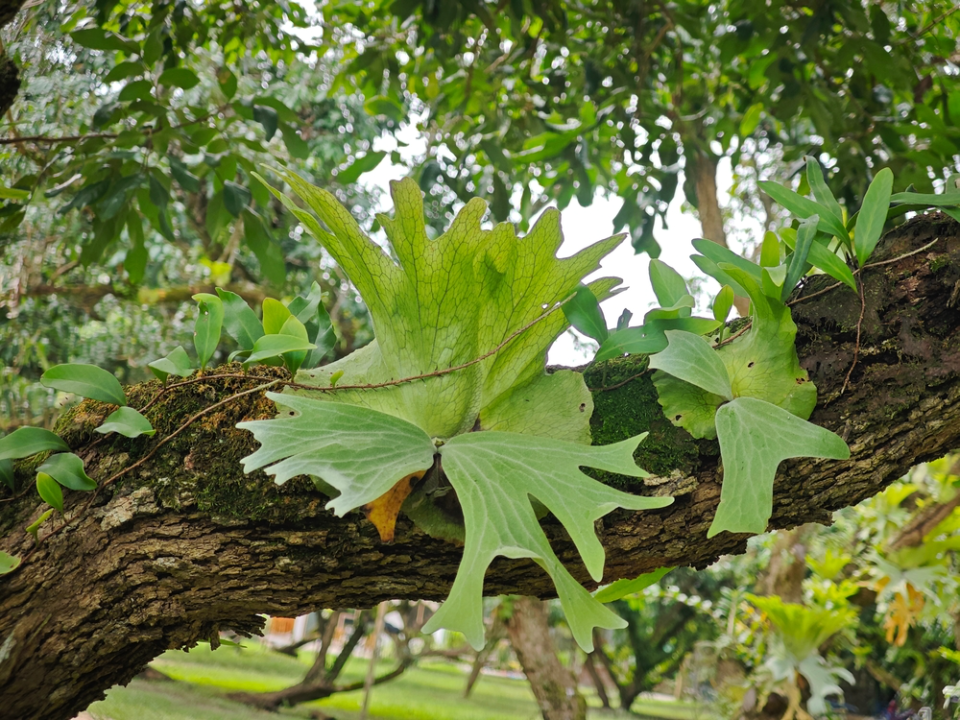
Staghorn ferns are another type of epiphytic plant that grows on trees. They have unique fronds that resemble antlers, hence the name “staghorn.” These ferns do not harm their host trees because their roots are used primarily for anchorage. They absorb moisture and nutrients from the surrounding air, rain, and decomposing organic matter that collects in the crevices of tree bark.
Staghorn ferns are commonly found in tropical and subtropical regions, where the environment is moist and humid. While they might appear to be clinging to the tree, they do not interfere with the tree’s health. In fact, these ferns can even help break down organic material on the tree, benefiting the overall ecosystem.
Lichens
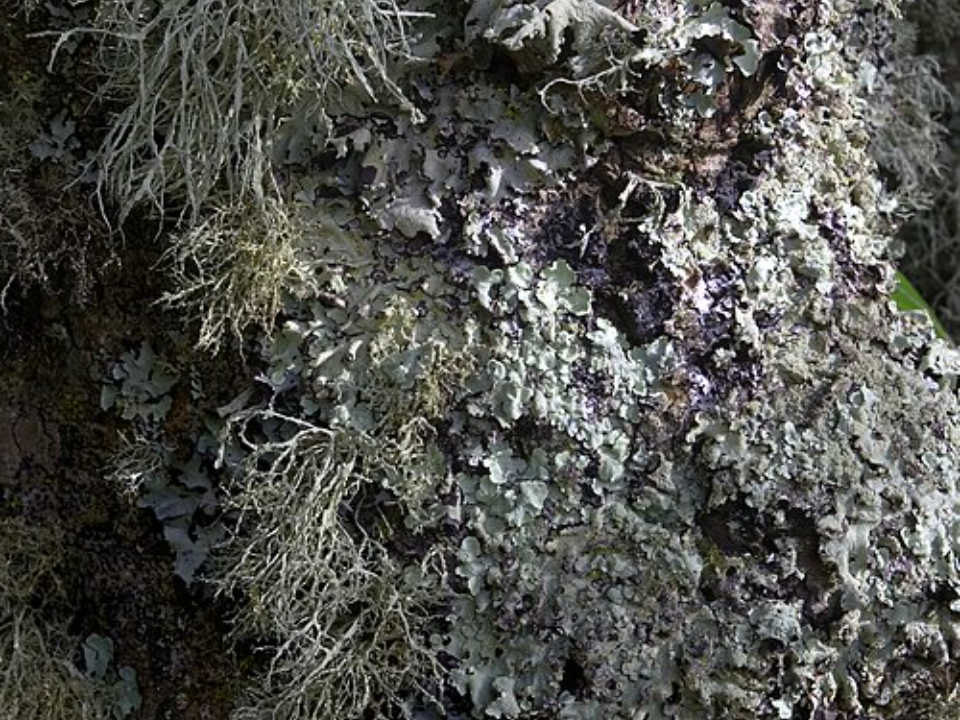
Lichens are symbiotic organisms made up of a fungus and an algae or cyanobacterium living together. They can be found on a wide range of surfaces, including tree bark, rocks, and even rooftops. Lichens do not harm the trees they inhabit; instead, they thrive on the nutrients that rainwater and air provide. The fungus provides a structure that supports the algae or cyanobacterium, which, in turn, performs photosynthesis.
Lichens are capable of surviving in harsh environments, from arctic tundras to tropical rainforests. Their role in the environment includes contributing to the nutrient cycle by breaking down rocks and dead organic matter. While they may appear to be growing directly on the tree, they do not draw nourishment from the host.
Air Plants (Tillandsia)
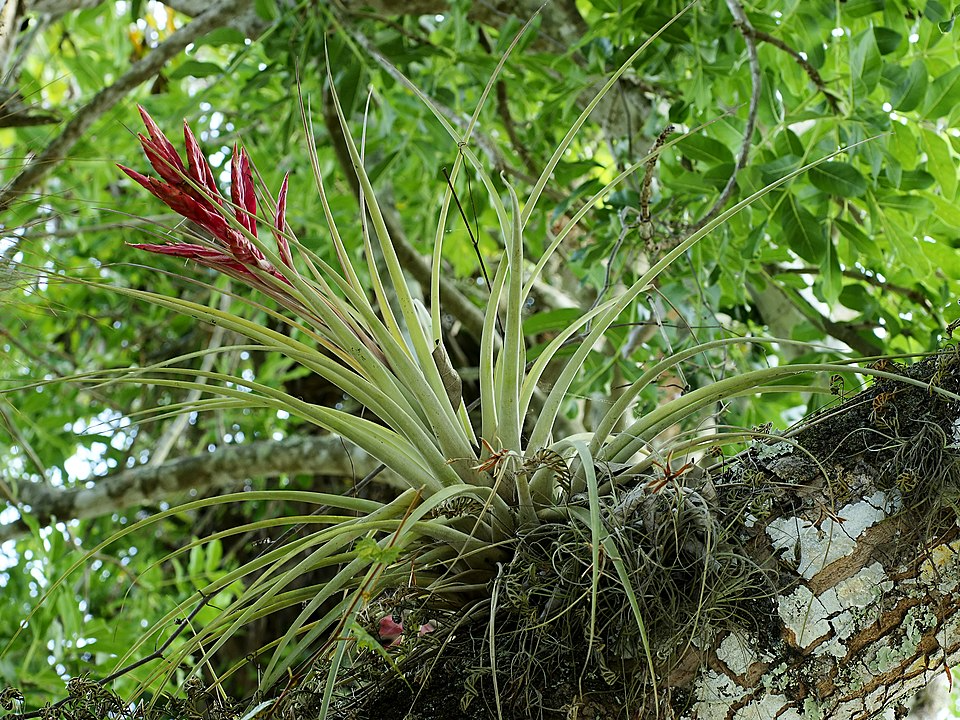
Air plants, or Tillandsia, are a diverse group of epiphytes that grow without soil. They attach to tree branches, rocks, and other surfaces, deriving their nutrients from the air, rain, and surrounding environment. Air plants have specialized trichomes (small hair-like structures) on their leaves that help absorb moisture and nutrients directly from the atmosphere. These plants do not harm the trees they live on, as they do not take resources from the host.
Instead, they benefit from the support of the tree, which allows them to grow in higher locations where sunlight is more abundant. Air plants are easy to care for and can be grown in a variety of environments, making them popular in home decor and gardening. They play a significant role in their natural ecosystems by helping maintain air quality and providing shelter for small creatures.
Wild Ivy (English Ivy)
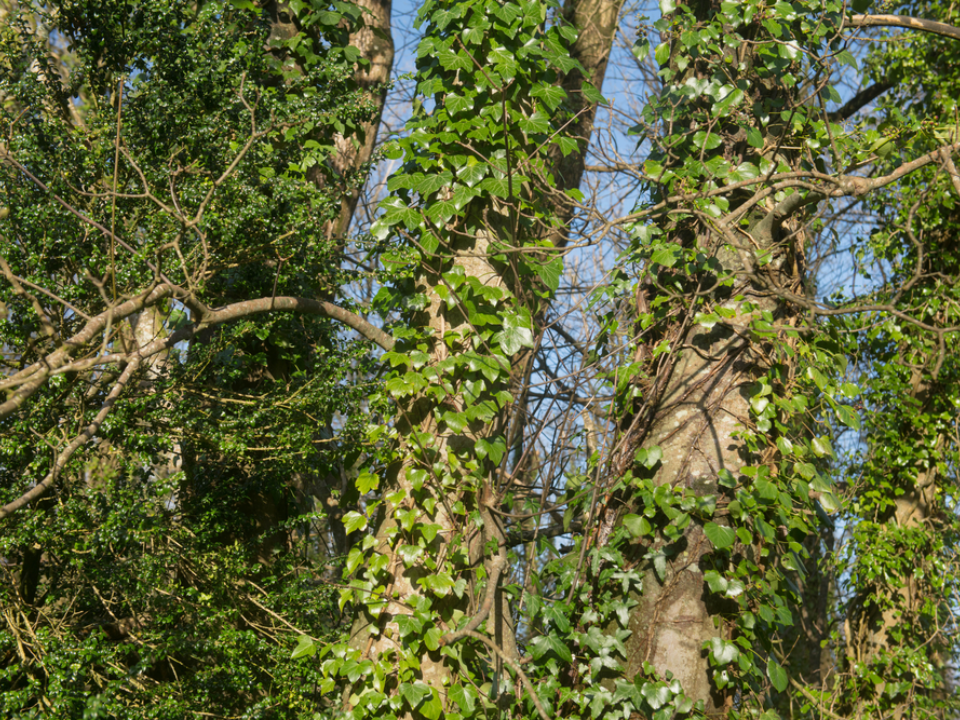
While ivy is often considered invasive, some species of ivy, such as English ivy, can be seen as epiphytes when they climb trees. English ivy climbs using its small roots, which cling to tree bark, but it does not draw nutrients directly from the tree. Instead, it relies on the nutrients and moisture from the surrounding environment.
Ivy can grow in dense patches, covering tree trunks and branches, yet it does not harm the tree unless it becomes excessively heavy. The tree provides support for the ivy, allowing it to access sunlight higher in the canopy. In return, ivy offers shelter for small animals, including birds and insects. This relationship between ivy and its host trees is one of coexistence, rather than parasitism.
Cacti (Epiphytic Species)
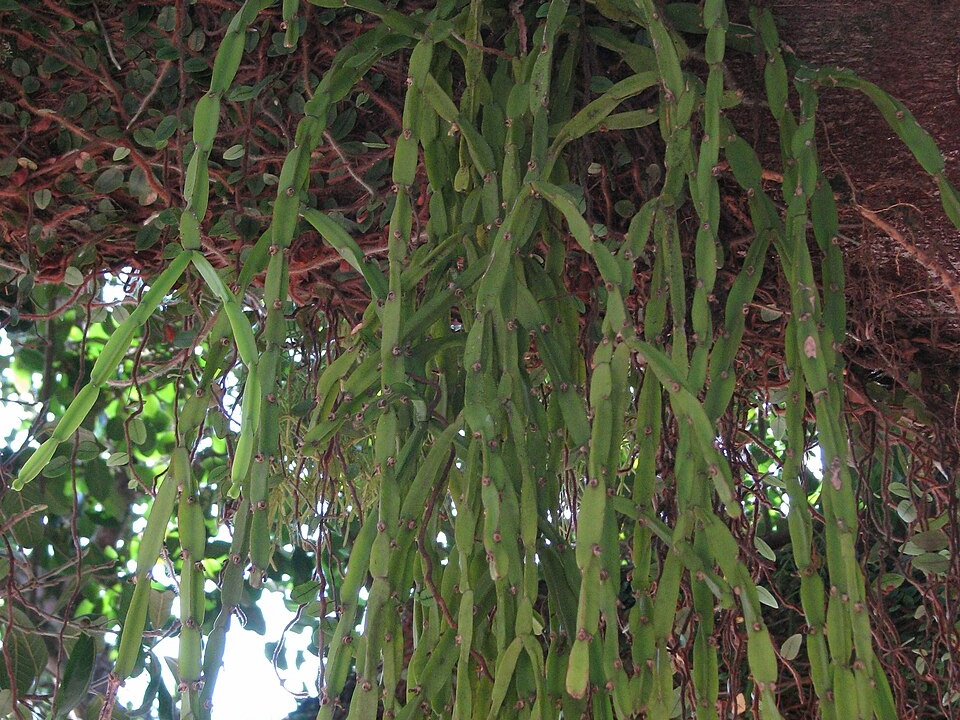
Epiphytic cacti, such as those found in tropical and subtropical regions, are another example of plants that live off other plants without harming them. These cacti attach to trees, using their roots only to anchor themselves in place. Instead of drawing nutrients from the tree, they rely on moisture from the air and rain, much like other epiphytes. The cactus’ unique structure allows it to store water in its fleshy stems, making it well-suited for environments where rainfall is sporadic.
They do not harm the trees they grow on because they do not interfere with the host’s nutrient or water systems. In fact, they are beneficial to their environment by offering shelter to small creatures and serving as a visual addition to the landscape. Their ability to thrive on trees without drawing from them highlights their remarkable adaptation.
Climbing Fern (Lygodium)
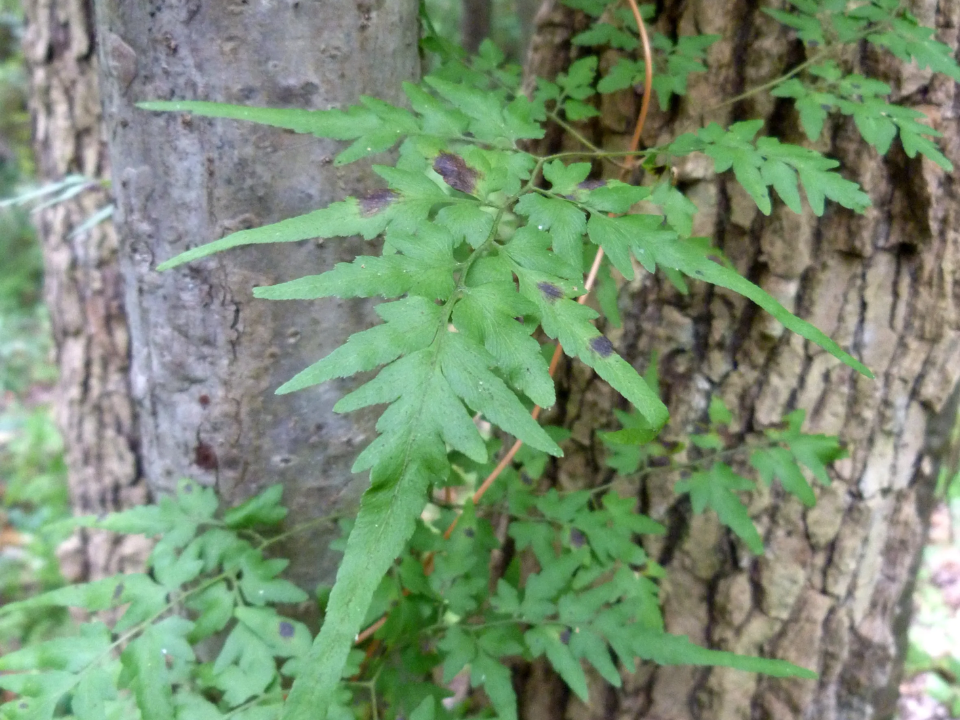
The climbing fern, also known as Lygodium, is another plant that may look as though it is parasitic but is actually an epiphyte. It grows by climbing on trees and other structures, using its tendrils to wrap around its host for support. The fern does not extract nutrients from the tree; instead, it relies on moisture in the air and decaying organic matter for its sustenance.
Lygodium’s unique ability to climb and spread across tree trunks makes it an attractive addition to the landscape. It can thrive in humid environments and provides shelter for insects and small animals. While it may seem invasive in some areas, it does not harm the trees it grows on. Its growth pattern is one of coexistence, where both the fern and its host benefit from the arrangement.
Bird’s Nest Fern
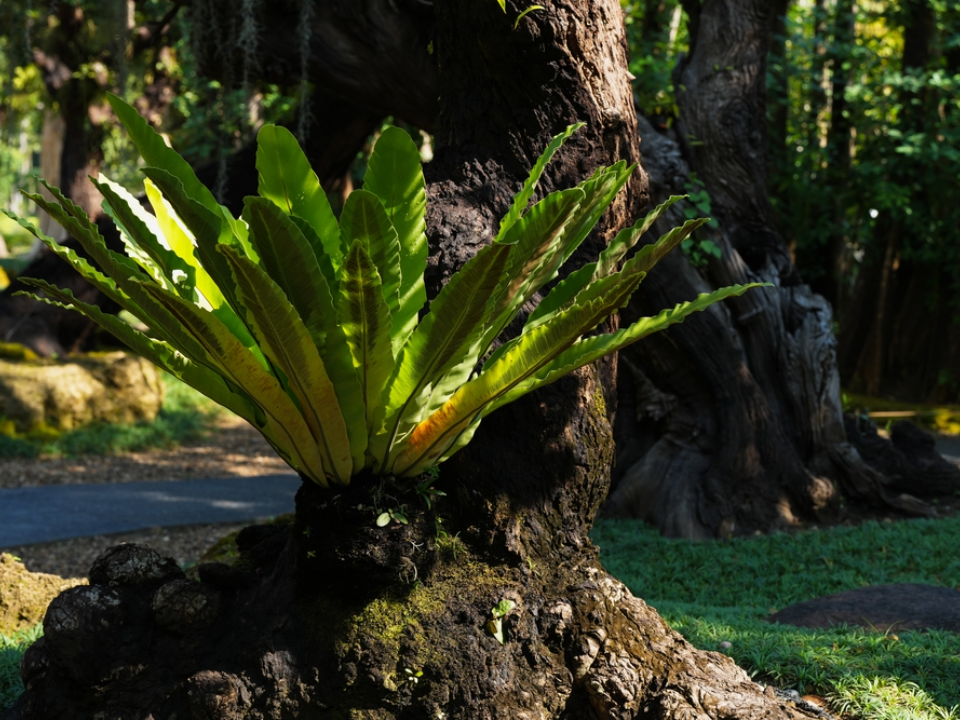
The bird’s nest fern, a non-parasitic fern, is often found growing on tree trunks in tropical forests. This fern uses its tightly curled fronds to form a nest-like shape, from which it gets its name. The fern does not take nutrients from the tree itself but instead relies on the rain, air, and decaying matter that collects in the crevices of the tree bark.
The roots of the bird’s nest fern act only to anchor the plant, not to extract sustenance from the tree. As the fern grows, it forms a large, lush nest that can hold water and organic matter, which benefits other species in the ecosystem. This plant’s role in the ecosystem includes providing habitat for insects and small creatures, demonstrating its role as a non-parasitic epiphyte.
Rhipsalis (Mistletoe Cactus)
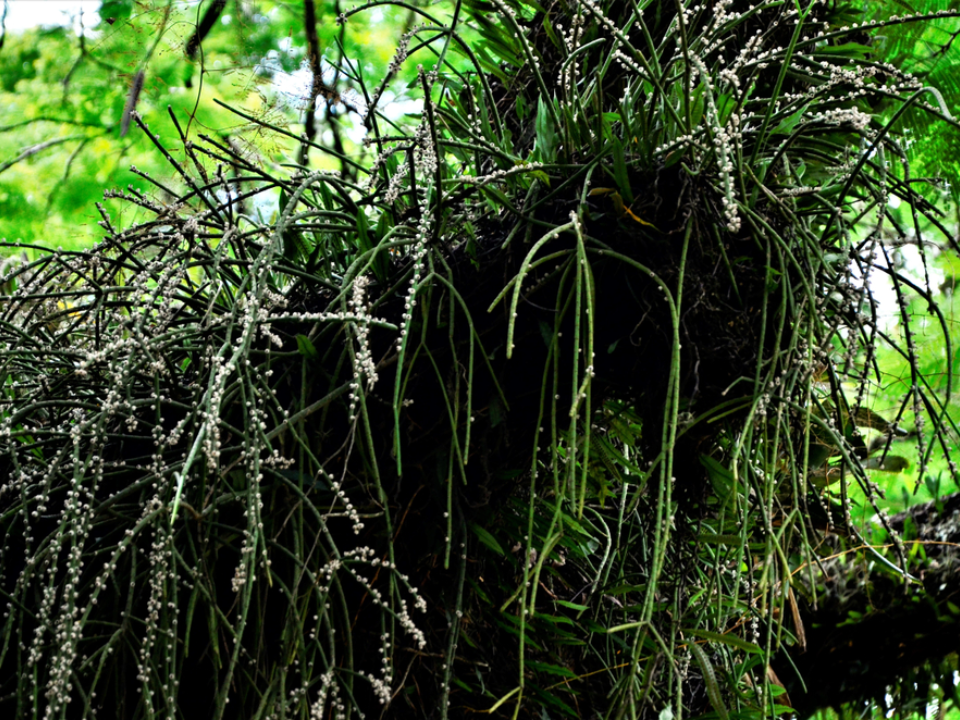
Rhipsalis, commonly known as mistletoe cactus, is an epiphytic cactus species that thrives on other plants without causing harm. This plant grows on the branches of trees, where it absorbs moisture from the air and rain rather than drawing nutrients from the tree itself. Rhipsalis does not damage the host tree because its roots serve only as a means of attachment.
The plant’s ability to store water in its fleshy stems allows it to survive in conditions where rainfall is infrequent. Rhipsalis is an important part of its ecosystem, providing shelter to insects and small birds. Its green, spiny appearance makes it a distinctive plant in the rainforest canopy, where it coexists with its host tree.
This article originally appeared on Avocadu.