
14 Jadeite Kitchen Pieces People Keep Collecting Year After Year
Jadeite kitchen pieces are those soft green dishes, bowls, canisters, and serving pieces made from opaque milk glass. Their look first caught on in the United States in the early 1930s, with makers like McKee introducing jade green wares around 1930 and Jeannette following in 1932. That vintage color still gives kitchens a warm and familiar feel today.
This post may contain affiliate links, which helps keep this content free. Please read our disclosure for more info.
Jeannette Jadite Salt Box
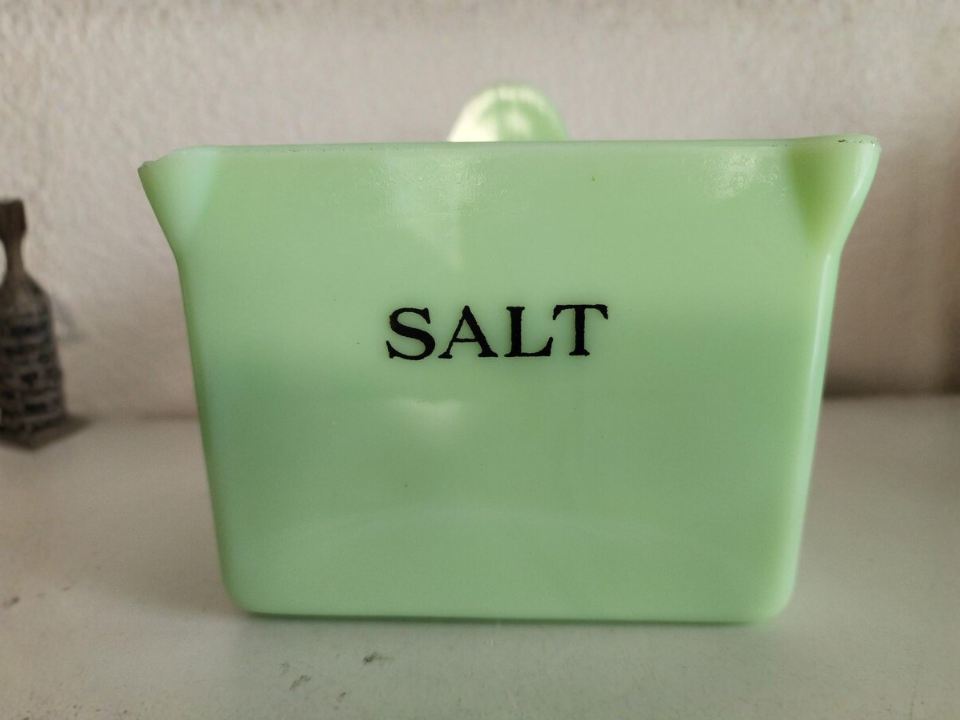
Jeannette Glass began making Jadite in 1932, and the salt box stands among the most talked about wall pieces from that early run. People keep buying it because it gives a kitchen shelf or wall a strong old-house feel right away. Its lift-top form, compact size, and soft green color make it easy to notice even in a crowded display. In the current market, a strong example is often priced around $1,350 to $2,000.
What keeps interest high is the mix of scarcity and daily kitchen history. Buyers usually watch for a clean lid line, smooth edges, and a body free of heavy chips. Even small damage can lower the price in a big way because this piece sits near the top end of many jadeite want lists. For many people, the salt box feels like a dream piece rather than a starter piece.
McKee Skokie Green Canister with Lid
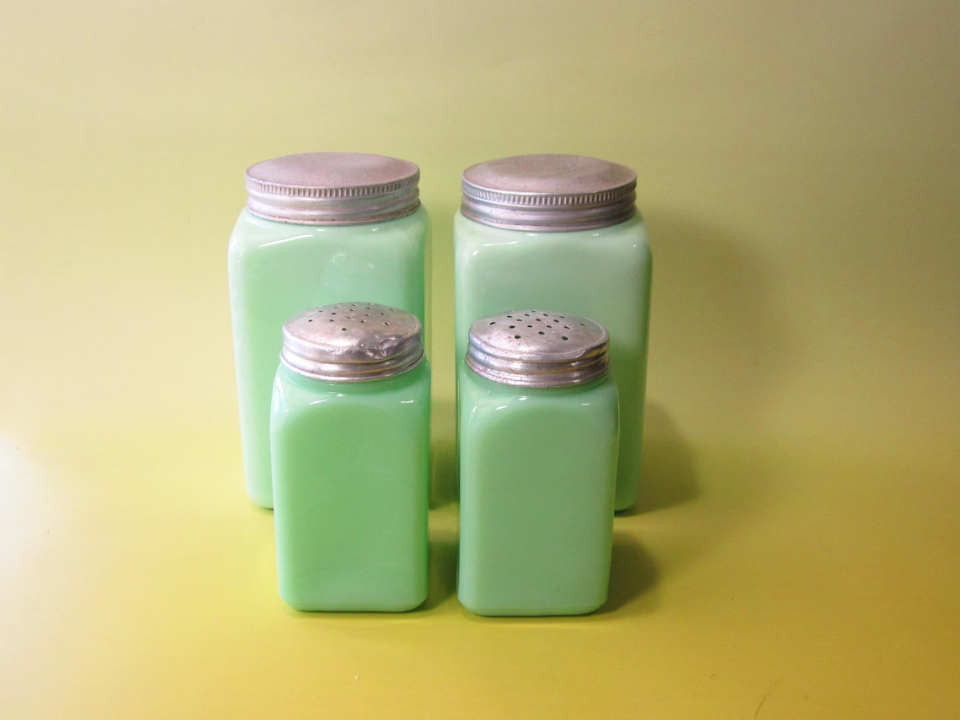
McKee put out its jade green kitchen glass under the Skokie Green name in 1930, which gives this canister a very early place in jadeite history. People keep collecting it because pantry ware feels useful and decorative at the same time. The shape looks good on a shelf by itself, though it also fits well with shakers and mixing bowls from the same maker. A canister with a lid is often estimated at around $95 to $300 today.
Another reason it stays popular is the way it tells a fuller kitchen story than plates or cups alone. Buyers often check the lettering, corners, lid fit, and surface shine before paying a higher price. Larger sizes and cleaner lids usually pull more attention. That old pantry look keeps McKee canisters in steady rotation year after year.
Anchor Hocking Fire King Philbe Refrigerator Dish
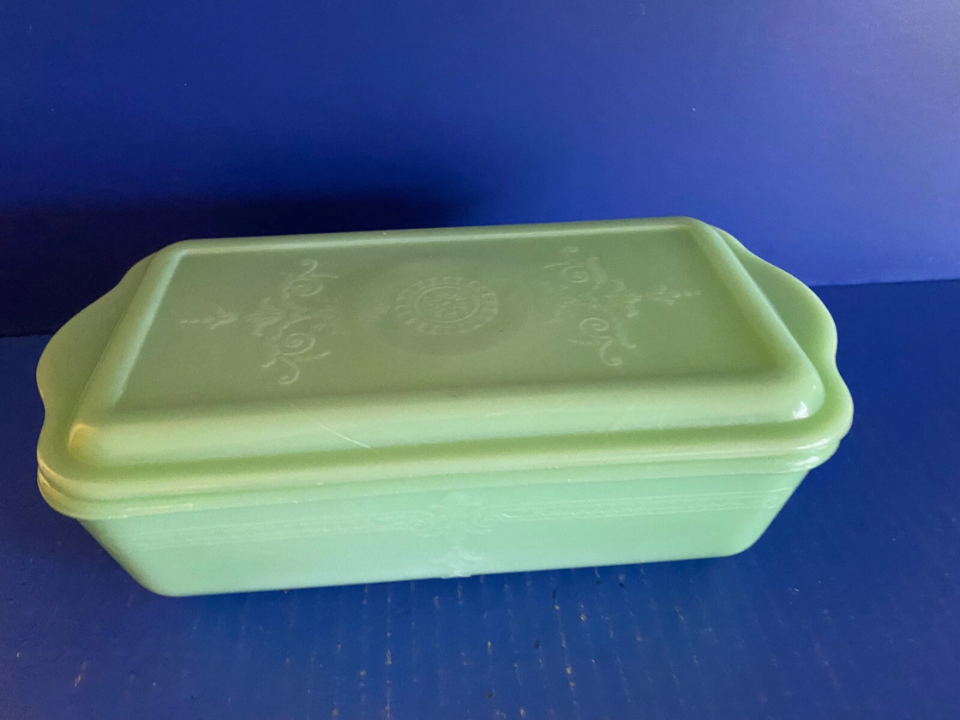
Anchor Hocking made Fire King jadeite in the mid 1940s and later, and the Philbe refrigerator dish became one of the best-known covered storage forms from that period. People keep collecting it because the block pattern gives the glass a strong look without feeling too busy. Its cover also gives it that classic icebox era mood that many buyers like. A complete example is often listed at around $80 to $180, with larger groupings priced higher.
Set beside bowls and mugs, this piece adds a square profile that helps a display feel more balanced. Most buyers pay close attention to the lid because a missing top cuts value fast. Good gloss, clean corners, and fewer scratches usually push the price upward. Its mix of storage use and shelf appeal is a big part of why it stays loved.
Jeannette Jadite Beehive Shaker
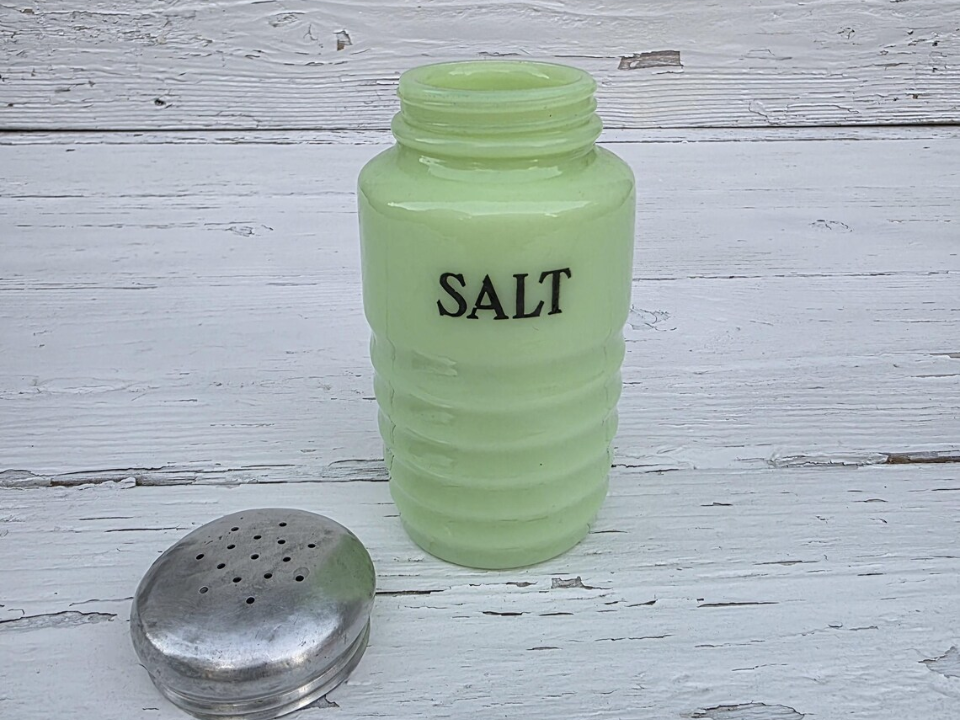
During the 1930s, Jeannette made Jadite shakers that still stand out today, and the beehive form is one of the easiest to spot. People keep collecting it because the ribbed shape adds texture without taking up much room. It is also a small way to bring early jadeite into a kitchen without buying a larger and pricier item. A single shaker often falls around $40 to $70, while a nice pair can run about $88 to $125 or more.
Small pieces like this often help a shelf feel finished. Buyers usually look hard at the metal top since rust, dents, or a loose fit can pull the value down. Nice pairs usually get more attention than singles because they feel ready to display right away. That simple mix of size, shape, and age keeps them popular.
Mosser Jade Cake Stand
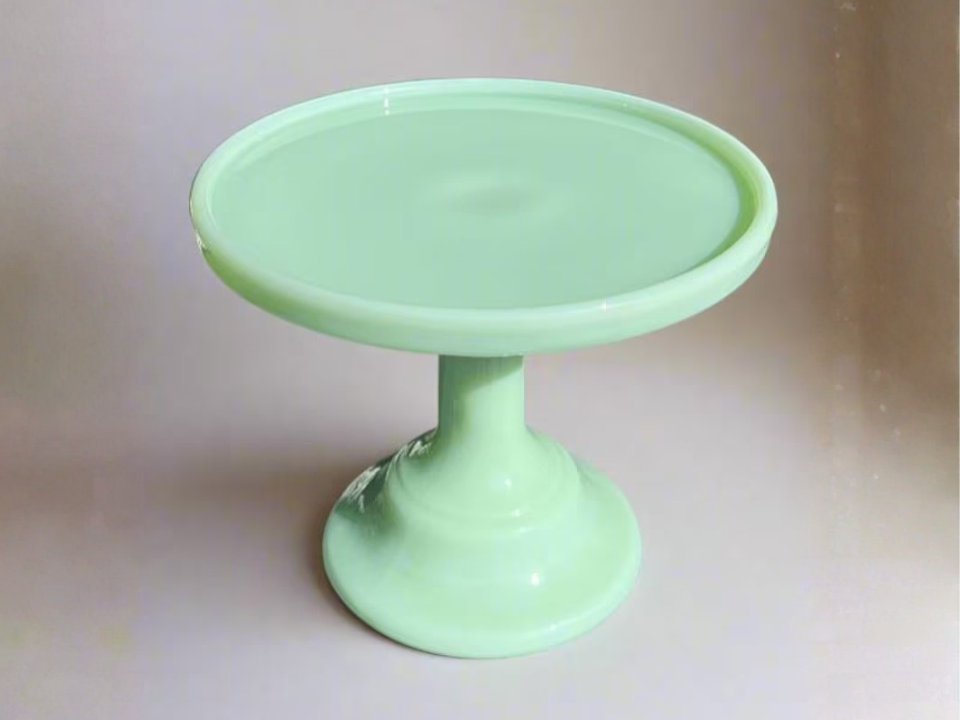
Mosser is a newer American glass maker, so this jade cake stand is modern rather than Depression era vintage. People keep collecting it because it gives the green glass look without the high cost tied to harder-to-find old pieces. The raised base also makes it very useful for cakes, pastries, fruit, or a holiday table. A Mosser jade cake stand often sells $48 to $65.
Unlike many older pieces, this one is easier to buy in clean condition. Buyers like how it can sit with vintage jadeite without looking out of place. The stand shape gives a shelf or table more height, which helps smaller pieces around it stand out too. Its lower entry price is one reason people keep coming back to it.
Jeannette Jadite Refrigerator Dish with Cover
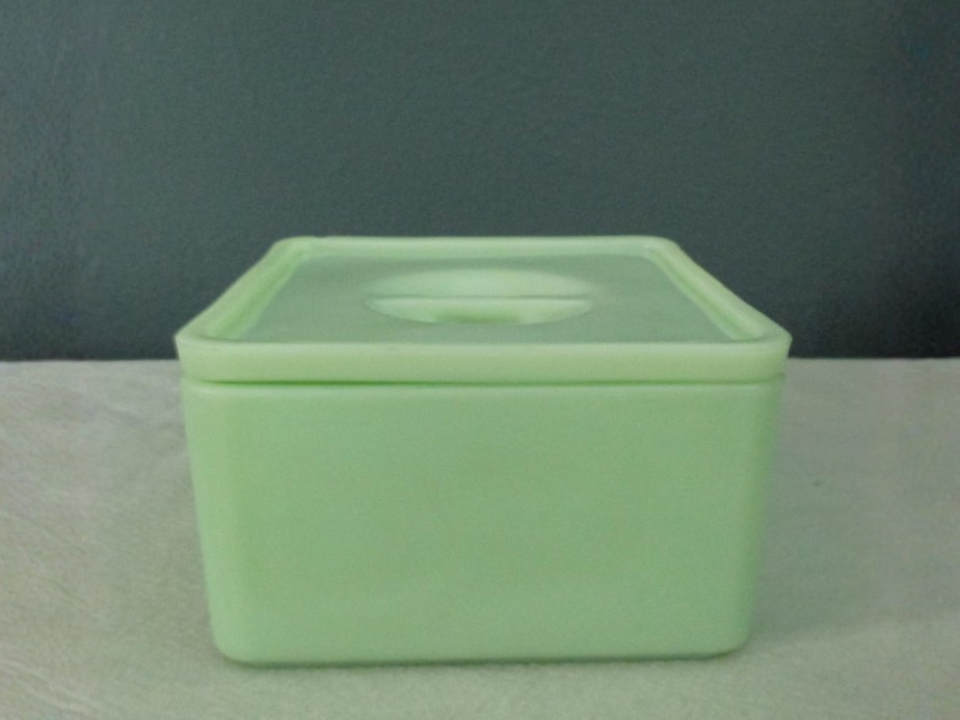
Jeannette made covered refrigerator dishes in the 1930s and early 1940s, and they still hold a strong place in many collections. People keep collecting them because they feel closely tied to old home kitchens and food storage before plastic containers took over. The covered square form looks neat, useful, and easy to stack. A nice covered piece often runs around $103 to $135 in the current market.
For display, this dish gives a collection a boxier shape that balances out cups and bowls. Buyers usually check the corners and lid rim first because those spots show damage more often. Strong color and a smooth, glossy body help a piece hold value better. That practical old kitchen look is why people still enjoy these dishes so much.
Anchor Hocking Fire King D Handle Mug
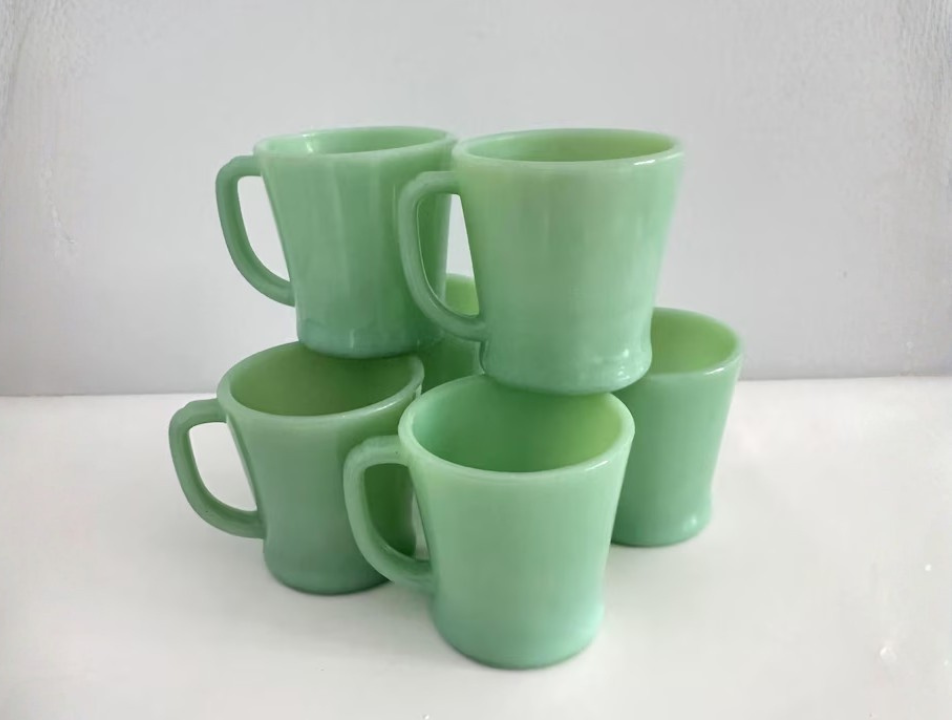
Anchor Hocking made the Fire King D handle mug in the late 1940s and 1950s, and it still ranks among the best-known jadeite mugs. People keep collecting it because the thick glass and simple shape feel very close to classic dinerware. It is a piece that works well for both daily use and open shelf display, and is priced $40 to $55 today.
For many buyers, this mug is the piece that starts the whole habit of collecting jadeite. The handle feels sturdy, the size feels familiar, and the color shows up well against white dishes or wood shelves. Mark style can matter to people who like sorting older examples from later ones. That easy charm keeps the D handle mug high on many lists.
McKee Bell Shaped Mixing Bowl
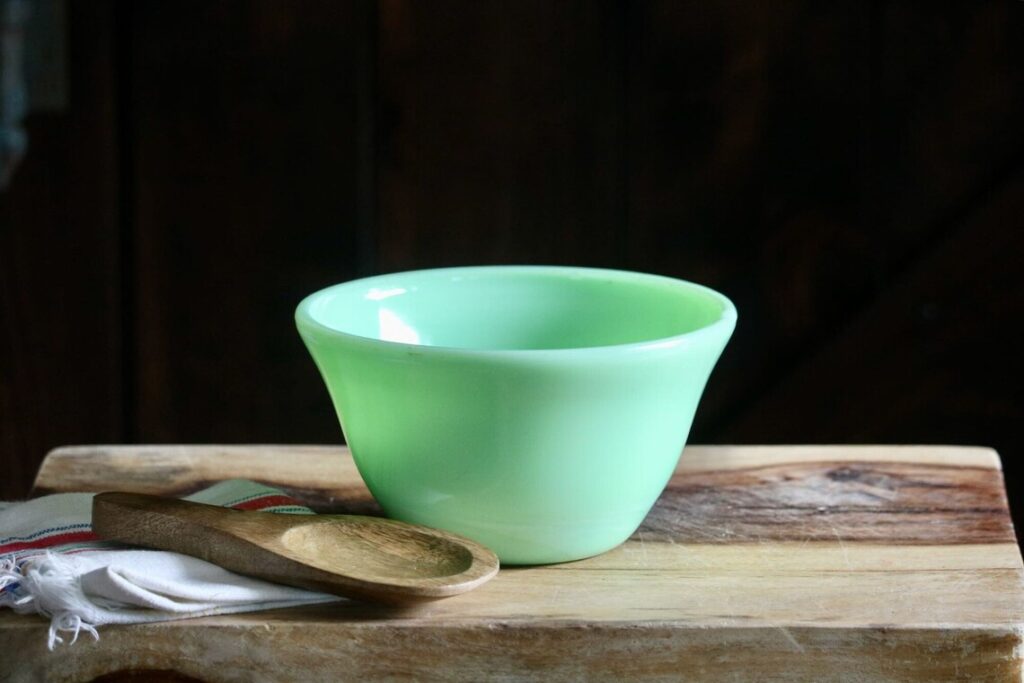
McKee made bell-shaped mixing bowls in the 1930s and 1940s, and people keep collecting them because they feel older and a little less common than many later bowls. The wide body and gentle flare give the piece a strong shelf presence. Buyers also like how it ties into the early years of jade green kitchen glass in the United States. A good example often sells around $149 to $257.
In many collections, this bowl acts like an anchor piece because the shape is easy to notice. Rim condition matters a great deal, since chips there can pull the value down quickly. Some early McKee pieces also glow under UV because of uranium glass content, which adds another layer of interest. That age and visual punch help keep these bowls very popular.
Jeannette Jadite Vertical Ribbed Mixing Bowl
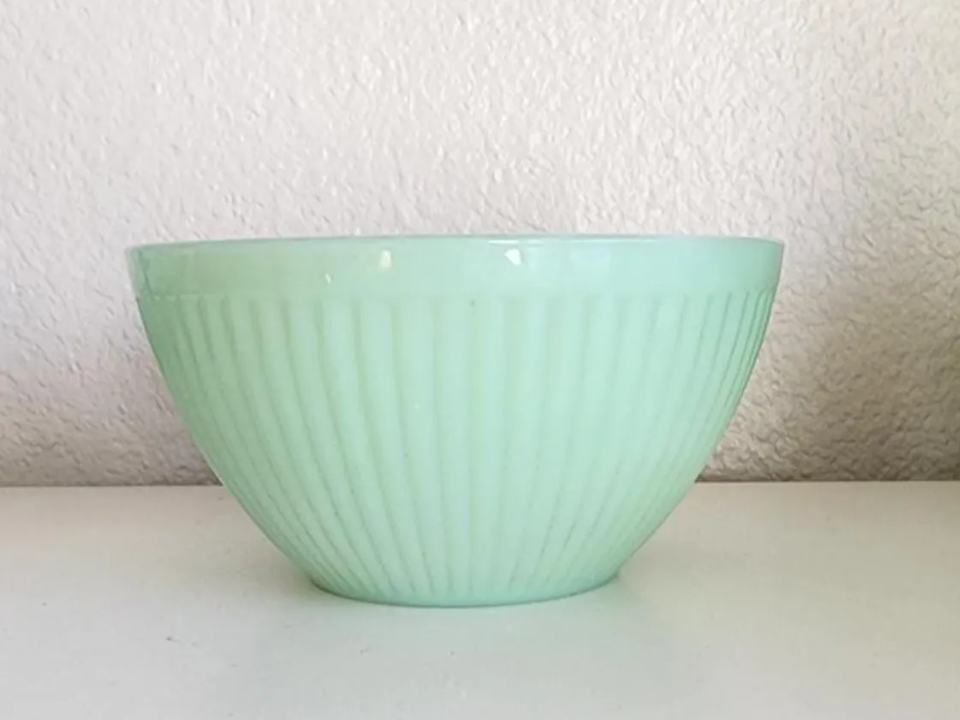
Jeannette made vertical ribbed mixing bowls during the 1930s, and people still like them because the rib lines give the glass more life. The texture catches light nicely and makes the bowl stand out from smoother jadeite pieces. Buyers often enjoy showing several sizes together because the nesting look feels full and balanced. A single bowl is often estimated around $86 to $140.
Grouped on a shelf, these bowls add both color and pattern. Buyers usually watch for strong gloss, fewer scratches, and a rim free of nicks before paying more. A full matching set can sell for much more than one bowl alone. That layered look is a big reason people keep buying them.
Mosser Jade Mixing Bowl Set
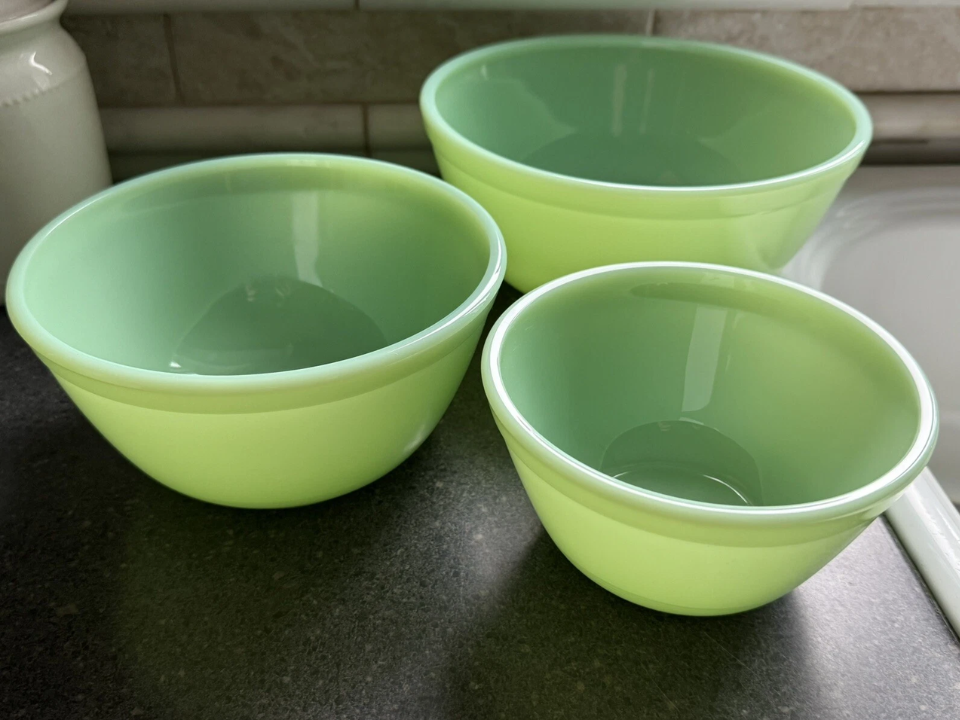
Mosser has made jade mixing bowl sets in recent years, and many people collect them as a lower-cost way into green kitchen glass. Buyers like that they carry the same color mood as vintage pieces, while being easier to find clean. The set format also makes it simple to place three sizes together right away. A three-bowl set often sells around $120 to $140.
At home, these bowls work well for baking, serving, or shelf display. Since they are newer, the condition is usually less of a worry than with older glass. People also like mixing modern Mosser with older Jeannette or Fire King pieces for a fuller look. That ease of use helps keep Mosser in regular demand.
Anchor Hocking Fire King Batter Bowl
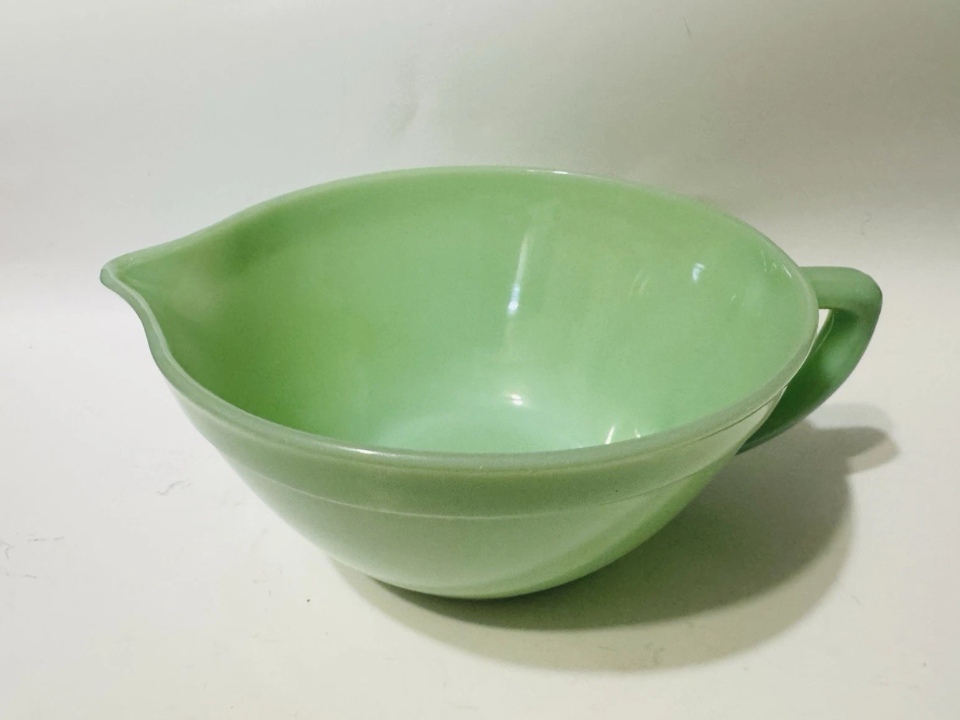
Anchor Hocking made Fire King batter bowls in the 1950s, and people still collect them because the handle and pouring spout make the piece feel very useful. The bowl also shows off jadeite well because the shape is broad and easy to notice. Many buyers like items that feel tied to real kitchen work rather than only shelf display. A nice batter bowl often runs around $75 to $100, though some smaller or more worn ones can sit lower.
From a display point of view, this bowl adds motion because the spout and handle break up the round form. Buyers usually inspect the rim, spout, and inside surface closely since those areas show wear first. Good shine and fewer utensil marks can help the value stay higher. Its strong working kitchen feel is a big part of the lasting pull.
Jeannette Jadite Measuring Cup
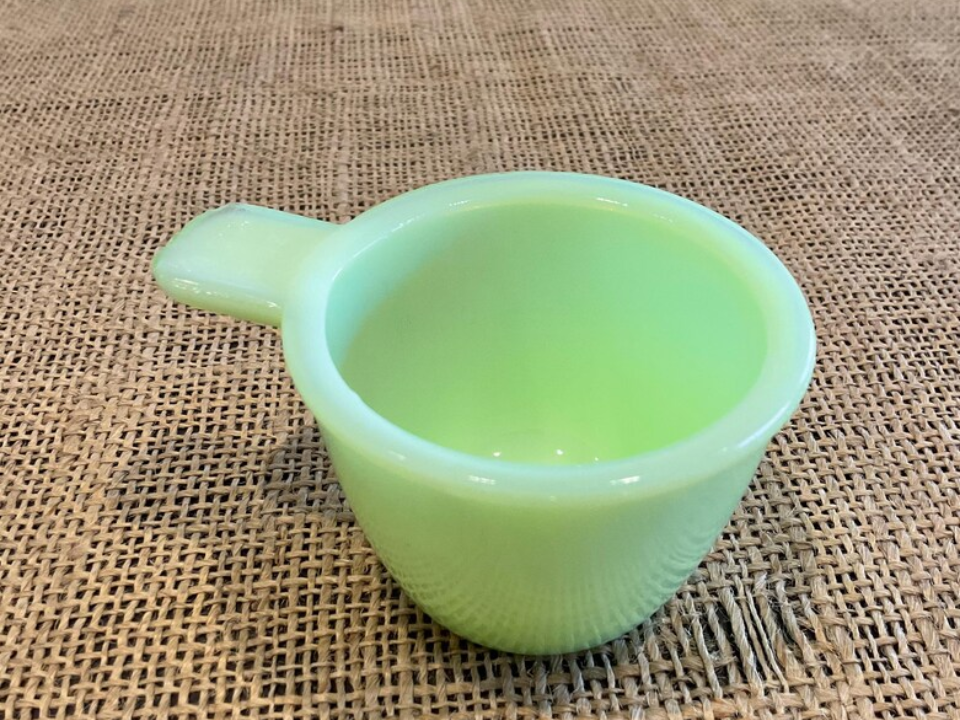
Jeannette made Jadite measuring cups in the 1930s, and people still like them because they combine utility with the look of green milk glass. Buyers often enjoy kitchen tools that show how baking and cooking once looked in ordinary homes. The handle and spout also make the piece feel lively beside bowls and mugs. A Jeannette measuring cup is often estimated at around $100 to $110, while some sets or rarer versions can go higher.
On a shelf, this piece brings a practical note that many collectors enjoy. Buyers usually check the handle, spout edge, and measuring marks before paying more. Since measuring cups are easy to understand and easy to display, they often appeal to both new buyers and longtime jadeite fans. That mix of function and old kitchen charm keeps them moving.
Glasbake Jade Green Square Mug
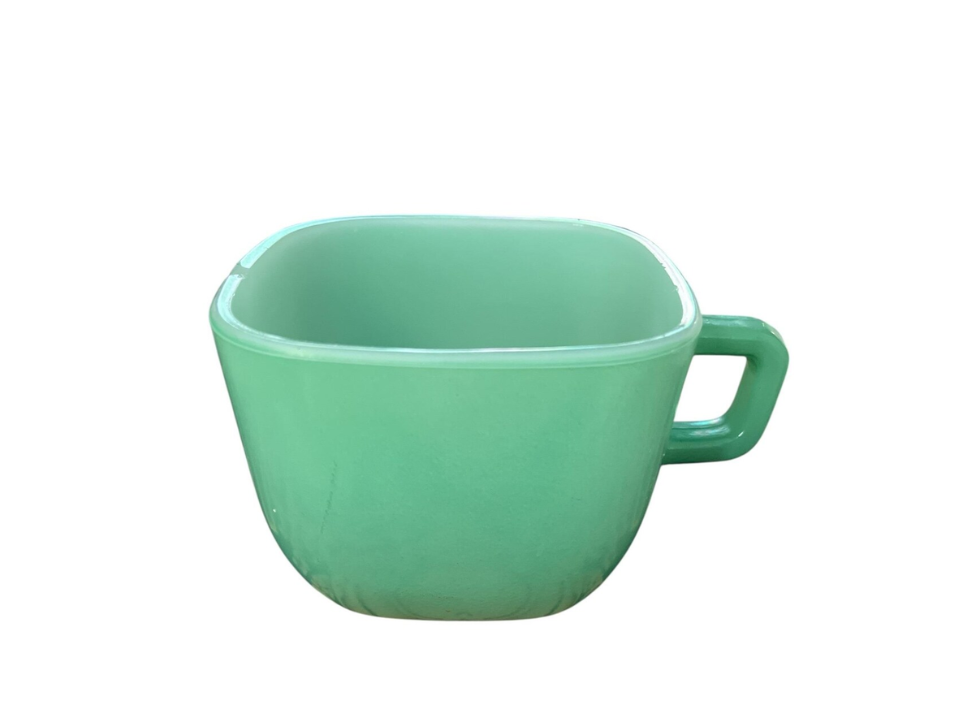
Glasbake made jade green mugs during the midcentury years, and the square mug still gets picked up because it looks different from the better-known Fire King shapes. The lines feel a little more modern, which helps the mug stand out in a mixed display. Buyers also like that it is usually easier on the wallet than some older mug styles. A square mug often sells around $15 to $25.
Placed among round cups and bowls, this mug changes the rhythm of a shelf nicely. Buyers usually look for clean corners and a smooth, glossy finish. Because the price often stays lower, it can be a very good entry point for someone starting a jadeite shelf. That mix of shape and lower cost helps it stay liked.
Anchor Hocking Fire King Alice Cup and Saucer
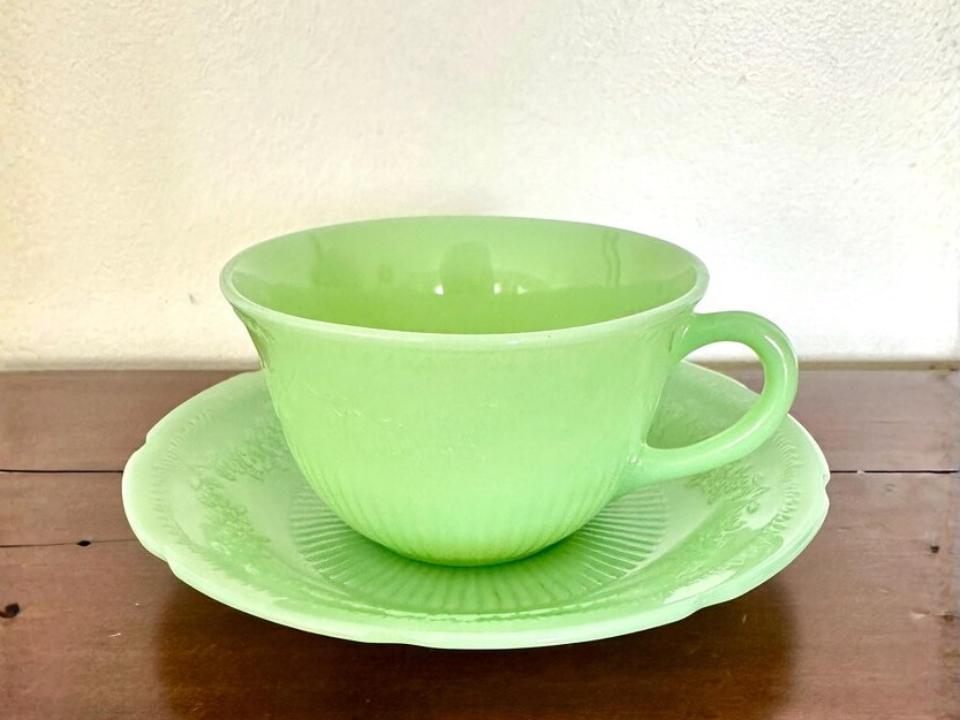
Anchor Hocking brought out Fire King Alice in 1945, and the cup and saucer remain popular because the floral edge gives jadeite a softer look. Buyers keep collecting this set because it adds pattern to shelves filled with smooth green glass. It also works nicely in tea displays and spring tables. A cup and saucer set often falls around $25 to $36 in the current market, though stronger examples can go higher.
Many people like Alice because it feels lighter and more decorative than plainer restaurantware. Rim wear and surface scratches can lower the price, so cleaner sets usually move first. Matching cups and saucers are more appealing than separated pieces because the set looks ready to use or display. That softer pattern keeps Alice high on many want lists.
This article originally appeared on Avocadu.