
12 Classic Bunny and Chick Figurines People Actually Collect
For many collectors, classic bunny and chick figurines have the right mix of charm, history, and display value. Some stand out because of their older brand names, while others are remembered for hand-painted details or a look that feels closely linked to Easter and spring. When a piece is well kept and has a style people still enjoy, it often draws more attention over time.
This post may contain affiliate links, which helps keep this content free. Please read our disclosure for more info.
Lefton H6664 brown bunny
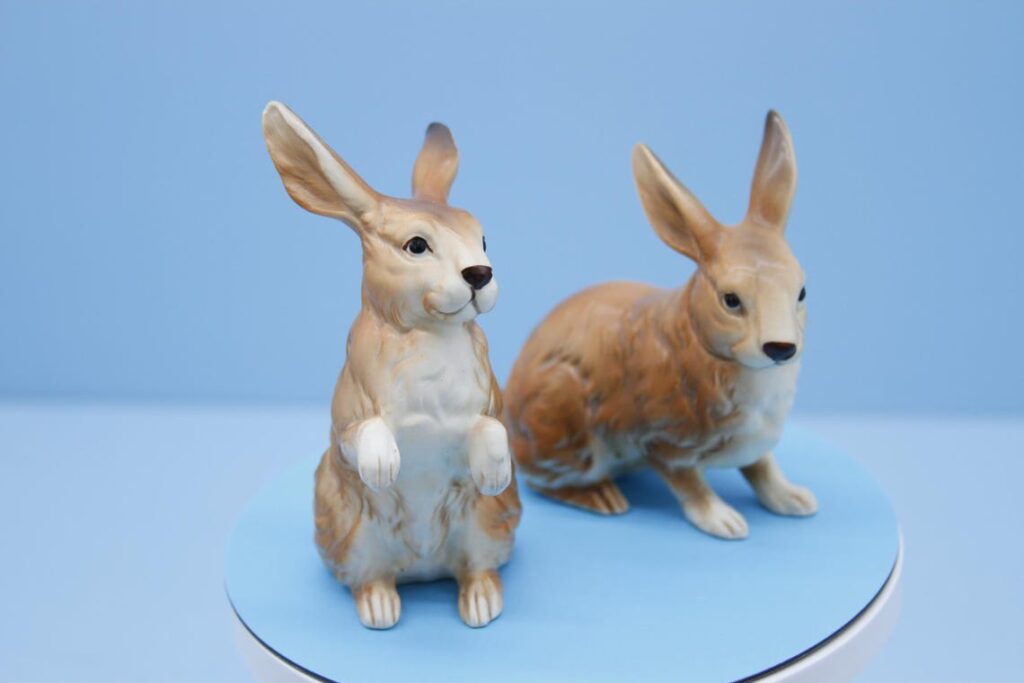
A brown Lefton bunny marked H6664 is another figure that people still pick up for vintage spring displays. It is usually dated to 1960 and described as a Japanese ceramic or porcelain piece with soft brown coloring and a seated pose. That calmer look makes it easy to use with pastel eggs, chicks, and planters. A sensible value range is about $15 to $22.
This figure works well because it feels classic without looking too formal. Smaller Lefton rabbits are often bought in pairs or grouped with other holiday ceramics from the same period. Paint wear on the ears and tiny chips on the base are the flaws buyers usually notice first. Cleaner examples tend to look much nicer right away.
Goebel yellow chick
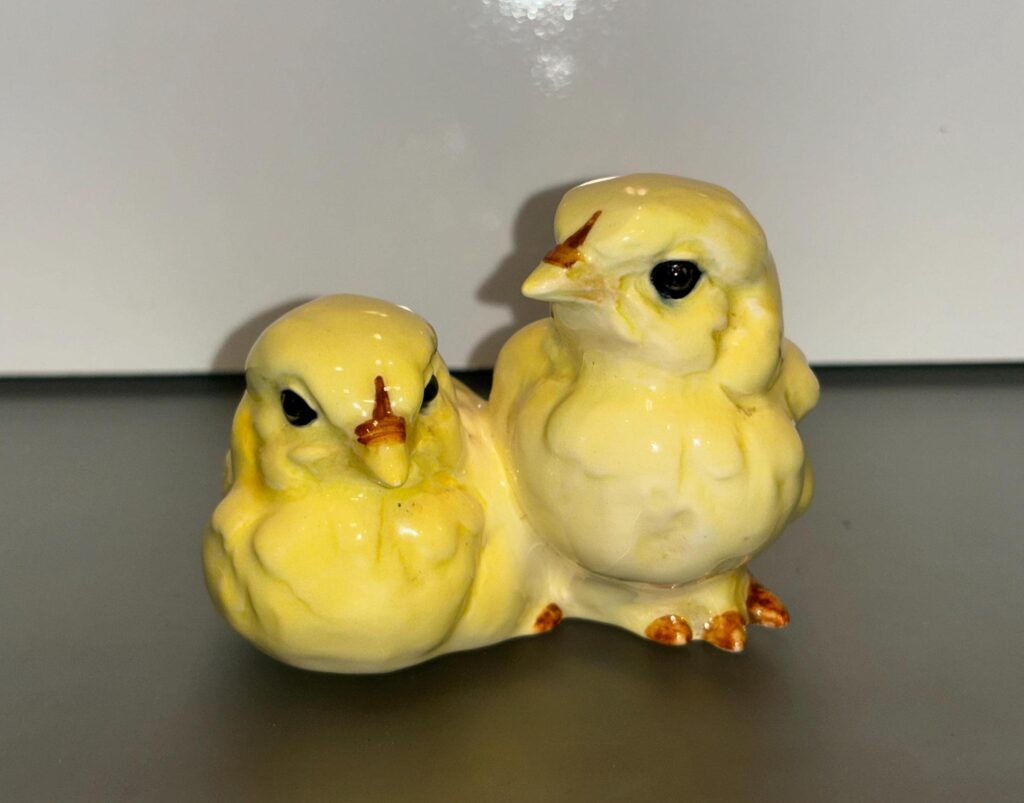
A little yellow Goebel chick is the kind of figure many people add to rabbit displays for balance. It is usually described as a small porcelain Easter chick with a neat seated pose and a glossy finish. That compact size makes it easy to place beside eggs, bunnies, and small spring planters. A fair current value is about $10 to $14.
Small chick figures stay popular because they are simple and easy to use in many displays. The Goebel mark gives this one more maker interest than an unmarked chick from the same period. Since it is tiny, even a small chip can change the look. Strong yellow color and a clean beak line usually make the nicest examples.
Lefton H880 standing bunny
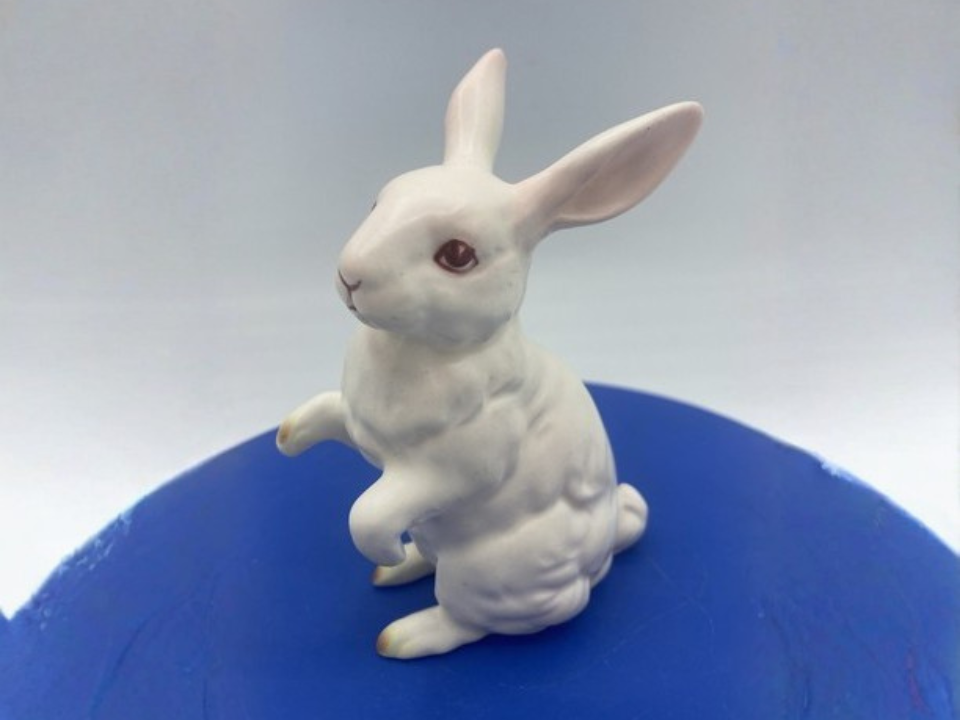
Lefton made many spring animal figures that still get attention, and the H880 standing bunny is one of the easier ones to spot. It was made in Japan and is commonly described as porcelain or ceramic with a glazed finish, a slim upright pose, and hand-painted detail. People like it because it has a light mid-century look that works well on shelves, trays, or Easter tables. A fair current value for a clean example is about $20 to $25.
It feels vintage without looking too ornate, which makes it easy to mix with other spring decor. Pieces with cleaner glaze and original Japanese labels usually bring more interest. Small chips around the ears or base can lower the price.
Lefton Easter angel with bunny
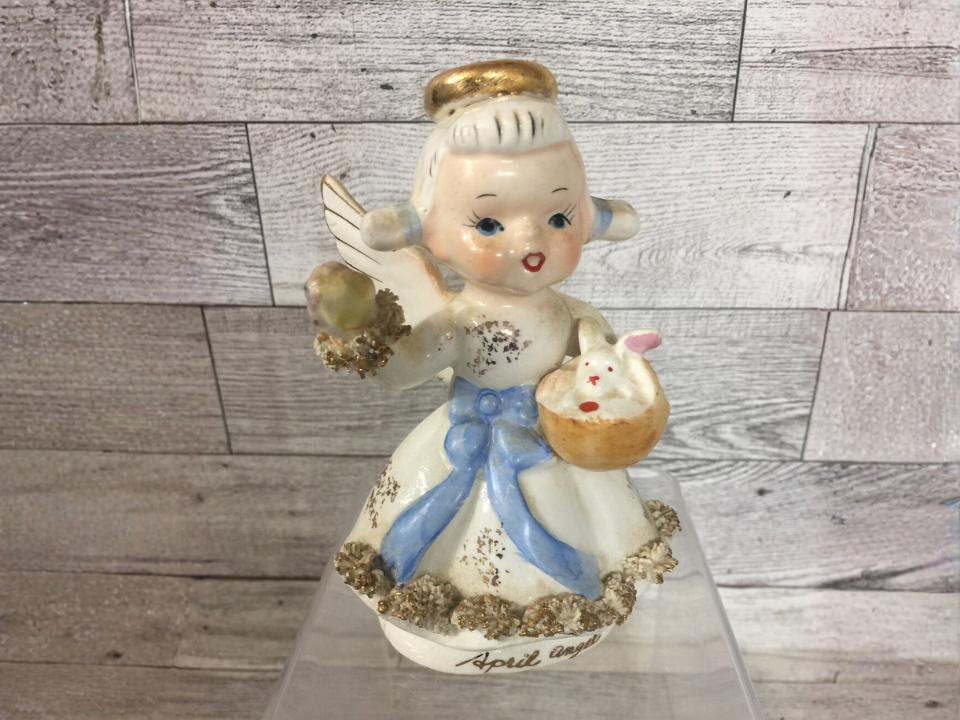
Some spring figurines stand out because they tell a little story, and this Lefton Easter angel with bunny does exactly that. It is typically described as a 1950s ceramic figure from Japan, with hand-painted details and a more decorative look than a plain rabbit. That extra scene work helps it appeal to people who like vintage holiday decor in general. A realistic value range is around $40 to $50.
The appeal here comes from more than the bunny alone. The angel figure gives it a stronger seasonal identity and a little more shelf presence. Wings, ears, and hands are the parts most likely to show damage, so condition matters a lot. When the paint is still bright and the figure is intact, it can look very nice in a spring display.
Josef Originals yellow flocked chick pair
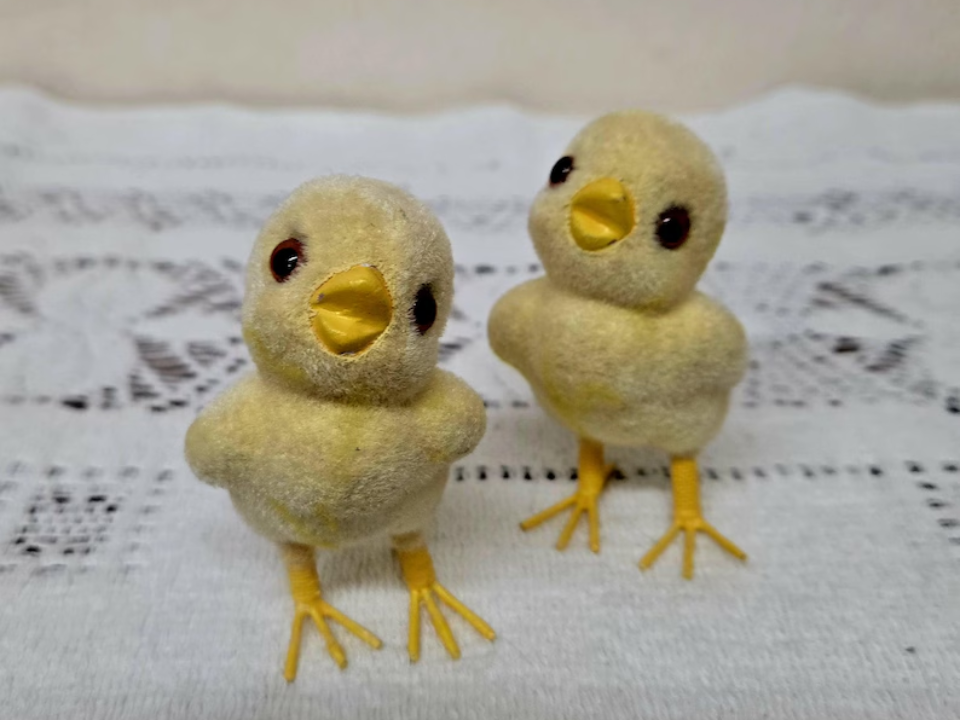
Josef Originals is known for sweet expressions and playful detail, and a yellow flocked chick pair fits that style very well. Vintage examples are described as Japanese ceramic figures with a flocked outer finish that gives them a soft, fuzzy look. That texture is a big part of why these chicks still get picked up by buyers. A current value for a pair in good shape is about $18 to $28.
What makes them stand out is how closely they match the look of older Easter decor. Flocking often wears down over time, so fuller coverage usually means a better-looking pair. The larger eyes and decorative finish also give them more personality than plainer chick figures. When both birds still show good color and even flocking, they look much stronger on display.
Napco mini bunny pair with pink eyes
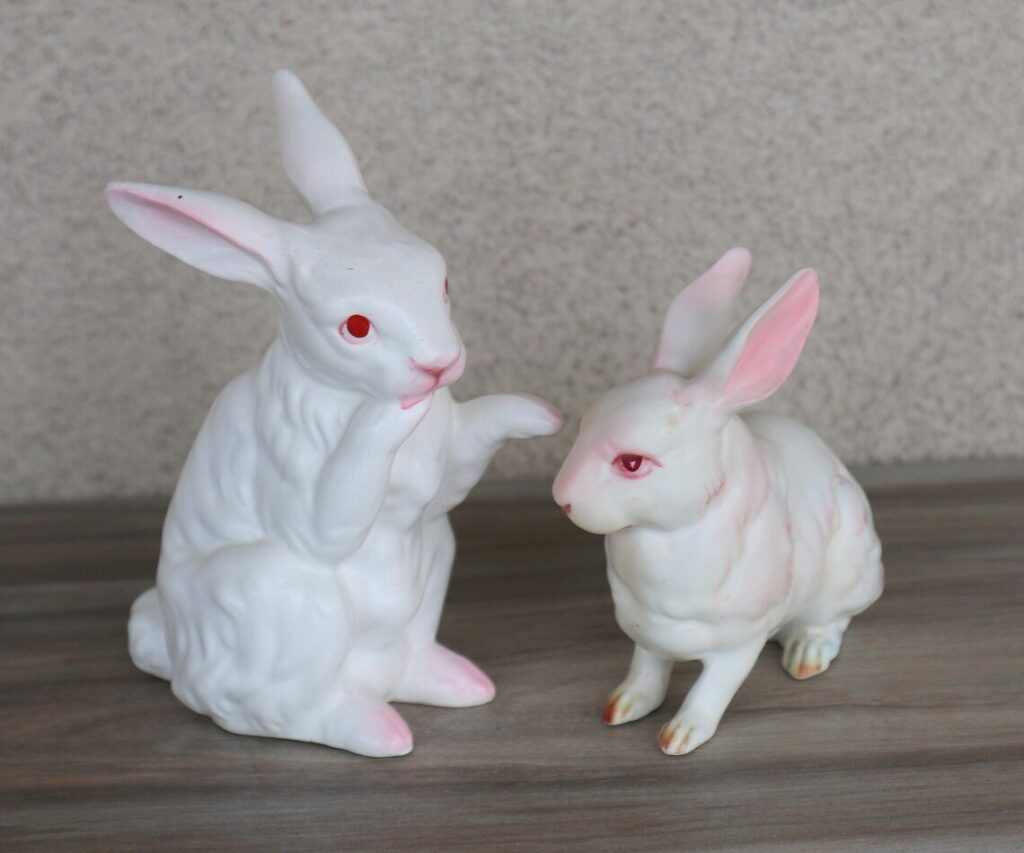
A pair of tiny Napco rabbits with pink eyes gives a shelf a very classic mid-century spring look. These are generally described as hand-painted ceramic figures made in Japan and sold as a matched pair. Many people like paired rabbits because they fill a small space neatly and feel more complete than a single figure. A good working value is around $15 to $20 for the pair.
The best part of this set is its quiet charm. The softer finish and smaller scale make the pair easy to mix with planters, chicks, and eggs from the same era. Buyers usually pay close attention to face paint and base wear. When both rabbits remain clean and balanced as a pair, they look much nicer together.
Napco Chickades girl feeding chicks
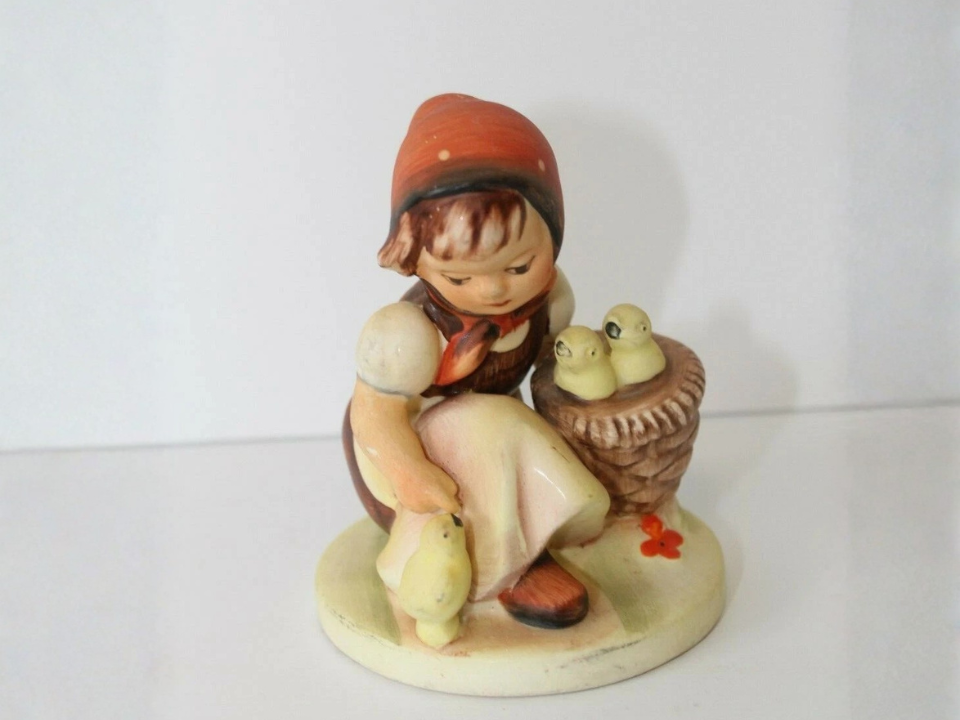
Napco also made more detailed spring scenes, and the Chickades girl feeding chicks is a good example from 1970. It is usually described as a ceramic figure from Japan that combines a child figure with small chicks in one scene. That added detail makes it appealing to people who want something more decorative than a plain chick. A sensible current value is about $25 to $30.
Scene pieces like this often hold attention a little longer than simpler figures. The mix of child and bird imagery gives it a soft nursery-style charm that many people still enjoy. Because there are more raised details, chips, and paint loss can hurt the look faster. Bright color and intact chicks make a big difference.
Goebel white bunny
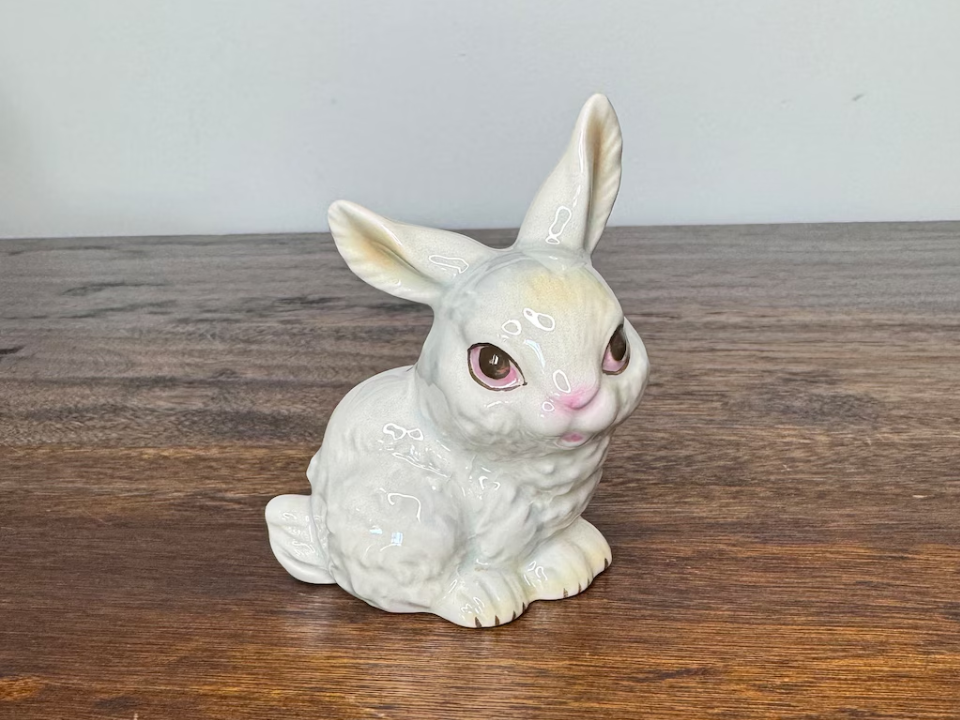
Goebel rabbit figures from West Germany are well-liked, and a small white bunny is one of the easier versions to recognize. These figures are usually described as porcelain with a smooth glaze and tidy modeling that feels a little more refined than many everyday holiday ceramics. That cleaner finish gives them a steady following among rabbit and animal figurine buyers. A fair market value is about $20 to $32.
This rabbit stays appealing because it has a polished look without being flashy. It works for spring decorating, though it also fits general animal figure groups well. Light crazing can appear with age, though chips to the ears or base matter more. When the glaze remains smooth and the form is intact, it presents very nicely.
Goebel brown bunny CE297
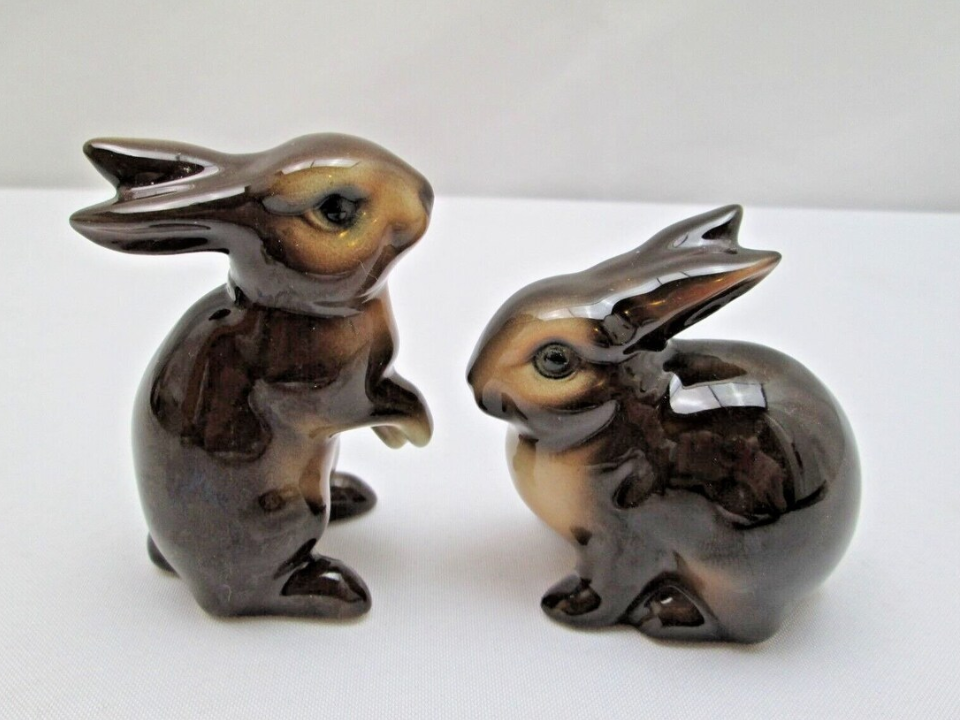
The brown Goebel bunny marked CE297 is another figure that still shows up in vintage groups. Examples like this are commonly identified as West German porcelain, with some dated around 1975 and showing a hand-painted brown finish. That date and maker pairing makes it a nice pick for people who like European animal figures. A fair value for one example is about $15 to $20.
Small Goebel animals often look very good in cabinets because they do not take up much space. This model also has a warmer appearance than a plain white rabbit because of the painted finish. Buyers usually watch the ears and tail first for chips or repairs. Cleaner glaze and a steady base keep the figure in the better part of the range.
Goebel yellow Easter bunny
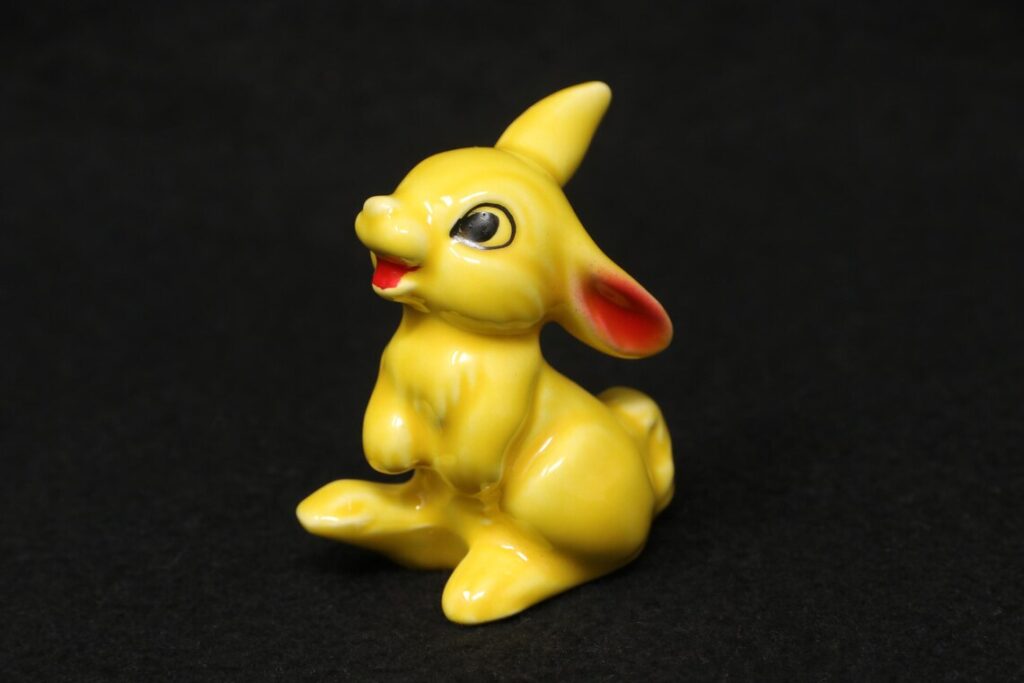
A yellow Goebel rabbit from the 1970s gives a collection a more cheerful color note. It is often described as a porcelain bunny made in Germany, usually around medium size, with a more playful Easter look than the quieter white or brown versions. That stronger color is a big part of what makes it memorable. A good estimate is about $18 to $28.
This figure is a nice choice for people who want one rabbit to stand out in a mixed group. The larger size helps it work as a front piece in a spring arrangement. Color rubs can show more clearly on yellow glaze, so surface wear matters here. When the finish remains bright, the figure has a very cheerful presence.
Royal Doulton Bunnykins Mother’s Day DB155
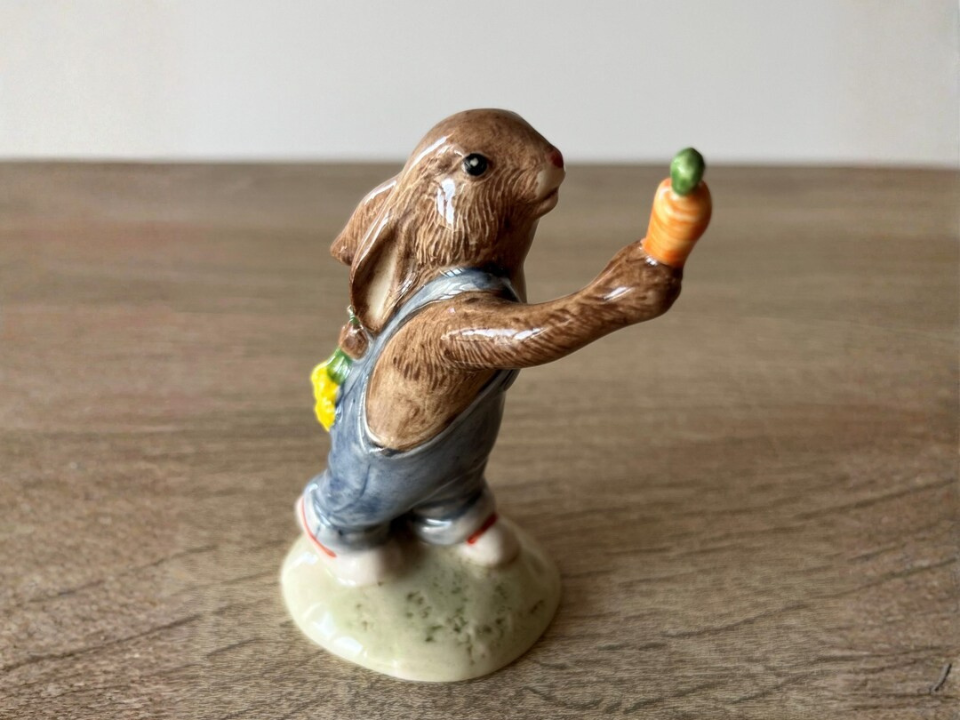
Royal Doulton Bunnykins figures are collected far beyond spring decor, and DB155 Mother’s Day is one rabbit figure people still like to add to their shelves. It is commonly described as a glossy porcelain Bunnykins figure in good cabinet condition, with the familiar Royal Doulton finish and styling. That brand history gives it appeal outside Easter decorating alone. A fair current range is about $20 to $28.
This figure works well because it feels like part of a larger line rather than a one-season item. That gives people a reason to add other Bunnykins pieces over time. The scene itself has a warm domestic feel, which keeps it easy to display year-round. Clean glaze and no crazing usually keep the piece in the nicer part of the range.
Beswick Beatrix Potter Benjamin Bunny
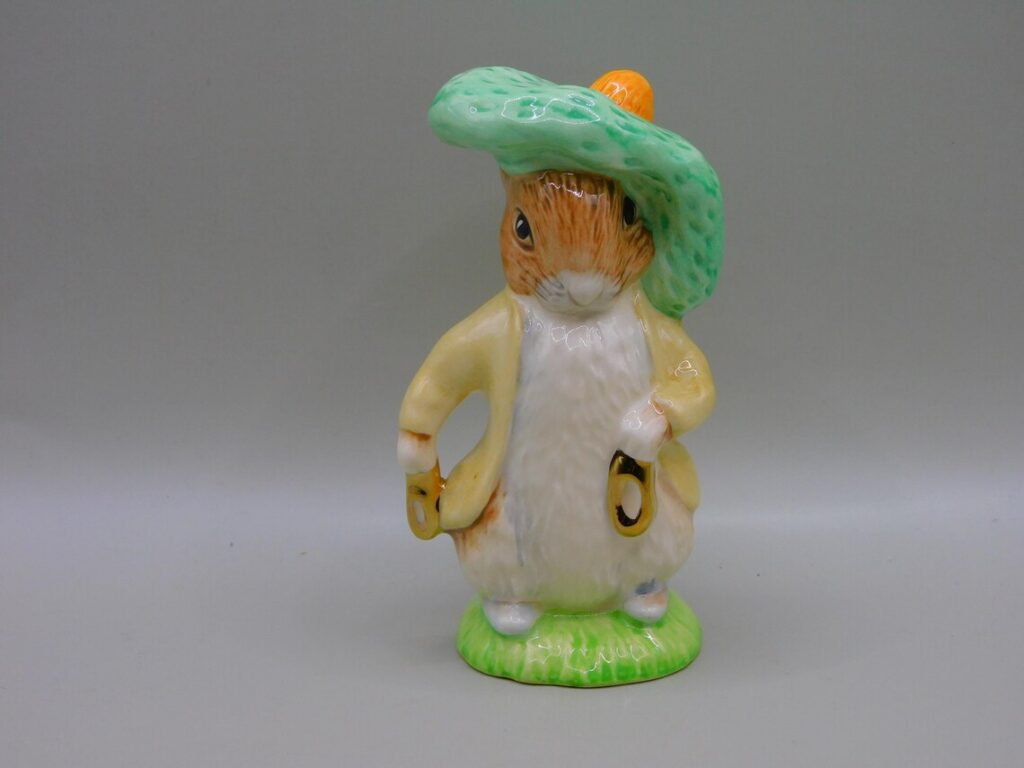
Benjamin Bunny is one of the rabbit figures people mention again and again when classic animal figurines come up. It is commonly identified as a Beswick England porcelain figurine tied to the 1948 Beatrix Potter issue, with prices that can vary a lot depending on version and condition. It stays popular because it joins children’s book history with well-known English ceramic work. A realistic current value range is about $10 to $35, with stronger examples moving higher.
There is a built-in audience for Beatrix Potter material, and that helps this rabbit stay easy to enjoy. Benjamin Bunny looks good on his own, though he also fits nicely beside Peter Rabbit and other figures from the same line. Backstamp, paint wear, and ear condition can all change the price. When the colors remain clean and the figure is intact, it makes a very pleasing rabbit collectible.
This article originally appeared on Avocadu.