
15 Antique Quilts Collectors Search for by Stitching and Pattern Type
Antique quilts can tell you a lot if you know where to look. Small details like hand stitching, worn thread, and fabric choices can hint at age, region, and how the quilt was used. This guide walks through patterns collectors watch for and the stitch clues that often separate a special old quilt from a newer copy.
This post may contain affiliate links, which helps keep this content free. Please read our disclosure for more info.
Feathered Star Quilt
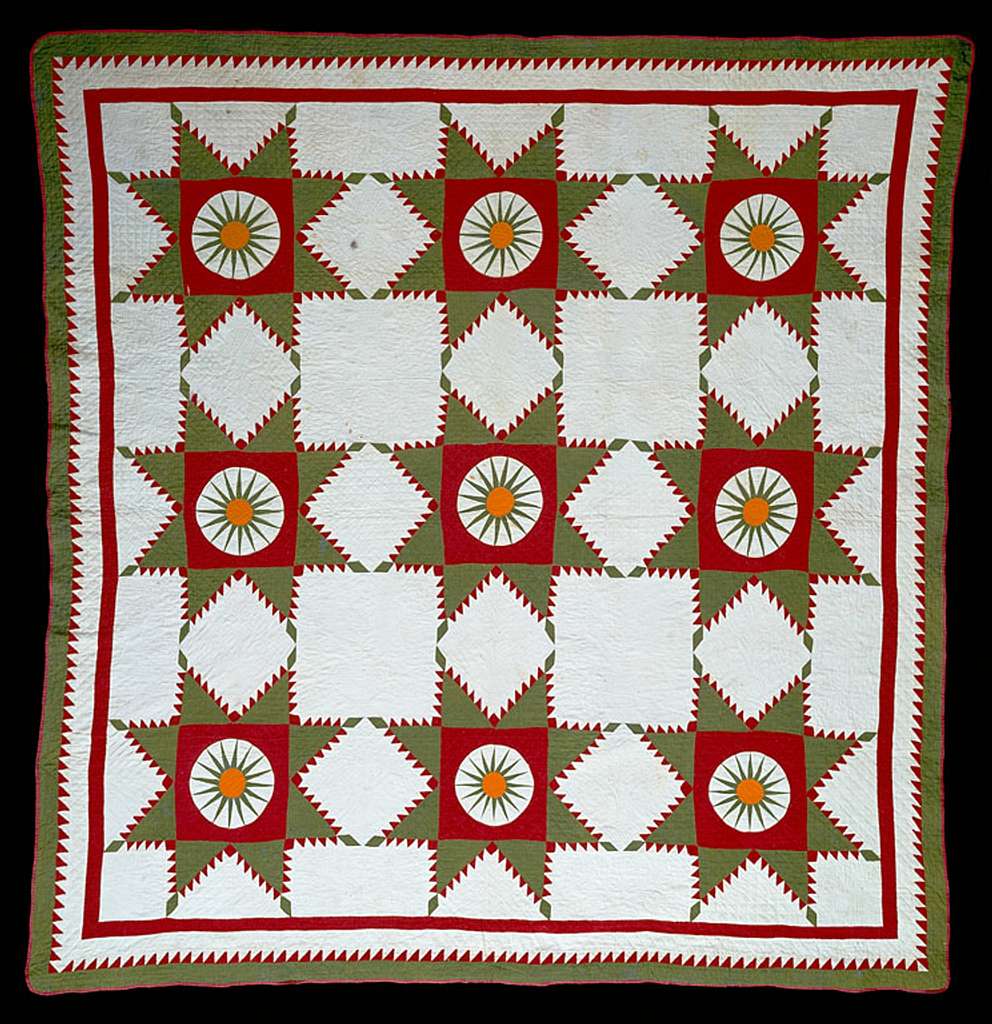
A Feathered Star quilt is one of those patterns that rewards close looking, because the points and curved feather shapes show how steady the maker’s hand really was. On older examples, you will often see tiny hand piecing stitches along the seams, and the points may be slightly off in a way that feels human, not factory-perfect. Check the background fabric too, since early ones often used solids, shirtings, or small prints that have a softer, lived-in look. If the star has lots of sharp points with smooth curves and no bulky seam ridges, that can be a clue it was carefully pieced by hand.
Flip the quilt over and look at the quilting lines inside the star, since hand quilting in this pattern is usually dense and consistent but not identical from block to block. You may spot “rocking stitch” texture on the back, with small, even dots that change slightly around tight curves. Pay attention to thread color, because older quilting thread can look a little dull or uneven compared to newer bright cotton. If the quilt has wear at the tips of the points, that often matches real use over decades, not a freshly aged look.
Lone Star Quilt
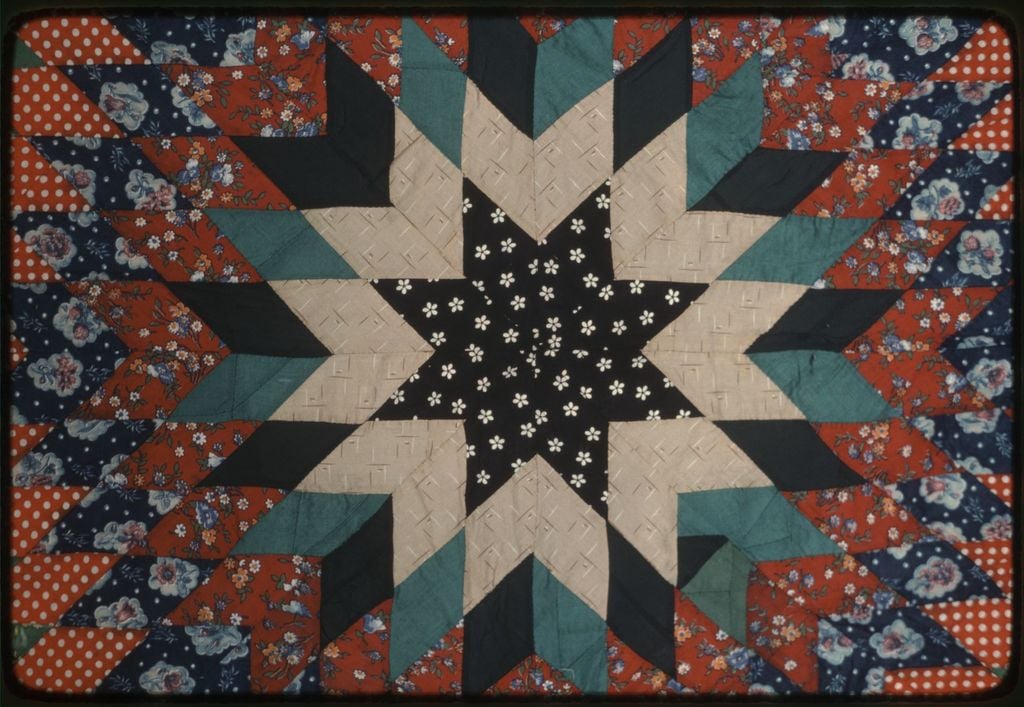
Lone Star quilts are famous for their big diamond star, and that strong shape makes seam work easy to judge. Many older Lone Stars were made from many small diamond pieces, so you might see lots of fine seams and careful matching where colors meet. Look at the “Y” seams where diamonds join, since hand piecing often leaves tiny, tidy stitches and slightly rounded seam intersections. Fabric can be a major clue here, because vintage prints and dyed solids can fade differently across the star, especially if it was folded for years.
The quilting itself often follows the diamond geometry, and hand quilting may show small shifts in spacing as the quilter worked around bulky seam joins. Check the edges of the star points for gentle wobble, which is common in older handwork and usually looks more natural than a perfect ruler line. If the backing fabric is a single wide piece with consistent color, it might be newer, while pieced backings were common when fabric was limited. Also look for hand-finished binding, since many antique examples have binding stitches you can see and feel along the back edge.
Double Wedding Ring Quilt
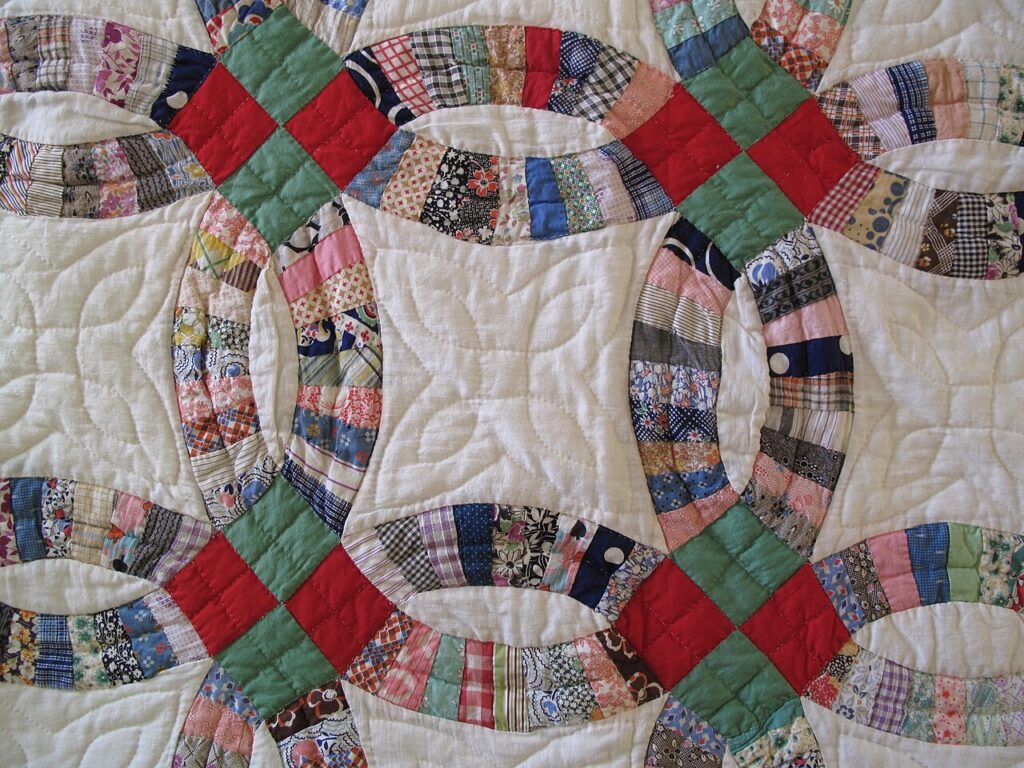
Double Wedding Ring quilts are all about curved piecing, so they are a great pattern for spotting handwork. Older examples often show small, careful stitches along curves, with little “give” in the seam that helps the rings lie flatter. Look closely at where rings overlap, because the seams can get thick and a hand piecer often managed that bulk with tiny trimming choices. You may also see slight variation in ring size or arc shape, which is a normal sign of cutting templates by hand.
Quilting on these often fills the rings with feathering, crosshatching, or curved lines, and hand quilting can leave a soft, padded look instead of a stiff flat surface. Run your hand over the rings and you may feel the batting rise and dip, which is common in older quilts that were used and washed. Check for repairs at stress points, like ring intersections or along the border, since those areas took the most wear. If patches and mending fabric look period-correct and aged similarly, that usually supports an older, well-loved quilt rather than a newer piece with staged repairs.
Log Cabin Quilt
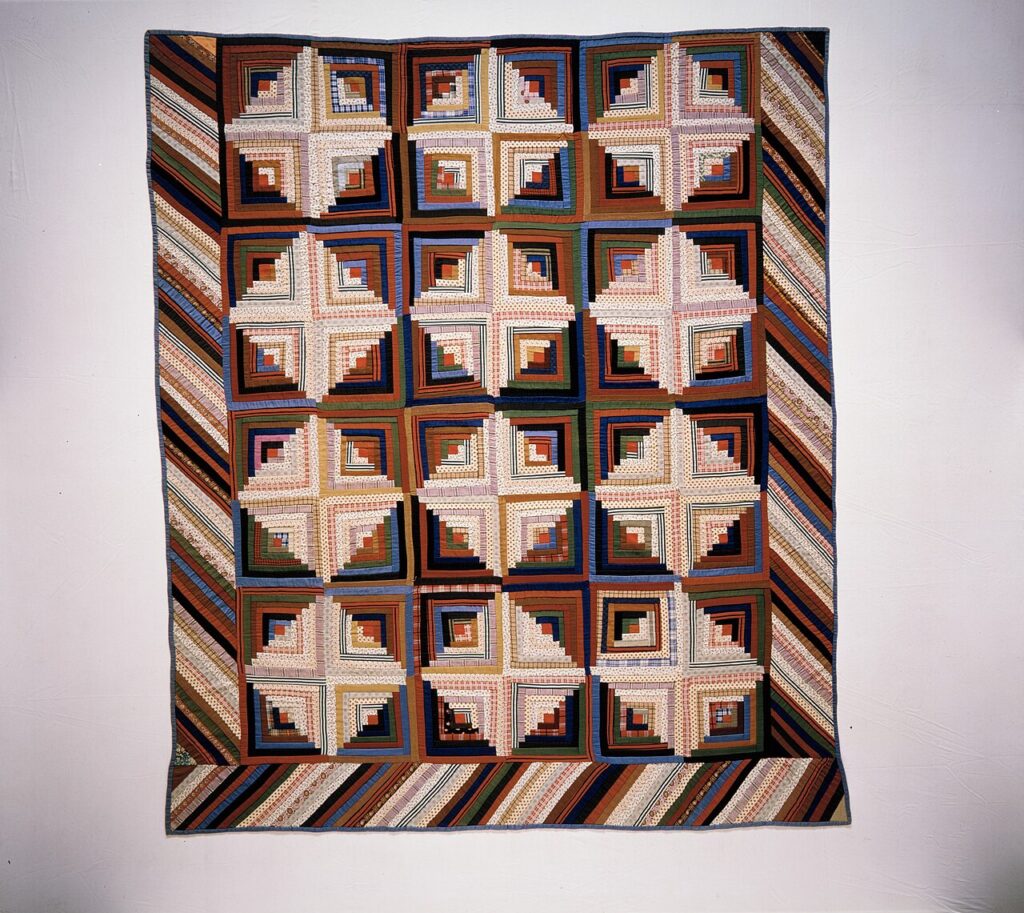
Log Cabin quilts look simple, but they hold a lot of clues because they were often made from scraps over time. In older Log Cabins, the “logs” may be narrower and slightly uneven, since scraps were cut by hand and used as they came. Check the center squares, which were sometimes meaningful fabric, and notice whether the seams around them look hand sewn with small, regular stitches. When you see a quilt with many different fabrics that fade at different rates, it can point to real scrap use rather than a coordinated modern palette.
Quilting is often simple on Log Cabins, sometimes just straight lines through the logs, and hand quilting can show gentle drifting as it crosses seam ridges. Turn it over and look for knots or thread starts, because hand quilters often tied off thread and moved to the next section in a way you can spot. Edge wear matters too, since Log Cabin quilts were common everyday quilts, so softened corners and rubbed binding are normal. A very crisp, spotless Log Cabin with perfectly matched fabric may still be old, but it deserves a closer look for later restoration or a newer reproduction.
Bear Paw Quilt
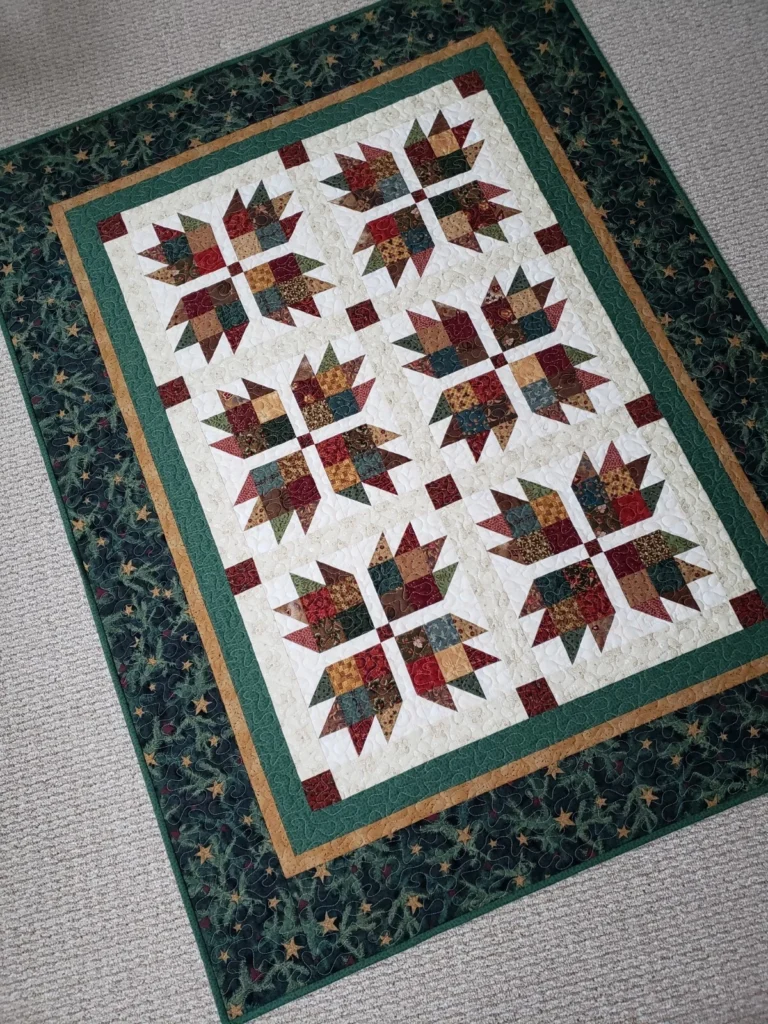
Bear Paw quilts have strong claw shapes, and the corners and triangles are where the clues usually show up first. Older Bear Paw blocks may have slightly different paw sizes or angles from block to block, especially if templates were traced and cut by hand. Look at the small triangle points, since hand piecing can leave tiny stitch marks and slight shifts that do not look machine-perfect. You may also find that the background fabric has a different weave than the prints, which can happen when makers used what they had on hand.
Quilting might outline the paws or fill the background with simple patterns, and hand quilting can look a bit tighter around paw edges where the quilter took more time. Feel for seam bulk at the paw “toes,” because multiple layers meet there and older quilts often show careful pressing choices rather than perfectly flat seams. Check the block intersections on the back, since hand stitching may show small inconsistencies that match the front. If the paws are worn on the high points while the flat background looks less used, that kind of honest wear can be a helpful sign.
Dresden Plate Quilt
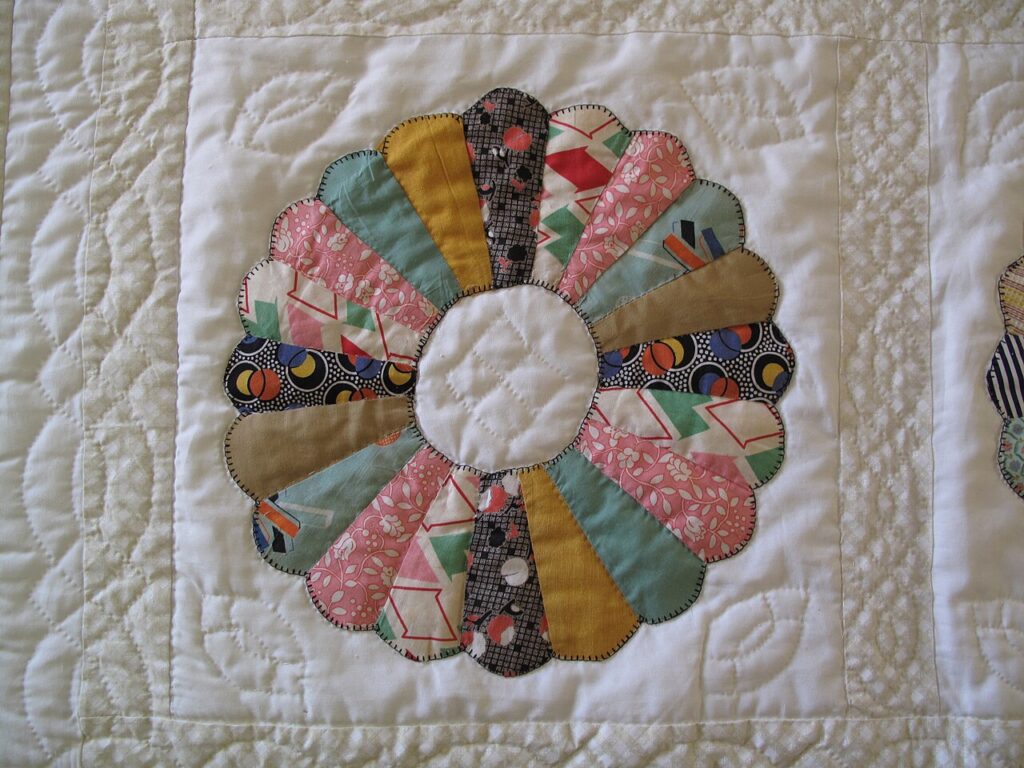
Dresden Plate quilts feature petal-like blades, and those blades can show you a lot about cutting and stitching methods. Older plates often have blades with slightly different lengths or curve shapes, especially if each blade was cut from scraps rather than from one uniform fabric run. Look at the edges of the blades, because many vintage examples have turned edges that were hand stitched down with nearly invisible stitches. The center circle is also important, since a neatly applied circle with tiny stitches often suggests careful hand applique work.
Quilting around Dresden plates can vary widely, but hand quilting may create a soft halo effect around each plate rather than a sharp, rigid outline. Turn the quilt over to see if the plate edges show small applique stitches in a rhythm that changes slightly as the maker went around curves. Plates that have gentle fraying under the stitches might mean real age and use, though heavy fraying can also be from poor storage. If you see modern fusible web stiffness or very flat, tight machine satin stitching, that usually points to later work, not an older hand-appliqued plate.
Grandmother’s Flower Garden Quilt
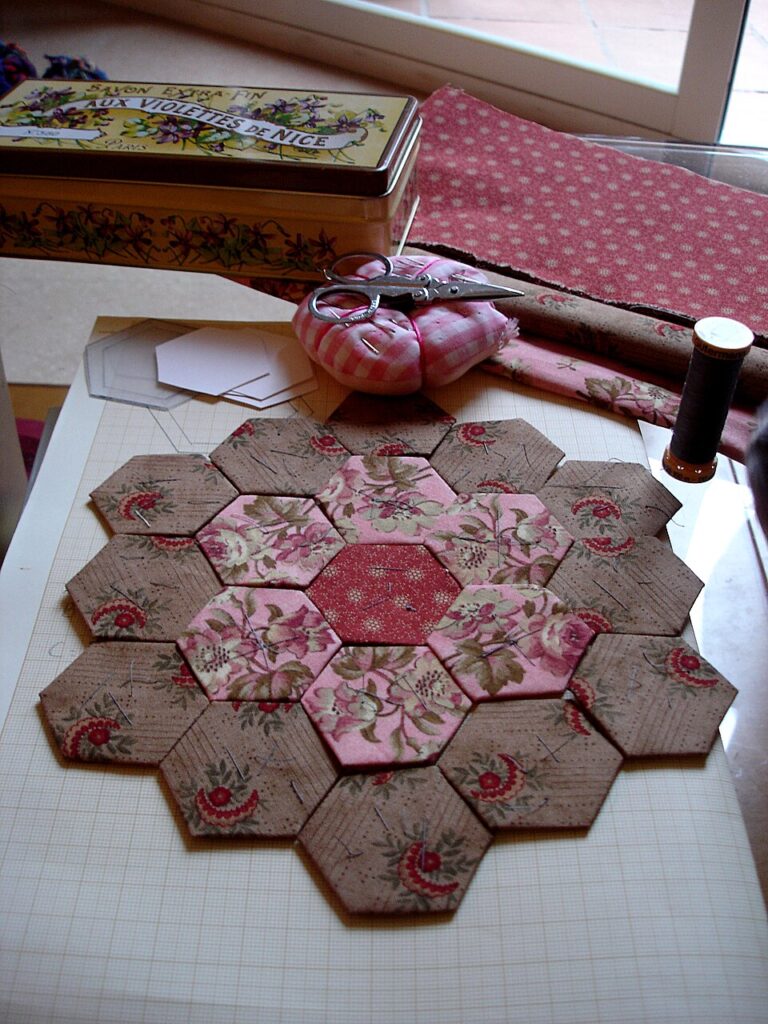
Grandmother’s Flower Garden quilts are built from small hexagons, so the seams and stitch size are the main things collectors check. Older ones often have tiny whip stitches holding hexagons together, and you can sometimes see the stitch line “dance” a bit where the maker turned a corner. Many were made from feed sack prints, florals, and tiny dots, so the fabric mix can look like a true patchwork memory box. Because the pieces are small, even slight stain shadows or fading can show where the quilt was folded or displayed for years.
Quilting on these can be lighter than you might expect, since the piecing is already dense, and hand quilting may follow flower outlines with simple lines. Look for paper remnants if you can feel a stiff spot, because some older quilts used paper templates that were not fully removed. Check the back for thread travel, knots, and small starts, since hand piecing a quilt like this often meant lots of stops and starts. If the hexagons are perfectly uniform with very modern fabric prints, it can still be lovely, but it may be newer than it looks.
Nine Patch Quilt
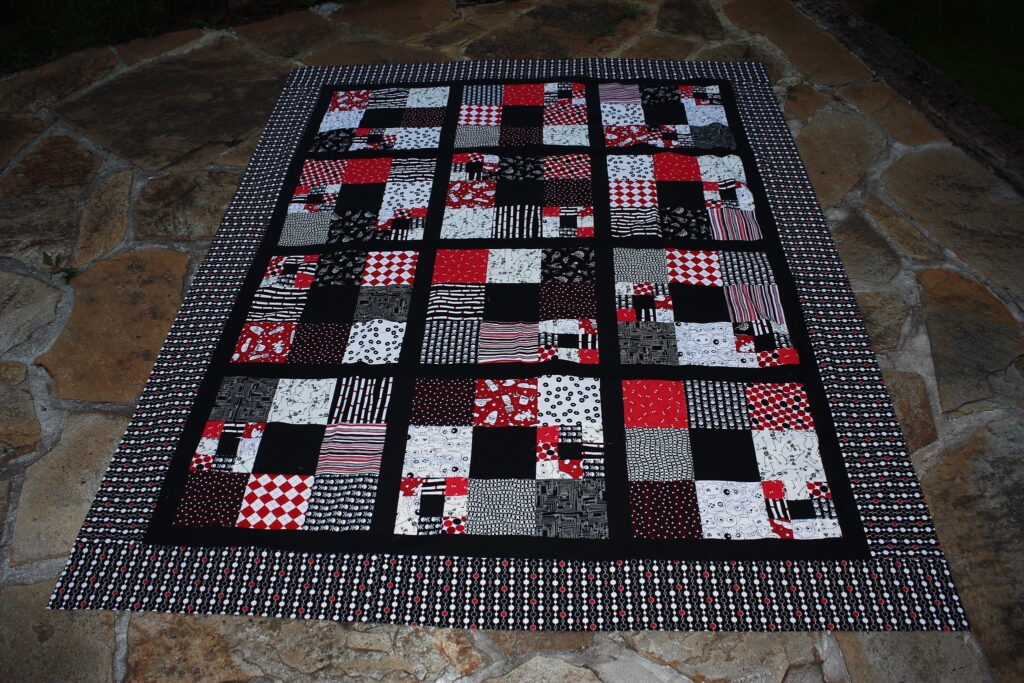
Nine Patch quilts are a classic, and they are one of the easiest patterns for spotting hand piecing versus machine work. In older quilts, the small squares might not be perfectly identical, and seam intersections may look slightly rounded or “soft” instead of sharply pressed. Check the seam allowance on the back, because hand piecers often left narrower allowances and you might see little stitch holes where the needle passed through. The fabric choices can also be telling, since older Nine Patches often mix worn calicos, shirtings, and scraps from clothing.
Quilting is often simple grids or diagonal lines, and hand quilting can create small, even stitches that are not perfectly spaced like a machine stitch line. Run your hand across the quilt and notice if the surface feels gently puckered, which is common with hand quilting after washing. Look closely at the binding, since many antique quilts have a hand-stitched binding edge with slightly uneven stitch spacing. If the quilt looks too flat and the stitching is perfectly uniform on both sides, it is worth considering that it may have been machine quilted later.
Irish Chain Quilt
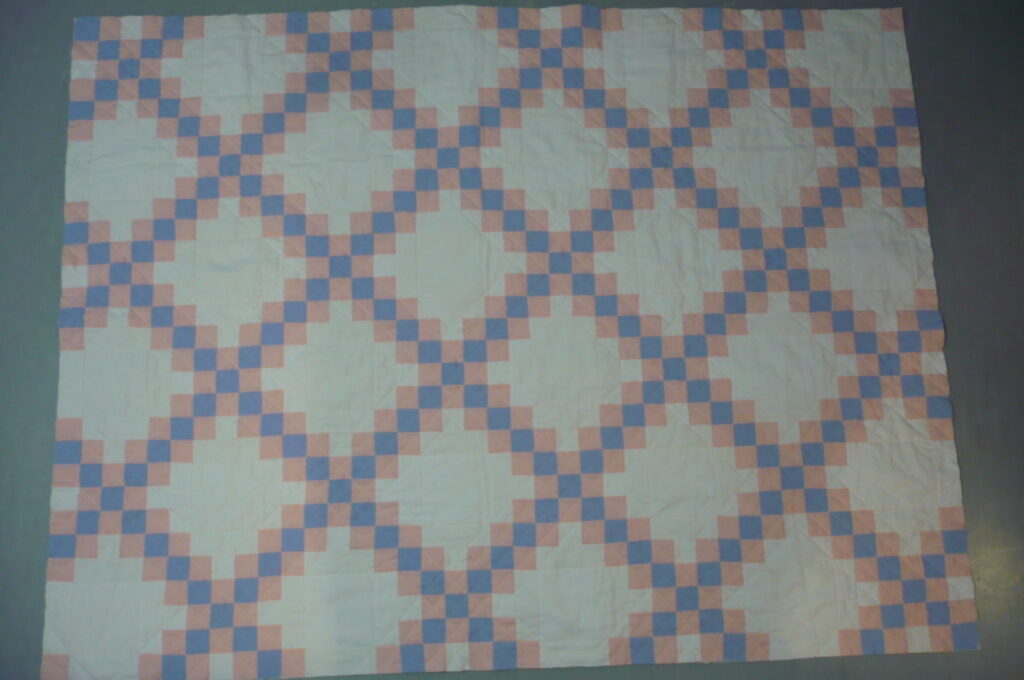
Irish Chain quilts rely on repeated squares that form chain paths, so matching and alignment are key clues. Older Irish Chains sometimes have chains that drift a little as you move across the quilt, and that is a normal sign of hand cutting and piecing. Look for small stitch marks along the seams and slight differences in block size, especially where many seams meet. The background fabric can offer hints too, since antique examples often use muslin or older white cotton that has mellowed with age.
Quilting may follow the chain paths or fill the background with simple shapes, and hand quilting can show changes in stitch length when the quilter moved around seam intersections. Check for “shadowing” where darker fabrics sit behind light ones, because thin older cotton can show what is underneath. A pieced backing is common on older Irish Chains, and it can give you extra fabric clues from the same time period. If you notice repairs along the chain lines, that makes sense because those seams often took stress with daily use.
Pineapple Quilt
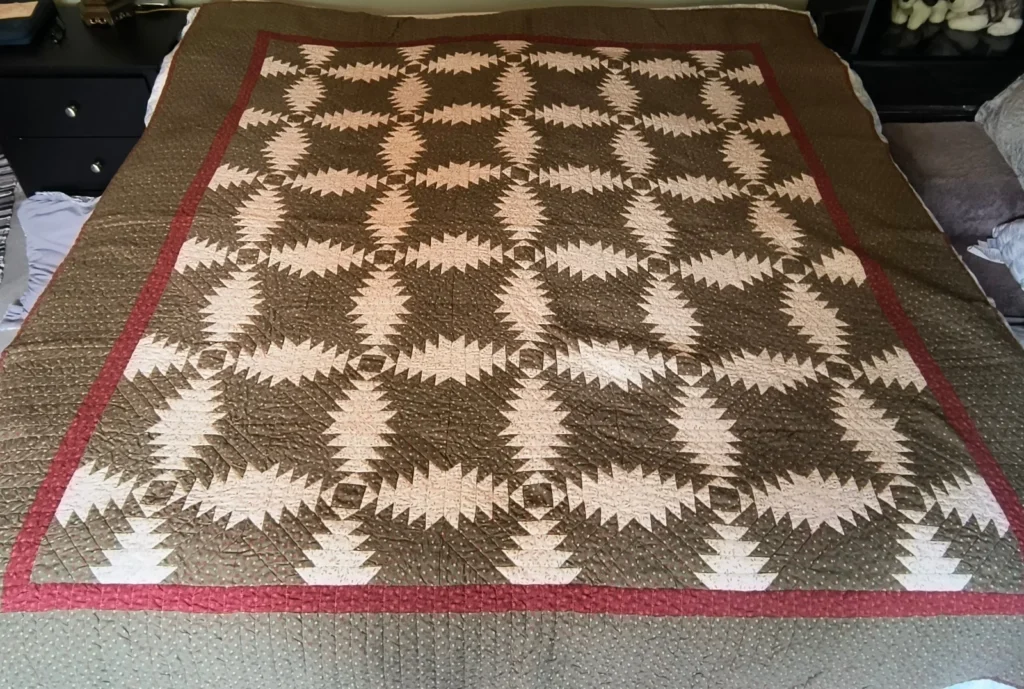
Pineapple quilts have layered, stepped logs that form a spiky circular look, and that complexity can reveal a lot. Older Pineapples often show slightly uneven log widths, because the maker was trimming by hand and working with scraps. Look at the corners where logs meet, since hand piecing can create tiny offsets that are hard to fake in a natural way. Fabric mix matters here too, because older examples often use many small prints and solids that do not look like a planned modern collection.
Quilting can be dense in Pineapple quilts, and hand quilting may fill the sections with echo lines or simple curves that change subtly as the quilter moved through the pattern. Feel for thickness, because all those seams can make the quilt heavier and slightly bumpy in a way that is typical of older scrap quilts. Flip it over and check whether the quilting stitches show small variations and occasional thread starts that make sense for hand work. If the quilt is extremely crisp with bright, modern colors and perfectly consistent seam trimming, it could be a later reproduction even if the pattern is traditional.
Baltimore Album Quilt
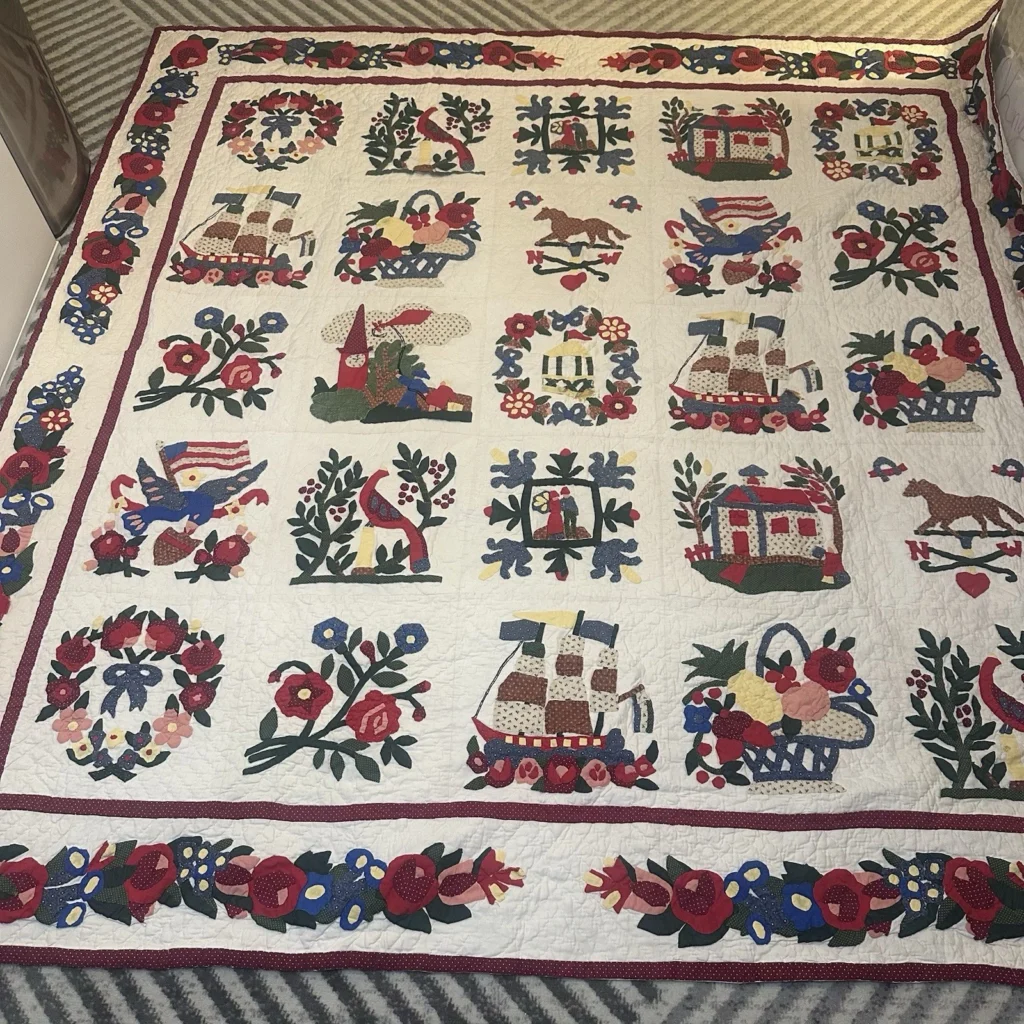
Baltimore Album quilts often include applique blocks with flowers, birds, baskets, and symbols, so they are full of stitch clues. On older ones, you can often see tiny hand applique stitches that nearly disappear into the fabric, especially around curves and points. Look for fine needle turn edges, where the fabric is turned under smoothly rather than cut and stitched raw. Many authentic older album quilts also show slight fading differences between blocks, because fabrics came from different sources and aged in their own way.
Quilting in album quilts can be very detailed, and hand quilting may include feathers, cables, and background fills that show steady work without looking like a printed template. Turn it over and look for the quilting pattern to match what you see on the front, since hand quilting usually reads clearly on both sides. Check the borders too, because later repairs sometimes show up there first, with newer fabric or different thread. If the applique edges feel stiff or have a fused look, that is often a sign of newer methods rather than older hand applique.
Crazy Quilt
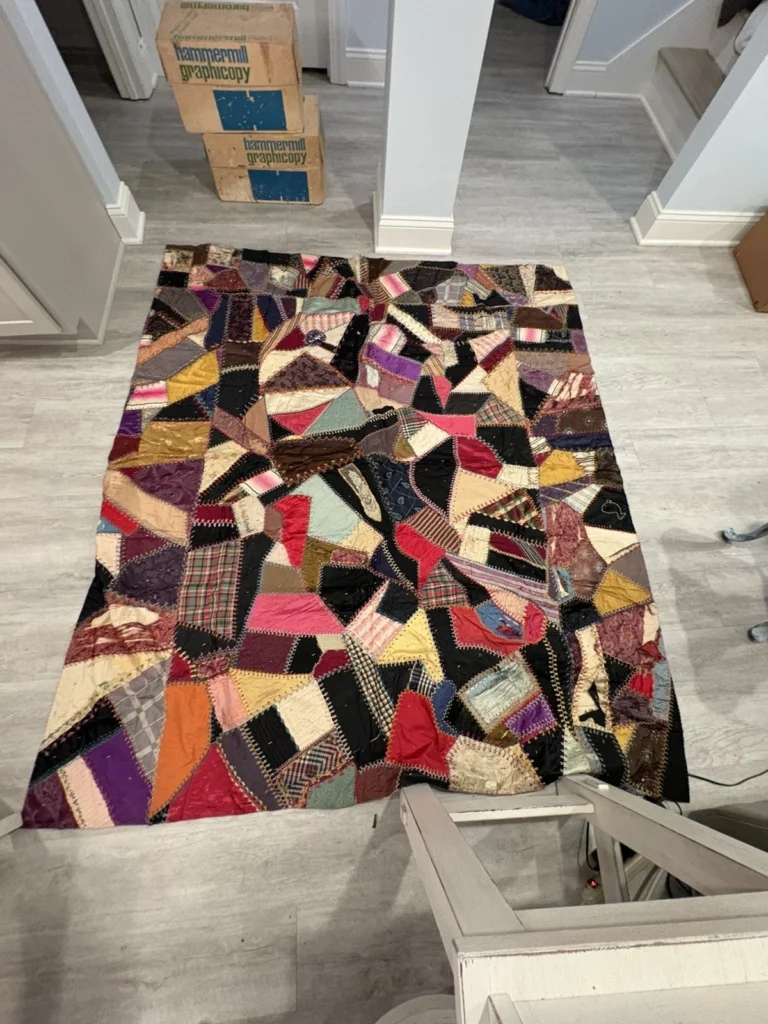
Crazy quilts are a patchwork of irregular shapes, and they often include decorative stitching that collectors love to study. Older crazy quilts can show hand embroidery stitches like feather stitch, herringbone, and buttonhole stitch, and those stitches often have slight variation that feels personal. Look at the fabrics, since silk, velvet, and satin were common, and age can show as shattering, thinning, or small splits along folds. Because crazy quilts were sometimes kept as parlor pieces, you may see less overall wear but more fabric fragility.
Turn the quilt over and see how it was put together, since older ones may have a foundation layer and you can sometimes feel the patch edges under the top. Hand stitching may show as small, uneven lines that make sense for someone sewing through multiple fabric types. Check for old trims, ribbons, and lace, but also look for signs they were added later, such as newer thread or cleaner fabric around them. If the embroidery thread looks bright and the fabrics are very stable with no age signs, it may be a later quilt made in the traditional style.
Ocean Waves Quilt
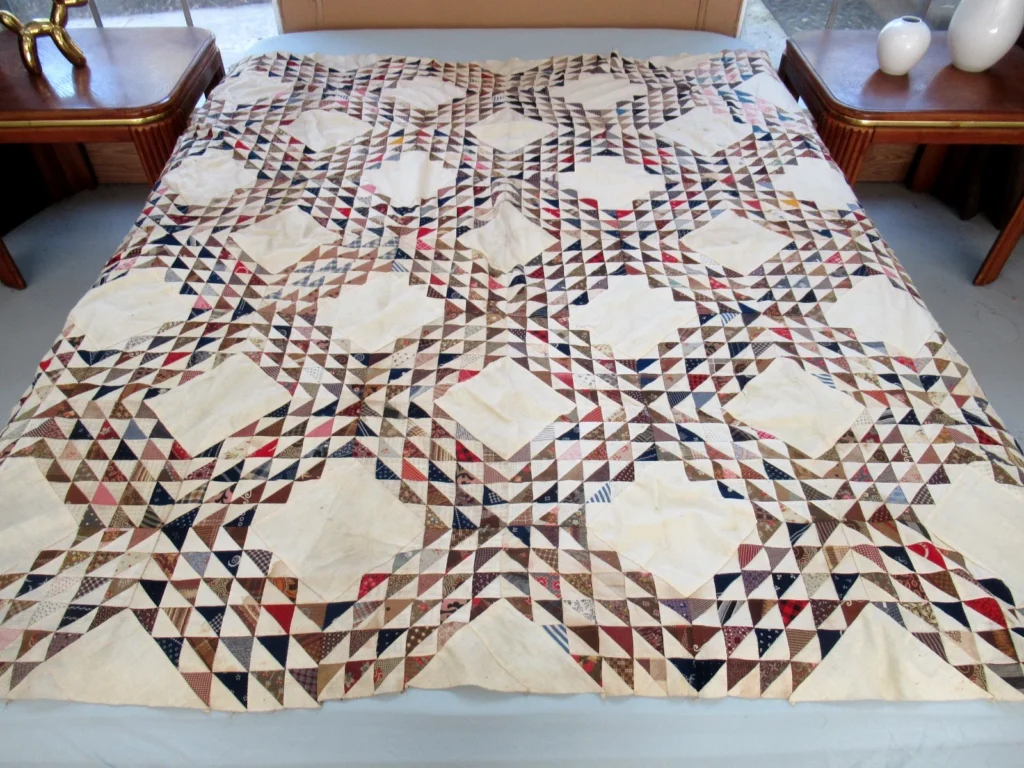
Ocean Waves quilts create a rolling, curved look using small triangles and color placement, so the accuracy of piecing is a big clue. Older examples might have waves that do not line up perfectly from block to block, and that slight drift can be a normal sign of hand cutting. Look at triangle points and seam joins, since hand piecing often leaves tiny stitch holes and a softer look at the intersections. Fabric fading can also show wave patterns more clearly over time, especially when dark and light fabrics age at different speeds.
Quilting sometimes follows the wave motion with curves or diagonal lines, and hand quilting can show gentle changes in spacing that match the quilt’s movement. Feel for puckering in the curved areas, because dense triangle piecing can pull a little after washing and years of use. Turn the quilt over to check stitch consistency and to see if the backing fabric looks period-correct. If the wave edges are razor sharp and every intersection is perfect, it could still be hand made, but it is worth checking whether it was pieced or quilted by machine.
Friendship Star Quilt
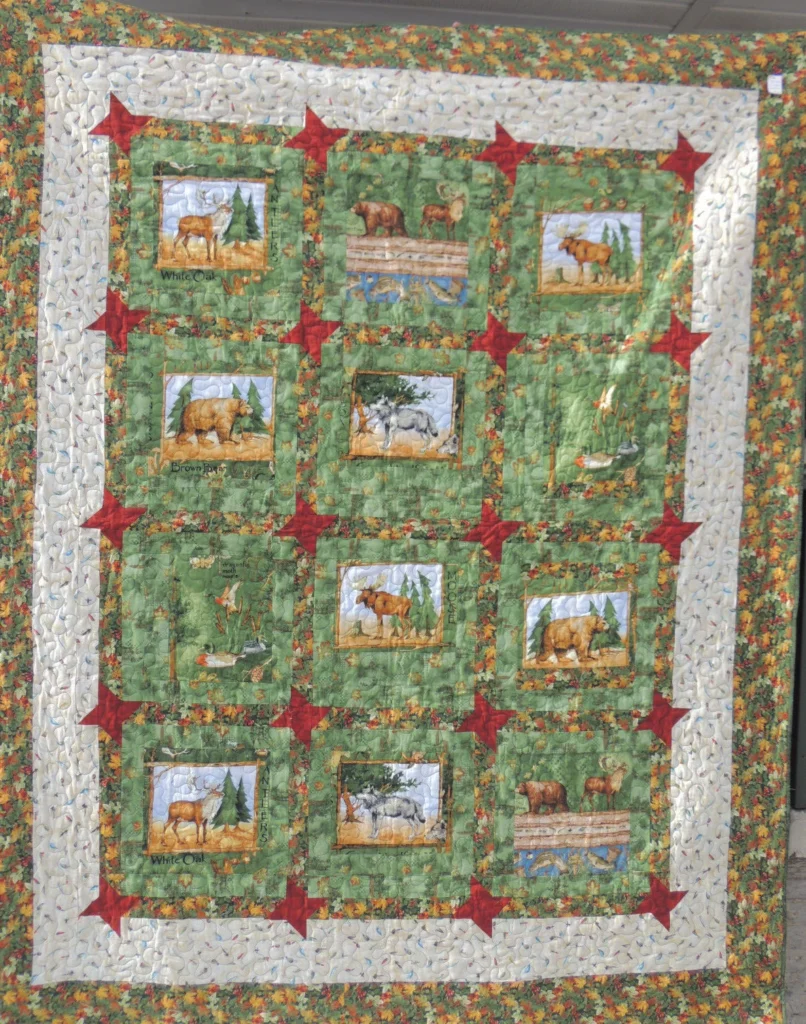
Friendship Star quilts are common, but that does not mean they are all the same, and small differences can help you judge age and handwork. Older blocks may show slight variations in star point length and angle, especially when many different hands contributed to one quilt. Look at the seam intersections where points meet, since hand piecing often creates tiny quirks that you can spot with a close look. Fabric choice can also tell a story, because older star quilts often mix scraps from clothing with more traditional quilting cottons.
Quilting might outline stars or fill the background with simple grids, and hand quilting often leaves a soft, crinkled texture that machine work does not always create. Check the back for thread tails or knots, since hand quilting usually has small tie-offs you can spot if you look closely. Binding is another clue, and many older quilts have hand-stitched bindings that show slight spacing changes from one side to the other. If the quilt has a few replaced patches, see whether the patch fabric and thread match the overall age, since mismatched repairs can be a sign of later work.
String Quilt
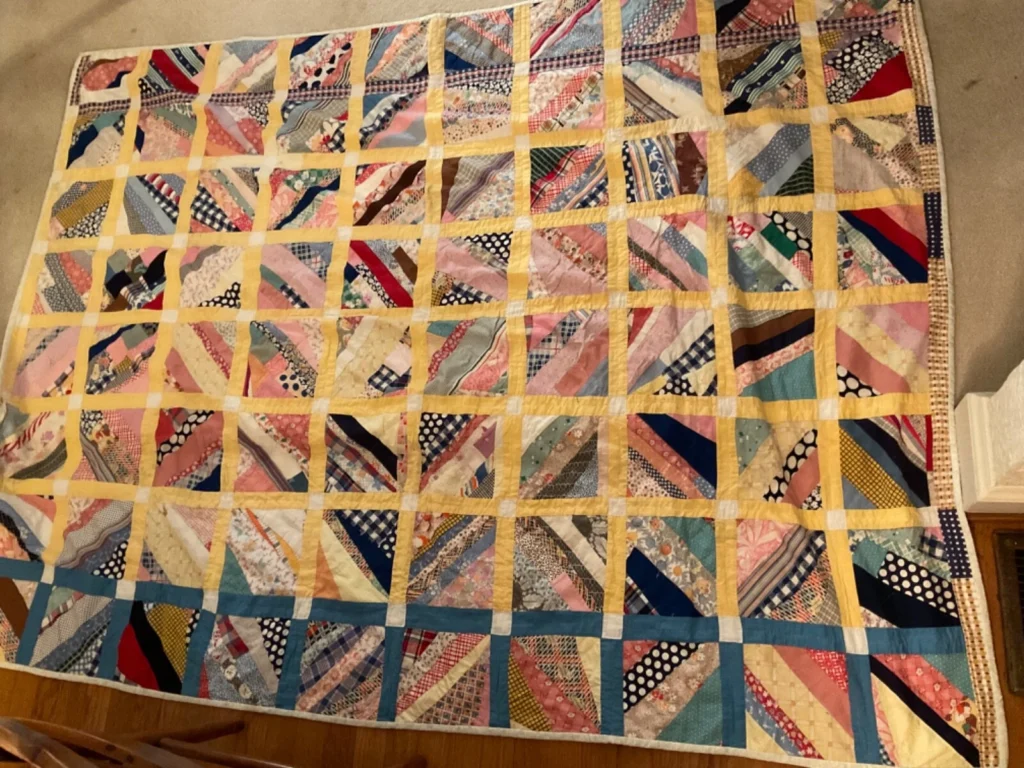
String quilts use strips sewn together, often on a foundation, and they can show a real scrap history when they are older. Look at the strip widths, since antique string quilts may use very narrow strings from worn clothing or leftover fabric pieces. Check whether the quilt has a foundation fabric, because older makers sometimes used feed sacks, muslin, or old fabric as a base and you might see it peeking through at seams. The overall layout may be slightly irregular, and that kind of imperfect alignment can be a sign of handwork and practical quilting.
Quilting is often simple, since the piecing is busy, and hand quilting can show long lines that wander a bit across strip seams. Turn the quilt over and see whether the backing is pieced from multiple fabrics, since that often goes along with scrap-based string quilts. Feel for weight and drape, because older foundations and thicker batting can make the quilt hang differently than a newer one. If the strings look too coordinated and the foundation feels like modern interfacing, it may be a newer quilt made in a vintage style.
This article originally appeared on Avocadu.