
14 Antique Wooden Boxes and Trays That Work as Decor and Storage
Wooden boxes and trays have a classic appeal that makes them perfect for a variety of home styles, from vintage to modern. These items are not just functional-they’re a statement piece that elevates the atmosphere of any room. Try incorporating one of these antique treasures in your space for a stylish storage solution.
This post may contain affiliate links, which helps keep this content free. Please read our disclosure for more info.
Tunbridge Ware Mosaic Box
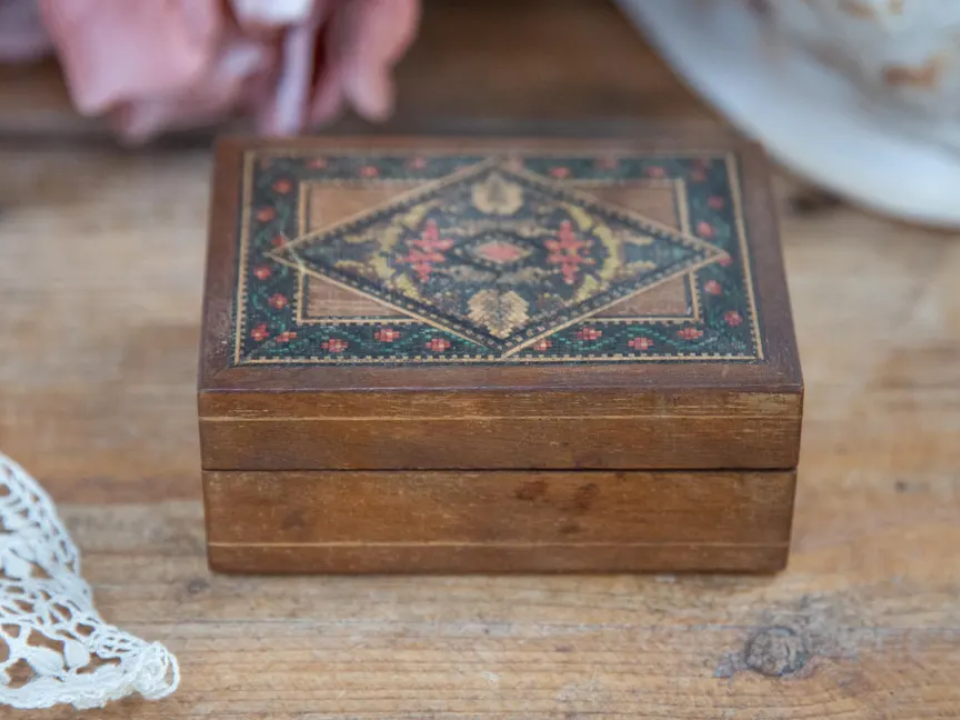
This Tunbridge Ware mosaic box was made around 1850 in Kent, England by local woodworkers who specialized in inlaid wood. Its most striking feature is the mosaic banding formed from many tiny pieces of colored timber that form complex patterns. Collectors prize pieces like this for the skill shown in the careful gluing and slicing of these tiny wood rods. Today, a well-kept example like this might trade for about $750 in the market.
The box can serve as both a decorative focal point on a shelf and a useful place to keep small items. Its origin in a known center of craft history gives it a sense of place and story that engages visitors. Its surface still retains a warm luster that comes from many years of careful use and upkeep. Adding something like this to a room brings a unique sense of history.
Shaker Oval Pantry Box
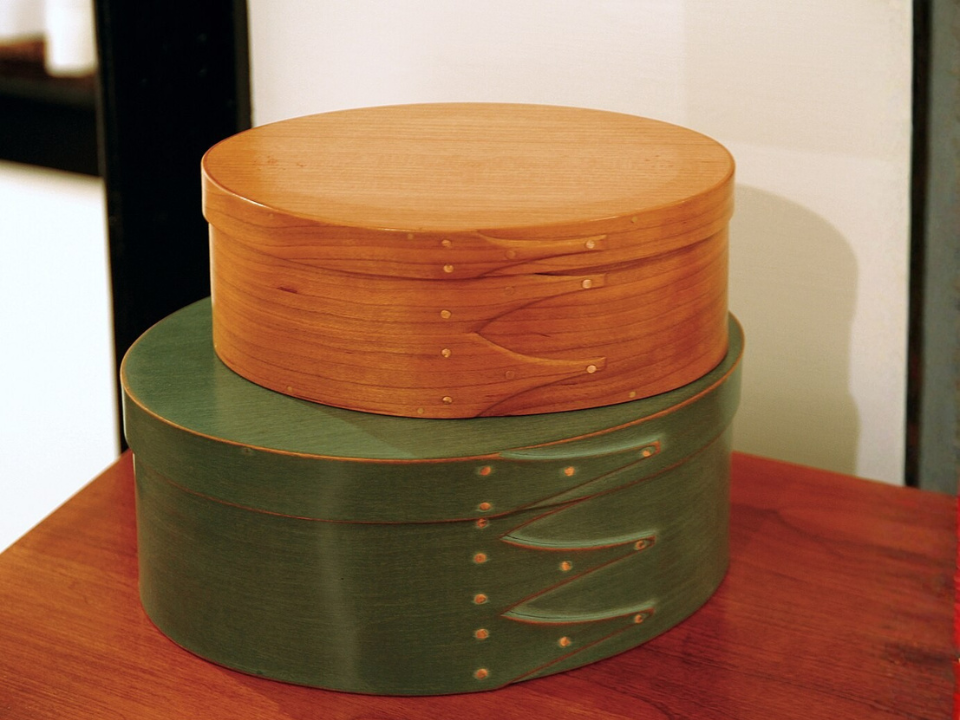
A Shaker oval pantry box from the late 1800s exemplifies the simple functional design prized by Shaker communities in North America. These round bentwood boxes were made by hand and finished with natural milk paint that can last for hundreds of years indoors. Its authenticity and practical use make it a rare collectible item. In current markets, a well-preserved example like this might fetch $500.
Its softly worn wood and smooth curves make it a gentle accent on a table or countertop. The lid fits snugly on top, making it suitable for storing herbs or sewing tools. Many owners will tell you this type of box makes everyday organization feel more like a small ritual. The story of Shaker makers often resonates with people who enjoy simple design.
Sinhalese Porcupine Quill Box
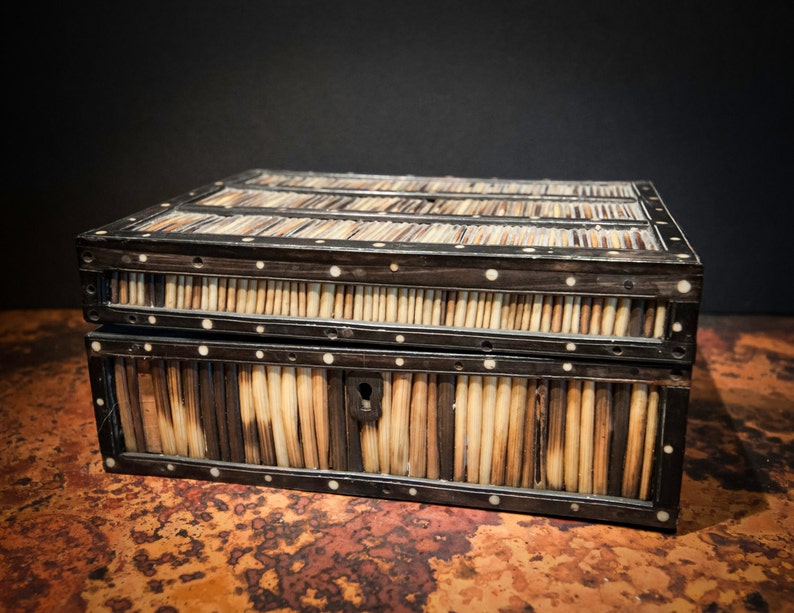
This Sinhalese porcupine quill box was produced around 1880 in southern Ceylon, now called Sri Lanka. Craftspeople in this region used ebony and porcupine quills to create striking chevron and pattern work along the edges of the box surface. Fine examples with dense quill inlay might fetch $1200 or more.
The contrasting dark ebony and lighter quills make this type of box stand out among more plain wooden pieces. It works well as a container for treasured trinkets or on a desk to hold writing tools. There is a sense of global history in the piece that speaks of trade routes and cultural exchange. For anyone curious about decorative surfaces, this box rewards careful looking.
H Gerstner Sons Tool Chest
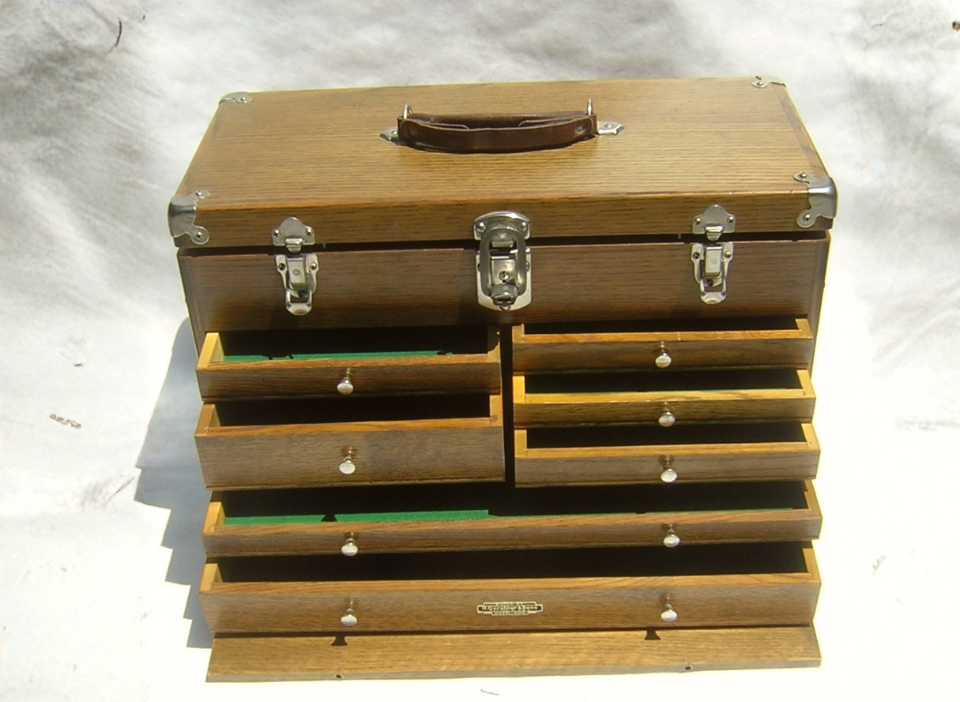
A classic H Gerstner Sons tool chest dates from 1920 and reflects the long tradition of fine American wood box making. This example was crafted in Dayton, Ohio, and shows the fine joinery and selection of hardwoods like walnut for lasting strength. Collectors often note that a chest like this can easily be repurposed to store small household items while still showing off its heritage. In current markets, a chest in good condition may be valued at around $900.
The multiple compartments inside make it practical for organizing craft tools or art materials. Its rich patina tells of decades of use and care by past owners. Many people enjoy placing this near a living area where its presence invites conversation. Seeing a box like this reminds you that utility and beauty can belong together.
Victorian Walnut Jewellery Box
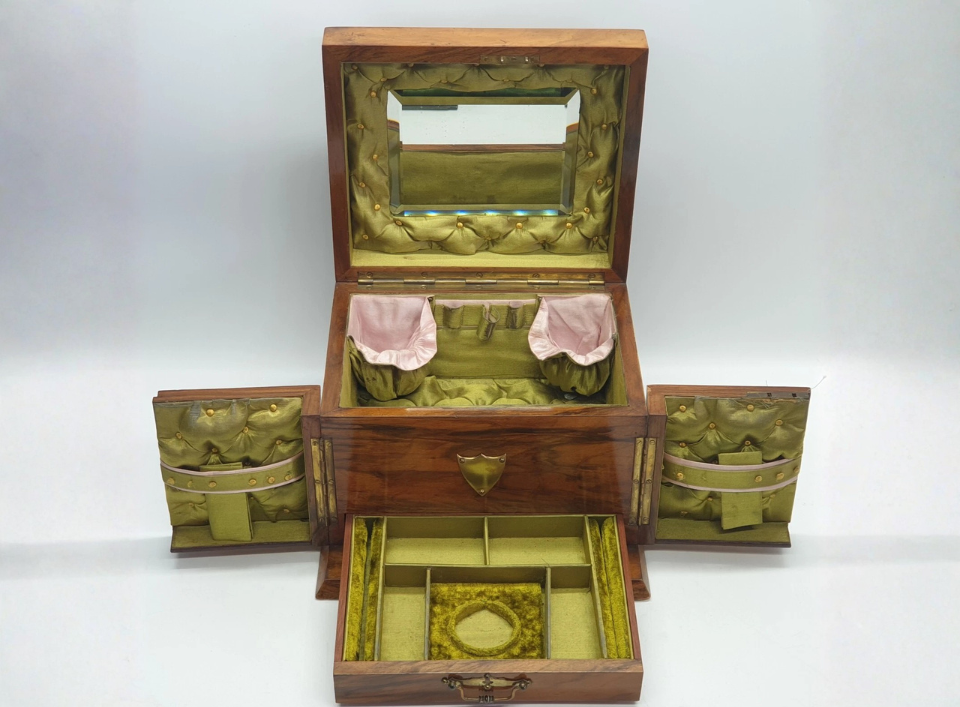
An ornate Victorian walnut jewellery box from 1885 features carved details and a soft felt interior. Its best feature remains the warmth of the walnut grain framed with subtle carving that catches the eye without feeling loud. In recent resale markets, a box like this that has retained its original lining might be priced near $620.
It works well on a dresser to hold earrings, rings, and brooches while adding a classic note to the room. Keeping it filled with small keepsakes makes the morning routine feel more personal. The exterior wood has mellowed with age, giving the piece a calm and inviting look. Many people enjoy the elegance it adds to their living space.
Tiffany Studios Bronze and Glass Tray
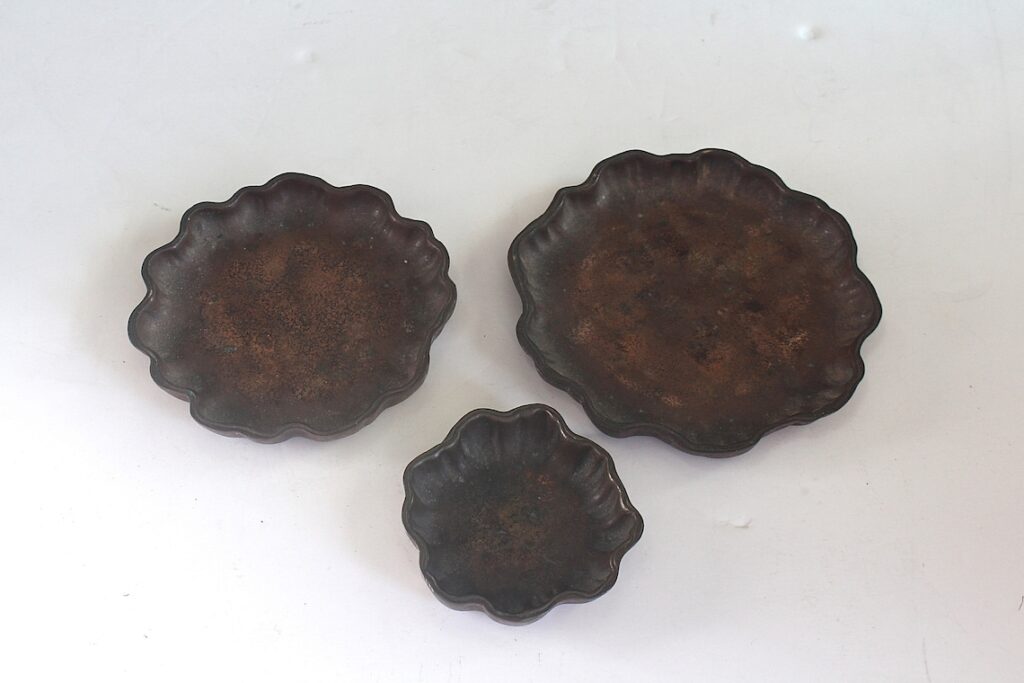
This tray by Tiffany Studios was made in the early 1900s in the United States and features bronze edges with iridescent glass inserts. Its best quality is the contrast between warm bronze and richly colored glass that shifts with light. Pieces by Tiffany Studios from this era are highly collectible and often valued at around $1,400 today. The maker’s mark on the base helps confirm authenticity for collectors.
Used on a coffee table or dresser, it can hold candles, books, or small objects with classic appeal. The glass surface shows subtle patterns that catch the eye without overwhelming a space. Over decades, the bronze has taken on a soft sheen that adds character without rust or corrosion. Many people enjoy seeing it in daily use as both a utility surface and a historical accent.
Colonial Bible Box
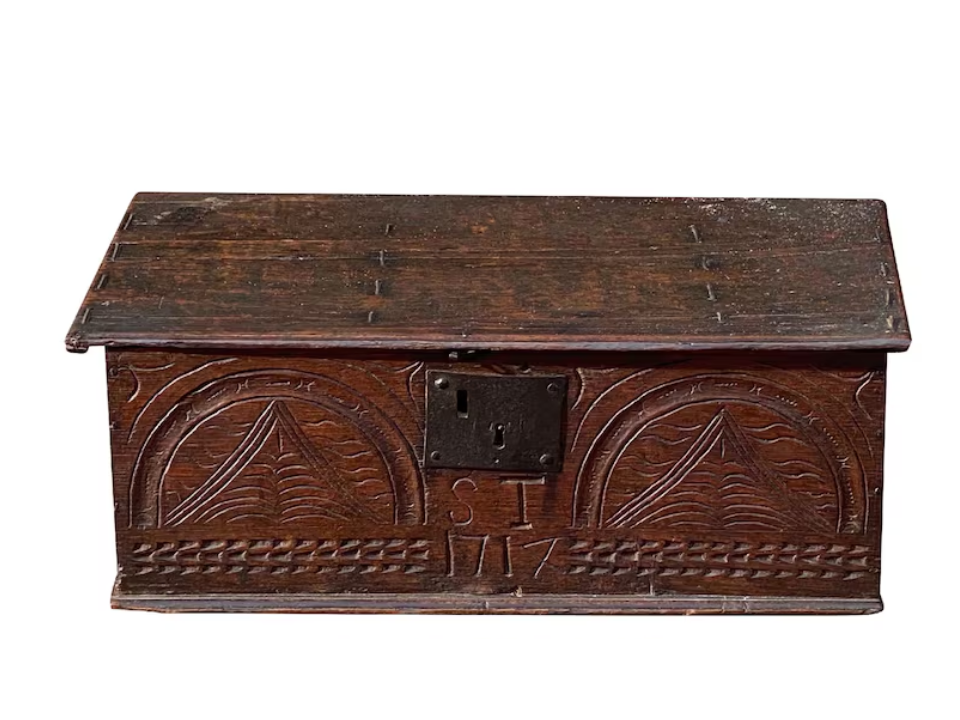
This colonial-era bible box was made around 1718 to hold a family bible and writing tools. Its angled top served as a portable reading surface in a time when furniture was limited. Because of its age and significance, a well-preserved example might be worth over $1500 at a sale.
Today, it can still serve as a small storage place for letters or cards in a study. Its presence evokes images of earlier homes lit by candlelight, where reading was a cherished activity. The wood has mellowed through the centuries, giving it depth of color. Many collectors enjoy its subtle historical aura.
Early 1900s Tramp Art Jewellery Chest
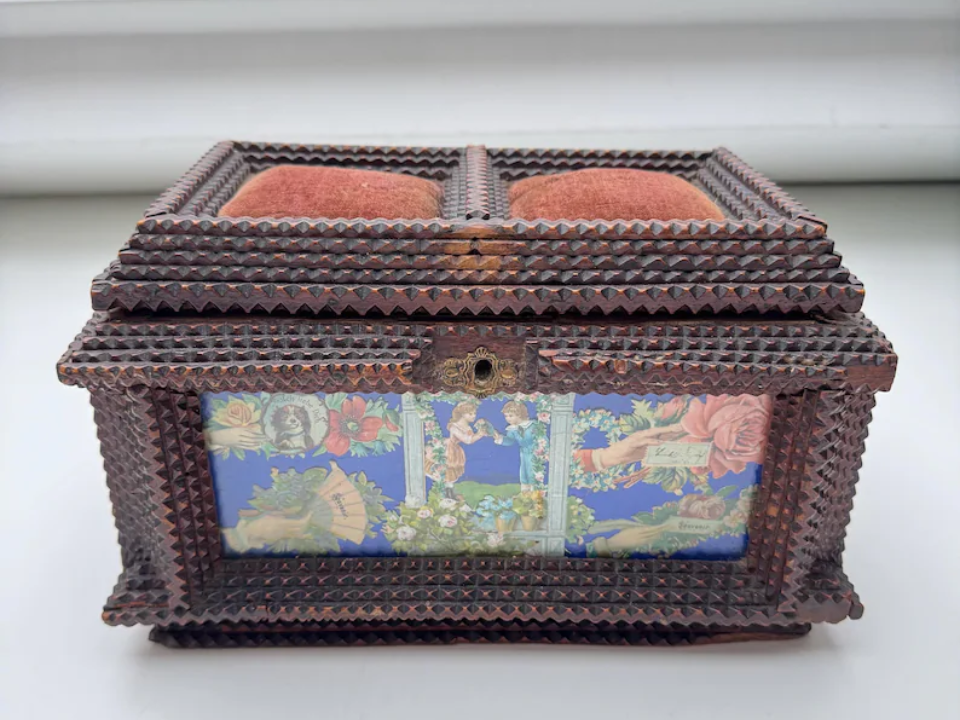
This tramp art jewellery chest from 1911 shows the folk art tradition that was popular in the early 20th century. The layered carved wood chips show the care the maker put into decorating a humble chest. Pieces like this often sell near $450 when found in good condition.
It makes a striking storage place for bracelets and necklaces while still showing its roots in vernacular craft. The feel of hand-worked wood invites touch and closer inspection. Its smaller scale means it fits easily into a variety of rooms. Many people enjoy the way it brings informal charm to a shelf or tabletop.
English Oak Butler Tray
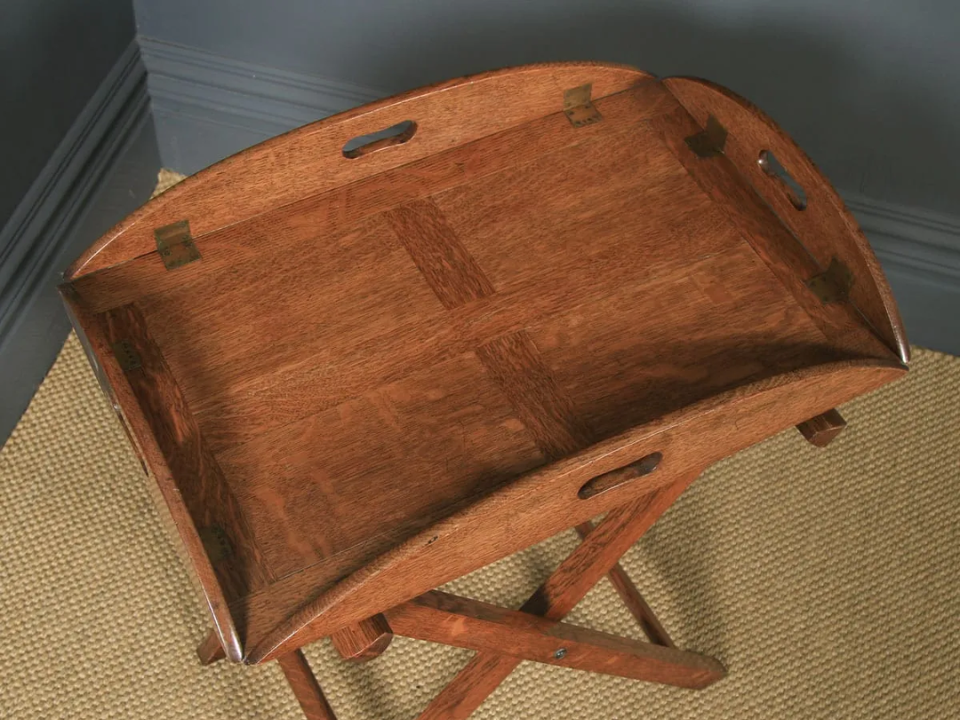
This English oak butler tray made by Elkington and Co. dates from about 1890 and shows traditional Victorian era design. The tray rests on foldable supports and bears metal side handles stamped with the maker’s name. Original examples in good condition might sell for around $850 in today’s antiques market. The oak grain and the metal fittings work well together to create a piece that feels both solid and refined.
Placed on a sideboard or at the end of a sofa, it provides a surface for drinks or decorative items. The smooth wood surface highlights the natural grain, bringing warmth to wood-rich interiors. Its hinges and folding legs still operate with ease, speaking to the care taken in its making. Many lovers of period pieces enjoy using it in living spaces as a reminder of early home entertaining practices.
Folk Art Storage Box
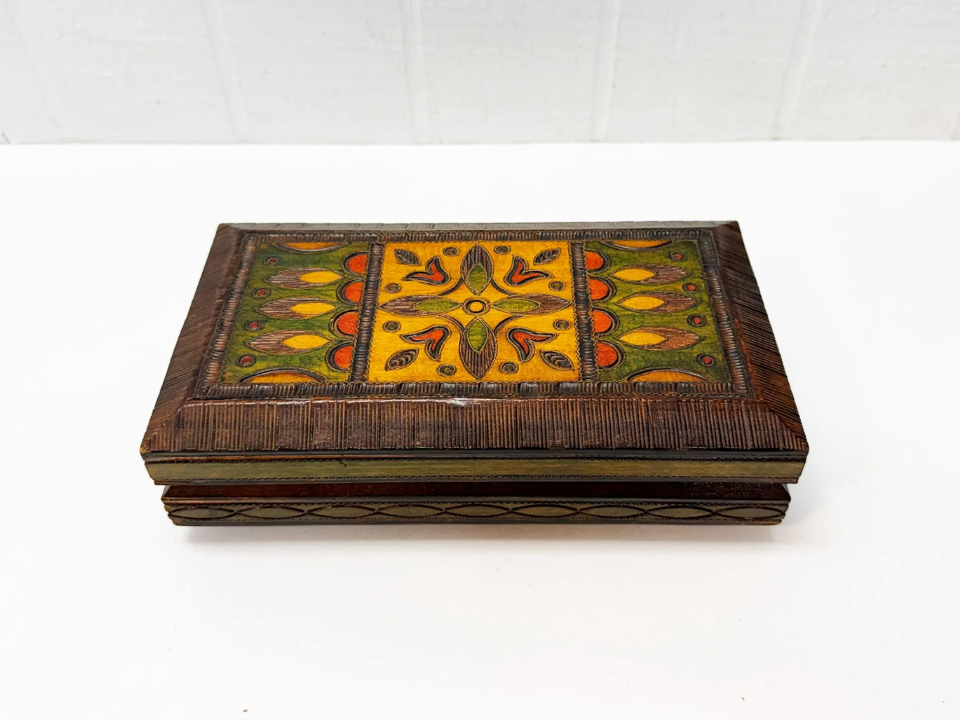
This folk art storage box from the early 1900s showcases vibrant hand-painted motifs, likely created by an anonymous artisan using bold colors and simple designs. The rustic finish of the box reveals the maker’s joyful creativity, with each brushstroke adding personality to the piece. The swinging latch, though functional, also serves as a charming detail, contributing to the overall whimsical character of the box. When found in good condition, such pieces can sell for around $300 in today’s market.
This box is perfect for storing personal items like postcards, photographs, or even small letters, adding a touch of individuality to a space. Over the years, the paint has softened and faded, giving the piece a nostalgic feel that connects it to the past. Many owners enjoy the sense of playfulness and warmth that a folk art piece like this brings to a room, offering both practical storage and artistic flair.
English Mahogany Writing Box
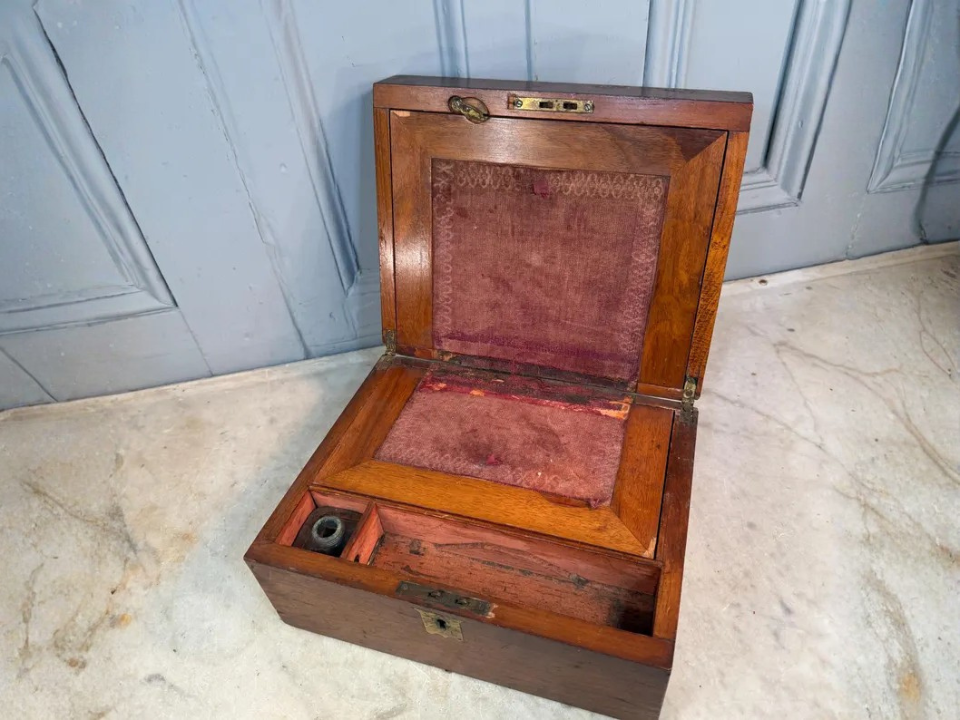
This English mahogany writing box from 1870 features a fold-out surface and compartments for paper and ink. Its best quality is the deep, rich mahogany that takes on a fine glow with age. In antique markets, a piece like this might be valued at around $950.
Today, it serves well on a desk, holding letters, stamps, and writing tools. The brass hardware still shows gentle wear that speaks of many years of thoughtful use. Inside the box, the original felt liners offer a soft home for small items. Many owners place this in home offices to bring a sense of calm.
Primitive Pine Blanket Chest
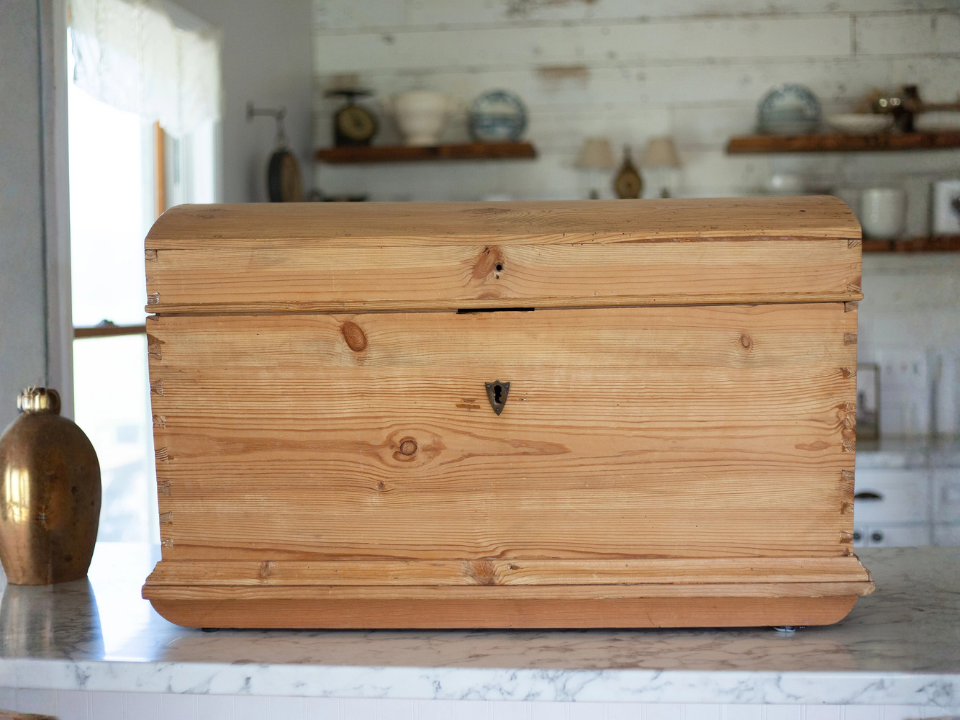
This primitive pine blanket chest dates from the colonial era and was likely made around 1830. Its broad top and sturdy build show the practical woodworking of early settlers. Examples in current online listings can reach near $2700.
Using it at the foot of a bed holds throws or linens with a solid presence. The paint has worn away in places, giving the wood a mellow surface that feels welcoming. Its broad, flat top invites placing books or a tray of candles. Many people find that this type of box makes storage feel like a story.
Danish Modern Rosewood Serving Tray
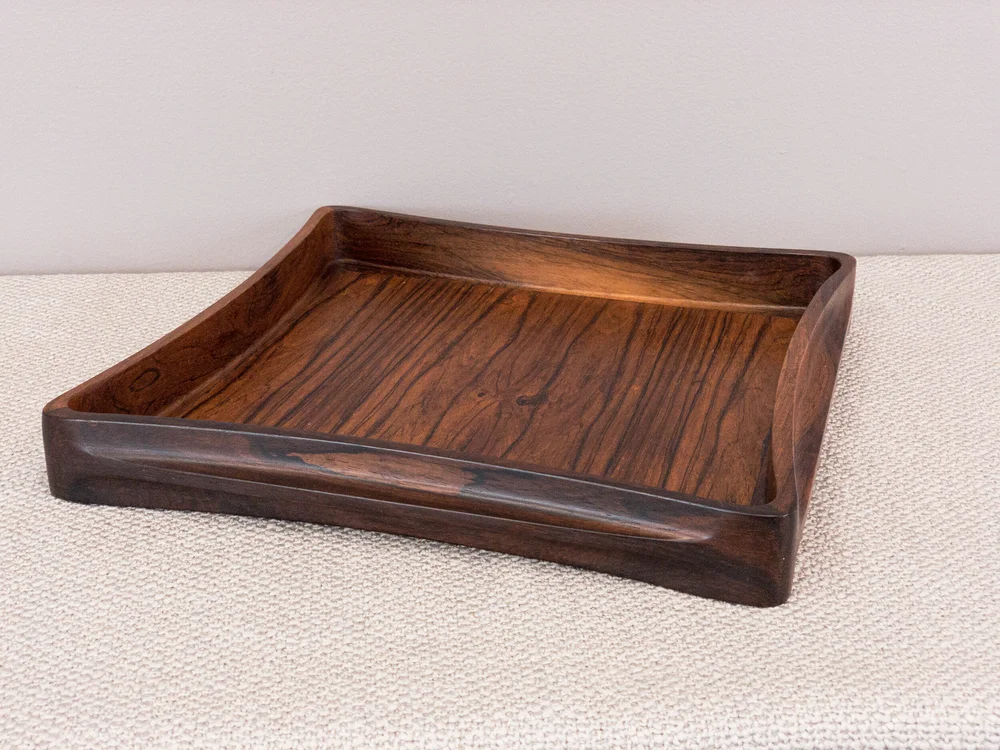
This serving tray, made in the 1950s, features rosewood edges with an inset teak base. Hong was known for his careful joinery and selection of rich wood tones that age attractively over decades. Similar trays from this maker can be valued at around $900 during resale today. The contrast of wood textures gives it both depth and tactile appeal.
Resting on a buffet or console, it holds glasses, carafes, or decorative objects with understated charm. The rosewood grain has deepened over time, creating warmth without gloss or shine. Handles on each side remain sturdy, making it easy to move the tray from room to room. Many people place it where it can be used often, enjoying both its service role and its elegant presence.
French Marquetry Cigarette Box
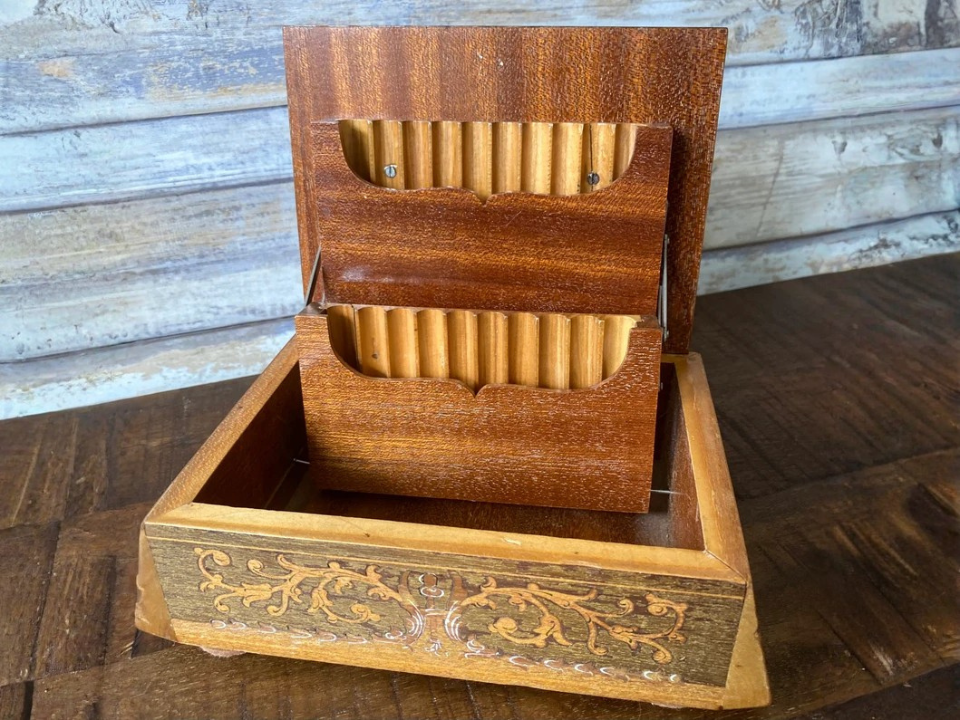
This French marquetry cigarette box from around 1900 features intricate patterns made from tiny wood veneers, meticulously arranged to create floral and geometric designs. The delicate craftsmanship of the piece showcases the skill of French artisans who specialized in this decorative technique during the late 19th and early 20th centuries. The box’s inlaid woodwork includes rich hues of rosewood, walnut, and satinwood, giving it both texture and depth. In current markets, a well-preserved example of this piece might be valued at around $720.
The box serves as a small but elegant storage solution, perfect for keeping keys, coins, or trinkets on an entryway table or vanity. Over time, the veneer’s colors have mellowed gracefully, developing a warm, inviting patina that adds character. Many people find that this box adds a touch of sophistication and artistic flair to their home decor, seamlessly blending function with beauty.
This article originally appeared on Avocadu.