
17 Cold Season Trees That Bloom Before the Leaves Come In
As winter starts to wind down, many gardens still look bare and lifeless, but some trees have a way of brightening up those chilly days. While most trees are still dormant, these special varieties are busy showing off their blooms on bare branches, creating beautiful bursts of color in the coldest months. Their flowers stand out against the gray sky, offering a hopeful sign that spring is on the way. These trees not only provide an early splash of color, but they also attract early pollinators, making them a great addition to any garden. Whether it’s the delicate petals of a flowering plum or the cheerful yellow blooms of forsythia, these trees offer much-needed beauty when everything else is still resting.
This post may contain affiliate links, which helps keep this content free. Please read our disclosure for more info.
Japanese Witch Hazel
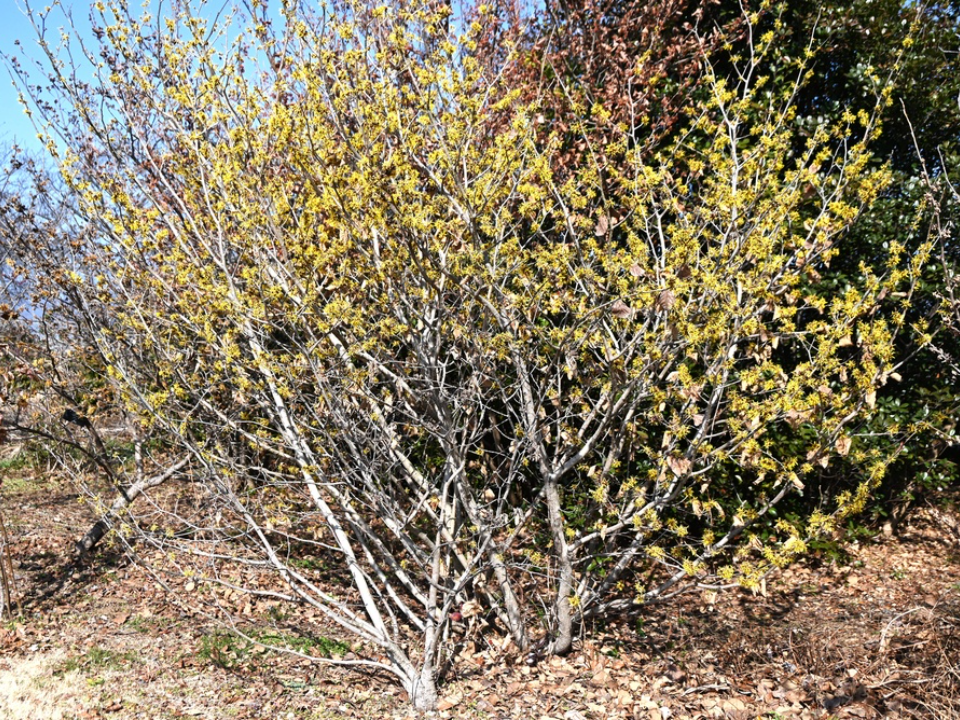
Japanese witch hazel is one of those plants that can surprise you on a cold late winter morning when the rest of the garden still looks asleep. Its branches stay bare through winter yet they carry narrow ribbon like petals in shades of yellow, orange, or red that curl and uncurl with temperature swings. Because the flowers sit right on the naked twigs, every blossom stands out clearly against the sky or snow.
The fragrance is usually light and clean, so the scent drifts on calm days without becoming overpowering. This small tree fits well into modest urban or suburban yards, since it tends to form a wide vase shape rather than a towering canopy. The show usually begins in mid to late winter, long before most other woody plants wake up. After flowering, fresh green leaves appear and carry the plant through the rest of the growing season.
Cornelian Cherry Dogwood
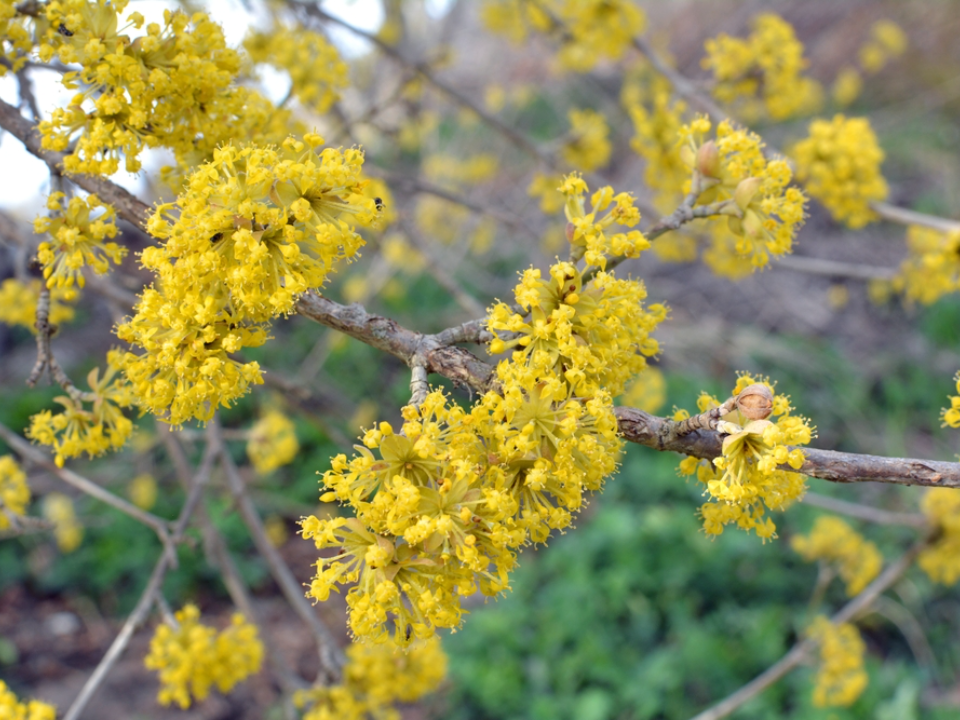
Cornelian cherry dogwood is a small tree that covers itself in bright yellow flower clusters when winter still feels stubborn. The blooms sit along the bare branches in tight rounded groups, so the whole tree can look like it is dusted with golden confetti. Because the flowers come long before the leaves, the color reads strongly from a distance and can brighten a gray view from the house.
The tree stays compact enough for most home gardens and can even be limbed up into a single trunk or left multi stemmed for a more natural look. Bark takes on subtle patterns as the tree matures, which adds extra interest in winter once the leaves drop again. It also handles city conditions and average soils fairly well, so it suits a wide range of sites. In regions with cold winters, this is often one of the first woody plants to send a real signal that the seasons are about to turn.
Japanese Apricot
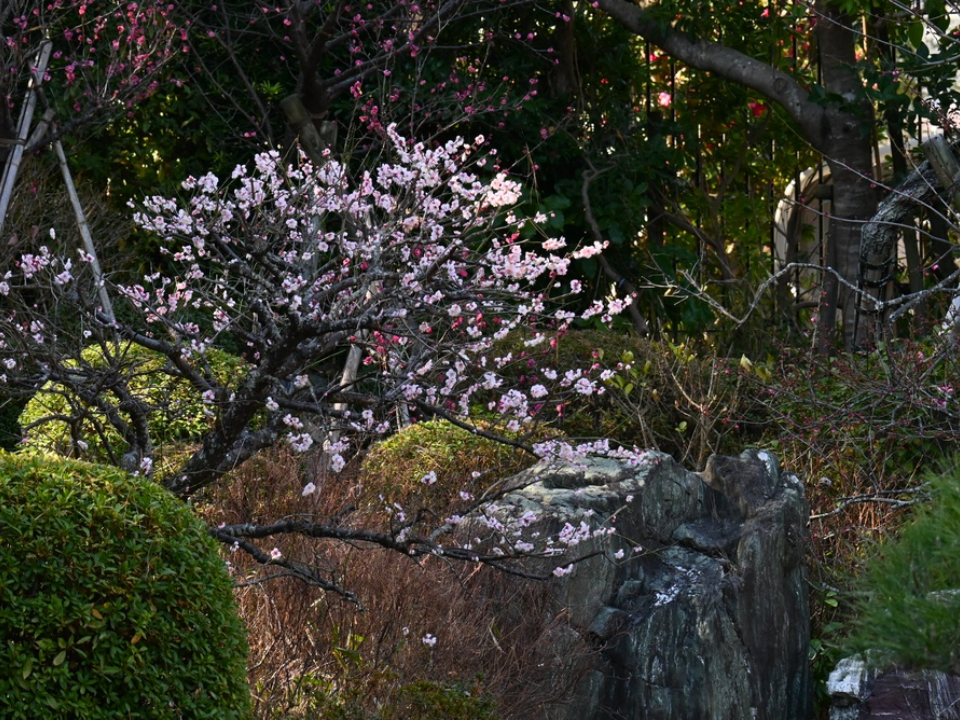
Japanese apricot, also called Japanese flowering apricot, is a graceful little tree that can bloom while snow still lingers under its branches. The flowers often open on bare wood in soft shades of white, blush, or deeper pink, and they have a sweet scent that can carry on still winter air. Because the blossoms hug the smooth greenish twigs, every branch looks like it has been dotted with tiny lanterns. In milder climates, the tree may start to flower in mid to late winter, while colder regions may see the display closer to very early spring.
The tree remains fairly small, which makes it easy to fit near a patio, walkway, or front entry. Some named forms have especially rich flower color or extra petals, so there is room to match the tree to your taste. After the floral show, small fruits can form, and although these are related to edible apricots, they are usually appreciated more for ornamental interest than for harvest.
Okame Cherry
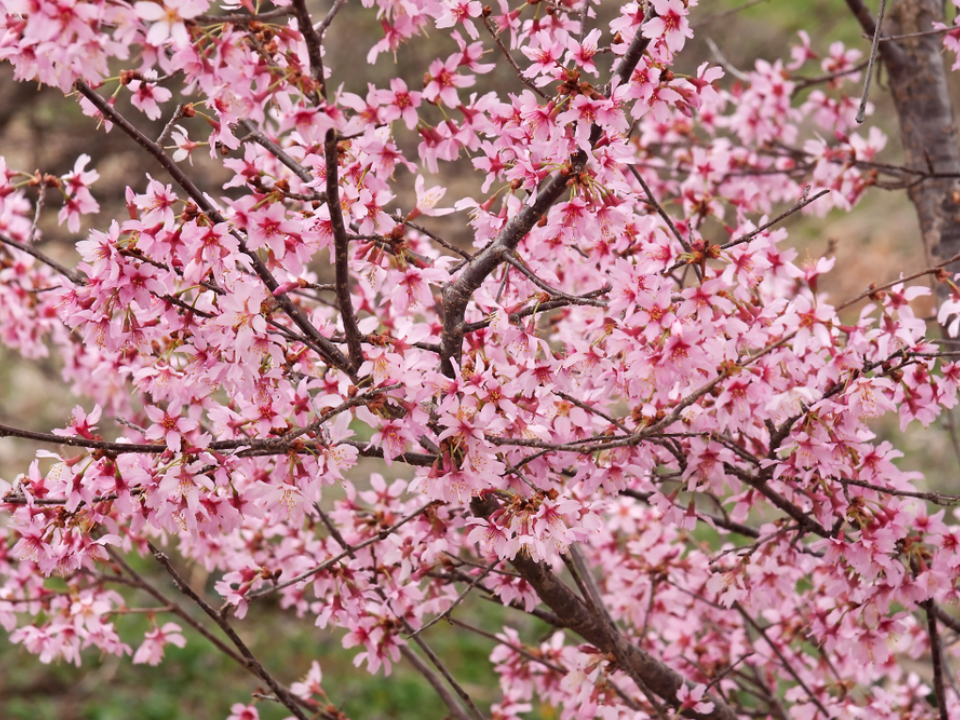
Okame cherry is one of the earliest flowering cherries and often opens its blooms on bare branches while winter is still fading. The tree carries deep pink single flowers in loose clusters, so each twig looks trimmed with confetti before any leaves even think about appearing. This early bloom makes it a favorite near paths and entryways where people will notice the color on chilly days. The tree itself stays in the small to medium size range, with a rounded crown that suits smaller gardens and street side plantings.
After the flowers fall, reddish new leaves emerge, then settle into green for summer and turn warm shades in autumn, so the tree gives interest across several seasons. Bees and other early pollinators appreciate the nectar when few other flowers are open. In regions with late hard frosts, the flowers can sometimes be nipped, so a slightly sheltered site near a building wall can help.
Higan Cherry
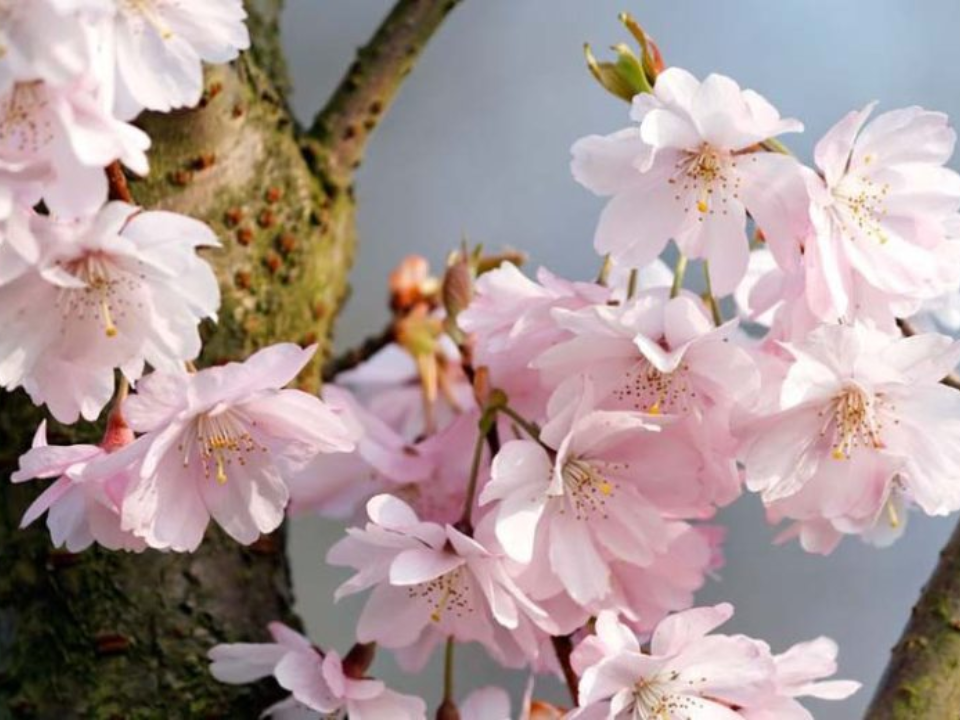
Higan cherry is another ornamental cherry that can bloom on nearly bare branches, and some forms produce flowers in repeated flushes from late fall through early spring. The tree carries small semi double blossoms in soft white or shell pink, which hang in loose clusters from fine twigs. Those flowers can appear even when there are only a few lingering leaves, so the branch structure stays visible behind the color. In late winter, a strong wave of bloom often arrives, giving the tree a frothy look at a time when nearby plants still seem quiet.
The crown typically forms an airy arching shape that looks graceful in both bloom and bare bark seasons. Birds enjoy the small fruits that follow flowering, adding to the wildlife value of the tree. Higan cherry works well as a specimen in a front yard or near a patio where the winter and early spring show will be easy to see. In regions with milder winters, the scattered off season flowers can be a cheerful surprise on gray days.
Star Magnolia
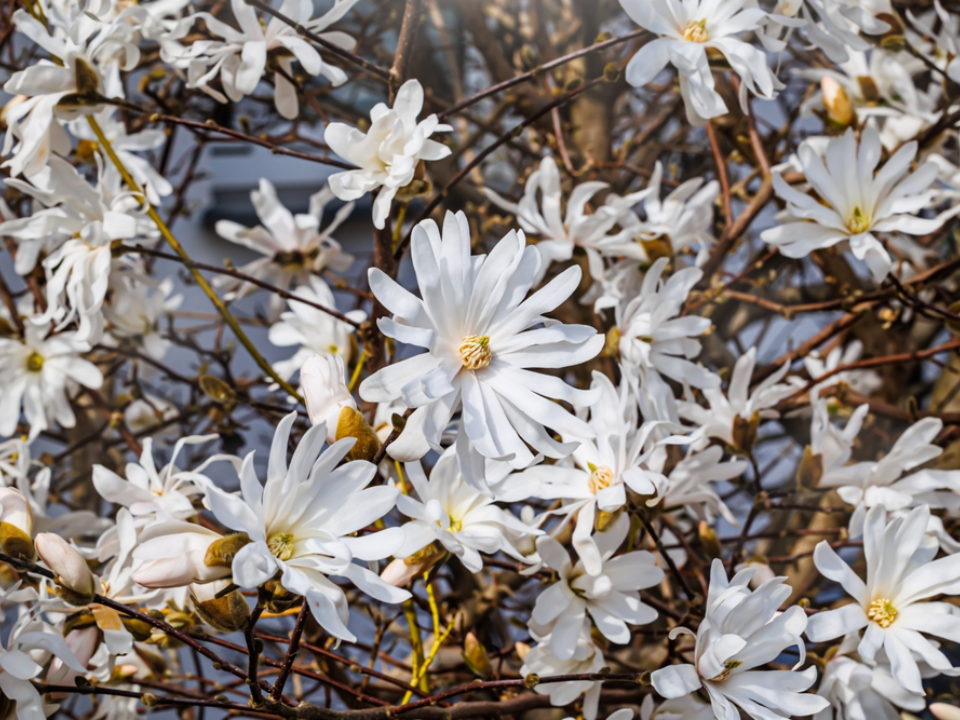
Star magnolia is a compact tree that sends out large star shaped white or blush flowers along its bare branches very early in the year. Each blossom has many narrow petals, so the flowers look full and almost fluffy when they open against a background of sky or neighboring evergreens. Because the flowers appear before the leaves, you can appreciate the full structure of the branches while the tree is in bloom.
The tree stays relatively small, often more like an oversized shrub in scale, so it fits easily near entry walks or as a corner accent. In colder climates, buds may swell during a mild spell and then pause again, so the bloom period can stretch out instead of happening all at once. After flowering, soft green leaves cover the twigs and make a pleasant backdrop for summer planting. The smooth gray bark and rounded form still give some structure in winter once the leaves drop.
Saucer Magnolia
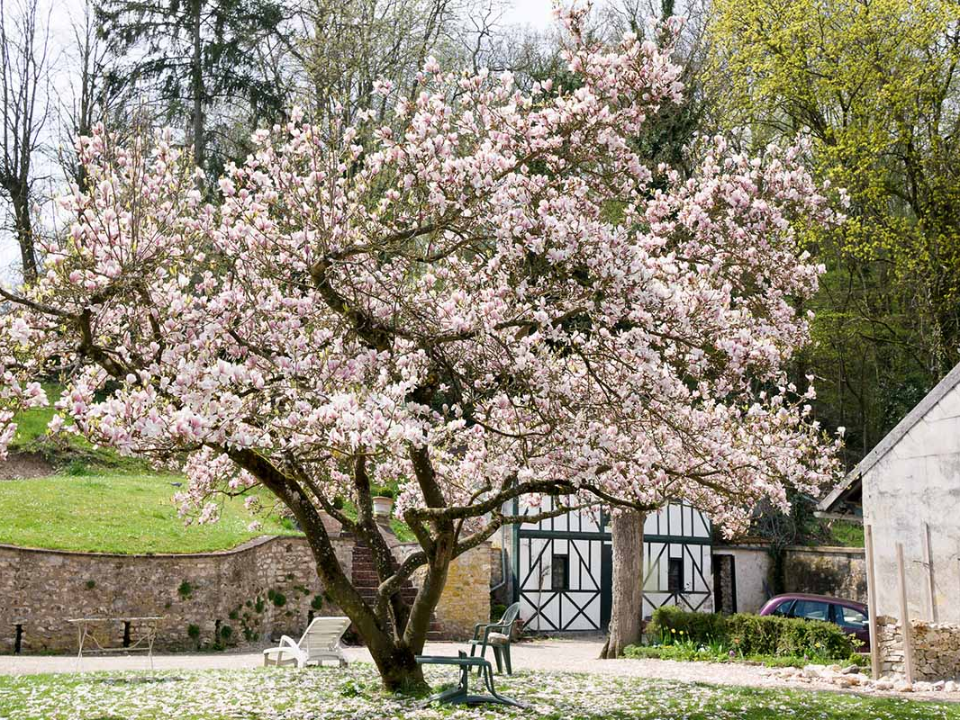
Saucer magnolia is famous for its large pink and white tulip shaped flowers that often line the bare branches just before spring arrives. On a mild late winter day, an established tree can look completely covered in big upward facing goblets of bloom. Because there are no leaves yet, the flowers define the outline of the entire crown and create a striking silhouette against the sky.
The tree usually grows to a medium height and spreads into a rounded crown, so it needs some room but does not reach the size of a shade maple. Different named forms vary in flower color and timing, which gives gardeners some flexibility if they want to extend the season of magnolia bloom. Even in years when frost cuts the display short, the buds and emerging blooms still give a lovely signal that winter is almost over.
Purpleleaf Plum
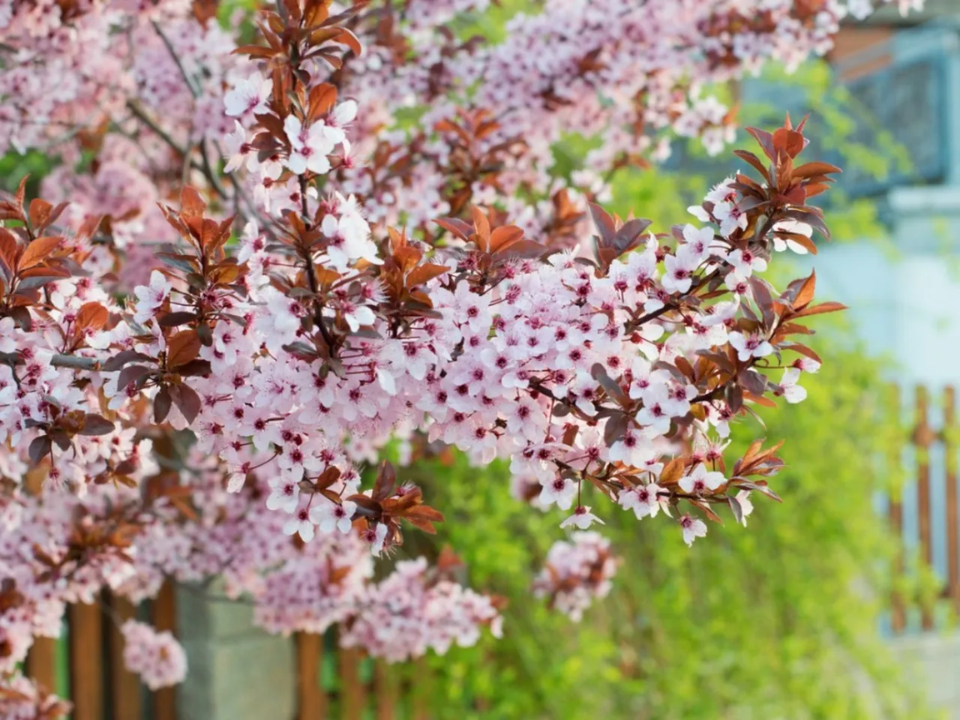
Purpleleaf plum is an ornamental plum tree that puts on pink to pale white flowers along bare branches just as winter loosens its grip. The blossoms appear before the deep purple leaves, so the flowers do not have to compete with foliage and show clearly against the dark twigs. When the tree is in full bloom, it can look like a cloud of pale color floating over a darker trunk and branch system. Once the flowers fall, the rich purple leaves take over and keep their color through the growing season, which adds strong contrast to green surroundings.
The tree usually stays modest in height, which makes it suitable for front yards, smaller properties, or along driveways. Some selections produce small fruits that birds enjoy, while others are mostly ornamental. Purpleleaf plum likes sunny spots and rewards that exposure with heavier bloom and better leaf color. In regions with late winter sun and cool nights, the combination of flowers on bare twigs and later foliage color can be especially striking.
Red Maple
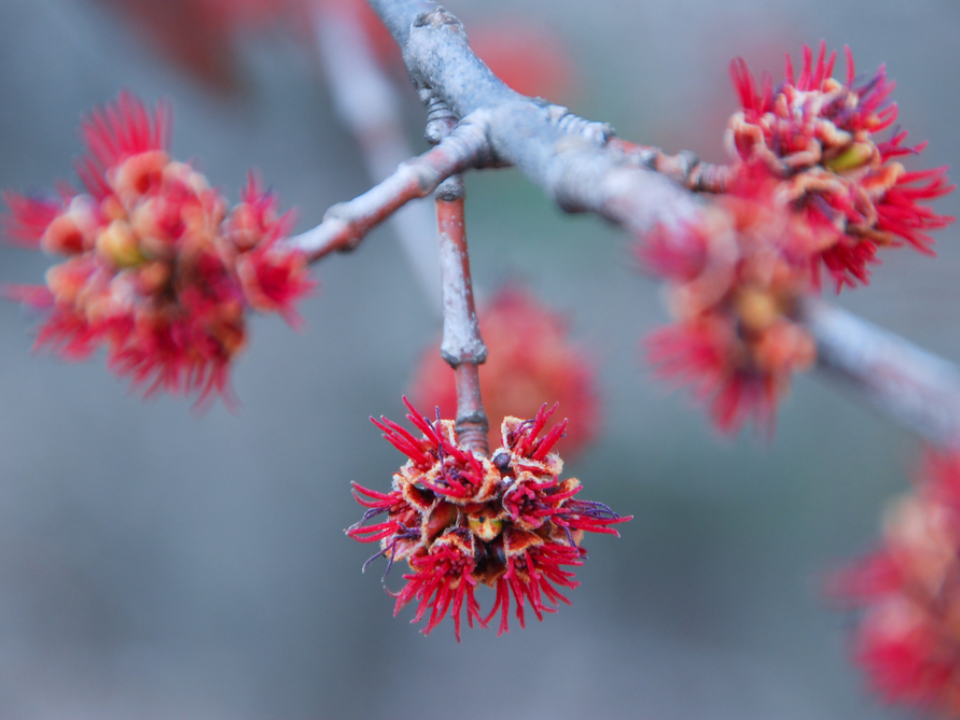
Red maple is a taller tree, yet its flowering habit in late winter fits this topic perfectly. Long before the leaves unfold, the branch tips carry clusters of tiny red flowers that may not look like much up close, but together give the entire crown a reddish haze. On a clear late winter day, you may notice distant treetops glowing softly above woods or streets and realize that the red maples have started to bloom. The flowers provide nectar and pollen for early season insects, offering an important food source before garden flowers open in earnest.
This species tolerates a range of soils and appears in wild areas as well as neighborhoods, so its late winter show is common across huge regions. After flowering, winged seeds follow, keeping the reddish tone going until fresh green leaves take over. Although the flowers are small, their appearance on completely bare branches makes them easy to spot for people who know what to look for. When combined with the tree’s well known fall color, red maple earns its place as a year round presence.
Pussy Willow Tree Form
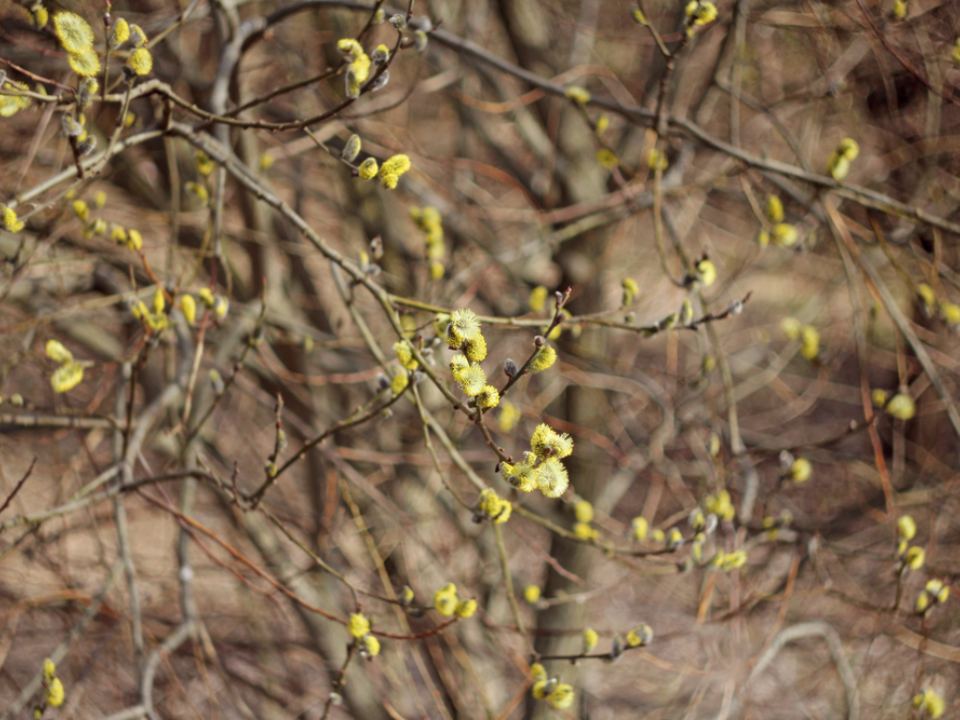
Pussy willow is often grown as a shrub, but it can also be trained into a small tree that shines in late winter. Instead of petals, it produces fuzzy catkins that line the bare twigs, giving the branches a soft silvery look that children and adults alike enjoy touching. As the season moves on, the catkins lengthen and show yellow pollen, which becomes valuable food for early pollinators. The lack of leaves at this time means the catkins stand out clearly, so they are easy to notice even from across a yard.
Pussy willow likes moist soil and can even handle sites near ponds or poorly drained low spots, which makes it useful where other small trees might struggle. The plant can be pruned after flowering to keep it compact and to encourage strong new shoots for next year’s catkins. Branches are also popular for cutting and bringing indoors, where they can last a long time in a vase.
Cherry Plum
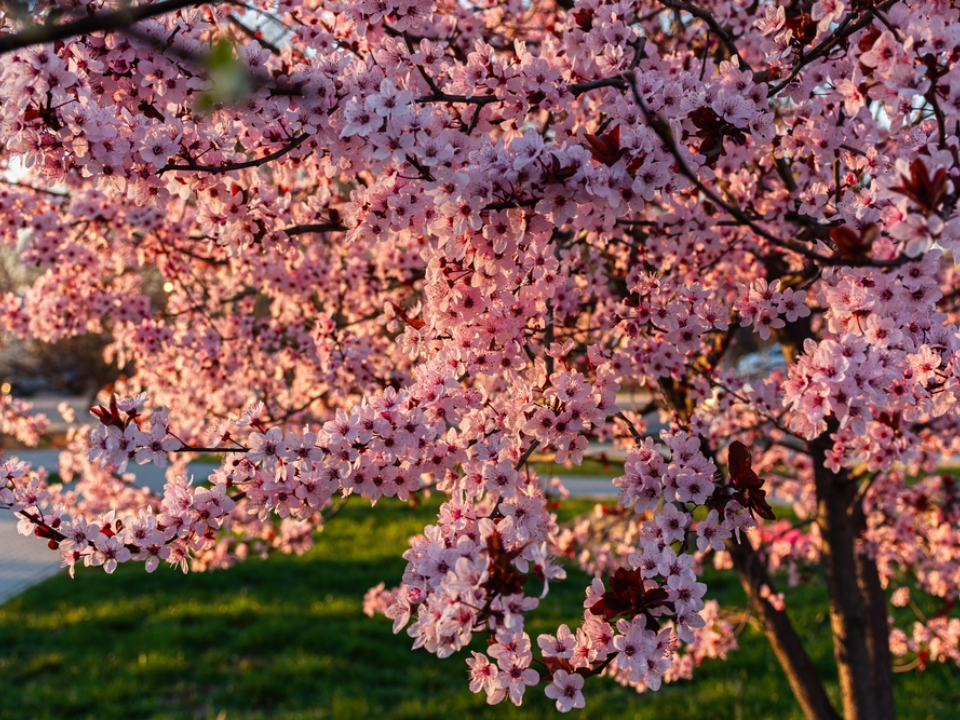
Cherry plum is a small tree that blooms early in the season, with white to pale pink flowers appearing directly on the bare branches. These flowers are often the first sign of color in late winter, so they stand out against the gray sky and still-bare earth. As the tree flowers before the leaves appear, the blossoms are clearly visible and create a soft cloud of color on the bare twigs. In addition to its beauty, cherry plum is an excellent tree for attracting early pollinators like bees, which appreciate the nectar.
This tree tends to stay compact, making it suitable for smaller yards or garden spaces. After flowering, the green leaves emerge, creating a contrast to the blossoms and helping the tree transition into the spring season. Cherry plum is also relatively low-maintenance and adaptable, able to grow in a range of soil types and conditions.
Redbud
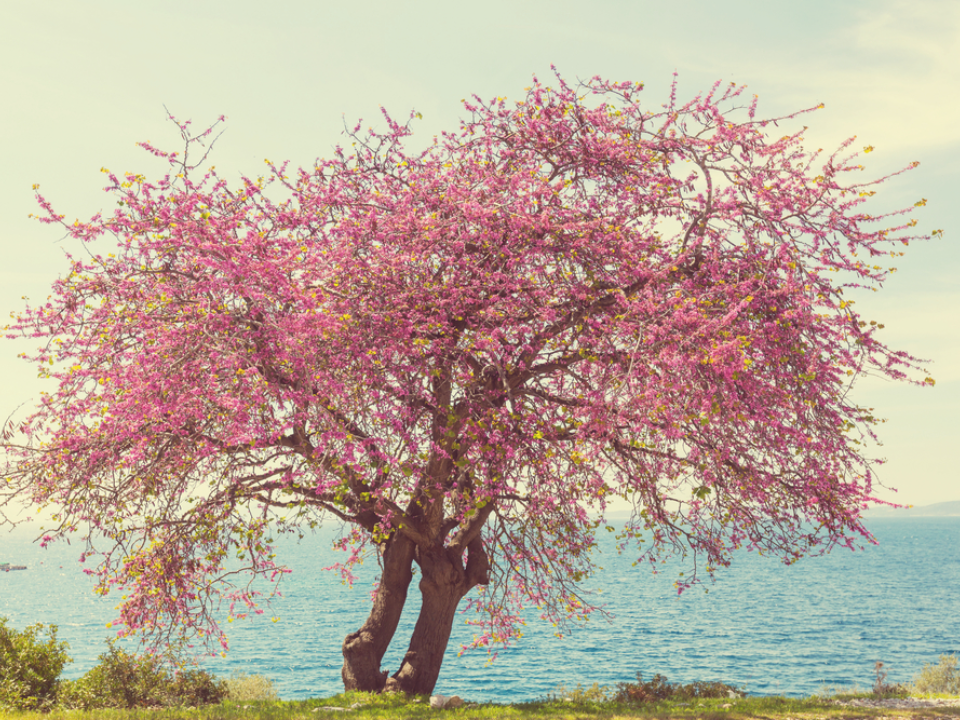
Redbud is a tree famous for its brilliant magenta to pink flowers that appear on bare branches before the heart-shaped leaves unfurl. These blossoms create a bright contrast against the bare twigs, offering a striking visual when the rest of the landscape remains dull. The flowers are small, but they grow in dense clusters, covering the tree and creating an eye-catching effect. Redbuds thrive in areas with well-drained soil and can grow in a range of light conditions, from full sun to partial shade.
After flowering, the tree produces heart-shaped leaves that transition from light green to yellow or red in the fall. Redbud is a favorite for its early bloom, unique flowers, and its ability to adapt to both urban and suburban environments. It is also known for attracting pollinators, such as bees, which benefit from the early spring flowers.
Snowdrop Tree
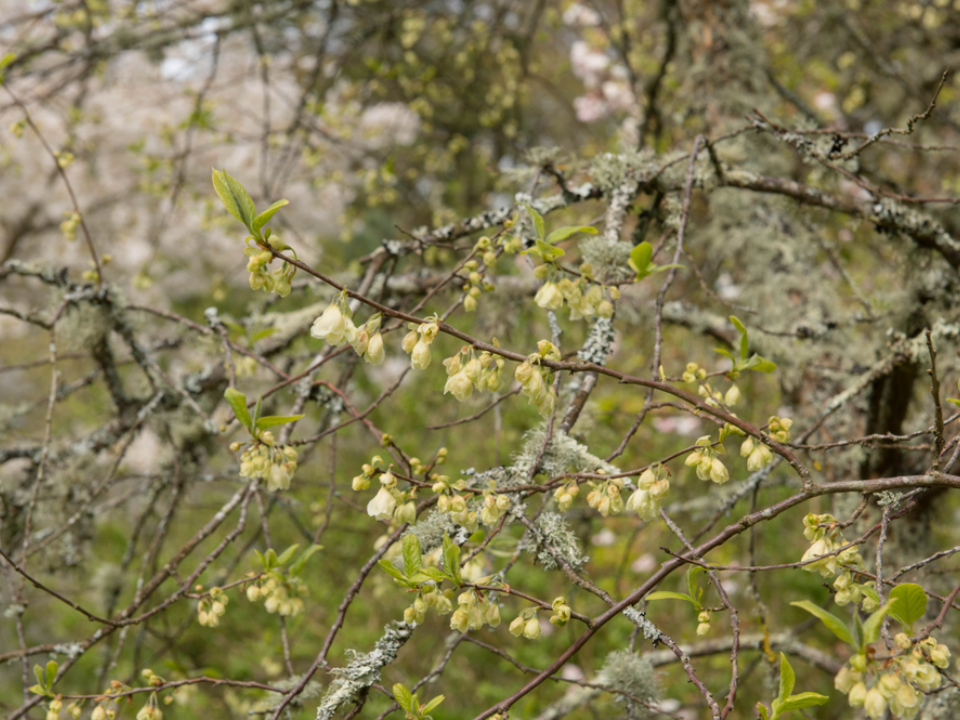
The snowdrop tree, also known as the Halesia or Carolina silverbell, produces delicate white flowers that dangle in clusters along the bare branches, often in late winter or early spring. These flowers, shaped like small bells, provide a soft, elegant appearance as they bloom before the tree produces any leaves. The snowdrop tree is known for its graceful silhouette and charming, slightly drooping flowers, which add a touch of softness to the winter landscape.
The tree can grow up to 30 feet tall, though it remains relatively narrow in width, making it suitable for many garden sizes. After the flowers drop, small green leaves begin to appear, and the tree’s smooth gray bark becomes more noticeable as the seasons progress. Snowdrop trees are generally hardy, preferring slightly acidic, well-drained soil and full sun to partial shade. This tree’s early blooming habit and fragrant flowers make it a beloved choice in gardens where winter color is needed.
Winter Jasmine
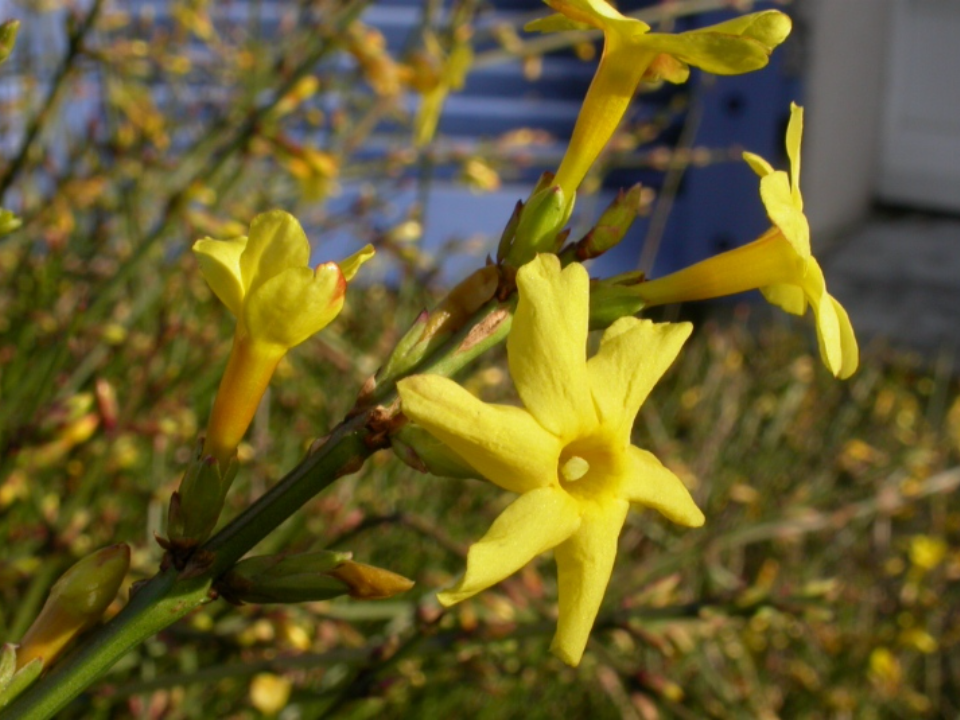
Winter jasmine is a sprawling shrub that blooms on bare branches, offering cheerful yellow flowers in late winter. The flowers often appear in early January or February, depending on the climate, and are typically the first color to appear in a dormant garden. The bright yellow blooms contrast with the bare stems, creating a striking visual.
The branches of winter jasmine often bend and spread, creating a graceful, cascading effect that works well in a variety of garden settings. After the flowers fall, dark green leaves begin to appear, though the plant’s structure and flexibility remain attractive year-round. Winter jasmine is hardy and can tolerate a range of soil types and sun exposures. It is often used as a ground cover, espaliered along a wall, or allowed to spill over the edges of raised beds for visual interest.
Forsythia
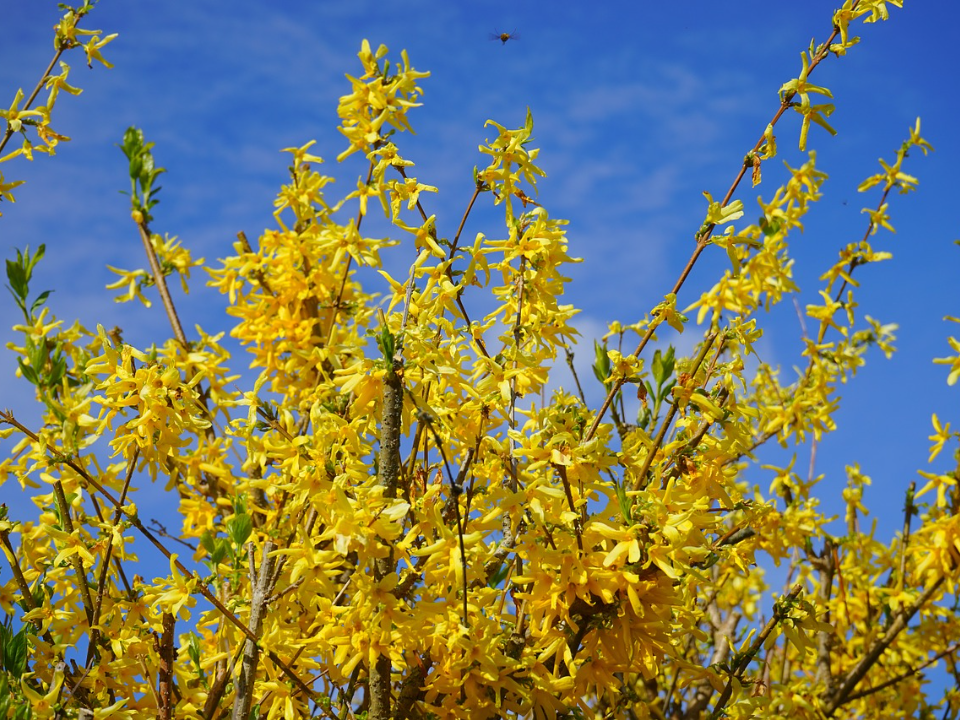
Forsythia is often one of the first shrubs to bloom in early spring, and it can bloom on bare branches when winter begins to fade. Its bright yellow flowers appear in clusters along the bare twigs, creating a lively burst of color that signals the end of winter. The blossoms cover the shrub in dense clusters, creating a golden carpet of color that can brighten up even the gloomiest winter day.
Forsythia prefers full sun and well-drained soil, and it is often used as a hedge, border plant, or specimen in gardens. Once the flowers fall, the shrub is covered with bright green leaves, which provide excellent summer coverage. Forsythia is low-maintenance and can be easily pruned to maintain its shape, making it a great option who prefer easy-care plants with seasonal color. This shrub is also an early pollinator attractor, bringing bees and butterflies into the garden before many other flowers open.
Winter Honeysuckle
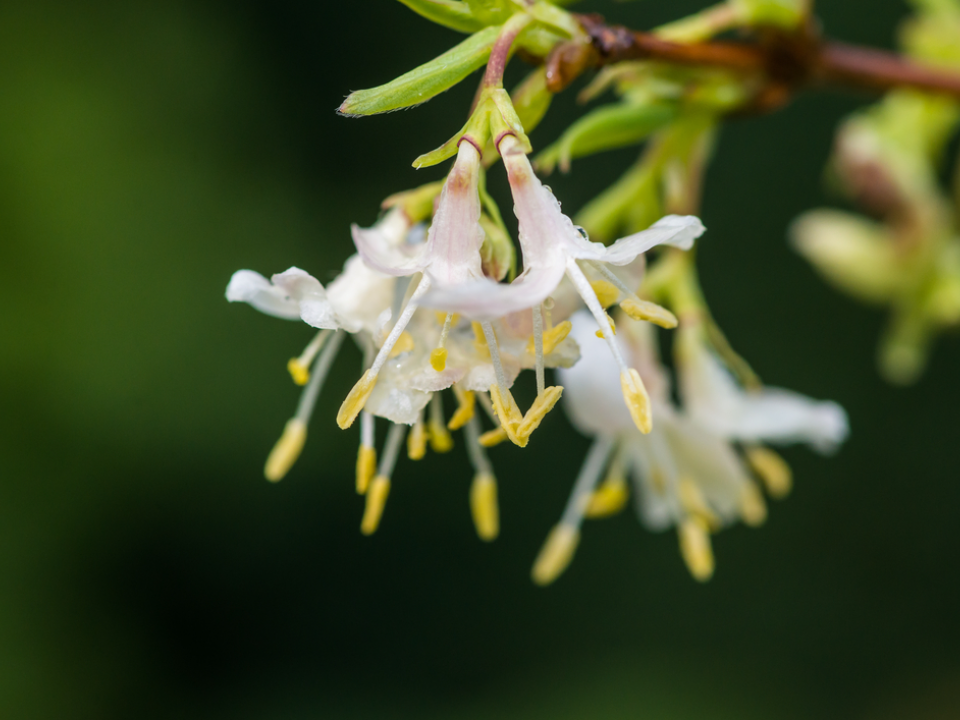
Winter honeysuckle is a deciduous shrub that blooms in late winter, often on completely bare branches. The flowers are small but fragrant, with shades of white and pale yellow that brighten the garden at a time when most other plants are still dormant. The scent of the blossoms is sweet and can spread across the yard on warm, sunny winter days, making it a delightful addition to any garden.
The plant’s twigs are bare when the flowers appear, so the fragrance is especially noticeable when standing near the plant. After the blossoms fall, winter honeysuckle develops green leaves, and the shrub will continue to thrive well into spring. It grows well in full sun or partial shade, and it prefers well-drained soil that is slightly acidic. Winter honeysuckle is also known for its ability to grow in both urban and suburban settings.
Almond Tree
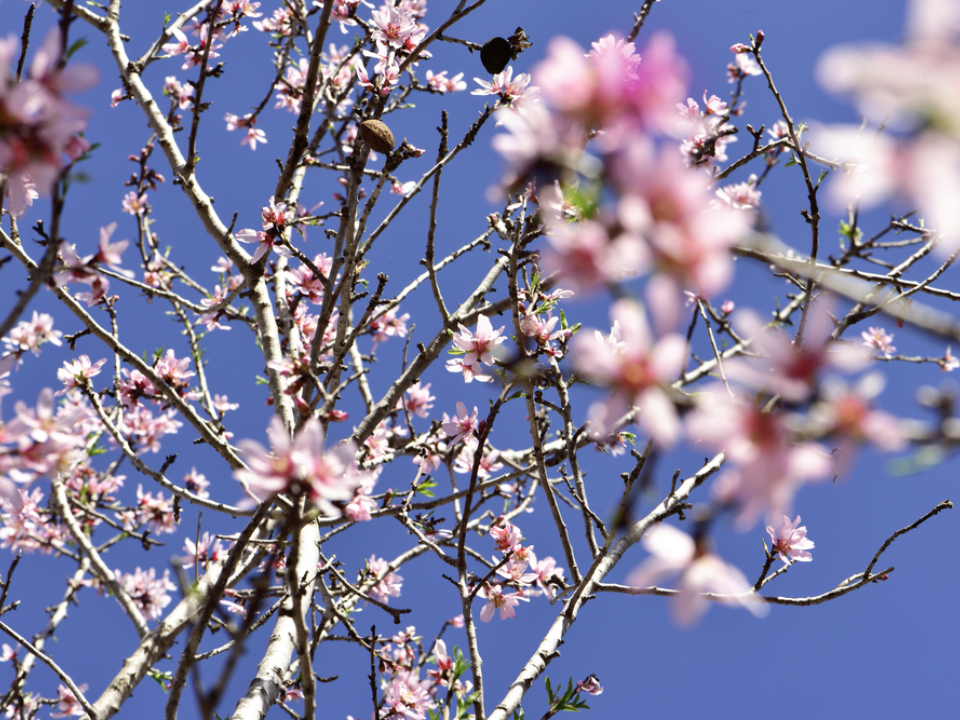
Almond trees are not only known for their nut-bearing ability but also for their lovely early bloom in late winter. The flowers are a soft pink to white color and appear on bare branches before any leaves emerge, making them stand out starkly against the winter sky. These blooms are often one of the first signs of spring, and they are highly prized for their delicate, almond-scented fragrance.
The almond tree is relatively small and well-suited for gardens where space is limited, though it can grow larger over time. After flowering, the tree produces small, green leaves and later, the beloved nuts that can be harvested in summer or fall. Almond trees require full sun and well-drained, slightly alkaline soil to thrive. This tree is often planted in orchards for commercial nut production, but it also adds beauty to home gardens with its stunning winter display.
This article originally appeared on Avocadu.