
15 Rare Depression Glass Patterns and Colors Collectors Want
Some Depression glass patterns look delicate, but they have survived cupboards, dishwashers, and countless family dinners. Rare colors and designs make certain pieces stand out in a display, even when they sit beside more expensive glassware. Collectors pay close attention to tiny details in the mold, in the color tone, and in how light moves across the surface. If you are curious about which patterns collectors tend to search for first, read on and see which ones match your taste.
This post may contain affiliate links, which helps keep this content free. Please read our disclosure for more info.
Royal Lace in Cobalt Blue by Hazel Atlas
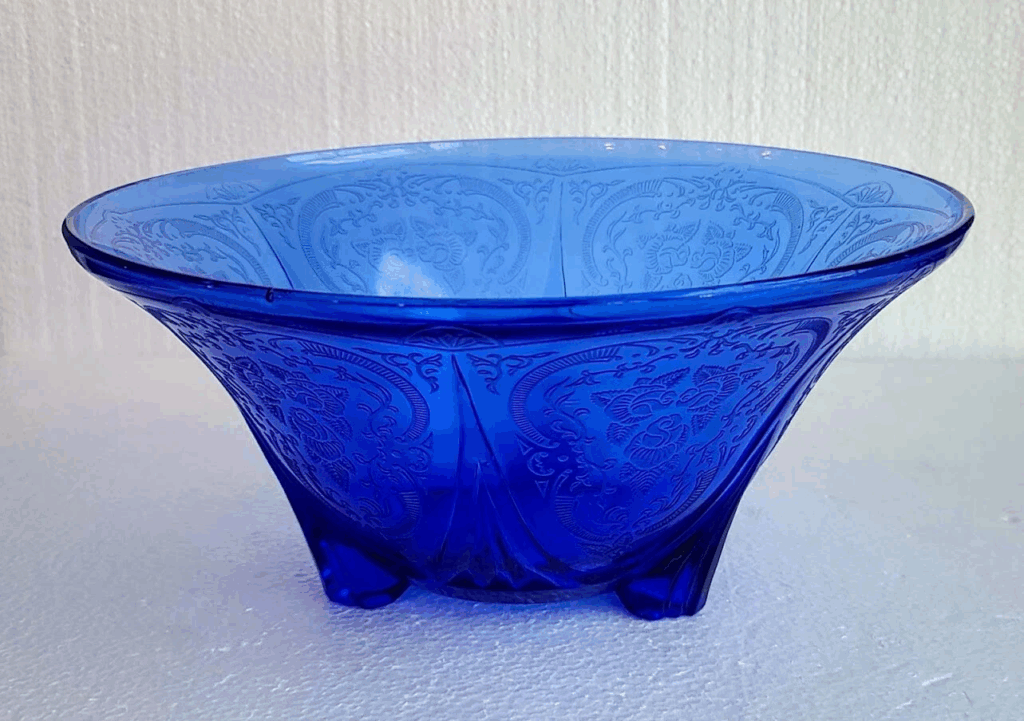
Royal Lace in cobalt blue stands out because the deep color and lace style pattern make even simple plates feel special. Production ran only for a short span in the 1930s, so there are fewer cobalt pieces compared with pink or green. The design covers the glass with scrolls and floral detail that sparkle when light hits the surface. Many collectors treat cobalt Royal Lace as a centerpiece pattern that can anchor an entire Depression glass display.
When you look at prices for cobalt Royal Lace, tumblers, and bowls often bring around $40 to $80 each in strong condition. A full set of matching tumblers can cost anywhere from $250 to $300 when the color is rich and the rims are clean. Larger serving pieces, such as console bowls or platters, can move into the low hundreds when they stay free of chips and cloudiness. Careful buyers inspect base marks and mold lines closely, since this pattern has been widely copied over the years.
American Sweetheart in Pink by MacBeth Evans
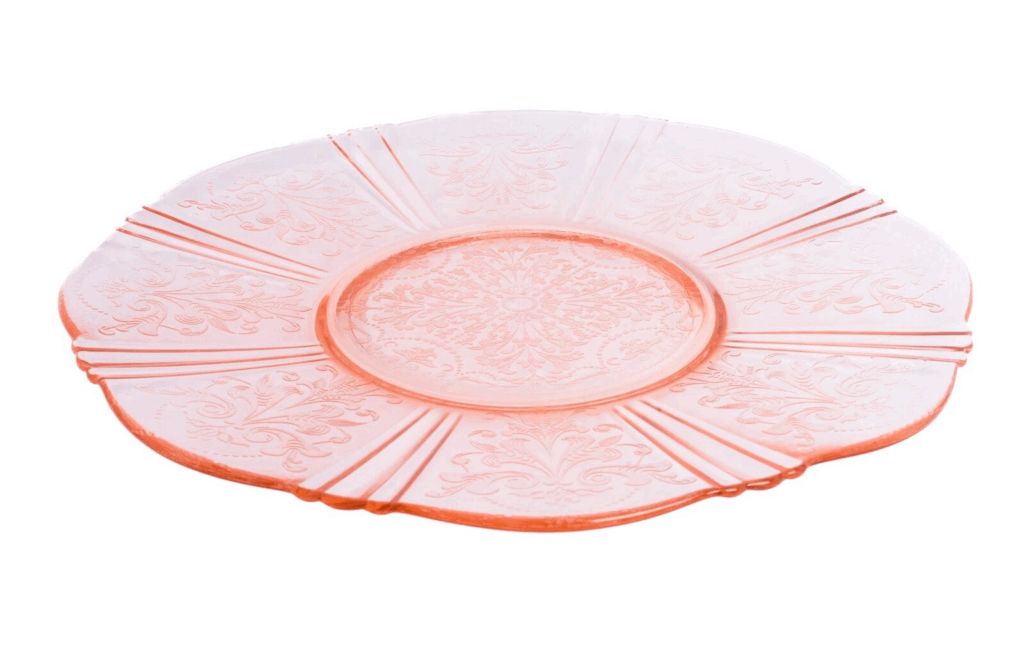
Pink American Sweetheart feels delicate and romantic because the glass is thin and the swirling border looks almost like lace. These plates and bowls were often used at the table, so many examples show chips, cracks, or heavy utensil wear. Clean pieces from the 1930s now feel scarce, especially when you look for larger serving forms. Collectors like how the soft pink shade and light-catching pattern work together in a cabinet or on a holiday table.
Pink American Sweetheart cups and saucers often fall around $10 to $20 per piece. Serving bowls and dinner plates can rise into the $30 to $80 band when they show clear glass and sharp detail. A pink water pitcher in this pattern can approach $800 to $900 if it is in excellent shape with no damage at all. Buyers pay close attention to clarity and rim condition, since haze and tiny nicks can cut those high numbers quickly.
American Sweetheart in Monax White
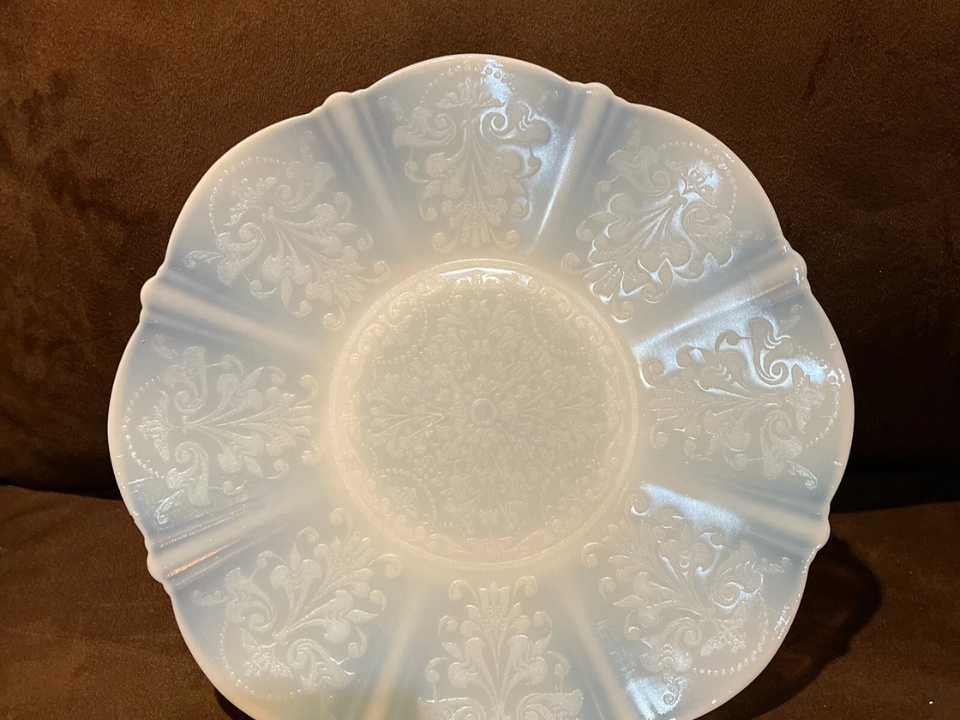
Monax American Sweetheart offers a different mood, with milky white glass that glows softly when light shines through the thin walls. The pattern floats on the opalescent background, so loops and scrolls are easy to see from a distance. Everyday use in the 1930s means that many pieces carry scratches or chips, so finding full sets in good condition can be challenging. Collectors appreciate how Monax looks on a table with pastel linens and how it pairs with other Depression glass colors.
When you check selling prices for Monax American Sweetheart, basic saucers and cereal bowls often start around $8 to $20 each. Larger platters and serving bowls usually land in the $30 to $60 range when they look bright and clean. Less common shapes, such as handled platters or covered dishes, can reach $75 or a bit more if the details are crisp. People who collect this color often pay extra for matching place settings, since a full table is harder to assemble than scattered single pieces.
Hocking Cameo in Pink
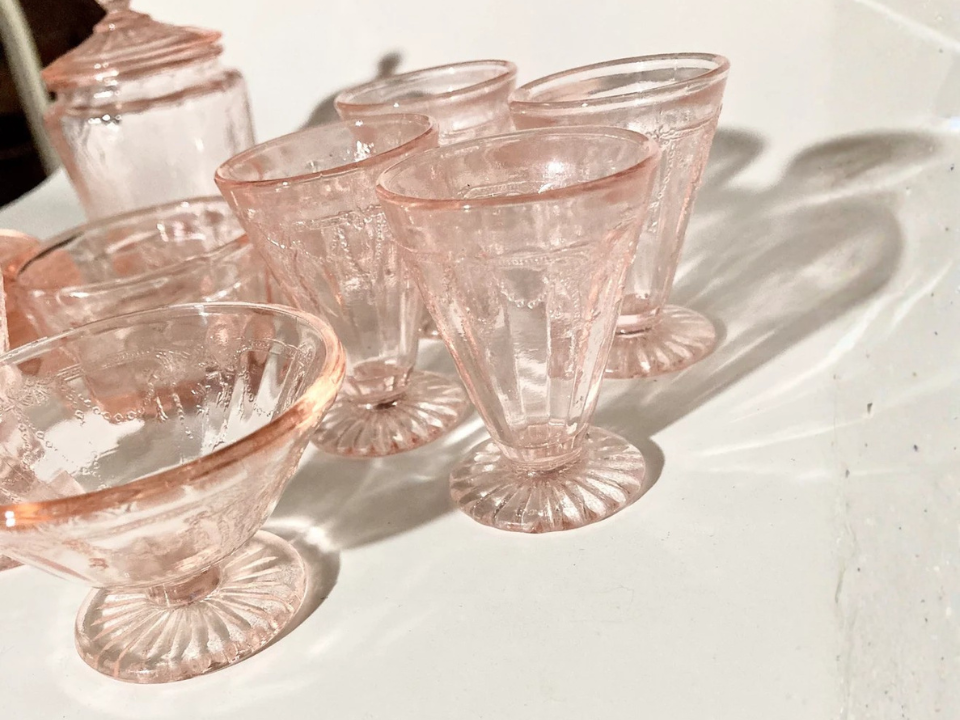
Pink Hocking Cameo draws attention because the dancing girl motif feels lively against the soft colored glass. The figure sits inside a medallion framed by neat geometric lines, so each plate looks like a little stage. Pink pieces were made in smaller quantities and often show signs of heavy use, which raises the appeal of clean survivors. Collectors like how this pattern adds motion and character among more floral designs.
Common Cameo items in pink can sit around $25 or a bit more. Rare shapes such as sandwich plates or unusual serving items can move into the $100 range when they show strong color and no damage. Tumblers, grill plates, and matching sets in pink may range from $60 to $150, depending on scarcity. People who enjoy uranium glass also check certain examples under black light, since a strong glow can nudge prices higher.
Hocking Cameo in Yellow Uranium Glass
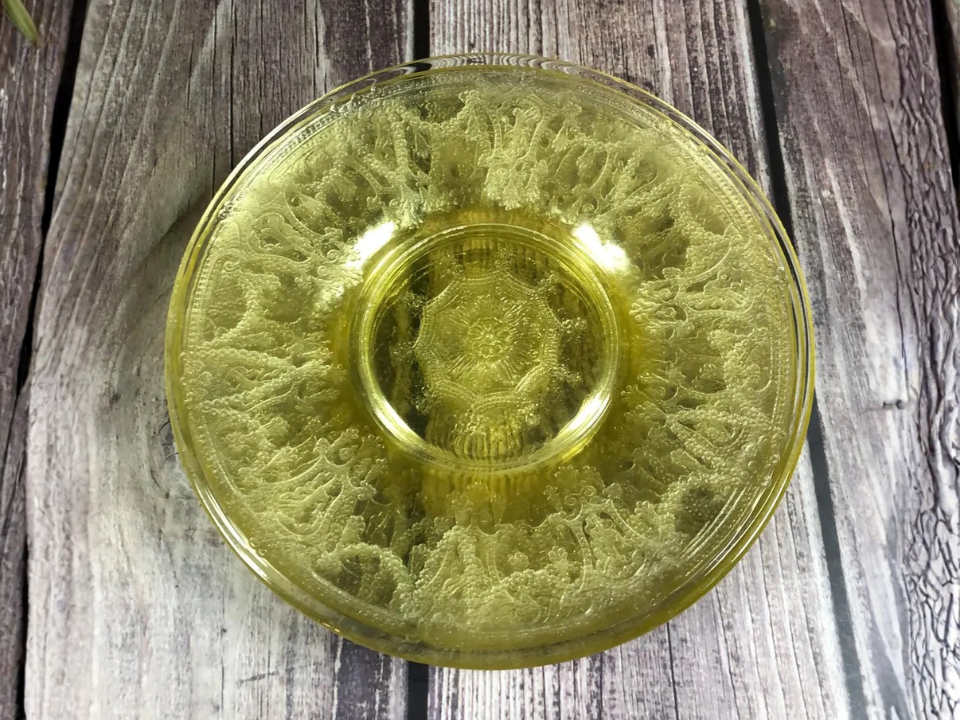
Yellow Hocking Cameo appeals strongly to uranium glass fans because it glows vividly under black light. The dancing figure and panels show clearly against the sunny yellow base, making each plate or bowl easy to spot on a shelf. This color ran for a shorter time than green, so yellow Cameo pieces remain noticeably harder to find. Many collectors keep at least one yellow Cameo piece in a cabinet to highlight when they switch on a black light.
Smaller yellow Cameo plates and bowls often fall between $30 and $70. Large grill plates, console bowls, and tall pieces can reach $90 to $160 or more when they have bright colors and no chips. Matching sets in this shade tend to bring higher totals, since people who like glowing glass often want a group rather than one stray item. Because uranium content is part of the appeal, collectors usually test these pieces under light to be sure the glow is strong.
Jeannette Adam in Scarcer Colors
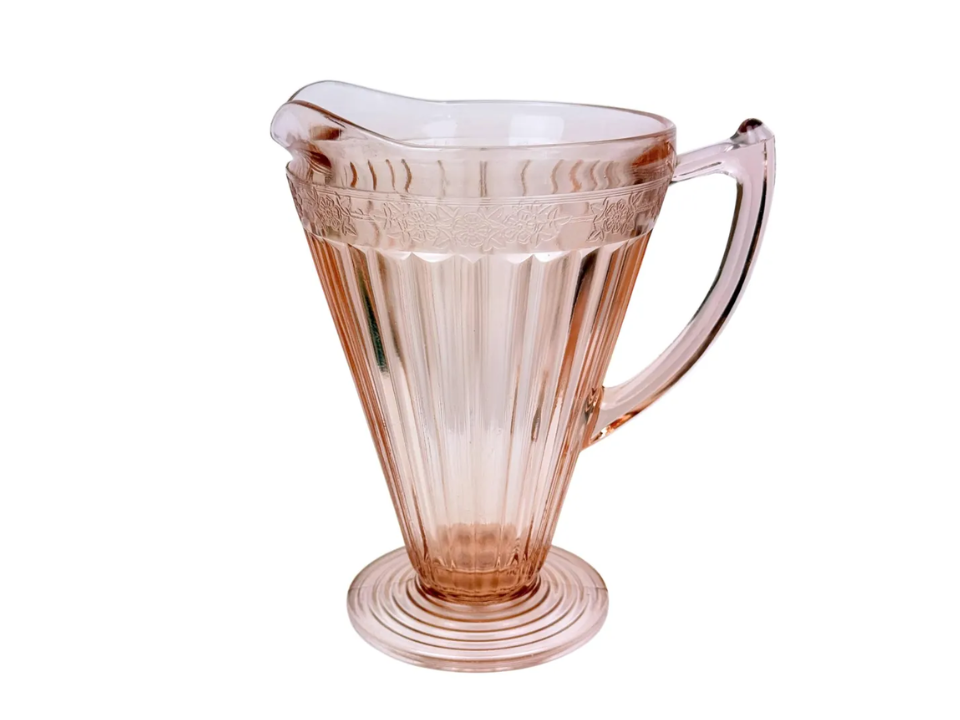
Adam by Jeannette Glass catches the eye when it appears in less common colors such as certain blues, yellows, or special crystal tones. The pattern favors squared shapes and a neat geometric layout that looks good in stacks. Covered butter dishes, unusual servers, and handled pieces did not survive in large numbers, which adds to their draw today. Collectors appreciate how Adam pieces can anchor a vintage table setting with clean lines and period charm.
Plates in standard shades may sell for about $20 to $40. Scarce forms and colors can climb much higher, especially when a rare covered dish or server appears in top condition. A standout covered butter dish in a prized color can approach $1,000 or more when every detail is right. People who collect Adam often spend years filling in missing pieces, which helps explain the strong bids when a hard-to-find item finally shows up.
Hocking Mayfair Open Rose in Blue
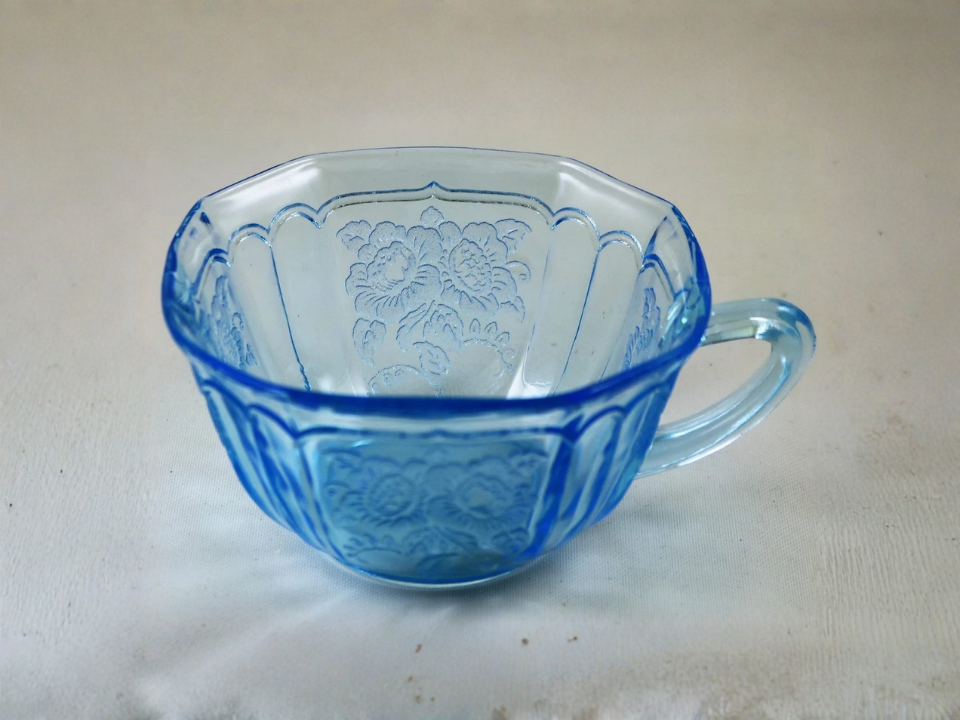
Blue Hocking Mayfair, often called Open Rose, brings a cool, icy tone that feels different from the usual pink and green. Clusters of roses rise gently from the glass, surrounded by structured panels that frame the pattern. These blue pieces had a limited production run, so they appear far less often than other colors. Collectors like how this shade brings variety and depth to a cabinet full of warmer Depression glass.
When you study blue Mayfair prices, simple pieces in this color already stand above common shades. Footed tumblers, grill plates, and larger serving dishes can reach into several hundreds of dollars when clean and matched. A group of blue tumblers in excellent condition can land in the $600 to $750 range, especially when sold as a set. Buyers take time to compare mold details and thickness, since copies and modern pieces can sometimes imitate the general look.
Jeannette Doric and Pansy in Ultramarine
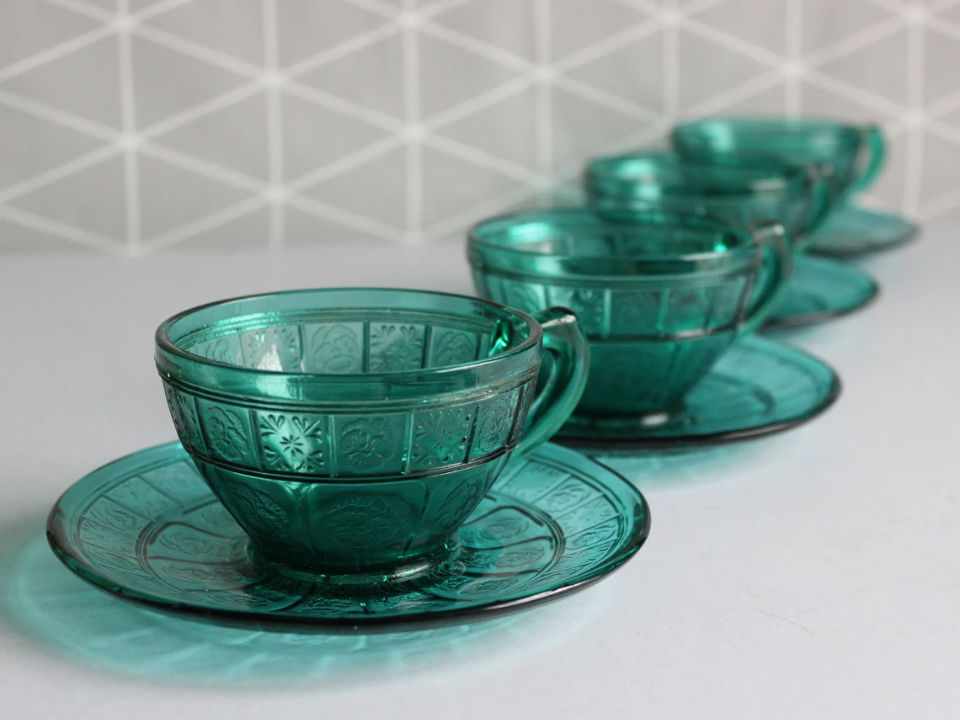
Doric and Pansy by Jeannette Glass becomes especially appealing in ultramarine, a rich teal color that reads strong on the shelf. The pattern pairs upright columns with pansy blossoms, so each piece has both structure and floral interest. Production lasted only a couple of years in the mid 1930s, which keeps the total number of surviving pieces low. Collectors enjoy how ultramarine Doric and Pansy pop among softer pastels and softer greens.
Across many sales, everyday shapes in ultramarine Doric and Pansy often bring around $40 to $90. Small serving items like creamers or sugars, especially with matching partners, can slide into the $100 to $150 range. Salt and pepper sets and special servers in this color tend to do well when the glass is clean and stoppers are intact. People who collect this pattern look for chances to build table sets, and complete groupings often reach several hundred dollars.
Federal Parrot in Green
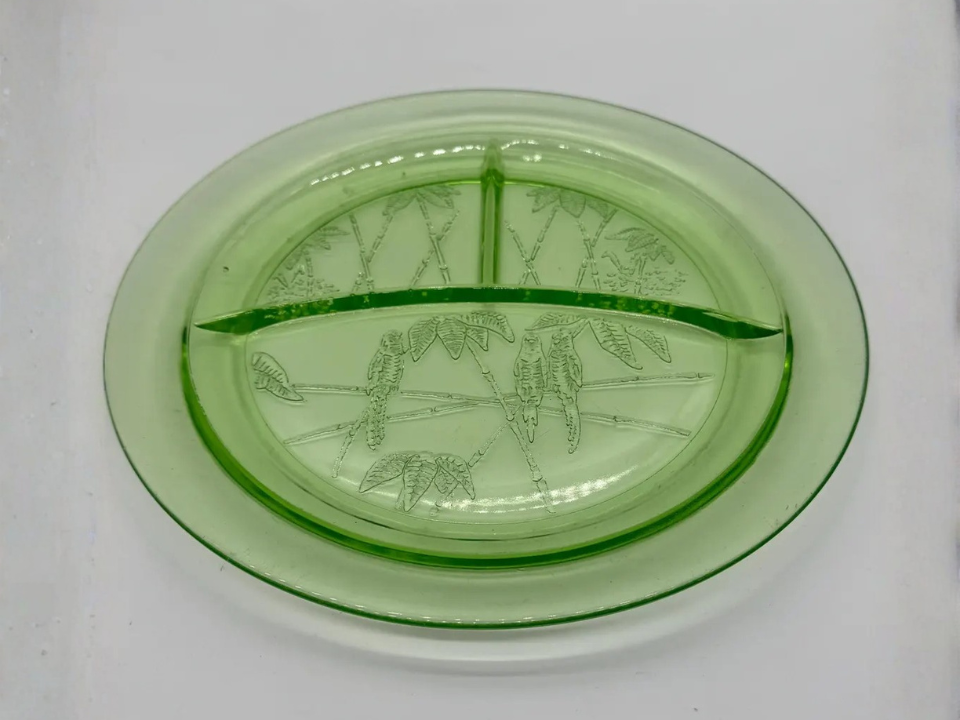
Federal Parrot delivers a playful touch because the twin parrots and bamboo stalks look like a tiny scene frozen in glass. The green color makes the birds stand out sharply against the background, so the motif reads clearly across the table. Production ran for only a short time in the early 1930s, leaving a fairly small pool of surviving pieces. Collectors who enjoy figural and novelty designs value Parrot as a way to break up rows of floral patterns.
These plates and bowls commonly sit between $40 and $90 in nice condition. Cream and sugar sets can draw $250 to $300 when the pattern is crisp, and both pieces match well. Larger serving forms, such as pitchers and console bowls, may move into the low to mid hundreds, especially when they show little wear. Buyers check the parrot figures closely, since worn or muddy details can bring selling prices down by a wide margin.
MacBeth Evans Petalware with Pastel Bands
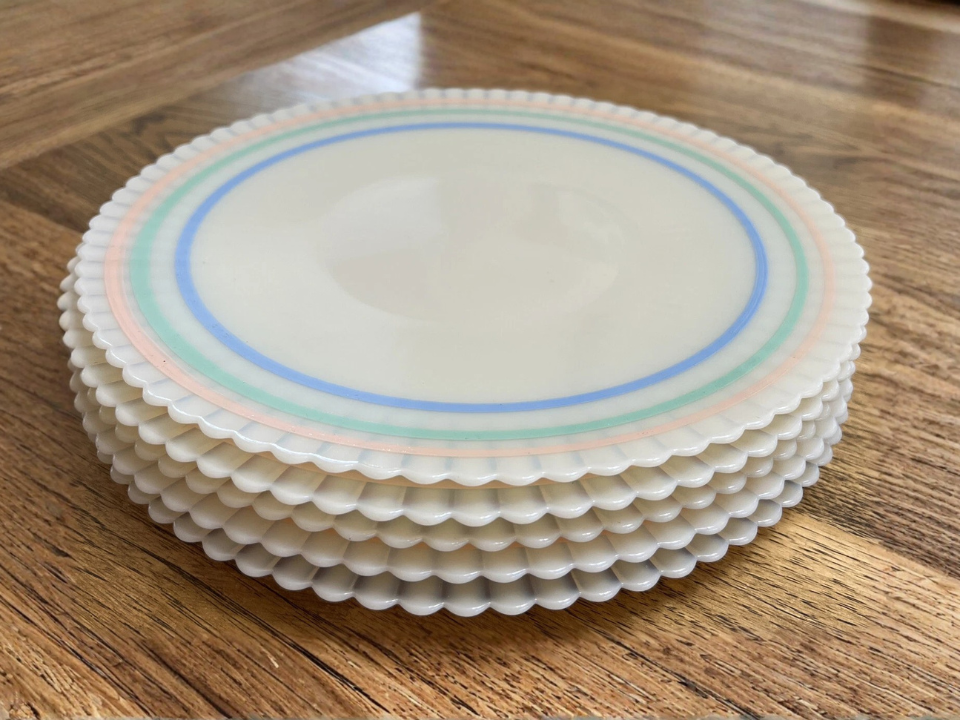
Petalware with pastel bands from MacBeth Evans carries a light dessert-style look that many collectors find charming. The base glass often appears as pale Monax or clear crystal, with pastel rings painted along the fluted rims. Colors such as pink, blue, yellow, and green wrap around the edges and make even simple plates feel festive. Because banded pieces were used and washed often, clean sets with bright paint are not easy to find.
In current price ranges, plain Petalware without decoration may sell for only a few dollars per piece. Pastel band pieces usually climb much higher, with single plates and bowls often running between $30 and $80 when paint is intact. Sets of cups and saucers with strong colors can reach several hundred dollars, sometimes near $700 or more. Collectors tilt toward examples where the bands are even and unfaded, since flaking and dull paint quickly cut the appeal.
Jeannette Cherry Blossom in Pink
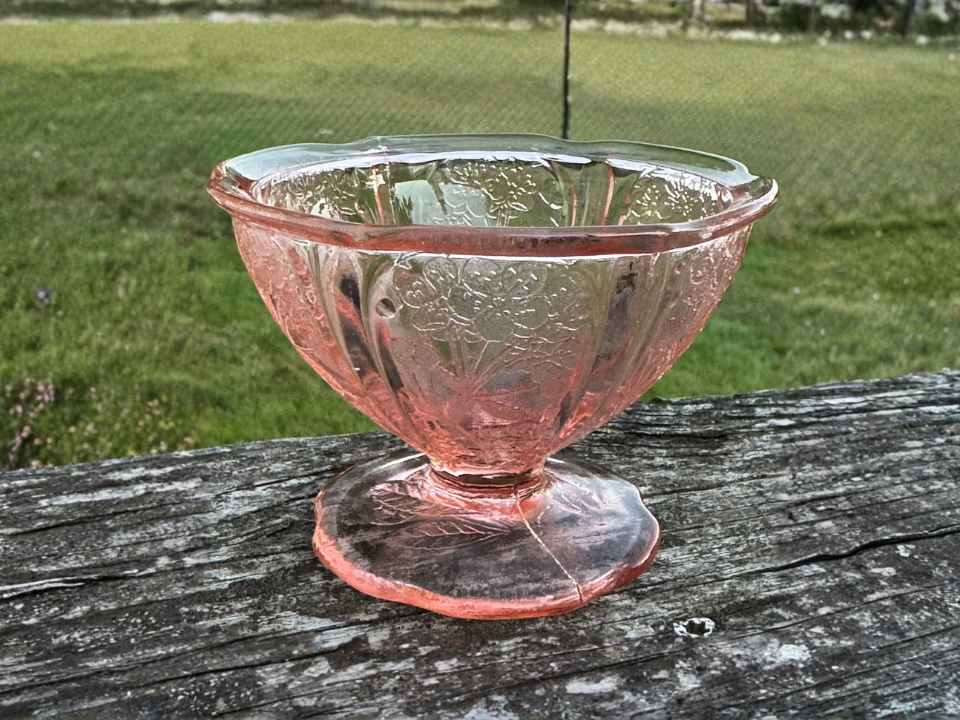
Pink Cherry Blossom by Jeannette Glass is loved for its soft color and field of blossoms and leaves that cover the surface. The pattern looks gentle but holds up well in display, especially when grouped on open shelves or in a china cabinet. While production ran through much of the 1930s, certain forms, such as special serving pieces and child sets, remain tough to locate. Collectors like this pattern because it can be both decorative and practical on the table today.
In price terms, dinner plates in pink Cherry Blossom usually sell around $25 to $40 when they stay clean and bright. Pitchers and large serving bowls can reach $60 to $90, depending on shape and condition. Child tea sets in this pattern often sit far higher, sometimes between $300 and $500 when complete and free from cracks. People who hunt for this glass watch carefully for later copies, preferring original pieces with crisp details and the right weight in the hand.
Miss America in Pink by Hocking
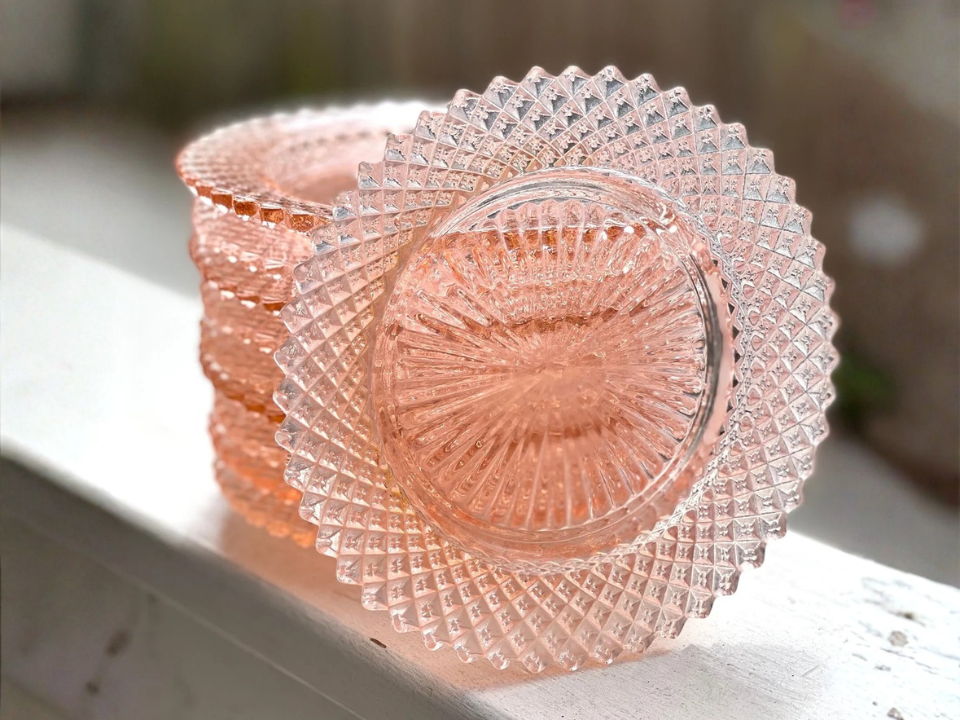
Miss America in pink from Hocking Glass shows off a sharp diamond point surface that catches light from every angle. This pattern covers plates, bowls, and serving items with tiny raised diamonds, so the glass sparkles even in soft light. The pink shade works well for both display and special occasion tables. Collectors like that there are many shapes in this pattern, which makes it possible to build a full set.
At flea markets and online sales, small pink Miss America plates and sherbets often range from $15 to $40. Larger items such as pitchers, footed cake plates, and divided trays may fall in the $60 to $175 band when they show minimal wear. A complete service for eight in this pattern can reach around $1,000 when all the pieces match and look clear. These big sets appeal to collectors who want a ready-made vintage table without needing to piece it together over many years.
Hazel Atlas Aurora in Cobalt Blue
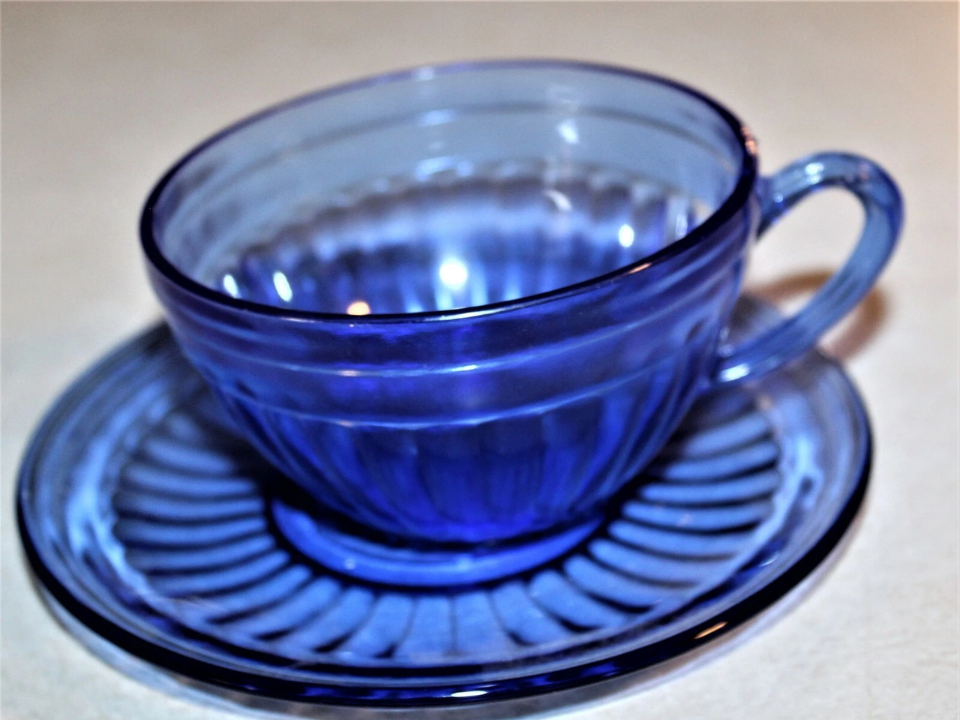
Aurora by Hazel Atlas in cobalt blue gives a quiet ribbed pattern a much stronger presence. The deep blue shade makes even plain bowls and tumblers feel rich, especially when grouped with other cobalt glass. Simple bands and smooth lines define the pattern, so the color does most of the work. Collectors often use Aurora pieces to fill gaps in cobalt displays because the shapes stack and store nicely.
Cobalt Aurora small bowls, and tumblers commonly land between $20 and $40. Taller or more unusual forms can reach $60 to $70 when they show good color and minimal wear. Sets of cereal bowls or drinkware sometimes bring totals in the low hundreds when everything matches well. Since the pattern is simple, chips on rims or bases are easy to spot, and those flaws tend to bring the price down.
Sharon Cabbage Rose in Pink by Federal
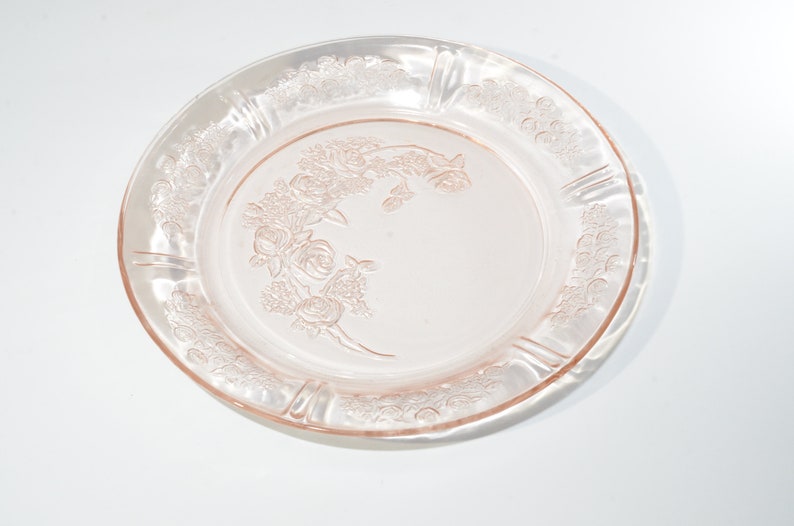
Sharon, often called Cabbage Rose, delivers a full floral pattern that wraps bowls, plates, and serving pieces in raised roses. Pink examples from Federal Glass feel especially gentle, with the blossoms standing out softly from the colored glass. These pieces spent many years as everyday dishes, so perfect survivors are less common than you might expect. Collectors often bring Sharon out for spring or garden-themed tables because the pattern fits those settings nicely.
Small pink Sharon bowls and soup plates often sell for about $15 to $25. Larger serving bowls, cake plates, and divided trays tend to fall between $30 and $60 when they look clean. Covered pieces and cheese dishes with lids can climb past $100 if glass and pattern details stay crisp. Since some modern pieces echo this look, careful buyers study thickness, mold quality, and base designs to be sure they are buying older glass.
Royal Lace in Pink or Green by Hazel Atlas
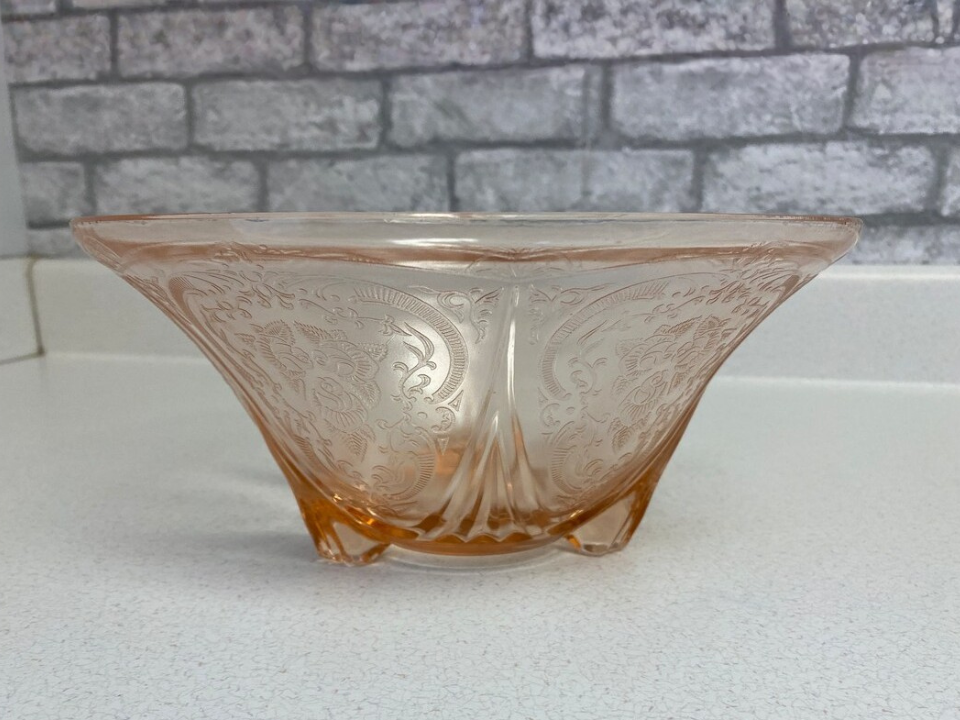
Royal Lace in pink or green still holds strong appeal for collectors who enjoy lace-style patterns in softer colors. Pink pieces feel romantic and gentle, while green examples look vivid and rich in a cabinet. Both shades share the same flowing design that made this pattern stand out during its original run. Collectors often like to mix pink and green pieces together for a coordinated yet varied display.
Single plates and bowls usually appear in the $30 to $70 range. Pitchers, console bowls, and uncommon shapes can climb into the $100 to $250 band when they show strong pattern detail and little damage. Sets of tumblers or coordinated table groupings in either color can reach several hundred dollars once everything is counted together. Because interest in Depression glass can rise and fall over time, many buyers track recent sales and local availability before deciding what they are willing to pay.
This article originally appeared on Avocadu.