
12 Rare Pocket Watches With Unique Dials And Cases
When you start to think seriously about pocket watches, you quickly learn that dials and cases can be as important as the brand on the movement. Painted scenes, unusual color combinations, or fancy numerals can make one watch feel special while others fade into the background. Cases with hinged covers, hand engraving, or interesting metals add another layer of charm that collectors appreciate. So as you go through this guide, take notes on the styles that speak to you and consider how they might shape a collection that feels truly personal.
This post may contain affiliate links, which helps keep this content free. Please read our disclosure for more info.
Patek Philippe Henry Graves Supercomplication
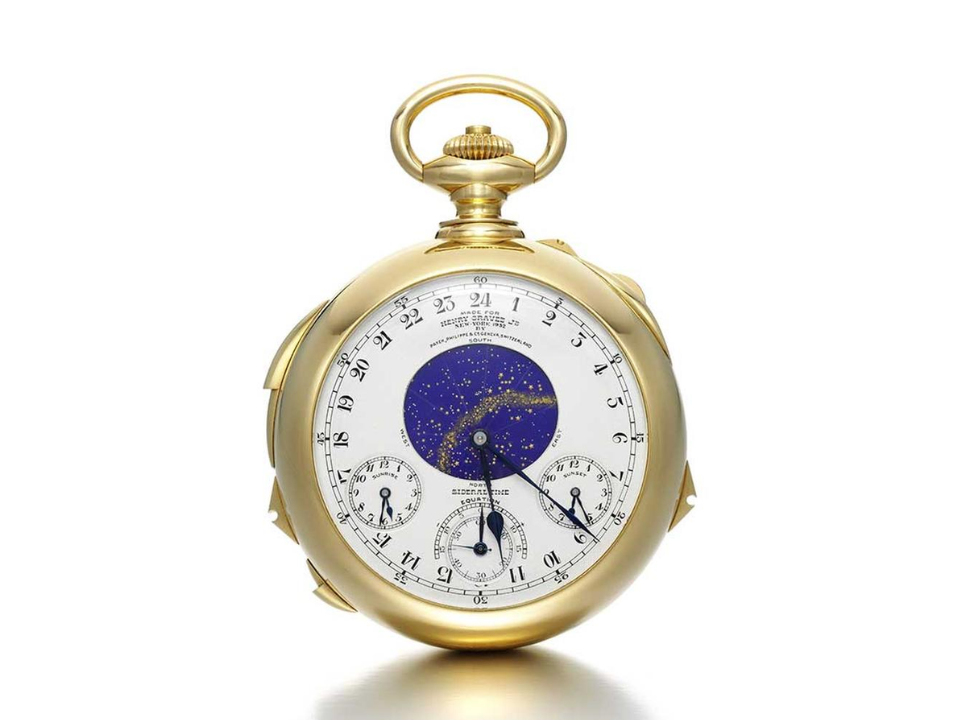
The Henry Graves Supercomplication was completed in 1933 by Patek Philippe for New York banker Henry Graves Jr. The watch carries an 18 karat yellow gold case with rich engraving and a double sided dial that shows time, calendar, and astronomical displays. Its dial on one side includes a sky chart set for the New York sky above the owner’s home, which makes the watch feel very personal. Auction history has seen this watch reach values near $24,000,000, which places it in a very rare group.
This is a one of one commission that has no identical companion in the market. The movement inside packs dozens of complications, so the special dials and heavy case all had to be designed around that single mechanism. Collectors view it as a yardstick when they talk about very complex pocket watches and record prices. Anyone who studies great pocket watch collections usually meets this piece as a reference for extreme rarity and value.
Breguet No. 160 Marie-Antoinette
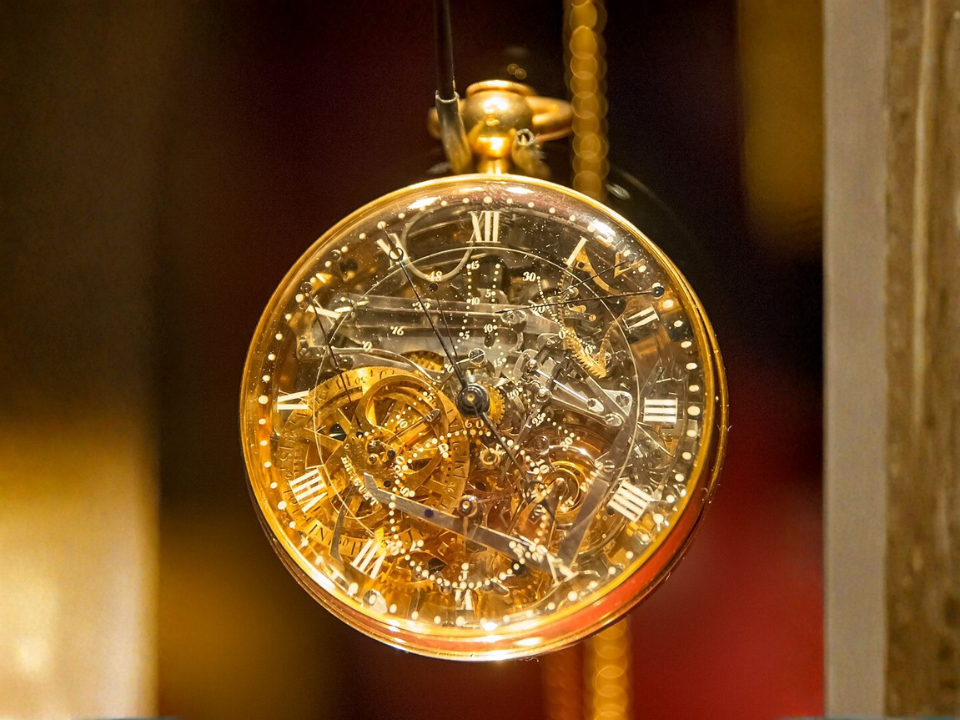
The Breguet No. 160, often linked to Marie Antoinette, began in 1783 and took many years to complete. Its case is made in rich yellow gold with a white enamel dial on one side and a rock crystal display on the other. That clear back allows light to fall on the movement so the tiny levers and wheels can be seen at work. Experts often speak of this watch with notional values near $30,000,000, even though it sits in a museum collection rather than moving between private owners.
In terms of design, the case decoration and elegant dial layout reflect the high taste of the late eighteenth and early nineteenth centuries. The movement combines a perpetual calendar, minute repeater, and several other features that were remarkable for its time. This level of technical work, paired with royal connections, makes the watch especially interesting to historians and collectors. Anyone who appreciates pocket watches with deep stories and complex inner workings will find this piece hard to ignore.
Patek Philippe Calibre 89
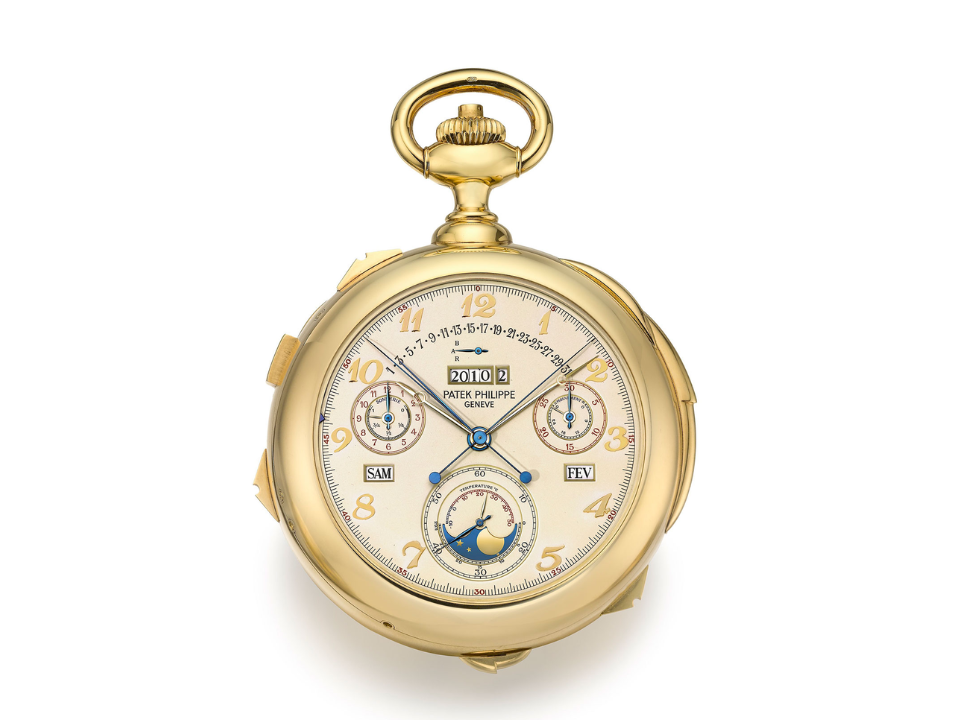
The Patek Philippe Calibre 89 appeared in 1989 as a major anniversary project for the company’s 150th year. Four examples were made, each in a different metal, including yellow gold, white gold, rose gold, and platinum. The huge cases carry two dials filled with calendar, astronomical, and timekeeping displays that leave very little empty space. Individual watches from this group have been estimated and sold in a range from about $6,000,000 to $10,000,000 depending on metal and condition.
The cases remain fairly clean in shape so that the dials and sheer size do the visual work. Inside, the movement involves many complications that speak to late twentieth century watchmaking skill. Each metal version is scarce by itself, which helps keep collector interest strong whenever one appears at auction. For a person building a list of truly complex pocket watches, the Calibre 89 often stands near the top.
Vacheron Constantin Reference 57260
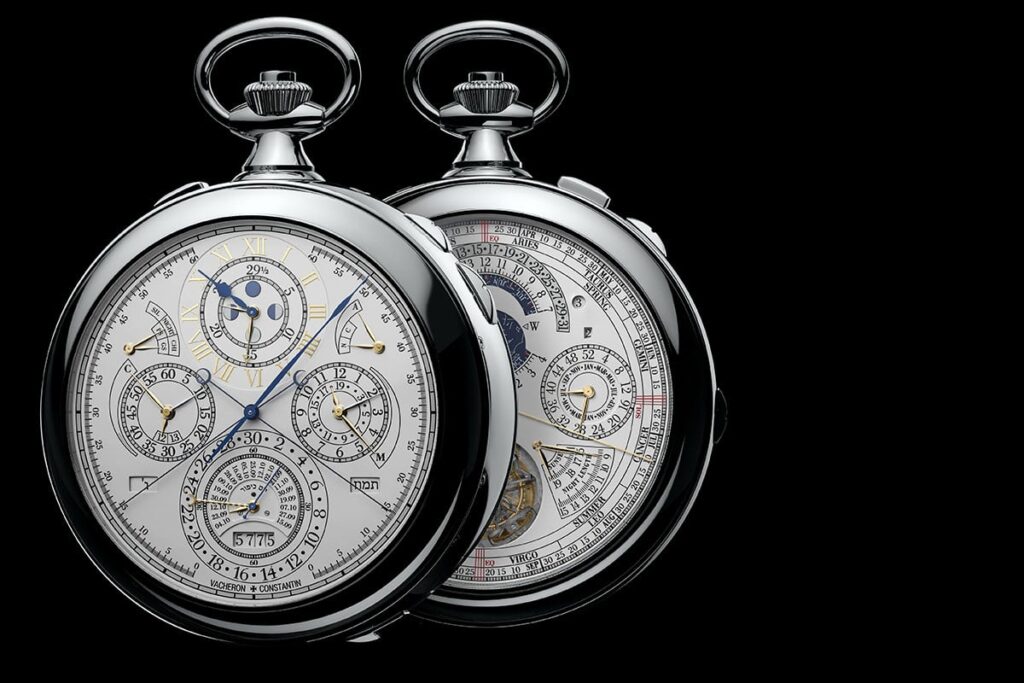
The Vacheron Constantin Reference 57260 was revealed in 2015 as a single commission that took years of planning and construction. This watch uses a large white gold case with two full dials, one on each side, each covered with hands and scales. The movement includes dozens of complications, including several calendar systems and unusual time displays. Various reports have placed its estimated value above $10,000,000, even though the exact figure for the commission has not been made public.
One dial organizes civil time, chiming functions, and classic information, while the second focuses on calendars and astronomy. The case design stays fairly simple, which helps keep attention on the dial details and the sheer size of the watch. Because it is a one of a kind piece, collectors can only admire it through images and rare viewings rather than regular sales. Anyone interested in recent high complication pocket watches will almost always mention this reference in their research.
Patek Philippe Star Caliber 2000
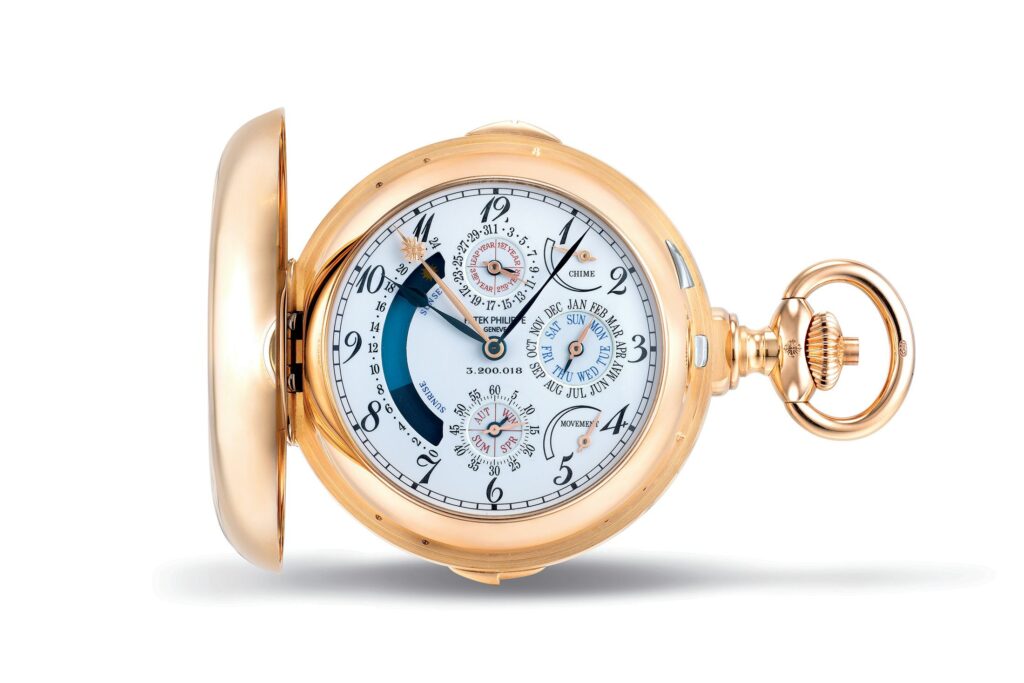
The Star Caliber 2000 line came out around the millennium as a series of very complex pocket watches from Patek Philippe. These watches were produced in tiny numbers in precious metals such as gold and platinum, and some were sold as complete sets. One side of the case presents a full perpetual calendar and chiming information, while the other side shows a moving star chart and moon indications. Values suggested by past offerings and expert commentary sit roughly between $8,000,000 and $10,000,000 for complete sets in strong condition.
The cases feel heavy because of the dense metals, and the lugs and bow are designed for sturdy chains. The main dials have a technical look with overlapping hands and windows, while the celestial side has a darker, night sky style. Collectors who love astronomical themes consider these watches a natural extension of earlier star chart models from the same maker. For someone who wants a pocket watch that links timekeeping with the motion of the heavens, the Star Caliber 2000 makes a powerful statement.
Vacheron Constantin Pocket Watch for King Farouk I
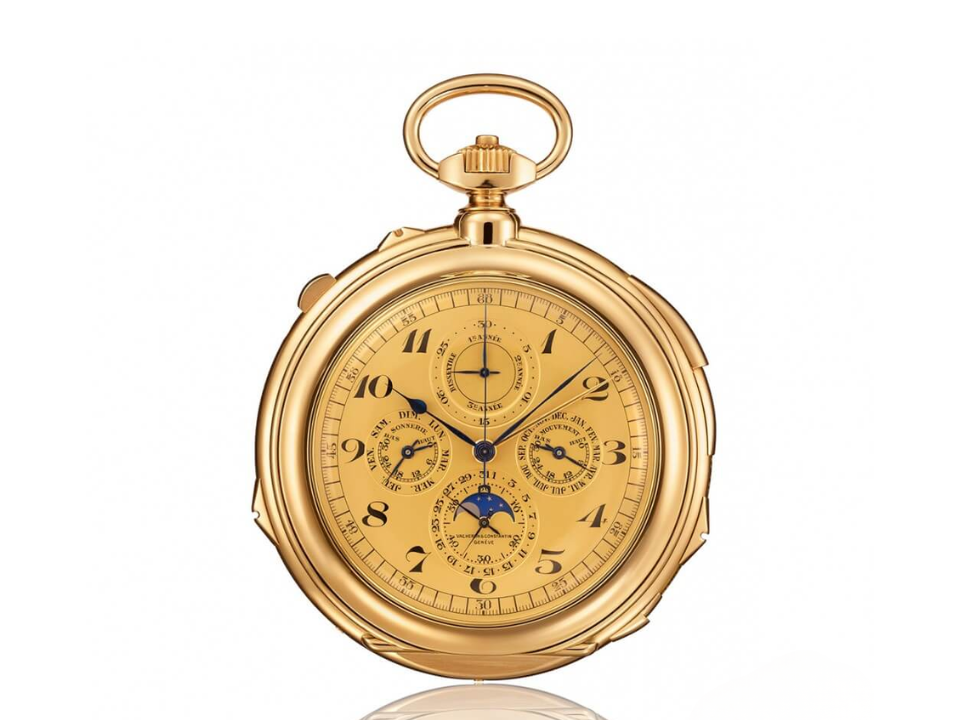
The pocket watch made for King Farouk I in 1946 continues the theme of royal pieces from Vacheron Constantin. This watch also uses an 18 karat yellow gold case and combines a minute repeater with grande and petite sonnerie, split seconds chronograph, perpetual calendar, and moon phase. The dial is formal in style, with clear numerals and neatly arranged subdials that hold a large amount of information. When such a piece is discussed, values are often placed in the multi million dollar range, around $3,000,000 or higher depending on sale conditions.
In terms of decoration, the watch carries inscriptions and emblems that tie it directly to King Farouk and to a specific political era. The enamel and printing on the dial give a clear presentation, which is important for quick reading of many scales. The movement reflects the high point of mid twentieth century pocket watch complications. For collectors who want at least one piece that blends royal history with complex watchmaking, this watch makes a strong case.
Audemars Piguet 150 Heritage Pocket Watch
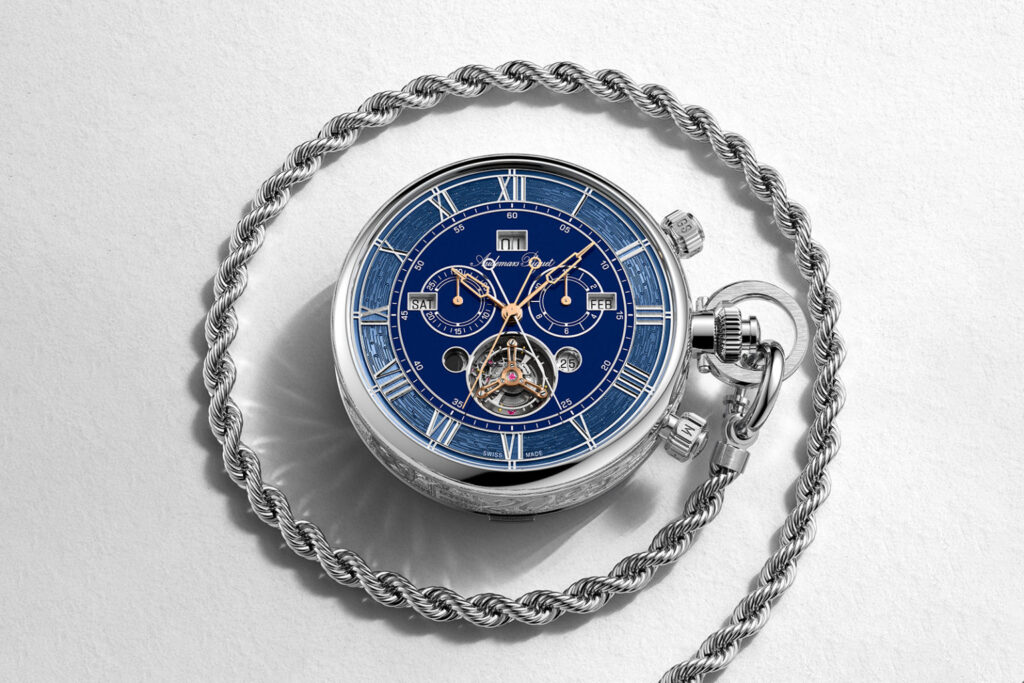
The 150 Heritage pocket watch was introduced in 2026 as part of a modern celebration of the brand’s long story. Its case is 18 karat white gold, and the main dial is white gold covered by blue translucent grand feu enamel, giving a deep, rich color. The dial carries hand engraved Roman numerals and star themed details that fit the astronomical focus of the movement. Early views from the market suggest a value that could sit around $2,000,000 or more for this complex piece.
The movement draws on ideas from the brand’s current grand complication wristwatches but reshapes them for pocket use. The case includes carefully placed pushers and crowns so the watch can be handled with comfort despite its size. With very limited production, each example is aimed at a very small group of advanced collectors. Anyone who wants to add a modern high complication pocket watch with an artistic enamel dial will find this model quite appealing.
Omega Grand Prix Paris 1900 Pocket Watch
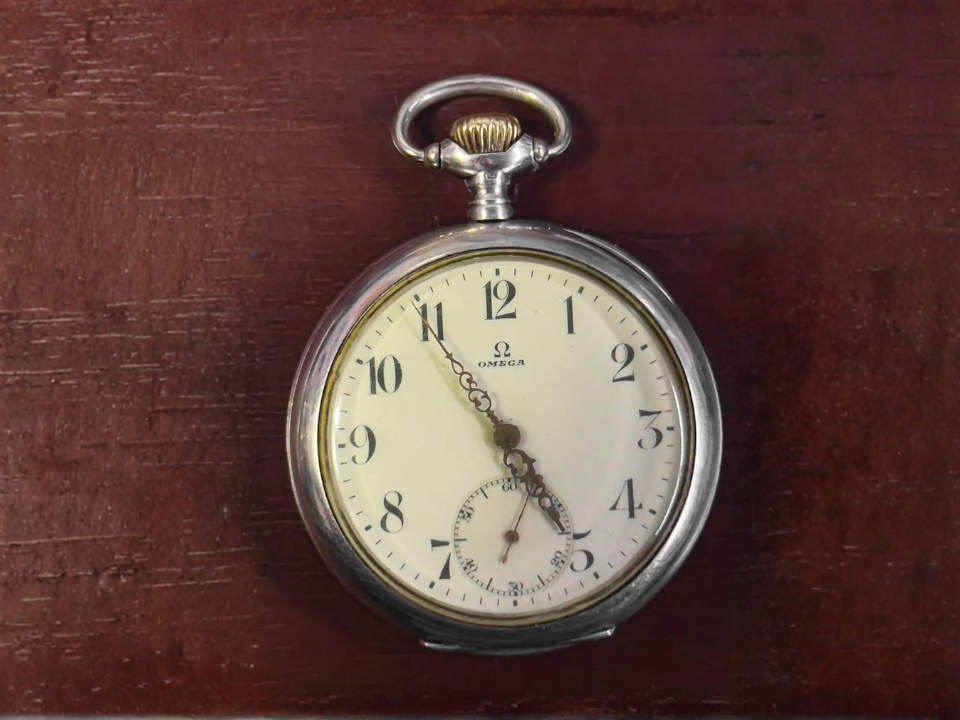
The Omega Grand Prix Paris 1900 pocket watches date back to the early twentieth century and celebrate awards won at the Paris Exposition. Many examples use silver or 14 karat yellow gold half hunter cases with engraved medallions and Grand Prix inscriptions on the back. The dials are usually white enamel with bold Arabic numerals and blue hands, giving a clear and classic look. Market prices today often run from about $1,000 to $3,000, with special gold or mint examples reaching higher.
The backs frequently show award medallions and fine engraving that connect the owner to the Paris event. Some watches have half hunter covers with a small glass window and blue enamel Roman numerals, which adds extra charm. The enamel dials can show hairlines or age spots, and collectors give higher value to clean, original surfaces. For someone who wants an early twentieth century pocket watch with a strong historical link at a reachable price, this group offers good candidates.
Omega Cloisonne Enamel Dial Pocket Watch
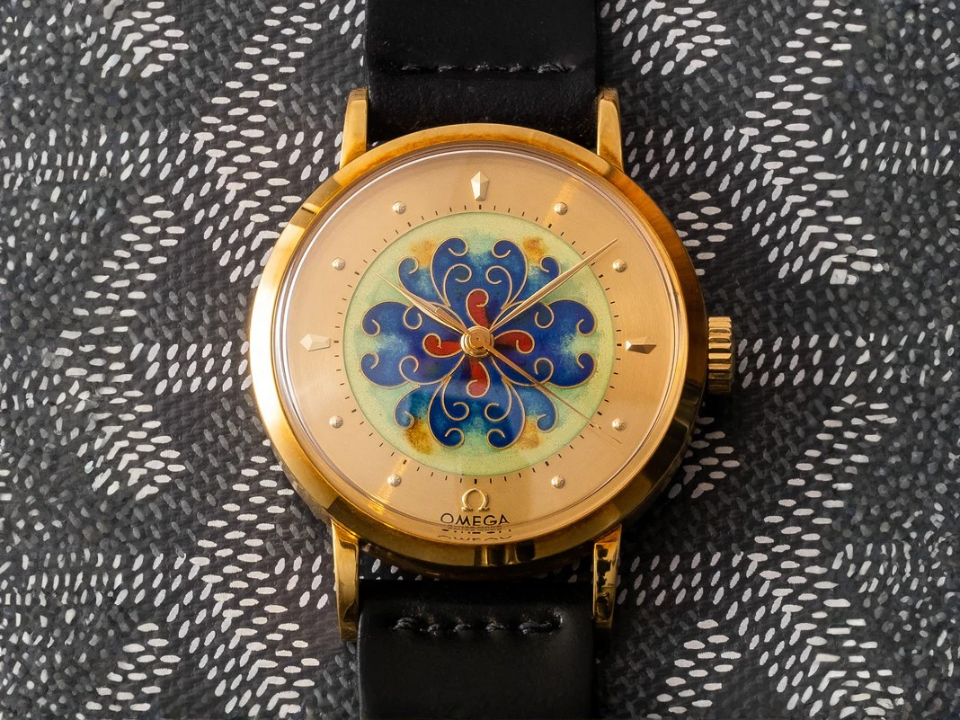
The cloisonne enamel dial pocket watches from Omega, produced in small numbers between roughly 1946 and 1956, hold a special place for collectors. These watches carry dials decorated with hand-applied enamel scenes or patterns formed by thin gold wires filled with colored enamel. Each dial winds up with its own personality because the artwork is done by hand. When an example reaches the market, prices can climb to $50,000 or more, depending on the subject and overall condition.
Many of these watches use solid gold, often with polished or lightly decorated surface,s so that the enamel dial remains the main attraction. The movements inside are mid-century calibers known for steady performance when serviced by a skilled watchmaker. Original enamel without heavy restoration is especially prized, since repairs can change the look of the artwork. For collectors who love pocket watches that feel close to miniature paintings, cloisonne enamel models are very appealing.
American Waltham Multicolor Gold Hunter with Odd Fellows Dial
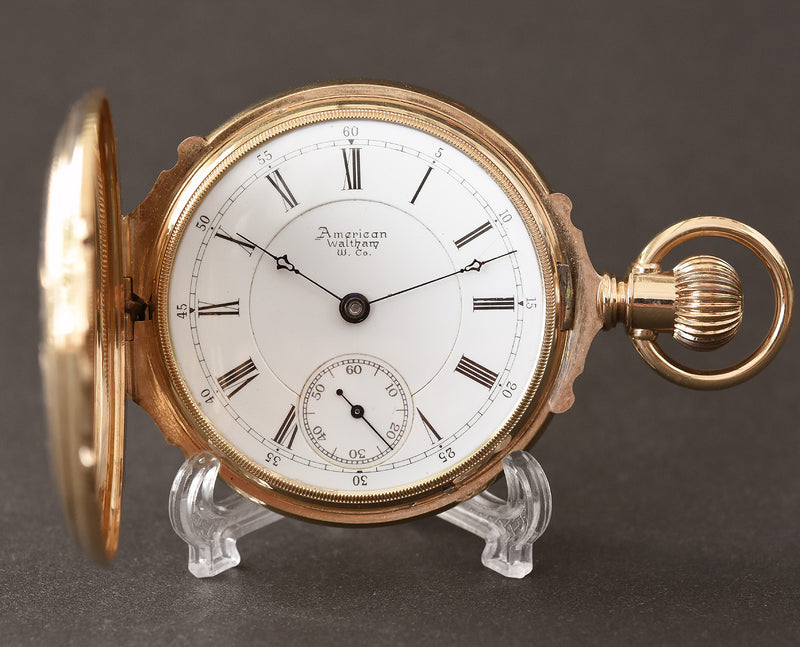
An eye-catching American example is a Waltham hunter pocket watch from around 1910 with a multicolor gold case and Odd Fellows enamel dial. The case blends different shades of gold in engraved floral or symbolic patterns, turning the outside into a small piece of jewelry. Inside the lid, the enamel dial often shows the three chain links and other symbols of the Odd Fellows fraternal group. Auction results for watches of this type tend to fall around $10,000 to $20,000 when the case and dial remain in strong condition.
Looking at the metal work, these watches often use 14 karat gold for both covers and the bow at the top. The movements are higher-grade American calibers with jeweled settings and good timekeeping when serviced properly. The link to Odd Fellows history means that both watch collectors and fraternal organization historians may find the same piece interesting. For a collection that aims to include objects with social or fraternal stories, this Waltham design fits nicely.
Patek Philippe Chronometro Gondolo Pocket Watch
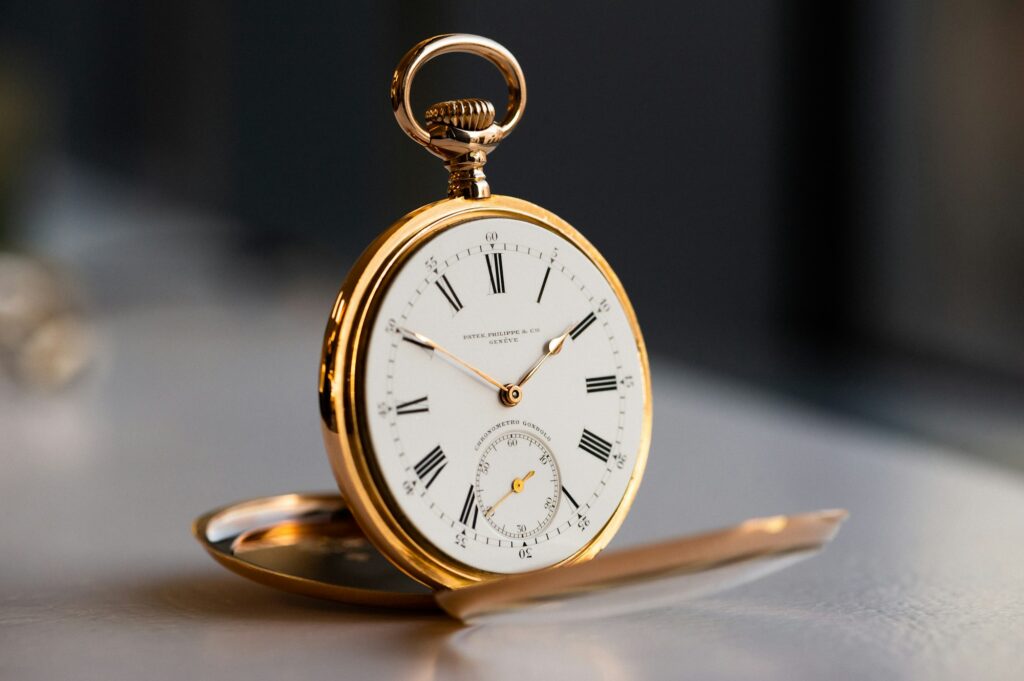
The Chronometro Gondolo pocket watches were made by Patek Philippe in the early twentieth century for the Brazilian retailer Gondolo and Labouriau. These pieces often date from the 1910s and carry large 18 karat rose or yellow gold cases with clean shapes and strong presence. The dials are usually white enamel with bold Arabic numerals, a railway minute track, and sometimes the retailer’s name printed on them. Depending on rarity and condition, these watches can reach values between $20,000 and $50,000.
Some examples show engine turning or stepped bezels that give them a distinct outline compared to more rounded pocket watches. The movements were adjusted to high standards and helped build the maker’s standing in South America. Collectors look for original dials, unpolished cases, and complete sets with chains or boxes, which can raise the appeal. For anyone who wants to show how a major Swiss brand worked with a specific regional partner, the Chronometro Gondolo pocket watches tell that story clearly.
Omega Olympic Rattrapante Chronograph Pocket Watch
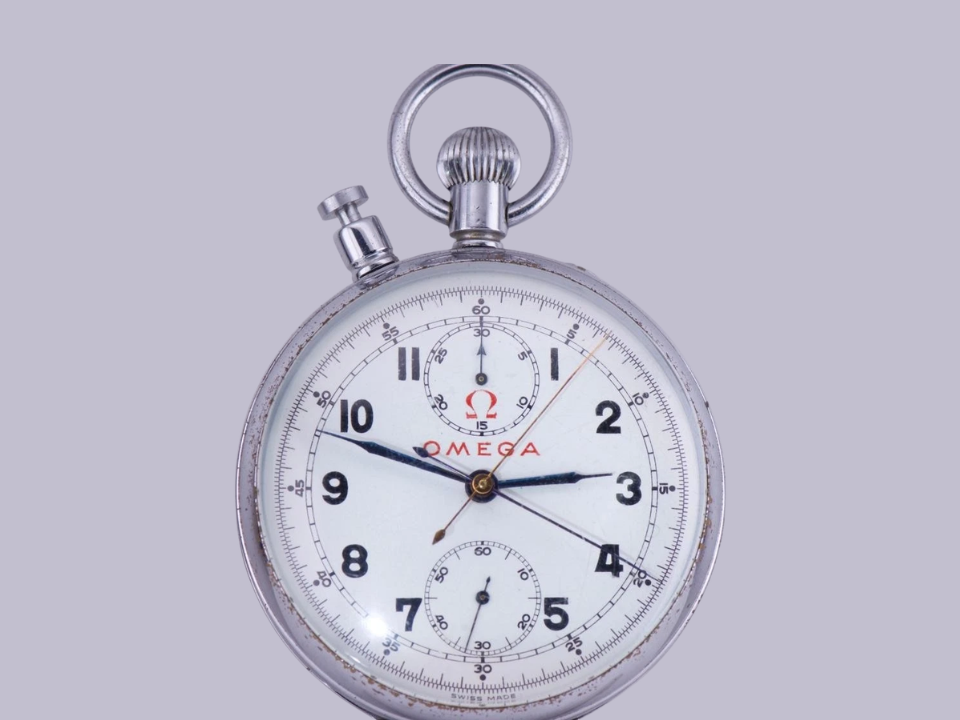
The Omega Olympic rattrapante chronograph pocket watch, with a large case near 65 millimeters, is tied to mid twentieth century sports timing. These watches usually use stainless steel or high-grade silver cases that can withstand regular handling. The dials are busy with multiple scales and split-second hands that allow timing of two events at once, often in black and red for clarity. Current market listings tend to show prices from about $3,000 to $5,000, which is attractive for a large and complex pocket chronograph.
The crowns and pushers are sized so that the watch can be used with gloves at events. The movements inside are designed for accuracy and repeat timing tasks, which suits their original use at athletic competitions. Collectors of Olympic items and timing equipment appreciate the direct link these watches have to sporting history. For a pocket watch collection that could benefit from at least one piece with a strong tool and sports background, this Omega model is an excellent choice.
This article originally appeared on Avocadu.