
12 Glass Icicle Ornaments That People Love to Collect
Glass icicle ornaments have long been a beloved holiday tradition, adding a touch of elegance and sparkle to Christmas trees. These delicate decorations capture the beauty of winter with their slender, frosty shapes that glisten in the light. Over the years, they have become more than just festive décor; they are cherished collectibles that evoke nostalgia and warmth. Whether handmade or mass-produced, each glass icicle tells a story of craftsmanship and holiday spirit. Many people are drawn to their timeless appeal and the way they reflect the shimmering glow of Christmas lights.
This post may contain affiliate links, which helps keep this content free. Please read our disclosure for more info.
Glass Icicle Ornament from 1950s Poland
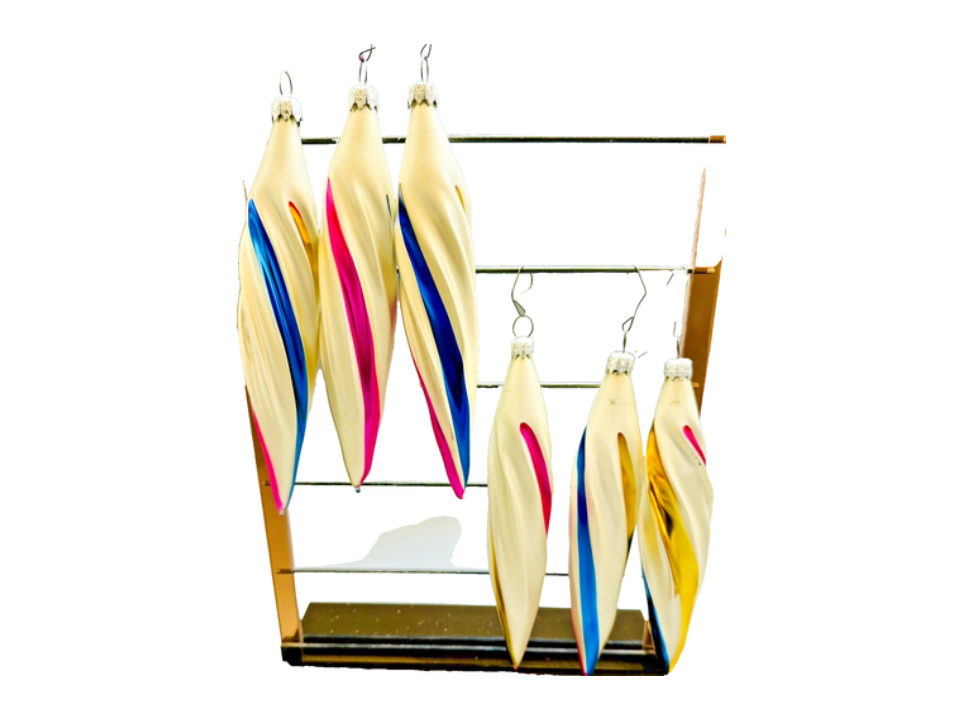
This ornament dates back to mid‑twentieth century Poland and shows the delicate hand‑blown glass style typical of that era. The slender, tapered shape gives it a classic snow‑covered look when hung on a tree. Faded remnants of silvering on the inside give the ornament a soft, warm glow under lights.
Collectors often prize this kind because original paint and glass remain intact after decades. Its fragile quality reminds one of a frosty winter morning with ice hanging from branches. They rarely show chips or cracks, making them desirable among vintage ornament collectors. Condition affects price strongly and those in excellent shape tend to fetch about $45.
Vintage German Mercury Icicle Ornament
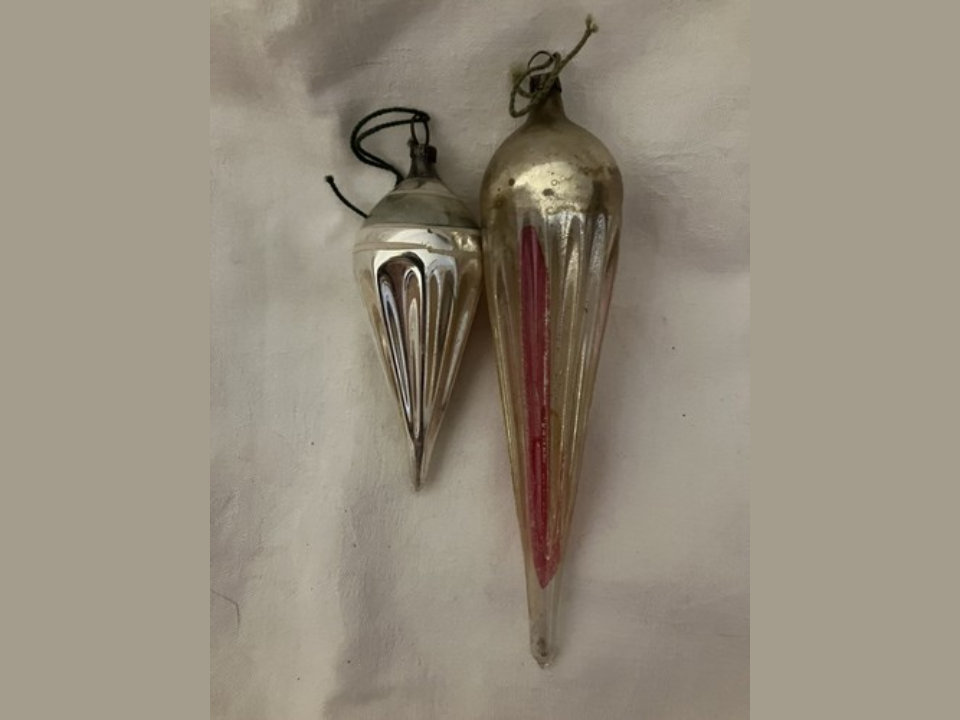
This piece originates from pre‑World War II Germany and was crafted using silvered mercury glass that gives a reflective, slightly smoky surface. The elongated icicle taper ends in a fine point that seems to catch light like real ice. Over the years patina has developed which contributes to a gentle antique sheen without overpowering the glass clarity.
Many collectors value these because of provenance and the way the ornaments echo the atmosphere of old European holiday traditions. The mercury glass resists cracking better than some thin blown ornaments, making them relatively sturdy despite their age. When found in clean condition with original cap and hanging loop intact they often command around $60.
Hand‑Painted Russian Glass Icicle Ornament
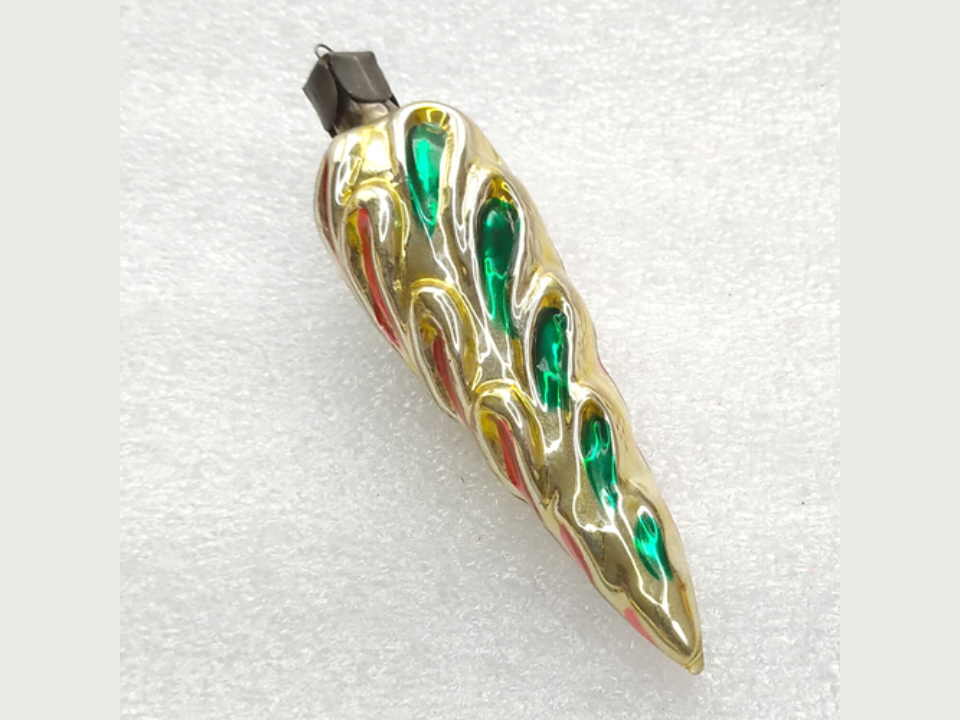
This ornament was created in a small workshop in Russia where artists painted snowflakes and frost patterns on clear glass before sealing it. The result is a delicate blend of transparency and detailed design which stands out among simpler glass ornaments. It reflects tree lights softly and shows subtle color graduations near the painted areas.
Collectors often appreciate its handmade character and the regional painting style that differs from more commercial ornaments. Because each was painted individually no two are exactly alike which adds a layer of uniqueness. For ornaments with minimal wear and vibrant paint such a Russian glass icicle in good shape sells for roughly $55.
Antique Czechoslovakian Glass Icicle Ornament
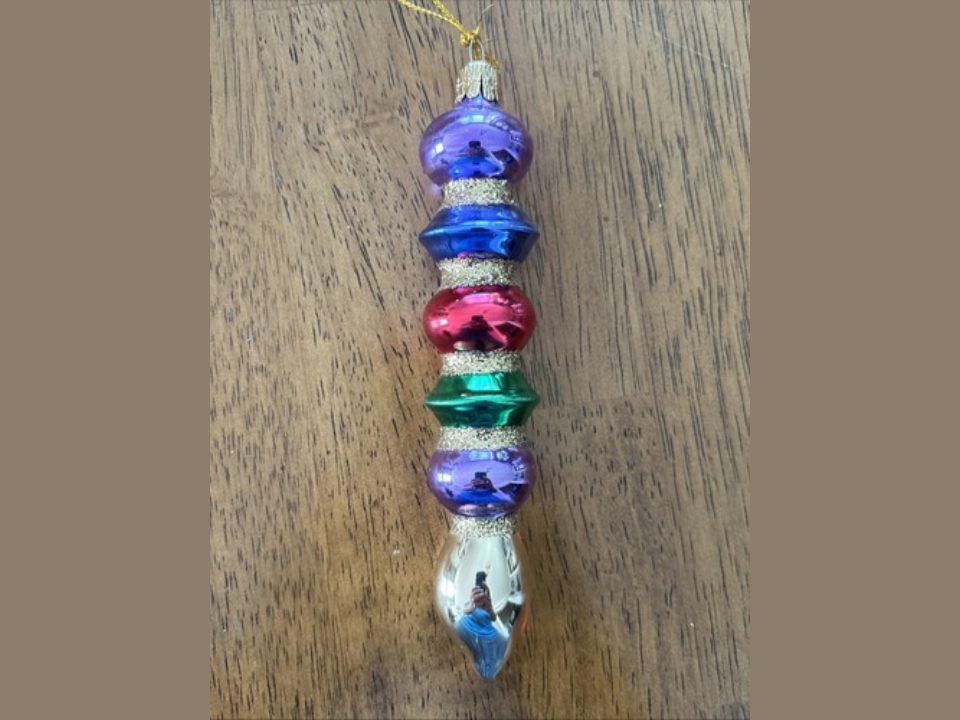
This example was blown and shaped in Czechoslovakia in the early twentieth century when many glassworkers experimented with festive shapes. The glass is slightly thicker than modern ornaments giving it weight and durability. Its surface shows faint signs of age such as micro hairline crazing that many collectors find adds charm rather than reducing value.
The elongated form curves subtly as if shaped by a gentle cold wind before freezing into place. It catches lights and reflects them with a subtle shimmer reminiscent of real ice. When in good collectible shape, these ornaments trade for approximately $50.
Venetian Murano‑Style Glass Icicle Ornament
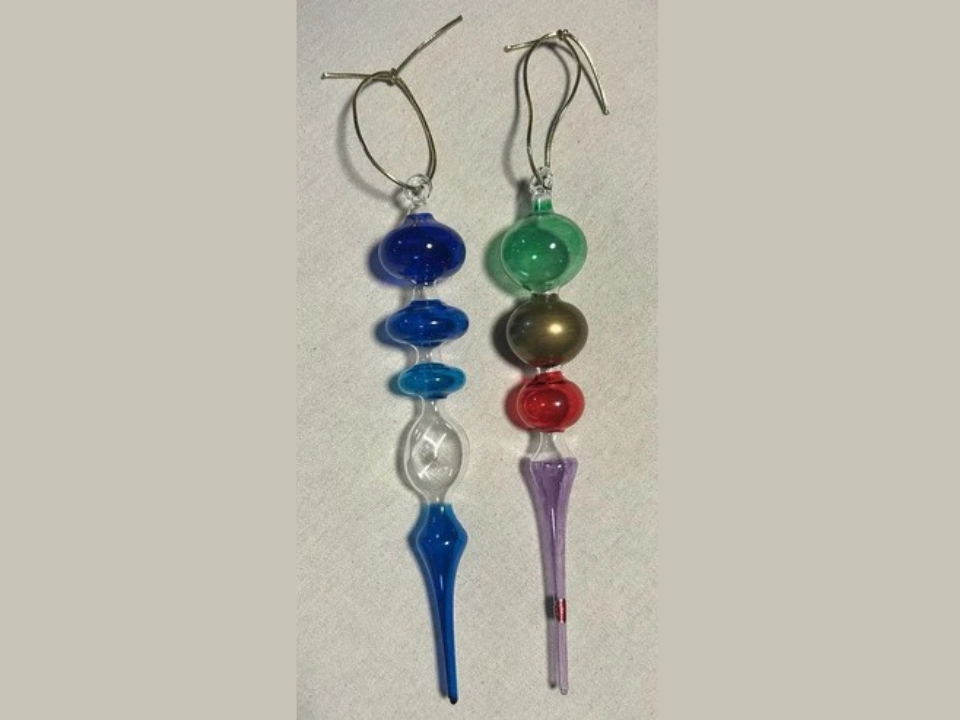
This ornament takes inspiration from Venetian glass traditions where artisans twist molten glass into fine tapering forms before cooling. The result is a graceful shape with a nearly transparent body and occasional faint bubbles trapped inside glass that hint at hand‑made origin. Light passing through gives a spectral glow that many hang as part of vintage or themed tree displays.
Each piece is hand‑working the taper length may vary slightly and the tip may curve gently rather than being perfectly straight. The delicate bubbles and slight irregularities attest to its handmade nature which many collectors value. Quality examples often command about $70 when sold.
Spun Sugar Icicle Ornament
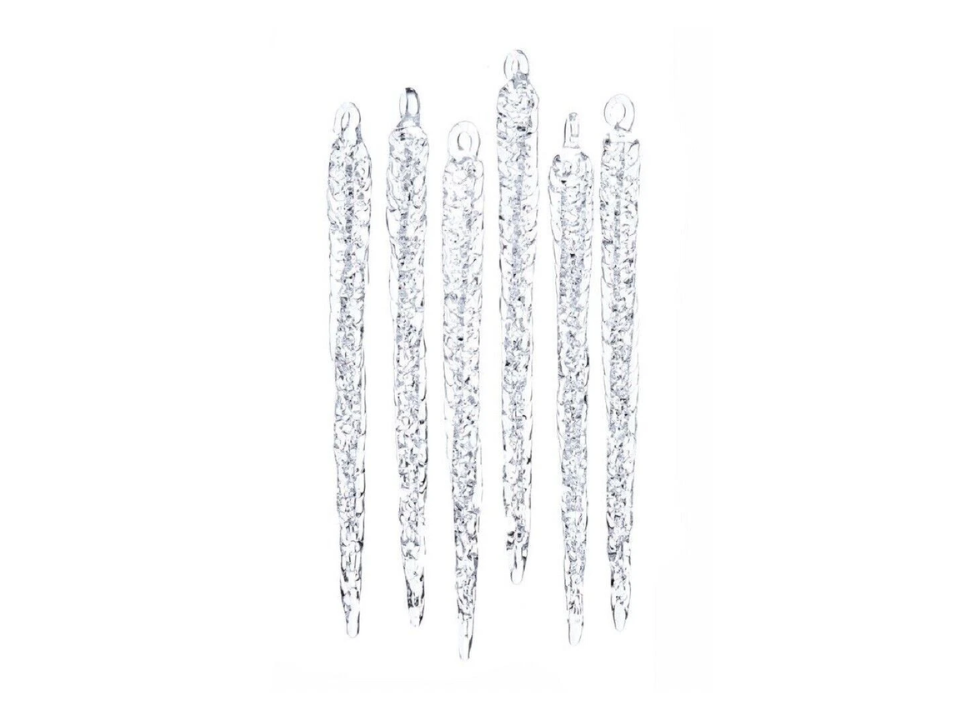
This piece resembles the spun sugar decorations once common in Eastern European holiday traditions. Glassworkers would twist thin rods of glass and pull them gently to create delicate sugar‑like icicle shapes. The glass often shows subtle spiral ridges along its length giving texture that catches light in interesting ways.
When hung on a tree the ornament seems almost to glimmer as if coated in frost. Collectors often look for these pieces because of texture and their old‑world charm. Condition matters because the thin glass can easily crack or chip. Ornament in good vintage shape tends to sell in the range of $40.
Contemporary Artisanal Glass Icicle Ornament
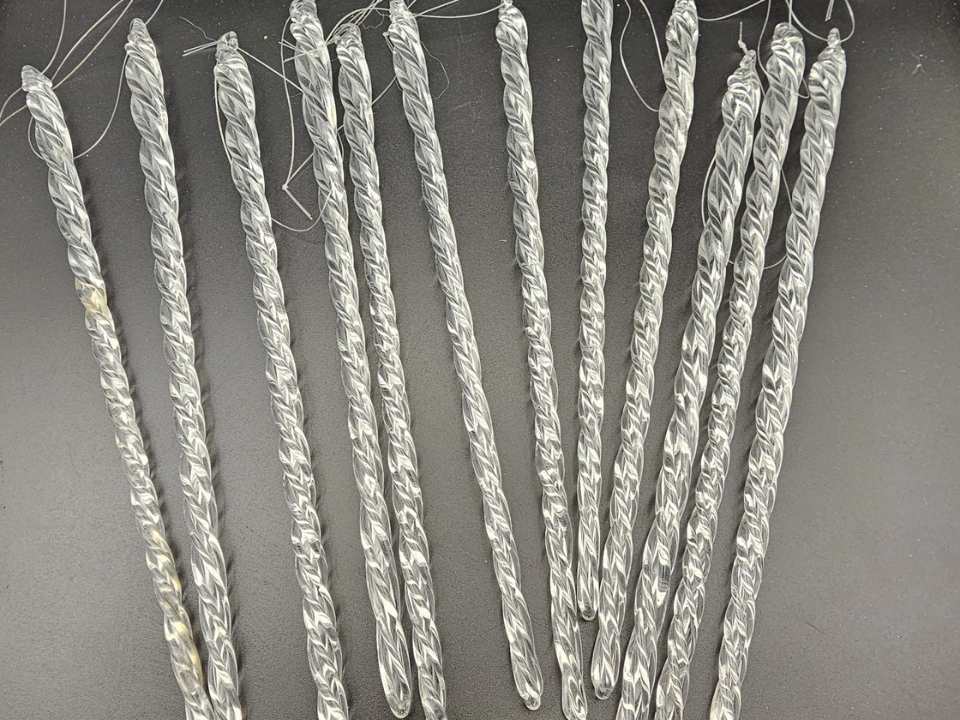
This ornament is recent yet handmade by a small glass studio specializing in festive decorations. It features an iridescent finish that casts soft rainbow reflections around a room when light hits the glass. The shape is elegantly long and slim tapering to a fine point which gives a refined icicle appearance.
These ornaments appeal to collectors who enjoy both vintage and newer handmade pieces with character. Because production is limited and quality is high demand tends to keep value stable. A typical selling price for such an ornament is around $30.
Limited Edition Holiday Series Glass Icicle Ornament from Japan
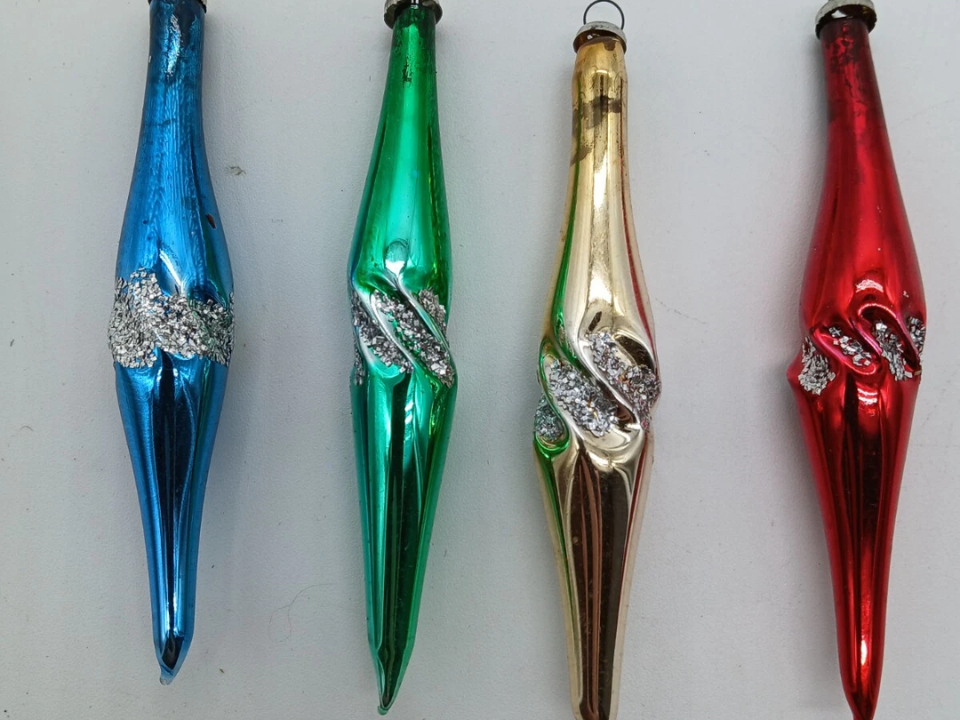
This ornament belongs to a limited holiday series produced in Japan in small batches for specialty stores. Glass is finely blown and every ornament is individually numbered on a small sticker near the top piece. Finish is immaculate and glass clarity is high making light refraction crisp and vivid when hung.
Collectors prize numbered limited editions for potential value preservation and for being part of a set. Complete sets tend to sell better than single ornaments but individual pieces still draw interest. Single ornament in pristine condition often sells for about $45.
Czech Hand‑Cut Icicle Ornament with Faceted Edges
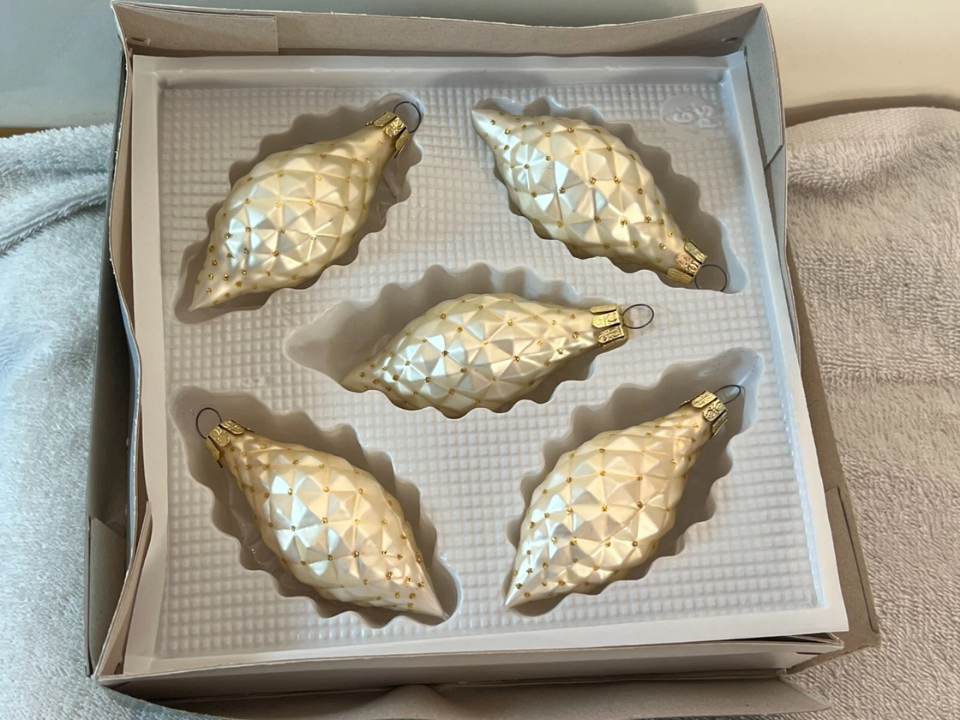
This ornament was manufactured in Czech glassworks where after blowing the glass the artisans cut fine facets along its length. The small facets catch lights and reflect them in many directions which gives a jewel‑like sparkle on a lit tree. The cut edges show excellent clarity and the glass remains free from haze which is a sign of careful preservation.
Collectors value faceted pieces because of how light behaves in them making them stand out among round or smooth ornaments. The shape remains slender and elegant which gives a refined feeling on any holiday display. High quality pieces with little wear sell for around $65.
Russian Vintage Icicle Ornament with Frosted Surface
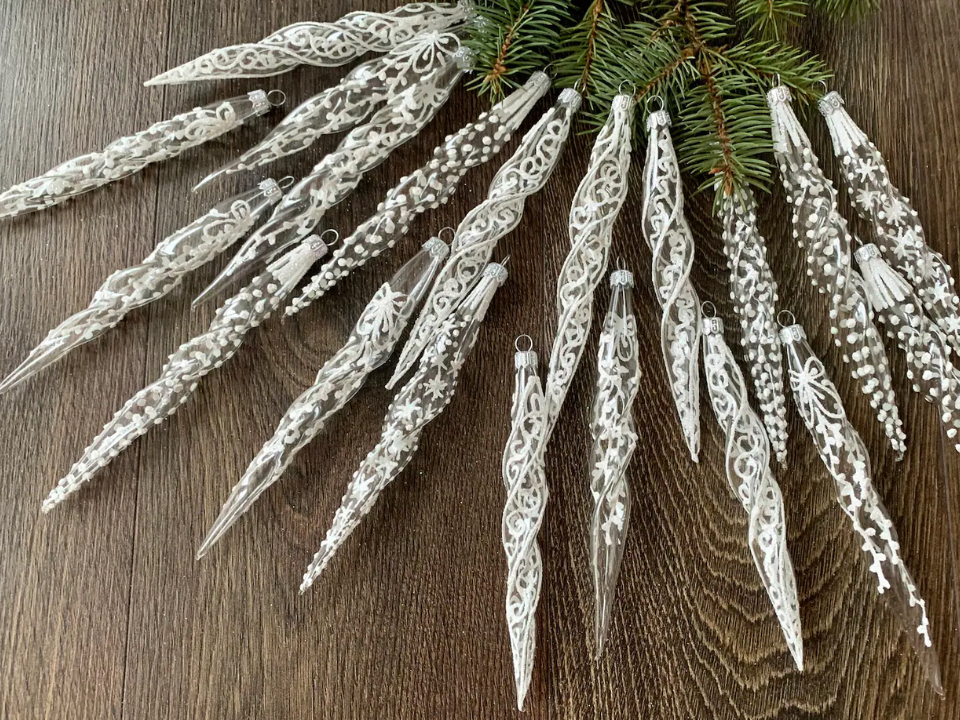
This ornament was given a frosted finish using acid etching or sandblasting after being blown. The frosty surface diffuses light softly giving atmosphere of snowfall on old windows. The overall shape swings gently downward like a frozen droplet before solidifying into ice.
Collectors who value texture and diffused light display often reach for these frosted styles. Over time the frosting remains but glass can become brittle so careful storage matters. A well preserved frosted Russian icicle often sells near $50.
German Vintage Icicle Ornament with Gold Trim
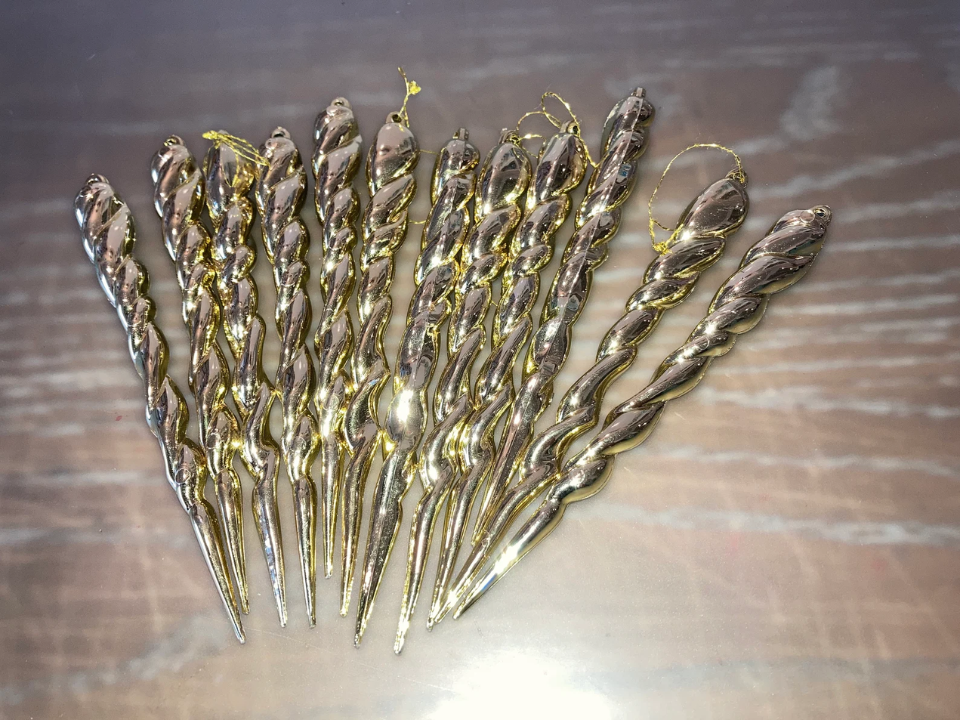
This ornament combines classic glass shape with decorative touches. After blowing the glass artisans added fine gold trim near the top or around the middle for a subtle decorative accent. Light catching gold accents against clear glass give a gentle warmth that stands out among plain icicles.
Many collectors appreciate the added detail which gives a festive feel without overbearing ornamentation. The gold often remains intact if stored properly which helps maintain value. In clean condition these ornaments sell around $55.
American Vintage Iridescent Icicle Ornament
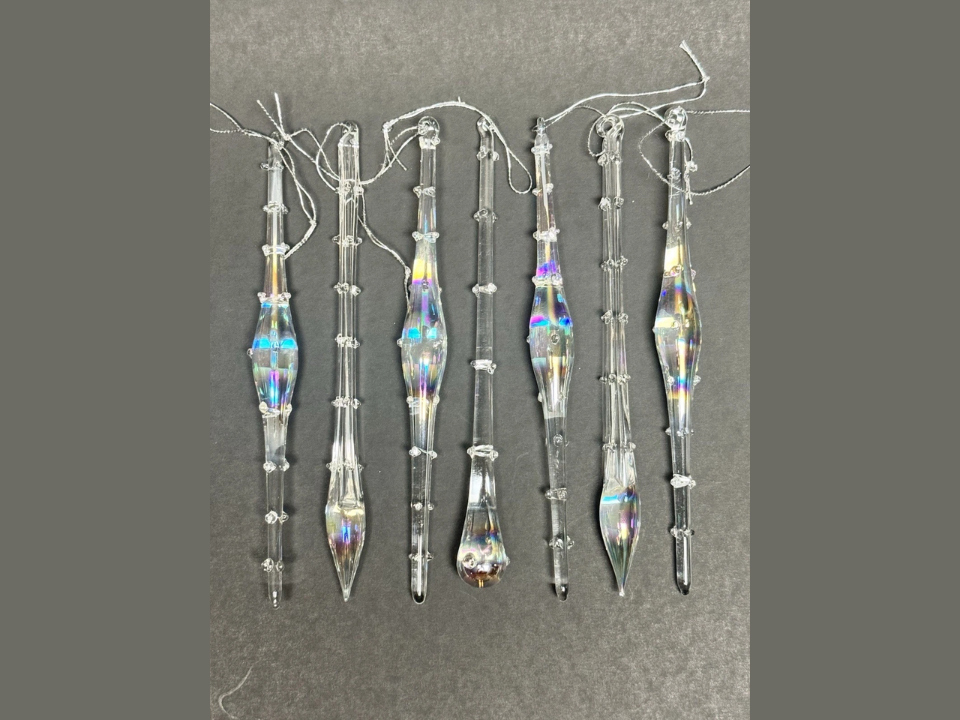
This piece dates to the 1960s or 1970s when American glass ornament makers experimented with coatings that produced subtle rainbow sheens. The glass is fairly thin which gives a fragile feel and the iridescence sometimes shows minor crazing with age but remains intact.
On a lit evergreen tree the surface shimmers softly, giving a nostalgic holiday effect. Many collectors enjoy these because they recall family Christmas trees from decades ago. Because these ornaments are moderately rare and condition dependent they typically sell for about $28 when in good shape.
This article originally appeared on Avocadu.