
11 Rare Oil Cans With Shockingly High Auction Prices
You may not think much about oil cans, but in the world of collectibles, some are highly prized. Oil cans that fetch high prices at auction are often those that have a compelling backstory or stand out for their rarity. The condition of the can, including whether it is still sealed or has unique features, can also contribute to its value. Whether it’s a vintage design or a connection to a legendary brand, these cans captivate collectors.
This post may contain affiliate links, which helps keep this content free. Please read our disclosure for more info.
Texaco 25-lb Grease Can
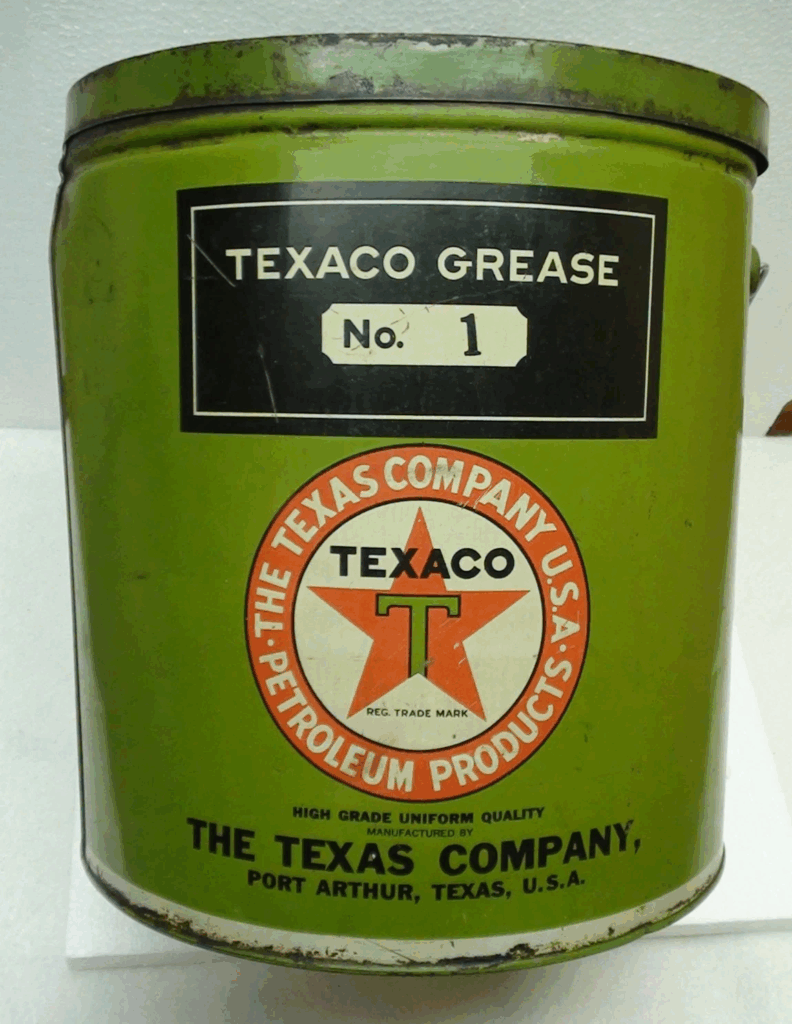
This heavy-duty grease can was made by Texaco in the 1930s and was originally used in service stations or garage shops. Its large capacity and vintage label mark it as a relic of early automotive service culture. Because most grease cans from that era have been discarded or heavily worn, surviving examples in decent condition attract attention from collectors. One listing of such a can recently showed a price around US$650 when offered online, which illustrates its desirability in the collector market. Having a can of this type adds a tangible connection to early 20th-century motoring history.
In many cases the value depends heavily on its preservation – intact label, no rust or major dents, and original seams still tight tend to push prices higher. Collectors often prize these larger cans because fewer people saved them compared with smaller quart-size oil cans. This particular grease can can serve as a display piece that reflects the industrial aesthetic of its era. For anyone interested in petroliana or automotive memorabilia, this item stands out as a solid example of early service-station equipment.
Early 1-Gallon Oil Can by Texaco
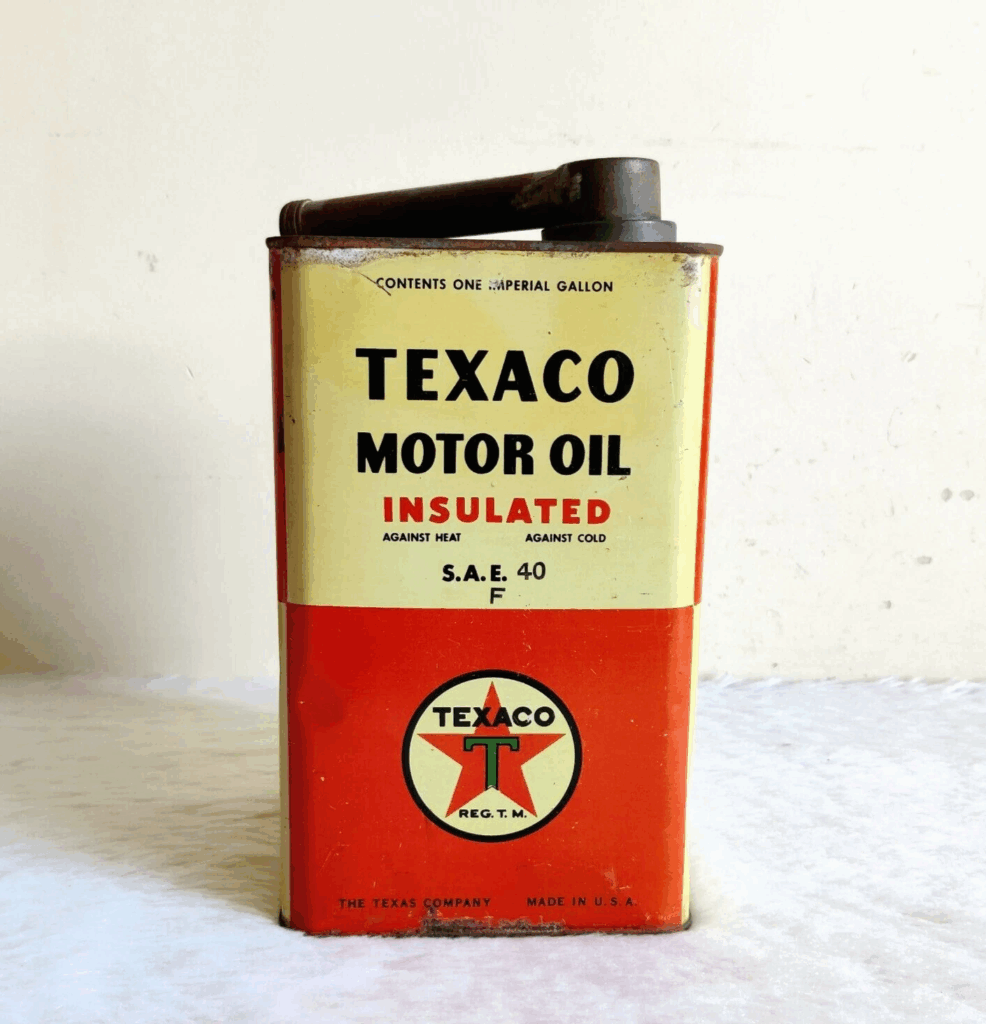
This gallon-size oil can came from Texaco around the 1950s, likely used for automotive lubricants sold at gas stations. Its larger size and vintage graphics help it stand out among smaller, more common oil cans. Items like this are considered rare because many were discarded after use, especially once plastic containers became common. A few auction records and listings show similar vintage gallon cans trading for a few hundred dollars depending on condition and graphic clarity. Holding onto an example gives a window into mid-century petrol supply practices before disposables took over.
Collectors often value the original branding and intact spout or screw-top design, which show practical manufacturing details from that period. Because large metal cans were subject to heavy use, finding one with clear graphics and limited rust is uncommon. That scarcity tends to drive up prices for originals that have survived decades relatively intact. For a collector interested in mid-century service station artifacts, this oil can represents a meaningful piece of history.
Esso 5-Gallon Gasoline Pail (1950s)
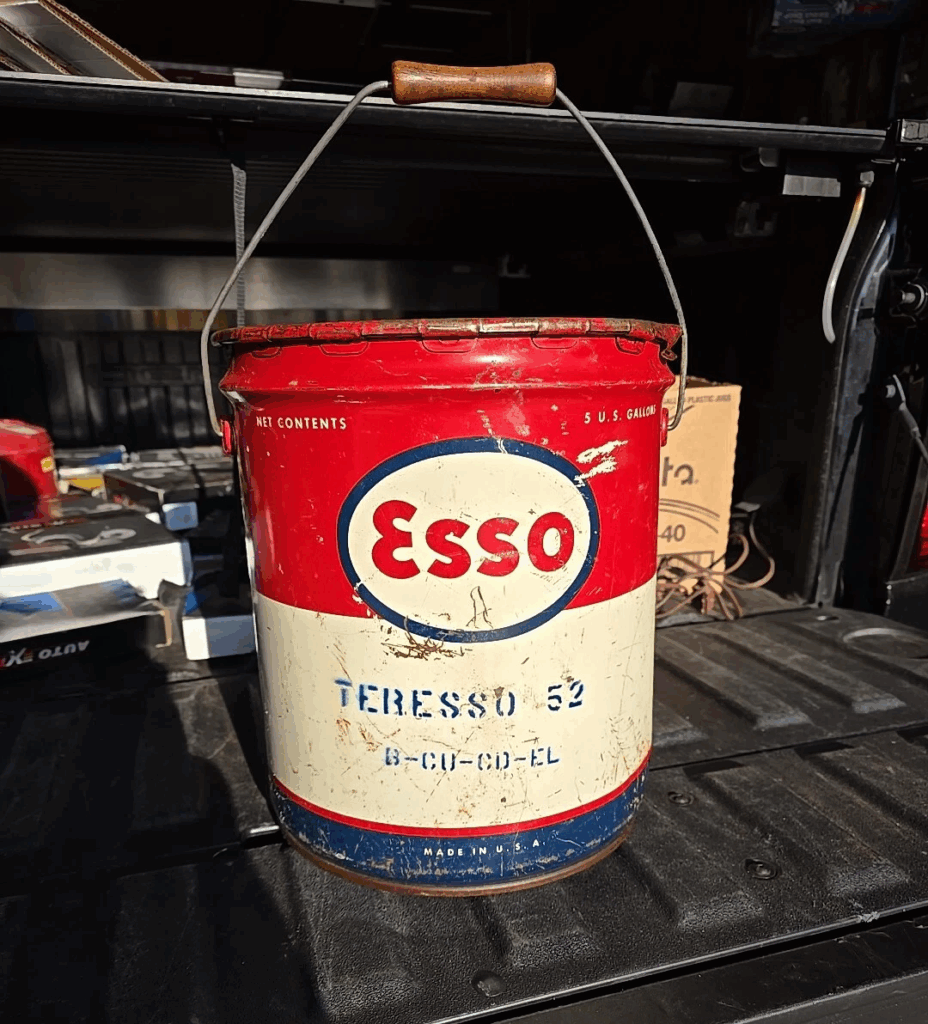
The Esso 5-gallon gasoline pail from the 1950s is a highly coveted item among oil can collectors. Unlike smaller cans, these large capacity pails were used primarily in bulk sales at service stations. They are rare today because they were often disposed of after use, leaving only a few intact examples behind. The most sought-after versions can reach prices upwards of $1,000, especially those with the classic Esso logo still visible and minimal wear. The unique size, iconic logo, and limited availability contribute to its high market value.
Esso, known for its famous tiger logo, is one of the most recognizable names in the oil industry. As a result, any related memorabilia, including these vintage pails, holds strong appeal for collectors. Given the larger size, these pails often had more exposure to wear and tear, which makes well-preserved examples all the more valuable. Some collectors are particularly drawn to the pails for their practical design and larger surface area, making them ideal for display. The rarity of finding one in excellent condition drives up the auction price significantly.
Vintage Quart Oil Can (Generic or Lesser-Known Brand)
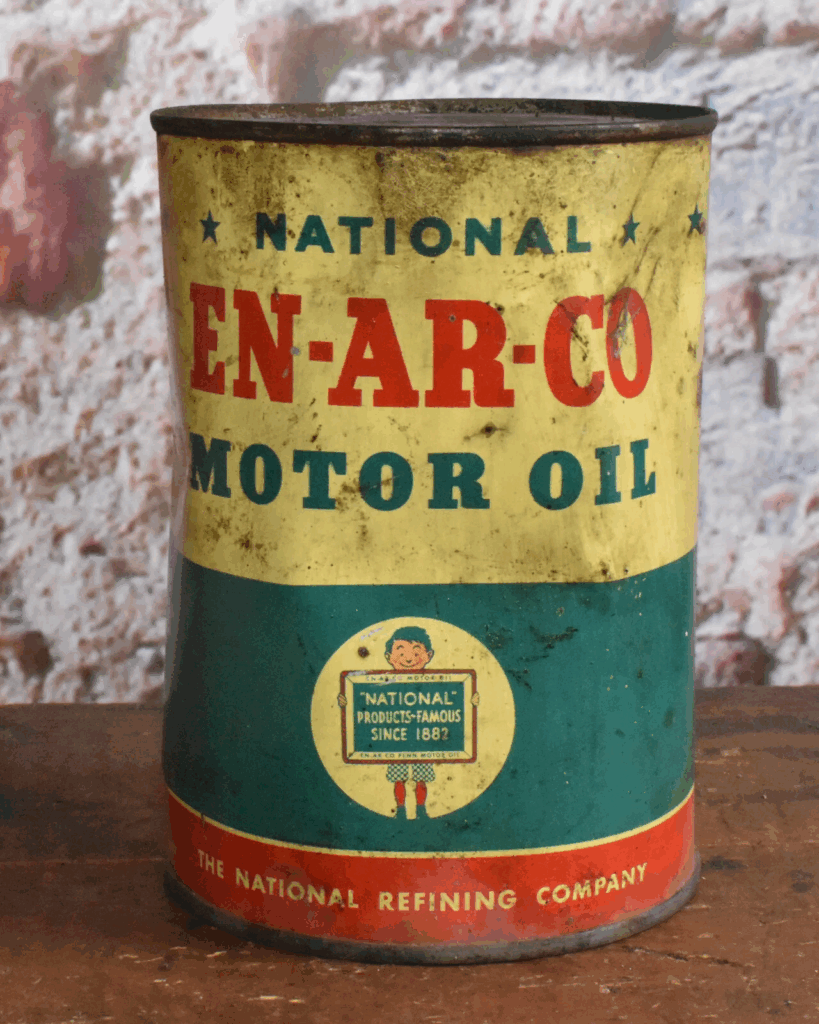
Some rare quart-size cans come from small or regional oil brands rather than major names, often produced in the early 1940s. These cans are less common because smaller companies may have had limited distribution and few cans survived. The rarity of brand plus age increases their collectible value. Certain guides list older oil tins among the more expensive petroliana items, with prices reaching several hundred dollars depending on condition.
Condition remains key because many of these older cans suffered corrosion or were discarded. When a can retains original paint, readable lettering, and minimal surface damage it becomes a prized find. For collectors focused on unusual or regional oil brands, such a can offers uniqueness not found in mass-produced items. It serves as a reminder of smaller players in the oil industry’s earlier days.
1-Quart Can of Oil from a Pre-War Make (circa 1930s)
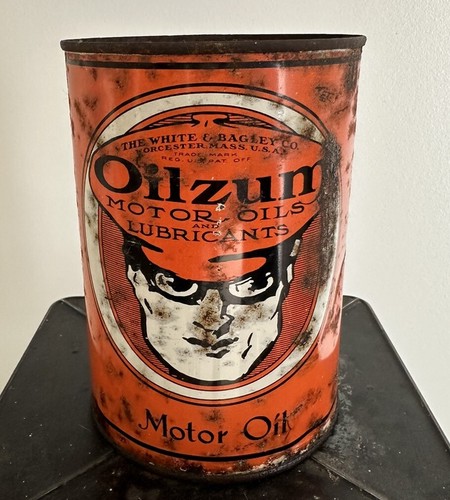
Some pre-war oil cans, made in the 1930s or early 1940s, survive today and are considered rare because they were often discarded during wartime or simply worn out in everyday use. Their shape, often squared and boxy, and their soldered seams make them stand out from later cylindrical designs. Collectors interested in early petroliana value these cans because they are tangible pieces of early automotive maintenance history. Auction guides note that rare vintage cans in good condition can sell for several hundreds of dollars, especially if they show original logos or early graphic design.
Given the passage of many decades, surviving examples are few, which adds to their appeal among collectors. Their form and materials reflect manufacturing methods from a bygone era. They can serve as evocative display pieces for those fascinated by early 20th-century industrial design. For a collector looking for historical authenticity rather than brand recognition alone, these cans can be among the most meaningful finds.
Sinclair Oil 1-Quart Can (Pre-1930s)
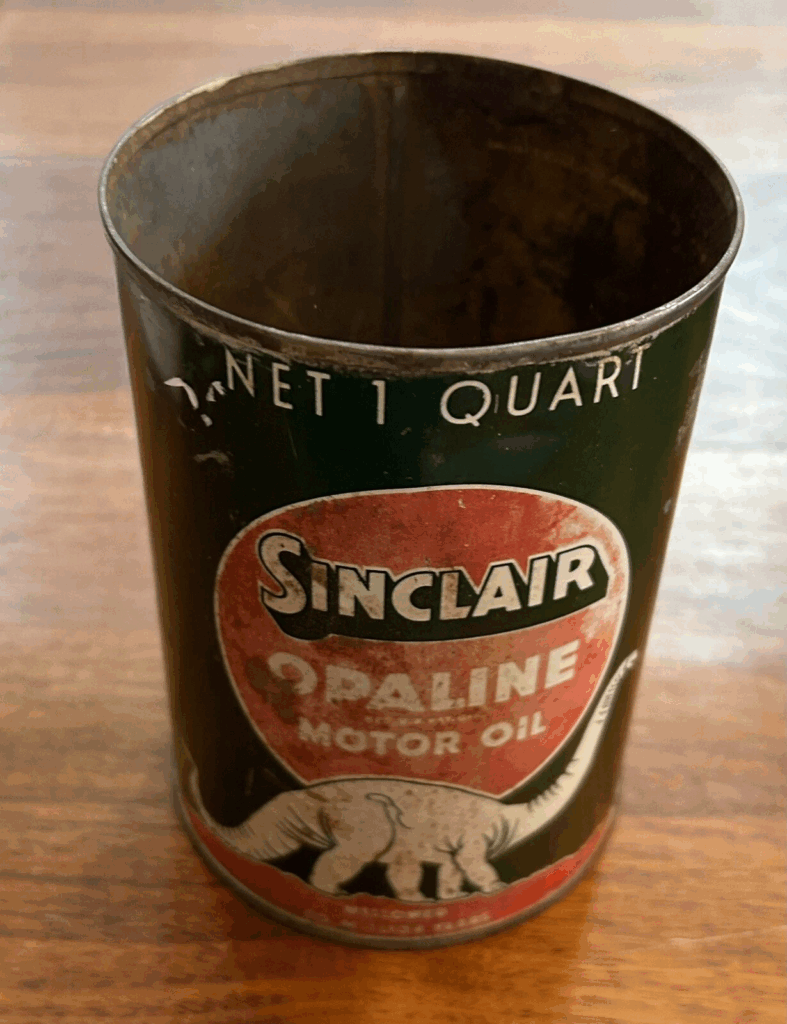
Sinclair Oil’s 1-quart cans from the pre-1930s are highly collectible, particularly because of the company’s long history and iconic logo. The early cans were produced before the widespread use of modern packaging, making them rare artifacts in the world of petroliana. These cans often feature vintage graphics, such as the iconic dino dinosaur logo, which makes them especially sought after by collectors of oil memorabilia. A Sinclair Oil 1-quart can can fetch up to $600, depending on its condition, with more pristine examples going for higher amounts. The age and nostalgic factor tied to the Sinclair brand make it a valuable find for any collector.
What sets these cans apart from others is the strong brand association with Sinclair’s legacy in the oil industry. Their value is driven by the historic nature of the company’s rise to prominence in the early 20th century. Collectors interested in petroleum history or brand marketing also find these cans significant. Because Sinclair Oil was one of the earliest companies to create such graphic designs for oil cans, finding one in good condition is increasingly rare. The combination of age, branding, and scarcity makes this an attractive auction item.
Large Capacity Grease or Oil Pail (5 to 10 Gallon Type, early 1940s–1950s)
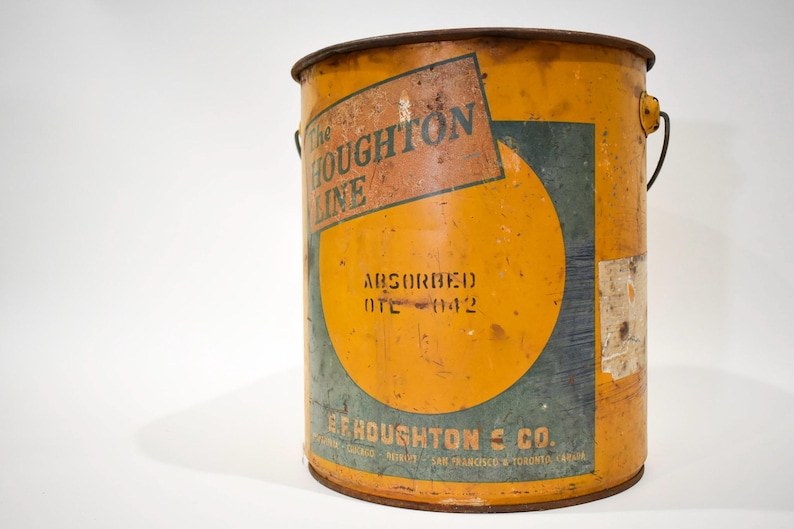
Older grease or oil pails sized 5 to 10 gallons are especially rare. Many such cans have not survived because their bulk made storage cumbersome and they were often discarded after use. When one does survive with original graphics intact, it becomes highly collectible. Because large-capacity cans were designed for professional garages or farms, surviving examples can speak to industrial and agricultural history, not just automotive.
Collectors willing to preserve and display such a pail may find it significant as a representation of mid-century industrial supply. Such items are seldom available on the market, which increases their value among enthusiasts. When in good condition they can sell for several hundred dollars or more.
Early Advertising Oil Can with Rare Branding or Logo Variant (1930s–1940s)
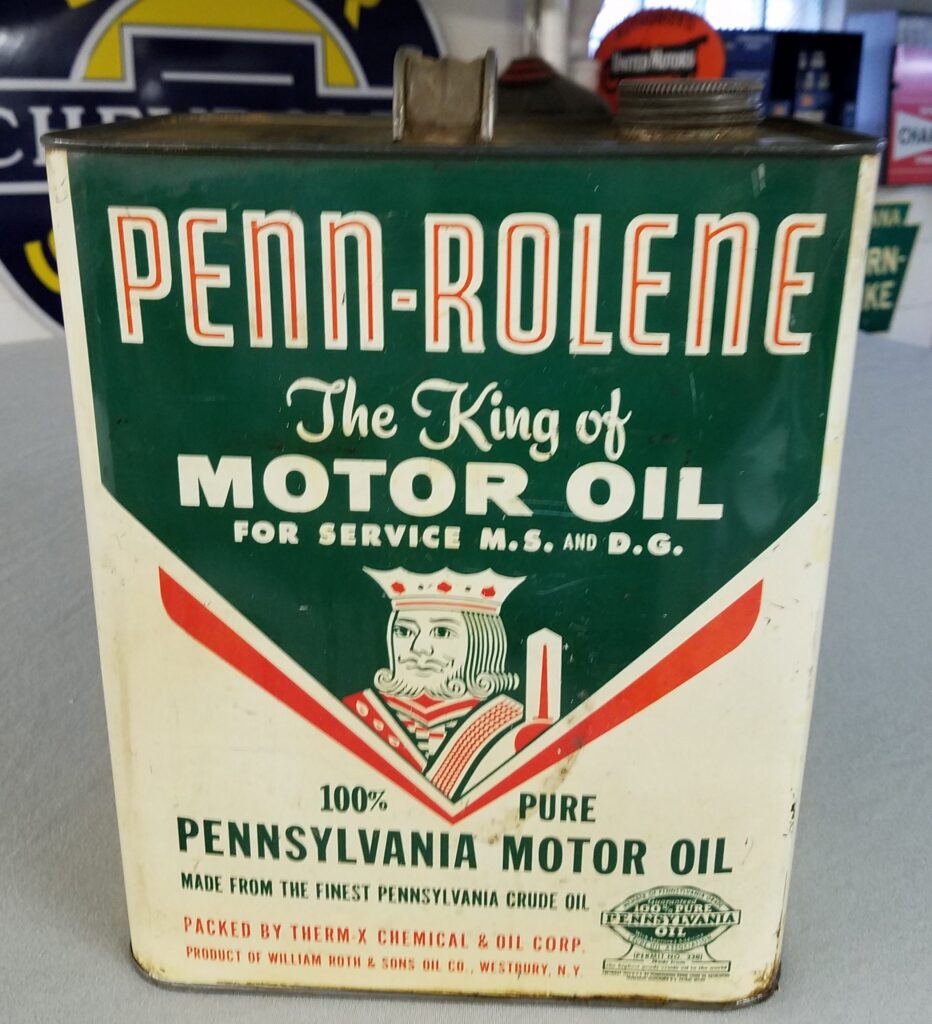
Some cans gain value due to branding or logo variants that lasted only a short time or were used by minor oil firms. These early advertising styles often featured elaborate typography or period-specific colors that later changed. When a can preserves these features, especially with readable graphics, it becomes highly collectible. Many collectors focus on logo history and brand evolution, so early variants draw particular interest.
Because such variants were often replaced fast or limited in production, surviving examples are uncommon. A can like that can hold a place of pride in a collection emphasizing design history or brand collectibility. Value tends to rise when the can is in good shape with minimal rust and clear original printing.
Specialist Motorcycle or Outboard Motor Oil Can from a Niche Supplier (1950s or earlier)
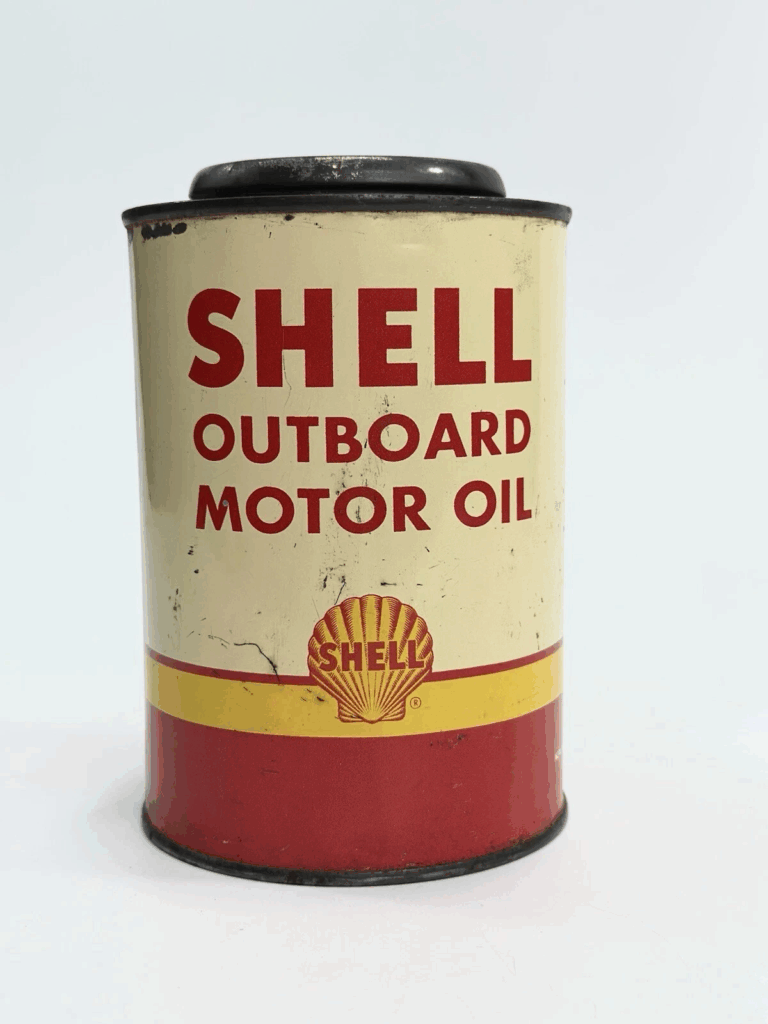
Some vintage oil cans were produced for niche markets such as motorcycle engines or marine outboard motors rather than general automotive use. These tend to have smaller production runs and narrower distribution. That limited reach makes survivors rare and attractive to collectors interested in niche or specialized petroliana. Occasionally, such cans come with unique spout designs or original labeling that reflects their specialized purpose.
Because they were never mass produced or heavily distributed, these specialist cans fetch attention from collectors wanting variety beyond mainstream automotive items. Their rarity and historical specificity can cause them to command higher prices compared with standard oil cans of the same era.
Quart or Pint Oil Can with Regional Advertising Label (1950s–1960s)
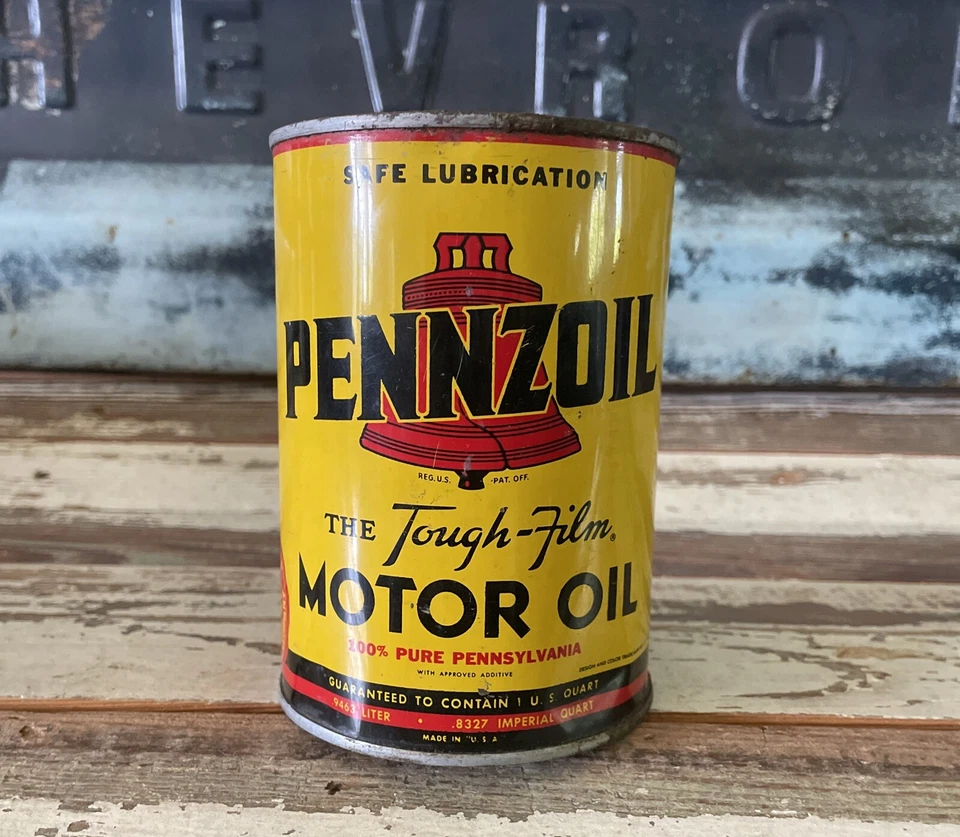
Finally there are oil cans from smaller regional oil or lubricant companies from the 1950s or 1960s, often used locally and never widely imported or distributed like Pennzoil and Cities Service. Their regional nature and limited numbers make them rare among collectors today. When one of these surfaces with original label and reasonable condition it can draw considerable interest. Many of these cans are valued more for their historical and regional connection than for brand prestige.
Collectors of petroliana prize such cans because they reflect local history and mid-century regional commerce. The combination of rarity, unique labeling, and surviving condition makes them desirable as display pieces or collectibles. Their price may not always break records but they hold value for collectors who appreciate variety and depth in a collection.
Standard Oil of Indiana 1-Quart Can (1920s)
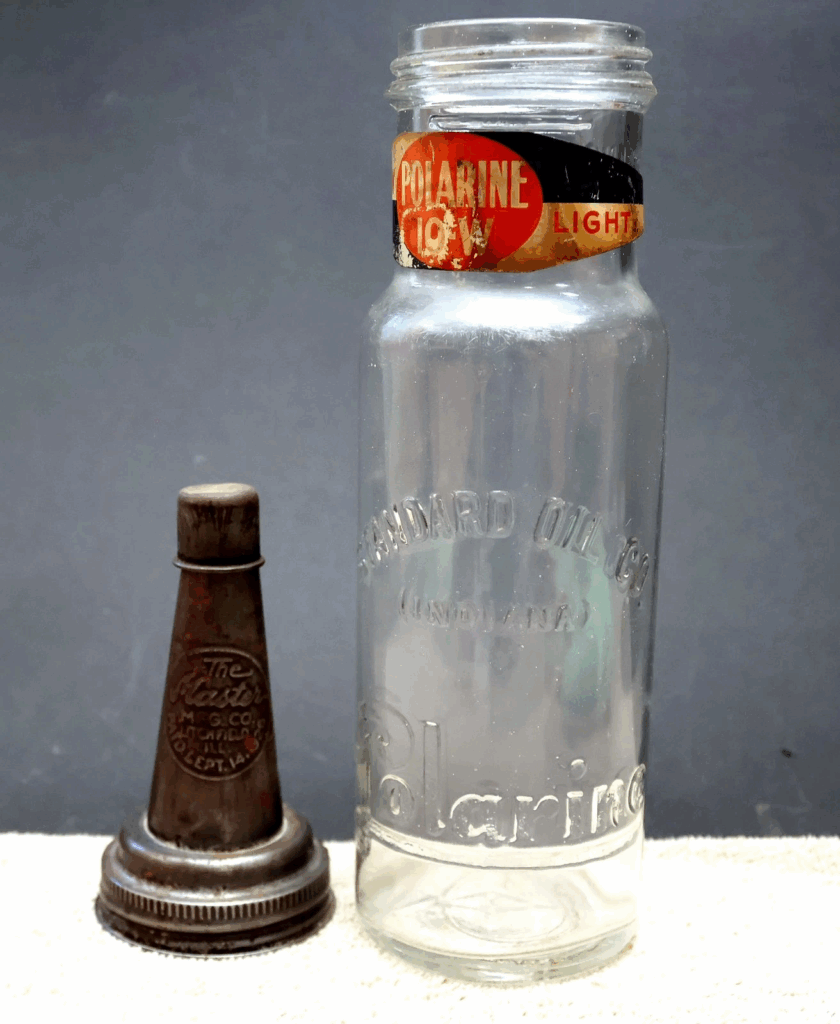
Standard Oil of Indiana produced 1-quart oil cans in the 1920s, a period when oil cans were becoming a key part of automotive service stations. These cans are rare because they predate the widespread adoption of modern packaging and were often discarded. Standard Oil of Indiana, an early leader in the petroleum industry, produced cans with simple, yet striking, designs that attract collectors today. The rarity of these cans, along with the historical significance of Standard Oil, has led some to sell for over $700 at auction. The combination of vintage age, brand significance, and condition makes these oil cans highly desirable to collectors.
As with many early 20th-century oil cans, condition plays a major role in determining its auction price. Most surviving examples have undergone wear from both age and exposure to the elements. However, cans with minimal rust, intact labels, and clear graphics are much more valuable. Collectors particularly value Standard Oil items because of the company’s pivotal role in the development of the oil industry in America. This can offers a glimpse into the early days of oil branding and is highly prized by collectors of historical industrial memorabilia.
This article originally appeared on Avocadu.