
11 Old Soda Crates That Sell for Way More Than Expected
Old soda crates, once common fixtures in warehouses and stores, have become a sought-after collectible. Many collectors are surprised by how much these vintage crates can fetch today. What makes them so valuable is the history they carry and their connection to classic brands. As vintage items continue to attract attention, these crates are gaining recognition for their nostalgic charm. If you come across one of these crates in your attic or at a local market, it might just be worth more than you think.
This post may contain affiliate links, which helps keep this content free. Please read our disclosure for more info.
Coca-Cola yellow wooden 24-bottle carrier
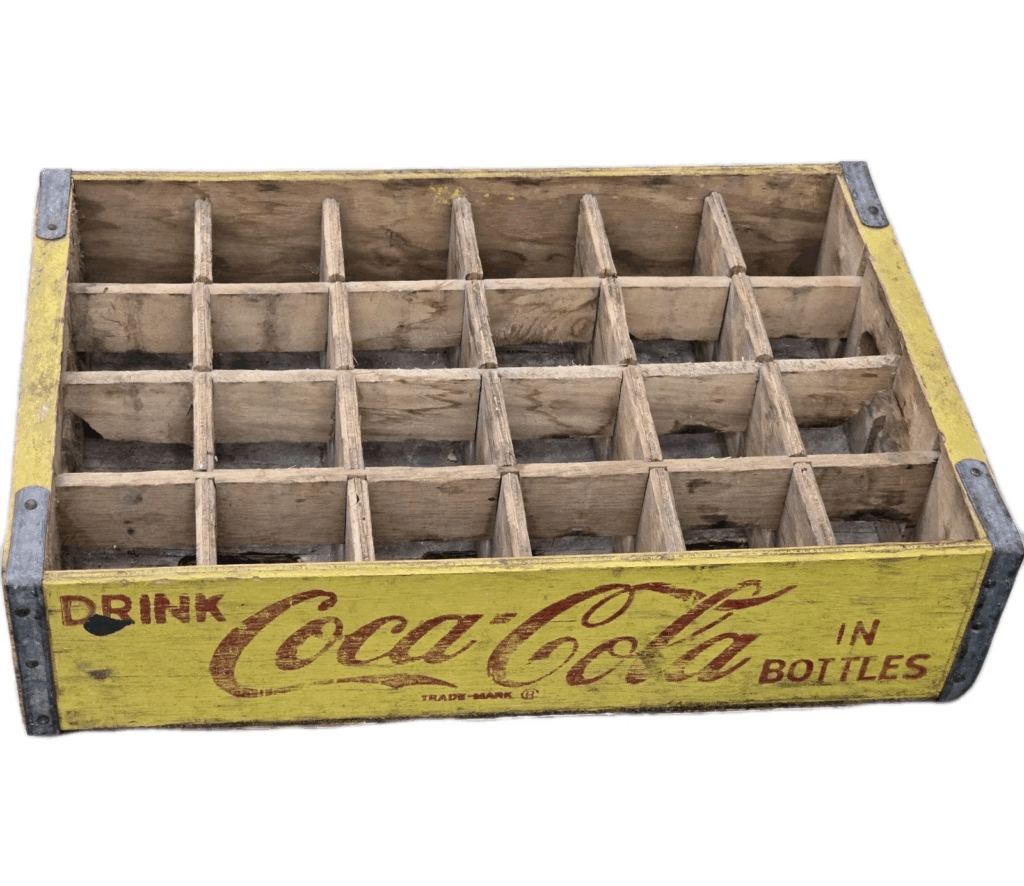
Produced in the early 1960s, this crate is made of solid wood with slotted dividers for 24 bottles and painted in Coca-Cola’s yellow Family Size scheme. It remains rare because most carriers from that period were scrapped or reused until the paint was long worn off. Collectors are paying more attention to these for their nostalgic value, original paint, and bottle-divider design. In good condition it might fetch around $120 to $150 based on previous listings. If the yellow paint is intact, the brand decoration untouched, and the wood shows little damage, it tends to command the higher end of the range.
Over time the condition of the crate plays a large role, especially whether the original metal banding and bottle dividers remain. Crates that lack one side or show heavy wear will fetch significantly less. Matching original era bottles still inside can further raise interest. If you find this crate in your attic or at a flea market check carefully for markings and paint style. Given the current collector interest in mid-century soda carriers, this item is a solid example of something that sells for more than one might expect.
Coca-Cola wooden crate with red and white enamel logo
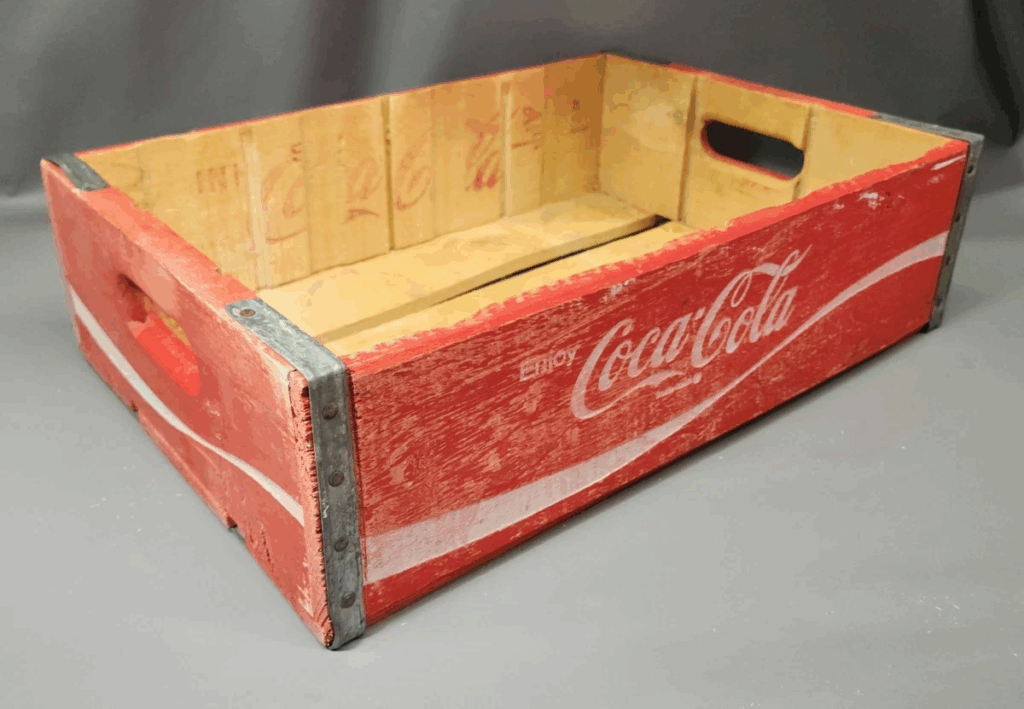
Made in the 1940s, this crate uses finger-jointed wood construction, has metal banding at the corners, and carries a red and white enamel Coca-Cola logo on the side. Its rarity stems from the fact that wooden soda crates from the 1940s seldom survive with paint intact and metal bands unbent. Because the brand and era are well regarded among collectors of soda-pop memorabilia, value has risen noticeably. A strong example might go for around $300 to $400 or even more if pristine. The condition of the enamel logo, absence of missing slats, and legibility of printing all contribute to the top prices.
Wear marks, missing pieces, or painted-over logos drive the value down considerably. If the box still stands firm, retains its original design and has minimal repair, you have something many collectors will take an interest in. Provenance or original bottling-works markings add another layer of worth. It makes a display piece for soda-brand fans or retro-themed interior décor. Given the scarcity of such crates in this age and condition, it often outpaces expectations.
7-Up Fresh Up wooden soda pop crate
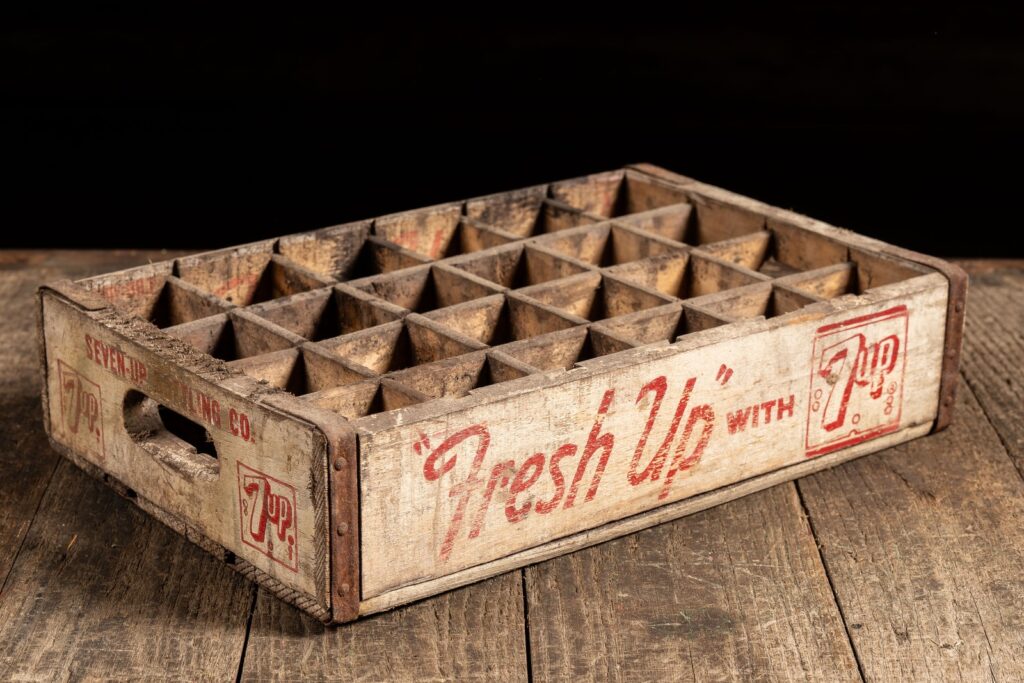
This crate dates to the 1950s, built of wood with a divided tray for 24 bottles and printed on the side with 7-Up’s Fresh Up slogan and vibrant graphics. What makes it more collectible than many other crates is the bright advertising print, single-brand focus, and the fact many of these were discarded once plastic cases took over. More collectors now chase such crates because they combine soda-brand nostalgia with functional wood-box construction, and originals in good shape are hard to find. Estimated value of a decent example is around $200 to $300, although superb condition pieces can sell for more. Watch for the slogan lettering’s clarity, intact bottle-divider wood structure, and minimal warping.
If the crate was used heavily, the wood may be fragile or the print faded and that will reduce the price. You should check for any replaced sides or missing metal hardware because that will lower value significantly. A crate with original handles or end-metal plates will hold more interest. For someone wanting to use it as décor or as part of a brand-specific collection it offers strong appeal. Because the 1950s era is increasingly viewed as collectible, these crates are rising in value.
Pepsi-Cola wooden crate
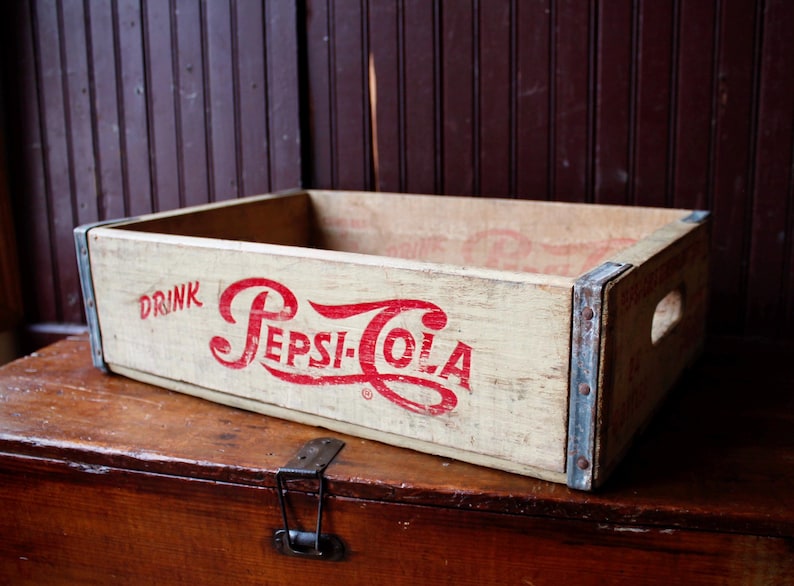
Produced in the 1930s era, this wooden crate features heavy planked wood, reinforced metal corners, and advertising decals for Pepsi-Cola of the day. Its rarity comes from two factors, its age and the survival of both decals and structural soundness in the wood. Because soda-brand crates from that era were utilitarian and often discarded, surviving examples that retain original graphics are scarce. In the current marketplace you might see a well-preserved specimen priced somewhere around $350 to $500 or more in exceptional cases. The decal condition, crate dimensions, and original hardware significantly affect its value.
If the crate has suffered water damage, warping, or the decals are missing or painted over then the value drops quickly. Matching crate lengths and regional bottler markings add collector interest. Storage for bottles or display use in retro settings makes it appealing beyond pure collecting. If you find one of these, measure the slots, check for the original bottling-works name and hardware, and photograph condition carefully. Older crates like this often sell for more than expected because they tick several collectible boxes.
Dr Pepper wooden crate with 24-slot design
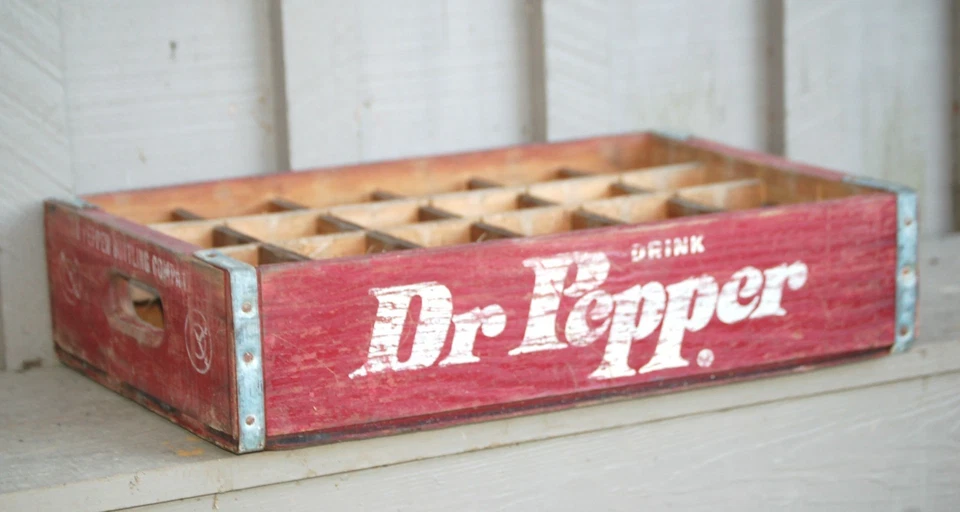
This crate was available in the 1950s and made in wood with 24 bottle-slots, painted red and white with Dr Pepper branding on the ends. What makes it rare is that Dr Pepper crates are less common than Coca-Cola or Pepsi-Cola ones, especially with full bottle-dividers intact in original paint. Collector interest has grown as niche soda brands gain attention, pushing values upward. A crate in good condition now may sell for around $250 to $350 depending on regional branding and condition. Key features to look for are matching slats, original paint, minimal structural rebuilding and clear logo.
If any side is missing or the crate has been heavily restored the price will be less. Retaining the original handle or bottler’s name (distributed by a particular franchise) adds value. It works nicely as décor or as part of a soda-bottling collection. In today’s market the interest in unusual brands and authentic originals means this piece may surprise you with its worth. Because fewer exist compared with mainstream brands, they can command strong prices.
Orange Crush wooden soda crate
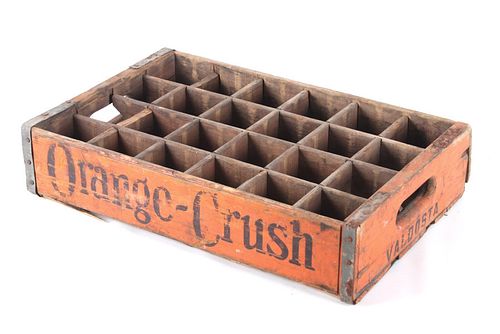
Crafted in the 1940s, this crate is built of wood with internal dividers and printed with Orange Crush advertising in bright orange and white. Its rarity comes from surviving the shift to cardboard and plastic carriers in later decades, plus retaining original print and structure. Because collectors look for mid-century soda advertising and authentic wood carriers, this crate has grown in appeal. A solid example might fetch around $200 to $300 depending on condition. If the print is vibrant, bottle-slot wood intact and the sides straight, it will reach the higher end.
Damage to slats, missing sections, or heavy fading of the print will pull the value down. This crate works well in vintage display settings or retro kitchens as a decorative element. If you find one at a second-hand sale check the print style, regional bottler name and structural condition. The connection to the Orange Crush brand and this era of soda-pop history help this crate stand out. In many cases it sells for far more than someone might expect from a simple wood box.
Schweppes wood crate

Launched to bottlers in the 1950s, this crate is made of wood with individual bottle-slots and carries Schweppes branding and regional bottler information. Rarity is found in the fact that many crates of minor soda brands did not survive in good condition, and most are unbranded. Because Schweppes is less common among soda-crate collectors, pieces retaining original identity are valuable. You might see such items go for around $150 to $250 now. Condition of wood, clarity of print, and original hardware affect price.
If the crate shows major wear, repair, or missing sections the market value will be lower. A crate that retains its original bottler address or regional print will draw more interest. It fits well in a collection that focuses on lesser-seen soda brands. If you spot one, note the size, divider integrity, paint condition and brand graphics. Its value has quietly climbed thanks to niche-brand interest in the soda-memorabilia world.
Hires Root Beer wooden crate

Made in the 1940s, this crate features heavy wood construction, metal corner reinforcements and original painted Hires Root Beer advertising on the sides. Its rarity comes from age, the survival of brand graphics and the decline of root beer crate production compared to mainstream colas. With collectors now giving attention to non-cola soda brands, this piece has seen growth in value. An estimated current value might sit around $180 to $300 for a fine example. Key factors include how intact the Hires logo remains, how straight the wood is and whether the crate has been modified.
Crates with missing slats, heavy rot or lacking brand graphics will fall well below that range. If you can trace the bottler location or original distribution region it may add value. It’s also suitable as vintage décor or for use at themed events or retail display. Given its age and brand uniqueness, this crate often exceeds what a buyer might first imagine. If you stumble upon one, check carefully for authenticity and finish to gauge worth.
Canada Dry ginger ale wooden crate
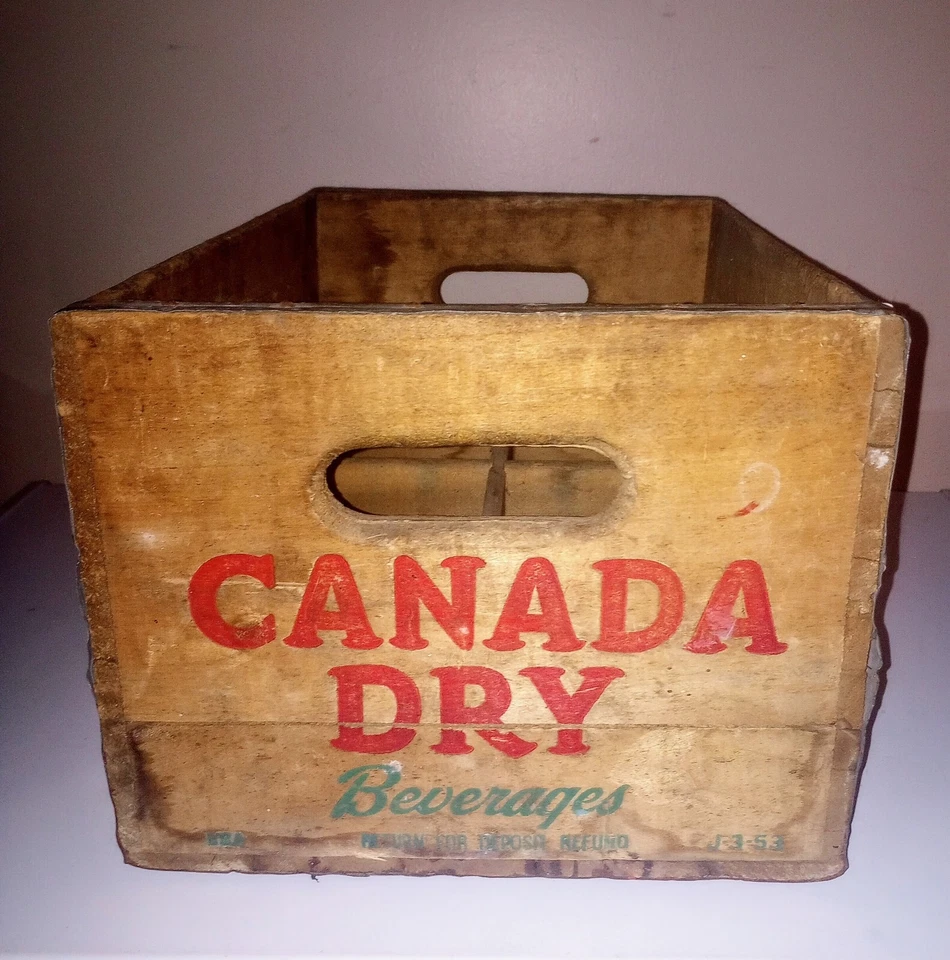
This crate was offered in the 1950s, made of wood with bottle-slot dividers and printed Canada Dry branding and local bottler information. It is rare because Canada Dry crates were less common in vintage soda-crate markets, and many were recycled rather than preserved. Interest among collectors of soda pop memorabilia has brought attention to this brand crate, raising its value. For a crate in good condition you might expect roughly $150 to $220. The state of the print, wood condition and originality of the hardware influence where in that range it lands.
If the wood has major splits, missing dividers or faded print the value will be lower. Regional bottler names still visible on the crate add extra appeal. If it remains unmodified and structurally sound it makes a good display item for bars or vintage-themed settings. Because it’s a less-common soda brand crate, it tends to attract interest from niche collectors. You may find this one surprises you in terms of market value.
Royal Crown (RC) cola wood crate

Produced around the 1960s when RC Cola was distributed widely, this crate uses wood panels and slots for bottles and features RC Cola advertising on the sides. Its rarity is in the region-specific print, intact bottle slots and brand retention – many were repurposed or thrown out. The increasing interest in soda-brand crates beyond the big players has helped raise its market value. A well-kept crate may fetch about $180 to $250 today. The better-preserved the graphics, the more intact the construction and fewer repairs the higher the price.
If the crate has had major restoration or repainting the value will be reduced. Original handles or metal corner reinforcements boost interest. These crates serve well as display pieces in soda-pop themed rooms or collections. Because RC is a somewhat less-common brand in wood-crate form, this piece often exceeds what one might first expect. If you spot one, check for brand name clarity, wood condition and divider completeness.
Vintage cardboard soda crate – ABC Soft Drinks
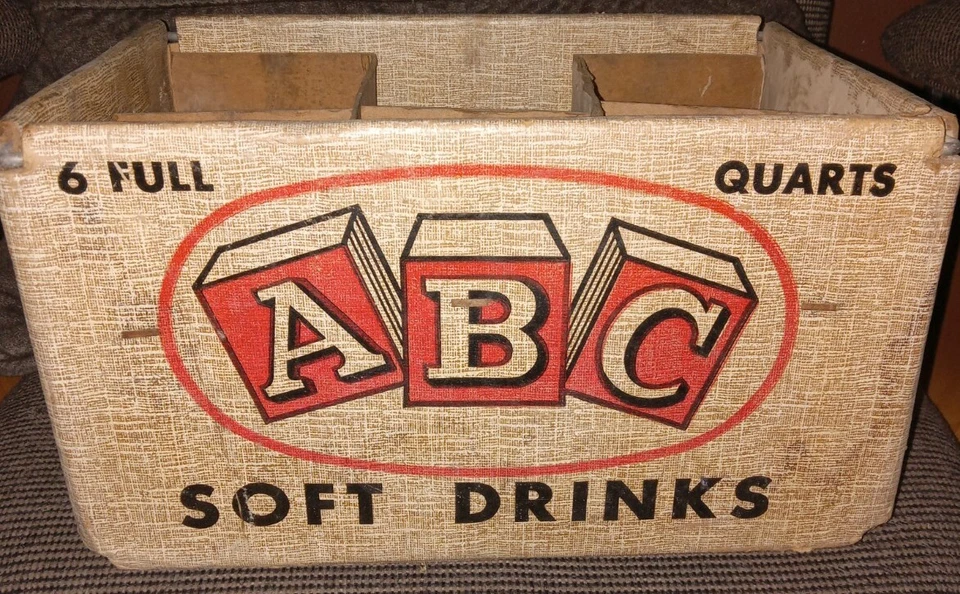
Made around 1962, this crate is constructed of thick cardboard (rather than wood) and branded for ABC Soft Drinks, a regional soda line, designed to carry bottles. It stands out because cardboard crates of this era are less durable and fewer have survived, especially with graphics intact. Because they bridge the gap between pure utility crates and collectible advertising carriers, they attract interest and value is rising slowly. You might see such a crate in the range of $80 to $120 depending on graphic condition. Key details include crease-free sides, intact printing and original color scheme.
If the cardboard is bent, torn or has missing panels the value will be lower. Since fewer people preserve cardboard crates compared with wooden ones, the survivors that remain are of interest. These crates work as decor, wall shelving or display boxes for soda-pop collectors. If you find one, check the brand name, bottler location, print style and overall condition. Sometimes the offer will surprise you for a seemingly modest item.
This article originally appeared on Avocadu.